
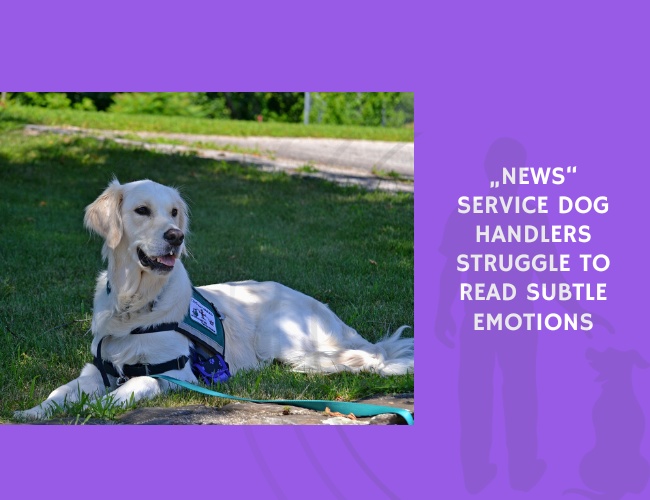
In this study, C. Fisher and Jill R. D. MacKay examined whether participation in psychiatric service dog (PsySD) programs—where dogs are specifically trained to detect and respond to handler anxiety—affects a handler’s ability to recognize canine affective states. As animal-assisted interventions (AAI) for post-traumatic stress disorder (PTSD) grow in popularity, questions remain about how handler-focused training may influence welfare awareness.
The researchers compared 23 PsySD handlers with 16 search-and-rescue dog (SARK9) handlers, whose dogs do not receive emotional service profile training. Participants completed the Animal Empathy Scale, identified canine affective states through standardized video clips, and described observations of their handler–dog relationships.
Results showed no correlation between handler empathy and ability to recognize canine emotion (r = 0.3767, p = 0.709). SARK9 handlers identified stress-related body language at a higher rate than PsySD handlers, but the difference approached—yet did not reach—statistical significance (p = 0.051).
Overall, both groups struggled with interpreting subtle emotional cues. Neither training context conferred a clear advantage in recognizing signs of canine stress, discomfort, or shifting affect. Importantly, the study indicates that the handler-centric nature of the emotional service profile in PsySD programs did not diminish handlers’ understanding of canine behavior compared to SARK9 handlers.
The authors emphasize that these findings present a valuable opportunity for program development. Enhancing education on dog body language, especially subtle cues, could improve welfare outcomes and strengthen the effectiveness and well-being of service dog teams.
Source: Fisher, C., & MacKay, J. R. D. (2020). Recognition of Canine Emotion by the Psychiatric Service Dog Owner-Handler. Published November 2, 2020.










