
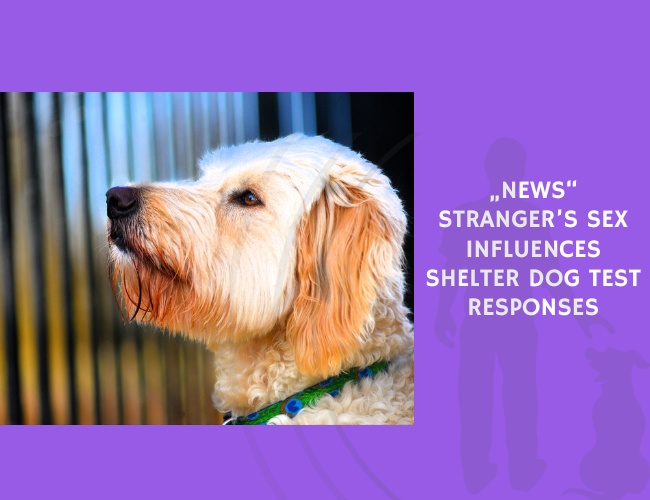
Published in Animals, this study by B. McGuire and Andrew Song examined whether the sex of the stranger involved in a behavioral assessment influences dogs’ responses. Many dogs display greater uneasiness around unfamiliar men, yet few studies have tested whether this affects shelter aggression evaluations.
The researchers analyzed 283 dogs evaluated over 27 months at a New York shelter. Twenty-six of these were undersocialized dogs from a single home, and only 19.2% of them showed no concerning behavior during the Stranger test. Among the remaining 257 dogs, 89.9% showed no concerning behavior (scores 1–3 on a 1–5 scale).
Dogs tested with a male stranger (n = 55) received significantly higher scores—indicating more uneasiness—than those tested with a female stranger (n = 202). However, the average score for male-stranger tests (2.2) still fell within the shelter’s “not concerning” range. The effect size was described as small to moderate.
Thus, while the sex of the unfamiliar person does influence dog behavior during the Stranger test, the difference is not large enough to justify changes in shelter testing protocols. The findings instead emphasize the importance of early socialization—especially exposure to a wide variety of people—to reduce uneasiness and improve outcomes in shelter environments.
Source: McGuire, B., & Song, A. (2023). Influence of Sex of Stranger on Responses of Shelter Dogs During Canine Behavioral Evaluations. Animals. Published July 30, 2023.










