
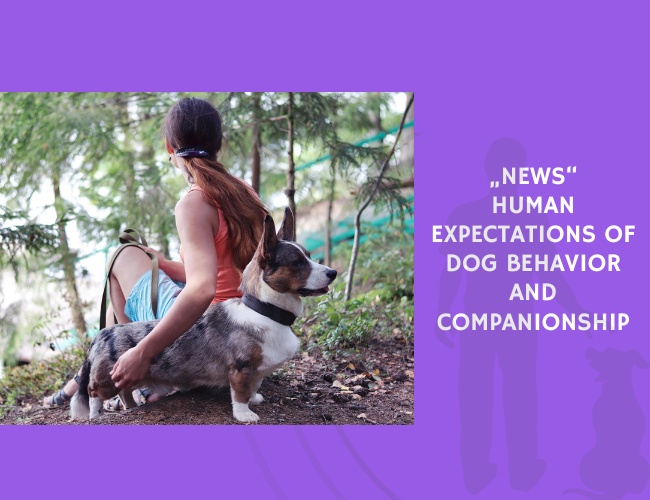
Published in the Journal of Applied Animal Welfare Science, this qualitative study by Danielle Stephens-Lewis and K. Schenke explores a key welfare issue: the mismatch between guardian expectations and actual canine behavior. Despite dogs’ status as beloved companions, large numbers are relinquished each year, often for perceived behavioral challenges. Understanding the roots of these perceptions is crucial for improving human–dog relationships.
The authors collected responses from 175 dog guardians through an online semi-structured survey. Using reflexive thematic analysis, they identified five overarching themes that characterize guardian expectations:
A well-balanced dog: Participants envisioned emotionally stable, adaptable dogs with few behavioral challenges. These expectations often did not account for normal canine variability or developmental needs.
Obedient: Many guardians expected high behavioral compliance—such as calmness, impulse control, and perfect responses to cues—sometimes exceeding what is reasonable without significant training and management.
Affection and Connection: Respondents described desires for unconditional affection, emotional support, and deep relational attunement, frequently anthropomorphizing canine social capacities.
Shared Interests: Guardians imagined dogs as companions who inherently enjoy the same activities or lifestyle, overlooking individual preferences or breed-specific tendencies.
Commitment: Many expected dogs to seamlessly integrate into family life, with minimal disruption to routines, personal time, or emotional bandwidth.
The study notes that these expectations often blur the distinction between observable behavior and inferred personality or temperament. Misaligned expectations can create stress for both guardians and dogs, contributing to relationship breakdowns and relinquishment.
The authors emphasize the need for clearer conceptualization of canine behavior and improved educational resources to help guardians understand what dogs can realistically offer and what they may require. Such efforts—including those informed by the Perceived Canine Reactivity Framework—can support stronger bonds, reduce relinquishment risk, and improve adoption matching processes.
Source: Stephens-Lewis, D., & Schenke, K. (2023). “Obedient, but Cheeky”: Human Expectations of Canine Behaviour and Companionship. Journal of Applied Animal Welfare Science. Published July 6, 2023.










