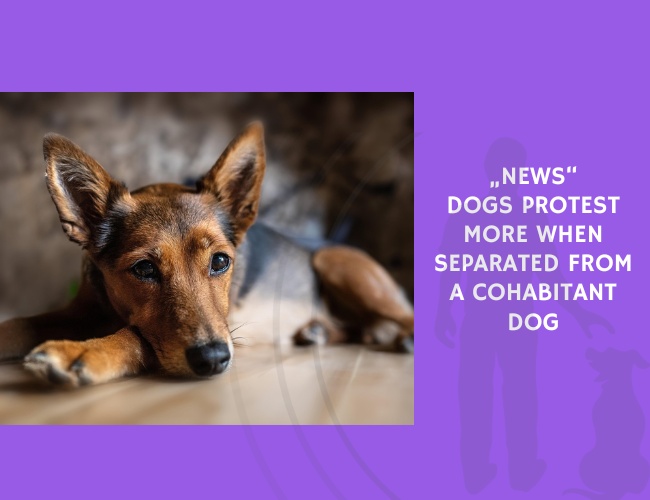
In this study, C. Mariti, Beatrice Carlone, C. Sighieri, M. Campera, and A. Gazzano examined how dogs respond to separation from different social partners. Dogs form significant bonds both with humans and other dogs, yet little is known about how intraspecific attachment compares to human-directed attachment in stressful situations.
Using the Ainsworth Strange Situation Test, the researchers observed 16 dogs during the 2-minute isolation episode. Each dog underwent two testing conditions: one in which it was separated from its owner, and another in which it was separated from a cohabitant dog. The team measured the duration of 19 behaviors and compared them across conditions using the Mann-Whitney test.
Dogs showed significantly higher levels of protest and distress behaviors when separated from their canine companion. These included increased proximity to the door (medians: 95.5 vs. 54.5; p = 0.017), more behaviors directed toward the door (p = 0.033), and more barking (p = 0.017). Attempts to escape were also higher, though not statistically significant at the 0.05 level (p = 0.067).
In contrast, passive behavior was greater when dogs were separated from their owner (p = 0.001). This suggests that while owner separation evokes calm waiting or resignation, separation from a familiar dog elicits active attempts to reunite.
The authors propose two interpretations: dogs may have stronger intraspecific attachment to their canine companions, or the heightened distress may result from being separated from the cohabitant dog while simultaneously lacking the comfort of the owner. Additionally, dogs living in multi-dog households may have fewer opportunities to be left alone, making isolation more stressful.
These findings have implications for dog welfare, especially regarding how separation and routine management practices affect dogs with strong inter-dog bonds.
Source: Mariti, C., Carlone, B., Sighieri, C., Campera, M., & Gazzano, A. (2018). Dog Behavior in the Ainsworth Strange Situation Test During Separation from the Owner and from the Cohabitant Dog. Published June 5, 2018.