
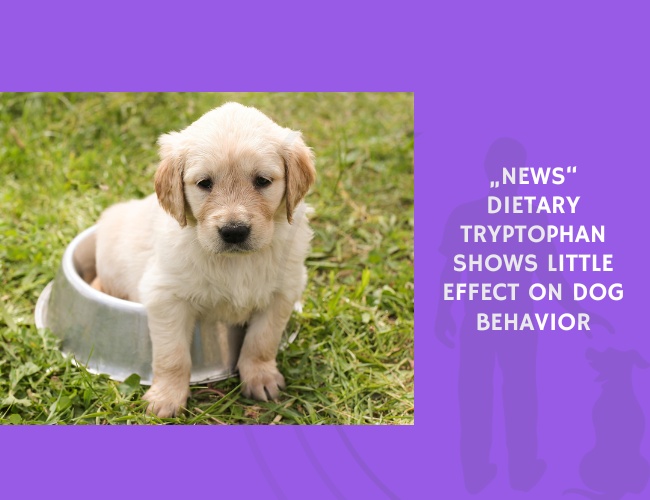
Published in the Canadian Journal of Veterinary Research, the study by J. Templeman, G. Davenport, J. Cant, V. Osborne, and A. Shoveller explored how dietary manipulation of tryptophan (Trp)—a key precursor in the serotonergic pathway—might shape behavioral responses in dogs. Tryptophan is known to influence mood and reactivity in many mammals, but its effects in canine diets require further clarification.
The researchers studied 36 healthy adult female mixed-breed hounds over a 24-week period. Dogs were fed either a control diet containing 0.18% tryptophan or one of three experimental diets with additional supplemental tryptophan at concentrations of 0.05%, 0.1%, or 0.15%, added to the basal level.
Behavioral assessments occurred at baseline and every eight weeks, focusing on dogs’ reactions to the approach of a familiar handler and an unfamiliar individual. Differences in activity (P = 0.0197), distance maintained (P = 0.0358), confidence (P < 0.0001), and ear position (P < 0.0001) between the two human categories confirmed that the behavioral ethogram used was sensitive and appropriate.
However, no consistent or significant behavioral differences emerged between dogs consuming the control diet and those receiving any level of tryptophan supplementation. These findings suggest that simply increasing dietary tryptophan concentration does not reliably modify behavior in this context.
The authors recommend that future studies consider the tryptophan-to-large-neutral-amino-acid ratio rather than absolute tryptophan levels alone, investigate potential breed-specific differences in tryptophan requirements, and incorporate additional biomarkers of serotonin status to better understand how diet may influence mood and behavioral regulation.
Source: Templeman, J., Davenport, G., Cant, J., Osborne, V., & Shoveller, A. (2018). The Effect of Graded Concentrations of Dietary Tryptophan on Canine Behavior. Canadian Journal of Veterinary Research. Published October 1, 2018.










