
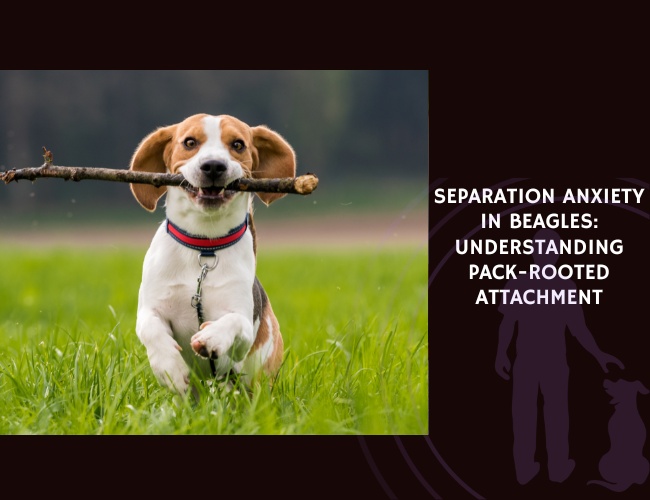
When your Beagle’s mournful howl echoes through your home the moment you reach for your car keys, you’re witnessing something deeper than simple sadness. This behaviour springs from centuries of selective breeding that wired these scent hounds to function as a unified social unit, making solitude feel cognitively unnatural. Let us guide you through the neurological and emotional landscape of Beagle separation distress, where pack heritage meets modern living.
The Pack-Hunting Legacy: Why Beagles Struggle with Solitude
Breeding for Cohesion, Not Independence
Beagles were meticulously developed for cooperative rabbit and hare hunting, working in tight packs where success depended on synchronized movement and constant auditory contact. This selective breeding shaped their neurological wiring in profound ways. Where breeds like terriers or livestock guardians developed self-sufficiency, Beagles evolved to find safety and purpose in proximity to pack members.
You might notice your Beagle shadowing you from room to room. This following behaviour isn’t clinginess in the traditional sense. It reflects their pack cognition design, where separation from the group signalled vulnerability in their historical role. The hunting field demanded constant awareness of pack location through scent trails and vocal cues, making isolation contradictory to their evolutionary blueprint.
The Genetic Predisposition to Vocal Communication
Did you know that Beagles possess one of the most diverse vocal repertoires among dog breeds? Their baying, howling, and distinctive vocalizations evolved as survival-based communication methods for maintaining pack cohesion across dense terrain. When separated, these vocal signals intensify as broadcasting mechanisms, attempting to re-establish contact through sound.
Your Beagle’s separation howling isn’t attention-seeking in the way we often interpret it. The behaviour represents pack recall programming, where silence from pack members triggered escalating vocal efforts to restore connection. This explains why many Beagles intensify their vocalizations when they feel unheard, creating a feedback loop that can challenge even patient neighbours.
Key Pack Heritage Traits That Influence Separation Behavior:
- Proximity Preference: Evolved to maintain visual or auditory contact with pack members at all times during hunts
- Vocal Dependency: Relied on baying and howling to coordinate movements across dense terrain and thick brush
- Cooperative Problem-Solving: Bred to work collectively rather than make independent decisions
- Scent Trail Following: Developed hypersensitivity to familiar scents as navigation and comfort anchors
- Low Independence Drive: Selected against self-sufficiency in favor of pack-oriented decision-making
Understanding the Beagle Brain: Affective Neuroscience of Separation
The PANIC/GRIEF System in Action
When you leave your Beagle alone, specific neural pathways activate what affective neuroscience identifies as the PANIC/GRIEF system. This isn’t simple discomfort. In pack-dependent breeds like Beagles, this system appears hyper-expressed, creating intense emotional and physiological responses to social separation.
The amygdala, your dog’s emotional processing centre, becomes hyperactive during isolation. You’ll observe this through pacing, panting, drooling, or hyper-attentiveness before your departure. These aren’t manipulative behaviours but genuine distress signals from a brain wired to interpret solitude as dangerous.
Scent-Anchored Emotional Memory
Beagles navigate their world through approximately 220 million scent receptors, compared to our mere 5 million. This extraordinary olfactory capacity creates unique attachment patterns. Your scent becomes an emotional anchor, a reassurance signal that regulates their nervous system through Soul Recall pathways where sensory memory and emotional bonding intertwine.
When deprived of familiar scent markers during your absence, your Beagle experiences amplified uncertainty. The disruption of these scent-based emotional memory pathways increases distress beyond what visual-dominant breeds might experience. This explains why your worn clothing or recently used blanket can provide genuine comfort, offering olfactory reassurance in your physical absence.
Anxiety or Unmet Social Need? Reframing the Diagnosis
Challenging the Pathology Label
Here’s a question worth exploring: How often is Beagle “separation anxiety” actually unmet social expectation rather than pathological anxiety disorder? The distinction matters profoundly for how we approach solutions.
True anxiety involves fear of imminent danger and generalised threat perception. Your Beagle, however, may not fear danger when alone. Instead, their pack-membership logic interprets separation as unsafe because it violates their fundamental social programming. They’re not anxious about potential threats but distressed by the absence of their primary social unit.
The Social Expectation Framework
Beagles evolved expecting constant social proximity. When we leave them alone for hours, we’re essentially asking them to contradict their deepest instincts. Imagine being told that breathing differently would make you more convenient for others. That’s the cognitive disconnect your Beagle experiences during solitude.
Signs Your Beagle Is Experiencing Social Need (Not Pathological Anxiety):
- Context-Specific Distress: Calm when accompanied by another dog but distressed when truly alone
- Immediate Relief Upon Return: Settles quickly once pack member returns, without prolonged agitation
- Food Interest: Will eat treats or meals when alone, showing distress doesn’t override all motivation
- Exploration Behavior: Moves around space checking for pack members rather than freezing in fear
- Responsive to Routine: Improves significantly with consistent schedules and predictable patterns
- No Generalized Anxiety: Confident in other contexts like vet visits, car rides, or meeting strangers
This reframing shifts our response from treating pathology to meeting legitimate social needs. Your Beagle isn’t broken or overly dependent. They’re responding predictably to circumstances that conflict with their evolutionary design. 🧠
Recognizing the Signs: Behavioral Patterns and Escalation
Early Warning Indicators
Separation distress doesn’t begin when the door closes. You’ll notice precursor behaviours that reveal your Beagle’s emotional state well before departure:
- Following shadow behaviour: Your dog becomes your constant companion, positioning themselves to maintain visual contact
- Pre-departure hypervigilance: They track your movements with heightened attention as you gather keys, shoes, or bags
- Physiological stress signals: Increased panting, drooling, or trembling as departure cues accumulate
- Proximity-seeking escalation: They press against you, paw at you, or insert themselves between you and the door
These patterns intensify through what’s called predictive processing. Your Beagle learns to associate specific cues with your departure, and their distress begins building during these preparation rituals rather than at the moment of separation.
Escalation During Isolation
Once alone, distress typically follows a recognizable progression. The first 30 minutes prove most critical, when stress hormones peak and panic-driven behaviours emerge:
Your Beagle may begin with restless pacing, circling areas you recently occupied. This movement pattern isn’t random but represents search behaviour, attempting to locate pack members. Vocalizations begin, often starting as whines and escalating to howls or baying as time passes without response.
Destructive behaviours frequently target exit points. Digging at doors, chewing door frames, or scratching at windows reflects panic regulation rather than boredom. Your dog isn’t being vengeful or destructive by choice. They’re engaging in escape-attempt behaviours driven by the neurological imperative to reunite with their pack.
Common Panic-Driven Behaviors vs. Boredom-Driven Behaviors:
Panic-Driven (Separation Distress):
- Focused on exit points (doors, windows, gates)
- Begins within minutes of your departure
- Accompanied by vocalizations, drooling, or panting
- Targets items saturated with your scent (shoes, clothing, pillows)
- Causes self-injury (broken nails, worn paw pads, damaged teeth)
Boredom-Driven (Under-Stimulation):
- Random object selection without pattern
- Occurs after extended alone time (hours)
- Playful body language if caught in the act
- Targets novel or interesting items (remote controls, books)
- Stops easily with enrichment toys or increased exercise
The Sensory Threshold Factor
Beagles appear to possess a lower sensory threshold for loneliness compared to many breeds. Their distress escalates faster and more intensely, likely due to their hyper-developed social sensitivity. Where some dogs might settle after initial protest, Beagles often maintain heightened arousal throughout separation periods, unable to downregulate their stress response without social cues. 🐾

Human Influence: How We Shape Separation Responses
The Emotional Departure Trap
Your departure routine powerfully influences your Beagle’s separation response. When you create elaborate goodbye rituals, laden with guilt-driven reassurance and extended affection, you inadvertently signal that leaving deserves emotional fanfare. Your Beagle reads this energy as confirmation that separation is indeed significant and potentially threatening.
Common Departure Mistakes That Increase Separation Distress:
- Prolonged Goodbyes: Extended petting sessions, repeated reassurances, or emotional farewells that build anticipation
- Guilt-Driven Compensation: Extra treats, toys, or attention right before leaving that highlight the significance of departure
- Inconsistent Timing: Unpredictable schedules that prevent your Beagle from building reliable expectation patterns
- High-Energy Returns: Excited, emotional greetings that emphasize how extraordinary your absence was
- Departure Cues: Always following the same sequence (keys, coat, shoes) that becomes a predictable panic trigger
- Last-Minute Attention: Responding to clingy behavior right before leaving, accidentally rewarding proximity-seeking
The same applies to homecoming. Excited, high-arousal greetings reinforce that your absence was a major event worth celebrating, embedding the emotional weight of separation more deeply into your dog’s experience.
Inconsistent Routines and Predictability Crisis
Did you know that unpredictable schedules magnify separation distress more than the duration of absence? Your Beagle’s brain constantly engages in expectation-building based on pattern recognition. When your schedule lacks coherence, each departure becomes loaded with uncertainty: How long this time? Will you return?
This predictive processing breakdown creates what we call expectation violation, where your dog cannot form reliable mental models about your behaviour. The resulting hypervigilance and chronic low-level stress make each separation more difficult than the last.
Attention Patterns and Overattachment
Attention-heavy homes can accidentally strengthen separation dependency. When your Beagle receives continuous, high-level interaction during your presence, then suddenly experiences complete social deprivation during your absence, the contrast amplifies distress.
This doesn’t mean withholding affection. Rather, it suggests building tolerance for benign separation within your home. Can your Beagle rest calmly while you’re in another room? Can they self-occupy while you’re present but engaged in other activities? These micro-separations build resilience for larger absences.
Environmental Context: Triggers and Stressors
The Silent Home Challenge
Beagles struggle particularly in silent environments. Their auditory sensitivity, so crucial for pack coordination, leaves them hyperalert to absence of sound. In hunting packs, silence meant danger or separation. In modern homes, it can trigger the same vigilance.
You might consider leaving ambient sound when departing, not to mask their vocalizations but to provide auditory environmental enrichment that reduces the stark silence your Beagle interprets as social isolation.
Scent Loss Scenarios
Homes where your scent dissipates quickly prove more challenging. Frequently cleaned spaces, strong air fresheners, or ventilation systems that rapidly clear your olfactory presence remove your Beagle’s primary emotional regulation tool.
Maintaining scent-stable areas, like a designated rest space with your recently worn clothing or bedding, provides olfactory continuity that helps regulate your dog’s nervous system during your absence.
Environmental Modifications to Reduce Separation Distress:
- Scent Anchoring: Leave recently worn t-shirts or bedding in your dog’s rest area for olfactory reassurance
- Ambient Sound: Provide calm music, audiobooks, or white noise to reduce stark silence and mask outside triggers
- Visual Comfort: Position rest areas away from windows where passing people or animals trigger alertness
- Temperature Regulation: Ensure comfortable climate since stressed dogs struggle with temperature regulation
- Safe Confinement Options: Use appropriately-sized crates or gated areas that feel secure rather than punitive
- Enrichment Stations: Designate specific areas for food puzzles, lick mats, or interactive toys
- Minimal Departure Visibility: Arrange furniture so your dog doesn’t watch your entire departure preparation routine
Apartment Living and Noise Anxiety
High-density living creates a compounding challenge. Your own anxiety about noise complaints feeds into your Beagle’s separation response, creating emotional feedback loops. When you show stress during their vocalizations, you confirm their distress signals are warranted. When you rush departures to minimize screaming duration, you increase the chaos and unpredictability they experience. 🧡
Together. Wired. Worried.
Separation feels unnatural. For a Beagle, solitude isn’t quiet time—it’s disconnection from the pack they were bred to track, follow, and communicate with constantly.
Ancestry amplifies distress. Their hyper-expressed PANIC/GRIEF system and vocal recall instincts aren’t misbehavior—they’re ancient survival circuits firing in modern rooms.



Calm connection reshapes fear. When departure gains clarity and return feels predictable, panic softens. Security isn’t taught—it’s felt through consistency.
The NeuroBond Approach: Building Secure Attachment
Emotional Clarity in Departure Rituals
The NeuroBond approach focuses on creating calm emotional presence and coherent departure structure. This means transforming how you handle transitions from high-arousal events into neutral routines.
Your departure becomes matter-of-fact: minimal eye contact, brief physical interaction, and low-key movement. You’re communicating through calm energy that leaving is ordinary, expected, and safe. This emotional clarity helps your Beagle interpret separation through your confident lens rather than their anxious instinct.
The NeuroBond Departure Ritual: Step-by-Step Protocol
- 30 Minutes Before: Begin emotional neutrality—no excessive interaction or attention-seeking responses
- 20 Minutes Before: Complete departure preparations (keys, bag, coat) calmly without announcing intentions
- 10 Minutes Before: Engage briefly in a calm, routine activity (check phone, read, fold laundry) to normalize your energy
- 5 Minutes Before: Provide high-value enrichment item (frozen Kong, puzzle feeder) without fanfare or eye contact
- Departure Moment: Leave within 30 seconds of providing enrichment—no goodbyes, reassurances, or prolonged eye contact
- Return Protocol: Enter calmly, ignore your Beagle for 5-10 minutes, then greet them once they’ve settled naturally
Low-Arousal Preparation
Begin desensitizing departure cues weeks before addressing actual separations. Pick up keys randomly throughout the day without leaving. Put on shoes, then sit and read. Practice the entire departure sequence, then remain home. These exercises break the predictive processing chain that builds anticipatory distress.
Departure Cue Desensitization Exercise Schedule:
Week 1-2: Individual Cue Neutralization
- Pick up keys 15-20 times daily, then set them down and continue normal activities
- Put on departure shoes/coat for 5-10 minutes while doing household tasks
- Touch doorknobs, wallets, or bags without following through with departure
Week 3-4: Sequential Cue Combinations
- Combine 2-3 cues (keys + shoes, coat + bag) without leaving
- Complete full departure preparation, then sit calmly for 10 minutes
- Walk to door, open it, close it, return to normal activities
Week 5-6: Mock Departures
- Complete entire sequence, step outside for 5-10 seconds only
- Increase outdoor time by 5-second increments based on your dog’s calm response
- Vary sequences unpredictably so patterns don’t reform
When actual departure day arrives, your Beagle has already experienced these cues hundreds of times without the triggering outcome. Their brain no longer predicts abandonment at the sight of your coat.
Spatial Predictability and Boundaries
Establishing designated boundaries within your home creates the foundation for emotional stability. Your Beagle learns that proximity isn’t constant, even when you’re present. This regulated proximity teaches them that brief separations are part of normal pack dynamics, not threats to social cohesion.
Use baby gates or closed doors during home time, allowing your dog to learn that temporary inaccessibility doesn’t mean loss of connection. You’re teaching their nervous system that your relationship transcends immediate physical presence.
Training Framework: From Panic to Regulated Trust
The Invisible Leash Principles
Traditional separation anxiety protocols often focus on desensitization through gradual exposure. The Invisible Leash approach adds another dimension: awareness-based emotional guidance. You’re not just teaching your Beagle to tolerate absence but helping them develop internal regulation through your modeled calm presence.
This means examining your own emotional state during separations. Your stress, guilt, or anxiety transmits through micro-signals your dog reads expertly. When you cultivate genuine calm about leaving, not performed calm but authentic internal regulation, your Beagle receives clearer information about the situation’s safety.
Structured Departure Progression
Begin with departures so brief they don’t trigger distress. For some Beagles, this might mean 30 seconds. Stand outside your door, count slowly, return calmly. No greeting fanfare, just neutral re-entry.
Gradually extend duration, but progress is determined by your dog’s response, not a schedule. If you return to find signs of stress (displaced items, drool marks, scratched doors), you’ve pushed too far. Drop back to a duration they managed successfully and build from there.
The goal isn’t speed but foundation. A Beagle who can remain calm for 30 seconds hundreds of times develops stronger regulation than one pushed to 30 minutes of barely-managed panic.
Alternative Perspective Building
Teach your Beagle that interesting things happen during alone time. Before departure, provide high-value food enrichment: frozen Kong toys, lick mats with spreadable treats, or puzzle feeders. Your absence becomes paired with desirable experiences rather than pure deprivation.
High-Value Enrichment Options for Separation Training:
Long-Duration Options (30-60+ minutes):
- Frozen Kong stuffed with wet food, peanut butter, or yogurt mixed with kibble
- Frozen broth blocks with embedded treats or kibble pieces
- Large marrow bones or recreational chews (supervised initially for safety)
- Snuffle mats with hidden high-value treats requiring extended searching
Medium-Duration Options (15-30 minutes):
- Puzzle feeders requiring problem-solving to access food
- Lick mats spread with pumpkin, sweet potato, or cream cheese
- Bully sticks, dental chews, or natural chew alternatives
- Treat-dispensing balls requiring manipulation and movement
Quick-Reward Options (5-15 minutes):
- Scatter feeding across safe floor space for natural foraging behavior
- Simple food puzzles with minimal difficulty
- Stuffed toys with easily accessible treats
Important Guidelines:
- Reserve highest-value items exclusively for alone time to create positive association
- Remove enrichment upon return to maintain its special status
- Rotate options to prevent predictability and boredom
- Monitor initially to ensure safety with new chew items
This cognitive shift matters. Your dog begins viewing your departure as a signal for solo enrichment opportunities, not just loss of social contact. You’re offering an alternative narrative to the pack-separation story their genetics tell. 🐾
Nutrition and Physical Influence on Emotional Regulation
The Gut-Brain Axis in Anxiety
Emerging research reveals powerful connections between digestive health and emotional regulation in dogs. Your Beagle’s microbiome influences neurotransmitter production, including serotonin and GABA, both crucial for anxiety modulation.
Consider whether your dog’s diet supports stable blood sugar and healthy gut bacteria. Highly processed foods with inconsistent nutrient profiles can create physiological instability that amplifies emotional reactivity. Whole food diets with quality protein sources and appropriate fiber support both physical and emotional balance.
Nutritional Considerations for Emotional Regulation:
Blood Sugar Stability:
- Complex carbohydrates (sweet potato, oats, brown rice) over simple sugars for steady energy
- High-quality protein sources (chicken, beef, fish, eggs) to support neurotransmitter production
- Regular feeding schedules that prevent blood sugar crashes during alone time
- Avoid feeding immediately before departure to prevent digestive upset during stress
Gut-Brain Axis Support:
- Probiotic-rich foods (plain yogurt, kefir, fermented vegetables in small amounts)
- Prebiotic fibers (pumpkin, apples, leafy greens) to nourish beneficial bacteria
- Omega-3 fatty acids (fish oil, flaxseed) for brain health and inflammation reduction
- Minimal food additives, preservatives, or artificial ingredients that disrupt microbiome
Calming Nutrient Sources:
- Tryptophan-rich proteins (turkey, eggs, salmon) that support serotonin production
- B-vitamins (organ meats, leafy greens) for nervous system function
- Magnesium sources (pumpkin seeds, spinach, fish) that support relaxation
- Avoid caffeine-containing foods (chocolate, tea) that increase anxiety
Exercise Timing and Energy Management
Physical exhaustion before departure seems logical but can backfire. A Beagle who’s physically depleted but emotionally activated remains distressed, just with less capacity for behavioral expression. They’re tired and panicked, not calm.
More effective: consistent daily exercise that maintains baseline contentment without creating extreme fatigue. Your Beagle learns to self-regulate energy across the day rather than crashing post-exercise. This steady-state approach supports emotional stability during separations.
Calming Supplements and Nervous System Support
Some guardians find value in natural calming supports: L-theanine, chamomile, or adaptogenic herbs that support stress response. These aren’t sedatives but tools that help the nervous system maintain regulation during challenging circumstances.
Always consult your veterinarian before introducing supplements, particularly if your Beagle takes any medications. The goal isn’t to drug away distress but to support their body’s natural regulation capacity while you address the behavioral and emotional foundations.
When Professional Support Becomes Necessary
Recognizing Severe Cases
Most Beagle separation distress responds to patient, consistent application of relationship-based protocols. However, some cases require professional intervention:
Red Flags Requiring Professional Support:
Physical Health Concerns:
- Self-injury during panic episodes (broken nails, worn paw pads, damaged teeth, abraded skin)
- Weight loss due to refusing food during extended alone periods
- Excessive drooling leading to dehydration or skin irritation
- Injury attempts at escape (jumping through windows, breaking through barriers)
Behavioral Severity Indicators:
- Panic begins with separations under 1 minute even after weeks of training
- No improvement with consistent protocol application over 8-12 weeks
- Regression after initial progress without environmental changes to explain it
- Inability to calm within hours of your departure despite enrichment
Generalization Patterns:
- Distress extends to car rides, veterinary visits, or other previously tolerated contexts
- Anxiety about your movements within the home (following to bathroom, kitchen, etc.)
- Hypervigilance that prevents rest or relaxation even when you’re present
- Aggressive responses when confined or prevented from following you
Household Impact:
- Noise complaints threatening housing security in rental situations
- Property damage exceeding reasonable training setbacks
- Family member stress affecting relationships or quality of life
- Other pets in home showing stress from the anxious Beagle’s behavior
These patterns suggest your Beagle’s PANIC/GRIEF system has become dysregulated beyond environmental and training modification alone.
Medication as a Bridge, Not a Solution
Anti-anxiety medications can provide a neurological bridge that allows learning to occur. When your Beagle’s panic is so intense that they cannot process information or respond to environmental cues, medication may reduce arousal enough that training becomes possible.
View pharmaceuticals as tools that create a learning window, not permanent solutions. The goal remains building secure attachment and emotional regulation skills. Medication supports that process when anxiety would otherwise prevent progress.
Qualified Professional Support
Seek veterinary behaviorists or certified separation anxiety trainers familiar with Beagle-specific challenges. These professionals understand the breed’s unique predispositions and can create tailored protocols that address pack-rooted attachment patterns.
Generic separation anxiety advice often fails with Beagles because it doesn’t account for their scent-based attachment, vocal broadcasting instincts, and pack cognition design. Breed-informed professionals offer more effective, efficient pathways to resolution. 🧠
Living Successfully with a Pack-Minded Breed
Realistic Expectations for Beagle Guardians
Your Beagle may never tolerate 10-hour workdays alone with complete calm. This doesn’t represent training failure but acknowledges their fundamental nature. Pack hounds weren’t designed for prolonged isolation, and we can meet them where they are rather than forcing incompatible lifestyles.
Consider whether your life structure genuinely accommodates a highly social breed. This isn’t criticism but invitation to honest assessment. Beagles thrive with companion dogs, access to midday interaction, or guardians with flexible schedules that minimize isolation duration.
Lifestyle Arrangements That Support Pack-Minded Breeds:
Companion Solutions:
- Adding a second dog with calm temperament and compatible energy level
- Cat companions (if properly introduced) who provide ambient presence
- Regular playdates with trusted neighbor dogs or friends’ pets
- Pet-sitting exchange arrangements with other Beagle guardians
Professional Care Options:
- Doggy daycare 2-5 days weekly for full social engagement
- Midday dog walker visits that break up long alone periods
- Pet sitters who stay in your home during extended absences
- Neighborhood pet care services that offer brief check-ins and interaction
Schedule Modifications:
- Remote work arrangements allowing home presence even if occupied
- Staggered household schedules where someone is usually home
- Part-time work or flexible hours reducing total isolation time
- Lunch-break visits for homes close to workplace
Environmental Adjustments:
- Moving to dog-friendly workplaces that allow office companions
- Choosing housing with yards accessible to neighbors’ friendly dogs
- Relocating near family members who can provide midday interaction
- Pet-friendly co-working spaces designed for remote workers with dogs
The Companion Dog Solution
Many Beagle separation challenges resolve significantly when a second dog joins the household. The presence of another canine provides the pack proximity their neurology craves. They’re not alone, even when you’re absent.
This approach works best when the second dog models calm behavior and enjoys the Beagle’s social intensity. Adding a second anxious dog obviously compounds rather than resolves the issue. But a confident, balanced companion can anchor your Beagle’s emotional state during your departures.
Doggy Daycare and Social Alternatives
Structured social environments offer another solution. Quality daycare facilities provide supervised pack interaction that satisfies your Beagle’s social needs while you work. They return home contentedly tired from meaningful social engagement.
Not all facilities suit Beagle temperaments. Seek environments that understand scent hound needs: adequate rest periods between play, respect for vocal communication styles, and staff who interpret hunting hound behavior accurately rather than labeling it problematic.
Remote Work and Schedule Flexibility
The shift toward remote work creates unprecedented opportunities for pack-minded breeds. When you’re home, even if occupied with work, your Beagle experiences your presence, scent, and occasional interaction that maintains their sense of pack cohesion.
This doesn’t mean constant attention during work hours. Rather, your proximity provides the social foundation they need while they learn to self-occupy during your focused periods. You’re teaching them that pack membership doesn’t require constant interaction, just consistent presence.
Prevention: Starting Right with Beagle Puppies
Early Independence Training
If you’re raising a Beagle puppy, the seeds of separation resilience are planted from day one. Begin teaching that being alone is safe and normal well before it becomes necessary.
Brief separations start in puppyhood: gated in another room while you cook dinner, crated calmly while you shower, left with engaging toys while you garden. These micro-separations build tolerance when stakes are low and distress is minimal.
Age-Appropriate Independence Training Timeline:
8-12 Weeks (Early Foundation):
- Brief confinement in puppy-proofed areas for 5-10 minutes while you’re home
- Rotate rooms so puppy learns you exist even when out of sight
- Practice no-eye-contact periods where you’re present but not interacting
- Feed meals in separate area while you occupy another room
3-4 Months (Building Tolerance):
- Extend alone time to 15-30 minutes with engaging enrichment items
- Practice departure cues (keys, shoes, coat) without actually leaving
- Step outside door for 1-5 minutes, return calmly without greeting fanfare
- Introduce crate training as positive, safe space rather than isolation punishment
5-6 Months (Structured Practice):
- Work up to 45-60 minute absences based on puppy’s calm response
- Begin actual brief errands (mail, garbage) leaving puppy home
- Vary departure times and durations to prevent rigid expectation patterns
- Practice alone time in different household locations (bedroom, living room, yard)
7-12 Months (Adolescent Refinement):
- Gradually extend to 2-4 hour absences as puppy matures
- Maintain consistency through adolescent regression periods
- Increase physical exercise and mental stimulation before longer absences
- Continue varied schedules preventing separation predictions
Avoiding Overattachment Patterns
The impulse to maintain constant contact with your adorable Beagle puppy is strong. Resist it. Puppies who never experience your absence, even at home, struggle more intensely when separations become necessary.
Build routine solo time into your puppy’s day. This teaches their developing brain that alone time is normal pack behavior, not abandonment. You’re shaping expectations before anxiety patterns establish.
Socialization Beyond the Human
Expose your Beagle puppy to various social contexts: other dogs, different humans, novel environments. Puppies who learn that security exists beyond one person or household develop more flexible attachment patterns.
This broad social foundation means your adult dog doesn’t place all emotional security in one source. They maintain confidence across contexts because their early experience taught them that connection is abundant, not scarce.
The Path Forward: Integrating Understanding into Action
Patience as a Practice, Not a Virtue
Addressing Beagle separation distress requires patience measured in months, not weeks. Your dog’s pack-rooted attachment developed through thousands of years of selective breeding. Gentle, consistent reshaping of these patterns takes time proportional to their depth.
You’re not failing when progress seems slow. You’re respecting the reality of neurological and emotional change, which occurs through repetition and safety, not force or speed.
Tracking Progress Through Small Victories
Celebrate incremental improvements: Your Beagle settles 30 seconds faster than last week. They eat their Kong toy more consistently during short absences. Their greeting when you return shows less frantic energy.
Progress Tracking: Measurable Improvement Indicators
Departure Phase Changes:
- Reduced following/shadowing behavior during pre-departure preparation
- Decreased panting, drooling, or trembling as you gather leaving items
- Accepts enrichment item with interest rather than ignoring it
- Settles in designated rest area before you’ve left
- Shows relaxed body language (soft eyes, natural tail position) during goodbyes
During Absence Improvements:
- Vocalizations decrease in frequency, duration, or intensity
- Engages with enrichment items (evidence of eating, chewing, licking)
- Rests or sleeps rather than pacing constantly (verify with camera monitoring)
- Destructive behaviors reduce or stop entirely
- Elimination accidents cease as stress reduces
Return Reunion Shifts:
- Greeting excitement becomes less frantic and settles faster
- Can wait calmly for your attention rather than demanding immediate interaction
- Returns to normal behavior within minutes rather than remaining hyperalert
- Shows trust through relaxed approach versus desperate clinging
- Accepts your departure cues later in day without renewed distress
Overall Behavioral Patterns:
- Demonstrates increased confidence in other contexts (walks, car rides, new places)
- Rests peacefully when you’re home but occupied with other tasks
- Accepts spatial boundaries like baby gates or closed doors without panic
- Maintains healthy appetite and normal sleep patterns
- Responds positively to training in other areas showing improved emotional regulation
These small shifts indicate foundational changes in their nervous system regulation. The dramatic transformation comes from accumulated small victories, not sudden breakthrough moments.
The Relationship-First Philosophy
Everything we’ve explored returns to relationship quality. Through the NeuroBond approach, your calm emotional presence becomes the foundation of learning. Your Beagle develops regulated trust not from desensitization alone but from experiencing your consistent, confident leadership during transitions.
The Invisible Leash reminds us that emotional guidance transcends physical control. Your energy, expectations, and emotional state communicate more powerfully than any training protocol. When you embody calm certainty about separations, your Beagle receives permission to trust that interpretation.
Conclusion: Honoring Pack Nature in Modern Life
Your Beagle’s separation distress isn’t defiance, manipulation, or weakness. It’s the predictable response of a breed designed for tight social cohesion, now navigating human lifestyles that often require solitude. Understanding this distinction transforms how you address their struggles.
You’re not fixing broken behavior but meeting legitimate needs shaped by evolutionary design. Your Beagle’s howls speak of pack bonds that served survival for generations. In honoring that heritage while building skills for modern living, you create space for both breed authenticity and household harmony.
The journey from panic to regulated trust requires your patience, consistency, and willingness to examine your own emotional patterns around departures. But the destination proves worth the investment: a Beagle who remains confident in your connection even during physical absence, trusting that pack bonds transcend immediate proximity.
That balance between honoring genetic heritage and building modern resilience, between respecting their social nature and developing independence skills—that’s the essence of Zoeta Dogsoul. Your Beagle can thrive in contemporary life without sacrificing the pack-minded sensitivity that makes them who they are. 🧡










