
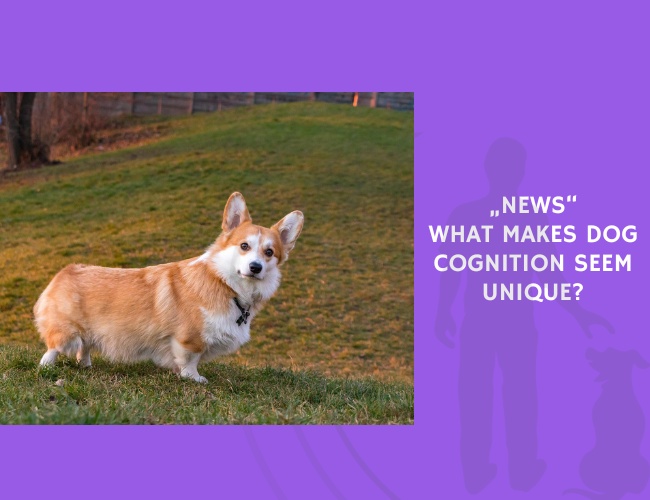
In this review, Clive Wynne evaluates three major domains often cited as evidence for exceptional canine cognition. The first concerns dogs’ well-known ability to follow human pointing gestures. Although dogs consistently succeed on pointing tasks, Wynne notes that several other species—including some non-domesticated animals—also perform well, suggesting this ability is not uniquely canine.
The second domain explores dogs’ capacity to distinguish between people who can see them and those who cannot. Studies in this area have produced mixed results. Wynne argues that successes and failures in these tasks are better explained by environmental and experiential factors—such as whether dogs live in enriched, human-oriented contexts—rather than species-specific cognitive specialization.
The third domain concerns dogs’ ability to selectively imitate another dog’s actions when the demonstrator appears to have a motive for acting suboptimally. These studies test whether dogs understand intention or perspective. Wynne finds that while dogs show some selective imitation, the evidence for advanced cognitive processing remains limited and context dependent.
Across these domains, Wynne concludes that there is little evidence for unique, human-like cognitive mechanisms in dogs. Instead, dogs share many cognitive abilities with other species, but centuries of living in close partnership with humans have fostered a remarkable sensitivity to human cues, actions, and social dynamics. This adaptation allows dogs to function exceptionally well in human environments without necessarily possessing specialized or uniquely evolved cognitive skills.
Source: Wynne, C. (2016). What Is Special About Dog Cognition? Published October 1, 2016.










