
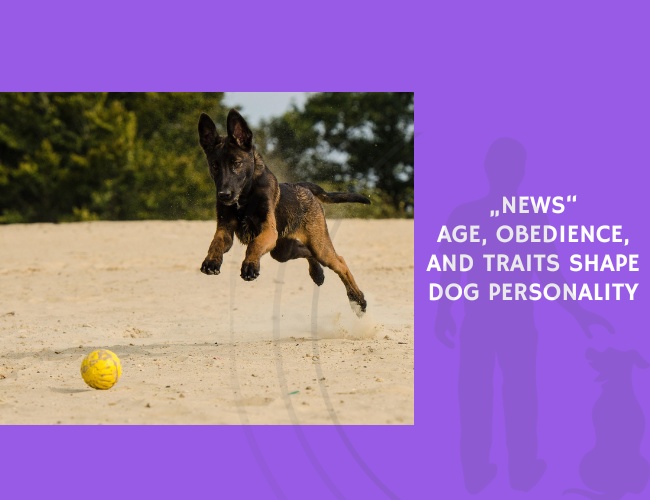
Published in Frontiers in Veterinary Science, the study by L. Wallis, Dóra Szabó, and Enikő Kubinyi assessed how age differences and demographic factors shape dog personality. The researchers analyzed data from 1,207 adult dogs in Hungary, categorized into six age groups, to explore how personality traits evolve across adulthood and into senior years.
The findings revealed clear age-related patterns. Activity and Excitability declined steadily with age, while Responsiveness to training decreased only in dogs above 12 years old. Aggressiveness toward animals followed a curved trajectory, peaking between ages 6 and 10. The largest behavioral shifts occurred between late senior and geriatric dogs, reflecting compensatory changes linked to biological aging and shifts in owner expectations.
When additional demographic factors were included, age was no longer a significant predictor of Responsiveness to training. Notably, time spent playing or interacting with the owner partially mediated the relationship between aging and trainability, suggesting that engagement-based interventions may help maintain training responsiveness in older dogs.
Across the broader model, 15 out of 28 demographic variables significantly influenced at least one personality factor. Dogs with a history of previous trauma showed higher levels of fearfulness and aggression, mirroring trends seen in humans. Meanwhile, higher basic obedience levels were linked to more desirable traits: lower fearfulness and aggression, and higher activity/excitability and responsiveness to training.
This work underscores how complex and multifactorial canine personality development is. Age, environment, training history, breed, lifestyle, and past experiences all shape individual behavioral trajectories. The authors emphasize that obedience and owner involvement meaningfully contribute to both personality assessment and the quality of the dog–owner relationship.
Source: Wallis, L., Szabó, D., & Kubinyi, E. (2020). Cross-Sectional Age Differences in Canine Personality Traits; Influence of Breed, Sex, Previous Trauma, and Dog Obedience Tasks. Frontiers in Veterinary Science. Published January 14, 2020.










