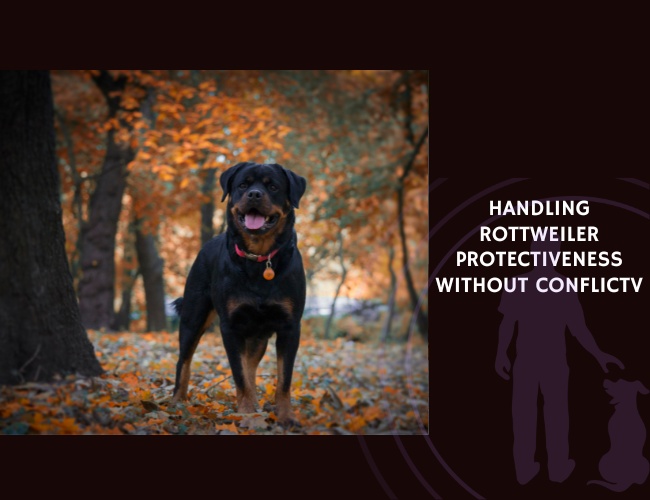
When you walk with your Rottweiler and notice that subtle shift in their posture as someone approaches, you’re witnessing generations of guardian heritage expressing itself through your companion’s body. That moment of heightened awareness, the way their gaze sharpens and their stance steadies, isn’t aggression waiting to happen. It’s something far more nuanced, far more intelligent than many traditional training approaches acknowledge. Your Rottweiler is evaluating, assessing, reading the environment with a sophistication that rivals any security professional.
But here’s what truly matters: the difference between calm, confident protection and reactive, anxiety-driven defensiveness often comes down to one thing—the emotional clarity and spatial leadership you provide in those precise moments. This isn’t about dominance. It’s not about suppression. It’s about understanding that your Rottweiler’s protective instinct is a gift that needs guidance, not control.
Let us guide you through a different approach to guardian stewardship, one that honors your dog’s heritage while building the kind of trust that transforms vigilance into partnership. Because when you understand what’s really happening beneath that watchful exterior, everything changes. 🧡
Guardian Heritage & the Architecture of Evaluation
Did you know that your Rottweiler’s ancestors didn’t just guard—they made complex decisions about movement, intent, and risk assessment every single day? As drovers moving cattle across Roman territories, they needed to read livestock behavior, anticipate bolting, manage spatial pressure without creating panic. As butchers’ companions and property guardians in medieval Rottweil, they developed an extraordinary capacity to differentiate between normal daily activity and genuine threat.
This historical context isn’t just interesting backstory. It’s the neurological foundation of how your dog processes the world right now, today, in your neighborhood.
Your Rottweiler inherited a brain optimized for pattern recognition and social evaluation. They notice when someone’s gait changes, when a voice carries tension, when spatial boundaries shift unexpectedly. While other breeds might respond to obvious threats, Rottweilers are constantly running background assessments—is this person’s intent clear? Is this spatial arrangement normal? Does this emotional energy match the context?
Understanding the Evaluation Process
When your Rottweiler stares at someone entering your home, they’re not being aggressive. They’re gathering data through multiple channels:
- Gait analysis: Does this person move confidently or hesitantly? Are their steps purposeful or uncertain?
- Spatial intention: Are they respecting boundaries or pushing forward into protected space?
- Emotional resonance: Does their energy match their stated purpose? Is there congruence between words and body language?
- Handler response: How is my human reacting to this situation? Are they calm or tense?
- Scent information: What chemical signals is this person broadcasting? Stress hormones? Confidence markers?
- Vocal quality: Is their voice steady or strained? Friendly or aggressive in tone?
This sophisticated processing happens in seconds, often before you’ve consciously registered anything unusual. Your dog’s amygdala is firing, their prefrontal cortex is comparing current input against stored patterns, and their whole system is asking one fundamental question: “Is this situation predictable and safe, or do I need to intervene?”
The Neural Wiring Behind Protection
Here’s where many people misunderstand their Rottweiler’s nature. They assume protectiveness comes primarily from loyalty—a desire to please and defend their beloved human. While loyalty certainly plays a role, the deeper driver is neurological optimization for detecting ambiguity, intrusion, and unregulated intent.
Think of it this way: your Rottweiler’s brain is wired with exceptionally sensitive threat-detection circuitry. In evolutionary terms, a guardian dog that missed genuine threats didn’t pass on their genes. But a guardian dog that could identify subtle inconsistencies—a stranger who moved too purposefully toward the livestock pen, a person whose verbal friendliness didn’t match their tense body language—that dog ensured survival.
This creates what neuroscientists call a negativity bias. Your Rottweiler’s neural network is tuned to notice what’s wrong, what’s different, what doesn’t fit. When they encounter uncertainty—an unclear social signal, an ambiguous gesture, an unpredictable movement pattern—their system doesn’t default to “probably fine.” It defaults to “gather more information and prepare to respond.”
This aligns beautifully with Predictive Processing Theory. Your dog’s brain is constantly generating predictions about what will happen next based on past experience. In an unclear environment, those predictions tend toward worst-case scenarios. Not because your dog is anxious by nature, but because their guardian heritage favored caution over complacency.
Protection, Possession, and the Subtle Face of Insecurity
You might notice something fascinating once you start observing carefully: not all protective behavior looks the same. A Rottweiler calmly positioning themselves between you and a stranger, maintaining soft eye contact, breathing normally, responsive to your cues—this is confident guardianship. A Rottweiler with a tight mouth, frozen posture, dilated pupils, and shallow breathing displaying the exact same positioning—this is fear-based defensiveness wearing the mask of protection.
Learning to differentiate these states is perhaps the single most important skill in guardian stewardship. Because the intervention that helps confident protection (acknowledgment and gentle guidance) will backfire spectacularly with insecurity-driven defensiveness (which needs distance, decompression, and emotional support).
True Protective Behavior: What It Looks Like
When your Rottweiler is operating from genuine protective assessment rather than anxiety, you’ll observe these key indicators:
- Measured responses: Their reaction matches the level of perceived threat. A distant passerby gets a glance; someone approaching the door gets alert attention. The response is proportional.
- Handler responsiveness: You can redirect their attention. They check in with you, looking for information about how you’re interpreting the situation. Your voice reaches them.
- Physical softness in tension: Yes, they’re vigilant, but their muscles aren’t locked. Their jaw is relaxed between vocalizations. Their tail might be low but it’s not rigidly tucked.
- Spatial confidence: They position themselves strategically but they’re not crowding you, hiding behind you, or pushing into your space out of their own need for reassurance.
- Calm vigilance: Their eyes are alert but not hard. They’re gathering information, not fixated in a stress-locked stare.
- Recovery capacity: Once the trigger passes or you provide guidance, they can settle relatively quickly. They’re not stuck in prolonged arousal.
- Contextual appropriateness: Their protective display makes sense for the situation. They’re more alert at night or in unfamiliar places, more relaxed in familiar, safe contexts.
Fear-Based Defensiveness: The Insecurity Signals
Contrast that with a dog operating from insecurity. You might see these warning signs:
- Explosive reactions: A person walking by fifty feet away triggers the same intensity as someone reaching toward you. The response is disproportionate to the actual threat level.
- Inability to disengage: Your voice, your touch, your redirections bounce off them. They’re locked into the perceived threat, unable to break focus.
- Physical stress indicators:
- Tight, closed mouth between vocalizations
- Frozen posture, holding their breath
- Slow, deliberate stepping that looks almost mechanical
- Eye-hardening—whale eye where you see the whites, fixed stare, dilated pupils
- Trembling or micro-shaking in the muscles
- Excessive panting when temperature doesn’t warrant it
- Sweaty paw prints on smooth surfaces
- Lowered body posture despite forward aggression
- Spatial insecurity: They might crowd you, push behind your legs, or conversely, rush forward beyond your position in a frantic attempt to “handle” the situation themselves.
- Post-event agitation: After the perceived threat passes, they remain aroused, unable to settle, scanning for the next problem. Recovery takes extensive time.
- Displacement behaviors: Sudden scratching, sniffing, lip-licking, or yawning in the middle of tense situations—signs their nervous system is overwhelmed.
Social Insecurity and Over-Attachment
Sometimes what appears as protectiveness is actually social anxiety expressing itself through guardian behaviors. A Rottweiler who lacks confidence in novel social situations might react to unfamiliar people not because they’re protecting you, but because the unfamiliarity itself is overwhelming.
Signs of Social Insecurity:
- Inconsistent reactivity: Your dog is fine with some strangers but reactive with others, without clear pattern to who triggers concern
- Quick de-escalation: Their “protective” display dissipates the moment the stranger moves away or stops paying attention
- Avoidance mixed with display: They bark intensely but back away simultaneously, showing the conflict between defensive display and desire to escape
- Generalized novelty fear: New people, new places, new objects all trigger similar anxiety responses
- Lack of recovery: Even after the trigger is gone, they remain nervous and hypervigilant
Signs of Over-Attachment:
- Context-dependent protectiveness: Someone approaching you triggers behavior, but someone approaching the house when you’re not present doesn’t
- Resource-guarding behaviors toward you: Tension when others seek your attention or physical proximity
- Separation distress: Excessive anxiety when you leave, attempts to prevent your departure
- Proximity-seeking during protective displays: They position close to you not for strategic advantage but for their own emotional security
- Handler-focus over threat-focus: They spend more time checking on you than monitoring the actual perceived threat
The Leadership Void and Emotional Responsibility
Here’s a truth that might surprise you: your Rottweiler sometimes steps into protective overdrive not because of what’s happening around them, but because of what’s missing in their sense of leadership security.
Physical presence and emotional presence are not the same thing. You can be standing right beside your dog while being emotionally absent—distracted by your phone, preoccupied with worries, anxious about the approaching stranger, uncertain about how to handle the situation. Your Rottweiler perceives this emotional vacancy acutely.
Guardian breeds are exceptionally attuned to their human’s emotional state. They don’t just see what you do; they feel what you feel. When you’re emotionally grounded, calm, and clear in your intention, your dog receives constant information: “I’ve got this. I’m aware. I’m confident. You can relax.”
When you’re emotionally scattered, anxious, or uncertain, your dog receives very different information: “There’s no clear leadership here. The situation is unmanaged. I need to step up.”
This creates what we might call the guardian paradox. The more uncertain you feel about your dog’s protective behavior, the more protective they become. Your anxiety about their protectiveness actually fuels the very behavior you’re trying to reduce.
Stress Indicators as Windows into Emotional State
Those micro-signals we mentioned—the tight mouth, the frozen posture, the slow stepping, the eye-hardening—these aren’t just interesting observational data. They’re your dog’s emotional state made visible.
Decoding the Physical Signals:
- Tight mouth: The lips are pulled back slightly and the whole muzzle appears tense. This indicates your dog is holding stress in their jaw, often accompanied by shallow breathing because a tense jaw restricts full respiratory movement.
- Frozen posture: Your dog has essentially pressed pause on their physical being. They’re holding their breath, suspending movement, existing in a state of heightened readiness. This isn’t the calm stillness of confident observation—this is the paralysis that comes from overwhelming uncertainty about how to respond.
- Slow stepping: That deliberate, almost mechanical gait where each foot placement looks calculated. This signals a dog trying to appear larger, more formidable, while simultaneously buying themselves time to assess. It’s a display behavior born from insecurity.
- Eye-hardening: When your Rottweiler’s eyes go from soft and observant to hard and fixed, when the whites become visible (whale eye), when their gaze locks onto something with intensity that doesn’t waver even when you speak. This reveals a nervous system flooded with stress hormones.
- Lip-licking or tongue flicks: Rapid, repeated licking of the lips or quick tongue flicks signal discomfort and attempts at self-soothing.
- Yawning: In tense contexts, yawning isn’t tiredness—it’s a displacement behavior indicating stress or an attempt to calm themselves.
- Lowered body with forward head: The contradictory posture of wanting to retreat (lowered body) while also confronting (forward head). This conflict reveals deep ambivalence and insecurity.
When these physical indicators accompany protective displays, you’re witnessing insecurity disguised as guardianship. Through the NeuroBond approach, you learn to read these signals early, before they escalate into reactive behavior. 🧠
Human Influence and the Power of Emotional Contagion
Your emotional state doesn’t just influence your Rottweiler—it actively shapes their perception of reality. This phenomenon, called emotional contagion, operates through multiple channels simultaneously:
How Your Dog Reads Your Emotional State:
- Heart rate monitoring: Your dog can detect your heart rate increasing through proximity, touch, and possibly even sound. An elevated heart rate signals arousal or stress.
- Breathing pattern analysis: Shallow, rapid breathing versus deep, slow breathing provides constant information about your emotional state. Your dog synchronizes with your respiratory rhythm.
- Muscle tension reading: Dogs are extraordinarily sensitive to muscle tension. They feel it through the leash, through your touch, through the way you move. Tense shoulders, tight jaw, rigid posture—all broadcast stress.
- Vocal tone interpretation: It’s not what you say but how you say it. Pitch, rhythm, volume, and vocal quality carry emotional content that your dog processes instantly.
- Movement quality assessment: How you walk, how you turn, how you position yourself—the fluidity or rigidity of your movement speaks volumes about your internal state.
- Biochemical scent changes: Your stress hormones (cortisol, adrenaline) change your scent profile. Your dog literally smells your emotional state through these chemical signals.
- Eye contact patterns: Whether you maintain soft, confident eye contact or exhibit darting, anxious glances provides social information your dog interprets.
Dogs evolved alongside humans for thousands of years, and part of that co-evolution involved developing exquisite sensitivity to human emotional signals.
When Your Tension Amplifies Their Duty
Imagine this common scenario: you’re walking your Rottweiler and you see someone approaching. You know your dog sometimes reacts to strangers. Immediately, your body responds—your heart rate increases, your shoulders tense, your breathing shallows, your grip on the leash tightens. You might even subtly pull your dog closer or change your walking path.
From your Rottweiler’s perspective, they’ve just received a cascade of information: “My human’s stress hormones just spiked. Their body language changed. Their breathing is different. They altered our path. Conclusion: there must be something genuinely concerning about this approaching person.”
Your tension doesn’t calm your dog’s concern—it validates it. It’s as if you’ve just confirmed the threat assessment they were beginning to make. You’ve essentially said, “Yes, you’re right to be worried. I’m worried too.”
This creates a feedback loop. Your anxiety about your dog’s potential reaction makes them more likely to react. Their reaction increases your anxiety. Your increased anxiety makes their next reaction more likely. And so on.
The Paradox of Over-Reassurance
Many well-intentioned handlers try to calm their protective Rottweiler with verbal reassurance. “It’s okay, buddy. Don’t worry. It’s fine. Everything’s fine.” This seems logical—you’re trying to communicate safety and reduce their concern.
But here’s what your dog actually hears: the words themselves mean nothing without context. What they’re reading is your vocal tone (often high-pitched, which signals distress in the animal kingdom), your tense body language, your repeated reassurance (which, ironically, emphasizes that there’s something that needs reassuring about).
From their perspective, if everything truly was fine, you wouldn’t need to keep saying so. Your repeated assurances while exhibiting anxious body language essentially confirms: “Yes, there’s a problem here. I’m trying to manage my own anxiety about it. You’re right to be concerned.”
Over-reassurance can actually increase arousal rather than decrease it. Each “it’s okay” becomes another signal that okayness is in question.
What Actually Works: Calm, Spatially Clear Leadership
The alternative isn’t to ignore your dog or pretend nothing is happening. It’s to provide what they’re actually seeking: confident, clear, grounded leadership.
Components of Effective Leadership:
- Genuine nervous system regulation: Maintaining your own calm emotional state—not faking calm while feeling anxious inside. Dogs see through that instantly. Actually finding your center, grounding yourself, breathing fully and deeply.
- Clear spatial navigation: Using body position, movement direction, and your spatial relationship to your dog to guide without confronting. Your positioning communicates your intentions and assessments.
- Consistent trajectory: When you confidently maintain your path, keep your shoulders relaxed, your breathing steady, you’re signaling: “I see what you see. I’ve assessed it. We’re continuing as planned.”
- Purposeful presence: Being fully present in the moment rather than distracted or mentally elsewhere. Your dog needs your engaged awareness, not your physical proximity alone.
- Boundary establishment through position: You don’t need to physically block or push your dog. Your body position, your energy, your directional clarity creates a spatial map that guides their positioning naturally.
- Calm acknowledgment: Recognizing your dog’s alerts without drama or anxiety. A simple “I see it” in a matter-of-fact tone validates their observation without amplifying concern.
- Follow-through: Your actions matching your energy. If you project calm but then act anxious, your dog notices the incongruence and trusts the anxiety signal over the calm facade.
Spatial Regulation and the Geography of Protection
Your Rottweiler doesn’t just protect you—they protect space itself. Understanding spatial regulation is essential because most protective incidents happen at these exact locations. Your dog isn’t randomly reactive. They’re heightened in specific spatial contexts that their guardian heritage has coded as high-priority areas.
Critical Spatial Zones Your Rottweiler Monitors:
- Doorways and entrances: Funnel points where unknown elements can enter protected space with minimal warning. Your dog’s nervous system is primed to pay special attention to these locations.
- Gates and property boundaries: The perimeter of territory—where “ours” meets “theirs.” These transition zones carry heightened significance for guardian breeds.
- Thresholds between rooms: Internal boundaries within the home that define different functional spaces. Your dog may be relaxed in the living room but alert in hallways or near bedroom doors.
- Vehicle spaces: Cars represent mobile territory. The interior of your vehicle, the area immediately around it, and entry/exit points all trigger protective assessment.
- Proximity zones around you: Your dog maps space around your body in concentric zones. Immediate proximity (within touching distance) is highest priority. Middle distance (a few feet) is moderate priority. Far distance may barely register.
- Elevated positions: Stairs, porches, decks—anywhere that provides tactical advantage for observation. These positions naturally draw guardian attention.
- Narrow passages: Hallways, tight sidewalks, confined spaces that eliminate spatial options and force close proximity to potential triggers.
- Windows overlooking approaches: Visual access points where your dog can monitor approaching people or animals before they reach the actual threshold.
Doorways and Thresholds: The Primary Hotspots
Think about doorways from your Rottweiler’s perspective. A doorway is a funnel point where unknown elements can enter protected space with minimal warning. In historical guardian work, doors and gates were the primary breach points—the places where threat most commonly materialized.
Your dog’s nervous system is primed to pay special attention to these locations. Heart rate increases. Sensory processing sharpens. Readiness heightens. This is completely normal and, in fact, functional. The challenge arises when this heightened awareness tips into anxious reactivity rather than calm vigilance.
You might notice your Rottweiler is perfectly relaxed in the living room but transforms the moment someone approaches the front door. This isn’t inconsistency—it’s spatial specificity.
Proximity Zones and Personal Space
Your Rottweiler also maps space around your body in concentric zones. Immediate proximity (within touching distance) is the highest protection priority. Middle distance (a few feet away) is moderate priority. Far distance might barely register.
This explains why your dog might be fine with someone across the room but reactive when that same person approaches you. The person didn’t change—the spatial relationship changed.
Understanding this helps you anticipate when your dog will feel compelled to intervene. It’s not about the person or the context in isolation. It’s about the spatial dynamic.
Hallways, Narrow Passages, and Forced Proximity
Narrow spaces create particularly high arousal because they eliminate spatial options. In a hallway, your Rottweiler can’t easily position themselves at their preferred distance from a approaching person. They can’t create space. They can’t maneuver. This forced proximity triggers heightened stress.
You might have a dog who seems fine with strangers in open spaces but becomes reactive in narrow hallways or tight sidewalks. Again, this isn’t inconsistency—it’s spatial literacy.
Directional Guidance vs. Physical Blocking
Here’s where traditional training approaches often fail spectacularly with guardian breeds: they use physical blocking, leash tension, and direct confrontation to manage spatial behavior. “No, you can’t go there. Stay back. Leave it.”
Why Physical Blocking and Leash Tension Backfire:
- Perceived as challenge: For a Rottweiler, physical blocking—using your body to push them back or physically restraining them—can be perceived as a confrontation or challenge to their protective assessment.
- Confirms threat: Strong physical intervention can actually confirm that the situation is indeed threatening enough that forceful measures are needed. Your intensity validates their concern.
- Creates discomfort: Leash tension creates physical discomfort and restriction, which increases rather than decreases arousal.
- Limits coping mechanisms: Tight leash prevents your dog from using distance as a stress management tool. They can’t move to a more comfortable position.
- Broadcasts your tension: That tight leash is a direct transmission cable for your anxiety. Your dog feels every bit of tension in your grip.
- Triggers opposition reflex: Many dogs instinctively pull against pressure. Leash tension can trigger this reflex, causing them to push forward more intensely.
- Prevents natural communication: A tight leash restricts your dog’s ability to use body language and positioning to communicate non-threatening intent to other dogs or people.
- Reinforces negative associations: The discomfort of correction becomes associated with the approaching person or dog, deepening the negative perception rather than reducing it.
Instead, directional guidance works with your Rottweiler’s spatial intelligence. You use subtle body position shifts, calm movement in a clear direction, and spatial clarity to guide where they position themselves. You’re not blocking—you’re leading.
For example, as someone approaches at a doorway, rather than pulling your dog back or physically blocking them, you might calmly step to the side, creating a clear spatial pathway that positions you slightly between your dog and the door, while giving your dog room to observe from a less intense angle. Your calm repositioning communicates: “I’ve got the threshold. You can observe from here.”
The Invisible Leash concept becomes literal here—you’re guiding through presence and clarity rather than through physical force. Your Rottweiler learns to read your spatial positioning as leadership information, not confrontation.
Calm. Clear. Trusted.
Protectiveness is perception. Your Rottweiler isn’t reacting to threat—they’re reading uncertainty. Their body pauses, not to resist, but to understand.
Guidance lowers vigilance. When your presence is grounded and clear, their evaluation settles. Leadership isn’t pressure—it’s emotional structure.
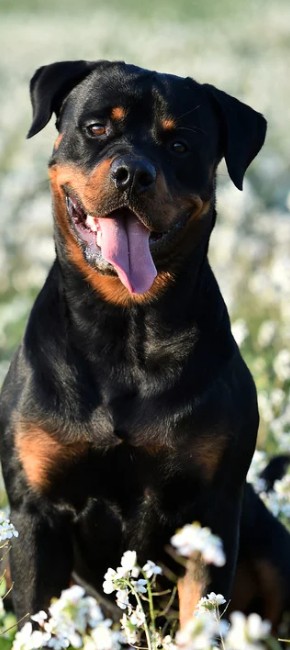

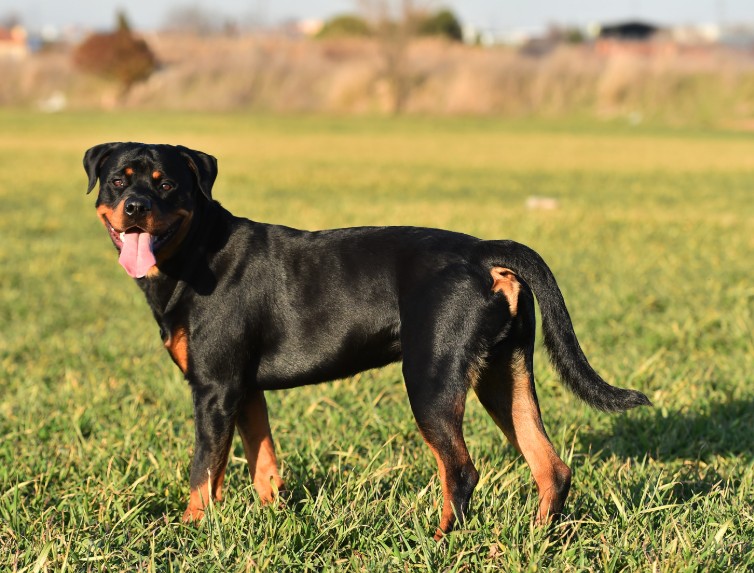
Safety is a shared signal. When you model calm recognition rather than correction, protectiveness becomes partnership—calm, measured, and wise.
Early Recognition: Reading the Pre-Escalation Signals
Most reactive incidents are preventable if you learn to recognize arousal in its early stages. By the time your Rottweiler is barking, lunging, or displaying obvious protective behavior, they’re already several steps into emotional escalation. But before that explosive moment, there were subtle signals—micro-communications that their nervous system was beginning to amp up.
The Escalation Ladder: Eight Critical Steps
- Environmental scan: Your dog’s head turns toward something. Their ears perk or orient toward the stimulus. They’ve noticed something that warrants attention. This is normal awareness, not yet concern.
- Sustained attention: Rather than glancing and moving on, they continue to focus. Their body stills slightly. They’re gathering more information about whatever caught their attention. Gaze locks on the trigger.
- Body tension: You might notice their neck muscles engage, their shoulders set slightly differently, their stance becomes more planted. Weight might shift slightly forward onto the front legs.
- Breathing changes: Their breath rate might increase, or conversely, they might hold their breath for a moment. Either signals arousal. You might see chest expansion or shallow panting beginning.
- Micro-signals emerge: The subtle indicators of rising stress:
- Mouth tension (lips pulled back slightly, jaw tight)
- Eye changes (pupils dilate, blink rate decreases, gaze hardens)
- Ear position shifts (might pin back or push intensely forward)
- Tail position changes (might rise, stiffen, or tuck depending on the emotional state)
- Whisker position forward and rigid
- Weight shift and postural change: They might rock forward onto their front legs, preparing to move or react. Stance widens for stability. Body rises slightly taller.
- Vocalization threshold: This is the moment just before barking or growling begins. You might see them take a deeper breath, their chest expand, mouth opening slightly.
- Reactive display: Barking, lunging, growling—the explosive protective behavior most handlers recognize. Full stress response with minimal cognitive processing.
The Intervention Window
Here’s the critical insight: by the time you reach step 8, intervention becomes exponentially harder. Your dog’s nervous system is flooded with stress hormones. Their prefrontal cortex (the thinking brain) has largely gone offline. They’re operating from their limbic system—pure emotional response.
But at steps 2-5? You have a wide intervention window. Your dog is still capable of processing information, responding to cues, and making different choices.
Effective Early-Stage Interventions:
- Acknowledge what they’ve noticed: “I see it too” (spoken calmly, matter-of-factly, not with anxious over-reassurance). This validates their observation without amplifying concern.
- Provide information through your calm: Your steady breathing, relaxed shoulders, continued movement all communicate: “I’m aware of what you’re seeing, and my assessment is that we continue normally.”
- Offer gentle redirection: Not a harsh correction, but an invitation to refocus. This might be calling their name and continuing to walk calmly, offering a simple “with me” cue, or using subtle spatial guidance.
- Increase distance if possible: Creating more physical space between your dog and the trigger reduces pressure and allows them to observe from a less intense proximity.
- Change orientation: Turning slightly so you’re not heading directly toward the trigger, creating a curved approach rather than confrontational straight line.
- Engage their thinking brain: Ask for a simple, known behavior (sit, touch, look at you) that requires cognitive processing, helping shift them out of pure emotional response.
- Maintain loose leash: Keeping the leash relaxed prevents you from transmitting tension and allows your dog freedom of movement to self-regulate positioning.
Why Suppression Backfires
When handlers try to suppress protective behavior through harsh corrections, physical blocking, or leash jerks, they typically create one of three problematic outcomes:
Three Ways Suppression Damages the Relationship:
- Covert escalation: The dog becomes more covert in their protective signaling. They learn not to show the early warning signs, jumping straight from internal arousal to explosive reaction because the middle steps have been punished. You lose your window for early intervention.
- Increased anxiety: The dog’s anxiety increases because their communication is being shut down without the underlying concern being addressed. This is like telling someone “don’t be anxious” without addressing why they’re anxious—it typically increases anxiety and creates learned helplessness.
- Negative association transfer: The dog transfers the negative association to the trigger itself. “Every time I notice an approaching stranger and try to alert my human, I get punished. Therefore, strangers truly are threatening—they predict punishment.” The very thing you’re trying to reduce (concern about strangers) becomes reinforced.
🐕 Guardian Stewardship Journey 🛡️
Transforming Rottweiler Protectiveness from Reactive Defense to Calm Vigilance
Phase 1: Understanding Guardian Heritage
Recognizing Your Dog’s Neural Architecture
Evolutionary Wiring
Your Rottweiler inherited a brain optimized for pattern recognition and social evaluation. Their ancestors made complex decisions about movement, intent, and risk assessment daily as Roman drovers and medieval property guardians. This isn’t aggression—it’s sophisticated environmental processing.
What You’ll Observe
• Intense focus on approaching strangers
• Heightened awareness at doorways and thresholds
• Subtle body tension during social interactions
• Constant environmental scanning and assessment
Phase 2: Reading the Difference
True Protection vs. Fear-Based Defensiveness
Confident Protection Signs
• Measured responses proportional to threat level
• Soft eyes with alert awareness
• Responsive to your redirections
• Can settle quickly after trigger passes
• Relaxed jaw between vocalizations
Insecurity Warning Signs
• Frozen posture with held breath
• Whale eye (visible whites of eyes)
• Tight mouth and excessive panting
• Explosive reactions to minor triggers
• Inability to disengage or settle afterward
The Neuroscience Behind It
Protectiveness rooted in uncertainty triggers the FEAR system (evaluation) rather than immediate RAGE. When uncertainty remains unresolved while pressure builds, the nervous system tips toward crisis response. Your calm leadership resolves the neurological question: “Is this safe?”
Phase 3: Your Emotional Influence
Understanding Human-Dog Emotional Synchrony
How Your Dog Reads You
Your Rottweiler monitors your heart rate, breathing pattern, muscle tension, vocal tone, and biochemical scent changes simultaneously. When you tighten the leash as someone approaches, you broadcast: “Yes, there’s something to worry about here.” Your tension validates their concern.
The Over-Reassurance Trap
Repeated “it’s okay, don’t worry” in a high-pitched, anxious tone actually confirms threat rather than reduces it. Your dog reads your tense body language, not your words. If everything truly was fine, you wouldn’t need to keep saying so.
The NeuroBond Solution
Maintain genuine nervous system regulation—not performed calm. Deep diaphragmatic breathing, relaxed shoulders, confident trajectory. Your grounded presence communicates: “I see what you see. I’ve assessed it. We’re continuing as planned.” Through NeuroBond principles, your emotional clarity becomes their emotional security.
Phase 4: Geography of Protection
Managing Critical Spatial Zones
High-Priority Spatial Zones
• Doorways and entrances (funnel points for intrusion)
• Proximity zones around your body (concentric circles)
• Narrow passages (forced proximity triggers)
• Gates and property boundaries
• Vehicle spaces and windows
• Elevated observation positions
Why Physical Blocking Fails
Physical restraint and leash tension confirm threat, create discomfort, limit natural coping mechanisms, and can trigger opposition reflex. For guardian breeds, force-based blocking is perceived as challenge or confirmation that strong measures are needed.
Directional Guidance Instead
Use subtle body position shifts, calm movement in clear directions, and spatial clarity. The Invisible Leash concept becomes literal—you guide through presence and clarity rather than physical force. Your positioning communicates leadership information, not confrontation.
Phase 5: Reading the Escalation Ladder
Intervening Before the Explosion
The 8-Step Escalation Pattern
1. Environmental scan (head turn, ear perk)
2. Sustained attention (gaze locks)
3. Body tension (muscle engagement)
4. Breathing changes (rate increases or breath-holding)
5. Micro-signals (tight mouth, dilated pupils, whale eye)
6. Weight shift forward
7. Vocalization threshold (chest expansion)
8. Reactive display (barking, lunging)
Your Intervention Window
Steps 2-5 offer wide intervention opportunity. Acknowledge calmly (“I see it”), maintain loose leash, continue with confident trajectory, offer gentle redirection, increase distance if possible. At step 8, the thinking brain is offline—intervention becomes exponentially harder.
Why Suppression Creates Worse Problems
Harsh corrections teach dogs to hide warning signals and jump straight to explosion, increase underlying anxiety without addressing root causes, and create negative associations with triggers themselves. The behavior you suppress doesn’t disappear—it goes underground.
Phase 6: Building Predictable Structure
Reducing Overwhelm Through Clear Roles
Threshold Ritual Example
Doorbell rings → Dog to designated place → Handler greets visitor calmly → Visitor settles → Optional controlled introduction. This structure allows observation without direct engagement, reducing the cognitive load of independent decision-making.
Context-Specific Positioning
• Walks: Loose-leash heel position during approaches
• Vet clinic: Mat work in waiting room
• Vehicle: Designated cargo area spot
• Outdoor cafes: “Place” command beside your chair
• Each provides clarity without suppressing awareness
The Power of Acknowledgment
When your dog alerts, acknowledge it: “Thank you, I’ve got it.” This validates their observation without amplifying concern. Then demonstrate through your behavior that continued calm is appropriate. They learn to alert and defer—communication without independent action.
Phase 7: Your Personal Foundation
Cultivating Genuine Leadership Presence
Building Nervous System Regulation
• 4-7-8 breath work (inhale 4, hold 7, exhale 8)
• Body tension scanning and release
• Mindfulness practice for present-moment awareness
• Physical centering with grounded posture
• Pre-walk emotional preparation rituals
Directional Clarity Elements
Purposeful movement, clear body positioning, consistent pace, shoulder orientation as direction signal, soft eye focus versus hard stare. Your dog reads where your body is going before you verbalize anything. The Invisible Leash operates through this subtle guidance.
Emotional Grounding Practice
Your heart rate variability, biochemical signature, and energy quality constantly broadcast information. Dogs perceive the difference between performed calm (anxious inside) and genuine calm (regulated nervous system). Do your own emotional work first.
Phase 8: Tracking Progress
Recognizing Growth Through Trust Building
Signs of Positive Transformation
• Longer pauses before reactions
• Increased check-ins with you during triggers
• Softer body language during alerts
• Quicker recovery after arousal
• Better threat discrimination
• Ability to be redirected successfully
• Relaxation in previously difficult contexts
The Soul Recall Effect
Through consistent emotional experiences of your calm leadership, your dog builds emotional memory patterns. Soul Recall principles show that repeated experiences of trust and successful outcomes create deep relational bonding that transcends individual training sessions.
When to Seek Professional Support
Bite incidents, escalating behavior despite consistent work, severe stress indicators, handler safety concerns, or intra-household aggression all require professional assessment. Look for IAABC or CCPDT certified trainers who specialize in guardian breeds and use force-free methods.
📊 Approach Comparisons: What Works vs. What Fails
Force-Based Control
Traditional: Leash jerks, physical blocking, harsh corrections suppress behavior through intimidation.
Result: Increased anxiety, covert escalation, damaged trust, dog learns to hide warning signals before explosion.
NeuroBond Stewardship
Approach: Calm presence, directional guidance, emotional grounding, acknowledgment without amplification.
Result: Trust building, confident non-reactivity, preserved protective instinct within calm framework, deeper bond.
Reactive Management
Pattern: Wait until dog is explosive (step 8), then intervene with force or panic. No early-stage recognition.
Problem: Misses intervention window, addresses symptoms not causes, creates feedback loop of increasing reactivity.
Proactive Early Intervention
Timing: Recognize steps 2-5 (sustained attention, body tension, breathing changes) and intervene with calm guidance.
Benefit: Prevents escalation, teaches alternative responses, maintains thinking brain online, builds trust.
Permissive Avoidance
Style: Avoid all triggers, never expose dog to challenging situations, keep them isolated from normal life experiences.
Outcome: Increasing fear sensitivity, narrowing world, dog never learns to trust handler’s leadership in uncertainty.
Graduated Exposure with Support
Method: Thoughtful exposure at sub-threshold levels with calm handler presence, building positive experiences gradually.
Growth: Expanding comfort zone, building confidence through successful encounters, learning handler is reliable guide.
⚡ Quick Reference Formula
Calm Guardian Formula:
Your Regulated Nervous System + Clear Spatial Guidance + Early Intervention (Steps 2-5) + Structured Roles + Acknowledgment without Amplification = Confident Non-Reactive Guardian
The Three-Second Reset:
Dog alerts → Deep breath → Shoulders down → Calm acknowledgment → Continue with confidence
Intervention Window Math:
Steps 2-5 = 80% success rate | Steps 6-7 = 40% success rate | Step 8 = 10% success rate
🧡 The Zoeta Dogsoul Integration
Your Rottweiler’s protectiveness isn’t a flaw to fix—it’s guardian heritage to guide. Through the NeuroBond approach, you honor their evolutionary wiring while building emotional clarity that transforms vigilance into partnership. The Invisible Leash operates not through force but through your calm presence, directional clarity, and emotional grounding—leadership so clear your dog can relax their intense vigilance because they trust your assessment. Each successful encounter builds Soul Recall, embedding emotional memory patterns that transcend individual training sessions, creating deep relational bonding where protection becomes shared responsibility rather than anxious burden.
This is guardian stewardship at its essence—where ancient protective instinct meets modern emotional intelligence, where the science of nervous system regulation meets the soul of human-canine partnership, and where your Rottweiler’s gift of vigilance becomes not a liability to suppress but a strength to celebrate within the framework of mutual trust.
© Zoeta Dogsoul – Where neuroscience meets soul in dog training
Redirecting Without Suppressing the Instinct
The goal isn’t to eliminate your Rottweiler’s protective nature. That instinct is part of who they are, part of their heritage, part of what makes them the remarkable companions they are. The goal is to shape that instinct into calm, confident vigilance rather than anxious, reactive confrontation.
This requires a fundamental mindset shift: you’re not trying to remove your dog’s protective capacity. You’re trying to become the person worthy of their trust in your own leadership. When your Rottweiler genuinely trusts your assessment and guidance, they can maintain their awareness while deferring to your judgment about when intervention is actually needed.
Structured Presence and Role Clarity
One of the most effective approaches is giving your Rottweiler a clear, structured role. When they understand their job, the cognitive load of constant assessment and independent decision-making decreases dramatically.
Example: Structured Visitor Arrival Ritual
- Pre-arrival preparation: Before the doorbell even rings, establish your dog’s position. This might mean guiding them to their designated mat or space before you expect the visitor.
- Doorbell response: Doorbell rings—your dog goes to (or remains at) their designated “place” (a mat, a crate, a specific room position). Practice this repeatedly with mock doorbells when no one is actually arriving.
- Observation position: They remain in that place while you greet the visitor. This position allows them to observe (fulfilling their need to monitor) without directly engaging. They’re still involved, still aware, but within a clear structure.
- Handler manages threshold: You open the door calmly, greet the visitor, establish initial conversation. Your dog observes that you’re competently handling the social interaction.
- Visitor settles: The visitor enters and moves to a sitting position, reducing the dynamic movement and spatial pressure.
- Release and controlled introduction: Once the visitor is settled and you’ve established the initial social dynamic, you might release your dog for a calm, guided introduction—or you might have them remain in place if arousal is too high.
- Ongoing monitoring: Throughout the visit, your dog can observe from their position, periodically checking in but not continuously engaging or hovering.
This structure doesn’t suppress your dog’s protective awareness. They’re still monitoring. They still know what’s happening. But they have a clear framework for how to participate, which reduces the overwhelm that often drives reactive behavior.
Calm Positioning as Functional Involvement
Similar structures work in various contexts. Each provides your dog with a role that acknowledges their awareness while preventing overwhelmed, independent decision-making.
Context-Specific Positioning Strategies:
- During walks: Your dog learns to walk at your left side in a loose-leash heel position, maintaining calm presence while you handle social interactions with approaching people or dogs.
- At the veterinary clinic: Establish them on a mat in the waiting room rather than standing vigilantly between you and other animals. This defined space reduces their perceived responsibility to monitor everything.
- In your vehicle: Designate a specific spot (back seat, cargo area) rather than allowing them to patrol between windows or hover between front seats monitoring approaches.
- At outdoor cafes: Practice “place” on a mat beside your chair, teaching them to settle and observe rather than standing alert throughout the entire meal.
- During family gatherings: Create a quiet space where they can retreat and observe from a distance rather than being in the middle of chaotic social interactions.
- At training classes: Use a mat or defined position during instruction portions, teaching them to observe and wait rather than constantly engaging with every dog or person present.
- During doorway transitions: Establish a brief pause and wait before moving through any threshold—doors, gates, entries—creating predictable ritual rather than rushed passages.
Each of these structures acknowledges your dog’s awareness and involvement while providing clear parameters that prevent overwhelm and reactive decision-making.
Acknowledging Alert Without Escalation
When your Rottweiler alerts to something—a noise, a person, an unexpected event—immediate suppression (“quiet,” “no,” “leave it”) can feel invalidating and increase frustration. Instead, acknowledgment followed by calm guidance respects their communication while establishing your leadership.
This might sound like: “Thank you, I’ve got it” or simply “I see it” in a matter-of-fact tone. You’re not praising the alert (which could reinforce repeated alerting). You’re also not punishing it (which could create covert escalation). You’re acknowledging that you’ve received the information they’re providing.
Then—and this is crucial—you demonstrate through your behavior that you’ve assessed the situation and determined continued calm is appropriate. You don’t just tell them; you show them through your own regulated nervous system and continued activity.
This builds what we might call “alert and defer” behavior. Your dog learns they can notice things, they can communicate those observations to you, and then they can trust you to handle the assessment and response. Their job is awareness and communication. Your job is evaluation and leadership. Through the principles of Soul Recall, this dynamic becomes embedded in your dog’s emotional memory, creating a pattern of trust and deference. 🧡
NeuroBond-Based Guardian Stewardship
The traditional model of guardian dog management often centers on control: control the dog’s movement, control their reactions, control their protective displays through force or suppression. The NeuroBond approach offers something entirely different—partnership through emotional clarity and relational trust.
This isn’t permissive or passive. It’s actively engaged leadership that works with your Rottweiler’s neurology, their heritage, and their emotional needs rather than against them.
Calm Presence as Foundation
Everything begins with your capacity to maintain genuine calm in situations that trigger your dog’s protective instincts. Not performed calm. Not fake-it-till-you-make-it calm. Actual nervous system regulation on your part.
This means doing your own work. If you feel anxious about your dog’s protectiveness, that anxiety will leak into every interaction. Your Rottweiler will feel it, and it will validate their concern that protection is indeed needed.
Developing Genuine Calm Presence:
- Breath work practice: Learn to maintain deep, diaphragmatic breathing even when your dog is beginning to alert. Your breath pattern directly influences your dog’s nervous system regulation. Practice 4-7-8 breathing (inhale for 4, hold for 7, exhale for 8).
- Body awareness scanning: Notice and release tension in your shoulders, jaw, hands, and legs. Dogs read muscle tension with extraordinary accuracy. Regular body scans help you identify where you hold stress.
- Emotional grounding techniques: Cultivate the internal sense that you can handle whatever situation arises. This isn’t arrogance—it’s quiet confidence born from preparation and practice.
- Mindfulness practice: Develop the ability to stay present in the moment rather than catastrophizing about what might happen. Your dog feels the difference between present calm and anxious future-thinking.
- Physical centering: Practice standing or walking with your weight evenly distributed, your core engaged, your posture open. Physical centeredness supports emotional groundedness.
- Pre-walk preparation: Take a few minutes before walks to center yourself emotionally and set intention for calm, confident leadership.
- Recovery practices: Develop personal stress-management techniques for after challenging encounters, preventing accumulated tension from affecting future interactions.
Directional Clarity Through Body Language
Your body speaks louder than your voice to your Rottweiler. The way you move, where you position yourself, how you orient in space—these provide constant information about your intent and assessment.
Elements of Clear Directional Leadership:
- Purposeful movement: Your gait, your trajectory, your spatial navigation all communicate certainty. When you know where you’re going and move there with relaxed confidence, your dog can follow that clarity without questioning.
- Body positioning as guidance: Rather than verbally commanding or physically forcing, you position yourself in ways that naturally guide your dog’s positioning. If you want your dog to move right, you calmly move right, creating the spatial pattern they follow.
- Clear spatial relationships: Your dog reads your position relative to them, to thresholds, to approaching people. By maintaining spatial clarity—knowing where you are and where you intend to be—you provide an anchor for their own positioning.
- Shoulder orientation: Where your shoulders point indicates your direction and focus. Dogs are incredibly attuned to shoulder position as a communication signal.
- Eye focus: Where you look and how you look (soft gaze vs. hard stare) communicates your assessment of situations and guides your dog’s attention.
- Movement quality: Fluid, confident movement versus hesitant, jerky movement tells your dog whether you’re certain about your path or uncertain about the situation.
- Pace consistency: Maintaining steady pace rather than speeding up nervously or slowing down uncertainly provides rhythmic predictability your dog can synchronize with.
Emotional Grounding as Communication
Your emotional state is constantly broadcasting information. When you’re emotionally grounded—centered, present, stable—your dog receives a steady stream of data that everything is manageable.
Emotional grounding manifests through:
Heart rate variability: A calm, regulated heartbeat communicates safety. Your dog can literally feel this through your proximity and scent.
Biochemical signature: Your stress hormones (or lack thereof) change your scent profile. Your dog knows whether you’re anxious, confident, fearful, or calm based on what they smell.
Energy quality: This is harder to quantify but real nonetheless. The quality of attention you bring—scattered versus focused, anxious versus assured—creates an energetic signature your dog perceives.
When these elements align—calm presence, directional clarity, emotional grounding—you create what we call the Invisible Leash. Your dog follows your lead not because they’re forced to, but because your leadership is clear, trustworthy, and emotionally resonant.
Threshold Rituals and Spatial Ceremony
Doorways, gates, thresholds—these are the high-intensity zones where most protective incidents occur. Rather than addressing each instance reactively, structured threshold rituals provide consistent frameworks that reduce tension and establish clear leadership.
Components of Effective Threshold Rituals:
- Anticipatory positioning: Before you even reach the threshold, establish your dog’s position and your own mental state. This preparation prevents reactive rushing.
- Pause before entry: Stop for a moment at the threshold. Take a breath. Let your dog notice that you’re approaching this space with awareness and intention, not rushing through mindlessly.
- Slow, deliberate movement: Reduce your walking speed as you approach and move through the threshold. This isn’t hesitation—it’s deliberate pacing that communicates calm control.
- Handler leads or coordinates: Your positioning and movement through the threshold guides your dog’s positioning. You move through first or together, depending on the specific ritual you’ve established and what works for your dog.
- Consistent sequence: The same ritual happens every time. Consistency builds predictability, which reduces anxiety and reactive potential.
- Emotional check-in: Before opening a door or gate, take a moment to check your own emotional state. Are you calm or anxious? Your state sets the template.
- Clear release or continuation: After passing through the threshold, there’s either a clear release (“okay”) or smooth continuation of movement, preventing confusion about when the ritual ends.
The Power of Slow Movement
Speed carries intent. Fast movement signals urgency, potential threat, excitement, or stress. Slow, deliberate movement communicates calm, control, and confidence.
When approaching a threshold (front door, gate, car door), practice intentional slow movement:
Pause before the threshold: Stop for a moment. Take a breath. Let your dog notice that you’re approaching this space with awareness and intention.
Slow your gait: As you move toward and through the threshold, reduce your walking speed. This isn’t hesitation—it’s deliberate pacing.
Guide with your body: Your positioning and movement through the threshold guides your dog’s positioning. You move through first or together, depending on the specific ritual you’ve established.
Emotional Pacing
Your emotional energy through threshold transitions sets the template for your dog’s emotional response.
Before opening a door to greet a visitor, take a moment to check your own state. Are you anxious about your dog’s potential reaction? That anxiety will prime them for reactivity. Are you rushed and frantic? That chaotic energy will escalate their arousal.
Instead, practice brief grounding: deep breath, shoulders back and down, center yourself emotionally. Then proceed.
Spatial Guidance Through Thresholds
Rather than letting your dog rush thresholds or blocking them forcefully, establish clear spatial patterns:
Door opens: You control the opening. Your dog learns that doors don’t fly open chaotically—you manage that boundary.
Position establishment: Before proceeding through, your dog settles into a calm position (sit, stand, down—whatever you’ve practiced). This creates a pause between arousal (door opening) and action (moving through).
Guided passage: You move through the threshold with clear directional leadership. Your dog follows your spatial cues.
These rituals don’t suppress your dog’s awareness that something significant is happening at the threshold. They provide structure that allows awareness without reactivity.
Consistency Builds Predictability
The power of threshold rituals emerges through consistency. When your dog experiences the same structured approach every time they encounter these high-arousal spaces, their nervous system learns: “This is predictable. My human has this. I don’t need to take charge.”
Predictability reduces anxiety. Anxiety reduction lowers reactive thresholds. Your dog can maintain their vigilant awareness while trusting your spatial management.
Sharing Responsibility, Building Trust
Perhaps the most profound shift in NeuroBond-based guardian stewardship is the concept of shared responsibility rather than total suppression or total independence.
Traditional approaches tend toward extremes: either the dog is completely shut down from any protective display, or the dog is allowed to make all protective decisions independently. Neither serves the relationship or the dog’s wellbeing.
Shared responsibility means:
Your Dog’s Role: Awareness and Alert
Your Rottweiler’s job is to notice, to be aware, to observe changes in the environment, and to communicate their observations to you. This honors their heritage and their natural capacity for environmental monitoring.
They’re allowed—even valued—for alerting you to unusual sounds, unexpected visitors, or changes in routine. A single woof when someone approaches the door isn’t a problem to eliminate. It’s your dog doing their job.
Your Role: Assessment and Leadership
Your job is to receive their alert, assess the situation from your broader human perspective, and guide the appropriate response. You’re not invalidating their observation. You’re taking their input and making the leadership decision about what happens next.
When your dog alerts to someone at the door, they’ve communicated: “Someone’s here. I’ve noticed. This is significant.” Your response—calm acknowledgment followed by confident handling of the situation—communicates: “Thank you for that information. I’ve got this from here.”
Why This Builds Trust
This dynamic builds profound trust because it honors both participants in the relationship. Your dog isn’t told their instincts are wrong or bad. They’re shown that their instincts are valued within a larger framework of your leadership.
Over time, your Rottweiler learns: “I don’t have to carry the entire burden of protection. I can notice, alert, and then trust my human to handle it.” This is emotionally liberating for a guardian breed.
The dog who feels solely responsible for protection is under constant stress. They can never fully relax because the weight of security rests entirely on them. When you demonstrate consistent, calm, competent leadership, you lift that burden.
Confident Non-Reactivity as the Goal
The ultimate expression of shared responsibility is what we call confident non-reactivity. Your Rottweiler maintains awareness, notices potential concerns, but doesn’t feel compelled to react intensely because they trust your assessment and leadership.
This isn’t suppression. A suppressed dog shows similar outward behavior (not reacting) but their internal state is high arousal being forcefully contained. You can see it in their body tension, their breathing, their stress indicators.
Confident non-reactivity looks entirely different. The dog is relaxed. They might glance at the approaching stranger, register the observation, glance at you, see your calm, and return their attention elsewhere. No suppressed tension. No forced compliance. Just trust. 🧠
The Neuroscience of Protection and Uncertainty
Understanding what’s happening in your Rottweiler’s brain during protective episodes helps you respond with precision rather than guessing.
The SEEKING and FEAR Systems
Healthy protective behavior operates within what neuroscientist Jaak Panksepp called the SEEKING system (curiosity, exploration, investigation) and the FEAR system (evaluation of potential threats, appropriate caution).
When your Rottweiler notices someone approaching, their SEEKING system activates: “What is this? Let me gather information.” Simultaneously, their FEAR system engages: “Is this potentially threatening? I should be cautious until I determine safety.”
This dual activation is completely normal and functional. Your dog is curious enough to investigate while cautious enough to remain safe. This is balanced guardian behavior.
When Systems Tip Into Reactivity
Problems arise when unmanaged uncertainty or environmental pressure pushes your dog out of balanced SEEKING/FEAR into either PANIC or RAGE systems.
The PANIC system activates when your dog feels overwhelmed, trapped, or unsupported. Signs include frantic energy, inability to settle, separation distress, or desperate attempts to escape the situation.
The RAGE system activates when threat appears imminent or when frustration builds to critical levels. This is where you see intense barking, lunging, aggressive displays.
The key insight: these escalations happen when uncertainty remains unresolved and pressure continues to build. Your dog’s brain is trying to resolve the question “Is this safe or threatening?” When that question remains unanswered while pressure (spatial proximity, continued approach, leash tension, handler anxiety) increases, the nervous system tips toward crisis response.
How Clarity Prevents Escalation
Your calm, clear leadership provides the resolution your dog’s brain seeks. When you demonstrate through your behavior that you’ve assessed the situation and determined it’s manageable, you’re essentially answering their neurological question: “This is safe enough that we continue normally.”
Your nervous system regulation becomes their nervous system regulation. This is biological synchrony—the reason why therapy dogs can calm anxious humans, why anxious owners have anxious dogs, and why calm, grounded handlers have calm, confident dogs.
Predictive Processing and Worst-Case Scenarios
Your Rottweiler’s brain is constantly predicting what will happen next based on past experiences. In uncertain situations, guardian breeds tend to generate worst-case predictions because, evolutionarily, this bias kept them safe.
When environmental signals are ambiguous—a stranger’s intent is unclear, a sound’s source is unknown, a person’s body language is mixed—your dog’s predictive processing fills in the gaps with threat-based assumptions.
You reduce this by providing clear information. Your calm tells them: “No worst-case scenario is unfolding.” Your continued normal activity tells them: “The prediction should be ‘normal interaction’ not ‘threat response.'” Your confident spatial navigation tells them: “I have assessed the pattern and determined our path.”
Building the Practice: From Concept to Daily Reality
Understanding these principles intellectually is valuable. Applying them consistently in daily life is where transformation happens. Let’s explore how this actually looks in practice.
Morning Walk Scenario
You’re walking your Rottweiler. Someone approaches on the sidewalk. You notice your dog’s attention shift toward the approaching person. This is your first decision point.
Old pattern: Tighten leash, feel anxiety spike, verbally reassure (“it’s okay, buddy”), try to distract or pull dog’s attention away.
New pattern: Maintain your breathing, keep loose leash, acknowledge internally that your dog has noticed (this is normal), continue walking with confident trajectory. If your dog’s attention remains fixed, calmly say “with me” while maintaining your path and calm energy. Your body language communicates: “I see what you see, and my assessment is we continue as planned.”
As you pass the person, maintain relaxed shoulders, normal breathing, friendly greeting to the stranger if appropriate. Your dog is reading every aspect of your response as data about how to interpret this encounter.
Visitor at the Door
Doorbell rings. Old pattern: Chaos. Dog rushes door barking. You’re yelling “no, down, quiet” while trying to physically restrain them. Visitor arrival becomes high-stress event.
New pattern: Doorbell rings. You’ve previously established a threshold ritual. Calmly say “place” and guide (don’t force) your dog to their designated mat or position. Take a breath. Ground yourself. Open door slowly, greeting visitor calmly. Your dog is observing from their place. Once initial greeting is complete and visitor is seated, you might release your dog for a calm, guided introduction, or you might have them remain in place depending on their arousal level and the visitor’s comfort.
Veterinary Clinic Visit
High-stress environment, other dogs, unfamiliar people, medical handling. Old pattern: Dog is tense throughout, possibly reactive toward other dogs, difficult for staff to examine, you’re anxious about managing the situation.
New pattern: Before entering, pause in parking lot. Practice calm breathing with your dog. Enter clinic moving slowly, with clear spatial guidance. Establish your dog on a mat or in a designated space in the waiting area. Maintain calm presence yourself—your emotional state is being broadcast to your dog constantly.
When called for examination, maintain loose leash, clear directional guidance. Communicate with staff about your approach: “We’re working on calm guardian behavior. I’ll guide positioning, and I appreciate slow, clear movements.” Your advocacy for your dog while maintaining calm leadership shows them you’re managing the situation.
Home Alone Behavior
Protectiveness when you’re absent often differs from protectiveness when you’re present. This reveals important information about whether your dog’s behavior is truly protective versus anxious/insecure.
If your dog is intensely protective when you’re home but calm when you’re absent, their behavior is more about protecting you (or protecting access to you) than about territorial guarding.
If they’re equally protective whether you’re home or not, their behavior is more territorially based.
For separation-related protectiveness, addressing the underlying anxiety about your absence is crucial alongside guardian stewardship work.
When Professional Support Becomes Necessary
Some protective behaviors require professional intervention from trainers or veterinary behaviorists who understand guardian breeds and force-free, relationship-based approaches.
Clear Indicators You Need Professional Help:
- Biting or bite attempts: Your dog has bitten or attempted to bite without clear provocation or adequate warning signals. This suggests either high arousal, poor bite inhibition, or significant underlying fear/aggression that needs expert assessment.
- Escalating behavior: Protective behavior is escalating despite your consistent application of these principles over several weeks. Escalation might indicate underlying anxiety disorders, trauma history, or neurological issues requiring veterinary behavioral consultation.
- Severe stress indicators: Your dog shows intense stress indicators (prolonged panting, trembling, inability to settle for hours, stress colitis, excessive shedding, self-mutilation) related to protective situations. This level of stress impacts quality of life and needs professional support.
- Handler safety concerns: You feel unsafe or unable to manage your dog in public settings. Your own safety and confidence matter enormously. If you’re afraid of your dog’s behavior, seek help immediately.
- Intra-household aggression: Your dog displays protective aggression toward you or household members. Resource guarding of space or objects directed at family requires immediate professional assessment.
- Inability to settle: Your dog cannot relax even in familiar, safe environments. Constant vigilance and inability to “turn off” guardian mode indicates problematic stress levels.
- Generalized fear: Protective behaviors are accompanied by widespread fearfulness, suggesting anxiety disorder rather than normal guardian assessment.
- Multiple trigger stacking: Your dog is reactive to so many different triggers that normal life is severely impacted and management seems impossible.
Finding the Right Professional
The quality and approach of the professional you work with matters enormously. Not all trainers or behaviorists are equipped to handle guardian breed protective behaviors appropriately.
Look for Professionals Who:
- Specialize in guardian breeds or working dogs: They understand the specific neurological and behavioral characteristics of breeds selected for protective work.
- Use force-free, science-based methods: Their approach aligns with LIMA (Least Intrusive, Minimally Aversive) principles and is grounded in current behavioral science.
- Understand behavioral neuroscience: They can explain the neurobiological underpinnings of protective behavior and work with, not against, your dog’s neural wiring.
- Focus on relationship building: Their primary emphasis is on strengthening the human-dog bond and building emotional regulation rather than suppression through force.
- Assess the whole picture: They evaluate for underlying fear, anxiety, medical issues, or pain before implementing behavioral protocols.
- Work with both ends of the leash: They recognize that human behavior and emotional state significantly influence dog behavior and include handler coaching.
Avoid Professionals Who:
- Rely on confrontational methods: Any approach based on alpha theory, dominance theory, or the need to “show the dog who’s boss” is outdated and potentially dangerous with guardian breeds.
- Use aversive tools as primary interventions: Heavy reliance on prong collars, e-collars, or harsh leash corrections can escalate defensive aggression and damage trust.
- Dismiss emotional state: They focus only on “making the dog obey” without addressing underlying fear, anxiety, or insecurity driving the behavior.
- Promise quick fixes: Behavioral change, especially with deep-rooted protective patterns, takes time. Anyone promising immediate transformation is overselling.
- Don’t assess for medical issues: They jump straight to training without considering that pain, thyroid issues, or other medical conditions might be contributing to behavioral changes.
- Use flooding techniques: Forcing your dog into overwhelming situations to “get over it” can cause severe psychological damage and is contraindicated for fear-based behaviors.
Living With a Guardian: The Long View
Your Rottweiler’s protective nature isn’t a problem to solve—it’s a characteristic to understand and guide. Over months and years of consistent application of these principles, you’ll notice transformation not through suppression, but through deepening trust.
Signs of Progress You’ll Observe:
- Longer pre-reaction pauses: The time between your dog noticing a trigger and reacting increases. They pause, look at you, wait for information before deciding how to respond.
- Softer body language during alerts: Even when they notice something concerning, their body remains relatively relaxed. Tension doesn’t immediately flood their entire system.
- Quicker recovery: After an alert or mild reaction, they settle more quickly. What used to take 15 minutes to recover from now resolves in 2-3 minutes.
- Increased check-ins: Your dog looks to you more frequently during potentially triggering situations, seeking your assessment and guidance rather than making independent decisions.
- Reduced trigger intensity: Things that used to cause explosive reactions now produce mild alerts. The overall intensity of protective displays decreases.
- Better discrimination: Your dog becomes more accurate in their threat assessment. Random pedestrians no longer trigger the same response as someone actually approaching with unclear intent.
- Ability to be redirected: When they do become alert or mildly reactive, your redirections work. They can hear you, respond to you, choose to defer to your guidance.
- Relaxation in previously difficult contexts: Places or situations that were always high-stress (vet clinic, certain walking routes) become more manageable as your dog generalizes their trust in your leadership.
Your dog learns that you’re a reliable leader who sees what they see, values their awareness, and handles situations with calm competence. They learn they don’t bear sole responsibility for safety. They learn that uncertainty doesn’t automatically mean threat.
This doesn’t happen overnight. Neural pathways take time to establish. Emotional patterns take time to shift. Trust builds through hundreds of small interactions where you prove your leadership through action, not force.
Some days will be harder than others. Your dog might have an off day where arousal is higher. You might have a stressful day where maintaining calm is harder. This is normal. Progress isn’t linear. What matters is the overall trajectory and your commitment to the approach.
The Gift of Guardian Partnership
When you get this right—when you build genuine partnership with your Rottweiler based on emotional clarity, spatial wisdom, and shared responsibility—you unlock something remarkable. You have a companion who is aware, observant, and protective, but who trusts you enough to remain calm and confident rather than anxious and reactive.
You can walk through your neighborhood with a dog who notices everything but reacts to nothing unless truly necessary. You can welcome visitors into your home with a dog who monitors but doesn’t menace. You can move through the world together with mutual trust and respect.
That balance between science and soul, between guardian heritage and relationship harmony—that’s the essence of Zoeta Dogsoul. Your Rottweiler’s protectiveness becomes not a liability to manage but a gift to guide, an expression of their deep bond with you, shaped through understanding rather than force. 🧡
This is guardian stewardship at its finest—where instinct meets intelligence, where heritage meets harmony, and where the ancient partnership between human and guardian dog finds its modern expression through emotional wisdom and relational trust.