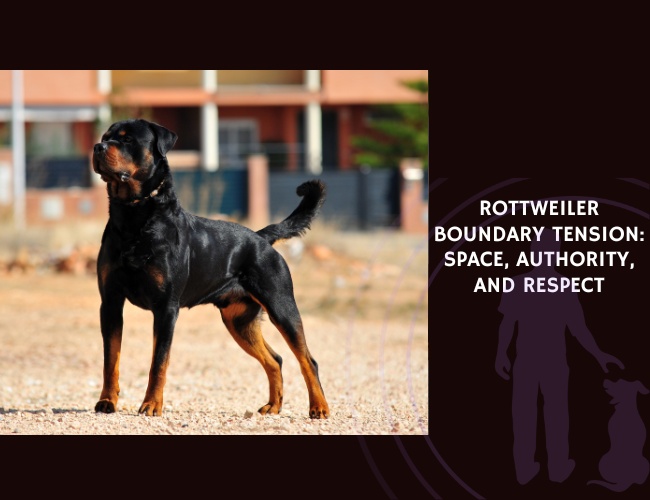
Navigating Social Pressure, Territorial Awareness, and Emotional Clarity in Guardian Breeds
When your Rottweiler plants themselves firmly in a doorway, their body still but their eyes tracking every movement, they’re not being stubborn. They’re doing what generations of breeding designed them to do: reading intent, evaluating safety, and holding space. This moment—this profound intersection of heritage, neuroscience, and relationship—reveals one of the most misunderstood aspects of living with guardian breeds.
Rottweilers carry within them an ancient blueprint for boundary awareness. Their ancestors didn’t chase threats away; they stood between danger and what mattered most. They evaluated, assessed, and made decisions about who could pass and who needed to wait. That legacy lives on in your living room, at your front door, and in every greeting your Rottweiler navigates. Understanding boundary tension in Rottweilers isn’t about correcting bad behaviour—it’s about recognizing sophisticated spatial intelligence that, without clarity from you, can transform from protective vigilance into emotional overload.
Heritage & Boundary Intelligence: The Guardian’s Ancient Blueprint
Your Rottweiler’s relationship with boundaries didn’t begin when you brought them home. It extends back through centuries of carefully selected breeding, where dogs who could read human intent, manage livestock movement, and protect property without unnecessary aggression became the foundation of the breed.
Historical roles that shaped modern boundary intelligence:
- Cattle drover: Controlling livestock movement through narrow passages without creating panic or stampede
- Butcher’s companion: Guarding money carts and property at market stalls, evaluating customers versus threats
- Property guardian: Protecting homes and businesses through presence and assessment rather than constant aggression
- Personal protector: Accompanying owners through dangerous routes, reading human intent at close quarters
- Threshold manager: Controlling access to shops, gates, and doorways—the original “working the door”
The Rottweiler’s role as a drover meant they needed to control movement without creating panic, to hold space without creating conflict, and to evaluate threats while maintaining calm authority.
This heritage matters because it shaped not just what Rottweilers do at boundaries, but how they think about them. Unlike breeds developed for pursuit or patrol, Rottweilers evolved to be evaluators. When a stranger approaches your door, your Rottweiler isn’t necessarily preparing to attack—they’re gathering information. Is this person’s energy calm or aggressive? Is their approach direct or hesitant? Does their body language suggest threat or benign intent?
Through the NeuroBond approach, we recognize that this boundary intelligence operates on multiple levels simultaneously:
Three levels of simultaneous boundary processing:
- Spatial information: Distance from threshold, speed of approach, angle of entry, movement patterns, physical positioning
- Social information: Familiar versus unfamiliar individuals, confident versus uncertain body language, group size and dynamics
- Emotional information: Your reaction and energy state, visitor’s emotional quality, environmental tension levels, historical context
This complex processing happens in seconds, often before you’ve even noticed someone approaching.
The critical insight here is that Rottweiler boundary awareness is more socially driven than purely territorial. They’re not guarding your property in the abstract—they’re protecting you, your household, and the emotional zones that feel like safety. This is why your Rottweiler may show no concern when a delivery person drops a package at the gate, but intense vigilance when someone approaches while you’re present. The boundary they’re truly protecting is relational, not geographical.
Did you know that Rottweilers often display more sophisticated boundary management at thresholds—doorways, gates, pathways—than in open space? This isn’t random. Thresholds represent decision points: entry or exclusion, safety or risk, permission or denial. Your Rottweiler’s ancestors made their living at exactly these pressure points, managing the flow of cattle through narrow passages, controlling access to butcher shops and market carts. That precision, that ability to hold a specific line without overreacting, remains encoded in their behavioural repertoire today.
Authority, Respect & Spatial Pressure: The Language of Proximity
When your Rottweiler refuses to move from the couch as you approach, or positions themselves between you and an approaching stranger, they’re speaking a language many humans never learn to read. This is the language of spatial pressure—a sophisticated system of communication where distance, positioning, and movement convey respect, authority, and relational understanding.
Rottweilers interpret proximity with remarkable precision. A direct, fast approach reads differently than a slow, curved one. Someone walking toward you triggers different neural pathways than someone walking past. These distinctions matter profoundly to a breed designed to evaluate intent through movement patterns. When your Rottweiler stiffens as a visitor leans over them, they’re not being antisocial—they’re responding to spatial pressure that violates their comfort zone without prior relationship or permission.
The concept of “stubbornness” in Rottweilers often misses this critical dynamic. When your Rottweiler won’t move from a doorway, consider what they might actually be communicating:
What “stubborn” doorway blocking really means:
- “I’m not certain about what’s happening beyond this threshold, and I need more information before moving”
- “I need clarity about my role and expectations before I can relax this position”
- “Someone needs to hold this space to ensure safety, and you’re not doing it, so I am”
- “This position allows me to monitor the situation—moving would compromise my assessment ability”
- “I’m experiencing uncertainty, and stillness helps me process what’s happening”
This isn’t disobedience—it’s emotional boundary holding in the absence of clear leadership.
Facial expressions and postural pressure in Rottweilers deserve particular attention.
Micro-signals of boundary assessment you might miss:
- Subtle lowering of the head while maintaining eye contact
- Shift of weight onto the front legs, creating readiness stance
- Slight narrowing of the eyes without full squinting
- Muscle tension visible along the neck and shoulder line
- Ear positioning forward with slight tension at the base
- Minimal tail movement despite environmental stimulation
- Slower, more deliberate breathing pattern
- Wrinkle formation above the eyes or across the forehead
These micro-adjustments communicate volumes. They’re saying: “I’m monitoring this situation,” or “I’m preparing to intervene if necessary,” or “I’m uncertain and increasing my readiness.” Most humans miss these signals entirely, only noticing the behaviour once it escalates to vocalization or more overt blocking.
The Invisible Leash reminds us that true guidance happens through emotional clarity and spatial awareness, not physical force. When you understand that your Rottweiler’s boundary behaviour stems from their need to manage uncertainty, you can address the root cause rather than suppressing the symptom. Your calm presence at the door, your clear directional guidance, your predictable handling of transitions—these provide the clarity that allows your Rottweiler to relax their vigilance.
Respect, in the Rottweiler’s world, isn’t about dominance hierarchies or who wins physical confrontations. It’s about who provides emotional clarity, who makes sound decisions, and who can be trusted to manage social complexity. When you consistently demonstrate spatial awareness—controlling greetings, managing thresholds, providing clear direction during transitions—your Rottweiler learns they don’t need to regulate these spaces independently. This isn’t submission; it’s collaborative role clarity that reduces their emotional load.
Body-Based Defence vs. Emotional Communication: The Power of Stillness
One of the most striking characteristics of Rottweilers experiencing boundary tension is their mastery of controlled stillness. While reactive breeds might bark, lunge, or pace, Rottweilers often do something far more subtle and far more sophisticated: they position themselves precisely and become absolutely still. This stillness isn’t passive—it’s loaded with intention, awareness, and readiness.
Watch your Rottweiler when someone approaches your home. Before any vocalization, before any obvious defensive display, notice their body. The slight widening of their stance. The subtle shift of weight. The precise angle of their body, often positioned to maximize their view while creating a physical barrier. This is proprioceptive social signalling—the use of body position, weight placement, and spatial occupation to communicate intent and manage potential conflict before it escalates.
This body-based communication represents an incredibly refined conflict-prevention strategy. By using their physical presence rather than aggressive displays, Rottweilers can often de-escalate situations that other breeds might amplify. The stillness says: “I’m here, I’m aware, I’m ready—but I’m not initiating conflict.” It’s a sophisticated middle ground between complete passivity and overt aggression.
The quality of this stillness matters enormously.
Healthy spatial guardianship indicators:
- Alert but not tense muscle tone
- Aware but not anxious overall demeanor
- Relatively steady, rhythmic breathing
- Firm but not rigid muscle tone
- Focused but soft eye contact
- Calm assessment without frantic scanning
- Ability to disengage and relax when situation resolves
This is a dog saying: “I’ve got this situation assessed, and I’m comfortable holding this position.”
Emotionally loaded guarding indicators (unhealthy):
- Brittle, tense stillness that feels fragile
- Shallow, irregular, or held breathing
- Rigid muscles rather than ready firmness
- Whale eye (white showing around the eyes)
- Micro-movements revealing anxiety: ear flicks, lip tension, weight shifts
- Inability to relax even when trigger passes
- Escalation to higher intensity with minimal additional stimulus
This is a dog saying: “I don’t know what to do with this situation, but I feel like I must do something.”
Eye contact in boundary situations deserves special mention. Rottweilers use direct eye contact as both information gathering and social pressure. That steady, unblinking gaze isn’t necessarily a threat—it’s assessment. They’re reading micro-expressions, looking for signs of intent, gathering data to inform their response. When humans misinterpret this as “mean mugging” or pre-aggression, they often respond with pressure (scolding, physical correction, forced submission), which can actually escalate the very tension they’re trying to prevent.
The progression from stillness to vocalization to physical intervention is not random—it’s a graduated response system. Most Rottweilers prefer to resolve boundary tension at the earliest, subtlest level possible. They’d rather position their body than vocalize, rather vocalize than physically intervene. When we interrupt this progression with punishment at the early stages, we don’t eliminate the underlying drive—we simply remove the early warning signals, potentially creating a dog who skips straight to higher-intensity responses because the subtle ones stopped working. 🧠
Triggers of Boundary Tension: Environmental Amplifiers and Social Complexity
Understanding what triggers boundary tension in Rottweilers requires examining both the immediate environmental factors and the deeper emotional contexts that amplify response intensity. Not all boundary moments create equal stress, and your Rottweiler’s reaction to someone approaching your door will vary dramatically based on multiple interacting variables.
Primary boundary tension triggers:
- New guests arriving at your home, especially without advance notice or familiar pattern
- Children running near or through spaces your Rottweiler considers important territory
- Deliveries and service workers approaching property without your direct presence
- Unfamiliar dogs near property boundaries or passing at close distance
- Sudden loud noises at thresholds: knocking, doorbell, gate rattling
- Multiple simultaneous arrivals creating social complexity
- Visitors who immediately reach toward your dog or invade personal space
- Moving trucks, construction, or unusual activity near property perimeter
- Nighttime approaches when visibility is reduced and uncertainty higher
New guests arriving at your home represent perhaps the most common boundary tension scenario. The combination of unfamiliar scent, unexpected timing, direct approach to a threshold, and your own energy shift (anticipation, excitement, social performance) creates a perfect storm of vigilance triggers. Your Rottweiler must simultaneously process: “Who is this? What is their intent? Why is my person’s energy changing? Should I intervene? What does success look like here?”
Children running near or through spaces your Rottweiler considers important often triggers heightened boundary awareness. The erratic movement patterns, high-pitched vocalizations, and unpredictable direction changes can activate both the SEEKING system (interest, curiosity) and the FEAR system (uncertainty, potential threat assessment). This isn’t about aggression toward children—it’s about movement complexity exceeding the dog’s comfort level in managing spatial dynamics.
Deliveries and service workers present unique challenges because they often approach property boundaries without your direct involvement. Your Rottweiler must make independent decisions about intent and appropriate response. Some Rottweilers handle this calmly, especially when the pattern is predictable (same delivery person, same time, same routine). Others experience significant stress because the absence of your direct guidance leaves them uncertain about their role.
Unfamiliar dogs near property boundaries trigger different neural pathways than human approaches. Here, your Rottweiler must evaluate not just threat level but also resource competition, social dynamics, and potential territorial conflict. The response will vary enormously based on the other dog’s body language, distance, and apparent intent—and crucially, on your own reaction to the situation.
Physical tension often precedes behavioural escalation, and learning to read these early signs can prevent boundary tension from intensifying. Watch for:
- Subtle breathing changes: shift from regular to slightly faster or held breath
- Muscle rigidity: particularly in the neck, shoulders, and hindquarters
- Slow head tracking: that deliberate, focused following of movement
- Weight shifts: subtle repositioning to create better angles or strengthen stance
- Ear positioning: forward focus with slight tension at the base
- Tail position: often level or slightly elevated, with minimal movement
These physiological changes represent your Rottweiler’s autonomic nervous system preparing for potential action. They’re not conscious decisions—they’re automatic responses to perceived uncertainty or potential threat. By noticing these early signs, you can intervene with clarity and guidance before your Rottweiler’s stress level climbs too high.
Emotional contagion plays an enormous role in boundary tension amplification. Your Rottweiler doesn’t just observe the approaching person—they observe you observing the approaching person. Your tension, your excitement, your uncertainty all transmit directly to your dog through vocal tone, body language, pheromones, and energy quality. A tense greeting (“It’s okay! They’re nice! Don’t worry!”) actually confirms your Rottweiler’s suspicion that something warrants vigilance. A genuinely calm, neutral greeting (“Come in”) communicates safety far more effectively than anxious reassurance.
Chaotic greetings—multiple people arriving simultaneously, loud voices, quick movements, attempts to immediately touch the dog—overwhelm your Rottweiler’s processing capacity. They cannot adequately assess threat level, establish appropriate social distance, or determine their role when too many variables change too quickly.
Signs your greeting structure overwhelms your Rottweiler:
- Inability to settle or hold position during arrivals
- Escalating vocalization that doesn’t decrease with reassurance
- Repetitive pacing or circling behavior
- Attempts to escape or hide during greeting process
- Redirected mouthing on leash, your clothing, or nearby objects
- Inability to take treats or respond to familiar commands
- Excessive panting, drooling, or stress yawning
- Continued agitation long after guests have settled
This sensory and social overload can push even a typically calm Rottweiler into defensive positioning or vocal warning.
Human Misinterpretation of Boundary Signals: When Communication Breaks Down
Perhaps the greatest challenge in addressing Rottweiler boundary tension is the profound disconnect between what dogs are communicating and what humans are perceiving.
Common human misinterpretation patterns:
- Labeling cautious assessment as “protective aggression” when it’s actually information gathering
- Interpreting stillness and focus as pre-attack preparation instead of conflict avoidance strategy
- Missing early boundary signals completely due to subtlety of communication
- Assuming doorway blocking equals dominance challenge rather than uncertainty about role
- Praising vigilant behavior thinking it shows “good protection” when it actually reinforces anxiety
- Believing that punishment of boundary concern eliminates the underlying drive
- Expecting immediate relaxation after verbal reassurance without addressing root uncertainty
- Interpreting every defensive display as “trying to be alpha” or challenging authority
This misalignment creates cycles of escalation, punishment, and broken trust that could be entirely avoided with better signal literacy.
The most common misinterpretation occurs when humans label cautious boundary assessment as “protective aggression.” Your Rottweiler stands at the door, body still, eyes focused, muscles slightly tense—and you interpret this as your dog “protecting” you from threat. In reality, they may be experiencing uncertainty, seeking clarity about their role, or simply gathering information before determining appropriate response. The behaviour looks similar, but the underlying emotional state differs profoundly.
This distinction matters because how you respond either reduces or amplifies the tension. If you interpret cautious assessment as protection and praise your Rottweiler (“Good dog! You’re protecting me!”), you’ve just confirmed that this situation warrants vigilance and defensive positioning. If instead you provide calm directional clarity (“Come here, lie down”), you communicate that you’re managing the situation and they can relax their assessment role.
Ignoring early boundary signals represents another critical misinterpretation pattern. Your Rottweiler gives you a look, shifts their weight, or positions themselves between you and an approaching person—and you miss it entirely or dismiss it as irrelevant. Without acknowledgment or direction from you, your Rottweiler must escalate to get the message across: “I need guidance here. I need you to clarify this situation.” The escalation isn’t defiance—it’s desperate communication from a dog trying to manage uncertainty without human support.
Responding to boundary signals with pressure creates particularly damaging cycles. Your Rottweiler shows concern at the door, and you snap “No! Leave it! Sit!” Now your dog must process: “There’s something uncertain at the boundary (stress), my human is using harsh tones (more stress), and I still don’t understand what’s happening or what my role should be (continued uncertainty).” The pressure didn’t reduce the underlying drive—it just added social stress to situational stress.
Many humans unintentionally reinforce boundary tension by allowing guarding behaviours to “work.” Your Rottweiler positions themselves at the door, appears vigilant, and the visitor hesitates or backs up. In that moment, your Rottweiler learns: “My boundary holding caused the uncertain element to retreat—this strategy works.” Even if you later punish the behaviour, the fundamental reinforcement (successful space management) has already occurred.
The concept of “dominance” applied to boundary behaviour creates profound misunderstanding. When your Rottweiler won’t move from the couch or doorway, the typical interpretation is that they’re “trying to be alpha” or “challenging your authority.” This anthropomorphic projection misses what’s actually happening: your Rottweiler is either uncertain about expectations, emotionally invested in that specific space, or lacking clear direction about when and why movement is necessary. Framing this as a dominance challenge inevitably leads to confrontational interventions that damage trust without addressing the root cause.
Soul Recall teaches us that behaviour always reflects underlying emotional experience. When your Rottweiler displays boundary tension, they’re not plotting rebellion—they’re responding to genuine uncertainty, inherited drives, or learned patterns about safety and responsibility. By exploring the emotional memory and relational context behind the behaviour, we can address the source rather than merely suppressing the symptom.
Leadership, Clarity, and Emotional Grounding: The Foundation of Boundary Confidence
The single most powerful factor in reducing Rottweiler boundary tension isn’t training techniques or behaviour modification protocols—it’s the quality of leadership you provide in everyday moments. Your Rottweiler doesn’t need you to be dominant or controlling; they need you to be clear, predictable, and emotionally grounded.
Calm, spatially aware leadership means you notice and manage transitions before your Rottweiler must.
Elements of effective spatial leadership:
- Hearing approaching cars or footsteps before your dog alerts, positioning yourself proactively
- Standing and moving toward the door with clear intention before your dog rushes forward
- Noticing potential triggers on walks and redirecting before independent assessment becomes necessary
- Managing your own nervous system state to remain genuinely calm during threshold events
- Making clear decisions quickly rather than hesitating and transmitting uncertainty
- Positioning yourself between your dog and uncertain elements to demonstrate management
- Creating predictable patterns around all threshold crossings and greetings
- Acknowledging your dog’s alerts while taking over assessment responsibility
You hear the car door outside before your dog does, and you calmly stand up and position yourself at the door with clear intention. You notice someone approaching on your walk and guide your Rottweiler to a different path or position before they must make an independent decision. This isn’t about controlling your dog—it’s about reducing the number of uncertain moments they must navigate alone.
Decision-sharing represents a sophisticated middle ground between permissive uncertainty and authoritarian control. Rather than making every single decision for your Rottweiler (exhausting for you, infantilizing for them) or expecting them to manage everything independently (overwhelming for them, chaotic for you), you create collaborative clarity about role-based responsibility. You handle greetings, threshold management, and social navigation. Your Rottweiler handles their own emotional regulation, appropriate social interaction, and basic responsiveness to your guidance.
This decision-sharing dramatically reduces emotional load at boundaries. Your Rottweiler no longer carries the weight of determining: “Should this person be allowed inside? Is this situation safe? What happens if I make the wrong call?” Instead, they can observe your calm management and relax into the role of responsive companion rather than independent security manager.
Predictable greeting structure makes an enormous difference in boundary tension. When guests arrive, your Rottweiler knows exactly what will happen: you answer the door calmly, guests wait briefly in the entryway, your Rottweiler sits or lies in a designated spot until released, initial interactions happen on your terms and timing. This structure doesn’t suppress your Rottweiler’s guardian instincts—it channels them into a format that reduces uncertainty and prevents overwhelm.
Consider the difference between these scenarios:
Chaotic greeting pattern (creates stress):
- Doorbell rings unexpectedly, triggering immediate arousal
- You rush to answer while your Rottweiler also rushes forward in heightened state
- You open door while simultaneously trying to restrain or redirect your dog
- Guests immediately step inside and reach toward your dog
- You’re saying “He’s friendly! It’s okay!” in an anxious, high-pitched tone
- Everyone’s energy is elevated, uncertain, and conflicting
- Your Rottweiler must process too many variables simultaneously without structure
- Greeting happens amid physical restraint, social pressure, and confusion
Structured greeting pattern (creates confidence):
- You hear car arrive before doorbell, positioning yourself calmly near entrance
- You ask your Rottweiler to settle in their designated spot with clear, calm direction
- Doorbell rings but there’s no surprise—you were already prepared and positioned
- You open door calmly, greeting guests yourself first while dog remains in designated spot
- Guests enter and complete human greeting without immediate dog interaction
- Once everyone is calm and settled, you assess whether to release your dog for greeting
- If released, greetings happen on your terms: calm approach, appropriate duration, your guidance
- Throughout, your energy communicates: “I’m managing this completely. No alarm necessary.”
The second scenario might seem rigid, but it’s actually profoundly respectful of your Rottweiler’s need for predictability and processing time. By removing uncertainty and giving clear role definition, you allow your dog to participate in social moments without the stress of managing them independently.
Emotional grounding—your own nervous system regulation—transmits directly to your Rottweiler. When you approach boundary moments (doors, thresholds, new environments, encounters with strangers) with genuine calm rather than anxious reassurance, your dog receives the most powerful signal possible: “This situation is managed. No alarm necessary.” Your calm isn’t a training technique—it’s authentic nervous system state that creates safety through embodied presence rather than verbal instruction. 🧡

NeuroBond Approach: Structure Instead of Control
Traditional approaches to managing boundary tension in guardian breeds often rely on suppression through obedience commands, physical correction, or establishing “dominance.” These methods might reduce visible behaviour, but they rarely address the underlying drives and often damage the trust necessary for genuine partnership. The NeuroBond approach offers a fundamentally different pathway: structure that creates clarity without conflict, guidance that respects guardian instincts while channeling them appropriately.
At the heart of this approach lies spatial clarity—the recognition that clear, consistent management of physical space reduces your Rottweiler’s need to independently regulate boundaries. When you consistently guide threshold crossings, manage greetings with predictable structure, and provide calm directional certainty during transitions, your Rottweiler learns that space management isn’t their job. This isn’t about preventing them from guarding—it’s about reducing the uncertainty that transforms healthy vigilance into anxious overreaction.
The Invisible Leash principles apply profoundly to boundary work. Rather than using physical restraint or verbal pressure to manage your Rottweiler’s boundary responses, you create energetic and spatial guidance that communicates: “I’m aware. I’m handling this. You can relax your assessment.” This happens through your positioning (placing yourself between your dog and uncertain elements), your movement (calm, purposeful, directional), and your energy quality (grounded, neutral, clear).
Consider doorway management as practical example.
Traditional approach (control-based):
- Your Rottweiler rushes to the door in heightened arousal
- You say “No! Sit! Stay!” while physically restraining them
- Door opens amid tension, uncertainty, and conflicting energy
- Your dog remains activated because nothing in the situation has actually resolved their concern
- The uncertainty about who’s entering and whether it’s safe persists
- Your dog must simultaneously manage: visitor assessment, compliance with commands, physical restraint, and unclear role expectations
NeuroBond approach (clarity-based):
- You hear someone approaching before your Rottweiler must react
- You calmly stand and move toward the door with clear intention
- Your positioning and movement communicate “I’m handling this”
- Your Rottweiler observes your calm certainty and either remains settled or joins you in calm assessment posture
- You open the door with clear spatial boundaries (guests don’t immediately enter fully, allowing processing time)
- You guide the greeting structure with calm directional clarity
- Your energy throughout: “I’m aware. I’m managing. You can relax your assessment.”
The difference isn’t just technical—it’s philosophical. You’re not controlling your Rottweiler; you’re reducing the uncertainty that drives defensive positioning. You’re not suppressing guardian instincts; you’re providing the leadership that allows those instincts to function without chronic stress.
Emotional neutrality represents another cornerstone of the NeuroBond approach to boundary work. When your Rottweiler shows concern at a threshold, your response should be emotionally neutral—neither praising the vigilance nor punishing the concern. Simply provide clear direction: “Come here,” or “This way,” or position yourself calmly between your dog and the threshold. This neutral guidance communicates: “I’ve noted your observation. I’m managing the situation. No further escalation needed.”
This emotional neutrality prevents two common problems: accidentally reinforcing boundary tension through anxious reassurance (“It’s okay! Don’t worry!”), and damaging trust through punishment of genuine concern. Your Rottweiler’s boundary awareness isn’t wrong or bad—it’s hardwired heritage that needs appropriate channeling, not suppression.
Role-based spatial guidance means giving your Rottweiler clear understanding of their job in boundary moments. Rather than expecting them to ignore their guardian instincts entirely (impossible and unfair), you define appropriate expression: “Your role is to notice and alert me with calm presence. My role is to assess and manage. Together we create safety.” This collaborative clarity reduces the pressure your Rottweiler feels to independently make high-stakes decisions about threat assessment and response.
The progression looks like this:
Phase 1: Complete human management (Weeks 1-8)
- You manage all boundary moments entirely and consistently
- Your Rottweiler observes your calm, predictable handling of thresholds, greetings, and transitions
- They’re learning the pattern, absorbing the structure
- Beginning to trust that you reliably notice and manage these moments
- Their role is simply to observe and remain calm while you handle everything
Phase 2: Relaxation through predictability (Weeks 8-16)
- Your Rottweiler begins to relax at boundaries because the pattern is now familiar
- They may still notice and orient toward threshold activity, but with decreasing intensity
- Your consistent management has reduced uncertainty substantially
- They’re starting to trust the structure and your reliability
- Occasional testing or regression during high-stress situations is normal
Phase 3: Collaborative confidence (Week 16+)
- Your Rottweiler can participate calmly in boundary moments
- They understand their role: notice and alert through calm presence
- They trust you to fulfill your role: assess and manage the situation
- Guardian instincts remain intact but expression is channeled through partnership
- Independent defensive action is rare because collaborative structure provides security
Can boundary stability improve not through control, but through relational trust and predictable human leadership? Absolutely. Every Rottweiler who learns to greet guests calmly, rest peacefully near doorways, and walk past other dogs without excessive tension demonstrates this truth. The difference isn’t in the dog’s capacity for boundaries—it’s in the human’s willingness to provide the structure and leadership that makes calm boundaries possible. That balance between science and soul—that’s the essence of Zoeta Dogsoul.
Still. Vigilant. Deciding.
Presence is their strategy. A Rottweiler doesn’t chase danger—they intercept it. Boundaries are evaluated, not defended through noise, but through stillness, eyes, and intent.
Not territorial—relational. They don’t guard places. They guard meaning. Doorways become decision points because they lead to you, not just to space.
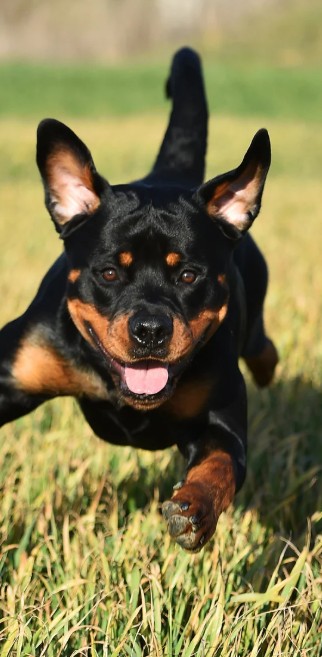


Calm before permission. When clarity meets instinct, tension softens. Authority isn’t enforced—it is recognized through grounded presence.v
Understanding the Neuroscience: What’s Happening in Your Rottweiler’s Brain
To truly address boundary tension, understanding the neural systems driving the behaviour provides invaluable insight. Your Rottweiler’s response to boundary situations isn’t arbitrary—it’s the product of specific brain networks evolved for survival, social navigation, and environmental assessment.
Primary neural systems in boundary behavior:
- SEEKING system: Drives investigative behavior, curiosity, information gathering about approaching stimuli
- FEAR system: Activates when uncertainty exceeds comfort threshold, triggers defensive readiness and caution
- RAGE system: Engages when other systems fail to resolve threat, produces defensive aggression as last resort
- Amygdala: Processes emotional responses and threat assessment with heightened sensitivity in guardian breeds
- Prefrontal cortex: Manages impulse control and decision-making, requires maturity and appropriate arousal to function optimally
- Oxytocin system: Facilitates bonding and trust, helps buffer stress responses during threshold events
The SEEKING system, identified in affective neuroscience, drives your Rottweiler’s investigative behaviour at boundaries. When someone approaches, this system activates: “What is this? What does it mean? What should I do?” This isn’t fear or aggression—it’s curiosity and information gathering. A well-balanced Rottweiler in a low-stress moment can satisfy SEEKING through calm observation: looking, sniffing, assessing from a comfortable distance.
The FEAR system activates when uncertainty exceeds your Rottweiler’s comfort threshold. Environmental novelty, ambiguous intent, unpredictable movement—these variables can trigger defensive readiness even without actual threat. The FEAR system says: “I don’t have enough information to feel safe. I need to increase vigilance or create distance.” This isn’t cowardice—it’s prudent caution in the absence of clear safety signals.
When SEEKING and FEAR activate simultaneously without resolution—your Rottweiler is curious but uncertain, wants to investigate but doesn’t feel safe—tension builds. If this tension intensifies without outlet or if your Rottweiler feels cornered (physically or psychologically), the RAGE system can engage. This produces defensive aggression: barking, lunging, or in extreme cases, biting. But here’s the critical point: the RAGE system is almost always the last resort, activated only when earlier, subtler systems weren’t adequately addressed.
Predictive processing theory helps explain why clarity from you matters so profoundly. Your Rottweiler’s brain constantly makes predictions about what will happen next based on past patterns. When you consistently manage thresholds calmly, greet guests predictably, and provide clear guidance during transitions, your Rottweiler’s brain learns to predict: “When humans approach, my person handles it calmly, and the outcome is safe.” This prediction reduces activation of fear and defensive systems.
Conversely, when boundary moments are unpredictable—sometimes guests are allowed to rush in, sometimes they’re stopped; sometimes your energy is calm, sometimes anxious; sometimes your Rottweiler’s vigilance is punished, sometimes ignored—the brain cannot form reliable predictions. This prediction error increases vigilance, amplifies stress responses, and compels your Rottweiler to maintain higher defensive readiness because they cannot reliably anticipate outcomes.
The amygdala, central to emotional processing and threat assessment, shows particular sensitivity in guardian breeds. This isn’t a flaw—it’s a feature. Rottweilers were selected for heightened environmental awareness and rapid threat assessment. Their amygdala processes subtle social signals, movement patterns, and environmental changes with remarkable precision. When this system functions within appropriate arousal levels, it produces discerning guardianship. When chronically overstimulated by uncertainty, chaotic environments, or lack of clear leadership, it produces hypervigilance and overreactive boundary responses.
The prefrontal cortex, responsible for impulse control and decision-making, requires adequate development and appropriate arousal levels to function optimally. Young Rottweilers (under 2-3 years) have less developed prefrontal regulation, making them more reactive and less capable of inhibiting impulses at boundaries. Additionally, high-stress situations reduce prefrontal function even in mature dogs, which is why your typically calm Rottweiler might overreact when multiple stressors combine (late evening + unexpected visitor + your anxiety + recent territorial incident).
Oxytocin, the bonding hormone, plays a fascinating role in boundary behaviour. When your Rottweiler feels deeply bonded with you and trusts your leadership, oxytocin release during your interactions helps buffer stress responses. Your calm presence becomes inherently calming because it’s associated with safety, security, and positive prediction. This is why relationship quality—built through consistent positive interactions, reliable leadership, and emotional attunement—directly impacts boundary tension levels.
Understanding these neural systems helps you recognize that punishment-based approaches to boundary tension are neurologically counterproductive.
Why punishment fails at the neurological level:
- Adds social stress (fear of your reaction) to existing environmental stress (boundary uncertainty)
- Amplifies amygdala activation rather than reducing it
- Creates conflict between natural guardian drive and fear of human disapproval
- Suppresses behavior temporarily through prefrontal override but intensifies underlying vigilance
- Damages oxytocin-mediated trust between dog and handler
- Often emerges later as more severe problems: redirected aggression, generalized anxiety, explosive reactivity
- Removes early warning signals, potentially creating dogs who escalate immediately to high-intensity responses
- Fails to address root cause: uncertainty about role, environment, or threat assessment
When you punish your Rottweiler’s boundary concern, you add social stress (fear of your reaction) to environmental stress (uncertainty about the boundary situation). This doesn’t reduce amygdala activation—it amplifies it. The behaviour might suppress temporarily (prefrontal override through fear of consequences), but the underlying stress and vigilance intensify, often emerging later as more severe problems. 😊
🏛️ Understanding Rottweiler Boundary Tension 🐕
A Journey from Vigilance to Confidence Through 8 Essential Phases
Phase 1: Recognition & Assessment
Understanding What You’re Actually Seeing
What Boundary Tension Really Is
Your Rottweiler’s stillness at doorways isn’t stubbornness—it’s sophisticated spatial intelligence inherited from centuries of guardian breeding. They’re processing spatial information, social cues, and emotional context simultaneously, often before you notice someone approaching.
Early Warning Signs to Notice
• Subtle breathing changes and muscle tension
• Slow, deliberate head tracking of movement
• Weight shifts to strengthen stance
• Controlled stillness loaded with awareness
• Direct eye contact as information gathering
Your First Action Step
Spend one week simply observing without intervention. Document when your Rottweiler shows boundary awareness, what triggers it, and how their body language progresses. Understanding comes before action.
Phase 2: Establishing Calm Leadership
Building the Foundation of Trust
What Leadership Actually Means
Through the NeuroBond approach, leadership isn’t about dominance—it’s about providing emotional clarity and predictable structure. Your Rottweiler needs you to notice and manage transitions before they must, reducing the uncertain moments they navigate alone.
Daily Leadership Practice
• Hear approaching cars before your dog alerts
• Stand and move toward doors with calm intention
• Position yourself between dog and uncertain elements
• Make clear decisions quickly without hesitation
• Maintain genuine calm, not anxious reassurance
Common Leadership Mistakes
Rushing to the door with elevated energy, saying “It’s okay!” in an anxious tone, physically restraining without addressing uncertainty, or hesitating and transmitting indecision all undermine the clarity your Rottweiler desperately needs.
Phase 3: Mastering Threshold Transitions
Where Calm Becomes Habit
Morning Threshold Practice Protocol
• Stand at door with hand on knob, breathing steadily
• Wait for settling (sitting, standing calm, or lying)
• No verbal commands needed—just calm presence
• Open door only when both of you are calm
• If activation occurs, close and wait for reset
• Repeat at every threshold, multiple times daily
The Invisible Leash Principle
The Invisible Leash reminds us that true guidance happens through emotional clarity and spatial awareness, not physical force. Your calm positioning and clear intention communicate more powerfully than any leash correction ever could.
What Success Looks Like
Within 2-3 weeks, you’ll notice your Rottweiler orienting to you before rushing to doors. They’re learning the pattern: thresholds open when we’re calm together, not when arousal is high.
Phase 4: Structured Greeting Protocol
Transforming Chaos Into Confidence
Step-by-Step Greeting Structure
1. Hear car arrive, position yourself calmly near door
2. Direct dog to designated settling spot before doorbell
3. Open door once dog is positioned and you’re calm
4. Complete human greeting first (30-60 seconds)
5. Guests settle without approaching dog initially
6. Release dog only if calm, on your terms and timing
⚠️ Signs Your Greeting Overwhelms
Inability to settle, escalating vocalization, pacing, attempts to escape, excessive panting, inability to take treats, or continued agitation after guests settle all signal that your structure needs more separation and slower progression.
Multi-Dog Household Adaptation
With multiple Rottweilers, give each their own separate settling position. Release them sequentially—calmest first—rather than simultaneously. One successful calm greeting is worth more than forced group compliance.
Phase 5: Context-Specific Management
Adapting to Different Environments
Urban Living Adaptations
Apartment dwellers must redefine territory: your actual space is behind your closed door. Hallway sounds are environmental background, not threats. Remain completely neutral to ambient activity, responding only to direct approaches to your specific entrance.
Vehicle Boundary Management
Cars trigger intense guardian behavior due to confined space and limited escape options. Before exiting at stressful destinations (vet, grooming), take 60 seconds for calm settling. Turn off engine, breathe normally, wait for relaxation signs before attaching leash.
Elevator Protocol for Urban Rottweilers
Your Rottweiler’s job in elevators: exist calmly beside you, nothing more. Position yourself between your dog and other passengers when possible. Make decisions about waiting for the next elevator if this one is too crowded. You manage all social navigation.
Phase 6: Age-Appropriate Expectations
From Puppy to Senior
Puppy Development (8-18 Months)
Guardian instincts emerge between 6-12 months. This isn’t regression—it’s genetic programming activating on schedule. Maintain greeting protocols with even more consistency during this phase. What they rehearse now becomes adult patterns.
Adolescent Intensity (12-24 Months)
Peak hormone surges bring the most challenging boundary behavior. Territorial instincts strengthen, social selectivity increases. This period requires your most consistent leadership and greatest patience. The intensity is temporary but formative.
Senior Adaptations (7+ Years)
Older Rottweilers need quieter greetings, more personal space, and predictable routines. What they handled easily at four may overwhelm them at ten. This isn’t deterioration—it’s natural reduction in stress tolerance that deserves respect and accommodation.
Phase 7: Trauma-Informed Boundary Work
Healing Through Trust
The Rule of Threes for Rescue Dogs
3 days: Decompression from transition stress
3 weeks: Learning routines, showing real personality
3 months: Building genuine trust and security
6-12 months: Meaningful reduction in threshold reactivity
12+ months: Deep confidence replacing hypervigilance
Soul Recall in Healing
Soul Recall teaches us that behavior always reflects underlying emotional experience. Rescue Rottweilers showing intense boundary tension aren’t being difficult—they’re responding to genuine trauma, learned patterns, or desperate attempts to establish security in environments that keep changing.
Building Trust Through Predictability
Every doorbell gets the same response. Every greeting follows identical structure. Every threshold transition happens with clear patterns. This predictability is therapeutic—it provides the external structure their dysregulated nervous systems need to find internal stability.
Phase 8: Sustaining Boundary Confidence
Making It Last a Lifetime
Daily Maintenance Practices
• Continue threshold calm practice at every door crossing
• Maintain greeting structure even when it feels unnecessary
• Monitor your own nervous system state during transitions
• Provide recovery time after intense boundary moments
• Build relationship deposits outside boundary contexts
Recognizing Regression Triggers
Life changes (moving, new baby, loss of family member), holiday visitor season, health issues, or accumulated stress can temporarily increase boundary reactivity. This is normal. Return to foundational structure without judgment.
The Reward of Partnership
A Rottweiler who relaxes at thresholds through trust, greets guests calmly through structure, and walks past uncertainty through partnership demonstrates refined guardian intelligence. You haven’t suppressed their instincts—you’ve channeled them into balanced expression.
🔍 Boundary Tension: Key Comparisons
Male vs Female Expression
Males: More overt physical presence, direct confrontation, intense same-sex dog reactivity, sustained arousal.
Females: Strategic positioning, selective assessment, proportional responses, faster stress recovery.
Urban vs Rural Living
Urban: Ambient activity as background, elevator management, hallway neutrality, redefined territory.
Rural: Clear property lines, natural boundaries, predictable perimeter, traditional guardian role.
Puppy vs Adolescent vs Adult
Puppy (8-12mo): Emerging awareness, socialization window.
Adolescent (12-24mo): Peak intensity, hormone surges, most challenging.
Adult (24mo+): Settled discernment, reliable patterns.
Healthy vs Problematic Guarding
Healthy: Alert but relaxed, proportional response, can disengage, trusts human leadership.
Problematic: Brittle tension, escalates rapidly, cannot settle, operates independently despite guidance.
Single Dog vs Multi-Dog Households
Single: Clear role, individual management, simpler protocols.
Multiple: Coalition dynamics, sequential greetings, resource competition at thresholds, role negotiation required.
Control-Based vs NeuroBond Approach
Control: Suppression, punishment, physical restraint, compliance through pressure.
NeuroBond: Clarity, trust, predictable structure, partnership through understanding.
⚡ Quick Reference: Boundary Confidence Formula
Success Formula: Consistent Structure + Calm Leadership + Predictable Patterns = Relaxed Guardian Confidence
Timeline Expectations: 2-3 weeks for initial settling, 2-3 months for reliable protocols, 6-12 months for deep confidence
Daily Investment: 5 minutes threshold practice + structured greetings + calm presence = transformed boundary behavior
The Core Truth: Your Rottweiler doesn’t need control—they need clarity. Not dominance—but direction. Not suppression—but structure.
🧡 The Zoeta Dogsoul Philosophy on Boundary Work
Through NeuroBond, we recognize that boundary tension isn’t a behavior problem—it’s sophisticated intelligence seeking partnership. The Invisible Leash teaches us that awareness, not tension, guides the path forward. And Soul Recall reminds us that every defensive display reflects emotional experience, not malicious intent.
Your Rottweiler’s ancient heritage gives them extraordinary spatial intelligence. Your calm leadership provides the structure that transforms vigilance into confidence. Together, you create something profound: a guardian who can relax because they trust, protect because they’re secure, and rest because partnership has replaced the burden of constant independent assessment.
This is boundary work at its essence—not control, but collaboration. Not suppression, but channeling. Not fixing a broken dog, but honoring an intelligent one while providing the clarity that allows their guardian nature to flourish without consuming them.
© Zoeta Dogsoul – Where neuroscience meets soul in dog training
Practical Applications: Daily Practices for Boundary Confidence
Understanding theory is valuable, but practical application in daily life creates actual change. Here are specific practices you can implement immediately to reduce boundary tension in your Rottweiler:
Morning threshold practice:
Before your first trip outside each day, take 30 seconds at the door:
- Stand calmly with hand on doorknob, breathing steadily
- Wait for your Rottweiler to settle (sitting, standing calmly, or lying down—doesn’t need to be perfect position)
- Maintain calm energy without verbal commands or tension
- Open door only when you’re both in calm state
- If your dog becomes activated, close door and wait for settling before trying again
- Repeat this process at every threshold crossing throughout the day
- Build pattern recognition: “Thresholds open when we’re calm, not when we’re activated”
This daily repetition builds pattern recognition: “Thresholds are places of calm transition, not high-arousal events.”
Greeting structure with guests:
Create a simple, repeatable protocol:
- Guest arrives, doorbell rings
- You calmly approach door (no rushing, no elevated energy)
- Give your Rottweiler clear direction to go to their designated spot (bed, mat, specific area)
- Wait for compliance or guide them there if necessary
- Open door once your dog is in position
- Complete human greeting first (30-60 seconds minimum)
- Guests enter and settle without approaching your dog
- Allow 2-3 minutes for environmental settling and arousal reduction
- You decide if and when your Rottweiler approaches for greeting
- Release them only if they’re calm; if not, guests visit without dog interaction this time
- Keep initial greetings brief and structured, always on your terms
This structure prevents overwhelm and gives clear role definition.
Spatial awareness walks: During daily walks, practice threshold awareness. Before crossing streets, entering gates, or moving through doorways, pause briefly and ensure your Rottweiler is attentive to you. This isn’t obedience drilling—it’s building collaborative spatial navigation where transitions happen together with mutual awareness rather than independent rushing.
Calm-state reinforcement: Notice and quietly acknowledge moments when your Rottweiler shows appropriate boundary awareness without overreaction. Someone walks past your property, your dog looks but remains calm—mark that moment with quiet approval. Vehicle pulls up, your dog orients but doesn’t escalate—acknowledge the appropriate response. You’re reinforcing the balanced middle ground between oblivious and overreactive.
Environmental management: If certain triggers consistently overwhelm your Rottweiler’s capacity for calm boundary management, modify the environment temporarily while building skills. Visual barriers at windows where your dog monitors passing traffic, strategic furniture placement to create comfortable distance from front doors, management tools like baby gates to control access during high-stress moments—these aren’t permanent solutions, but they prevent rehearsal of unwanted patterns while you build better ones.
Energy awareness: Monitor your own nervous system state during boundary moments. Notice the difference between genuine calm and anxious reassurance. Practice approaching your door, hearing the doorbell, and greeting visitors while maintaining steady breathing and relaxed body language. Your Rottweiler reads your authenticity—they know whether your calm is real or performed.
Decision-making clarity: In moments of uncertainty, make a clear decision rather than hesitating. Even a less-than-perfect decision delivered with calm certainty creates more security for your Rottweiler than perfect strategy delivered with anxious uncertainty. They need your clarity more than your perfection.
Recovery time:
After intense boundary moments (challenging greeting, territorial encounter, threshold tension), give your Rottweiler time to decompress:
- Calm walk in familiar, low-stimulation environment (15-30 minutes)
- Quiet resting time in their safe space without interaction demands
- Sniffing games that engage their nose and provide mental satisfaction
- Food puzzles or slow-feeding activities that require focus and calm
- Gentle massage or calm physical contact if your dog enjoys and seeks it
- Avoid additional triggers or high-arousal activities for 1-2 hours
- Monitor breathing and body tension to assess recovery progress
- Don’t immediately repeat the challenging situation—allow full nervous system reset
A calm walk, quiet resting time, or engaging but non-social activity (sniffing games, food puzzles) helps their nervous system return to baseline. Preventing stress accumulation across multiple boundary moments in short time frames reduces overall reactivity.
Relationship deposits: Build trust and connection outside of boundary contexts. Play, training games, quiet companionship, gentle physical contact (if your Rottweiler enjoys it)—these positive interactions create relationship resilience that carries over into higher-stress moments. A Rottweiler who deeply trusts your leadership in calm moments will extend that trust more readily into uncertain ones.
Professional support:
If boundary tension escalates to concerning levels, seek qualified professional guidance:
Red flags requiring immediate professional support:
- Lunging with clear intent to make contact or bite
- Intense, sustained barking that doesn’t decrease with any intervention
- Inability to settle near thresholds even in absence of triggers
- Freezing followed by explosive reaction without warning signals
- Redirected aggression toward family members during boundary events
- Concerning body language suggesting imminent aggression: hard stares, stillness before lunging, lip curling with forward intent
- Bite history or near-miss incidents at boundaries
- Escalating intensity over time despite your intervention attempts
- Your own fear or inability to safely manage the situation
What to look for in a professional:
- Understanding of guardian breed psychology and heritage
- Force-free, relationship-based methodology
- Addresses underlying emotional drivers, not just suppressing visible behavior
- Can read and interpret subtle body language accurately
- Focuses on building confidence and trust, not obedience through pressure
- Experience specifically with territorial and boundary-related issues
- Willing to work with your veterinarian for comprehensive approach
Look for trainers or behaviourists who understand guardian breed psychology, avoid punishment-based methods, and can address the underlying emotional drivers rather than merely suppressing visible behaviour.
Multi-Dog Household Dynamics: Navigating Boundary Complexity with Multiple Dogs
Living with multiple dogs transforms boundary dynamics in ways many people don’t anticipate. When you add a second Rottweiler—or mix your Rottweiler with other breeds—boundary tension doesn’t simply double. It multiplies through social complexity, resource competition, and the intricate dance of pack dynamics at thresholds.
Multiple dogs create layered boundary systems. Your first Rottweiler may have established clear patterns around your front door, greeting protocol, and territorial perimeter. When a second dog enters the household, they must negotiate several critical questions:
Questions multi-dog households must resolve:
- Who holds primary monitoring position at key thresholds?
- Whose role is it to assess approaching visitors first?
- What happens when we both feel responsible for the same threshold?
- How do we divide labor: primary sentinel versus backup support?
- Who gets access to valued monitoring spots (windows, doorways) and when?
- How do we communicate about threat assessment without escalating each other?
- What’s the hierarchy for greeting guests or responding to boundary triggers?
These questions create temporary instability that requires careful human management to resolve constructively.
Boundary tension manifests differently in multi-dog households primarily through coalition dynamics and role competition. Two Rottweilers may amplify each other’s vigilance—one dog’s alert posture triggering the other’s defensive positioning, creating escalating arousal that neither would reach alone. This is emotional contagion between dogs, not just between human and dog. When one Rottweiler orients toward the door with heightened attention, the second reads this as: “My packmate perceives something significant. I should increase my readiness as well.”
Alternatively, some multi-dog households develop complementary boundary roles naturally. One dog becomes the primary sentinel—the one who notices first, positions at thresholds, and initiates assessment. The other takes a supportive role—backing up the primary guardian but not initiating boundary responses independently. This division of labor can actually reduce individual stress when it emerges organically and you support it with appropriate structure.
Resource guarding at boundaries presents unique challenges in multi-dog homes. Doorways, favorite resting spots near windows or entryways, and feeding areas near thresholds become contested spaces. A Rottweiler who shows no resource guarding around toys or food bowls may become intensely protective of “their” doorway monitoring position. This isn’t arbitrary—that threshold position holds strategic value for a guardian breed. It’s the control point, the place where they can fulfill their inherited role of evaluating and managing access.
You might notice subtle (or not-so-subtle) positioning battles: one dog consistently arriving at the door first, body-blocking the other from prime viewing positions, or displaying tension when the other dog attempts to share threshold space. These moments require your intervention not to punish, but to provide clarity. By managing greetings yourself—positioning both dogs away from the immediate threshold, creating individual settling spots, controlling the greeting sequence—you remove the resource competition from the equation.
Managing greetings with multiple Rottweilers demands extraordinary structure and leadership. The energy multiplication when two or three powerful guardian breeds converge on a doorway can overwhelm even experienced dog handlers.
Multi-dog greeting management protocol:
- Each dog has a designated position separate from each other (not competing for same doorway view)
- Positions should be visual barriers apart if possible (different rooms, around corners, behind furniture)
- Practice stationing in these positions daily, not just during actual arrivals
- You greet visitor first, completely, before releasing any dogs
- Release dogs one at a time rather than simultaneously for initial greeting
- First dog released should be the one with calmest, most reliable greeting behavior
- Second dog watches successful calm greeting before being released
- If either dog becomes overaroused, that dog returns to their station
- Maintain calm energy throughout—you’re orchestrating, not controlling through tension
- End greetings while dogs are still successful, before arousal escalates
- Build duration and complexity gradually over weeks and months
Your strategy should emphasize separation and sequential processing rather than simultaneous management. When visitors arrive, each dog should have a designated position (separate locations, not competing for the same doorway view). You greet the visitor first, completely, before releasing dogs for interaction—and you may release them one at a time rather than simultaneously.
Mixed breed households—Rottweiler paired with herding breeds, terriers, or sporting breeds—create different dynamics than multiple Rottweilers. A Rottweiler’s slow-building, assessment-based boundary response paired with a reactive terrier’s immediate alarm barking can create chaos. The terrier’s rapid reaction triggers the Rottweiler’s defensive systems faster than they’d engage independently, potentially pushing the Rottweiler past their optimal arousal level before they’ve completed assessment.
Understanding each dog’s natural threshold response style allows you to manage them individually while preventing negative amplification. Your Rottweiler needs processing time and clear role definition. Your Border Collie needs movement and direction. Your Labrador needs enthusiastic but structured greeting opportunity. Trying to apply identical management to fundamentally different behavioral drives creates frustration and confusion.
Hierarchy at thresholds in multi-dog households is real but often misunderstood. It’s not about dominance or submission in the traditional sense—it’s about role clarity and resource access. The dog who consistently monitors the front window isn’t necessarily “dominant”—they may simply have stronger guardian drive or higher spatial vigilance. Problems emerge not from hierarchy itself, but from unclear or contested hierarchy that creates constant social negotiation and tension.
Your role is to provide clarity that allows natural hierarchy to stabilize without destructive conflict. This means: honoring reasonable role divisions when they emerge organically, preventing resource guarding around boundary positions through environmental management, ensuring each dog has access to valued monitoring spots at different times, and most importantly, making it clear that ultimate boundary management authority rests with you, not any dog in the household.
The gift of multi-dog households is that dogs can learn from each other’s calm responses just as easily as they amplify each other’s tension. A young Rottweiler living with an older, settled guardian who demonstrates appropriate boundary awareness often learns faster than through human training alone. They observe: “The approaching mail carrier isn’t a threat because my elder packmate barely glances up,” or “Visitors are managed calmly by our human, so I don’t need to intervene.” This social learning accelerates boundary confidence when the model is healthy and the structure supports it.
Puppy & Adolescent Development: The Unfolding of Guardian Instincts
Understanding when and how boundary awareness emerges in young Rottweilers allows you to shape these instincts during their formation rather than correcting problematic patterns later. Guardian behavior isn’t present at birth—it unfolds across predictable developmental stages that offer windows of opportunity for skillful guidance.
Developmental timeline of boundary awareness:
- Birth to 8 weeks: Foundation period with mother and littermates, no boundary awareness, pure exploration and social learning, focus on gentle handling and environmental exposure
- 8 to 12 weeks: Primary socialization window (CRITICAL), maximum receptivity to new experiences, establish positive associations with varied people, sounds, environments
- 12 to 16 weeks: First hints of boundary awareness, alerting to sounds outside, interest in doorways, environmental curiosity without true guarding
- 4 to 6 months: Continued confident socialization, often shows delightful friendliness toward strangers, minimal boundary concern (developmental window, not permanent personality)
- 6 to 12 months: Beginning of adolescence, first serious boundary awareness, increased alertness at thresholds, selective stranger responses, guardian instincts emerging on schedule
- 12 to 18 months: Peak adolescent intensity (most challenging period), hormone surges, strengthened territorial instincts, increased social selectivity, testing of household rules
- 18 to 24 months: Settling and maturation, decreasing reactivity, increasing discernment, better impulse control, moderation of adolescent intensity
- 24 to 36 months: Full neurological maturity, adult patterns established, capacity for consistent reliability if properly guided through earlier stages
Guardian behavior isn’t present at birth—it unfolds across predictable developmental stages that offer windows of opportunity for skillful guidance.
Birth to 8 weeks represents the foundation period where puppies are with their mother and littermates. During this time, they’re learning fundamental social skills, bite inhibition, and early communication patterns. Boundary awareness is essentially absent—these puppies explore their world with curiosity uncomplicated by territorial concern. Responsible breeders during this period focus on gentle handling, varied environmental exposure, and positive human interaction that builds the confidence foundation necessary for later boundary work.
8 to 12 weeks marks the primary socialization window—perhaps the most critical period for preventing future boundary problems. During these weeks, your Rottweiler puppy should experience calm, positive exposure to diverse people, sounds, environments, and experiences. Every positive doorway greeting, every calm encounter with visitors, every neutral experience with passing strangers creates neural pathways that support balanced boundary responses later. Under-socialization during this window often produces adults with fear-based boundary aggression because they lack the experiential database to distinguish normal from threatening.
The key during early socialization isn’t maximum exposure—it’s quality exposure. One calm, positive greeting where the puppy feels safe is worth more than ten overwhelming encounters that create stress associations.
Signs your socialization exposure is too intense:
- Cowering, hiding, or attempting to escape the situation
- Tail tucked, body lowered, ears pinned back
- Excessive panting, drooling, or stress yawning
- Inability to take treats they’d normally eagerly accept
- Freezing in place, becoming completely still and unresponsive
- Submissive urination during or after the interaction
- Avoiding eye contact, looking away repeatedly
- Continued stress signals long after exposure ends (won’t settle, can’t sleep)
- Increased startle response or fearfulness in subsequent days
- Regression in previously confident behaviors
Watch your puppy’s body language carefully. If they’re exploring confidently, seeking interaction, showing loose body movement and easy breathing—continue the exposure. If they’re showing stress signals—reduce intensity immediately. Pushing through fear doesn’t create confidence; it creates sensitization.
12 to 16 weeks often brings the first hints of boundary awareness. Your Rottweiler puppy may start alerting to sounds outside, showing interest in who’s at the door, or displaying curiosity about property perimeters. This isn’t yet true guardian behavior—it’s developmental exploration and environmental interest. Your response during this phase matters enormously. If you react with excitement or anxiety when your puppy notices the doorbell, you’re teaching them that doorbells warrant heightened arousal. If you remain calm and redirect their attention to you, you’re teaching them that you manage threshold events.
4 to 6 months represents continued socialization with increasing confidence. Many Rottweiler puppies during this period show delightful friendliness toward strangers, easy adaptability to new environments, and minimal boundary concern. Treasure this phase and use it wisely. Continue structured greetings, exposure to diverse environments, and positive interactions with many different people. Don’t assume this friendliness is permanent—it’s a developmental window, not a final personality. The neural pruning that occurs during adolescence will eliminate unused pathways, so experiences during this period literally shape brain architecture.
6 to 12 months brings the beginning of adolescence and often the first serious boundary awareness. Many Rottweiler owners report that their formerly friendly puppy suddenly becomes selective about strangers, shows increased alertness at thresholds, or displays subtle guarding behavior around property boundaries. This is normal, expected, and genetically programmed. Guardian instincts are emerging on schedule. Your job isn’t to suppress these instincts—it’s to channel them through structure, clarity, and continued positive socialization.
During early adolescence, maintain your greeting protocols with even more consistency. Your Rottweiler is learning what patterns to solidify and which to abandon. If boundary vigilance “works”—it makes uncertain elements go away, it generates your attention and concern, it allows them to control social interactions—they’ll intensify it. If instead they learn that you reliably manage thresholds, that calm assessment is valued while overreaction is redirected, and that appropriate boundary awareness receives acknowledgment while escalation doesn’t, they’ll develop balanced guardian expression.
12 to 18 months represents peak adolescent intensity. Hormones surge, particularly in intact males. Territorial instincts strengthen. Social selectivity increases. Many Rottweilers during this phase display their most challenging boundary behavior—intense alerting, prolonged assessment of strangers, possible same-sex dog reactivity, and testing of household rules around threshold management. This period requires your most consistent leadership, clearest structure, and greatest patience.
Adolescent hormone surges directly impact boundary intensity through multiple pathways. Testosterone in males increases territorial marking, competitive social behavior, and threat assessment sensitivity. Even in neutered males, adolescent neurological development intensifies guardian drives independent of gonadal hormones. Females may show increased boundary vigilance during heat cycles or false pregnancies, driven by protective maternal hormones even without actual offspring.
The critical insight during adolescence is that this intensity is temporary but formative. How you navigate these months shapes adult patterns that persist for years. Responding to adolescent boundary challenges with punishment, confrontation, or dominance-based suppression creates dogs who associate threshold management with conflict, mistrust, and social pressure. Responding instead with increased structure, patient redirection, continued socialization, and calm leadership creates adults who can express guardian instincts within appropriate bounds.
18 to 24 months typically brings settling and maturation. Most Rottweilers during this period show decreasing reactivity, increasing discernment, and better impulse control around boundaries. The adolescent intensity moderates as hormonal fluctuations stabilize and neurological maturation completes. Dogs who received consistent guidance through earlier stages emerge with balanced boundary awareness—alert but not anxious, protective but not overreactive, confident but not aggressive.
Preventative training for young Rottweilers (3-18 months) focuses less on obedience commands and more on environmental confidence, emotional regulation, and partnership patterns.
Core preventative training priorities:
- Threshold calmness: Daily practice of calm doorway transitions, reinforcing that thresholds open when we’re settled
- Environmental confidence: Exposure to varied settings, surfaces, sounds in positive context
- Emotional regulation: Teaching ability to shift from arousal to calm, recovery from excitement
- Clear greeting structure: Every greeting follows predictable pattern from early age
- Processing time: Allowing assessment before demanding interaction or movement
- Handler focus: Building strong orientation to you during environmental changes
- Impulse control games: Wait for food release, maintain position despite distraction, delayed gratification
- Positive stranger associations: Every new person predicts good things, never forced interaction
- Calm around triggers: Rewarding relaxation near doors, windows, when doorbell rings
- Trust in your leadership: Demonstrating you notice and manage situations before they must
Teach your young Rottweiler that thresholds are places of calm transition, not high-arousal events. Practice doorway manners dozens of times daily with minimal drama. Expose them to varied greetings with clear structure. Reward calm curiosity about new people while preventing overwhelming approaches. Build their confidence in your leadership through consistent, predictable management of social situations.
Remember that your Rottweiler’s brain isn’t fully mature until approximately 2-3 years old. The impulse control, emotional regulation, and decision-making capacity you expect from an adult simply aren’t available to an adolescent. Adjust your expectations accordingly while maintaining your standards. You can expect your adolescent Rottweiler to respond to clear guidance and show gradually improving boundary management, but perfect performance and consistent reliability belong to mature adulthood, not to the developmental journey toward it. 🧠
Gender Differences: How Sex and Hormones Shape Boundary Expression
Male and female Rottweilers express boundary awareness through noticeably different patterns, influenced by hormones, evolutionary selection pressures, and neurological differences.
Male Rottweiler boundary characteristics:
- More overt, physically imposing boundary presence
- Larger size creating immediate territorial claim through physical presence alone
- Deeper vocalizations that carry farther and sound more intimidating
- Tendency toward direct confrontation rather than subtle positioning
- Increased intensity toward other male dogs, especially intact males
- Heightened territorial marking and boundary patrolling when intact
- Strong attachment to perimeter monitoring behaviors
- More sustained arousal and slower return to baseline after triggers
- Physical presence and positioning as primary communication method
Female Rottweiler boundary characteristics:
- More strategic, selective boundary awareness
- Subtler positioning and careful assessment before action
- Calculated intervention rather than immediate response
- Focus on specific individuals (children, elderly) rather than broad territory
- Better discernment between genuine threat and benign novelty
- Proportional responses matching actual danger level
- Cyclical behavior linked to reproductive hormones when intact
- More flexible stress responses and better stress recovery
- Strategic approach allowing more nuanced guidance from handlers
Understanding these tendencies helps you provide gender-appropriate guidance while avoiding rigid stereotypes that miss individual variation.
Male Rottweilers typically display more overt, physically imposing boundary presence. Their larger size, deeper vocalizations, and tendency toward direct confrontation make their boundary awareness more immediately visible. When a male Rottweiler positions himself at a doorway, his physical presence alone often communicates territorial claim. This visibility can be advantageous—it’s very clear when they’re in assessment mode—but it also means their boundary responses attract more attention and concern from humans.
Males often show increased boundary intensity toward other male dogs, particularly intact males, particularly during adolescence and young adulthood. This same-sex intolerance isn’t universal, but it’s common enough to warrant awareness. The combination of territorial instinct and male-male competitive dynamics can create significant tension when strange males approach property boundaries. Your male Rottweiler may show complete calm when female dogs pass but intense vigilance when males approach.
Intact male Rottweilers display heightened territorial marking and boundary patrolling compared to neutered males. The presence of testosterone amplifies the drive to establish and maintain territorial claims through olfactory marking, physical positioning, and direct challenge of perceived intrusions. Many intact males develop strong attachment to perimeter monitoring—fence lines, property edges, visual boundaries—and spend considerable time patrolling and marking these areas.
Neutering male Rottweilers typically reduces (but doesn’t eliminate) territorial intensity. The behavioral effects of neutering are variable—some males show dramatic reduction in boundary vigilance, others show minimal change. The timing of neutering matters. Males neutered before puberty (6-8 months) may show less development of territorial behavior, while those neutered after sexual maturity (18-24 months) may retain learned patterns despite hormone reduction. Neither approach is universally better; the decision should consider individual behavior, health factors, and breeding intentions.
Female Rottweilers often display more strategic, selective boundary awareness. Where males tend toward overt physical presence, females frequently use subtler positioning, careful assessment, and calculated intervention. A female Rottweiler may allow visitors to enter while maintaining watchful distance, gather extensive information before deciding on response level, or focus protection specifically on valued individuals (children, elderly family members) rather than territory broadly.
This doesn’t mean females are less capable guardians—they’re often more discerning guardians. Female Rottweilers excel at distinguishing genuine threat from benign novelty, responding proportionally to actual danger rather than reacting to every trigger. This selectivity makes them easier for some handlers to manage around boundaries, as they’re less prone to over-reaction and more responsive to nuanced guidance.
Intact female Rottweilers show cyclical boundary behavior linked to reproductive hormones. During heat cycles, some females become more vigilant and protective, driven by hormonal preparation for potential pregnancy and offspring protection. Others become more anxious and reactive as hormonal fluctuations affect emotional regulation. False pregnancies can trigger intense nesting and boundary guarding behavior, even without actual puppies to protect.
Spaying female Rottweilers generally produces more stable, consistent boundary responses by eliminating hormonal cycles. However, some females show increased territorial behavior after spaying, possibly due to the loss of estrogen’s moderating effect on certain aggressive tendencies. Individual variation is substantial—some spayed females become noticeably calmer, others show no change, and a small percentage actually increase boundary vigilance post-surgery.
The timing of spaying in females has become controversial, with research suggesting that early spaying (before first heat) may increase certain health risks while later spaying (after 1-2 heat cycles) allows more complete physical and behavioral maturation. The behavioral impact of spaying at different ages varies considerably between individuals. A female spayed at 6 months may develop different boundary patterns than one spayed at 18 months, though predicting the specific difference is difficult.
Beyond reproductive hormones, males and females may differ in stress response systems that impact boundary behavior. Some research suggests female dogs show more flexible cortisol responses and better stress recovery, potentially explaining their often more modulated boundary reactions. Males may show more sustained arousal and slower return to baseline after boundary triggers, making them more prone to cumulative stress and overreaction when triggers occur in succession.
Social dynamics between male and female Rottweilers in the same household often show complementary rather than competitive boundary roles. Mixed-sex pairs frequently develop cooperative guardian patterns where both dogs contribute to household security without the same-sex tension that can complicate two males or two females living together. The female may handle interior vigilance and close-range assessment while the male monitors perimeter and responds to distant triggers.
Individual personality and experience always matter more than gender generalities. You’ll encounter males who show subtle, strategic boundary management and females who display intense, physical territoriality. The gender patterns described here are tendencies, not deterministic predictions. Your specific Rottweiler’s boundary behavior will reflect the complex interaction of their sex, hormone status, genetics, early experiences, current environment, your leadership quality, and their individual temperament.
The practical application of gender awareness means adjusting your expectations and strategies slightly based on your dog’s sex while remaining attentive to their individual expression. Male Rottweilers may need more consistent structure around same-sex dog encounters, more environmental enrichment to reduce excess territorial energy, and earlier intervention when arousal begins building. Females may benefit from extra support during hormonal fluctuations, validation of their selective assessment rather than demands for universal friendliness, and opportunities to express guardian instincts in ways that honor their strategic approach.
Apartment & Urban Living: Boundary Management Without Boundaries
Rottweilers in urban environments face unique boundary challenges that rural or suburban owners rarely encounter. The traditional model of guardian breeds—clear property lines, defined perimeter, controlled access points—dissolves in apartments, condos, and dense urban housing. Your Rottweiler must navigate a world where “territory” is ambiguous, where strangers constantly pass within feet of your living space, and where every trip outside requires traversing shared corridors, elevators, and common areas.
Living environment profoundly affects boundary definition and stress levels. A Rottweiler in a rural home with acreage can develop clear territorial understanding: “Inside this fence line is ours. Beyond it is neutral.” Their boundary work has natural limits and clear success conditions. Urban Rottweilers lack this clarity. Is the apartment your territory? The hallway? The building? The immediate block? Without obvious boundaries, some urban Rottweilers default to treating everything within sensory range as potential territory—creating chronic vigilance and stress.
The constant proximity of strangers in urban settings can overwhelm guardian instincts. Your apartment-dwelling Rottweiler hears footsteps in the hallway dozens of times daily. Voices, sounds, and scents of neighbors penetrate shared walls. Strangers pass your door, stop outside it, knock on nearby apartments. Each event could trigger boundary assessment. If your Rottweiler alerts to every occurrence, they’d maintain near-constant arousal—neurologically exhausting and behaviorally unsustainable.
Managing boundary tension in close-quarter urban settings requires redefining what constitutes “your” territory and teaching your Rottweiler to accept ambient urban activity as environmental background rather than territorial intrusion.
Urban territory redefinition framework:
- Your actual territory: Your apartment interior, specifically space behind your closed door
- Neutral shared spaces: Hallways, despite proximity, are communal areas not requiring defense
- Irrelevant activity: Sounds and movement beyond your door are environmental background
- Relevant triggers: Direct approach to your specific entrance warrants appropriate response
- Clear discrimination: Teaching difference between ambient activity (ignore) and actual approach (notice calmly)
How to teach this discrimination:
- When hallway sounds occur, remain completely neutral—no acknowledgment, no alerting, no energy change
- Teaching through example: “That sound is categorically unimportant, doesn’t warrant my attention”
- When someone approaches and knocks specifically on your door, then respond with calm greeting protocol
- Creating clear discrimination: “This event is different and warrants appropriate response”
- Consistent response patterns across all occurrences (every hallway sound gets same neutral response)
- Never reinforcing alerts to ambient activity, even with corrections (attention reinforces behavior)
Your territory is your apartment interior, specifically the space behind your closed door. The hallway, despite its proximity, is neutral shared space. Sounds and movement beyond your door are irrelevant unless they involve direct approach to your specific entrance.
This redefinition happens through consistent response patterns, not one-time explanations. When hallway sounds occur, you remain completely neutral—no alerting, no acknowledgment, no change in your behavior. You’re teaching through example: “That sound is categorically unimportant.” When someone approaches and knocks specifically on your door, then you respond with your greeting protocol. You’re creating clear discrimination: “This event is different and warrants appropriate response.”
Many urban Rottweilers develop door hyper-vigilance because the door represents the only clear boundary in an otherwise ambiguous environment. They fixate on that threshold, monitoring it constantly, reacting intensely to any activity near it. Counter this by creating psychological space between your Rottweiler and the door. Furniture placement that prevents direct door monitoring from resting spots, designated resting areas away from the entrance, and consistent practice of calm doorway transitions all reduce fixation.
Adapting strategies for Rottweilers without traditional property boundaries often means shifting from territorial guarding to personal protection focus. Rather than “protecting property,” you’re teaching your urban Rottweiler that their role is “staying aware of my immediate environment when we’re together in public.” This is actually more aligned with original Rottweiler function—they were personal property guardians and drover companions, not estate protectors. The butcher’s Rottweiler guarded the money purse and traveled with their human, not a fixed location.
Elevator dynamics present particularly intense boundary challenges. Elevators are confined spaces where strangers approach directly, personal distance dissolves, escape options disappear, and your Rottweiler must maintain proximity to potentially concerning individuals with no ability to create space. This violates every instinct about safe boundary management. Add elevator mechanical sounds, movement sensations, and the social awkwardness of forced proximity between strangers, and you have a perfect recipe for guardian breed stress.
Successful elevator management requires absolute clarity from you about expectations and role. Your Rottweiler’s job in elevators is to exist calmly beside you, nothing more.
Progressive elevator training protocol:
- Week 1-2: Approach elevator during off-peak hours, reward calm presence near doors without entering
- Week 3-4: Enter empty elevator, remain for 10 seconds, exit before doors close, reward throughout
- Week 5-6: Short rides in empty elevator (1-2 floors), focus on handler, high-value rewards
- Week 7-8: Longer rides in empty elevator, building duration and comfort
- Week 9-10: Rides with one calm stranger at opposite end of elevator
- Week 11-12: Gradually increase number of passengers and proximity
- Week 13+: Real-world application with management tools as needed
During elevator rides:
- You position yourself between your dog and other passengers when possible
- Maintain calm energy regardless of who enters
- Make decisions about whether to wait for next elevator if this one is too crowded
- Your dog’s only job: exist calmly beside you
- You manage all social navigation without expecting your dog to “be friendly”
- Reward calm presence, ignore fixation on other passengers
- If your dog cannot maintain calm, exit and wait for next elevator
Practice elevator exposure during low-traffic times initially, rewarding calm presence and gradually building tolerance for closer proximity and more passengers.
Hallway encounters—passing neighbors, maintenance workers, delivery people in narrow corridors—require similar clarity. Your Rottweiler should learn to pass politely with minimal interaction. This doesn’t mean they ignore these people entirely, but appropriate acknowledgment looks like: brief visual check, continued calm forward movement, orientation toward you rather than the stranger. What you’re preventing is: hard staring, stopping to block passage, positioning between you and the passing person (unless actual threat indicators exist), or any vocalization.
The gift of urban boundary work is that it produces Rottweilers with exceptional discrimination skills and environmental confidence. An urban Rottweiler who learns to remain calm amid constant ambient activity, who can ride elevators peacefully, who passes strangers in hallways without concern—that dog has achieved remarkable stimulus control and trust in human leadership. These skills transfer beautifully to all other environments. The urban-adapted Rottweiler often handles novel situations more calmly than their suburban counterparts because they’ve learned that environmental complexity doesn’t require constant defensive readiness.
Common area management—building lobbies, shared yards, mailroom areas—requires teaching your Rottweiler that these spaces are communal, not territorial. You’re visiting these areas, not claiming them. The distinction matters. When you approach these spaces, your energy should reflect: “We’re passing through” rather than “We’re monitoring for threats.” Your Rottweiler reads this difference and adjusts their vigilance level accordingly. Calm, purposeful movement through common areas with minimal dwelling or monitoring behavior prevents the development of territorial claims to shared spaces.
For urban Rottweilers, mental stimulation and physical exercise become even more critical than for their suburban counterparts. The chronic low-level stress of dense living, limited personal space, and constant proximity to activity requires regular decompression through vigorous exercise, scent work, training games, and enrichment activities. A tired, mentally satisfied Rottweiler has less excess energy to invest in vigilant boundary monitoring. This isn’t about “wearing them out” into exhaustion—it’s about meeting their needs so their nervous system can maintain healthy baseline arousal rather than chronic elevation. 😄
Car & Vehicle Boundaries: Territory on Wheels
Vehicles represent peculiar boundary challenges for Rottweilers, often triggering more intense territorial behavior than even home environments. Understanding why cars become such loaded guardian zones—and how to manage vehicle-based boundary tension—prevents common problems around vet visits, grooming appointments, and daily travel.
Why cars become intense boundary zones:
- Limited escape options: Cannot retreat, reposition, or create distance when stationary
- Close proximity threats: Passing pedestrians, cyclists, other dogs approach within feet
- Heightened vulnerability: Glass barriers provide visibility but not security
- Your presence amplifies value: Car becomes container of their most important resource (you)
- Confined space dynamics: Small area intensifies territorial claim and defensive positioning
- Previous reinforcement: History of “guarding the car successfully” creating learned pattern
- Rapid stimulus changes: Movement past windows triggers rapid sequential assessments
- Lack of structural security: No walls, fences, or doors providing genuine protection
- Stationary vulnerability: Parked cars allow prolonged approach and investigation by others
Cars become intense boundary zones because they combine multiple guardian-triggering factors in a confined space: limited escape options, close proximity to passing threats, heightened vulnerability while stationary, your presence requiring protection, and previous reinforcement history of “guarding the car works.” When your Rottweiler is inside your vehicle and someone approaches, their options for creating safe distance don’t exist. They can’t retreat, can’t reposition for better assessment angle, can’t create space. The only variables they can control are their display intensity and your awareness of the potential threat.
Many Rottweilers who show minimal boundary concern at home transform into intense vehicle guardians. The woman walking past your house triggers barely a glance, but the same woman walking through the parking lot near your car triggers intense barking, lunging against windows, and sustained vigilance. This isn’t inconsistency—it’s context-specific threat assessment. At home, your Rottweiler can monitor from comfortable distance, has space to maneuver, and can rely on structural barriers (fences, walls, doors). In the car, all these safety factors disappear.
Your presence in the car amplifies guardian response. Many Rottweilers show less vehicle territoriality when alone in a parked car than when their human is present. This reveals the relational nature of their guarding—they’re protecting you, not just claiming the car as territory. When you’re absent, the car is less valuable. When you’re present, the car becomes the space containing their most important resource, warranting intense protection.
Stationary vehicles trigger more intense boundary behavior than moving ones. While driving, environmental stimuli pass quickly, rarely staying in your Rottweiler’s perceptual field long enough to require assessment or response. The rapid change prevents fixation and prolonged arousal building. When parked, pedestrians can linger near the car, other dogs can approach and investigate, and your Rottweiler must maintain readiness over extended periods without resolution. This sustained vigilance creates stress accumulation.
Managing vehicle-based territorial behavior begins with preventing the pattern’s establishment. Young Rottweilers should experience vehicles as calm, neutral spaces from puppyhood. The car is not a guardian post—it’s a resting spot during travel. When people pass the parked car, you remain completely neutral. No acknowledgment, no alerting, no change in energy. You’re teaching: “Passing activity is irrelevant. We’re simply resting here temporarily.”
If vehicle guarding has already developed, modification requires systematic desensitization and counter-conditioning. Park in locations where pedestrian traffic passes at predictable distance. Sit calmly in the car with your Rottweiler. When someone passes, immediately engage your dog’s attention with a high-value activity (food puzzle, special toy, calm interaction with you) before they can alert. You’re interrupting the stimulus-response chain and creating new associations: “Person passing = good things happen with my human” rather than “Person passing = I must create defensive display.”
Window barriers can be invaluable tools during vehicle boundary retraining. Covering rear windows so your Rottweiler cannot monitor approaching pedestrians removes the triggering stimulus while you work on front-facing exposures with more control. You’re not creating a permanent solution—you’re managing the environment to prevent rehearsal of unwanted behavior while building better patterns. As your Rottweiler’s calm responses strengthen, you gradually increase their visual access.
Safe protocols for vet visits, grooming, and boarding often require special attention to vehicle transitions. These destinations already trigger stress through association with uncomfortable procedures, restraint by strangers, and separation from you. Adding vehicle-based territorial arousal before you even exit the car compounds the problem. Your Rottweiler arrives at the vet clinic already activated from “protecting” the car, making them more reactive during examination and harder to handle safely.
Prevent this by managing vehicle departure deliberately. Before exiting at the vet, grooming facility, or any high-stress destination, take sixty seconds for calm settling. Turn off the engine. Breathe normally. Wait for your Rottweiler to show relaxation signs—softer eyes, steady breathing, reduced muscle tension. Only then attach the leash and exit. This brief pause creates state change from “guardian mode” to “calm companion mode” before the stressful interaction begins.
Some Rottweilers develop intense barrier frustration in vehicles—they want to access the stimulus (person, dog, cyclist) but the car windows and doors prevent it. This frustration manifests as intensified barking, scratching at windows, or redirected mouthing on seat belts and harnesses. Barrier frustration differs from pure guardian behavior. It combines territorial response with thwarted access, creating heightened arousal that can escalate quickly.
Managing barrier frustration requires both environmental changes (controlling visual access to triggers) and emotional work (building frustration tolerance through training games and impulse control exercises outside the vehicle context). A Rottweiler who’s learned general impulse control—waiting calmly for food release, maintaining position despite distraction, accepting delayed gratification—transfers these skills more readily to vehicle situations.
Long-term vehicle boundary management succeeds when vehicles become strongly associated with relaxation and positive experiences rather than vigilance and protective duty. Regular calm car rides to pleasant destinations (parks, friend’s homes, enjoyable outings) create competing associations that reduce territorial intensity. The car becomes “the way we get to fun places” rather than “the vulnerable container I must protect.”
Consider that your Rottweiler’s vehicle behavior reflects their broader boundary management patterns. A dog with generalized boundary tension will show intense vehicle guarding. A dog with balanced, confident boundary awareness will typically show moderate, appropriate vehicle behavior. This means that improving vehicle-specific responses often requires addressing overall boundary work, leadership clarity, and relationship quality—the vehicle behavior is a symptom, not an isolated problem. 🧡
Trauma & Rescue Considerations: Healing Boundary Wounds
Rescue Rottweilers and those with trauma histories present unique boundary challenges that require specialized understanding, adjusted expectations, and tremendous patience. Past experiences—whether known or unknown—fundamentally shape how these dogs perceive safety, threat, and their role in boundary management. Your approach must honor their history while gently building new, healthier patterns.
Past experiences amplify boundary sensitivity through learned associations and trauma-based hypervigilance. A Rottweiler who experienced abuse from someone entering through doorways may show intense threshold reactivity not because of guardian instinct alone, but because doorways predict danger. A dog who was attacked while restrained may display extreme barrier frustration and defensive aggression when confined behind fences or in vehicles. A Rottweiler rehomed multiple times may show heightened territorial behavior as they desperately try to establish security in environments that keep changing.
The challenge with rescue Rottweilers is often distinguishing between genetic guardian instinct, learned defensive behavior, and trauma-based reactivity. All three can produce similar surface behaviors—alerting, postural tension, vocalization, defensive displays—but the underlying emotional states differ profoundly, requiring different interventions. Guardian instinct operates from confidence and role fulfillment. Learned defensive behavior operates from “this strategy worked before to create safety.” Trauma-based reactivity operates from fear, desperation, and survival programming.
Unknown histories create particular difficulty. When you adopt a Rottweiler without clear background information, you’re working with incomplete data about what experiences shaped their current boundary responses. That intense reaction to men in hats might reflect past abuse, breed predisposition to suspicion of unusual visual profiles, or simple lack of socialization to varied appearances. You can’t know with certainty, which means you must proceed cautiously, assuming sensitivity until proven otherwise.
Rehabilitation timeline expectations for rescue Rottweilers must be realistic and individualized. Some rescue dogs show remarkable improvement within weeks as they settle into stable environments and consistent routines. Others require months or years to develop genuine boundary confidence.
Realistic rescue rehabilitation timeline:
- First 3 days: Decompression from transition stress, often shutdown or overly compliant, not showing authentic personality yet
- First 3 weeks: Learning household routine, beginning to show real personality, initial trust building, testing boundaries
- First 3 months: Genuine trust and security developing, may show increased boundary vigilance as they begin bonding and caring about protecting this space
- 3-6 months: Meaningful reduction in threshold reactivity, greeting protocols becoming more reliable, patterns stabilizing
- 6-12 months: Calm greeting structures reliable in most situations, deep confidence beginning to replace hypervigilance
- 12+ months: Genuine settled confidence, boundary awareness balanced and appropriate, full integration into household rhythms
Factors affecting timeline:
- Severity of past trauma and duration of negative experiences
- Length of time problematic patterns were rehearsed and reinforced
- Dog’s age and neurological flexibility (younger dogs often adapt faster)
- Quality of current environment, structure, and leadership
- Individual resilience factors that vary significantly between dogs
- Consistency of training approach and household management
- Presence or absence of ongoing stressors in new environment
The timeline depends on: severity of past trauma, length of time problematic patterns were rehearsed, the dog’s age and neurological flexibility, quality of current environment and leadership, and individual resilience factors that vary between dogs.
A useful framework is the “Rule of Threes” adapted for rescue dogs: three days to decompress from transition stress, three weeks to learn household routine and begin showing authentic personality, three months to build genuine trust and security. For boundary-specific issues, extend this timeline. Expect three months before seeing meaningful reduction in threshold reactivity, six months before calm greeting protocols become reliable, and a year or more before deep confidence replaces hypervigilance in most situations.
Special considerations for dogs with unknown histories include avoiding assumptions about what they can handle. The friendly-seeming rescue Rottweiler who accepts your touch may still show intense reactivity to strangers at your door. The dog who seemed calm at the shelter may display significant territorial behavior once they begin to bond with you and perceive your home as worth protecting. Don’t interpret initial shutdown or compliance as absence of guardian instinct or boundary concern—these may simply be suppressed during early adjustment.
Trust-building protocols specific to boundary work require demonstrating consistent, predictable management of threshold events. Every time your doorbell rings, you handle it the same way. Every greeting follows identical structure. Every transition through doorways happens with clear patterns. This predictability is therapeutic for traumatized dogs—it provides the external structure their dysregulated nervous systems need to begin finding internal stability.
Avoid flooding—deliberately exposing the dog to overwhelming levels of triggering stimuli with the intention of forcing habituation. Flooding traumatizes rather than heals. It may create apparent compliance through learned helplessness, but it doesn’t build genuine confidence. Instead, use graduated exposure at levels your Rottweiler can handle successfully, slowly expanding their comfort zone through positive experiences rather than overwhelming their capacity.
Trauma-informed boundary work recognizes that some defensive responses protect necessary psychological boundaries, not just physical territory. A rescue Rottweiler who guards their crate, bed, or designated safe space may be communicating: “I need somewhere that’s absolutely mine, where intrusion is not allowed.” Respecting these psychological boundaries while gently expanding their overall confidence creates healing rather than additional violation.
Some rescue Rottweilers show minimal boundary concern initially, then develop intense territorial behavior after months in their new home. This isn’t deterioration—it’s often a positive sign. The dog finally feels secure enough to care about protecting this place and these people. Their initial lack of reactivity reflected emotional detachment and learned helplessness, not confidence. The emerging guardian behavior indicates they’re bonding and investing emotionally in their environment.
Managing this emergence requires welcoming the bonding it represents while shaping its expression appropriately. You’re honored that your rescue Rottweiler now cares enough to protect you, and you provide the structure that allows this instinct to express without creating problems. This balanced response acknowledges their healing while guiding their recovery toward healthy functioning.
Physical health considerations matter particularly for rescue Rottweilers. Undiagnosed pain, untreated medical conditions, and health problems from neglect can significantly impact boundary behavior. A rescue dog with chronic ear infections may show heightened sound sensitivity and defensive responses to approaching people they can’t hear clearly. Dental pain can increase irritability around greetings. Vision problems can create startle-based reactivity. Comprehensive veterinary evaluation should accompany behavioral rehabilitation.
The reward of boundary work with rescue Rottweilers is profound. Watching a traumatized dog gradually develop genuine confidence, seeing hypervigilance transform into appropriate awareness, experiencing the moment they finally trust your leadership enough to relax their defensive stance—these represent healing at the deepest level. You’re not just modifying behavior; you’re providing the secure base from which their nervous system can finally release survival mode and access the peace they’ve been denied.
That journey from broken to whole, from hypervigilant to appropriately aware, from fearful guardian to confident companion—that’s the essence of Zoeta Dogsoul in its most redemptive form. You honor their past by understanding its impact. You serve their present by providing structure and safety. You create their future by believing in the balanced, confident guardian living within the traumatized rescue, waiting for the partnership that makes healing possible. 🧠
Health Considerations: When Boundary Behaviour Signals Physical Issues
Sometimes what appears to be boundary tension actually reflects underlying physical discomfort or health problems.
Health conditions that can increase boundary defensiveness:
- Pain-related irritability: Hip dysplasia, arthritis, musculoskeletal pain causing defensive positioning to avoid being bumped
- Vision decline: Inability to clearly see approaching people, increasing uncertainty and defensive readiness
- Hearing loss: Cannot hear approaching individuals, leading to startle responses that appear aggressive
- Thyroid dysfunction: Hypothyroidism increasing irritability, reducing stress tolerance, amplifying reactivity
- Cognitive decline: Canine cognitive dysfunction causing confusion, anxiety, and heightened defensive responses
- Neurological conditions: Brain function changes affecting impulse control and emotional regulation
- Chronic pain conditions: Any ongoing discomfort reducing tolerance for stress and environmental demands
- Sensory processing issues: Difficulty filtering environmental stimuli, leading to overwhelm
Rottweilers experiencing pain, sensory decline, or neurological issues may display heightened defensiveness at boundaries because their capacity to navigate uncertainty is compromised.
Pain-related irritability can manifest as increased boundary vigilance. A Rottweiler with hip dysplasia, arthritis, or other musculoskeletal pain may show more defensive positioning at doorways or thresholds because being bumped or moved quickly could hurt. They’re not being difficult—they’re protecting themselves from potential pain triggers.
Vision or hearing decline, common in aging Rottweilers, dramatically impacts boundary behaviour. A dog who cannot clearly see or hear approaching people cannot assess intent adequately, leading to increased defensive readiness. Sudden approach by someone they didn’t hear coming can trigger startle responses that appear like aggression but are actually fear-based reactions to sensory ambush.
Thyroid dysfunction can alter temperament and stress responses. Hypothyroidism, relatively common in Rottweilers, can increase irritability, reduce stress tolerance, and amplify reactive tendencies. If your Rottweiler’s boundary behaviour changes suddenly or intensifies without obvious environmental cause, thyroid screening should be part of your assessment.
Cognitive decline in senior Rottweilers can present as increased boundary sensitivity. A dog experiencing canine cognitive dysfunction may show confusion around familiar routines, increased anxiety in previously comfortable situations, and heightened defensive responses as their ability to process and predict environmental changes declines.
Neurological conditions affecting impulse control or emotional regulation will necessarily impact boundary behaviour. While less common, conditions affecting brain function can create behaviour changes that appear like boundary tension but actually reflect altered neurological processing.
If you notice sudden changes in boundary behaviour, increased defensiveness without clear environmental trigger, or concerning escalation in response intensity, veterinary evaluation should precede or accompany behavioural intervention. Addressing physical causes of discomfort or dysfunction often dramatically improves behaviour that appeared to be purely psychological or training-related.
Senior Rottweilers: Boundary Needs in Later Life
As your Rottweiler ages, their boundary-related needs evolve. Senior dogs often require different spatial management than their younger selves, and recognizing these changing needs helps maintain their dignity and security while preventing stress-related conflicts.
Adaptations for senior Rottweiler boundary needs:
- Quieter, calmer greeting structures with fewer simultaneous visitors
- More personal space during social interactions, allowing them to observe from comfortable distance
- Reduced expectations for enthusiastic participation in household activities
- Predictable approach patterns so they can see or hear you coming
- Visual signals to supplement or replace verbal cues if hearing declines
- Lights turned on before entering rooms where they’re resting
- Protected resting spaces where sudden approach won’t occur
- Simplified daily routines with minimal variation to reduce confusion
- Respect for comfort-based territorial preferences (favorite resting spots)
- Environmental modifications: ramps instead of stairs, non-slip surfaces, orthopedic bedding
- Patience with increased recovery time needed after boundary events
- Earlier intervention before arousal builds, as their regulation capacity decreases
Older Rottweilers may need more personal space and quieter greetings. What they easily navigated at four years old—enthusiastic guests, multiple visitors simultaneously, children running nearby—may overwhelm them at ten or twelve. This isn’t deterioration of temperament; it’s natural reduction in stress tolerance and processing capacity. Respecting these changing needs by providing calmer greeting structures and more space during social moments maintains their comfort.
Physical limitations impact boundary management. A senior Rottweiler with arthritis cannot reposition quickly if someone approaches unexpectedly. They may display more defensive body language or vocalizations because their physical vulnerability is real—they can’t move as readily to create distance if needed. Providing them predictable, calm spaces where they can rest without worry about sudden approach becomes increasingly important.
Sensory decline requires environmental adaptations. If your Rottweiler’s vision is failing, approach from angles they can see, turn on lights before entering rooms where they’re resting, and create predictable traffic patterns in your home. If hearing is declining, use visual signals to announce your presence, avoid sudden touch, and maintain clear routines so they can predict transitions.
Cognitive changes may require simplified structures. A senior dog experiencing some cognitive decline benefits from even more predictable boundary management—same greeting routine every time, minimal variation in daily patterns, clear spatial cues about expectations. Complexity that they once navigated easily may now create confusion and defensive uncertainty.
Comfort-based boundaries become paramount. Your aging Rottweiler may develop strong preferences about their resting spaces not because they’re “grumpy” but because those spaces provide physical comfort (soft bedding for arthritic joints) and psychological security (ability to monitor environment). Respecting these preferences rather than forcing flexibility maintains their quality of life and reduces unnecessary stress.
The senior years are not about managing boundary problems—they’re about honoring your Rottweiler’s changing needs while maintaining their dignity, security, and comfort. The relationship you’ve built across years of partnership allows you to provide the understanding, adaptation, and gentle guidance that makes their later life peaceful rather than stressful.
Conclusion: Is Boundary Work Right for Your Rottweiler?
Understanding and working with boundary tension in Rottweilers isn’t optional—it’s fundamental to living successfully with guardian breeds. Whether you’re considering bringing a Rottweiler into your life, struggling with boundary challenges in your current companion, or simply seeking deeper understanding of your dog’s behaviour, this work matters profoundly.
Rottweilers aren’t for everyone. They require humans who can provide calm, consistent leadership without becoming controlling or dominating. They need spatial awareness, emotional groundedness, and willingness to manage social complexity on their behalf. They thrive with structure, predictability, and clear role definition. If this sounds exhausting rather than engaging, a guardian breed may not be the right fit for you.
But if you’re drawn to the profound partnership possible with a dog who can truly read situations, who offers sophisticated social intelligence, who can be both powerful guardian and gentle companion—then understanding boundary work is your pathway to that relationship. Your Rottweiler’s boundary awareness isn’t a flaw to fix; it’s an ancient intelligence to understand and channel.
The journey requires patience. Boundary confidence isn’t built in days or weeks—it develops across months and years of consistent, calm, clear leadership. There will be setbacks, moments of uncertainty, situations that challenge your skills and your dog’s capacity. This is normal, expected, and navigable with appropriate understanding and support.
The reward is a Rottweiler who can relax at thresholds because they trust your management, who can greet guests calmly because the structure is predictable, who can walk past uncertainty without overreacting because your partnership provides security. This isn’t suppressed instinct—it’s refined expression of guardian intelligence through collaborative relationship.
Your Rottweiler stands at your door not because they’re aggressive or problematic, but because millennia of breeding designed them to evaluate, protect, and hold space when it matters. By providing the leadership, structure, and emotional clarity they need, you transform that ancient heritage from source of stress into expression of partnership. You honor their intelligence while guiding its application. You preserve their guardian nature while preventing it from consuming them with chronic vigilance and uncertainty.
This is the work. This is the relationship. This is the profound possibility of life with Rottweilers—when we understand not just what they do, but why they do it, and how we can provide the partnership that allows their remarkable intelligence to flourish without overwhelming their capacity for peace. 🧡