
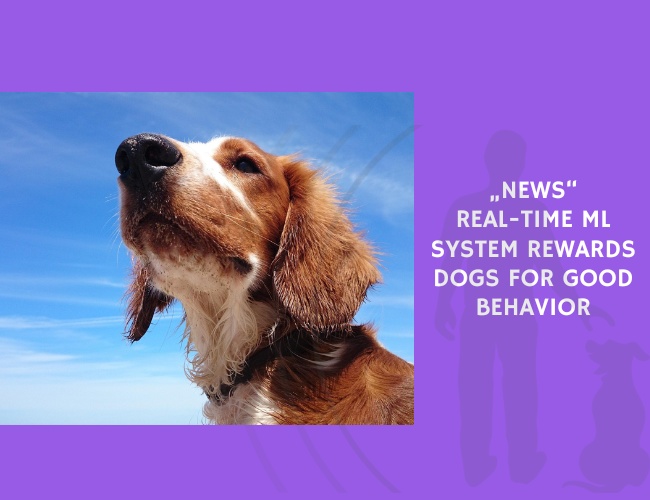
Posted on arXiv, the work by Jason Stock and Tom Cavey outlines the creation of an automated training tool that combines computer vision, embedded hardware, and positive reinforcement principles. The system is designed to recognize three common dog behaviors—sit, stand, and lie down—and deliver treats when desired actions are detected.
The authors trained an image classification model capable of achieving up to 92% test accuracy while running at 39 frames per second. They evaluated a range of neural network architectures, along with methods for interpretability, quantization, and optimization to ensure the model would perform efficiently on the NVIDIA Jetson Nano, a compact edge-AI device.
In real-time operation, the model performs onboard inference to classify the dog’s posture and triggers a servo motor that releases treats from a custom-built dispensing apparatus. By reinforcing behaviors instantly, the system aligns with established learning theory principles, offering highly consistent timing and reducing handler error.
The project demonstrates the feasibility of automated, ML-driven reinforcement systems for dog training and opens the door to more advanced behavior-detection tools. Such systems may eventually support owners, trainers, and researchers in delivering precise, repeatable behavioral feedback without requiring continuous human monitoring.
Source: Stock, J., & Cavey, T. (2021). Who’s a Good Boy? Reinforcing Canine Behavior in Real-Time using Machine Learning. arXiv. Posted January 7, 2021. Authors affiliated with fields of computer science and embedded machine learning.










