
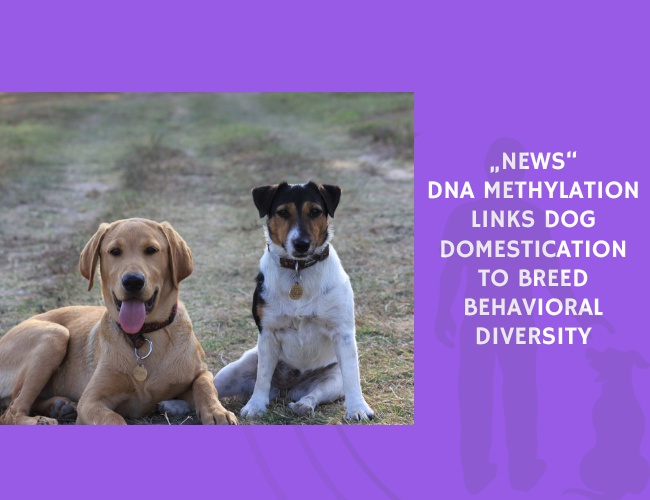
Published in PLoS ONE, this study by Ann-Sofie Sundman, F. Pértille, Luiz Lehmann Coutinho, E. Jazin, C. Guerrero-Bosagna, and P. Jensen examines how epigenetic modifications—specifically DNA methylation—may help explain the remarkable variation in behavior and morphology across dog breeds. Epigenetic factors act as mediators between genetic information and environmental influences, making them key players in evolutionary processes.
The researchers analyzed frontal cortex DNA from 38 dogs representing eight breeds and three wolves. Using a combined approach of genotype-by-sequencing (GBS) and methylated DNA immunoprecipitation (MeDIP), they generated libraries subsequently sequenced on the Illumina HiSeq2500 platform. The sequencing effort captured approximately 1.18 ± 0.4% of the dog genome through GBS and over 11 million unique base pairs through GBS-MeDIP.
The results revealed substantial DNA methylation differences not only between wolves and dogs but also among individual dog breeds. These methylation patterns affected genes associated with behavior and morphology, supporting the hypothesis that epigenetic variation played a role both in early dog domestication and in the diversification of breeds.
According to the authors, these methylation differences may help explain how dogs underwent rapid evolutionary changes in a relatively short timeframe. While the specific mechanisms remain to be fully determined, the findings provide strong evidence that epigenetic modifications contributed to both species-level and breed-level phenotypic variation.
This work adds a new dimension to our understanding of canine evolution and offers valuable insights for future studies exploring the interplay between genetics, epigenetics, and behavior. It also opens possibilities for applying epigenetic knowledge to dog breeding, welfare, and behavioral research.
Source: Sundman, A.-S., Pértille, F., Coutinho, L. L., Jazin, E., Guerrero-Bosagna, C., & Jensen, P. (2020). DNA methylation in canine brains is related to domestication and dog-breed formation. PLoS ONE. Published October 29, 2020. Authors affiliated with institutions specializing in behavioral biology, genomics, and veterinary science.










