
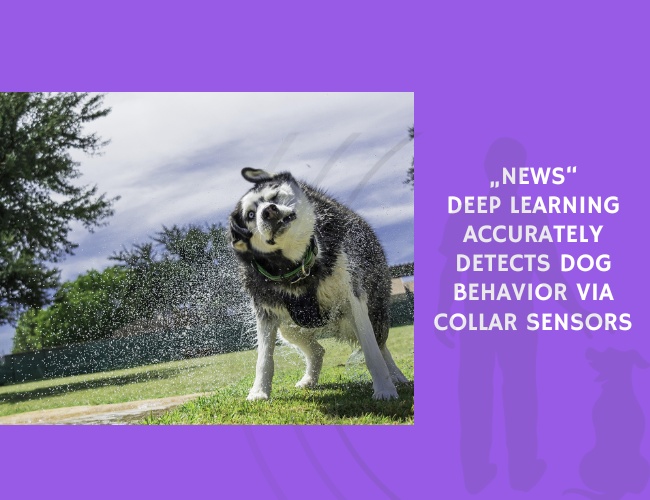
Posted on bioRxiv, the study by Robert D. Chambers, N. Yoder, Scott Lyle, and colleagues describes how recent advances in embedded computing and machine learning make it possible to detect richly detailed dog behaviors using affordable consumer activity monitors. Traditional collar devices typically estimate steps, distance, and general activity, but this research demonstrates far more precise classification capabilities.
The authors built a massive training dataset consisting of over 5,000 videos from more than 2,500 dogs, and validated performance using 11 million days of production device data. To assess real-world reliability, they surveyed owners of 10,550 dogs, collecting 163,110 event responses confirming behavioral detections.
The algorithm achieved exceptional accuracy. For drinking behavior, sensitivity reached 0.949 and specificity 0.999; for eating behavior, sensitivity reached 0.988 and specificity 0.983. The model also detected licking, petting, rubbing, scratching, and sniffing with similarly strong performance. Notably, the system’s accuracy was unaffected by collar position, meaning normal variations in device placement do not compromise behavior detection.
In production settings, users reported true positive rates of 95.3% for eating and 94.9% for drinking, demonstrating strong real-world reliability. These findings highlight the potential of wearable sensors combined with deep learning to enhance health monitoring, early problem detection, and veterinary decision-making for companion dogs.
Source: Chambers, R. D., Yoder, N., Lyle, S., et al. (2020). Deep Learning Classification of Canine Behavior Using a Single Collar-Mounted Accelerometer: Real-World Validation. bioRxiv. Posted December 14, 2020. Authors affiliated with institutions specializing in computer science, veterinary medicine, and applied machine learning.










