
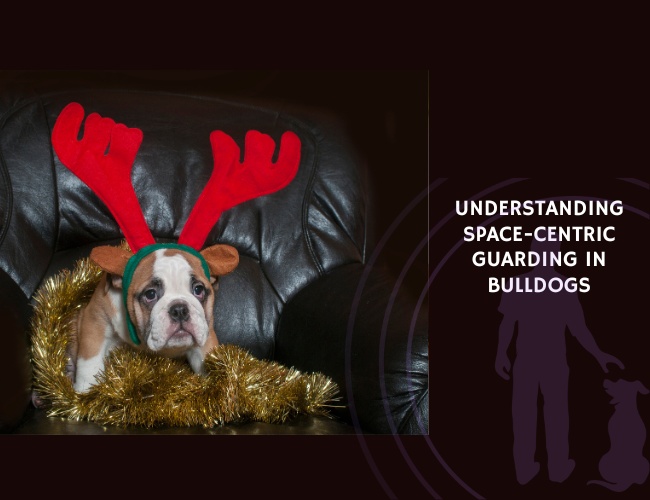
Have you ever noticed your Bulldog stubbornly claiming the doorway, refusing to budge from the sofa, or positioning themselves between you and another family member? This isn’t random stubbornness. What you’re witnessing is space-centric guarding, a fascinating behavioral pattern deeply rooted in your Bulldog’s ancestry, physical design, and emotional landscape. Unlike many breeds that might fiercely protect a favorite toy or food bowl, Bulldogs often choose to guard locations, and understanding why reveals profound insights into their inner world. Let us guide you through the complex interplay of breed heritage, body mechanics, and emotional needs that shape this distinctive behavior.
The Ancestral Blueprint: Breed Origins & Guarding Tendencies
Your Bulldog’s tendency to claim space isn’t a personality quirk. It’s written into their genetic code, shaped by centuries of selective breeding for specific roles that demanded an entirely different kind of courage than chase-and-retrieve work.
From Bull-Baiting to Boundary Holding
Bulldogs descend from powerful Mastiff-type dogs, originally bred for bull-baiting and later adapted for guarding and control roles. These historical functions emphasized something remarkable: holding ground rather than covering ground. Their ancestors weren’t meant to pursue fleeing threats across fields or retrieve objects. Instead, they were designed to confront challenges directly, maintain an unyielding presence, and control defined areas through sheer physical deterrence. This heritage suggests a predisposition toward static guarding, controlling a specific zone through presence and intimidation rather than dynamic object protection or active pursuit.
When you see your Bulldog planted firmly in a doorway, you’re watching centuries of breed history in action. Their role historically involved limiting access to specific areas or targets, which aligns perfectly with the space-based guarding you observe today. 🧡
Physical Architecture Shapes Strategy
Are Bulldogs more likely to claim locations because of their body structure? Absolutely. Your Bulldog’s unique physical characteristics significantly influence their guarding approach. That heavy build, low center of gravity, and brachycephalic structure often result in limited agility and increased breathing effort during physical exertion. Prolonged chase or active object protection becomes physically demanding and energy-draining for them.
Consequently, a strategy of claiming and defending a fixed location becomes a more energy-efficient and effective method of control. Think about it: why chase something across the yard when you can simply block the doorway? Their historical role as guardians, often involving remaining in a specific area to deter intruders, further reinforces this proximity-based guarding heritage. They are built to be formidable anchors in space, not swift runners across distance.
Emotional Security in Stable Positions
How does your Bulldog’s preference for stable, anchored positions relate to their emotional wellbeing? The connection runs deep. Bulldogs often seek out specific stable positions that become emotionally significant anchored zones:
Common Anchored Zones Bulldogs Claim:
- Their designated bed or crate – Provides comfort, personal territory, and scent security
- Door thresholds and hallways – Allows monitoring of entry/exit points and traffic control
- Your lap or feet – Offers ultimate proximity and connection to their primary attachment figure
- Corner of the sofa near you – Combines comfort with human proximity and visual monitoring
- Under desks or tables – Creates a den-like space with overhead protection
- Bedroom doorways – Guards access to the human’s most intimate resting space
- Sunny spots by windows – Provides warmth, visual stimulation, and perimeter monitoring
- Landing at top of stairs – Strategic elevation and traffic control position
- Kitchen entrance during meal prep – Proximity to food resources and family activity
These “anchored zones” become emotionally significant spaces where physical intrusion can activate defensive systems, similar to how you might feel if someone suddenly invaded your personal space without warning. The stability of these positions allows them to exert control through presence alone, contributing to their overall sense of wellbeing and reducing anxiety. 🧠
Space as Emotional Territory
Your Bulldog doesn’t just occupy space. They emotionally inhabit it, transforming physical locations into meaningful territories that reflect their inner needs and social bonds.
The Concept of Emotional Anchoring
Do Bulldogs form emotional attachments to physical locations associated with safety, comfort, or human presence? Without question. Bulldogs, like many social animals, form strong emotional attachments to specific physical locations. These locations aren’t merely physical points on a floor plan. They become “emotional anchors” imbued with profound significance.
Spaces That Become Emotional Anchors:
- Safety-associated spaces – Quiet corners for retreat when overwhelmed, spots away from household chaos
- Comfort-laden locations – Their bed carrying their scent, soft sofas with plush cushions, warm spots near heating vents
- Human-presence zones – The spot next to your desk where you work, areas near your favorite chair, the hallway leading to your bedroom
- Regulatory control positions – Doorways and thresholds where they can monitor and manage access
- Scent-saturated areas – Locations heavily marked with your scent or the family’s scent
- Predictable routine spots – Where they wait for meals, morning greetings, or evening cuddle time
- Recovery spaces – Where they retreat after stressful experiences or veterinary visits
This emotional anchoring transforms a physical space into a perceived extension of your Bulldog’s self or social group. Through the NeuroBond approach, you begin to understand that when a space feels safe, carries your scent, or offers quiet refuge, it becomes more than territory. It becomes sanctuary. Any perceived threat or intrusion into this emotionally anchored zone can trigger protective or defensive behaviors.
Defending Emotional Boundaries, Not Just Physical Space
This protective response isn’t merely about guarding a physical resource. Your Bulldog is defending an emotional boundary. When they growl at someone approaching their spot on the sofa, they’re not being difficult. They’re protecting what feels like an extension of themselves, a zone where they’ve invested emotional significance and found security.
Consider how you might feel if someone casually sat in your favorite chair where you always read, or stood too close when you’re feeling vulnerable. That discomfort you’d experience is similar to what your Bulldog feels when their emotionally anchored space is approached without respect for the boundary they’ve established.
Human Proximity Zones Hold Special Value
Are Bulldogs more likely to guard human proximity zones rather than random high-value objects? The evidence is clear: yes. Bulldogs demonstrably prefer to guard spaces near their human companions. This behavior stems directly from their strong social bonds and emotional dependency on you.
The space immediately surrounding you, or areas that facilitate close interaction like the sofa cushion next to yours or the hallway leading to your bedroom, holds immense emotional value. These proximity zones allow your Bulldog to regulate access to their primary source of security and affection. By guarding these spaces, they’re reinforcing their bond with you and maintaining what they perceive as their crucial role within your social structure.
You might notice your Bulldog doesn’t guard an expensive toy left across the room, but they’ll firmly defend the floor space right next to your feet. That’s not about the physical value of the location. It’s about emotional proximity to you, their most treasured resource. 🧡
Human-Dog Relationship & Protective Positioning
Your Bulldog’s space control behaviors reveal fascinating insights into how they perceive and manage social relationships within your household.
Strategic Space Management
Do Bulldogs use space control to manage human movement? They absolutely do. When your Bulldog blocks the hallway, sits strategically between you and a visitor, or guards the entry point to a room, they’re not simply being stubborn or inconvenient. They’re actively attempting to regulate social interactions and access within their environment.
Space Control Behaviors You Might Observe:
- Doorway blocking – Positioning themselves to control who enters or exits specific rooms
- Strategic interpositioning – Sitting between you and other family members, guests, or pets
- Hallway claiming – Lying across narrow passages to monitor and manage traffic flow
- Furniture monopolizing – Taking central positions on sofas or beds that force others to navigate around them
- Stair landing occupation – Claiming elevated positions that oversee multiple areas
- Following and positioning – Moving to maintain specific spatial relationships with family members
- Entry point guarding – Monitoring front doors, back doors, or gates to the yard
- Resource proximity control – Positioning near food bowls, water stations, or toy storage even when not using them
- Displacement behaviors – Physically moving to block another dog’s path to a desired location
This isn’t about dominance in the outdated sense. It’s about your Bulldog attempting to create order in their social world, managing the flow of interactions in ways that feel emotionally safe and predictable to them.
Attachment-Based Location Guarding
How does proximity to you amplify the perceived value of a space? The relationship is direct and powerful. Your Bulldog’s strong attachment to you means that any location where you’re present, or where they can easily access you, becomes inherently more valuable to them.
This leads to what we call “attachment-based location guarding.” The space itself is guarded specifically because it facilitates the desired closeness and security you provide. The Invisible Leash reminds us that the connection between you and your Bulldog isn’t just about physical restraint or proximity. It’s about emotional guidance and the energy that flows between you.
When your Bulldog guards the sofa cushion next to you but shows no interest in the identical cushion across the room, they’re demonstrating this attachment-based valuing. The cushion near you offers something the distant one cannot: immediate access to your presence, your warmth, your attention, and the security you represent.
Guarding the Space, Not the Person
Does emotional dependency lead to guarding the space around someone rather than the person directly? This is a nuanced but crucial distinction. Emotional dependency can indeed lead Bulldogs to guard the space around you or a highly valued location, rather than guarding you or an object directly.
This represents a sophisticated form of territorial behavior where the boundary being defended is the invisible perimeter of their perceived control or safety zone. If your Bulldog is highly dependent on you for security, they may guard the sofa next to you, or the doorway leading to you, to ensure that this crucial resource, your presence and attention, remains accessible and undisturbed.
Think of it as defensive positioning around an asset rather than protection of the asset itself. Your Bulldog is creating a buffer zone that they control, ensuring their access to you remains uncompromised. This reflects a strategy to control the environment in service of securing their emotional needs.
Low Mobility, High Control Strategy
Your Bulldog’s physical design doesn’t limit their effectiveness. It simply shapes their approach to achieving control and security within their environment.
Physical Traits Influence Behavioral Strategy
How do physical traits like heavy build, limited agility, and breathing effort influence your Bulldog’s preference for static guarding? The connection is fundamental. Your Bulldog’s body structure makes prolonged physical exertion challenging. That adorable, compact build with its low center of gravity and brachycephalic respiratory system means that extended running, jumping, or active pursuit demands significant energy and can quickly lead to breathing difficulty and overheating.
Given these physical realities, a static guarding strategy becomes the intelligent choice. Why waste energy chasing a toy across the yard when you can simply claim the sofa and defend it through presence alone? Why attempt to actively protect a moving object when you can control access to a fixed location much more efficiently?
This isn’t laziness. It’s strategic adaptation. Your Bulldog’s ancestors were bred for tenacity and strength in holding positions, not for speed or endurance in pursuit. Their modern descendants have inherited this tactical approach: maximize control while minimizing energy expenditure.
Benefits of Static Guarding Strategy for Bulldogs:
- Energy conservation – Minimal physical exertion compared to chasing or active patrolling
- Reduced respiratory stress – Avoids breathing difficulties associated with prolonged activity
- Temperature regulation – Prevents overheating that their brachycephalic structure makes them prone to
- Consistent monitoring – Maintains visual surveillance of their claimed area continuously
- Physical comfort – Allows them to rest while still maintaining control
- Predictable positioning – Family members know where to find them, reinforcing routine
- Joint protection – Reduces wear on joints that may already be compromised by body structure
- Clear communication – Their presence alone signals territorial claim without aggressive display
- Sustainable long-term – A strategy they can maintain as they age and mobility decreases further
Selective Immobility as Strategic Positioning
Does selective immobility function as strategic space-blocking? Precisely. When your Bulldog plants themselves in a doorway and refuses to move, what looks like stubbornness is actually tactical positioning. This “selective immobility” serves multiple functions simultaneously.
Functions of Selective Immobility:
- Physical barrier creation – Forces others to navigate around them, granting traffic control
- Minimal energy expenditure – Requires almost no physical effort compared to active patrolling
- Continuous space monitoring – Allows surveillance while conserving physical resources
- Clear territorial signaling – Communicates claimed status of the space to all household members
- Temperature optimization – Enables them to remain in thermally comfortable positions
- Rest with purpose – Combines necessary physical rest with functional role fulfillment
- Reduced vulnerability – Stationary position in claimed space feels safer than movement through uncertain territory
- Social traffic management – Controls who approaches, who passes, and interaction frequency
- Pressure-free control – Achieves environmental management without confrontation or chase
Your Bulldog isn’t being difficult when they become an immovable obstacle. They’re executing an energy-efficient control strategy perfectly suited to their physical capabilities. By remaining stationary in strategic locations, they achieve maximum environmental control with minimum physical cost.
Body-Based Defensiveness
Can limited escape options intensify defensive postures when a Bulldog is approached in claimed space? Absolutely, and this is crucial for understanding their reactions. Your Bulldog’s physical build, while impressive and powerful, also limits their agility and quick-escape options. They cannot dart away swiftly like a more agile breed might.
Physical Factors That Intensify Defensiveness:
- Limited agility – Cannot quickly maneuver around obstacles or escape routes
- Low acceleration – Takes time to get their heavy body moving from stationary position
- Brachycephalic breathing constraints – Sudden movement causes immediate respiratory stress
- Joint limitations – May have hip dysplasia, arthritis, or other mobility restrictions
- Body mass inertia – Significant weight requires more energy to shift direction or relocate
- Shortened legs – Reduced speed and jumping capability compared to longer-legged breeds
- Center of gravity – Low build makes rapid direction changes more challenging
- Cornered positioning – Furniture or walls limiting physical escape routes
- Temperature sensitivity – Overheating risk if forced into sudden exertion
This body-based defensiveness isn’t aggression for its own sake. It’s a rational response to physical limitations combined with emotional investment in the space. Your Bulldog is essentially thinking: “I cannot easily run, so I must stand firm.” Understanding this helps you approach their guarded spaces with greater sensitivity and awareness.
You might notice your Bulldog is more defensive when approached in a corner of the sofa compared to when they’re on the open floor. The corner position offers less escape route, intensifying their need to defend. 😄
Reading Your Bulldog: Visual Recognition Guide
Learning to read your Bulldog’s body language before space-guarding escalates is one of the most valuable skills you can develop. Early recognition allows you to intervene gently, redirect calmly, and prevent defensive responses before they become entrenched patterns.
Early Warning Signs: The Subtle Signals
Before your Bulldog ever growls or snaps, their body speaks volumes. These early signals often go unnoticed, but recognizing them gives you the opportunity to address discomfort before it escalates into defensive behavior.
Early Warning Signs Checklist:
Eye Contact Changes:
- Whale eye (whites of eyes visible while tracking without head movement)
- Hard, fixed staring at approaching individuals
- Deliberate eye contact avoidance while body remains stationary
- Rapid eye movements tracking multiple people or movements
- Squinting or narrowed eyes indicating stress
Ear Position Signals:
- Ears pinning back slightly against the head
- Rotating ears tracking movement while head stays still
- Perked forward ears with hypervigilant focus
- Asymmetrical ear positioning (one forward, one back)
- Rapid ear position changes indicating uncertainty
Muscle Tension Indicators:
- Subtle body stiffening and rigid posture
- Tense shoulders and neck muscles
- Overall shift from soft to hard body language
- Pressing more firmly into furniture or ground
- Weight redistribution preparing for quick response
- Tail base tension and rigidity
Breathing Pattern Changes:
- Shallow, rapid breathing despite no physical exertion
- Momentary breath-holding when approached
- Stress panting when temperature is comfortable
- Audible breathing changes due to tension
- Flared nostrils indicating arousal
Eye contact shifts: Your Bulldog may engage in “whale eye,” where you see the whites of their eyes as they track your approach while keeping their head still. They might also offer hard, fixed stares at approaching individuals, or conversely, avoid eye contact entirely, turning their head away while remaining in position. These eye signals indicate awareness of potential intrusion and rising tension.
Ear position changes: Relaxed ears typically sit naturally on your Bulldog’s head. As tension builds, you might notice ears pinning back slightly against the head, or rotating to track movement while the head remains stationary. In some Bulldogs, ears may actually perk forward with intense focus, signaling hypervigilance about their claimed space.
Muscle tension: Perhaps the most telling early sign is subtle body stiffening. Your Bulldog’s previously relaxed posture becomes rigid. Their shoulders may tense, their neck muscles tighten, and their overall body language shifts from soft to hard. You might notice them pressing more firmly into the furniture or ground, as if rooting themselves more securely into position.
Breathing changes: Many Bulldogs exhibit breathing pattern shifts when experiencing spatial stress. Breathing may become shallower and faster, or they might hold their breath momentarily when someone approaches. Some Bulldogs display stress panting even when not physically exerted or warm. Given their brachycephalic structure, these respiratory changes can be particularly noticeable. 🧠
The Escalation Ladder: From Discomfort to Defense
Understanding how space-guarding intensifies helps you recognize which stage your Bulldog has reached and respond appropriately. Each level requires different intervention strategies.
The Four-Stage Escalation Ladder:
Stage 1: Subtle Discomfort
- Slight weight shifting or position adjustment
- Turning head or body to face approaching person
- Pausing mid-activity (sleeping, chewing, grooming)
- Increased alertness with relatively soft body language
- Brief eye contact followed by looking away
- Subtle muscle tension not yet visible to untrained eye
- Best intervention: Gentle redirection, change approach angle, offer alternative activity
Stage 2: Visible Tension
- Obvious muscle stiffening throughout body
- Noticeable breathing pattern changes
- Freezing in position while tracking movement with eyes
- Lowered head or tucked chin (defensive posture)
- Closed mouth, disappearance of relaxed expression
- Whale eye or hard staring
- Ears pinned or hyperalert
- Best intervention: Stop approach, create distance, assess and modify strategy
Stage 3: Active Warning
- Low growling or guttural sounds
- Showing teeth or lip raising (snarling)
- Snapping toward (without contact) approaching individual
- Rigid body leaning forward assertively
- Direct, intense eye contact
- Hackles raised along spine
- Stillness preceding potential action
- Critical: Do not punish—this is communication. Respect boundary, reassess entire approach
Stage 4: Defensive Response
- Lunging forward from position
- Snapping with contact
- Biting (inhibited or uninhibited)
- Body explosion from stationary to active defense
- Loss of communication escalation (skipping warnings)
- Emergency response needed: Create safety, seek professional help immediately
Stage 1: Subtle Discomfort At this earliest stage, your Bulldog shows minimal but detectable signs of awareness and mild tension. They may shift their weight slightly, adjust their position to face the approaching person, or pause in whatever they were doing (sleeping, chewing, resting). Their body language remains relatively soft, but their attention is now focused on the potential intrusion. This is the ideal intervention point—gentle redirection works beautifully here.
Stage 2: Visible Tension As concern increases, body language becomes unmistakably tense. Your Bulldog’s muscles visibly stiffen, their breathing changes noticeably, and they may freeze in position while tracking movement with their eyes. Some Bulldogs will lower their head slightly or tuck their chin, creating a more defensive posture. The mouth typically closes, and any previous panting or relaxed expression disappears. At this stage, they’re communicating clear discomfort but haven’t yet issued warnings.
Stage 3: Active Warning When tension escalates further, your Bulldog begins actively communicating their desire for space. This may include low growling, showing teeth, raising lips in a snarl, or snapping toward (but not making contact with) the approaching individual. Their body remains rigid, and they may lean forward slightly in a more assertive posture. These are not attacks—they’re communication. Your Bulldog is saying clearly: “I need you to respect this boundary.” Punishment at this stage is particularly damaging because it teaches them that warning communication doesn’t work, potentially leading them to skip warnings and move directly to defensive action in future situations.
Stage 4: Defensive Response If all previous communication has been ignored or ineffective, your Bulldog may escalate to actual defensive behavior: lunging, snapping with contact, or biting. This represents a failure of earlier communication, not inherent aggression. By this stage, your Bulldog feels they have no other option to protect their space and emotional security. Prevention focuses on never allowing escalation to reach this point through recognition and response at earlier stages.
Distinguishing Space-Guarding from Other Issues
Not all defensive behavior around space is space-centric guarding. Accurate identification ensures you address the actual underlying issue rather than misapplying solutions.
Key Differences Between Guarding Types:
Space-Guarding Characteristics:
- Defends specific locations (sofa, doorway, bed)
- Guards location regardless of what’s in it
- No defensiveness around movable objects elsewhere
- Location tied to emotional significance (safety, comfort, proximity)
- Willing to guard multiple different locations
- Reduces when removed from claimed space
Resource Guarding Characteristics:
- Defends possessable items (food, toys, chews, stolen objects)
- Guards the object regardless of location
- May move object to different locations while guarding
- Object has inherent value (edible, interactive, high-value)
- Typically guards same category of items consistently
- Continues guarding if item moves with them
Fear-Based Aggression Characteristics:
- Body language leans away from threat
- Ears completely flattened back
- Shows avoidance signals (turning away, trying to escape)
- Wants to increase distance from perceived threat
- May retreat if given opportunity
- Defensive as last resort when escape blocked
Pain-Related Defensiveness Characteristics:
- Sudden appearance in previously non-defensive dog
- Inconsistent intensity based on pain levels
- Other pain indicators present (limping, difficulty rising, sensitivity)
- Guards positions that provide physical relief
- May vocalize with touch even away from guarded space
- Often improves with pain management
Space-Guarding vs. Resource Guarding Resource guarding focuses on possessable items: food bowls, toys, chews, stolen objects. The dog is defending the object itself and will often guard it regardless of location. Space-centric guarding, conversely, focuses on the location. Your Bulldog defends the sofa spot, the doorway, or the bed, not a specific object within that space. They may show no defensiveness around food or toys but react strongly when approached in their claimed location.
Space-Guarding vs. Fear-Based Aggression Fear-based aggression typically involves a desire to escape or create distance from a perceived threat. The dog’s body language leans away, ears flatten completely back, and they show avoidance signals alongside defensive ones. Space-guarding Bulldogs, in contrast, don’t want to leave their position—they want the approaching individual to leave or stop approaching. Their body language is often more forward or neutral rather than consistently withdrawn.
Space-Guarding vs. Pain-Related Defensiveness Pain-related defensiveness can look very similar to space-guarding because painful dogs often claim comfortable resting spots and defend them. The critical difference: pain-related defensiveness typically appears suddenly in a previously non-guarding dog, may be inconsistent based on pain levels, and often includes other pain indicators like limping, difficulty rising, or sensitivity to touch in specific body areas. If your Bulldog suddenly develops space-guarding behavior, especially if they’re older or showing other physical changes, consult your veterinarian to rule out pain as the primary driver.
Through careful observation of these body language signals and accurate differentiation from other behavioral issues, you can respond to your Bulldog’s space-guarding with appropriate strategies that address the actual underlying cause. 🧡
Emotional Triggers & Pressure Sensitivity
Your Bulldog’s emotional landscape significantly influences when and how intensely they guard spaces, revealing the deep connection between their inner state and outward behavior.
Interpreting Movement as Emotional Intrusion
Do Bulldogs interpret movements toward their space as potential emotional intrusions rather than physical threats? This interpretation runs deeper than simple territorial defense. When someone approaches your Bulldog’s claimed space, they may process this movement not primarily as a physical threat to their safety, but as an emotional intrusion into their secure zone.
Signs Your Bulldog Perceives Emotional Intrusion:
- Defensive reactions to familiar, non-threatening people
- Stronger reactions when emotionally vulnerable (tired, stressed, ill)
- Increased intensity during quiet rest periods vs. active times
- Differential responses based on approacher’s emotional state
- More guarding when they’re seeking connection or security
- Reduced defensiveness when they initiate leaving the space
- Heightened responses when you’re interacting with others nearby
- Calmer acceptance of approaches that include verbal reassurance
This distinction matters because it explains why your Bulldog might react defensively even when the approaching person poses no actual physical danger. A family member walking toward the sofa where your Bulldog rests isn’t threatening bodily harm, but they are approaching an emotionally significant boundary. The Bulldog’s response is rooted in protecting their emotional security and sense of control, not in fear of physical attack.
This emotional interpretation means that body language, energy, and approach style matter tremendously. A confident, calm approach respects the emotional dimension of the space, while hesitant or tense energy can amplify your Bulldog’s perception of intrusion and threat.
Emotional Pressure and Defensive Responses
Can emotional pressure from humans trigger defensive reactions even without physical contact? Yes, and this is where many well-intentioned interactions go wrong. Your Bulldog is remarkably sensitive to emotional energy and pressure. When you approach their guarded space with frustration, anxiety, or demanding energy, they feel this emotional pressure acutely.
Even without touching them or raising your voice, this emotional intensity can trigger defensive responses. Your Bulldog might stiffen, growl, or show other warning signals in response to the pressure they sense, not to any physical action you’ve taken. This is why calm, emotionally regulated approaches are so effective in managing space-guarding behaviors.
Moments of Soul Recall reveal how deeply emotional memory and current emotion intertwine in your Bulldog’s behavior. If past approaches to their space were tense or resulted in conflict, those emotional memories color how they interpret current approaches, even when you’re trying to remain calm.
Fatigue and Frustration Amplify Guarding
Are Bulldogs more reactive when fatigued, overstimulated, or emotionally frustrated? Without question. Your Bulldog’s emotional state significantly influences the intensity of their space-guarding behaviors. When they’re tired, overstimulated from a busy day, or frustrated by unmet needs, their threshold for perceived intrusion drops dramatically.
Emotional States That Amplify Guarding:
Fatigue-Related Factors:
- Physical exhaustion from exercise or activity
- Sleep deprivation or disrupted rest
- Post-meal drowsiness and digestive rest needs
- Age-related tiredness in senior dogs
- Recovery from illness or medical procedures
Overstimulation Triggers:
- Excessive household activity or noise
- Multiple visitors or social interactions
- Prolonged play sessions without rest breaks
- Environmental chaos (construction, moving, parties)
- Sensory overload from multiple simultaneous stimuli
Frustration Sources:
- Blocked access to desired resources (you, food, outdoors)
- Unmet exercise or mental stimulation needs
- Interrupted routines or unpredictable schedules
- Failed attempts to communicate other needs
- Conflict with other household pets
- Unclear expectations or inconsistent boundaries
Anxiety Contributors:
- Separation from primary attachment figure
- Changes in household composition or routine
- Recent stressful experiences (vet visit, grooming, travel)
- Environmental insecurity (new home, renovation)
- Social uncertainty or relationship tensions
A Bulldog who might easily vacate the sofa when calm and rested may growl and stiffen when exhausted and someone approaches their resting place. This isn’t inconsistency. It’s a natural response to diminished emotional resources. When fatigued, your Bulldog has less capacity to regulate their responses and tolerate what feels like boundary violations.
Similarly, overstimulation from too much activity, noise, or social interaction can leave your Bulldog feeling emotionally raw and defensive. Emotional frustration, perhaps from blocked access to you or unmet exercise needs, can also intensify their need to control something in their environment, often manifesting as heightened space guarding.
Recognizing these emotional factors helps you adjust your expectations and approach. On days when your Bulldog seems more reactive about their space, consider what emotional state they might be in and respond with greater patience and sensitivity. 🧡
Miscommunication & Human Reinforcement
Your responses to your Bulldog’s space-guarding behaviors, often well-intentioned, can inadvertently strengthen the very patterns you wish to change.
Unintentional Ownership Reinforcement
How often do you unintentionally reinforce space guarding by allowing your Bulldog to “own” certain areas without boundaries? This happens more frequently than most people realize. When your Bulldog consistently occupies the bed, sofa, or a doorway, and you consistently defer to them by walking around them, sitting elsewhere, or waiting for them to move on their own terms, you’re teaching them something powerful.
Common Ways Humans Unintentionally Reinforce Guarding:
- Consistently walking around the dog rather than asking them to move
- Choosing alternative seating when dog occupies preferred spot
- Waiting for dog to relocate on their own timeline
- Allowing unlimited, unsupervised furniture access
- Never practicing displacement during calm, non-confrontational times
- Accepting doorway blocking as “just their personality”
- Avoiding certain areas of home when dog is resting there
- Inconsistently enforcing “off” or relocation requests
- Only displacing dog when absolutely necessary
- Never inviting dog back after displacement (teaching displacement = permanent loss)
- Allowing dog to determine household traffic patterns
- Permitting dog to control who sits where
Your Bulldog learns that their presence in that space dictates your movement and access. This reinforces their perceived ownership and control. Each time you accommodate their space claim without establishing that access is granted by invitation rather than taken by right, you solidify their belief that they are responsible for regulating these spaces.
This doesn’t mean you should never let your Bulldog on the furniture. It means the decision should flow from your invitation and guidance, not from their unilateral claiming. The difference is crucial for establishing clear leadership and reducing space-based anxiety.
How Human Reactions Validate Guarding
Do your reactions when your Bulldog guards space actually validate their behavior? Often, yes. Your responses play a crucial role in either reinforcing or reducing guarding attempts, and many common reactions inadvertently strengthen the behavior.
How Different Reactions Validate Guarding:
Backing Off Teaches:
- “My defensive display successfully controls human movement”
- “Growling/stiffening makes threats retreat”
- “I am effective at boundary enforcement”
- “Escalating intensity produces desired results”
- “Humans respect my territorial claims”
Appeasing Reinforces:
- “Guarding this space earns treats and attention”
- “Defensive behavior leads to rewards”
- “Humans negotiate when I claim territory”
- “Being possessive of space is valuable”
- “I can trade access for resources”
Laughing/Comforting Validates:
- “My guarding behavior draws positive attention”
- “Humans find my territorial displays engaging”
- “Emotional reactions to my guarding provide connection”
- “This behavior strengthens human focus on me”
- “Territory claiming maintains interaction”
Inconsistent Responses Create:
- “Sometimes guarding works, sometimes it doesn’t—better guard more intensely”
- “I must escalate to determine when humans will respect boundaries”
- “Leadership is unpredictable, requiring me to control space”
- “Trial different intensity levels to find what succeeds”
Backing off: When you retreat after your Bulldog growls or stiffens in a guarded space, you teach them that their guarding behavior is effective. They learn: “When I show defensive signals, humans respect my boundary.” This reinforces the guarding strategy as successful.
Appeasing: Offering treats or gentle words to coax your Bulldog out of a guarded space might seem kind, but it can be interpreted as a reward for the guarding behavior itself. Your Bulldog may think: “When I guard this space, I receive treats and attention.” This validates and reinforces the pattern.
Laughing or comforting: While these reactions seem harmless or even affectionate, they can be misinterpreted by your Bulldog as attention or approval. Any attention, even sympathetic attention, can validate their actions in their mind.
These responses, though often well-intentioned, can inadvertently strengthen your Bulldog’s belief that guarding is necessary and successful for managing their environment and social interactions. Through the NeuroBond approach, we recognize that clear, consistent communication serves everyone better than accommodating or appeasing responses that create confusion about boundaries and leadership.
Inconsistent Leadership Creates Anxiety
Does inconsistent leadership confuse your Bulldog and cause them to regulate space to create order? This is one of the most significant factors in space-guarding behaviors. Bulldogs, like all dogs, thrive on predictability and clear communication from their leaders. When human leadership is inconsistent, sometimes allowing access to a space and sometimes denying it, or reacting differently to the same guarding behavior on different occasions, confusion and anxiety result.
Signs of Inconsistent Leadership Affecting Space Behavior:
- Different family members have different rules about furniture access
- Rules change based on human mood or convenience
- Dog allowed on sofa sometimes, prohibited other times with no clear pattern
- Guarding ignored when convenient, addressed when inconvenient
- Displacement enforced by some family members but not others
- Varying reactions to same defensive behavior (sometimes backed off, sometimes confronted)
- Bedtime rules differ from daytime rules inconsistently
- Guest presence changes rules unpredictably
- Weekend vs. weekday access differences without clear cues
- Consequences for guarding vary without pattern dog can understand
Your Bulldog may become uncertain about expectations and feel compelled to take on the role of environmental mediator. By guarding spaces, they attempt to create their own sense of order and predictability, asserting control where they perceive a vacuum in consistent guidance.
Imagine if the rules at your workplace changed daily with no explanation. One day certain behaviors are encouraged, the next day they’re prohibited, with no pattern you can discern. You’d likely feel anxious and try to create some structure of your own to manage the uncertainty. This is similar to what your Bulldog experiences with inconsistent leadership.
When you establish clear, consistent patterns around space access, invitations to shared areas, and calm redirections when needed, you provide the clarity your Bulldog craves. This reduces their perceived need to self-regulate through guarding, allowing them to relax into a follower role where they trust you to provide structure and security.
Anchored. Aware. Protective.
Guarding through presence. Bulldogs don’t chase threats—they contain them. Their heritage and body design favor holding space, turning doorways, sofas, and thresholds into quiet zones of control.v
Stability becomes strategy. Limited agility and high energy cost make motion inefficient. So they guard by staying—using location as influence instead of action.
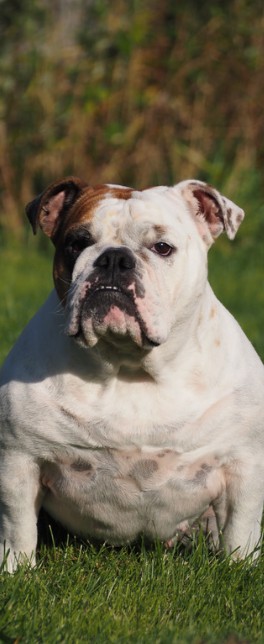
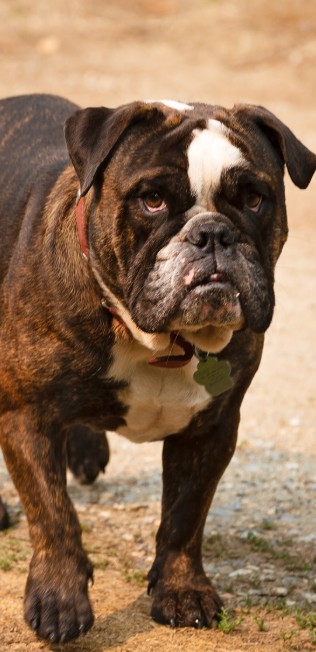
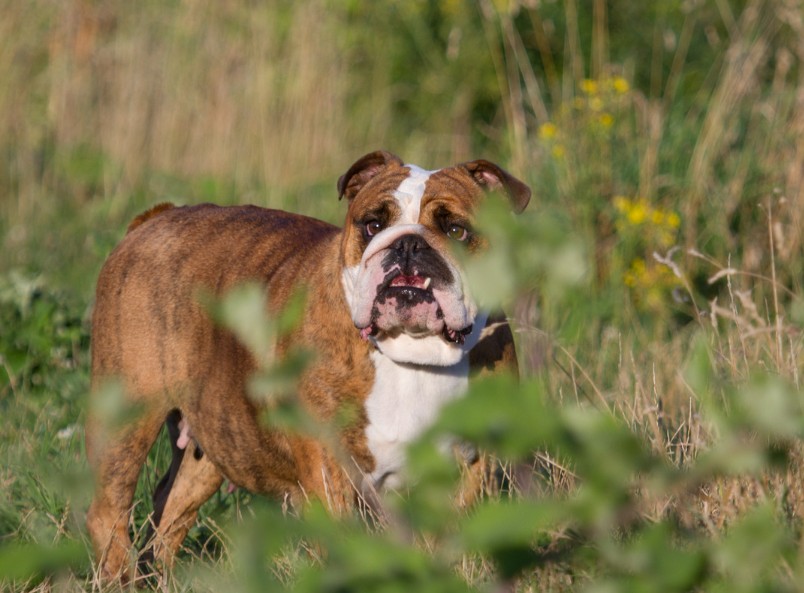
Space feels like safety. Certain positions offer not just comfort but emotional security. When they hold ground, they’re not just guarding space—they’re protecting peace.
Managing Multi-Dog Household Dynamics
Space-guarding behaviors become more complex and nuanced when multiple dogs share your home. The social dynamics between dogs add layers of competition, hierarchy negotiation, and resource management that can either intensify or modify space-centric guarding patterns.
How Space-Guarding Manifests with Other Dogs Present
When other dogs are present, your Bulldog’s space-guarding often shifts in significant ways. The presence of canine competition can amplify the perceived value of certain spaces, particularly those associated with human proximity or comfort. You might notice your Bulldog doesn’t guard their bed when they’re the only dog home, but becomes intensely protective of the sofa spot next to you when another dog is present.
Multi-Dog Space Guarding Patterns:
Intensification Patterns:
- Guarding only occurs when other dogs are present
- Increased defensive intensity with canine competition
- Preference shifts to finite resources (spots next to owner)
- Guarding locations that grant competitive advantage
- Blocking other dogs’ access paths to valued resources
Reduction Patterns:
- Deference to more confident dogs’ spatial control
- Release of perceived territory management responsibility
- Reduced anxiety when another dog “manages” environment
- Acceptance of secondary positions without defensiveness
Selective Guarding Patterns:
- Guards from new/unfamiliar dogs but not established companions
- Differential responses based on relationship quality
- Space-sharing with trusted dogs, guarding from others
- Age-based selectivity (guards from young dogs, not seniors)
- Size-based responses (guards from similar-sized dogs)
This intensification occurs because the space now serves dual purposes: it provides the original emotional security and comfort, plus it represents competitive access to limited resources. The space next to you isn’t just valuable for the warmth and connection—it’s valuable because only one dog can occupy it at a time, making it a finite resource in a competitive environment.
Interestingly, some Bulldogs actually reduce space-guarding when other, more confident dogs are present. If another dog naturally assumes spatial control, your Bulldog may defer and release their perceived responsibility for territory management. This can provide valuable insight into whether their guarding stems from anxiety about environmental control or genuine preference for specific locations.
You might also observe selective guarding, where your Bulldog defends spaces from certain dogs but not others. They may guard the doorway from a newer dog while allowing a long-term companion free access. This selective response reveals that the behavior isn’t purely territorial but is influenced by relationship quality, trust, and perceived social standing with specific individuals.
🏰 Understanding Space-Centric Guarding in Bulldogs
A Complete Journey from Recognition to Resolution 🐾
Phase 1: Recognition & Understanding
Identifying the Pattern
Why Bulldogs Guard Space
Unlike breeds that guard objects, Bulldogs claim locations. Their Mastiff ancestry bred them to hold ground rather than cover ground. Their heavy build and brachycephalic structure make static positioning more energy-efficient than active pursuit. These anchored zones become emotional territories linked to safety, comfort, and proximity to you.
Common Claimed Spaces
• Sofa spots next to you
• Door thresholds and hallways
• Their designated bed or crate
• Sunny window positions
• Bedroom doorways
• Any location carrying your scent
What to Observe
Watch for selective guarding patterns. Does your Bulldog only guard when others are present? Do they defend proximity zones near you more than random locations? Track which spaces trigger defensive responses and under what emotional conditions (tired, stressed, overstimulated).
Phase 2: Reading Early Warning Signs
Before Defensive Behavior Escalates
Subtle Body Language Signals
• Whale eye – seeing whites of eyes while tracking your approach
• Muscle stiffening – shift from soft to rigid posture
• Breathing changes – shallow, rapid breathing or stress panting
• Ear rotation – tracking movement while head stays still
• Weight shifting – preparing to defend position
The Escalation Ladder
Stage 1: Subtle discomfort – gentle position adjustment
Stage 2: Visible tension – obvious stiffening and freezing
Stage 3: Active warning – growling, teeth showing
Stage 4: Defensive response – lunging, snapping, biting
Critical: Never Punish Warnings
Growling and stiffening are communication, not defiance. Punishing these signals teaches your Bulldog that warnings don’t work, potentially leading them to skip straight to biting in future situations. Instead, honor the boundary and reassess your approach.
Phase 3: Understanding Emotional Triggers
When Guarding Intensifies
States That Amplify Guarding
Fatigue: Exhausted dogs have lower tolerance for displacement
Overstimulation: Too much activity reduces emotional regulation
Frustration: Unmet needs increase control-seeking behaviors
Anxiety: Environmental changes heighten defensive responses
Emotional vs. Physical Intrusion
Your Bulldog perceives approaches to their space as emotional intrusions into their secure zone, not physical threats. Through NeuroBond awareness, you recognize that they’re protecting emotional safety and predictability. Their defensive response reflects anxiety about losing control over their comfort and connection to you.
Adapting Your Approach
On high-stress days, lower your expectations. A Bulldog who normally vacates the sofa easily may need gentler handling when exhausted. Recognize their emotional state and respond with patience, not frustration. Calm energy communicates safety more than any verbal command.
Phase 4: Eliminating Reinforcement Patterns
Breaking the Cycle
How You Accidentally Reinforce Guarding
• Backing away when they growl teaches defensive displays work
• Offering treats to coax them off rewards guarding behavior
• Walking around them confirms their territorial control
• Inconsistent rules create anxiety that intensifies claiming
Correct Response Pattern
Never back away from defensive signals. Instead, pause and calmly redirect using high-value lures or alternative activities. After they vacate, immediately re-invite them to the space on your terms. This teaches that displacement doesn’t mean permanent loss, building trust in your leadership.
Consistency Across the Household
All family members must enforce identical boundaries. Mixed messages create the vacuum of leadership that drives your Bulldog to self-regulate through territorial control. Establish clear household rules: furniture by invitation only, no tolerance for blocking doorways, calm displacement practiced daily.
Phase 5: Establishing Structured Boundaries
Building Clear Leadership
Invitation-Based Access
Teach “up” and “off” commands from day one. Your Bulldog waits for invitation before accessing furniture or high-value spaces. This establishes that you control resources, not them. Practice 3-5 gentle displacements daily with immediate re-invitation to build trust that leaving doesn’t equal permanent loss.
Predictable Routines
Create consistent patterns around shared spaces. If your Bulldog knows they’re invited to the sofa every evening after dinner, they don’t need to claim it defensively all day. Predictability reduces anxiety and the perceived need to guard. The Invisible Leash operates through emotional guidance, not physical control.
Spatial Zoning System
Shared zones: Living areas with invitation-based furniture access
Human priority zones: Office during work, dining during meals
Dog sanctuary zones: Their bed/crate – never disturbed
Transition zones: Hallways for fluid movement, not blocking
Phase 6: Environmental Optimization
Designing for Success
Strategic Furniture Placement
Move sofas off main traffic pathways to reduce confrontations. Create alternative routes around claimed positions. Position beds where your Bulldog can see family activity without being in constant traffic flow. Provide 1.5-2x more resting spots than number of dogs in multi-dog homes.
Decompression Spaces
Create at least one protected sanctuary where your Bulldog is never disturbed. Low-traffic location, comfortable bedding, pleasant temperature. Never used for timeout or displacement. When they have an absolute safe haven, they don’t need to defend every comfortable location as if it’s their only refuge.
Small Space Solutions
In apartments, create bypass routes and use vertical space for human storage. Time-share spaces: living room primarily theirs during your work hours, primarily yours during evenings. Flexible furniture on wheels allows configuration adjustments based on their emotional state. Intensify enrichment to reduce fixation on spatial control.
Phase 7: Age & Context Adaptations
Life Stage Considerations
Puppies (8-16 Weeks)
Prevention is key. Teach invitation-based access from day one. Practice gentle displacement 3-5 times daily with immediate re-invitation. Create multiple positive space associations to prevent rigid attachment to single locations. Never allow puppy to successfully defend spaces from family members.
Adolescents (6-18 Months)
Hormonal changes intensify territorial behaviors. Maintain consistency religiously – don’t excuse new guarding as “just a phase.” Increase structure and predictability. Avoid punishment; use calm redirection. Expect regression and continue training patiently. Consider spay/neuter timing with your veterinarian.
Seniors (7+ Years)
Pain dramatically intensifies guarding. Veterinary evaluation first if behavior suddenly develops. Provide orthopedic bedding in multiple locations. Approach with awareness of sensory deficits (deafness, vision loss). Allow longer response time. Choose battles carefully – is displacement truly necessary? Cognitive dysfunction may require medication and environmental management.
Phase 8: Troubleshooting & Professional Support
When to Seek Help
Immediate Professional Help Required
• Any bite that breaks skin
• Behavior escalating despite 4+ weeks consistent intervention
• Children or vulnerable household members at risk
• Your fear or anxiety increasing around your dog
• Multiple concurrent behavioral issues
Medical Causes to Rule Out
Arthritis, hip dysplasia, dental pain, thyroid dysfunction, cognitive dysfunction syndrome, neurological conditions, sensory decline. Comprehensive veterinary examination including bloodwork, orthopedic assessment, and pain evaluation before assuming purely behavioral causes.
Timeline Expectations
1-3 weeks: Subtle shifts in response patterns
1-3 months: Measurable reduction in guarding intensity
3-6 months: Significant transformation, incidents becoming infrequent
6+ months: Maintenance phase, occasional regression during stress is normal
🔍 Space-Guarding vs. Other Behaviors
Space-Centric Guarding
Defends specific locations (sofa, doorway, bed) regardless of what’s in them. Guards location even when empty. No defensiveness around movable objects elsewhere. Location tied to emotional significance.
Resource Guarding
Defends possessable items (food, toys, chews). Guards the object regardless of location. May move object while guarding. Object has inherent value, not the space it occupies.
Fear-Based Aggression
Body language leans away from threat. Shows avoidance signals and desire to escape. Defensive as last resort when escape blocked. Wants to increase distance from perceived threat.
Pain-Related Defensiveness
Sudden appearance in previously non-defensive dog. Inconsistent intensity based on pain levels. Guards positions providing physical relief. Other pain indicators present (limping, difficulty rising).
Single vs. Multi-Dog Homes
Guarding often intensifies with other dogs present due to finite resource competition. May reduce if confident dog assumes spatial control. Selective guarding from certain dogs but not others based on relationship quality.
Puppy vs. Senior Patterns
Puppies show preference without intensity; intervention prevents escalation. Seniors guard fiercely due to pain, reduced mobility, cognitive decline, or sensory deficits. Sudden onset in seniors warrants veterinary evaluation first.
⚡ Quick Reference: Space-Guarding Formula
Prevention: Invitation-based access + Predictable routines + Multiple comfortable spaces = Reduced territorial anxiety
Intervention: Calm displacement + Immediate re-invitation + Consistent boundaries = Trust in leadership
Environment: Strategic furniture placement + Protected decompression space + Bypass routes = Lower conflict triggers
Timeline: 3-5 daily practice sessions × Absolute consistency × 3-6 months = Significant transformation
🧡 The Zoeta Dogsoul Perspective
Space-centric guarding reveals the profound connection between your Bulldog’s physical reality and emotional landscape. Through the NeuroBond framework, you recognize that their defensive positioning isn’t stubbornness but a sophisticated strategy for managing anxiety about environmental control. The Invisible Leash operates here not through physical restraint but through emotional guidance—when your Bulldog trusts your leadership, they release the burden of spatial regulation. Moments of Soul Recall emerge as past experiences of displacement or insecurity shape current defensive patterns, yet through patient, consistent care, new emotional memories form. Your Bulldog learns that leaving a space doesn’t mean permanent loss, that your presence provides security without them needing to control every comfortable location. This transformation happens not through force or confrontation but through building trust, establishing clarity, and honoring the emotional needs underlying the behavior. That balance between respecting their heritage and physical reality while providing clear, loving leadership—that’s the essence of Zoeta Dogsoul.
© Zoeta Dogsoul – Where neuroscience meets soul in dog training
Managing Spatial Resources with Multiple Bulldogs
Multiple Bulldogs in one household create unique challenges because they share breed-typical characteristics: similar space preferences, comparable mobility limitations, and parallel guarding tendencies. When two or more Bulldogs want the same anchored zones, conflicts can emerge.
Strategies for Multi-Bulldog Space Management:
Space Multiplication:
- Provide 1.5-2x more beds/resting spots than number of dogs
- Create multiple proximity zones near owner (cushions, beds at different distances)
- Establish several comfortable positions in main family areas
- Ensure doorway alternatives exist for monitoring behaviors
- Offer varied elevated and floor-level options
Rotation Systems:
- Assign time slots for highly desired singular spaces
- Rotate who sleeps in bedroom at night (if space limited)
- Schedule turns for premium window spots or sunny areas
- Alternate who gets closest proximity position to owner
- Use consistent visual or verbal cues for rotation transitions
Individual Retreat Spaces:
- Designate one exclusive space per dog (never shared)
- Use separate rooms, crates, or clearly marked zones
- Teach all dogs to respect each other’s exclusive areas
- Never allow dogs to invade another’s designated retreat
- Position retreat spaces away from high-traffic competition zones
Relationship-Based Management:
- Assess each dog pairing’s relationship quality
- Provide more management for uncertain/tense relationships
- Allow more freedom for secure, established pairs
- Mediate access to prevent monopolization
- Protect each dog’s fair access to resources
Multiplication of high-value spaces becomes essential. Instead of one comfortable dog bed, provide multiple equally desirable options in different areas. Instead of one sofa spot near you, create several proximity zones where dogs can be near you simultaneously without competing for the same physical space. The Invisible Leash reminds us that connection doesn’t require physical overlap—multiple dogs can feel connected to you from different positions in the same room.
Rotation systems can work effectively for spaces that cannot be multiplied. If multiple Bulldogs want the same sunny spot by the window, establish a rotation where each dog has designated times for that location. Consistency in rotation reduces conflict because dogs learn the predictable pattern and don’t need to compete—they simply wait their turn.
Individual retreat spaces are non-negotiable in multi-dog households. Each Bulldog should have at least one space that is exclusively theirs, never shared or intruded upon by other dogs. This might be a crate with the door open, a bed in a separate room, or a corner designated specifically for that individual. These exclusive spaces provide essential decompression zones where each dog can fully relax without any spatial competition.
Relationship between dogs matters profoundly. Dogs with secure, well-established relationships often naturally work out space-sharing arrangements with minimal conflict. Dogs with uncertain relationships, especially newly introduced individuals or those with personality clashes, require more active human management of spatial resources. Your role is to mediate access and prevent one dog from monopolizing all high-value locations. 🧠
Preventing Competitive Space-Claiming
Prevention strategies focus on reducing the competitive aspect of space access before conflicts become entrenched patterns.
Prevention Strategies for Competitive Claiming:
Establish Clear Human Control:
- All furniture access by invitation only (no unilateral claiming)
- Consistent “off” and “place” commands for all dogs
- Practice displacement exercises regularly during calm times
- Rotate which dog receives invitations first
- Never allow “first come, first served” furniture access
Reward Peaceful Coexistence:
- Quietly praise when dogs rest near each other without tension
- Offer occasional treats for calm proximity
- Acknowledge relaxed body language in shared spaces
- Create positive associations with sharing (not competing)
- Reinforce calm departures and approaches to spaces
Early Tension Interruption:
- Watch for subtle stiffening or eye contact changes
- Interrupt before growling or overt warnings occur
- Calmly redirect both dogs to different activities
- Don’t wait for conflicts to escalate before intervening
- Use neutral redirection (not punishment)
Respect Individual Space Needs:
- Never force dogs into uncomfortable proximity
- Honor tension signals by providing distance
- Rotate who gets premium positions rather than forcing sharing
- Understand that not all dogs must be equally close simultaneously
- Create adequate spatial options for individual preferences
Monitor and Prevent Bullying:
- Watch for patterns of one dog consistently displacing others
- Protect displaced dogs’ right to invited spaces
- Don’t allow monopolization of all high-value locations
- Intervene if one dog blocks others’ access to resources
- Ensure fair, equitable access managed by human leadership
Establish human control over all high-value spaces from the beginning. No dog has inherent ownership of furniture, doorways, or proximity zones. All access is granted by invitation from you. This prevents competition because the dogs learn that access doesn’t come from out-competing each other—it comes from you.
Reward peaceful coexistence in shared spaces. When multiple dogs rest near each other without tension, quietly acknowledge this with calm praise or occasional treats. This reinforces that sharing space peacefully is valuable and rewarded, reducing the perception that guarding is necessary.
Interrupt early tension immediately. When you notice one dog beginning to stiffen or show early warning signs toward another dog approaching their space, calmly interrupt before escalation occurs. Call both dogs to you, redirect their attention, or invite them to different areas. This prevents the pattern of challenge-and-defend from becoming established.
Never force dogs into close proximity around high-value spaces. If your Bulldogs show tension about space near you, don’t insist they both lie at your feet simultaneously. Honor their need for individual space while maintaining your role as the one who determines access. You might invite one dog onto the sofa while the other rests on their bed nearby, rotating who gets the closer position.
Monitor for bullying patterns where one dog consistently displaces others from comfortable spots. This isn’t necessarily the displaced dog’s problem to solve through guarding—it’s your responsibility to ensure fair access for all dogs. If one dog routinely pushes others away from high-value locations, actively manage this by protecting the displaced dog’s right to invited spaces.
Through thoughtful management of spatial resources and relationships in multi-dog households, you can minimize competitive guarding while ensuring each Bulldog feels secure and has access to the comfort and connection they need.

Intervention, Prevention & The NeuroBond Framework
Understanding space-centric guarding is valuable, but transformation comes through thoughtful intervention strategies that respect your Bulldog’s emotional needs while establishing clear leadership.
Structured Spatial Boundaries
Can structured spatial boundaries prevent space-based emotional claiming? This approach is highly effective for both prevention and management. Structured spatial boundaries involve clear, consistent practices around space access that establish human leadership while respecting your Bulldog’s need for security.
Components of Structured Spatial Boundaries:
Guided Access Elements:
- Specific verbal cue for furniture invitation (“up” or “come up”)
- Dog waits for invitation before accessing elevated surfaces
- Consistent use of cue across all family members
- Immediate compliance expected (with appropriate training timeline)
- Invitation granted at human’s discretion, not dog’s demand
Predictable Invitation Patterns:
- Established routines for furniture access (e.g., after dinner, before bed)
- Consistent timing that dog can anticipate
- Same locations invited at similar times daily
- Clear beginning and ending cues for access periods
- Transparency in when access is available vs. restricted
Calm Redirection Techniques:
- Gentle verbal cue to vacate space (“off” or “down”)
- Lure with treat or toy to alternative location if needed
- Immediate reward for compliance
- Re-invitation after brief period (teaches displacement isn’t permanent loss)
- Never forceful physical removal or harsh corrections
- Escalation only if calm redirection repeatedly fails
Guided access means teaching your Bulldog that access to high-value spaces like the sofa or bed is granted by invitation, not claimed by right. You invite them up with a specific cue, and they learn to wait for that invitation rather than jumping up independently. This establishes that you control access to these resources.
Predictable invitations involve using consistent cues and routines for inviting your Bulldog into shared spaces. This predictability reduces anxiety because your Bulldog knows exactly what to expect and when. They don’t need to guard the space because they trust the pattern of invitation and access you’ve established.
Calm redirection means gently and consistently redirecting your Bulldog away from guarded areas without confrontation, using positive reinforcement when they comply. This teaches them that leaving a space results in good outcomes, not loss of access to security or comfort.
These practices establish clear human leadership and reduce your Bulldog’s perceived need to claim spaces for emotional security. When you consistently guide access, your Bulldog can relax, trusting that their needs will be met through your leadership rather than their own defensive positioning.
NeuroBond Relational Clarity
How does NeuroBond relational clarity reduce your Bulldog’s perceived need to control space for emotional safety? The NeuroBond framework emphasizes clear, consistent, and emotionally intelligent relational leadership. When your Bulldog experiences this kind of clarity in their relationship with you, their entire emotional landscape shifts.
They perceive you as a reliable and competent leader who will manage the environment and ensure their safety. This perception fundamentally changes their relationship with space. Instead of feeling responsible for mediating access or defending territory to maintain security, they can relax into a follower role. They trust you to provide the security and structure they need.
This trust minimizes the anxiety that often drives space-guarding behaviors. Your Bulldog doesn’t need to self-regulate through territorial defense because they have confidence in your regulation. The clarity you provide about expectations, boundaries, and access patterns fills the vacuum that space-guarding attempts to fill.
When you establish yourself as a benevolent, consistent leader through the NeuroBond approach, your Bulldog can release the burden of environmental control. They can simply be a dog, secure in the knowledge that you’re managing the big picture of safety and resource access.
Cooperative Care Methods
Can cooperative care methods reduce space-based guarding without confrontation? These approaches are essential for transformation without escalation. Confrontational methods can intensify defensive behaviors, creating a cycle of increased guardedness. Cooperative care offers a different path.
Cooperative Care Method Components:
Non-Confrontational Repositioning:
- Use high-value treats to lure dog from guarded space
- Toss treats away from space to create movement
- Invite to alternative desirable activity (walk, play, training)
- Use target training (touch hand target to guide movement)
- Employ place/bed command to redirect to designated spot
- Avoid direct physical handling when possible
- Reserve physical guidance for safety emergencies only
Emotional Pacing Techniques:
- Approach with relaxed, confident body language
- Slow, predictable movements (no suddenness)
- Soft eye contact or looking slightly away
- Calm, even breathing that dog can mirror
- Neutral or positive facial expression
- Low, soothing vocal tone
- Giving dog time to process and respond
Leadership Presence Indicators:
- Consistent daily routines dog can predict
- Calm confidence in all interactions
- Clear, consistent expectations about space
- Follow-through on all requests (don’t make requests you won’t enforce)
- Emotional regulation during stressful moments
- Predictable responses to behaviors
- Benevolent authority (kind but clear)
Non-confrontational repositioning involves gently guiding your Bulldog out of a guarded space using lures, positive reinforcement, or calm redirection rather than physical force or harsh commands. You might use a treat to draw them off the sofa, then invite them back up on your terms. This teaches them that leaving doesn’t mean permanent loss of access.
Emotional pacing means approaching your Bulldog and their space with a calm, relaxed demeanor. You avoid sudden movements or tense body language that could trigger a defensive response. Your energy communicates safety and confidence rather than threat or uncertainty. This emotional regulation on your part helps regulate their emotional response.
Leadership presence is demonstrated through consistently calm, confident body language and predictable routines. You reassure your Bulldog through your presence that you are in control and will provide for their needs. This presence doesn’t need to be dominant or forceful. It simply needs to be steady, clear, and reliable.
These methods build trust and reinforce the concept that you are a benevolent leader. Your Bulldog learns that they can relinquish control over space, knowing their emotional and physical needs will be met through your guidance. The goal is creating an environment where your Bulldog feels secure enough to release their grip on spatial control, trusting your leadership to provide what they truly need: safety, comfort, predictability, and connection. 😄
Age-Specific Considerations in Space-Guarding
Space-guarding behaviors evolve throughout your Bulldog’s life, influenced by developmental stages, hormonal changes, physical aging, and past experiences. Understanding these age-related factors helps you tailor your approach to your dog’s current life stage.
Puppies: Early Space Preferences and Prevention
Your Bulldog puppy begins developing space preferences surprisingly early, often between 8-16 weeks of age. During this critical socialization period, they’re forming associations between locations and emotional experiences that will shape their adult behaviors.
Early space preferences in puppies often start innocently. Your puppy discovers that certain locations feel particularly safe, comfortable, or rewarding. The soft bed in the quiet corner becomes associated with restful sleep. The spot next to you on the sofa becomes linked with warmth and affection. The sunny patch by the window offers pleasant warmth. These early positive associations are healthy and normal.
Prevention strategies at this stage focus on building flexibility rather than preventing all space preferences. Your goal isn’t to stop your puppy from having favorite spots—it’s to ensure they don’t develop rigid, defensive ownership over them.
Puppy Prevention Strategies (8-16 Weeks):
Invitation-Based Access Training:
- Teach “up” cue for furniture access from first day
- Teach “off” cue paired with reward
- Never allow unsupervised furniture claiming
- Require wait before jumping up (builds impulse control)
- All family members use identical cues consistently
Regular Displacement Practice:
- Practice 3-5 gentle displacements daily
- Use treat lure to guide puppy off surfaces
- Immediately re-invite after brief pause
- Pair displacement with positive experiences
- Never make displacement a negative experience
- Gradually increase delay before re-invitation
Resource Monopolization Prevention:
- Interrupt early stiffening or defensive signals immediately
- Don’t allow puppy to successfully defend spaces
- Family members have equal right to all spaces
- Rotate sleeping locations to prevent singular attachment
- Ensure puppy doesn’t control household traffic flow
Multiple Positive Space Creation:
- Provide 3-4 comfortable resting spots minimum
- Rotate feeding locations occasionally
- Create cozy spots in different rooms
- Use different textures and elevations
- Move bed/crate to different positions periodically
Space-Sharing Socialization:
- Arrange playdates with balanced adult dogs
- Observe and learn from mature dogs’ space-sharing
- Practice calm parallel resting with other dogs
- Reward voluntary space-yielding behaviors
- Prevent competitive claiming patterns from forming
Teach invitation-based access from the beginning. Your puppy should learn that access to elevated surfaces, furniture, and high-value spaces comes through your invitation. Use a consistent cue like “up” to invite them onto the sofa, and “off” when you want them to vacate. This establishes early that you control access.
Practice gentle displacement regularly. Several times daily, calmly guide your puppy out of comfortable positions using treats and praise, then immediately invite them back. This teaches them that leaving a space doesn’t mean permanent loss—it means trusting your guidance. They learn that displacement followed by reinvitation is a normal, non-threatening pattern.
Prevent resource monopolization. Don’t allow your puppy to claim prime locations and successfully defend them from family members or other pets. If they show early guarding signals, gently interrupt and redirect. Never reinforce defensive posturing by backing away when they stiffen or vocalize.
Create multiple positive space associations. Ensure your puppy has many comfortable, safe spaces rather than bonding intensely with just one. Feed them in different locations, rotate sleeping areas occasionally, and create several cozy resting spots. This flexibility prevents rigid attachment to single spaces.
Socialization around space-sharing is crucial. If possible, arrange controlled interactions with balanced adult dogs who naturally manage space fairly. Watching mature dogs share space, take turns, and relocate without conflict provides valuable social learning for your puppy. 🧡
Adolescents: Hormonal Influences on Territory
The adolescent period, typically 6-18 months for Bulldogs, often brings intensification of space-guarding behaviors that may have been absent or minimal during puppyhood. This stage can surprise and frustrate owners whose previously flexible puppy suddenly becomes territorial.
Hormonal changes during adolescence significantly influence territorial and defensive behaviors. As sexual maturity approaches, your Bulldog’s brain undergoes substantial changes affecting impulse control, emotional regulation, and social behavior. Both male and female Bulldogs may show increased territoriality during this period, though manifestations can differ.
Males may show increased marking behavior and broader territorial concerns, potentially guarding larger areas or showing more assertiveness about space control. Females may show heightened defensiveness during heat cycles or false pregnancies, when hormonal fluctuations can intensify protective and nesting behaviors around specific spaces.
This adolescent intensification doesn’t mean you’ve failed in early training. It reflects normal developmental changes. However, how you respond during this critical period significantly influences whether these behaviors become permanent patterns or temporary developmental phases.
Adolescent Management Strategies (6-18 Months):
Consistency Intensification:
- Maintain all puppy-established rules without exception
- Don’t excuse territorial behavior as “just a phase”
- Immediate, calm response to new guarding attempts
- All family members enforce identical expectations
- Document and address any regression immediately
Structure and Predictability Enhancement:
- Increase routine consistency (feeding, walking, training times)
- More frequent, shorter training sessions
- Predictable daily schedule reduces anxiety
- Clear transitions between activities
- Established quiet times and active times
Hormonal Considerations:
- Consult veterinarian about optimal spay/neuter timing
- Track behavior changes with hormonal cycles (females)
- Consider impacts of testosterone surges (males)
- Discuss behavioral implications with vet
- Balance physical development with behavioral needs
Non-Punitive Boundary Enforcement:
- Redirect rather than correct territorially defensive behaviors
- Increase reward frequency for cooperative responses
- Avoid harsh corrections during volatile period
- Maintain calm, patient leadership presence
- Focus on teaching what TO do, not punishing what not to do
Regression Management:
- Expect temporary forgetting of learned behaviors
- Return to basics without frustration
- Shorter, more frequent training refreshers
- Higher-value rewards during regression periods
- Patient consistency until phase passes
Maintain consistency religiously during adolescence. Your teenager Bulldog is testing boundaries and may challenge previously accepted rules. When they suddenly stiffen at your approach to “their” sofa spot, maintain your expectation that they relocate calmly when asked. Don’t accommodate new territorial behavior simply because they’re going through hormonal changes.
Increase structure and predictability. Adolescent dogs benefit from even more consistent routines and clear leadership than puppies. The hormonal turbulence creates internal confusion—your external clarity and structure provide essential stability.
Consider strategic spaying/neutering timing in consultation with your veterinarian. While reproductive status isn’t the sole cause of space-guarding, hormonal influences can exacerbate tendencies. Discuss optimal timing based on your individual dog’s development and behavior patterns.
Avoid punishment for territorial behavior during this sensitive period. Adolescent dogs are already emotionally volatile—harsh corrections can create anxiety that intensifies defensive behaviors rather than reducing them. Maintain calm, consistent leadership without anger or force.
Exercise patience with regression. Your previously well-mannered puppy may suddenly seem to forget everything they learned. This is developmentally normal. Continue consistent training without frustration, understanding this stage is temporary.
Seniors: Aging, Pain, and Cognitive Changes
Senior Bulldogs, typically 7+ years old, often show significant changes in space-guarding intensity and patterns. These changes stem from multiple factors: physical discomfort, cognitive decline, sensory deficits, and altered emotional regulation.
Pain dramatically intensifies space-guarding in senior dogs. A Bulldog with arthritis guards their comfortable bed more fiercely because standing and relocating causes pain. A dog with hip dysplasia defends their cushioned sofa spot because harder surfaces increase discomfort. This isn’t primarily behavioral—it’s pain management through spatial control.
When senior dogs suddenly develop or intensify space-guarding, veterinary evaluation should be your first step. Addressing underlying pain through appropriate medication, supplements, physical therapy, or environmental modifications often reduces defensive behaviors more effectively than behavioral interventions alone.
Cognitive dysfunction syndrome (canine dementia) affects many senior Bulldogs and can manifest as increased territorial behavior, confusion about social relationships, and heightened defensiveness. A dog experiencing cognitive decline may guard spaces because they’re confused about who belongs in their environment or feel generally anxious and uncertain. They may not recognize family members as reliably, leading to defensive responses to approaches from familiar people.
Sensory decline contributes significantly to senior space-guarding. A Bulldog with hearing loss may startle more easily when approached because they don’t hear you coming. A dog with vision impairment may feel more vulnerable in their resting spaces and react defensively to unexpected approaches they couldn’t see developing. These sensory deficits increase reliance on familiar, controlled spaces where they feel secure despite reduced sensory information.
Reduced mobility intensifies the low-mobility, high-control strategy discussed earlier. A senior Bulldog who moves even more slowly and with more difficulty than their younger counterparts has even stronger motivation to claim and defend strategic locations rather than relocate frequently.
Senior Bulldog Accommodations (7+ Years):
Pain Management and Comfort:
- Orthopedic memory foam bedding in multiple locations
- Heated beds for arthritic joints
- Non-slip surfaces near resting areas for safe rising
- Ramps or steps for furniture access (if allowed)
- Multiple comfortable options reduce single-space guarding intensity
- Regular veterinary pain assessment and management
Sensory Deficit Adaptations:
- Approach deaf dogs within visual field, use vibration cues
- Make noise before approaching deaf dog’s resting space
- Use nightlights for vision-impaired dogs
- Maintain familiar furniture layout for blind/low-vision dogs
- Allow more processing time for sensory-impaired responses
- Avoid startling approaches that trigger defensive reactions
Mobility Considerations:
- Reduce expectations for frequent relocation
- Choose battles carefully (is displacement truly necessary?)
- Allow longer response time for “off” requests
- Provide assistance rising if needed
- Position beds near frequently visited areas (reduce travel needs)
Cognitive Dysfunction Support:
- Maintain extremely consistent routines
- Avoid unnecessary environmental changes
- Use calming supplements (consult vet)
- Consider medications for cognitive support
- Increase patience with confusion or disorientation
- Nightlights to reduce sundowning anxiety
Appropriate accommodations for senior Bulldogs honor their changing needs while maintaining necessary boundaries:
Provide orthopedic bedding in multiple locations to address pain and mobility challenges. Ensure they have comfortable options that reduce the intensity of guarding any single space.
Approach their spaces with greater awareness of sensory deficits. Make noise before approaching a deaf dog’s resting space. Approach within the visual field of a vision-impaired dog. Give them more time to register your approach and adjust.
Reduce expectations for frequent relocation. While you maintain authority to move your senior dog when truly necessary, choose your battles. Is it genuinely important that they vacate that spot right now, or can you work around them?
Consult with your veterinarian about pain management, cognitive support supplements, and environmental modifications that address the root causes of intensified guarding rather than treating it as purely behavioral. 🧡
Rescue and Rehomed Bulldogs: Trauma’s Impact
Rescue and rehomed Bulldogs often arrive with established space-guarding patterns shaped by uncertain or traumatic past experiences. Understanding the specific challenges these dogs face helps you approach their behaviors with appropriate compassion and strategy.
Past trauma around space and resources creates particularly intense space-guarding. A Bulldog who was removed from comfortable resting spots harshly, who competed desperately for limited space in a chaotic environment, or who associated space-claiming with survival may guard defensively even in your secure, stable home. Their nervous system remembers that losing control of space meant loss of safety or comfort.
Inconsistent past leadership leaves rescue Bulldogs uncertain about expectations and boundaries. If previous homes had chaotic or absent leadership, your Bulldog may have learned to self-regulate through spatial control. They don’t yet understand that you will provide clear, consistent guidance—they’re operating based on what they learned previously: claim space to create order.
Attachment insecurity in newly rehomed dogs often manifests as intense guarding of proximity to their new person. A rescue Bulldog may guard the space next to you with unexpected intensity because you represent their new source of security and they fear losing access to you. This often intensifies in the first few months as they’re still uncertain about the permanence of your relationship.
Unknown history complicates intervention. You may not know what specific experiences shaped their current behaviors. This requires patient observation to understand their individual triggers and patterns rather than applying generic solutions.
Trauma-Informed Approaches for Rescue Bulldogs:
Initial Adjustment Period (2-4 Weeks):
- Allow space-claiming without immediate intervention
- Observe patterns before implementing changes
- Build basic trust through consistent care
- Establish predictable routines
- Avoid overwhelming with multiple new expectations
- Let them decompress and feel safe first
Gradual Boundary Introduction:
- Start with one clear, simple rule (e.g., kitchen off-limits)
- Add boundaries slowly, one at a time
- High reward rate for compliance
- Never punish during trust-building phase
- Celebrate small wins enthusiastically
Consistent Pattern Establishment:
- Identical daily schedule (feeding, walks, rest, play)
- Same routes for walks, same feeding location
- Predictable bedtime routine
- Consistent verbal cues across all interactions
- All family members follow identical protocols
Professional Support Considerations:
- Seek veterinary behaviorist for severe cases
- Find trainer experienced with rescue/trauma
- Consider anxiety medication if warranted
- Group classes only after individual foundation built
- Trauma-informed positive reinforcement methods only
Progress Expectation Management:
- Expect non-linear progress (good days and setbacks)
- Regression during stress is normal, not failure
- Timeline extends longer than puppies (often 6-12 months)
- Small improvements are significant victories
- Patience and consistency eventually yield results
Effective approaches for rescue Bulldogs emphasize building trust gradually:
Allow adjustment time before addressing space-guarding intensely. During the first few weeks, focus on building basic trust and security. Once they feel safer in your home, you can begin addressing spatial boundaries more actively.
Establish clear, consistent patterns without confrontation. Rescue dogs need even more predictability than other dogs. Your consistency helps them understand and trust the new system.
Recognize that progress isn’t linear. Rescue Bulldogs may show improvement, then regress during stressful periods. This doesn’t mean you’ve failed—it means their nervous system is still healing from past experiences.
Consider professional support from a veterinary behaviorist or certified dog behavior consultant who specializes in rescue and trauma-informed approaches. These professionals can help you navigate the specific challenges your individual dog presents.
Honor their need for safety while gradually expanding their flexibility and trust in your leadership. Through the NeuroBond approach, you create the relational clarity and emotional security that allows them to release defensive patterns developed in less stable circumstances. 😄
Environmental Design Solutions
Your home’s physical layout significantly influences your Bulldog’s space-guarding behaviors. Strategic environmental design can prevent conflicts, reduce territorial stress, and create harmonious spatial flow that works with your Bulldog’s natural tendencies rather than against them.
Home Layout Optimization
The strategic placement of beds, furniture, and resources shapes how your Bulldog experiences and claims space. Thoughtful arrangement can dramatically reduce space-guarding incidents.
Home Layout Optimization Strategies:
Furniture Positioning:
- Move sofas off main traffic pathways
- Create alternative routes around preferred dog positions
- Position furniture to allow multiple approach angles
- Ensure clear sight lines without creating bottlenecks
- Arrange furniture to distribute monitoring positions
Doorway and Threshold Management:
- Provide alternative monitoring spots with good sightlines
- Use furniture to create multiple surveillance positions
- Avoid arrangements that funnel all traffic through one contested point
- Consider baby gates for temporary threshold management during training
- Position beds near (not in) doorways for monitoring without blocking
Strategic Bed Placement:
- Position in quieter corners with family visibility
- Balance: Connected to activity but not in constant traffic
- Multiple bed locations in different rooms
- Avoid placing only in high-traffic, high-disturbance areas
- Near owner’s frequently used spots (desk, favorite chair) but not blocking access
Elevated Resting Options:
- Low platforms or slightly raised beds for easier dismounting
- Furniture-height beds for dogs allowed on furniture
- Steps or ramps to reduce jumping effort
- Couch cushions on floor as intermediate height option
Visual Barrier Management:
- Partially block window views if obsessive monitoring occurs
- Use curtains strategically to reduce surveillance triggers
- Create cozy “den” spaces with partial enclosures
- Balance visibility with trigger reduction
Furniture positioning matters profoundly. Consider the sofa placement in relation to traffic flow. A sofa positioned directly in the main walkway creates natural conflict—your Bulldog claims a comfortable spot that also happens to be where people constantly need to pass. This sets up repeated confrontations. Moving the sofa slightly off the main traffic path allows your Bulldog to rest comfortably while reducing the frequency of necessary approaches and displacements.
Doorway and threshold management becomes crucial when Bulldogs favor these monitoring positions. If your Bulldog consistently guards a particular doorway, consider whether furniture arrangement inadvertently makes that the only comfortable monitoring position. Creating alternative monitoring spots with good sightlines can distribute their attention across multiple positions rather than concentrating it on a single contested threshold.
Bed placement strategy influences guarding intensity. Beds placed in high-traffic areas where your Bulldog is frequently disturbed or must be displaced lead to more defensive behaviors than beds positioned in quieter corners. However, completely isolating beds far from family activity can increase proximity-seeking behaviors and guarding of human-adjacent spaces. The sweet spot: beds positioned where your Bulldog can see and feel connected to family activity without being directly in the path of constant traffic.
Elevated resting options can reduce some guarding behaviors. Many Bulldogs guard floor-level spaces partly because those positions require them to stand to relocate. Providing slightly elevated beds or furniture that’s easier to step down from can reduce the physical effort and discomfort associated with displacement, making your Bulldog more willing to relocate when asked.
Visual barriers and sight-line management help manage monitoring behaviors. If your Bulldog obsessively guards a window or door position, partially blocking the sight line with furniture or curtains can reduce the perceived need to maintain constant surveillance. This doesn’t mean completely blocking views—it means reducing the intensity of monitoring triggers. 🧡
Creating Designated Zones That Reduce Conflict
Establishing clear spatial zones within your home provides structure that both you and your Bulldog can reference, reducing ambiguity about expectations and access.
Zoning System for Space Management:
Shared Zone Characteristics:
- Living rooms, family rooms, main hallways
- Both humans and dogs have access
- Human controls specific positions (furniture, key spots)
- Access to general area is free, access to premium positions by invitation
- Rules apply consistently across all family members
Human Priority Zone Examples:
- Dining room during meal times
- Home office during work hours
- Kitchen during cooking/food prep
- Bedrooms during specific times (if restricted)
- Guest rooms always
- Entry/exit zones during arrivals/departures
Dog Sanctuary Zone Requirements:
- At least one space exclusively belonging to dog
- Never disturbed except genuine emergency
- Crate with door open, bed in quiet room, designated corner
- Protected from children, visitors, other pets
- Dog can always access without permission
- Creates true safe haven reducing defensiveness elsewhere
Transition Zone Management:
- Hallways, staircases, doorways
- Teach fluid movement through transitions
- Practice “through” or “move” commands
- Reward movement, not static claiming
- Two-way traffic practice (approach from both directions)
Rotating Access Strategy:
- Prevents “this is MY room” mentality
- Bedroom access some nights but not others
- Office access when empty, restricted when working
- Clear cues signal access changes (door positions, verbal cues)
- Maintains flexibility in space relationships
Shared zones are areas where both humans and dogs have free access, but with clear leadership. Living rooms, kitchens, and main hallways typically function as shared zones. In these areas, your Bulldog learns that space is communal—they can be present, but you control access to specific positions like furniture or doorways through invitation.
Human priority zones are areas where dogs are only present by specific invitation. This might include dining areas during meals, home offices during work hours, or bedrooms during certain times. Establishing these zones teaches your Bulldog that not all spaces are equally available, reducing the perception that they should claim every comfortable location.
Dog sanctuary zones are spaces exclusively for your Bulldog where they’re never disturbed or displaced without genuine necessity. These become their true safe havens, reducing the need to defensively claim shared spaces. When your Bulldog knows they have inviolable spaces of their own, they can relax more easily about shared and human-priority zones.
Transition zones like hallways and doorways require special management. These spaces naturally create traffic control points. Teaching your Bulldog to move freely through transitions rather than claiming them as guard posts prevents bottlenecks and reduces confrontational interactions. Practice moving through doorways together in both directions, rewarding fluid movement rather than allowing static claiming.
Rotating access to certain zones can prevent rigid territorial patterns. If your Bulldog develops intense attachment to a specific room, rotating which rooms they access at different times prevents the development of “this is MY room” mentality. This rotation maintains flexibility in their relationship with space. 🧠
Decompression Spaces: Essential Retreat Options
Decompression spaces serve a distinct purpose from regular sleeping areas. These are locations specifically designed and maintained for stress relief, recovery, and complete relaxation without any demands or disturbances.
Decompression Space Design Elements:
Location Requirements:
- Away from main household traffic pathways
- Minimal noise exposure (not next to TV, front door, kitchen)
- Low visual stimulation (not facing windows with activity)
- Temperature-controlled and comfortable
- Natural barrier or furniture creating sense of enclosure
Comfort Components:
- High-quality orthopedic bedding
- Familiar scents (your worn t-shirt, their favorite blanket)
- Appropriate size (cozy but not cramped)
- Soft lighting or darkness option
- Climate control (fan for warmth, heated bed for cold)
Association Protection:
- Never used as timeout or punishment destination
- Never location for unpleasant experiences (grooming, medication)
- Not called to this space as displacement alternative
- Only positive experiences associated with this location
- Dog chooses to enter, never forced
Access and Protection Rules:
- Dog can access 24/7 without requesting permission
- No obstacles blocking entry/exit
- Family rule: Dog in decompression space = off-limits
- Children taught absolute no-interaction rule
- Visitors informed of sanctuary status
- Other pets prevented from entering
Intrusion Prevention:
- Clear visual markers (sign, different colored bed)
- Physical barriers if needed (baby gate, furniture arrangement)
- Active family enforcement of protection rule
- Consequences for violating sanctuary (for humans!)
Characteristics of effective decompression spaces:
Low stimulation: Away from main traffic, noise, and visual triggers. This might be a quiet bedroom corner, a crate in a calm area, or a space behind furniture that creates a natural barrier to foot traffic.
Comfortable and inviting: High-quality bedding, appropriate temperature, and pleasant associations. These spaces should be intrinsically rewarding to occupy.
Never used for displacement or correction: Decompression spaces must maintain purely positive associations. You never call your Bulldog to their decompression space as an alternative to somewhere you’re displacing them from, and you never send them there as a consequence for unwanted behavior.
Protected from intrusion: Family members, visitors, children, and other pets should understand that when your Bulldog is in their decompression space, they are off-limits for interaction unless the dog chooses to leave and engage.
Easily accessible: Your Bulldog should be able to access their decompression space whenever they choose, without having to pass through challenging areas or navigate around obstacles.
The existence of genuine decompression spaces reduces the intensity of guarding elsewhere. When your Bulldog knows they have an absolute sanctuary available, they don’t need to defend every comfortable location as if it’s their only refuge. This knowledge creates emotional flexibility around space-sharing in other areas.
Traffic Flow Management in Small Spaces
Apartments and smaller homes present unique challenges when Bulldogs claim strategic positions. Limited square footage means fewer alternative routes and more frequent necessary displacements, potentially intensifying territorial behaviors.
Small Space Solutions:
Bypass Route Creation:
- Identify primary dog claiming spots
- Map alternative pathways around these positions
- Slightly adjust furniture to open new routes
- Accept minor detours as conflict-prevention strategy
- Train family members to use bypass routes during high-guarding times
Vertical Space Optimization:
- Wall-mounted shelving and storage
- Elevated counters and desks
- Hanging organizers and hooks
- Loft-style arrangements where possible
- Maximize floor space for dog use
Flexible Furniture Options:
- Ottomans on wheels for easy repositioning
- Lightweight folding chairs
- Modular furniture that reconfigures
- Multi-purpose pieces (storage+seating)
- Furniture that can be moved based on dog’s state
Time-Based Space Sharing:
- Morning: Living room primarily dog’s (owner in kitchen/bedroom)
- Midday: All spaces neutral/shared
- Evening: Living room primarily owner’s (dog in bedroom/crate)
- Clear routines signal transitions
- Dog learns predictable time-based patterns
Enrichment Intensification:
- Daily walks non-negotiable (provides mental outlet)
- Indoor training sessions (mental stimulation)
- Puzzle toys and food dispensers
- Scent games and hide-and-seek
- Regular novel experiences (new walk routes, new activities)
- Reduces fixation on spatial control through alternative outlets
Create bypass options wherever possible. Even in tight spaces, minor furniture adjustments can often create alternative paths around areas your Bulldog might claim. If they favor a particular spot on the sofa, can you access the kitchen via a slightly different route that doesn’t require passing directly in front of them? Small adjustments in your movement patterns can reduce daily confrontations.
Vertical space utilization offers creative solutions. While Bulldogs aren’t climbers, you can use vertical space for human storage and activities, leaving more floor space accessible. Wall-mounted storage, elevated counters, and creative furniture choices maximize the limited square footage differently for human and dog use.
Flexible furniture like ottomans on wheels or lightweight chairs that can be easily repositioned allows you to adjust spatial configurations based on your Bulldog’s needs and your activities. During times when your Bulldog tends to guard heavily (perhaps when tired or overstimulated), you might create more open space. During times when they’re more flexible, you can reconfigure for your needs.
Time-sharing of spaces works effectively in very limited areas. Certain spaces might be primarily your Bulldog’s domain during specific hours (daytime rest) and primarily yours during others (evening activities). Clear routines around these time-based territorial divisions provide predictability that reduces guarding intensity.
Enrichment and exercise management becomes even more critical in small spaces. A Bulldog with insufficient mental and physical stimulation in a confined environment is more likely to fixate on spatial control as their primary activity. Regular walks, training sessions, and cognitive enrichment provide outlets that reduce obsessive space-claiming.
Through thoughtful environmental design, you create a physical environment that supports emotional security, reduces conflict triggers, and works with your Bulldog’s natural need for anchored spaces while maintaining appropriate human leadership and access. The goal isn’t to prevent your Bulldog from having favorite spots—it’s to ensure those preferences don’t become defensive territoriality. 😄
When It’s Not Working: Troubleshooting Guide
Despite your best efforts implementing the strategies outlined throughout this article, you may encounter situations where space-guarding behaviors persist, intensify, or resist change. Understanding when and how to seek additional help, what underlying issues might be complicating progress, and realistic expectations for behavior change helps you navigate these challenging situations.
When to Seek Professional Help
Certain situations warrant professional intervention from qualified behavior specialists who can provide individualized assessment and guidance.
When to Seek Professional Help:
Escalation Indicators:
- Space-guarding intensifying despite 4+ weeks consistent intervention
- Behavior spreading to more locations or contexts
- Increased intensity of defensive responses
- Progression from warnings to contact (biting)
- Your interventions making behavior worse, not better
Safety Concerns Requiring Immediate Help:
- Any bite that breaks skin
- Lunging with clear intent to bite
- Children or elderly at risk in household
- Genuine fear of your dog’s reactions
- Inability to safely move dog when necessary
- Guest or visitor safety compromised
Multiple Concurrent Issues:
- Space-guarding plus severe separation anxiety
- Space-guarding plus generalized fearfulness
- Space-guarding plus aggression in other contexts (food, toys, handling)
- Space-guarding plus compulsive behaviors
- Multiple behavioral issues creating complex picture
Diagnostic Uncertainty:
- Unable to determine if pain, fear, or behavioral
- Inconsistent patterns you can’t explain
- Sudden onset without clear trigger
- Medical evaluation needed but behavior persists after treatment
Professional Credential Requirements:
- Veterinary Behaviorist (DACVB) for complex/medical cases
- Certified Applied Animal Behaviorist (CAAB/ACAAB)
- Certified Professional Dog Trainer-Knowledge Assessed (CPDT-KA) with behavior specialization
- Force-free, positive reinforcement methodology only
- No “balanced” trainers using aversive tools
Escalation despite consistent intervention is a clear signal for professional help. If you’ve implemented structured boundaries, consistent leadership, and cooperative care methods for several weeks but your Bulldog’s space-guarding is intensifying rather than improving, something is complicating the picture that requires expert assessment.
Safety concerns always warrant immediate professional consultation. If your Bulldog has bitten or seriously attempted to bite when approached in guarded spaces, if children or vulnerable household members are at risk, or if you feel genuinely afraid of your dog’s reactions, contact a certified professional immediately. Safety cannot be compromised while working on behavioral modification.
Multiple behavior issues occurring simultaneously often require professional support. If space-guarding is accompanied by other concerning behaviors like severe separation anxiety, generalized fearfulness, or aggression in multiple contexts, these interconnected issues need comprehensive assessment and an integrated treatment plan.
Uncertainty about underlying causes suggests professional evaluation would be valuable. If you cannot determine whether the behavior stems from pain, fear, resource competition, unclear leadership, or other factors, a professional can help identify root causes and design targeted interventions.
Seek certified professionals with appropriate credentials:
Veterinary Behaviorists (Diplomates of the American College of Veterinary Behaviorists) are veterinarians with specialized training in animal behavior who can address both medical and behavioral aspects comprehensively.
Certified Applied Animal Behaviorists (CAAB or ACAAB) have advanced degrees in animal behavior and extensive experience designing behavior modification programs.
Certified Professional Dog Trainers – Knowledge Assessed (CPDT-KA) with additional certifications in behavior consulting can provide skilled guidance, particularly for cases without severe aggression.
Avoid professionals who rely primarily on punishment, advocate “alpha rolls” or dominance-based approaches, or guarantee rapid results. Ethical professionals acknowledge the complexity of behavior change and emphasize force-free, evidence-based methods. 🧡
Medical Issues That Intensify Guarding
Physical health problems frequently underlie or exacerbate space-guarding behaviors. Addressing these medical factors is essential for successful behavior modification.
Medical Conditions That Intensify Guarding:
Pain-Related Conditions:
- Arthritis (especially hips, elbows, spine)
- Hip or elbow dysplasia
- Intervertebral disc disease (IVDD)
- Dental pain or oral infections
- Ear infections
- Skin conditions causing discomfort
- Post-surgical pain
- Chronic pain from old injuries
Cognitive and Neurological Issues:
- Cognitive Dysfunction Syndrome (canine dementia)
- Brain tumors affecting behavior centers
- Epilepsy or seizure disorders
- Vestibular disease
- Age-related cognitive decline
- Stroke or other vascular events
Hormonal and Metabolic Disorders:
- Hypothyroidism (low thyroid function)
- Cushing’s disease
- Addison’s disease
- Diabetes-related complications
- Hormonal fluctuations (intact females)
Sensory Decline:
- Progressive hearing loss
- Vision impairment or blindness
- Combined sensory deficits
- Sudden sensory loss (more defensive than gradual)
Systemic Conditions:
- Chronic infections affecting comfort
- Gastrointestinal issues causing positional discomfort
- Urinary tract problems
- Any condition causing general malaise
Veterinary Evaluation Steps:
- Complete physical examination
- Orthopedic evaluation (joint palpation, range of motion)
- Neurological assessment
- Bloodwork (complete chemistry, thyroid panel)
- Radiographs (X-rays) if pain suspected
- Specialist referral if needed
Pain conditions top the list of medical contributors to space-guarding. Arthritis, hip or elbow dysplasia, spinal issues, dental pain, and other chronic pain conditions make comfortable positions precious and displacement aversive. A Bulldog in pain has legitimate reason to guard the spot that provides relief. Comprehensive veterinary examination, potentially including X-rays or other diagnostics, can identify pain sources. Appropriate pain management through medication, supplements, physical therapy, or other interventions often reduces guarding behavior significantly.
Cognitive dysfunction syndrome (canine dementia) affects senior dogs and manifests in various ways including increased territorial behavior, confusion about social relationships, and heightened defensiveness. Dogs with cognitive dysfunction may guard spaces because their declining cognitive function creates general anxiety and confusion. They may not reliably recognize family members or understand household routines. Veterinary assessment can diagnose cognitive dysfunction, and while not fully reversible, various interventions including environmental management, supplements, and medications can help manage symptoms.
Thyroid dysfunction, particularly hypothyroidism, can affect behavior and temperament in dogs. Some dogs with thyroid imbalances show increased irritability, anxiety, or defensive behaviors. A complete thyroid panel can identify hormone imbalances, and thyroid supplementation may improve both physical and behavioral symptoms.
Neurological conditions affecting brain function can contribute to behavioral changes including increased defensiveness and altered social behavior. While less common, conditions like brain tumors, epilepsy, or other neurological disorders can manifest behaviorally. Veterinary neurological evaluation is warranted if behavioral changes are sudden, severe, or accompanied by other neurological signs.
Sensory decline (hearing or vision loss) increases spatial defensiveness because the dog has reduced ability to monitor their environment and may be startled by approaches they don’t see or hear coming. While sensory decline can’t be reversed, accommodating these deficits through environmental modifications and adjusted approach techniques reduces defensive reactions.
Pain and medical issues should always be evaluated before attributing space-guarding purely to behavioral causes, particularly if the behavior develops suddenly or intensifies without clear environmental triggers.
Recognizing Improvement vs. Escalation
Understanding whether your interventions are working requires clear recognition of positive change versus concerning deterioration.
Signs of Improvement:
- Earlier, subtler warning signals before escalation
- Longer tolerance before defensive response triggers
- Willingness to relocate (even if slowly) when requested
- Reduced intensity of guarding reactions (stiffening instead of growling)
- More frequent voluntary relocation without being asked
- Quicker recovery time after defensive episodes
- Accepting approaches from more family members
- Guarding fewer locations than initially
- Longer periods between guarding incidents
- Decreased body tension in claimed spaces
- More relaxed body language overall
- Increased trust signals (soft eyes, loose body)
- Willingness to leave space for high-value rewards
- Less fixation on monitoring/surveillance behaviors
Signs of improvement include:
Your Bulldog shows earlier, subtler communication before escalating to intense defensive behavior. Instead of immediately growling when approached, they might simply look at you or shift slightly—lower-intensity signals indicating you’re successfully teaching them that subtle communication is effective.
Increased willingness to relocate when asked, even if not yet immediate or effortless. Your Bulldog might pause, consider, then move, rather than rigidly refusing or defending.
Reduced intensity of guarding reactions. Perhaps they still stiffen when approached in their favorite spot, but no longer growl or snap—the behavior is de-escalating even if not eliminated.
More frequent voluntary relocation. Your Bulldog chooses to move on their own more often rather than only when displaced by you.
Quicker recovery after defensive episodes. If a guarding incident occurs, your Bulldog returns to normal interaction faster rather than remaining tense for extended periods.
Signs of Escalation Requiring Immediate Action:
- Increased frequency of guarding incidents (more often than at start)
- Higher intensity reactions (stiffening → growling → snapping → biting)
- Expansion of guarded territory to new locations
- Reduced warning signals before defensive behavior
- Skipping escalation ladder (going straight to high-intensity responses)
- Defensive behavior generalizing to other contexts (food, toys, handling)
- Guarding from people previously tolerated
- Longer recovery time after episodes (staying aroused/tense)
- Your own fear or anxiety increasing around the dog
- Family members avoiding dog or certain areas
- Children expressing fear or changing behavior around dog
- Incidents becoming unpredictable or without clear triggers
Signs of escalation requiring immediate strategy adjustment or professional help:
Increased frequency of guarding incidents despite consistent intervention. Your Bulldog is defending spaces more often than when you began addressing the behavior.
Higher intensity reactions. What began as stiffening has progressed to growling, or growling has progressed to snapping or biting.
Expansion of guarded territory. Your Bulldog is claiming additional spaces beyond those they originally defended.
Reduced warning before defensive behavior. Your Bulldog is skipping subtle signals and moving directly to intense reactions.
Defensive behavior generalizing to new contexts. Space-guarding is now accompanied by defensiveness around food, toys, or other situations.
Your own fear or hesitation increasing. If you’re becoming more anxious or uncertain around your dog, this emotional shift can worsen the dynamic.
Timeline Expectations for Behavior Change
Realistic expectations about the pace of improvement help you maintain consistency and avoid frustration when change doesn’t happen overnight.
Behavior Change Timeline:
Week 1-3 (Early Changes):
- Subtle shifts in response patterns
- Slight hesitation before claiming spaces
- Marginally quicker responses to relocation cues
- Fractionally less intense defensive body language
- Small changes meaningful even if behavior not resolved
- Establishing new routines and patterns
Month 1-3 (Moderate Progress):
- Measurable reduction in guarding intensity
- Increased voluntary relocation
- Decreased frequency of confrontational interactions
- Better response to invitation-based access
- Learning new patterns (not yet fully integrated)
- Some regression during stressful periods normal
Month 3-6 (Significant Transformation):
- Default responses shifting from defensive to cooperative
- Incidents becoming infrequent (not daily)
- Emotional charge around space access reducing
- New behaviors becoming more automatic
- Confidence in human leadership solidifying
- Noticeable quality-of-life improvements
Month 6+ (Long-Term Maintenance):
- Major improvement achieved and maintained
- Occasional regression during stress (normal)
- Continued consistency required
- Some dogs may always need active management
- Breed-typical drives may persist at lower intensity
- Trauma-affected dogs may have longer timeline
Factors Affecting Timeline:
- Consistency across all household members (critical)
- Severity of initial behavior (mild vs. intense)
- Underlying causes (behavioral vs. pain-related)
- Individual temperament and learning style
- Age of dog and duration of established pattern
- Environmental factors and household stability
- Professional support involvement if needed
Early changes (1-3 weeks): You might notice subtle shifts in your Bulldog’s responses as you implement new strategies. They may show slight hesitation before claiming a space, respond a bit more quickly to relocation cues, or show fractionally less intense defensive body language. These small changes are meaningful even if the behavior isn’t yet resolved.
Moderate progress (1-3 months): With consistent implementation, most Bulldogs show measurable improvement during this timeframe. Guarding intensity typically reduces, voluntary relocation increases, and the overall frequency of confrontational interactions decreases. However, complete resolution is unusual at this stage. Your Bulldog is learning new patterns but hasn’t fully integrated them.
Significant transformation (3-6 months): Sustained consistency over several months often yields substantial change. Your Bulldog’s default responses shift from defensive claiming to cooperative space-sharing. Incidents become infrequent rather than daily. The emotional charge around space access reduces significantly.
Long-term maintenance (6+ months): Even after achieving major improvement, occasional regression during stressful periods is normal. Continued consistency in leadership and boundaries maintains the new patterns. Some Bulldogs, particularly those with intense breed-typical guarding drives or significant past trauma, may always require active management even after improvement.
Factors influencing timeline:
Consistency of implementation across all household members accelerates progress. Inconsistency prolongs it significantly.
Severity of initial behavior affects timeline. Mild space preference responds faster than intense, long-established defensive guarding.
Underlying causes matter. Behaviorally-driven guarding without medical complications responds better than guarding intensified by chronic pain or cognitive dysfunction.
Individual temperament and learning style vary. Some Bulldogs are highly responsive to environmental management and leadership changes. Others require more time and support.
Patience combined with consistency yields the most reliable results. Trust the process, celebrate small improvements, and maintain your commitment to the strategies even when progress seems slow. Through the Zoeta Dogsoul approach, transformation happens not through force or quick fixes but through building trust, establishing clarity, and honoring the emotional needs underlying the behavior. 🧡
Building Trust Through Spatial Intelligence
Recognizing the Emotional Landscape
Your Bulldog’s relationship with space reflects their inner world. Those anchored zones they claim, the doorways they monitor, the proximity to you they fiercely maintain—all of these reveal what matters most to them: safety, predictability, connection, and a sense of control in an environment that might otherwise feel uncertain.
When you see your Bulldog planted firmly on the sofa cushion next to you, refusing to move for another family member, you’re witnessing their attempt to secure access to their most valued resource: you. When they block the hallway, they’re trying to regulate social interactions in ways that feel emotionally manageable. When they stiffen at someone approaching their bed, they’re protecting an emotional sanctuary, not just a physical sleeping spot.
This recognition transforms your response. Instead of viewing their behavior as problematic, you can see it as communication about unmet needs or unclear boundaries. This shift in perspective is the foundation of the Zoeta Dogsoul approach, where behavior is always meaningful, always connected to the emotional and relational context in which it occurs.
Practical Steps for Everyday Life
How do you translate this understanding into daily practice? The application is surprisingly straightforward once you grasp the underlying principles.
Daily Practical Implementation Steps:
Morning Routine:
- Invite dog to furniture rather than allowing unilateral claiming
- Practice “off” command during morning activities (low-stress practice)
- Greet dog calmly without rushing into their resting space
- Establish predictable breakfast location and process
- Morning walk provides mental reset before day begins
Throughout the Day:
- Randomly practice gentle displacement with immediate re-invitation
- Vary approach paths to claimed spaces (different angles reduce defensiveness)
- Reward voluntary relocations enthusiastically
- Maintain calm, confident energy when moving through dog’s spaces
- Use invitation cues consistently across all family members
Evening Routine:
- Predictable invitation to shared cuddle time (reduces defensive claiming)
- Practice place/bed commands during dinner prep
- Calm evening walk helps release physical and mental energy
- Establish clear bedtime routine and sleep location expectations
- End day with positive, calm interactions
Weekly Practices:
- Rotate which family member practices displacement exercises
- Introduce minor environmental changes (bed position shifts)
- Practice high-value space access in different contexts
- Review and adjust strategies based on week’s observations
- Celebrate wins and problem-solve challenges
Ongoing Monitoring:
- Track guarding frequency and intensity
- Note correlation with fatigue, stress, or environmental changes
- Adjust expectations during challenging periods
- Maintain consistency even when seeing improvement
- Document progress to recognize gradual change
Establish invitation-based access to high-value spaces. Teach your Bulldog to wait for your cue before jumping on furniture or entering rooms you want to control. This doesn’t mean excluding them from these spaces, but rather establishing that access flows from your leadership.
Create predictable routines around shared spaces. If your Bulldog knows that every evening after dinner they’re invited onto the sofa for cuddle time, they don’t need to claim it defensively throughout the day. The predictability reduces anxiety and the perceived need to guard.
Provide alternative anchored zones that are theirs without question. A comfortable bed in a quiet corner, a designated resting spot where they’re never disturbed, gives them a sanctuary they can fully claim. This can reduce their need to claim shared spaces defensively.
Practice calm approaches to their spaces. Move with relaxed confidence rather than tension or hesitation. Your energy communicates your intentions more clearly than any words or actions. When you approach their space with calm leadership presence, you’re less likely to trigger defensive responses.
Redirect without confrontation when they claim a space inappropriately. Use lures, invitations to alternative activities, or gentle guidance rather than forceful removal. Show them that leaving one space often leads to something equally good or better.
Maintain consistency in your responses to their space-guarding. Every time you back away from their growl, you reinforce the behavior. Every time you calmly, confidently guide them out of a space and reward compliance, you reinforce appropriate responses to your leadership.
The Role of Physical and Emotional Wellbeing
Your Bulldog’s space-guarding intensity often correlates with their physical comfort and emotional state. A Bulldog struggling with joint pain may guard their comfortable resting spot more fiercely because movement causes discomfort. A Bulldog feeling anxious from insufficient mental stimulation may attempt to control their environment through spatial claiming.
Physical and Emotional Wellbeing Factors:
Physical Health Management:
- Regular veterinary check-ups (at least annually, biannually for seniors)
- Pain management for arthritis or joint issues
- Dental health maintenance (pain affects behavior)
- Appropriate weight management (reduces joint stress)
- Comfortable, supportive bedding for body structure
- Temperature regulation (cooling mats, heated beds as needed)
Exercise Requirements:
- Daily walks appropriate to age and fitness level
- Avoid overexertion (respect brachycephalic limitations)
- Mental stimulation through varied routes and environments
- Low-impact activities for senior or arthritic dogs
- Balance: Enough exercise to reduce anxiety, not so much it causes pain
- Quality over quantity for Bulldogs
Mental Enrichment:
- Food puzzles and slow feeders
- Scent work and nose games
- Training sessions (even 5-10 minutes daily)
- Rotating toys to maintain novelty
- Safe socialization opportunities
- Environmental enrichment (safe chews, appropriate toys)
Emotional Security Needs:
- Predictable daily routines
- Consistent leadership from all family members
- Adequate rest and quiet time
- Safe retreat spaces always available
- Positive social interactions
- Minimal exposure to overwhelming situations
Stress Reduction:
- Recognize and remove stressors when possible
- Provide decompression time after stressful events
- Calming aids if appropriate (pheromones, music, supplements)
- Respect fatigue signals
- Reduce household chaos during high-stress periods
Addressing underlying physical health concerns, ensuring adequate but appropriate exercise, providing mental enrichment, and managing their emotional state all contribute to reducing space-guarding behaviors. When your Bulldog feels physically comfortable and emotionally secure, they have less need for defensive control strategies. 🧡
Living Harmoniously with Your Bulldog
Space-centric guarding in Bulldogs reveals the remarkable interplay between breed history, physical design, and emotional complexity. Your Bulldog isn’t being difficult when they claim the doorway or defend their spot on the sofa. They’re responding to deeply ingrained instincts shaped by centuries of selective breeding, adapting to physical limitations with intelligent strategies, and attempting to meet emotional needs for security, predictability, and connection.
Through understanding the ancestral blueprint that predisposes them to static, presence-based guarding, recognizing how locations become emotional territories that provide safety and control, appreciating their strategic use of space to manage social relationships and physical limitations, and identifying how human responses can inadvertently reinforce or reduce these behaviors, you gain the tools to transform your relationship.
The NeuroBond framework offers a pathway forward, emphasizing clear relational leadership, structured spatial boundaries, and cooperative care methods that respect your Bulldog’s emotional needs while establishing the guidance they crave. When you provide consistent leadership, predictable access patterns, and calm redirection, your Bulldog can release the burden of environmental control.
They no longer need to guard spaces to feel secure because they trust you to manage their environment and ensure their wellbeing. This trust forms the foundation of a more harmonious relationship, where boundaries are clear, emotions are regulated, and the profound bond between you and your Bulldog can flourish without the interference of defensive territorial behaviors.
Quick Reference Action Checklist:
Immediate Actions to Start Today:
- ☐ Implement invitation-based furniture access (teach “up” and “off” cues)
- ☐ Practice one gentle displacement with immediate re-invitation
- ☐ Identify your Bulldog’s primary anchored zones
- ☐ Create at least one protected decompression space
- ☐ Establish one predictable daily routine around shared spaces
This Week:
- ☐ Schedule veterinary check-up if pain suspected
- ☐ Assess and optimize furniture placement for traffic flow
- ☐ Practice calm approach techniques to guarded spaces
- ☐ Document current guarding frequency and triggers
- ☐ Ensure all family members use consistent cues and responses
This Month:
- ☐ Establish clear spatial zones (shared, human-priority, dog sanctuary)
- ☐ Create multiple comfortable resting options throughout home
- ☐ Implement regular displacement practice (3-5 times daily)
- ☐ Review progress and adjust strategies as needed
- ☐ Seek professional help if escalation occurs
Ongoing Commitments:
- ☐ Maintain absolute consistency across all household members
- ☐ Never reinforce guarding by backing away from defensive displays
- ☐ Provide adequate physical exercise and mental enrichment daily
- ☐ Monitor emotional state and adjust expectations accordingly
- ☐ Celebrate small improvements and trust the process
Red Flags Requiring Immediate Professional Help:
- ☐ Any bite that breaks skin
- ☐ Behavior escalating despite 4+ weeks of consistent intervention
- ☐ Safety concerns for children or vulnerable household members
- ☐ Your fear or anxiety increasing around your dog
- ☐ Multiple concurrent behavioral issues emerging
Your Bulldog’s space-guarding isn’t a problem to be eliminated through force or confrontation. It’s a communication to be understood, an emotional need to be addressed through thoughtful leadership, and an opportunity to deepen the trust and connection between you. When you approach their behaviors with this understanding, guided by patience, consistency, and emotional intelligence, you create space for transformation.
That balance between respecting their heritage and physical reality while providing clear, loving leadership—that’s the essence of Zoeta Dogsoul. In this balance, you and your Bulldog can share space, share life, and share the profound connection that makes the human-dog bond so uniquely meaningful. 🧡










