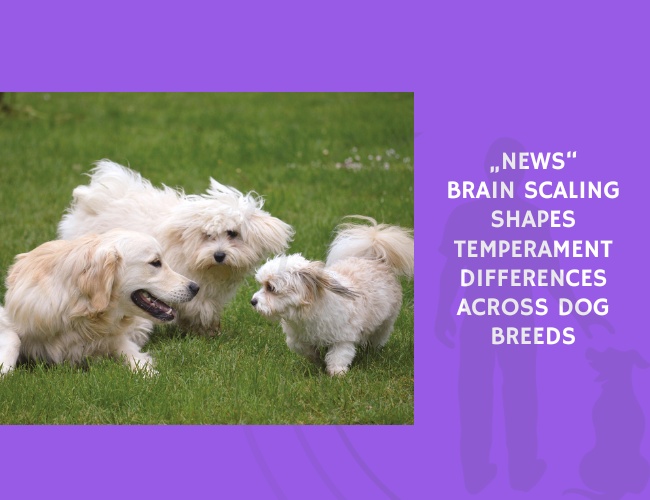
Published in Brain Structure and Function, this study by E. Hecht, I. Zapata, J. Serpell, and colleagues investigates how brain morphology relates to breed-average temperament profiles. Using structural MRI scans from 62 dogs, the researchers analyzed brain architecture alongside scores from the Canine Behavioral Assessment and Research Questionnaire (C-BARQ), a widely validated tool for assessing canine temperament across 14 behavioral dimensions.
The authors found that several key behavioral categories—including stranger-directed fear, aggression, and trainability—were significantly associated with covarying gray matter networks and regional volume differences in the brain. Regions involved in social processing and the fight-or-flight response showed strong links to fear and aggression, suggesting that these behaviors may reflect neural systems shaped during wolf-to-dog domestication.
Importantly, the study identified that trainability was linked to expansion in broad cortical areas, while fear, aggression, and other reactive behaviors were associated with enlargement in distributed subcortical regions. These profiles closely paralleled how brain regions scale with overall brain size.
This pattern aligns with models of developmental constraint on brain evolution, suggesting that differences in behavior across breeds emerge partly through neurodevelopmental scaling—specifically, through disproportionately larger later-developing brain regions in dogs with larger brains. This offers a potential explanation for why smaller-bodied dog breeds tend to show higher reactivity than larger breeds.
The findings underscore the importance of integrating behavioral genetics, neuroscience, and developmental biology when interpreting temperament variation among dog breeds. By connecting structural brain differences to validated behavioral measures, this study provides a foundation for more nuanced research into how brain development shapes canine temperament.
Source: Hecht, E., Zapata, I., Serpell, J., et al. (2021). Neurodevelopmental scaling is a major driver of brain–behavior differences in temperament across dog breeds. Brain Structure and Function. Published August 29, 2021. Authors affiliated with departments including Biology, Psychology, and Veterinary Sciences across multiple research institutions.