
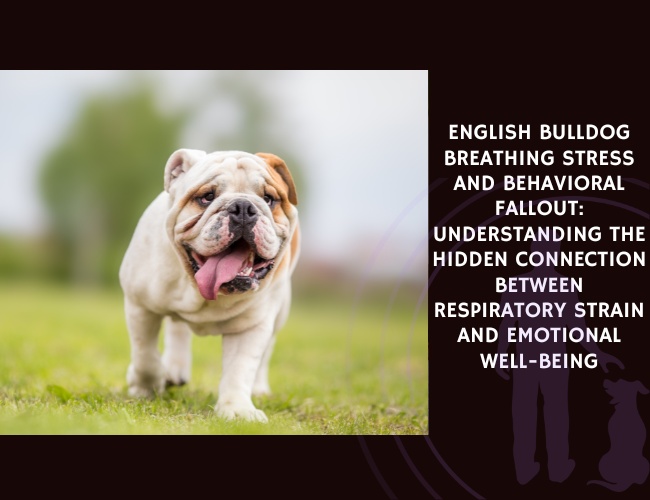
When you look into your English Bulldog’s soulful eyes, you see loyalty, gentleness, and an unmistakable charm that has captured hearts for generations. But beneath that endearing face lies a profound physiological challenge that shapes nearly every aspect of their behavior, mood, and emotional life. Understanding the connection between breathing difficulty and behavioral responses is not just about managing symptoms—it’s about fundamentally rethinking how we interpret, support, and communicate with these remarkable dogs.
The distinctive flat face that defines the English Bulldog’s appearance comes with a hidden cost: Brachycephalic Obstructive Airway Syndrome (BOAS). This condition transforms every breath into an effort, every moment of excitement into a potential crisis, and every interaction into a careful balance between engagement and overwhelm. What many perceive as stubbornness, laziness, or temperament issues often stems from something far more fundamental—the exhausting, relentless work of simply trying to breathe.
Through the NeuroBond approach, we can begin to see these behaviors not as defiance but as communication, not as character flaws but as survival responses. When we understand that a Bulldog’s refusal to walk further might be respiratory panic rather than obstinacy, that their snapping during handling could be breathing distress rather than aggression, we open the door to a completely different relationship—one built on true understanding rather than misinterpretation.
The Anatomy of Struggle: Understanding Brachycephalic Respiratory Constraints
The English Bulldog’s facial structure represents one of the most extreme examples of selective breeding for appearance. Their unique anatomy creates multiple respiratory obstacles:
- Stenotic nares: Abnormally narrow nostrils that restrict initial airflow, making every inhale an effort from the very first moment air enters the body
- Elongated soft palate: Excess tissue that extends into the airway, partially obstructing the passage to the lungs and creating resistance with every breath
- Tracheal narrowing: A constricted windpipe that limits oxygen delivery even when air successfully passes through the upper airway
- Everted laryngeal saccules: Small tissue pouches that can be pulled into the airway due to increased negative pressure during breathing efforts
- Collapsed nostrils: Narrow nasal passages that can collapse further during inhalation, especially during stress or exertion
Together, these anatomical limitations create a respiratory system that operates under constant strain, even during rest.
Chronic Sympathetic Activation
Even in resting states, your Bulldog’s body remains on alert. The structural limitations of their airways trigger chronic respiratory effort, which activates the sympathetic nervous system—the body’s ancient “fight or flight” mechanism. This isn’t triggered by external threats or stressful situations; it’s an internal, persistent state driven by the simple act of breathing.
You might observe this chronic activation through several physiological signs:
- Elevated resting heart rate compared to other breeds of similar size
- Muscle tension, particularly in the neck, shoulders, and chest area
- Difficulty settling or fully relaxing, even in safe, familiar environments
- Heightened startle responses to sounds or movements
- Persistent low-level panting even in cool conditions
- Restlessness during rest periods, with frequent position changes
Research on physiological stress demonstrates that breathing patterns directly influence emotional states. For brachycephalic breeds, the baseline respiratory effort itself acts as a chronic stressor, maintaining the sympathetic system in heightened activation. This means your Bulldog isn’t just struggling to breathe—their entire nervous system is interpreting this struggle as an ongoing emergency.
The Oxygen Debt Reality
Does breathing difficulty increase baseline stress levels, even in calm environments? Absolutely. Chronic respiratory effort is a persistent physiological stressor that elevates baseline stress hormones, particularly cortisol. Your Bulldog lying peacefully on the couch may appear relaxed, but internally, their body is working overtime to maintain adequate oxygenation.
This constant effort likely elevates baseline stress levels, making them more prone to frustration and altering their mood and social interactions in ways that might seem unpredictable to you. The body’s continuous struggle to oxygenate itself creates a state of chronic low-grade anxiety that colors every experience, every interaction, every moment of their day.
Hypoxia and Cognitive Function
Low oxygen availability affects far more than physical stamina. When the brain receives insufficient oxygen—a condition known as hypoxia—cognitive functions begin to deteriorate. Decision-making becomes impaired. Attention spans shorten. Patience evaporates. The emotional threshold—that invisible line between coping and reactivity—drops dramatically.
You might notice your Bulldog exhibits these cognitive effects during or after physical or emotional exertion:
- Reduced focus during training sessions, with wandering attention even to familiar cues
- Increased distractibility, particularly when breathing becomes more labored
- Quicker frustration when learning new behaviors or problem-solving
- Difficulty with impulse control, acting before thinking
- Slower response times to commands they typically perform quickly
- Apparent confusion or “blanking out” during interactions
- Shortened tolerance for normal activities that previously posed no challenge
These aren’t signs of stubbornness or lack of intelligence. They’re the direct neurological consequences of reduced oxygen supply to the brain. Elevated carbon dioxide levels, which often accompany restricted breathing, compound these cognitive challenges, creating a perfect storm of impaired mental function.
Breathing as an Emotional Amplifier: When Physical Strain Shapes Emotional Life
The relationship between breathing and emotion runs deeper than most people realize. Respiratory effort doesn’t just make physical activity harder—it fundamentally amplifies emotional reactivity.
Intensified Emotional Responses
Increased breathing effort acts as a constant internal irritant, a background noise that never stops. Research on physiological stress indicates that this internal discomfort can make Bulldogs significantly more irritable, leading to heightened reactivity to stimuli that other dogs might barely notice.
Common triggers that can provoke disproportionate responses in respiratory-compromised Bulldogs include:
- Doorbells or knocking sounds that might merely alert most dogs but trigger intense barking or alarm
- Physical touch, especially unexpected or near sensitive areas like the head, neck, or chest
- Loud or sudden noises such as dropped objects, vacuum cleaners, or outdoor construction
- Other dogs approaching, particularly in direct, frontal greetings
- Children’s high-energy movements and vocalizations
- Changes in household routine or the arrival of unfamiliar people
- Weather changes, particularly increases in temperature or humidity
What appears to be an overreaction is actually a proportional response to a nervous system already operating at maximum capacity. The breathing difficulty doesn’t just make them uncomfortable—it removes their buffer, their capacity to filter and modulate responses to the world around them.
Activation of Primal Emotional Systems
According to Panksepp’s groundbreaking work in Affective Neuroscience, chronic physiological distress activates fundamental emotional systems that operate below conscious awareness. For English Bulldogs, the constant sensation of not getting enough air can trigger the FEAR system, leading to behaviors that seem disproportionate to external threats.
Signs that your Bulldog’s FEAR system is activated include:
- Avoidance behaviors such as refusing to enter certain spaces or approach specific situations
- Hypervigilance with constant environmental scanning and inability to relax
- Defensive responses that appear suddenly and intensely
- Freezing in place when faced with routine activities
- Excessive hiding or seeking enclosed spaces
- Reluctance to engage even with familiar people or activities they previously enjoyed
During acute episodes of breathlessness, the PANIC system activates, producing distress vocalizations, frantic attempts to escape, or complete immobilization. You might see your Bulldog suddenly freeze, eyes wide, as if trapped by an invisible threat. This isn’t drama or manipulation—it’s a primal survival system responding to the very real sensation of suffocation.
The RAGE system, too, can be triggered by persistent frustration from the inability to breathe comfortably. This manifests through:
- Irritability that seems to come from nowhere, especially during physical demands
- Snapping or air-snapping when approached or handled
- Aggressive displays that confuse owners who know their Bulldog’s generally gentle nature
- Resource guarding that intensifies during breathing difficulty
- Low frustration tolerance for waiting, sharing space, or routine handling
- Grumbling or warning vocalizations that escalate quickly
These emotional outbursts aren’t character flaws; they’re physiological responses to internal overload.
Beyond Temperament: Reframing “Difficult” Behaviors
Can emotional outbursts—snapping, blocking, avoidance, stubborn shutdown—be traced to internal respiratory overload rather than temperament? In most cases, yes. What looks like bad temperament or deliberate disobedience is often a desperate attempt to manage overwhelming physiological discomfort.
Common behaviors that are actually respiratory-linked include:
- Snapping during harness fitting: Often experiencing acute airway restriction and panic, not expressing dominance or aggression
- Lying down and refusing to move during walks: Protecting themselves from respiratory collapse, not being lazy or defiant
- Avoiding interaction or shutting down: Conserving precious energy and oxygen, not sulking or being antisocial
- Blocking doorways or pathways: Creating control over their environment when internal control feels impossible
- Refusing to be lifted or carried: Anticipating the chest pressure and breathing restriction that often accompanies being picked up
- Resistance to grooming or handling: Associating these activities with past experiences of breathing difficulty
- Sudden “stubbornness” during training: Experiencing cognitive overload from oxygen debt rather than willful disobedience
Through Soul Recall, we understand that these behaviors become emotionally encoded—repeated experiences of respiratory panic create lasting behavioral patterns that persist even when the immediate trigger has passed. The body remembers distress, and these memories shape future responses in ways that can perplex even the most attentive owners.
Reading the Signals: Early Indicators of Respiratory-Linked Stress
Recognizing the subtle signs of respiratory distress is essential for preventing escalation and supporting your Bulldog’s emotional regulation. These signals often appear long before obvious panting or blue gums, yet they’re frequently overlooked or misinterpreted.
Early Warning Signs to Watch For:
Postural changes:
- Head lifting or neck stretching to straighten the airway
- Stiff, rigid body posture indicating discomfort
- Position freezing—becoming completely still as a stress response
- Refusing to move forward or backing away from situations
- Spreading front legs wider to open the chest cavity
- Leaning against walls or furniture for support
Facial and respiratory indicators:
- Nostril flaring to maximize air intake
- Wide eyes or “whale eye” showing the whites
- Rapid, shallow breathing even at rest
- Exaggerated swallowing or gulping movements
- Reverse sneezing episodes that seem frequent or distressing
- Increased drooling or foamy saliva
Behavioral withdrawal signals:
- Attempting to leave an area or interaction
- Pacing or restlessness, unable to settle
- Vocal distress including soft whining or grunting
- Seeking cool surfaces like tile floors
- Decreased interaction with family members
- Loss of interest in food, toys, or normal activities
These are your Bulldog’s earliest warning signs, subtle flags that they’re beginning to struggle. The more attuned you become to these signals, the earlier you can intervene to prevent escalation into respiratory crisis or behavioral reactivity.
Context-Specific Responses
Growling or snapping during lifting, harnessing, or veterinary handling is often linked to breathing panic rather than true aggression. When you lift a Bulldog or place pressure on their chest through handling, you can restrict their already compromised airway, triggering an immediate increase in respiratory effort and panic.
Situations where handling-related respiratory panic commonly occurs:
- Being lifted or picked up: Pressure on the chest wall and loss of control over positioning
- Harness or collar fitting: Equipment tightness around the neck or chest area
- Veterinary examinations: Restraint combined with stress in an already-triggering environment
- Nail trimming: Restraint of legs combined with positioning that may restrict breathing
- Grooming procedures: Extended periods in uncomfortable positions with potential heat buildup
- Medication administration: Handling of the head and mouth area while feeling vulnerable
- Car harness fastening: Confined space combined with equipment pressure
- Being held for photos: Prolonged positioning that prevents self-adjustment
The response isn’t calculated defiance—it’s a fear-based, defensive reaction to perceived suffocation. This aligns perfectly with the activation of FEAR and PANIC systems under physiological strain. Understanding this context transforms how we approach handling and changes our interpretation of these responses from “bad behavior” to “communication of distress.”
Environmental Factors: When External Pressures Meet Internal Constraints
The environment plays a critical role in either supporting or overwhelming your Bulldog’s respiratory capacity. External factors that barely affect other breeds can trigger crisis-level responses in brachycephalic dogs.
Heat and Humidity: The Perfect Storm
English Bulldogs cannot cool themselves efficiently through panting—the very mechanism that’s supposed to regulate body temperature becomes another source of respiratory strain. Heat and humidity make it exponentially harder to dissipate warmth, directly increasing respiratory effort and the risk of potentially fatal overheating.
Temperature and humidity danger zones for English Bulldogs:
- Above 70°F (21°C): Monitor closely, limit outdoor activity, provide cooling options
- Above 75°F (24°C): Minimize outdoor time, avoid midday hours, ensure constant access to air conditioning
- Above 80°F (27°C): Critical danger zone—outdoor activity should be extremely brief and only in shaded areas
- Above 85°F (29°C): Life-threatening conditions—outdoor time only for essential bathroom breaks
- High humidity (above 60%): Significantly increases risk even at lower temperatures
- Combination of heat and humidity: Creates exponentially greater danger than either factor alone
What feels like a pleasant summer day to you might represent a genuine danger zone for your Bulldog. Their struggle to breathe intensifies with every degree of temperature increase, every percentage point of humidity. This isn’t about preference or comfort—it’s about survival.
Excitement and Arousal: The Double-Edged Sword
Excitement elevates heart rate and metabolic demand, requiring more oxygen precisely when the respiratory system is least able to deliver it. The joy of greeting you at the door, the thrill of seeing another dog, the anticipation of a walk—these positive emotions create physiological demands that can quickly spiral into distress.
Common excitement triggers that increase respiratory demand:
- Doorbell or arrival of family members: Creates immediate arousal spike with intense physical response
- Seeing other dogs: Triggers social excitement or anxiety, both increasing metabolic needs
- Preparation for walks: Anticipation and excitement elevate heart rate before physical activity begins
- Mealtime routines: Food excitement can trigger panting and increased respiratory effort
- Play with toys or people: Physical activity combined with emotional arousal
- Visitors entering the home: Social stimulation requiring greeting behaviors
- Car rides: Excitement and anxiety combined with confined space and potential heat
- Novel environments or experiences: Mental stimulation paired with uncertainty increases arousal
You might notice your Bulldog becomes reactive or snappy during greetings, not because they’re antisocial, but because the excitement-induced respiratory demand pushes them into panic territory. Managing arousal levels becomes essential, not to dampen their joy but to protect their physiological capacity.
Pressure-Based Handling and Physical Restraint
Any pressure on the neck or chest can further restrict airways that are already compromised. Traditional collar-based control, tight harnesses, or physical restraint during veterinary exams can trigger immediate and intense respiratory distress. Research confirms that emotional stress significantly impacts physiological responses, including respiration—but for Bulldogs, physical pressure adds a direct mechanical restriction that compounds the problem.
Types of handling that can restrict breathing:
- Collar pressure during leash corrections: Direct compression of an already-compromised trachea
- Tight harnesses: Chest bands that restrict ribcage expansion during breathing
- Lifting under the chest: Pressure on the thoracic cavity limiting lung expansion
- Restraint holds during veterinary procedures: Compression combined with fear and arousal
- Hugging or tight physical contact: Well-meaning affection that inadvertently restricts breathing
- Pulling or jerking on leash: Creates sudden pressure on neck structures
- Being held in arms: Pressure points combined with inability to adjust position
- Grooming table restraints: Equipment designed for safety that may restrict respiratory movement
This is why cooperative care approaches, which prioritize the dog’s consent and comfort, are not optional luxuries for this breed—they’re essential safety measures.
The Impact of Chaotic Environments
Does emotional stress from chaotic greetings, loud environments, or rushed leash walks worsen breathing difficulty? Absolutely. Chaotic environments increase arousal and anxiety, which elevates heart rate and respiratory rate. For your Bulldog, this heightened physiological state exacerbates underlying breathing difficulties, creating a feedback loop where emotional stress worsens breathing, and worsening breathing intensifies emotional stress.
Environmental chaos that triggers respiratory distress:
- Multi-dog greetings: Overwhelming social complexity requiring constant vigilance and positioning
- Crowded spaces: High stimulation with limited escape options increasing anxiety
- Loud households: Constant noise preventing nervous system downregulation
- Rushed morning routines: Hurried leash walks without adequate warm-up or pacing
- Active children’s play: High energy, unpredictable movements, and loud vocalizations
- Construction or traffic noise: Persistent auditory stress with no control or escape
- Frequent visitors: Ongoing social demands without adequate recovery time
- Multi-pet households: Competition for resources and constant social negotiation
- Busy dog parks: Overstimulation combined with physical demands in potentially hot conditions
Rushed activities, demanding social situations, and high-stimulation environments don’t just stress your Bulldog psychologically—they create genuine physiological crisis potential. What might be mildly stressful for another dog can be overwhelmingly dangerous for a brachycephalic breed.
Overstimulation and System Shutdown
When overstimulation combines with respiratory strain, your Bulldog’s coping mechanisms can simply collapse. Instead of engaging or cooperating, they may exhibit behaviors that appear stubborn but are actually protective survival strategies.
System shutdown behaviors indicating overwhelm:
- Collapse to the ground: Literally lying down to reduce oxygen demand and protect against respiratory crisis
- Active avoidance: Turning away, backing up, or attempting to leave situations
- Complete disengagement: Appearing to “zone out” or ignore all stimuli
- Refusal to make eye contact: Shutting down social processing to conserve resources
- Physical rigidity: Freezing in place as a conservation response
- Selective deafness: Inability to process verbal cues when cognitively overloaded
- Slow-motion movement: Moving at minimal pace to reduce metabolic demands
- Sitting or lying with averted gaze: Creating physical and emotional distance
These responses aren’t defiance—they’re survival strategies. When the system becomes overloaded by both external stimuli and internal physiological stress, the brain prioritizes conservation of resources over compliance with commands. Recognizing these as protective rather than oppositional changes everything about how we respond.

Cognitive Impact: How Respiratory Stress Undermines Learning and Focus
The effects of chronic respiratory strain extend far beyond physical limitations into the realm of cognitive function, learning capacity, and behavioral flexibility.
Oxygen, Carbon Dioxide, and Brain Function
The brain is an oxygen-hungry organ, consuming roughly 20% of the body’s total oxygen supply despite representing only 2% of body weight. When oxygen delivery is compromised through respiratory restriction, cognitive processes suffer immediately and dramatically.
Signs your Bulldog is experiencing oxygen-related cognitive impairment during training:
- Reduced focus: Difficulty maintaining attention on you or the task at hand
- Increased distractibility: Environmental stimuli become overwhelming and impossible to ignore
- Slower response times: Delayed reactions to familiar cues or commands
- Apparent confusion: Seeming to “forget” well-established behaviors
- Decreased motivation: Loss of interest in rewards or activities they typically enjoy
- Inability to learn new behaviors: Struggling to form new associations or remember sequences
- Mistakes on known behaviors: Performing incorrectly despite demonstrated previous mastery
- Frustration signals: Increased stress indicators during what should be enjoyable training
- Quick fatigue: Mental exhaustion appearing within minutes of starting training
- Reduced problem-solving: Inability to work through simple challenges or puzzles
What appears to be distractibility or lack of motivation during training sessions may actually be cognitive impairment caused by insufficient oxygenation of the brain. Studies on stress and performance confirm that excessive physiological tension impairs cognitive function. For English Bulldogs, the “excessive tension” is constant and internal—the unrelenting effort to breathe.
Cognitive Shutdown and Perceived Stubbornness
When the body diverts cognitive resources to essential survival functions like maintaining respiration, fewer resources remain for higher-level processing. Working memory, impulse control, inhibition, and the ability to process and respond to commands all require cognitive resources that may simply be unavailable when your Bulldog is struggling to breathe.
Distinguishing cognitive shutdown from stubbornness:
Cognitive shutdown looks like:
- Blank stare or glazed expression during training
- No response to cues that typically elicit immediate reaction
- Appearing to not hear or process commands
- Physical stillness combined with mental unavailability
- Occurs during or after physical exertion or arousal
- Improves dramatically with rest and cooling
True stubbornness looks like:
- Active engagement but choosing alternative behaviors
- Clear awareness of cues but deliberate non-compliance
- Attention directed elsewhere by choice
- Testing boundaries with behavioral experimentation
- Consistent across various physiological states
- Responds to higher-value rewards or motivation adjustments
What trainers and owners interpret as stubbornness—the dog who “knows” the command but “refuses” to comply—often represents cognitive shutdown. The system is too overloaded to process commands or engage in complex behavioral tasks. This realization should fundamentally change how we approach training with this breed. Repeating a command more loudly or with greater authority doesn’t address the underlying issue. Providing physiological support, reducing arousal, and allowing adequate recovery time does.
Emotional Regulation and Social Tolerance
Chronic physical stress significantly depletes emotional regulation capacity. Research highlights that stress reduces emotional control and increases negative emotional valence—essentially, everything becomes more difficult and more irritating when your system is under constant strain.
Signs that respiratory stress is reducing social tolerance:
- Decreased patience with other dogs: Quicker to growl, snap, or air-snap during interactions
- Reduced greeting tolerance: Previously friendly greetings becoming brief or absent
- Increased reactivity to familiar dogs: Dogs they once played with now triggering defensive responses
- Withdrawal from family interactions: Seeking solitude rather than companionship
- Lower tolerance for children: Reduced patience with unpredictable movements and sounds
- Space-guarding behaviors: Claiming resting areas and reacting when approached
- Shortened social interaction windows: Engaging briefly before seeking escape
- Increased threshold sensitivity: Minor social violations triggering disproportionate responses
- Preference for parallel activities: Willing to be near but not directly engaged with others
- Morning or evening irritability: Reduced tolerance during times of increased respiratory difficulty
A Bulldog constantly struggling to breathe has minimal emotional reserve to tolerate social interactions, novel situations, or minor frustrations. They become more prone to irritability, reactivity, and social intolerance—not because of poor socialization or temperament issues, but because their physiological state leaves no buffer for emotional flexibility.
Understanding this helps explain why your generally friendly Bulldog might suddenly snap at another dog, why they seem less tolerant than they used to be, or why they struggle in social situations that should be enjoyable. It’s not about attitude—it’s about available resources.
Breath. Stress. Behavior.
Air shapes emotion. When every inhale is work, the body learns vigilance before trust. What looks like stubbornness is often exhaustion—effort disguised as temperament.
Survival alters expression. Chronic breathing strain keeps the nervous system primed, turning calm moments into quiet emergencies. Stress becomes baseline, not reaction.



Behavior speaks the body. Refusal, restlessness, or reactivity are not flaws but signals. When oxygen is scarce, patience fades—because biology always speaks before behavior.
The Communication Gap: Human Misinterpretation and Unintentional Harm
One of the most significant challenges in supporting English Bulldogs lies in the frequent misinterpretation of their behaviors by well-meaning humans who simply don’t understand the connection between respiratory struggle and behavioral response.
The Laziness Myth
How often do humans misread breathing stress as laziness, stubbornness, or disobedience? Constantly. This fundamental misinterpretation creates a cascade of problems and damages the human-dog relationship.
Common misinterpretations of respiratory distress:
- Lying down during walks: Labeled “lazy” → Actually experiencing respiratory distress or collapse prevention
- Refusing to climb stairs: Called “stubborn” → Actually protecting against dangerous oxygen debt
- Not coming when called: Seen as “disobedient” → Actually conserving oxygen and avoiding increased demand
- Slow movement: Interpreted as “unmotivated” → Actually pacing themselves to maintain adequate oxygenation
- Avoiding play: Considered “antisocial” → Actually recognizing their physical limitations
- Sitting during training: Viewed as “unfocused” → Actually needing rest to maintain cognitive function
- Minimal enthusiasm: Judged as “depressed” → Actually managing chronic physical discomfort
- Resistance to activity: Seen as “difficult” → Actually communicating physical constraints
This fundamental misinterpretation creates a cascade of problems. Owners push harder, become frustrated, apply traditional training methods that assume the issue is motivational rather than physiological. The dog’s stress increases, breathing worsens, behaviors intensify, and the misunderstanding deepens.
Unintentional Stress Escalation
Do humans unintentionally increase stress by asking Bulldogs to perform tasks during respiratory discomfort? Yes, frequently. Asking your Bulldog to sit, heel, or engage in social greetings when they’re already experiencing respiratory distress significantly increases stress. These activities require additional physical and cognitive effort, exacerbating breathing difficulties and pushing them further into physiological and emotional overload.
Common requests that escalate respiratory stress:
- “Come say hi to this person/dog”: Forces social interaction requiring arousal and physical approach
- “Sit and stay while I chat”: Demands sustained position-holding during social overstimulation
- “Keep walking, we’re almost there”: Pushes through early warning signals of respiratory crisis
- “Stop being so stubborn and climb these stairs”: Forces exertion when the body is signaling danger
- “Just let them pet you for a minute”: Requires tolerance during handling that may restrict breathing
- “Heel properly during this walk”: Demands focused attention and specific positioning when cognitively impaired
- “Play with this other dog”: Forces high-arousal activity when respiratory capacity is already compromised
- “Come inside right now”: Rushes movement when they’re trying to pace themselves
- “Get in your crate”: May trigger anxiety in confined space when already feeling air-restricted
The well-meaning owner encouraging their Bulldog to “just say hi” to another dog, to complete a training sequence, or to participate in family activities may be unknowingly creating dangerous levels of strain. Without understanding the internal experience, these requests seem reasonable—with understanding, they become recognizably harmful.
The Power of Emotional Clarity
Can emotional clarity—calm tone, slow movement, spatial guidance—reduce respiratory anxiety? Absolutely, and this is where the Invisible Leash becomes most relevant. A calm, clear emotional presence from you significantly reduces your Bulldog’s anxiety.
Techniques that support respiratory regulation through emotional clarity:
- Calm vocal tone: Soft, low-pitched speaking that doesn’t elevate arousal or startle
- Slow, deliberate movements: Predictable motion that allows anticipation without anxiety
- Giving physical space: Not crowding or hovering, allowing room to breathe and self-regulate
- Gentle spatial guidance: Leading through body positioning rather than leash pressure
- Reduced verbal cues: Minimal talking to decrease cognitive processing demands
- Predictable routines: Consistent patterns that eliminate arousal spikes from uncertainty
- Quiet presence during rest: Simply being near without demanding interaction
- Reading and honoring signals: Responding to early stress cues before escalation
- Modeling calm breathing: Your own regulated breath influencing their nervous system
- Patience during transitions: Allowing time to process and adjust to changes
Reduced arousal directly decreases respiratory rate and effort, creating a more stable physiological state and reducing panic-driven reactivity. Studies demonstrate that slow-paced breathing improves emotional states and reduces perceived stress—when you model calm through your own presence and movement, you provide a regulatory influence that your Bulldog’s compromised system desperately needs.
This isn’t about training techniques or commands—it’s about emotional energy and nonverbal communication. Your Bulldog reads your state constantly, and when you embody calm stability, you offer them a pathway to regulation they cannot achieve alone.
🫁 English Bulldog Breathing Crisis Framework
Understanding the Hidden Connection Between BOAS and Behavioral Responses
Phase 1: Anatomical Reality
Understanding the Physical Constraints
Structural Limitations
The English Bulldog’s brachycephalic anatomy creates multiple respiratory obstacles that operate simultaneously. Stenotic nares restrict initial airflow, while an elongated soft palate partially obstructs the passage to the lungs. Tracheal narrowing further limits oxygen delivery, creating a system under constant strain even during rest.
⚠️ Critical Recognition
Every breath requires effort • Resting state = active work • No “normal” baseline exists • Chronic sympathetic activation is constant • This isn’t something they “get used to” – it’s relentless physiological stress.
Observable Signs
• Elevated resting heart rate
• Muscle tension in neck and chest
• Difficulty fully relaxing even in safe spaces
• Heightened startle responses
• Persistent low-level panting in cool conditions
Phase 2: Neurological Impact
How Breathing Stress Activates Primal Systems
Emotional System Activation
Chronic respiratory effort triggers Panksepp’s FEAR, PANIC, and RAGE systems below conscious awareness. The constant sensation of insufficient air activates the FEAR system, leading to avoidance and hypervigilance. Acute breathlessness episodes trigger PANIC responses with distress vocalizations and frantic escape attempts.
Behavioral Translation
• Snapping during handling = breathing panic, not aggression
• Freezing in place = oxygen conservation response
• Refusing to move = respiratory collapse prevention
• Irritability = system overload, not temperament
• Avoidance = protective survival strategy
Recognition Practice
Train yourself to see behaviors through a respiratory lens. When your Bulldog displays what appears to be stubbornness, pause and assess their breathing rate, body tension, and recent activity level. This reframing transforms interpretation and response.
Phase 3: Cognitive Depletion
Hypoxia’s Effect on Learning and Focus
Oxygen Debt = Cognitive Debt
The brain consumes 20% of the body’s oxygen despite being only 2% of body weight. When respiratory restriction compromises oxygen delivery, cognitive processes suffer immediately. Working memory, impulse control, and attention all require resources that become unavailable during breathing difficulty.
Training Implications
Traditional training assumes cognitive availability. For Bulldogs, this assumption is dangerous. What appears as “knowing but refusing” is often genuine cognitive unavailability due to oxygen deprivation. Repeating commands louder doesn’t address the underlying physiological limitation.
Adaptive Approach
• Keep sessions to 3-5 minutes maximum
• Work in cool, well-ventilated spaces only
• Allow full recovery between repetitions
• Accept approximations when capacity is compromised
• Measure success by physiological calm, not performance speed
Phase 4: External Stressors
When Environment Meets Compromised Capacity
Temperature Danger Zones
• 70°F+: Monitor closely, limit activity
• 75°F+: Minimize outdoor time, ensure AC access
• 80°F+: Critical danger – brief bathroom breaks only
• 85°F+: Life-threatening conditions
• High humidity multiplies risk exponentially
Arousal Amplification
Excitement elevates metabolic demand precisely when respiratory capacity is most limited. Doorbell arrivals, dog sightings, meal anticipation – these positive emotions create physiological demands that can spiral into crisis. Managing arousal becomes essential for survival, not just behavior.
Protective Strategies
Create low-arousal environments through predictable routines, minimal doorbell triggers, calm greetings, and strategic removal from overstimulating situations. Prevention always outweighs intervention once respiratory distress begins.
Phase 5: Human Misinterpretation
The Dangerous Gap in Understanding
Common Misreadings
• Lying down during walks → “Lazy” (Actually: respiratory distress)
• Refusing stairs → “Stubborn” (Actually: protecting against oxygen debt)
• Not coming when called → “Disobedient” (Actually: conserving oxygen)
• Snapping during handling → “Aggressive” (Actually: breathing panic)
Unintentional Harm
Well-meaning requests like “just say hi to this dog” or “keep walking, we’re almost there” can push a Bulldog into respiratory crisis. Without understanding the internal experience, these seem reasonable. With understanding, they become recognizably dangerous.
The Invisible Leash Principle
True guidance comes through calm presence, not physical force. Your emotional state directly influences their respiratory rate. When you embody quiet stability through soft tone, slow movements, and spatial awareness, you provide regulatory support their compromised system desperately needs.
Phase 6: Consent-Based Support
Medical Necessity, Not Progressive Philosophy
Core Principles
Cooperative care for brachycephalic breeds isn’t about being “nice” – it’s about survival. Allowing opt-in/opt-out reduces trapped sensations that trigger panic. Teaching start-button behaviors where the dog initiates procedures gives them control when internal control feels impossible.
Practical Implementation
• Equipment fitting: Slow, collaborative process with pause options
• Handling: Support both chest and hindquarters, avoid compression
• Cooling: Proactive mats, AC, strategic timing – not reactive emergency measures
• Body language: Read and respond to subtle cues before escalation
Autonomy = Safety
When your Bulldog can signal “not right now” and have that communication respected, their sense of control reduces overall stress significantly. This autonomy supports emotional regulation and indirectly eases respiratory effort through reduced anxiety.
Phase 7: Veterinary Partnership
Surgical and Management Options
Surgical Considerations
Stenotic nares resection, soft palate resection, and laryngeal sacculectomy can significantly improve quality of life. While these don’t “cure” BOAS, they reduce severity and impact. Board-certified surgeons specializing in brachycephalic procedures offer the highest level of expertise.
Weight Management Priority
Every extra pound dramatically increases respiratory burden. Maintain ideal body condition (ribs easily palpable, visible waist, abdominal tuck) through careful nutrition. Exercise alone won’t create weight loss due to limited capacity – focus primarily on dietary management.
Emergency Recognition
Blue or purple gums, excessive panting that doesn’t resolve with cooling, collapse, extreme breathing difficulty, or disorientation require immediate veterinary attention. Know your emergency clinic location and contact information before crisis occurs.
Phase 8: Paradigm Shift
From Problems to Communication
Reframed Understanding
Stubbornness becomes self-preservation. Aggression becomes panic response. Laziness becomes energy conservation. Reactivity becomes nervous system operating without buffer. This reframing creates space for genuine compassion and appropriate support.
Soul Recall in Practice
Through Soul Recall, we understand that repeated respiratory panic creates lasting behavioral patterns. The body remembers distress, and these emotional memories shape future responses. Healing requires not just managing current symptoms but addressing encoded fear and creating new, safe associations.
Building Trust
Your Bulldog’s courage in navigating a world their anatomy makes challenging deserves recognition. Every moment of engagement despite their struggles represents remarkable bravery. Meeting them exactly where they are, with full understanding of their constraints, creates the foundation for genuine partnership.
🔍 Understanding Behavioral Differences: Respiratory Stress vs. Other Causes
Respiratory-Linked Refusal
• Occurs during/after physical demand
• Improves dramatically with cooling/rest
• Associated with visible breathing effort
• Position freezing or lying down
• Wide eyes, nostril flaring present
Fear-Based Refusal
• Triggered by specific stimuli/context
• Consistent across temperature/activity
• Associated with avoidance signals
• Backing away, hiding behaviors
• Can be desensitized gradually
Respiratory Reactivity
• Threshold drops during heat/excitement
• Variable intensity based on breathing state
• Sudden onset without clear external trigger
• Improves when physiologically regulated
• Associated with panting/effort
Learned Reactivity
• Consistent trigger-response pattern
• Present across all physiological states
• Clear external stimulus identification
• Can be counter-conditioned
• Breathing effort not primary factor
Cognitive Overload Shutdown
• Appears after sustained mental/physical work
• Blank stare, no response to cues
• Oxygen deprivation compromises processing
• Resolves with adequate rest/cooling
• Not responsive to increased motivation
Motivational Disengagement
• Active attention to alternatives
• Clear awareness but choice not to comply
• Responds to higher-value rewards
• Not associated with breathing difficulty
• Behavioral experimentation present
⚡ Quick Assessment Formula
Respiratory Distress Recognition: Breathing Rate + Body Tension + Context = Intervention Decision
Normal Alert Signs: Panting at rest in cool environment | Nostril flaring | Head/neck stretching | Position freezing | Refusing movement
Crisis Indicators: Blue/purple gums | Extreme panting not resolving with cooling | Collapse | Disorientation | Gasping
Temperature Rule: 70°F = Monitor | 75°F = Limit | 80°F = Danger | 85°F = Emergency
Training Decision: If breathing is labored → Stop training immediately. If recovery takes >10 minutes → No more sessions that day.
🧡 The NeuroBond Path Forward
Understanding breathing stress through the NeuroBond framework transforms everything. When we recognize that behavior emerges from physiological state, not character flaws, we shift from demanding compliance to providing support. The Invisible Leash reminds us that true guidance flows through calm presence and emotional clarity, not force or pressure. Through Soul Recall, we honor the emotional memories encoded by repeated respiratory panic, building new associations of safety and trust.
Your Bulldog’s courage in navigating a world their anatomy makes challenging deserves our deepest respect. Meeting them with full understanding of their constraints, supporting rather than pushing, and building relationship through genuine connection rather than obedience – this is the essence of working with, not against, their reality.
That balance between neuroscience and soul, between understanding mechanism and honoring individuality, creates space for the deepest possible bond. Not one based on performance, but on profound mutual understanding and unwavering support.
© Zoeta Dogsoul – Where neuroscience meets soul in dog training
Management and Support: A NeuroBond-Based Approach
Traditional dog training often emphasizes compliance, obedience, and pushing through discomfort to achieve goals. For English Bulldogs, this approach is not only ineffective—it’s potentially dangerous. A fundamentally different framework is required, one that prioritizes physiological support, emotional safety, and genuine communication over conventional obedience.
Emotionally Coherent, Low-Pressure Leadership
Can emotionally coherent, low-pressure leadership help Bulldogs regulate without pushing through respiratory distress? Yes, this represents the foundation of effective support for brachycephalic breeds. Emotionally coherent leadership means understanding and responding to your dog’s physiological and emotional state rather than demanding compliance regardless of internal experience.
This approach allows your Bulldog to regulate their own pace and avoid situations that trigger respiratory distress. By providing a sense of safety and predictability, you help reduce baseline anxiety, which in turn alleviates some respiratory effort. The goal shifts from “making” your dog do things to creating conditions where they can safely choose engagement.
This isn’t permissive or lacking in structure—it’s deeply attuned and protective, recognizing that your Bulldog’s limitations are real and must be respected rather than overcome.
Cooperative Care Principles
Cooperative care—which emphasizes consent, choice, and body autonomy—is not merely progressive training philosophy for English Bulldogs. It’s a medical necessity that directly impacts respiratory function and emotional stability.
Core cooperative care practices for respiratory support:
Consent handling:
- Allowing your dog to opt in or out of interactions reduces stress and the feeling of being trapped
- Teaching “start button” behaviors where the dog initiates procedures
- Respecting withdrawal signals and pausing when requested
- Building trust through predictable, controllable interactions
Calm equipment fitting:
- Taking time to properly fit harnesses and collars without rushing
- Allowing your dog to participate in the fitting process
- Never forcing compliance during vulnerable moments
- Choosing equipment specifically designed for brachycephalic breeds
- Regular checks to ensure equipment hasn’t become tighter as they breathe
Safe cooling strategies:
- Proactive cooling mats in resting areas
- Air conditioning as a non-negotiable necessity, not luxury
- Avoiding midday heat and exercising only in cool morning or evening hours
- Providing constant access to shade and fresh, cool water
- Cooling vests for necessary outdoor activity in warm weather
- Recognizing early signs of overheating before crisis develops
Body-language reassurance:
- Reading and responding to subtle stress cues
- Validating their experience rather than dismissing concerns
- Providing emotional support through calm presence
- Acknowledging when situations are genuinely difficult for them
- Adjusting expectations based on their current state
When your Bulldog can signal “not right now” and have that communication respected, their autonomy and control reduce overall stress significantly. These practices contribute to a sense of control and safety that are critical for emotional regulation and can indirectly ease respiratory effort. Research highlights the benefits of breathing practices for psycho-emotional well-being and stress reduction.

NeuroBond Communication: Creating Safety Through Emotional Presence
The NeuroBond model emphasizes quiet emotional presence, structured pacing, and minimal verbal overload—elements particularly beneficial for brachycephalic breeds whose nervous systems are already operating at capacity.
Core NeuroBond Communication Elements:
Quiet emotional presence:
- Calm energy that doesn’t demand or overwhelm
- Soft vocal tones without sudden volume changes
- Measured, flowing movements rather than abrupt gestures
- Emotional steadiness that provides an anchor during stress
- Presence without performance expectations
Structured pacing:
- Predictable daily routines that allow physiological preparation
- Consistent activity timing so the body can anticipate demands
- Gradual transitions between rest and activity
- Built-in recovery periods between stimulating events
- Respecting natural energy fluctuations throughout the day
Low verbal overload:
- Strategic, meaningful use of words rather than constant chatter
- Allowing silence to reduce processing demands
- Clear, simple cues without repetition or escalation
- Nonverbal communication carrying the majority of interaction
- Eliminating unnecessary commands or commentary
Environmental predictability:
- Consistent household schedules and routines
- Designated safe spaces for rest and recovery
- Minimal sudden changes or surprises
- Clear communication before transitions
- Stable emotional climate in the home
Loud voices, sudden movements, and intense emotional displays all increase arousal and respiratory demand. A quiet emotional presence—characterized by calm energy, soft vocal tones, and measured movements—provides a regulatory influence that helps your Bulldog’s nervous system downregulate. This doesn’t mean suppressing all emotion or becoming robotic. It means being mindful of how your emotional state and expression affect your dog’s physiological state, particularly when their system is already compromised.
Parasympathetic Activation
This NeuroBond approach aligns perfectly with neuroscience research showing that regulating breathing activates the parasympathetic nervous system—the “rest and digest” system that counterbalances the sympathetic “fight or flight” response. While you cannot directly regulate your Bulldog’s breathing, you can create environmental and emotional conditions that allow their parasympathetic system to engage, effectively alleviating anxiety and promoting emotional and physiological stability.
Practical Strategies: Daily Life with a Respiratory-Compromised Dog
Understanding the theory behind respiratory-linked behavioral challenges is essential, but practical daily management requires specific strategies and adjustments.
Environmental Modifications
Climate control becomes non-negotiable. Air conditioning during warm months, avoiding outdoor activity during heat and humidity, creating cool resting spaces—these aren’t luxury accommodations but medical necessities. Your Bulldog’s life may literally depend on your commitment to temperature management.
Essential environmental adjustments:
Temperature management:
- Air conditioning set to 68-72°F (20-22°C) during warm months
- Multiple cooling mats in frequently used resting areas
- Fans positioned to create air circulation without drafts
- Tile or cool flooring options in primary living spaces
- Shaded outdoor areas for essential bathroom breaks
- Never leaving them in vehicles, even briefly
Arousal trigger minimization:
- Doorbells replaced with silent notifications or lights
- Window film to reduce visual stimulation from street activity
- Consistent daily routines to prevent anticipatory arousal
- Designated quiet zones away from household traffic
- White noise machines to buffer environmental sounds
- Gradual, calm preparation for activities rather than sudden departures
Air quality considerations:
- HEPA filtration to reduce respiratory irritants
- Smoke-free environment (absolutely no smoking indoors or near the dog)
- Minimal use of aerosols, perfumes, or strong cleaning products
- Good ventilation to prevent CO₂ buildup
- Humidity levels maintained at 30-50% for optimal breathing
Minimize arousal triggers in the home environment. Doorbells that cause excited barking, windows where they can watch stimulating street activity, chaotic household routines—all create arousal spikes that tax respiratory capacity. Creating a calm, predictable home environment directly supports physiological stability.
Activity Management
Short, frequent, low-intensity activities replace traditional exercise expectations. Multiple brief walks in cool conditions serve your Bulldog far better than one longer outing.
Appropriate activity guidelines:
Walking parameters:
- 5-10 minute walks, multiple times daily in cool weather
- Early morning (before 7am) or late evening (after 8pm) in warm seasons
- Grass or shaded routes that allow frequent rest stops
- Self-paced movement—allowing them to set the speed
- Immediate return home if signs of respiratory distress appear
- Never forcing continued movement when they stop or slow
Alternative exercise options:
- Swimming in cool, supervised conditions (excellent low-impact option)
- Indoor sniff work and scent games requiring minimal movement
- Puzzle toys and slow-feeders for mental stimulation
- Short training sessions (3-5 minutes) focused on calm behaviors
- Gentle massage and body awareness exercises
- Food-scatter games in air-conditioned spaces
Activities to avoid:
- Running, jogging, or any sustained aerobic activity
- Fetch games requiring repeated sprinting
- Dog park play with high-arousal, chase-based interactions
- Hiking, especially on inclines or in warm weather
- Extended outdoor time during daylight hours in summer
- Any activity continuing past early signs of fatigue
Understanding that your Bulldog’s exercise needs and capacities are fundamentally different from other breeds prevents frustration and dangerous situations. This isn’t about them being “lazy”—it’s about physiological reality. Mental enrichment through scent work or puzzle toys offers stimulation without physical strain.
Social Situation Navigation
Carefully managing social interactions protects your Bulldog from overwhelming situations. Not every dog park visit is appropriate. Not every greeting needs to happen. Not every social gathering serves their needs.
Social interaction guidelines:
Situations to decline:
- Crowded dog parks with high arousal and unpredictable play
- On-leash greetings with unfamiliar dogs during walks
- Extended family gatherings in hot or chaotic environments
- Children’s birthday parties with high energy and noise
- Group training classes requiring sustained focus and arousal management
- Doggy daycare with continuous stimulation and no rest opportunities
Low-stress social options:
- Parallel walks with calm, familiar dogs at a distance
- Brief, structured greetings with known, gentle dogs
- Quiet visits with one or two calm people
- Supervised interactions in cool, calm environments
- Short socialization sessions with clear exit strategies
- Allowing them to observe from a safe distance without participation
Advocacy strategies:
- Learning to say “no” to well-meaning but harmful interaction requests
- Explaining your dog’s needs without apology or extensive justification
- Creating physical space using your body to block approaches
- Teaching others appropriate greeting protocols for brachycephalic breeds
- Having prepared responses to common pressure situations
- Prioritizing your dog’s safety over social expectations
Watch for early signs of stress and remove your dog from situations before they escalate. Prevention is always easier than intervention once respiratory distress has begun. Learning to advocate for your dog—to say “no” to well-meaning but potentially harmful interactions—is essential.
Handling and Restraint Protocols
Develop handling protocols that prioritize respiratory safety at every interaction. Never use force or restraint that restricts breathing—the few seconds saved aren’t worth the respiratory crisis or lasting fear created.
Safe handling practices:
Equipment choices:
- Well-fitted Y-front or H-style harnesses that avoid chest compression
- Quick-release buckles for emergency removal
- Wide straps that distribute pressure
- Never using collars for leash attachment or control
- Regular equipment checks for proper fit as body condition changes
- Breakaway safety features for any worn identification
Cooperative care training:
- Teaching nail trim acceptance through gradual desensitization
- Medication administration practiced with high-value rewards
- Grooming procedures broken into tiny, reward-rich steps
- Veterinary exam preparation using mock visits and positive associations
- “Chin rest” or “paws up” behaviors giving them control over procedures
- Regular practice in low-stress conditions building tolerance
Lifting and carrying techniques:
- Supporting both chest and hindquarters to avoid compression
- Keeping upper body elevated to maintain open airways
- Brief carries only, setting them down frequently
- Teaching a “ready to be lifted” signal they can control
- Using ramps or steps whenever possible to avoid lifting
- Two-person lifts for heavier individuals
Veterinary visit preparation:
- Pre-visit anxiety medication when recommended
- Scheduling first appointments to avoid wait time stress
- Bringing cooling equipment and water
- Requesting exam room with air conditioning
- Communication with vet about BOAS-sensitive handling
- Permission to take breaks during stressful procedures
Practice cooperative care for nail trims, medication administration, and grooming. Prepare for veterinary visits by training calm acceptance of examination through desensitization and counterconditioning.
Training Approach Adjustments
Reframe training goals around communication and relationship rather than obedience and compliance. Focus on building trust, establishing clear communication systems, and supporting your Bulldog’s efforts to engage rather than demanding performance regardless of state.
Respiratory-aware training principles:
Session parameters:
- 3-5 minute training sessions maximum
- Multiple short sessions rather than one long session
- Frequent breaks allowing full recovery between repetitions
- Ending before fatigue or stress signals appear
- Cool, well-ventilated training locations only
- Training during coolest parts of day
Goal adjustments:
- Prioritizing calm, low-arousal behaviors over exciting tricks
- Focusing on relaxation and self-regulation skills
- Teaching “go to mat” and settle behaviors
- Rewarding calm observation over active engagement
- Building patience and impulse control through waiting games
- Emphasizing choices and consent rather than commands
Communication clarity:
- Clear, consistent cues without repetition
- Visual signals supplementing or replacing verbal cues
- Allowing processing time between cue and response
- Accepting approximations when cognitive function is compromised
- Never punishing slow responses or “non-compliance”
- Recognizing when breaks are needed, not more repetition
Success indicators:
- Measuring progress by physiological calm, not performance speed
- Celebrating maintained respiratory comfort during training
- Valuing engagement attempts over perfect execution
- Recognizing when they’re working within their capacity
- Adjusting difficulty based on daily respiratory function
- Building confidence through achievable challenges
Keep training sessions short, allowing frequent breaks. Work in cool, low-stimulation environments. Recognize that some days will be better than others based on respiratory function, and adjust expectations accordingly. Success looks different with this breed—and that’s completely acceptable.
Medical Considerations and Veterinary Partnership
While behavioral and management strategies are crucial, veterinary partnership remains essential for supporting English Bulldogs with BOAS.
Surgical Intervention Options
For many English Bulldogs, surgical intervention to address anatomical restrictions can significantly improve quality of life. These procedures don’t “cure” BOAS but can reduce its severity and impact.
Common surgical procedures for BOAS:
- Stenotic nares resection: Widening narrow nostrils to improve airflow at the entry point
- Soft palate resection: Trimming excess tissue that obstructs the airway
- Laryngeal sacculectomy: Removing everted tissue pouches from the airway
- Tonsillectomy: Removing enlarged tonsils that contribute to obstruction
- Turbinate reduction: Addressing overgrown nasal tissue blocking airflow
- Combined procedures: Often multiple corrections performed simultaneously for optimal results
Working with a veterinarian experienced in brachycephalic breeds helps you understand whether surgical options might benefit your specific dog, what realistic expectations are, and what post-surgical care requires. Board-certified surgeons specializing in soft tissue or BOAS-specific procedures offer the highest level of expertise.
Ongoing Monitoring
Regular veterinary assessment of respiratory function, weight management (as obesity dramatically worsens BOAS), and early intervention for respiratory infections or other conditions that further compromise breathing all support your Bulldog’s well-being.
Key monitoring parameters:
Respiratory function assessments:
- Annual BOAS grading by qualified veterinarian
- Exercise tolerance testing to establish baseline
- Sleep study or overnight oxygen monitoring if available
- Video documentation of breathing patterns at rest and during activity
- Tracking changes in snoring intensity or breathing sounds
- Noting any increase in respiratory effort or distress episodes
Weight management priorities:
- Monthly weight checks maintaining ideal body condition
- Body condition scoring (BCS) of 4-5 out of 9
- Ribs easily palpable with minimal fat covering
- Visible waist when viewed from above
- Abdominal tuck visible from the side
- Recognizing that every extra pound significantly increases respiratory burden
Warning signs requiring immediate veterinary attention:
- Blue or purple gum color (cyanosis)
- Excessive panting that doesn’t resolve with cooling
- Collapse or loss of consciousness
- Extreme difficulty breathing or gasping
- Sudden increase in respiratory noise or effort
- Refusal to lie down despite exhaustion
- Disorientation or altered mental state
Understanding warning signs of respiratory crisis—excessive panting, blue-tinged gums, collapse—and having emergency plans in place can be life-saving. Keep your veterinarian’s emergency contact information readily accessible, know the location of the nearest 24-hour emergency clinic, and never hesitate to seek immediate care when concerned.
Weight Management
Maintaining ideal body condition cannot be overstated in its importance. Every extra pound increases respiratory demand and effort. Weight management through careful nutrition and appropriate activity levels (within respiratory limitations) significantly impacts overall respiratory function and quality of life.
Effective weight management strategies:
Nutritional approaches:
- High-quality, protein-rich diet supporting lean muscle mass
- Measured portions rather than free-feeding
- Low-calorie vegetables (green beans, carrots) as treat substitutes
- Elimination of table scraps and human food
- Slow-feeder bowls preventing rapid eating and air swallowing
- Multiple small meals throughout day rather than large portions
- Working with veterinary nutritionist for customized feeding plans
Activity considerations:
- Understanding that exercise alone won’t create weight loss due to limited capacity
- Focusing primarily on dietary management
- Incorporating gentle, cool-condition movement when appropriate
- Swimming as lowest-impact option for overweight individuals
- Never pushing exercise as primary weight-loss strategy
- Prioritizing metabolic health through nutrition
Monitoring and adjustment:
- Weekly weigh-ins to track trends
- Visual body condition assessment
- Adjusting food portions based on weight trends, not hunger signals
- Recognizing that even small weight gains matter significantly
- Celebrating weight loss victories as genuine health improvements
- Patient, gradual approach preventing muscle loss
Building a Life of Understanding: The Path Forward
Supporting an English Bulldog with BOAS-related behavioral challenges requires a fundamental shift in perspective—from seeing behaviors as problems to be fixed to understanding them as communications to be heard, from demanding compliance to providing support, from conventional training to relationship-based partnership.
Essential perspective shifts for Bulldog guardians:
From performance to support:
- Releasing expectations of athletic ability or endurance
- Valuing their efforts rather than outcomes
- Measuring success by their comfort, not your goals
- Recognizing courage in their daily navigation of challenges
- Celebrating small victories in managing their condition
From obedience to communication:
- Seeing refusal as information about their state, not defiance
- Understanding that “no” is legitimate feedback
- Learning their individual signals and honoring them
- Building dialogue rather than issuing commands
- Respecting their knowledge of their own limitations
From fixing to understanding:
- Accepting that BOAS cannot be trained away
- Focusing on management and support rather than correction
- Acknowledging that some behaviors are protective, not problematic
- Understanding root causes rather than suppressing symptoms
- Working with their physiology rather than against it
From comparison to individuality:
- Releasing comparisons to other breeds or other Bulldogs
- Honoring their unique challenges and capacities
- Adjusting expectations to their specific needs
- Recognizing that “normal” for them is different
- Celebrating what they can do rather than grieving what they cannot
This shift isn’t easy. It requires letting go of expectations, acknowledging limitations, and constantly prioritizing your dog’s internal experience over external appearances or goals. It means accepting that your Bulldog may never be the hiking companion you envisioned, the social butterfly at the dog park, or the obedience star at training class—and recognizing that their value and your bond don’t depend on meeting those expectations.
The Gift of Understanding
When you truly understand the connection between breathing difficulty and behavioral responses, everything changes. The dog who seemed stubborn becomes a dog bravely managing chronic discomfort. The dog who seemed aggressive becomes a dog protecting themselves from suffocation panic. The dog who seemed lazy becomes a dog wisely conserving precious resources.
Behaviors reframed through respiratory awareness:
Stubbornness becomes:
- Self-preservation and boundary-setting
- Communication of genuine physical limitation
- Advocacy for their own needs
- Wisdom about their body’s capacity
- Protection against dangerous overexertion
Aggression becomes:
- Panic response to air restriction
- Communication of overwhelming distress
- Defensive reaction to perceived suffocation
- Warning that capacity has been exceeded
- Survival instinct appropriately activated
Laziness becomes:
- Energy conservation for essential functions
- Recognition of physiological constraints
- Intelligent pacing and self-management
- Protection against respiratory collapse
- Careful stewardship of limited resources
Reactivity becomes:
- Nervous system operating without buffer capacity
- Proportional response to internal overwhelm
- Communication that arousal threshold is exceeded
- Expression of genuine discomfort or fear
- Signal that support and intervention are needed
This understanding creates space for compassion, appropriate support, and realistic expectations. It allows you to see your Bulldog’s considerable courage in navigating a world that their anatomy makes challenging at every turn. It deepens your appreciation for the moments of joy, engagement, and connection that they offer despite their struggles.
Creating Safety and Connection
Through the principles of Zoeta Dogsoul—the recognition that emotional connection, clear communication, and physiological support form the foundation of true partnership—you can build a relationship with your English Bulldog that honors their reality while celebrating their unique gifts.
Building genuine connection with respiratory-compromised dogs:
Daily practices:
- Starting each day with calm, connected presence
- Observing and responding to subtle state changes
- Prioritizing their comfort in every decision
- Creating moments of joy within their capacity
- Celebrating engagement without demanding performance
- Ending each day with reassurance and security
Relationship foundations:
- Trust built through consistent, predictable support
- Communication based on understanding, not commands
- Safety provided through environmental management
- Respect for their limits and boundaries
- Partnership rather than dominance or control
- Mutual regulation and emotional co-creation
Long-term commitment:
- Ongoing education about their condition
- Willingness to adapt as their needs change
- Financial preparedness for medical interventions
- Emotional resilience for challenging moments
- Advocacy for their needs in all situations
- Deep acceptance of who they are, not who you wished they’d be
That balance between science and soul, between understanding the mechanism of their struggles and honoring the individual dog in front of you, creates the conditions for the deepest possible bond. Not a bond based on obedience or performance, but one rooted in genuine understanding, mutual trust, and the profound connection that emerges when two beings truly see and support each other.
Your English Bulldog’s flat face may create challenges that other breeds never face. Their breathing difficulties may shape their behavior in ways that require constant awareness and adaptation. But within those constraints lies an opportunity for a relationship of exceptional depth—one built on understanding rather than expectation, on support rather than demand, on connection rather than compliance.
That’s the essence of working with—rather than against—the physiological reality of brachycephalic breeds. That’s the path to true partnership. That’s the promise of understanding breathing stress not as a training problem to solve, but as a communication bridge to cross, meeting your Bulldog exactly where they are and building from that foundation of acceptance and support. 🧡










