
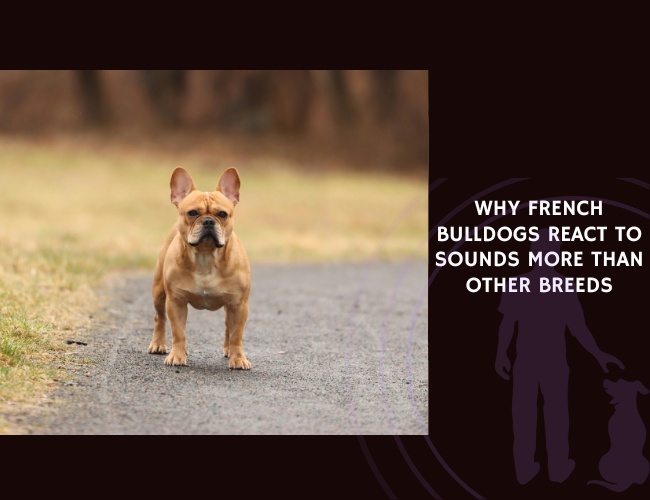
If you share your life with a French Bulldog, you have probably noticed something remarkable about your companion. A distant siren sends them into a flurry of barks. The doorbell triggers an immediate vocal response. Even the gentle thud of a book falling from the table can elicit a surprisingly intense reaction. You might wonder whether your Frenchie hears the world differently, or if something deeper is happening beneath those bat-like ears and soulful eyes.
What you are observing is not simply a quirk of personality. The heightened sound reactivity in French Bulldogs emerges from a complex interplay of neurological sensitivity, emotional architecture, and the profound bond they form with their humans. Understanding why your Frenchie reacts this way opens a window into their inner world and reveals how you can help them navigate their auditory environment with greater confidence and calm. 🧡
The Neurological Foundation: How Your Frenchie Processes Sound
Your French Bulldog’s brain processes auditory information differently than many other breeds. This is not about hearing ability alone but about how incoming sounds are filtered, interpreted, and transformed into emotional and behavioral responses.
Lower Sensory Gating and Neural Thresholds
Sensory gating is the neurological mechanism that filters out irrelevant environmental information, preventing your dog’s brain from becoming overwhelmed by constant stimuli. Research in sensory processing suggests that French Bulldogs may possess less efficient sensory gating for auditory input. This means that sounds other breeds might automatically dismiss as background noise register more intensely in your Frenchie’s awareness.
Think of it as having a volume dial that is naturally set higher. Sounds that might barely register for other breeds arrive with full intensity:
- A neighbor closing their car door becomes a notable event
- The hum of a distant lawnmower enters their conscious awareness
- Subtle creaks of floorboards register as distinct sounds
- The refrigerator cycling on demands attention
- Footsteps in the hallway above trigger alertness
They are not being dramatic; they are genuinely processing more auditory information than breeds with more robust filtering mechanisms.
You might observe these signs that your Frenchie has lower sensory gating:
- They react to sounds you barely notice or did not consciously register yourself
- Their ears rotate and track subtle environmental noises constantly throughout the day
- They startle more easily than other dogs, even at moderate volume sounds
- They become overstimulated or exhausted after being in noisy environments
- They demonstrate heightened awareness during transition times when multiple sounds overlap
This lower threshold for auditory stimulation means your Frenchie experiences the soundscape of daily life as richer, more detailed, and potentially more overwhelming. When you understand this fundamental difference in how they perceive their environment, their reactions begin to make perfect sense.
The Brachycephalic Factor
The adorable flat face that makes French Bulldogs so distinctive comes with physiological implications that extend beyond their respiratory system. The brachycephalic anatomy creates chronic mild stress on their respiratory function, which influences their baseline nervous system activation.
When breathing requires more effort, the body maintains a slightly elevated state of arousal. This means your Frenchie operates with a baseline stress level that is marginally higher than breeds with uncompromised airways. You might observe this through:
- Slightly faster resting respiratory rate
- More frequent panting even at rest
- Higher baseline heart rate during calm periods
- Reduced stress tolerance during temperature changes
- Quicker transition from calm to aroused states
In this state, the nervous system is already primed for reactivity. Any sudden sound does not need to cross as high a threshold to trigger a response because the system is already closer to activation.
This is not about fear or anxiety in the traditional sense. It is about physiological reality influencing emotional regulation. Your Frenchie’s body is working harder to perform basic functions, and this creates a neurological context where stimuli are processed through a more sensitive filter.
Affective Neuroscience: The Emotional Systems at Play
To truly understand your French Bulldog’s sound reactivity, you need to look beyond simple stimulus-response patterns and explore the emotional systems driving their behavior. Affective neuroscience research, particularly the work of Jaak Panksepp, identifies distinct emotional circuits in the mammalian brain that shape how dogs experience and respond to their world.
The PANIC System: Emotional Safety and Connection
The PANIC system is activated by social separation, loss of contact, or perceived disruption to emotional bonds. In companion breeds like French Bulldogs who are deeply bonded to their humans, this system plays a surprisingly dominant role in sound reactivity.
When a sudden noise occurs, your Frenchie’s first concern may not be “Is that dangerous?” but rather “Does this affect my connection to my human?” The sound represents a disruption to their sense of emotional safety and predictability. Common triggers include:
- A door slamming that might signal someone leaving
- A loud noise from another room where their human is located
- The television suddenly turning on, indicating routine change
- Keys jingling near the door, suggesting departure
- Footsteps moving toward exits or away from the dog
These sounds activate the PANIC system, creating distress that manifests as attention-seeking vocalizations, following behavior, or attempts to solicit reassurance. Your Frenchie is not alerting you to danger; they are reaching out for emotional connection and confirmation that their secure base remains intact.
Common PANIC system responses you might observe include:
- Whining or high-pitched vocalizations that sound more distressed than aggressive
- Immediately seeking physical proximity to you when a sound occurs
- Looking directly at your face rather than toward the source of the sound
- Pawing at you or nudging you for acknowledgment and reassurance
- Following you from room to room with increased intensity after hearing unexpected noises
- Difficulty settling until you provide direct attention or physical contact
The FEAR System: Genuine Threat Perception
The FEAR system responds to immediate threats or startling stimuli, leading to defensive behaviors like freezing, fleeing, or fighting. While sudden loud sounds certainly can activate this system, the fascinating aspect of French Bulldog sound reactivity is that the PANIC system often dominates.
You can observe this in their behavior after the initial reaction. Look for these distinctions:
Fear-driven response:
- Sustained vigilance toward the sound source
- Escape attempts or hiding behavior
- Aggressive defensive posturing
- Continued anxiety even after the sound stops
- Avoidance of the area where sound occurred
PANIC-driven response:
- Seeks proximity to their human immediately
- Looks to human for guidance and reassurance
- Calms quickly when connection is re-established
- Shows attention-seeking rather than defensive behavior
- Returns to normal once emotional safety is confirmed
This distinction matters because it reveals what your Frenchie actually needs when they react to sounds. They are not asking you to eliminate the threat; they are asking you to maintain the emotional safety of your relationship.
The SEEKING System: Curiosity and Exploration
The SEEKING system drives exploration, curiosity, and investigation. A dog operating primarily from this system would hear a sound and think “What is that? Let me explore.” They would approach the source with interest rather than alarm.
In emotionally aroused or anxiously attached French Bulldogs, the PANIC and FEAR systems often override the SEEKING system. Instead of curiosity, you see reactivity. Instead of investigation, you see distress. This tells you that their emotional state, not their sensory experience alone, determines how they respond to auditory stimuli.
Through the NeuroBond approach, you can help shift your Frenchie’s dominant emotional system from PANIC to SEEKING by creating consistent emotional safety and trust. When they know their connection to you is secure regardless of environmental changes, sounds become opportunities for curiosity rather than triggers for distress.
Sensory Processing Sensitivity: The Highly Sensitive Frenchie
Some French Bulldogs demonstrate what researchers call Sensory Processing Sensitivity, an inherent tendency to process information more deeply and thoroughly. If your Frenchie seems aware of subtleties in the environment that other dogs miss, they may be among the highly sensitive individuals of their breed.
Characteristics of High Sensitivity
Highly sensitive French Bulldogs notice small changes in their environment. They react to subtle shifts in your mood or energy. They become overstimulated more easily in chaotic environments. They process experiences deeply, showing stronger emotional responses to both positive and negative events.
Signs your Frenchie may be highly sensitive include:
- Noticing when furniture has been rearranged or new objects appear in familiar spaces
- Responding to your emotional state before you consciously express it
- Needing longer recovery time after exciting or stressful events
- Showing preferences for quieter areas of the home during busy times
- Reacting to changes in your daily routine with visible concern or adjustment behaviors
- Displaying intense joy at positive events and deep distress at negative ones
This sensitivity is not a weakness or behavioral problem. It is a neurological trait that brings both challenges and gifts. Sensitive Frenchies often form extraordinarily deep bonds with their humans, read social cues with remarkable accuracy, and respond beautifully to gentle, emotionally coherent training approaches.
Emotional Arousal and Amplified Reactions
When your sensitive Frenchie is already in a state of emotional arousal—excitement about a visitor, anticipation of a walk, anxiety about a change in routine—their ability to filter auditory stimuli becomes further compromised. Sounds that they might ignore when calm can trigger intense reactions when they are emotionally heightened.
You might notice this pattern during transition times. Examples of how emotional state affects sound processing:
- During peaceful afternoon rest: The doorbell barely registers, perhaps just ear movement
- At excited dinnertime: Same doorbell provokes immediate barking and running
- During calm morning routine: Car door closing outside goes completely unnoticed
- When anxiously awaiting your return: Every car sound triggers alertness and vocalization
- In relaxed state with you present: Neighbor noises are processed but not reacted to
- During separation anxiety: Same neighbor noises become triggers for distress vocalizations
Understanding this relationship between emotional state and sensory processing helps you recognize that managing sound reactivity often means managing your Frenchie’s overall emotional regulation, not just their response to specific noises. 🧠

Attachment Theory: The Heart of Reactivity
Perhaps no framework explains French Bulldog sound reactivity more completely than attachment theory. Originally developed to describe human infant-caregiver bonds, attachment theory has been successfully applied to the human-dog relationship and reveals profound insights into your Frenchie’s behavior.
The Anxiously Attached Frenchie
French Bulldogs are renowned for their intense attachment to their humans. While this creates the delightful companionship that makes them such beloved pets, it also creates vulnerability to insecure attachment patterns.
An anxiously attached Frenchie demonstrates constant vigilance about your availability and responsiveness. They worry that you might leave. They monitor your movements closely. They become distressed when separated even briefly. They seek constant reassurance that you are present and attentive.
Behavioral signs of anxious attachment include:
- Following you from room to room, even for brief separations
- Becoming visibly distressed when you prepare to leave (picking up keys, putting on shoes)
- Difficulty settling or relaxing when you are in another room
- Excessive greeting behaviors when you return, even from short absences
- Monitoring your location constantly through visual checks or ear positioning
- Increased vocalization or destructive behavior when left alone
- Physical symptoms of stress such as panting, drooling, or pacing during separations
In this state, household sounds are not processed as neutral environmental events. They are interpreted through the lens of attachment anxiety. A sound from another room means you are somewhere else. A loud noise might signal you are about to leave. The television turning off could indicate bedtime and separation.
These interpretations are not conscious thoughts but emotional responses generated by an attachment system on high alert. Your Frenchie is not being manipulative or demanding; they are genuinely distressed by perceived threats to their emotional safety.
Vigilance for Connection, Not Danger
This is where the concept of “vigilance for connection” becomes transformative in understanding your Frenchie’s behavior. Traditional interpretations of sound reactivity focus on threat detection and fear responses. While these elements exist, they often miss the deeper truth of what is happening in your French Bulldog’s inner world.
Watch what your Frenchie does when they react to a sound. Do they bark at the source of the noise, or do they bark toward you? Do they investigate the sound, or do they seek proximity to you? Do they calm when the sound stops, or do they calm when you acknowledge them?
Key differences between vigilance for connection and vigilance for danger:
Vigilance for Connection:
- Eyes and body orient toward you rather than the sound source
- Vocalizations are directed at you with frequent eye contact
- They approach you rather than investigating or fleeing from the sound
- Calming occurs when you provide acknowledgment, regardless of whether the sound continues
- Body language shows distress but not defensive aggression
Vigilance for Danger:
- Eyes and body orient toward the sound source with sustained focus
- Vocalizations are directed at the perceived threat with minimal attention to you
- They investigate the source or attempt to escape from it
- Calming occurs only when the sound stops or the threat is removed
- Body language shows defensive posturing, hackles raised, or fear responses
If their reactions orient toward you rather than the sound source, they are demonstrating vigilance for connection. They are monitoring their environment not primarily for danger but for anything that might impact their emotional bond with you. The sound is significant only insofar as it represents a potential disruption to that connection.
Inconsistent Availability and Heightened Reactivity
Sound reactivity intensifies dramatically in French Bulldogs who experience inconsistent human availability. If your presence and responsiveness vary unpredictably—sometimes fully attentive, sometimes distracted or absent—your Frenchie learns they cannot reliably count on you for emotional regulation.
This creates chronic anxiety. Unable to predict when you will be available, they become hypervigilant for any environmental change that might affect their access to you. Sounds become triggers for this underlying anxiety, amplifying their reactions far beyond what the auditory stimulus itself warrants.
The tragic irony is that this reactivity often leads to human frustration and withdrawal, which further reinforces the Frenchie’s anxiety and intensifies the behavior. Breaking this cycle requires understanding that your consistent, calm presence is not a reward for good behavior but a fundamental need for your dog’s emotional regulation.
Social Learning: Your Frenchie as an Emotional Mirror
French Bulldogs are extraordinary social learners, particularly when it comes to emotional mirroring and behavioral modeling. Your reactions to sounds shape their reactions more profoundly than you might realize.
Social Referencing and Human Cues
Dogs naturally use their humans as reference points for interpreting novel or ambiguous situations. When something uncertain occurs, your Frenchie looks to you to understand how to respond. This process, called social referencing, means your emotional state and behavioral response to sounds directly teaches your dog how to interpret those sounds.
If you react to a sudden noise with tension, surprise, or concern, your Frenchie learns that sound is meaningful and potentially threatening. If you respond to the doorbell with excitement and enthusiasm, your dog learns that sound signals something arousing. If you react to their barking with immediate attention, laughter, or soothing, you teach them that barking at sounds is an effective way to engage you.
This happens unconsciously and continuously. You are not intentionally training these responses, but your emotional reactions and behavioral patterns create a learning environment that shapes your Frenchie’s sound reactivity.
Common human behaviors that inadvertently reinforce sound reactivity:
- Immediately looking at or speaking to your Frenchie when they bark at a sound
- Using a higher-pitched or soothing “baby voice” to calm them after they react
- Laughing at their dramatic or amusing reactions to sounds
- Picking them up or providing physical comfort in response to their barking
- Offering treats to quiet them after they have already started vocalizing
- Moving quickly toward them or showing tension in your own body when sounds occur
- Providing any form of engagement, even scolding, which registers as attention
Your Frenchie cannot distinguish between positive and negative attention; they only register that their behavior successfully engaged you.
Vocal Mimicry and Shared Communication
French Bulldogs excel at vocal communication, and they readily learn to mimic human vocal patterns. If your household is expressive and vocal, your Frenchie learns that vocalization is an appropriate response to stimuli.
When humans react vocally to sounds—exclaiming at a loud noise, laughing at something unexpected, calling out to someone at the door—the Frenchie observes this and incorporates it into their own behavioral repertoire. They begin to see vocalization as a form of shared communication and emotional expression.
In homes where humans frequently verbalize their responses to environmental events, French Bulldogs often develop more pronounced vocal reactivity. They are not misbehaving; they are participating in what they perceive as the household’s communication style.
The Invisible Leash and Emotional Clarity
The Invisible Leash reminds us that true guidance comes through calm energy and emotional coherence rather than physical control or verbal commands. When sounds occur, your Frenchie reads your energetic response before they process the sound itself.
If you maintain calm, grounded presence when noises occur, you provide your Frenchie with clear information: this is not significant, we remain connected, everything is secure. This emotionally coherent signal helps them regulate their own response and reduces the likelihood of reactive behavior.
Conversely, if your energy becomes tense, scattered, or anxious when sounds occur, you send the message that these sounds threaten the stability of your shared environment. Even if you do not vocalize or act dramatically, your Frenchie detects the subtle shifts in your breathing, muscle tension, and energetic state.
Operant Conditioning: The Accidental Reinforcement Trap
While emotional and neurological factors create the foundation for sound reactivity, operant conditioning explains why these behaviors often intensify over time. Most humans inadvertently reinforce the exact behaviors they wish to eliminate.
The Attention Cycle
For a breed that thrives on human interaction and connection, attention becomes the most powerful reinforcer available. Any response you give to your Frenchie’s sound reactivity—whether positive or negative—reinforces the behavior by providing the outcome they seek: your attention.
When your Frenchie barks at a sound and you immediately respond by speaking to them, looking at them, touching them, or even scolding them, you create a powerful association: barking at sounds makes my human engage with me. For an attention-seeking, connection-oriented breed, this is precisely the outcome they desire.
Common human responses that accidentally reinforce barking:
- Speaking to your dog in any tone, including “It’s okay” or “Quiet!”
- Looking directly at them or making eye contact during barking
- Walking toward them or approaching when they vocalize
- Touching, petting, or picking them up to comfort them
- Laughing at their dramatic or quirky vocalizations
- Giving treats to “distract” or quiet them
- Moving to investigate the sound source with them
- Any change in your behavior that indicates their barking got your attention
The reinforcement is even stronger if your attention is warm, soothing, or playful. Speaking in a gentle voice to calm them, offering a treat to quiet them, or laughing at their dramatic reaction all send the message that their behavior was effective and worthwhile.
The Escalation Pattern
Once the attention cycle is established, it often escalates. If your response becomes less consistent—sometimes attending to their barking, sometimes ignoring it—you create what behaviorists call a “variable reinforcement schedule.” This is the most powerful form of reinforcement, creating behaviors that are extremely resistant to extinction.
Your Frenchie learns that barking sometimes works, so they try harder and more persistently when it does not immediately succeed. The behavior intensifies, becoming louder, more frequent, or more dramatic in an attempt to achieve the desired outcome.
Breaking the Cycle
Understanding this conditioning pattern does not mean you should ignore your Frenchie’s distress. Remember that their reactivity often stems from attachment anxiety and emotional sensitivity. Completely withdrawing your attention can intensify their anxiety and worsen the underlying emotional state.
Instead, focus on reinforcing calm, quiet behavior in the presence of sounds. Provide your Frenchie with attention, connection, and engagement when they are settled and peaceful. When sounds occur and they remain calm, acknowledge that with gentle praise or quiet physical presence.
If they do react, avoid immediately engaging them. Wait for a moment of calm, even if brief, then provide your attention. This teaches them that connection comes through calmness, not reactivity. Over time, this shifts their behavioral strategy from “bark to get attention” to “be calm to maintain connection.”
Communication and Emotional Co-Regulation
Your French Bulldog’s sound reactivity is fundamentally a form of communication. Understanding what they are trying to convey transforms your ability to respond effectively.
What Your Frenchie Is Really Saying
When your Frenchie barks at a sound, they might be communicating any of the following:
“I noticed something and want to share this with you”
- For highly social dogs, sharing awareness of environmental changes is a form of connection
- Their bark says “Did you hear that? Let’s acknowledge this together”
- This is information-sharing rather than alarm
“I feel uncertain and need your guidance”
- Sounds that fall outside their predictable routine create uncertainty
- Their vocalization asks “Is this okay? Should I be concerned? Please tell me everything is fine”
- They are seeking your emotional interpretation of the event
“I am feeling disconnected and this is my way to re-engage you”
- If they have been alone or their human has been focused elsewhere, a sound provides an opportunity to initiate interaction
- The bark means “Here is a reason for us to connect again”
- The sound itself is less important than the opportunity it creates for engagement
“I am overwhelmed and need help regulating my emotional state”
- For sensitive or anxious individuals, unexpected sounds create genuine distress
- Their vocalization is a request for co-regulation, essentially saying “I cannot process this alone, please help me calm down”
- They are seeking your presence as an emotional anchor
Emotional Co-Regulation and Soul Recall
Moments of Soul Recall reveal how memory and emotion intertwine in behavior. When your Frenchie reacts to sounds, they are often accessing emotional memories of past experiences with similar stimuli and your responses to those situations.
If sounds have historically been followed by your tension, absence, or distraction, those emotional memories activate when new sounds occur. Your Frenchie is not responding only to the current sound but to the accumulated emotional learning associated with auditory disruptions.
Co-regulation means you serve as an external regulator of your dog’s emotional state until they develop the capacity to self-regulate. When sounds occur, your calm, grounded presence helps your Frenchie process the stimulus without becoming overwhelmed. Your breathing steadies theirs. Your relaxed posture reduces their tension. Your quiet confidence provides the emotional clarity they need to settle.
This is not about commanding them to be quiet or suppressing their natural responses. It is about being an emotional anchor that helps them navigate stimuli that exceed their current regulatory capacity.
Sensitive. Alert. Overwhelmed.
They don’t just hear — they absorb.
French Bulldogs process sound with low sensory filters, allowing even subtle noises to enter their awareness with full emotional impact. What another dog ignores, the Frenchie interprets as significant, activating alertness before they can regulate it.
Breathing shapes arousal.
Brachycephalic anatomy places constant strain on respiration, raising baseline arousal and shortening the distance between calm and triggered states. In this heightened state, sounds don’t just register — they disrupt.



Bond turns alert into alarm.
French Bulldogs don’t just react to noise — they react to how you react. Their emotional reliance means they scan your responses to determine safety, and if you tense, they intensify.
The Role of Selective Breeding
Understanding why French Bulldogs react to sounds more than other breeds requires examining their breeding history and the traits humans selected over generations.
Companionship as Primary Function
French Bulldogs were not bred for guarding, herding, hunting, or other working functions that required independent decision-making and environmental assessment. They were bred specifically and exclusively for companionship, emotional expressiveness, and human-oriented behavior.
This selection pressure created specific traits that contribute to sound reactivity:
- Exquisite attunement to human emotional states rather than environmental assessment
- High motivation for social interaction that makes attention the strongest reinforcer
- Predisposition to seek constant connection rather than independent functioning
- Vulnerability to separation anxiety when removed from their human
- Preference for proximity over exploration or investigation
- Emotional dependency that creates sensitivity to disruptions in their bond
While these traits make them wonderful companions, they also created the foundation for attachment-based sound reactivity.
Breed characteristics that contribute to sound reactivity:
- Extreme human-orientation with minimal independent decision-making drives
- Heightened social intelligence that makes them constantly monitor human emotional states
- Strong motivation for continuous proximity and physical contact with their humans
- Reduced environmental vigilance instincts compared to working or guardian breeds
- Emotional expressiveness that was deliberately selected and reinforced
- Lack of “off switch” for social engagement and attention-seeking behaviors
- Tendency to interpret environmental changes through the lens of their human relationship rather than independent assessment
Expressiveness and Communication
Breeders favored French Bulldogs who were communicative and expressive. The breed’s characteristic vocalizations, facial expressions, and demonstrative behavior were deliberately selected because humans found them endearing and entertaining.
This means that the tendency to vocally respond to environmental stimuli is not an accidental quirk but an intentionally cultivated trait. Frenchies who barked, grumbled, and “talked” were perceived as more engaging companions and were more likely to be bred.
Understanding this breeding history helps you recognize that your Frenchie’s sound reactivity is not a behavioral flaw to eliminate but a breed characteristic to understand and manage appropriately.
🔊 Understanding French Bulldog Sound Reactivity 🐾
A Journey Through the Neurological and Emotional Architecture of Sound Processing
Phase 1: The Neurological Foundation
How Their Brain Processes Sound Differently
Lower Sensory Gating Mechanisms
French Bulldogs possess less efficient neural filtering systems. While other breeds automatically dismiss background noise, Frenchies process more auditory information with greater intensity. Their “volume dial” is naturally set higher, making subtle sounds like footsteps or distant lawnmowers register as significant events.
What to Expect
Your Frenchie notices sounds you might not even register. They’re not being dramatic—they genuinely experience a richer, more detailed soundscape. This means reactions to seemingly minor noises (neighbor’s car door, refrigerator cycling, distant sirens) are authentic responses to their sensory reality.
Brachycephalic Stress Factor
Their flat-faced anatomy creates chronic mild respiratory stress, maintaining a slightly elevated baseline arousal. This means their nervous system is already primed—sounds don’t need to cross as high a threshold to trigger reactions. This is physiological reality, not behavioral excess.
Phase 2: The PANIC System Dominance
Connection Over Danger Detection
Attachment-Based Reactivity
The PANIC emotional system activates when French Bulldogs perceive threats to their connection with you. A door slamming doesn’t signal danger—it suggests someone might be leaving. Through the NeuroBond framework, we understand that sounds trigger attachment anxiety rather than fear responses.
Observable Behavioral Patterns
Watch what your Frenchie does after reacting to a sound: • They orient toward YOU, not the sound source • They seek proximity and reassurance • They calm when connection is re-established • Their vocalizations are directed at you with frequent eye contact
Supporting Emotional Security
Build secure attachment through predictable routines and consistent presence. When sounds occur, maintain calm, grounded energy—this tells your Frenchie that your connection remains stable regardless of environmental changes. Your emotional coherence becomes their safety signal.
Phase 3: Vigilance for Connection
Monitoring Emotional Bonds, Not Just Threats
Connection-Seeking vs. Threat-Alerting
French Bulldogs monitor their environment for anything that might impact their emotional bond with you. The sound itself is only significant insofar as it represents potential disruption to your connection. This is “vigilance for connection” rather than traditional “vigilance for danger.”
Key Recognition Signs
If your Frenchie’s reactions include: • Looking at you more than the sound source • Approaching you rather than investigating • Calming when acknowledged, not when sound stops • Showing distress without defensive aggression
They’re demonstrating attachment-based reactivity, not fear-based alerting.
Strengthening Your Role
The Invisible Leash reminds us that guidance flows through calm presence. When sounds occur, your steady energy provides the information they need: “Our connection is secure, this changes nothing.” Your groundedness becomes their reference point.
Phase 4: Social Learning and Mirroring
How Your Responses Shape Their Reactions
Emotional Mirroring Capacity
French Bulldogs excel at reading and reflecting human emotional states. If you react to a sound with tension, surprise, or enthusiasm, your Frenchie learns that sound is meaningful. They use you as a reference point—your emotional response teaches them how to interpret ambiguous stimuli.
Household Communication Styles
Expressive, vocal households create more vocally reactive Frenchies. They observe humans exclaiming at noises, laughing at unexpected sounds, or calling out responses—then incorporate these patterns into their own behavior. They’re participating in what they perceive as shared communication.
Accidental Reinforcement Trap
Any attention given during barking reinforces the behavior. Speaking to them, looking at them, touching them—even scolding—provides the outcome they seek: your engagement. For a connection-oriented breed, this is powerful reinforcement that strengthens reactive patterns over time.
Phase 5: Sensory Processing Sensitivity
The Highly Sensitive Frenchie
Deep Processing Trait
Some Frenchies demonstrate heightened Sensory Processing Sensitivity—they notice environmental subtleties others miss, respond strongly to mood shifts, and process experiences with unusual depth. This sensitivity is a neurological trait, not a behavioral problem, bringing both challenges and remarkable gifts.
Emotional State Amplification
When already aroused (excitement, anxiety, anticipation), sensory filtering becomes further compromised. The doorbell barely noticed during calm afternoon suddenly provokes intense barking at dinnertime. Their emotional state determines their sensory threshold—managing reactivity means managing overall regulation.
Working With Sensitivity
Sensitive Frenchies thrive with gentle, emotionally coherent approaches. Create predictable environments, provide quiet retreat spaces, and maintain even emotional climates. Their sensitivity enables extraordinary bonding and intuitive communication when properly supported.
Phase 6: Environmental Influences
Context Shapes Expression
Acoustic Environment Impact
Urban environments with constant auditory chaos—traffic, sirens, neighbors, construction—prevent true acoustic rest. Your Frenchie’s nervous system remains perpetually activated. Wood floors amplify footsteps, thin walls carry neighbor sounds, open floor plans transmit noise readily, all creating chronic low-level stress.
Household Energy Dynamics
High-energy families with frequent emotional peaks create more expressive dogs who mirror the household’s communication style. Calm, even emotional climates produce Frenchies with moderated reactivity. Inconsistent energy patterns increase anxiety and vigilance, as unpredictability activates monitoring systems.
Creating Acoustic Sanctuary
Use white noise machines to mask irregular sounds, play background music to reduce silence-to-sound contrast, install sound-dampening curtains, and create a designated quiet space. Environmental management reduces unnecessary auditory stress and provides essential nervous system recovery opportunities.
Phase 7: Training and Modification
Building Adaptive Responses
Systematic Desensitization Protocol
Start with triggering sounds at barely audible levels paired with positive associations. Gradually increase volume over many sessions, staying below reactive threshold. This allows nervous system habituation and creates new emotional associations—sounds predict good outcomes rather than distress.
Alternative Response Training
Teach “place” behavior where they go to their bed when sounds occur. Train “look at me” to redirect attention from sound to you. Develop reliable “quiet” cues practiced during calm moments. These alternative behaviors are incompatible with reactive barking and earn attention constructively.
Emotional Capacity Building
Through NeuroBond approach, you’re not just training behaviors but building emotional resilience. When sounds occur and you maintain calm, you model the response you want them to learn. Your physical presence and emotional coherence become their regulation tools.
Phase 8: Health and Professional Support
When to Seek Additional Help
Physical Health Factors
Chronic respiratory challenges from brachycephalic anatomy lower stress thresholds. Ear infections or inflammation increase auditory sensitivity. Cognitive decline in senior dogs affects sound processing. Address underlying physical discomfort to improve emotional regulation capacity.
Clinical Anxiety Recognition
If reactivity includes: persistent restlessness in quiet environments • inability to settle despite your calm presence • aggressive responses to sounds • panic-level fear with injury risk • generalized anxiety extending beyond sound triggers—consultation with a veterinary behaviorist is warranted.
Integrative Treatment Options
Appropriate medication (SSRIs, benzodiazepines) can reduce arousal enough to make training possible. Supplements like L-theanine, CBD, and omega-3s support stress resilience. Combining medical intervention with behavior modification and environmental management creates comprehensive support for severe cases.
🔍 Reactivity Patterns: Understanding Different Profiles
Secure vs. Anxious Attachment
Secure: Notices sounds, checks with human briefly, returns to calm. Trusts connection remains stable.
Anxious: Intense reactions to sounds suggesting separation. Prolonged distress requiring repeated reassurance. Hypervigilant for connection disruption.
High vs. Low Sensitivity
High Sensitivity: Reacts to subtle sounds others miss. Overwhelmed in chaotic environments. Extraordinary emotional attunement.
Standard Processing: Reacts mainly to loud or unexpected sounds. Tolerates busy environments well. More resilient to acoustic stress.
Urban vs. Quiet Environment
Urban Living: Chronic acoustic stress, never fully relaxed, higher baseline reactivity. Needs acoustic sanctuary spaces.
Quiet Setting: Lower stress baseline, more selective reactions, easier habituation to occasional sounds. Natural recovery periods available.
Learned vs. Inherent Reactivity
Learned Pattern: Developed through social learning and accidental reinforcement. Responds well to systematic training modification.
Inherent Sensitivity: Neurological trait present from early age. Requires environmental management and acceptance alongside training.
Puppy vs. Adult vs. Senior
Puppy: Still learning appropriate responses. Highly moldable through early socialization and sound exposure.
Adult: Established patterns but capable of change. Requires patience and consistency.
Senior: May increase with cognitive decline or hearing loss. Needs compassionate accommodation.
Connection-Seeking vs. Alarm-Alert
Connection-Seeking: Vocalizations directed at human. Seeks proximity and reassurance. Calms with acknowledgment.
Alarm-Alert: Focused on sound source. Investigates or displays defensive posturing. Calms only when sound stops.
⚡ Quick Reference: Sound Reactivity Formula
Reactivity Intensity = (Neurological Sensitivity + Attachment Anxiety + Environmental Stress) × Human Emotional Response
Sound Threshold = Baseline Stress Level ÷ Emotional Security × Current Arousal State
Habituation Success = (Consistent Exposure + Positive Association) – Accidental Reinforcement
Key Principle: Your calm presence × consistent routine = your Frenchie’s emotional stability
🧡 The Zoeta Dogsoul Perspective
French Bulldog sound reactivity reveals a profound truth about companion dogs: their greatest concern is not danger, but disconnection. Through the NeuroBond framework, we recognize that their barking at sounds is often a request for emotional co-regulation—an invitation to share the burden of processing stimuli that exceed their capacity.
The Invisible Leash teaches that your most powerful tool isn’t verbal commands or physical control, but the quality of your energetic presence. When sounds disrupt the environment, your grounded calm becomes the signal they need: “Our connection is secure, I am here, everything is okay.”
Moments of Soul Recall—when your Frenchie accesses emotional memories of past sound experiences—remind us that we’re always teaching, always shaping their inner world through our responses. Each interaction becomes an opportunity to build resilience, deepen trust, and strengthen the bond that defines their sense of safety.
This is not about silencing their voice or suppressing their nature. It’s about becoming the emotional anchor they need to navigate a world that sometimes overwhelms their sensitive systems. That balance between honoring their experience and guiding their growth—that’s where true companionship lives.
© Zoeta Dogsoul – Where neuroscience meets soul in dog training
Environmental Factors and Household Dynamics
The specific environment your French Bulldog lives in dramatically influences their sound reactivity patterns.
Acoustically Challenging Environments
Urban environments expose dogs to constant and unpredictable auditory stimuli. Street traffic, neighbors, sirens, construction noise, and the general acoustic chaos of city living create ongoing challenges for sensitive French Bulldogs.
Common urban sound stressors include:
- Street traffic with varying volumes and unpredictable horn honks
- Neighbors’ activities through shared walls in apartments
- Elevator doors, footsteps, and voices in hallway areas
- Emergency vehicle sirens at unpredictable intervals
- Construction sounds that vary in intensity and duration
- Dogs barking in neighboring units or on nearby streets
- Delivery trucks, garbage collection, and maintenance vehicles
In such environments, your Frenchie never experiences true auditory rest. Their nervous system remains perpetually activated, processing constant sound input. This creates a state of chronic low-level stress that makes them more reactive to individual sounds.
Environmental factors that amplify sound reactivity:
- Living in apartments with thin walls that transmit neighbor sounds clearly
- Wood or tile flooring that amplifies and carries footsteps and dropped objects
- Open floor plans where sounds travel throughout the space without barriers
- Proximity to busy streets with constant traffic, horns, and sirens
- Nearby construction projects creating unpredictable loud noises
- Shared walls with neighbors who have irregular schedules or loud activities
- Large windows that allow both sound and visual stimuli from outside
- Echo-prone spaces with high ceilings and minimal sound-absorbing materials
Similarly, homes with thin walls, wood floors that amplify footsteps, or open floor plans that carry sound readily create acoustic challenges. Your Frenchie may be reacting not to unusual sounds but to normal household noises that reach them with unexpected intensity.
Family Energy and Emotional Climate
The emotional atmosphere of your household significantly influences your Frenchie’s reactivity. High-energy, emotionally expressive families often have more reactive French Bulldogs, not because the dogs are anxious but because they mirror and participate in the household’s communication style.
Household characteristics that shape sound reactivity patterns:
- High-energy households: Frequent emotional peaks, loud conversations, dramatic reactions create more expressive dogs
- Calm households: Even emotional climate, measured responses produce dogs with moderated reactivity
- Inconsistent energy: Unpredictable shifts between chaos and calm increase anxiety and vigilance
- Multiple family members: Different people’s varying reactions to sounds can confuse your Frenchie
- Children in home: Higher activity levels and unpredictable sounds may increase baseline arousal
- Other pets: Additional animals create more complex social dynamics and competition for attention
- Frequent visitors: Regular exposure to doorbell and new people patterns can either habituate or sensitize
If your home is characterized by frequent emotional peaks—excitement, laughter, dramatic reactions, loud conversations—your Frenchie learns that emotional expressiveness is normal and appropriate. They incorporate this into their own behavioral patterns, including their responses to sounds.
Conversely, households with calm, even emotional climates typically have French Bulldogs who demonstrate less dramatic sound reactivity. The dogs still notice and process sounds, but their responses are more measured and less intense.
Routine and Predictability
French Bulldogs thrive on predictable routines and consistent daily patterns. When their environment is predictable, they can anticipate when certain sounds will occur and contextualize them appropriately.
Elements of predictable routine that reduce sound reactivity:
- Consistent times for meals, walks, and sleep that help them anticipate daily flow
- Regular patterns for visitors or deliveries so doorbell becomes expected
- Predictable sounds associated with routine activities (coffee maker, shower, etc.)
- Established signals that precede your departures and returns
- Consistent responses from you to various household sounds
- Regular quiet times when they know they can fully relax
- Stable household composition without frequent changes in residents or pets
The doorbell at 3 PM when you expect a delivery is less alarming than the doorbell at 11 PM when no one is expected.
Households with irregular schedules, frequent visitors, or constantly changing dynamics create ongoing uncertainty. In this context, every sound becomes potentially significant because your Frenchie cannot predict what might happen next. Their reactivity reflects their attempt to monitor and make sense of an unpredictable environment.

Health and Physiological Considerations
Sound reactivity in French Bulldogs sometimes has underlying health components that amplify their responses.
Chronic Discomfort and Lowered Threshold
The brachycephalic anatomy that defines the breed often creates chronic respiratory challenges. Many French Bulldogs live with some degree of breathing difficulty, which creates ongoing physical discomfort.
Signs that respiratory challenges may be affecting your Frenchie’s reactivity include:
- More intense reactions to sounds during hot weather or after exercise
- Increased irritability when their breathing is labored
- Lower tolerance for excitement or arousal that affects respiration
- Heightened startle response when already breathing heavily
- Difficulty calming down once aroused, partly due to breathing stress
- More reactive behavior in situations that compromise breathing (like wearing certain collars)
Pain and discomfort lower the threshold for reactivity across all domains. When your body is struggling, you have fewer resources available for emotional regulation and stress management. A dog experiencing chronic respiratory stress is already operating near their stress threshold, meaning any additional stimulus is more likely to exceed their regulatory capacity.
Signs that respiratory issues may be increasing sound reactivity:
- Increased reactivity during hot weather or after physical activity when breathing is more labored
- More dramatic reactions when lying down or in certain positions that restrict airway
- Difficulty calming after reacting to sounds, with continued panting or labored breathing
- Intensified reactions during sleep or rest when respiratory effort increases
- Greater reactivity in the evening or when fatigued and respiratory compensation is more difficult
- Correlation between seasonal allergies or respiratory infections and heightened sound sensitivity
This does not mean every sound-reactive Frenchie has respiratory distress, but it does mean that addressing underlying health issues should be part of your approach to managing reactivity. Improving their physical comfort improves their emotional regulation.
Hearing Sensitivity and Ear Health
While French Bulldogs do not have structurally unusual hearing, their large, erect ears may make them more acoustically sensitive to certain frequencies. Additionally, the breed can be prone to ear infections and other ear health issues that temporarily increase auditory sensitivity.
If your Frenchie suddenly develops increased sound reactivity, a veterinary examination of their ears should be part of your investigation. Discomfort or inflammation in the ear canal can make sounds genuinely painful, creating what appears to be behavioral reactivity but is actually pain avoidance.
Cognitive Decline in Senior Frenchies
Older French Bulldogs sometimes develop increased sound reactivity as cognitive function declines. Canine cognitive dysfunction can create confusion, anxiety, and difficulty processing sensory information. Sounds that were once familiar and benign become startling or alarming because the aging brain no longer processes them effectively.
Signs that cognitive changes may be affecting sound reactivity:
- Sudden onset of sound reactivity in a previously calm senior dog
- Confusion or disorientation after sounds occur, seeming uncertain about what happened
- Barking at familiar sounds they previously ignored for years
- Increased nighttime reactivity when cognitive function typically declines
- Difficulty returning to baseline after reacting, showing prolonged confusion or anxiety
- Reacting to sounds that are not actually present (auditory hallucinations)
- General increase in anxiety, confusion, or changes in sleep-wake cycles
Senior French Bulldogs may also experience hearing loss, which paradoxically can increase rather than decrease sound reactivity. Partial hearing loss means sounds reach them unpredictably or with distorted qualities, creating uncertainty and startlement. 🧡
Practical Approaches to Managing Sound Reactivity
Understanding the complex foundations of sound reactivity allows you to develop effective, compassionate strategies to help your French Bulldog navigate their auditory world with greater ease.
Building Emotional Security
The most fundamental intervention is strengthening your Frenchie’s sense of emotional security and attachment. Secure attachment reduces the PANIC system activation that drives much of their reactivity.
Practical strategies to build emotional security:
- Establish consistent daily routines for feeding, walking, play, and rest times
- Provide attention and affection proactively before your Frenchie demands it
- Practice brief separations (even just going to another room) followed by calm, low-key reunions
- Create predictable signals for your departures and returns so they are never surprised
- Spend quality time in calm activities together—quiet presence builds connection
- Respond consistently to their communication attempts so they trust their signals are heard
- Avoid dramatic goodbyes or greetings that heighten emotional arousal around transitions
Create predictable routines so your Frenchie can anticipate daily patterns. Be consistently present and responsive when you are together, offering attention before they demand it. Practice brief separations followed by calm reunions to build confidence that you always return.
Most importantly, maintain calm, emotionally coherent energy throughout your interactions. Your Frenchie reads your internal state constantly, and your groundedness becomes their anchor in moments of uncertainty.
Desensitization and Counter-Conditioning
Systematic desensitization involves gradually exposing your Frenchie to sounds at low intensities while creating positive associations. A structured protocol works best:
Desensitization Protocol:
- Identify the target sound and obtain a recording or way to reproduce it controllably
- Determine your Frenchie’s threshold—the volume at which they notice but don’t react
- Start below threshold with the sound barely audible during a calm, positive activity
- Pair with high-value rewards immediately when the sound plays
- Keep sessions short—3 to 5 minutes maximum to prevent fatigue
- Increase volume gradually over multiple sessions, never jumping more than 10% louder
- Watch for stress signals and reduce volume if your Frenchie shows tension
- Practice in different contexts once they are comfortable at a given volume
- Maintain consistency with daily or every-other-day sessions
- Expect gradual progress over weeks or months, not days
This gradual process allows their nervous system to habituate to the sound and learn that it predicts positive outcomes rather than distress.
Counter-conditioning changes the emotional response to a sound. If your Frenchie associates the doorbell with anxiety, you create new associations where the doorbell predicts wonderful things. This requires patience and consistency, but it can fundamentally shift their emotional experience of triggering sounds.
Environmental Management
While you cannot eliminate all sounds from your Frenchie’s environment, you can reduce unnecessary auditory stress. White noise machines mask irregular environmental sounds, creating a more consistent acoustic backdrop. Background music can make sudden noises less startling by reducing the contrast between silence and sound.
Environmental modifications that reduce sound reactivity:
- Install white noise machines or apps in areas where your Frenchie spends most time
- Play calming background music at moderate volume throughout the day
- Use heavy curtains or acoustic panels to dampen external noise transmission
- Place rugs or carpet in high-traffic areas to absorb footstep sounds
- Create a designated quiet space with minimal acoustic stimulation where your Frenchie can retreat
- Use door sweeps and weather stripping to reduce sound transfer between rooms
- Position your Frenchie’s bed or crate away from windows and external walls
- Consider sound-masking strategies during high-stress times like fireworks or storms
For urban Frenchies, creating a quiet room where they can retreat when overwhelmed provides essential respite. This acoustic sanctuary allows their nervous system to rest and recover from constant stimulation.
Training Alternative Responses
Instead of trying to eliminate your Frenchie’s awareness of sounds, teach them alternative behaviors that are incompatible with reactive barking. Effective alternative responses include:
“Place” or “Bed” Command:
- Train your Frenchie to go to a designated spot when they hear specific sounds
- Reward calm settling on their place with attention and treats
- Practice with gradually increasing sound intensity
- This gives them a job to do that is incompatible with barking
“Look at Me” or “Focus” Cue:
- Teach your Frenchie to make eye contact with you when triggered
- This redirects their attention from the sound to you
- Allows you to provide guidance through your calm energy
- Reinforces that you are their reference point, not the sound
“Quiet” or “Enough” Command:
- Must be trained extensively during calm moments first
- Pair with immediate reward when they stop vocalizing
- Cannot be effectively introduced during high arousal
- Works best when your Frenchie already has good impulse control
Teaching a reliable “quiet” cue allows you to interrupt barking and redirect to calm behavior. However, this must be trained when your Frenchie is below their reactive threshold, not in the moment when they are already highly aroused.
Your Role as Emotional Guide
Remember that through the NeuroBond approach, you are not just training behaviors but building emotional capacity. Your Frenchie learns emotional regulation through their relationship with you.
How to be an effective emotional guide when sounds occur:
- Maintain relaxed posture with shoulders down, breathing deep and slow
- Avoid sudden movements toward your dog or the sound source
- Keep your voice neutral if you speak at all—no high pitch or urgency
- Continue your activity calmly rather than stopping to focus on the sound
- Breathe consciously as your breathing pattern directly affects your dog
- Release tension from your body, particularly jaw, shoulders, and hands
- Acknowledge briefly if your Frenchie seeks you, then return to calm activity
- Reward calm moments with quiet praise or gentle touch, not excited attention
- Stay grounded in your body rather than becoming mentally scattered or anxious
Avoid dramatic reactions to your dog’s reactivity. Speaking in an excited or anxious voice, moving quickly toward them, or showing tension in your body all confirm their perception that the sound was significant and alarming.
Instead, maintain relaxed posture, breathe deeply and slowly, and offer quiet acknowledgment only when they show moments of calm. Your physical and emotional presence becomes the information they need to understand that everything is okay.
When to Seek Professional Support
Some sound reactivity extends beyond typical breed characteristics and requires professional intervention.
Signs of Clinical Anxiety
If your Frenchie shows generalized anxiety that extends far beyond sound reactivity, they may benefit from consultation with a veterinary behaviorist. Warning signs include:
- Persistent restlessness even in familiar, quiet environments
- Destructive behavior that occurs regardless of sound triggers
- Excessive clinginess that prevents any independent functioning
- Inability to settle or relax even when you are present and calm
- Self-harming behaviors like excessive licking or chewing
- Aggressive responses to sounds or when approached during reactivity
- Panic-level fear with frantic escape attempts that risk injury
- Complete inability to habituate to repeated sounds over time
- Generalized fearfulness extending to visual stimuli, touch, or movement
- Physical symptoms like chronic digestive issues or hair loss from stress
Similarly, if their reactivity to sounds includes aggressive responses, panic-level fear with attempted escape, or behaviors that put them at risk of injury, professional assessment is warranted.
Medication and Supplementation
For French Bulldogs with severe anxiety disorders, appropriate medication can reduce their overall arousal level enough that training and behavior modification become possible. This is not a failure or shortcut; it is a legitimate medical intervention for a neurobiological condition.
Options your veterinarian might discuss include:
Prescription Medications:
- SSRIs (fluoxetine, sertraline) for long-term anxiety management
- Benzodiazepines (alprazolam) for acute anxiety episodes
- Trazodone for situational anxiety and sleep support
- Gabapentin for anxiety with pain or sensitivity components
- Clonidine for arousal reduction and impulse control
Supplements and Nutraceuticals:
- L-theanine for promoting calm alertness without sedation
- Alpha-casozepine for reducing anxiety-related behaviors
- CBD products formulated specifically for pets (quality and dosing matter significantly)
- Adaptogenic herbs like ashwagandha in veterinary formulations
- Omega-3 fatty acids for overall brain health and mood regulation
Various supplements show promise in reducing anxiety and improving stress resilience in dogs. While research is still emerging, many owners report meaningful improvements with appropriate supplementation.
Integrative Approaches
Consider working with professionals who take an integrative approach, addressing physical health, nutrition, emotional wellbeing, and behavior modification simultaneously. Sound reactivity rarely exists in isolation, and comprehensive support often yields better outcomes than addressing behavior alone.
Living with Your Sound-Reactive Frenchie
Ultimately, some degree of sound awareness and reactivity is inherent to many French Bulldogs. Rather than viewing this as a problem to eliminate, consider it a characteristic of your dog’s sensitive, emotionally attuned nature.
Acceptance and Adjustment
Part of sharing your life with a French Bulldog means accepting their expressiveness and emotional responsiveness. They were bred to be communicative companions, and their vocalizations are part of how they engage with you and their environment.
This does not mean tolerating reactive behavior that disrupts your household or stresses your dog. It means approaching the issue with compassion and realistic expectations, recognizing that you are helping your Frenchie manage an inherent sensitivity rather than correcting a behavioral failure.
Celebrating Their Sensitivity
The same sensitivity that makes your Frenchie reactive to sounds also makes them exquisitely attuned to your emotions, needs, and experiences. They notice when you are sad and offer comfort. They respond to your excitement with enthusiastic joy. They detect subtle shifts in your wellbeing and adjust their behavior accordingly.
This profound emotional intelligence is inseparable from their auditory sensitivity. You cannot have one without the other. Learning to appreciate and work with their sensitivity rather than against it transforms your relationship.
The Gift of Connection
At its heart, your French Bulldog’s sound reactivity often reflects their deep desire for connection with you. They are not trying to be difficult or demanding. They are expressing their fundamental nature as companion animals whose greatest need is emotional proximity to their beloved human.
When you understand their barking as communication, their following as seeking connection, and their reactivity as requesting guidance, you can respond in ways that meet their true needs while gently shaping more adaptive behaviors.
That balance between understanding and guidance, between acceptance and growth—that is the essence of Zoeta Dogsoul.
Is a French Bulldog Right for You?
If you are considering welcoming a French Bulldog into your life, their sound reactivity is one of many factors to consider carefully.
Ideal Living Situations
French Bulldogs thrive in environments that support their emotional and physical needs. Consider these factors when evaluating fit:
Human Availability:
- Work-from-home situations or flexible schedules that allow frequent presence
- Retired individuals or families with staggered schedules
- Lifestyles that include dogs in daily activities and errands
- Ability to provide companionship for most of the day
- NOT suitable for people requiring their dog to be alone 8+ hours daily
Physical Environment:
- Apartments or homes in any setting, as long as climate-controlled
- Access to outdoor space helpful but not essential
- Soundproofing or quiet neighborhoods beneficial for reactive individuals
- Multi-unit housing manageable with proper training and environmental modifications
- Climate considerations crucial due to brachycephalic breathing challenges
Lifestyle Compatibility:
- Moderate activity levels—not for intense athletes or extreme couch potatoes
- Willingness to manage heat sensitivity and avoid overexertion
- Financial preparedness for potential health issues related to breed structure
- Commitment to being emotionally present, not just physically present
- Patience with breed characteristics like sound reactivity and expressiveness
They adapt well to apartment living if their humans can provide adequate exercise, enrichment, and emotional support. Their sound reactivity can be managed in multi-unit housing with proper training and environmental modifications.
Personality Considerations
If you appreciate dogs who are expressive, communicative, and emotionally engaged, a French Bulldog’s reactive nature may not bother you. Many Frenchie owners find their vocalizations charming and enjoy the constant communication.
Assess your compatibility with these French Bulldog personality traits:
What You’ll Love If You Appreciate:
- Constant companionship and desire to be involved in everything you do
- Emotional expressiveness and “talking” through various vocalizations
- Deep bonding and intuitive response to your emotional state
- Moderate exercise needs paired with enthusiastic play bursts
- Clownish, entertaining behavior and endearing personality quirks
- Strong desire to please when they understand what you want
Challenges If You Prefer:
- Quiet, independent dogs who entertain themselves
- Emotionally reserved or aloof temperaments
- Dogs who can be left alone for extended periods without distress
- Minimal vocalization and subtle communication styles
- Dogs with robust health and no breed-specific medical concerns
- Consistent predictability in behavior and low maintenance needs
If you need a quiet, independent, or emotionally reserved dog, a French Bulldog is likely not the right match. Their expressiveness and attachment are fundamental breed characteristics, not behaviors you can train away.
Commitment to Understanding
Sharing your life with a sound-reactive French Bulldog requires patience, consistency, and willingness to understand their inner world. Before committing to this breed, honestly assess your capacity for:
- Being their emotional anchor through consistent calm presence
- Providing the stable leadership they need without becoming frustrated
- Accepting that managing their sensitivity is ongoing, not a one-time fix
- Learning to read their subtle cues and responding appropriately
- Dedicating time to training, socialization, and behavior modification
- Managing your own emotional state to support their regulation
- Adjusting your lifestyle to accommodate their attachment needs
- Seeking professional support when challenges exceed your expertise
- Remaining patient through setbacks and gradual progress
- Celebrating small improvements rather than expecting perfection
You must be prepared to be their emotional anchor, to provide the calm leadership they need, and to accept that managing their sensitivity is an ongoing aspect of your relationship.
If you can embrace this role with compassion and dedication, the rewards are extraordinary. French Bulldogs offer devoted companionship, emotional attunement, and a depth of connection that few breeds match.
Conclusion: Understanding as the Path to Harmony
The heightened sound reactivity you observe in French Bulldogs emerges from a fascinating convergence of neurological sensitivity, emotional architecture, social learning, and the profound attachment bonds they form with their humans. What might initially appear as simple overreaction or behavioral excess reveals itself as a complex phenomenon rooted in how these remarkable dogs experience and interpret their world.
Your Frenchie’s reactions to sounds tell a story. They speak of a brain that processes auditory information with exceptional sensitivity and reduced filtering. They reveal an emotional system where the PANIC response—the fear of separation and loss of connection—often overshadows direct threat perception. They demonstrate the power of social learning and the profound influence your emotional state has on your dog’s behavior. Most fundamentally, they express your French Bulldog’s deep need for emotional security and consistent connection with you.
Understanding these layered foundations allows you to move beyond simple behavior modification and toward genuine relationship-based solutions. When you recognize that your Frenchie’s barking at the doorbell may be less about alerting to danger and more about seeking connection, you can respond in ways that address their true needs. When you understand that their reactivity often reflects attachment anxiety rather than external threat perception, you can focus on building emotional security rather than simply suppressing vocalizations.
The Invisible Leash teaches us that true guidance flows through calm presence and emotional coherence. Your Frenchie does not need you to eliminate every sound from their environment or command them into silence. They need you to be their emotional anchor, the steady presence that helps them interpret and navigate stimuli that exceed their regulatory capacity.
Through patience, consistency, and deep understanding of your individual dog’s needs, you can help your French Bulldog develop greater resilience and calm in the face of auditory stimuli. This journey requires acceptance that some degree of sound awareness is inherent to their nature, balanced with the recognition that you can meaningfully reduce excessive reactivity through compassionate, informed approaches.
The relationship you build with your sound-reactive Frenchie becomes a practice in presence, emotional attunement, and mutual regulation. You learn to read their subtle cues and respond before reactivity escalates. They learn to trust your calm guidance and draw on your steadiness when sounds overwhelm them. Together, you create a bond where communication flows in both directions, needs are understood and met, and the challenges of sensitivity transform into opportunities for deeper connection.
This is the art and science of living with French Bulldogs—honoring their unique neurological and emotional architecture while gently guiding them toward greater confidence and peace. It is the wisdom of Zoeta Dogsoul, where behavioral understanding meets emotional intelligence, and where the bond between human and dog becomes the foundation for healing, growth, and profound companionship










