
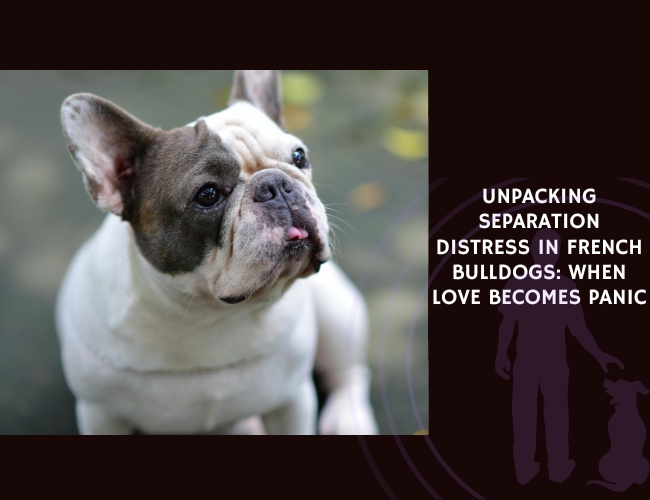
If you share your life with a French Bulldog, you already know their capacity for devotion runs deeper than most breeds. These compact companions with oversized hearts seem designed to orbit their humans like emotional satellites, offering warmth, comedy, and unwavering presence. Yet this beautiful attachment carries a shadow: many Frenchies struggle profoundly when left alone, displaying behaviors that range from mild worry to full-blown panic.
You might recognize the signs. Your Frenchie shadows you from room to room, never quite settling unless you’re within sight. Departure rituals trigger visible stress before you’ve even picked up your keys. Reunions feel less like greetings and more like rescues from emotional drowning. These patterns aren’t misbehavior or manipulation. They’re genuine distress signals from a nervous system overwhelmed by separation, and understanding why they happen opens the door to meaningful change.
This article explores the neurobiological, behavioral, and relational foundations of separation distress in French Bulldogs. We’ll examine how breeding history shaped their emotional architecture, distinguish between healthy attachment and anxious dependency, and reveal how well-meaning human behaviors often amplify the very patterns we’re trying to soothe. Most importantly, we’ll explore pathways toward emotional resilience that honor both the science of canine neurobiology and the profound bond you share with your Frenchie.
Breed Traits & Emotional Design: How History Shaped the Frenchie Heart
French Bulldogs weren’t designed for independence. Unlike breeds developed for herding, hunting, or guarding work that required autonomous decision-making and emotional self-reliance, Frenchies emerged from generations of selection for one primary quality: human-oriented companionship. Their ancestors were bred not to work beside humans, but to exist within the intimate spaces of human life, lap dogs whose purpose centered on emotional availability and affectionate presence.
This selective breeding created dogs with extraordinary affiliative softness, meaning their temperament naturally gravitates toward seeking and maintaining human contact. You see this in how your Frenchie lights up when you enter a room, how they position themselves for maximum physical touch, how their entire behavioral repertoire seems calibrated around your emotional state. These aren’t accidental traits but carefully cultivated characteristics reinforced over countless generations.
The trade-off for companionship intensity: What happens when we breed specifically for emotional proximity and human mimicry? We potentially reduce the neural scaffolding for independence. Breeds developed for autonomous work maintain robust internal regulation systems because survival demanded it. A herding dog needed to manage frustration, solve problems independently, and maintain emotional equilibrium during long periods away from handlers. Frenchies, conversely, had no evolutionary pressure to develop these capacities. Their survival and reproductive success hinged on being maximally bonded, not maximally independent.
Observable traits from companion-focused breeding include:
- Constant orientation toward human location and activity
- Reduced exploratory behavior when humans are accessible
- Strong preference for human contact over independent activities
- Heightened sensitivity to human emotional states and micro-expressions
- Limited problem-solving persistence when frustrated or challenged
- Tendency to seek human assistance rather than attempt independent solutions
Genetic predisposition to emotional reactivity: Research in behavioral genetics suggests certain breeds may carry neurobiological predispositions toward heightened emotional reactivity and lower frustration tolerance. While individual variation always exists, French Bulldogs as a population show patterns consistent with breeds selected for high responsiveness to human emotional cues. This same sensitivity that makes them such intuitive companions can become a vulnerability when the source of emotional co-regulation vanishes.
You might notice your Frenchie seems more emotionally “tuned in” than other breeds you’ve known. They read your micro-expressions, respond to subtle voice tone shifts, and mirror your emotional states with uncanny accuracy. This beautiful attunement comes from breeding, but it creates a dependency on your presence as their primary means of emotional stabilization. When you leave, they don’t just miss you—they lose their emotional anchor. 🧡
Attachment vs. Dependency: Understanding the Critical Difference
Not all closeness is created equal. The distinction between secure attachment and anxious dependency determines whether your Frenchie’s devotion supports their wellbeing or undermines it.
Secure attachment develops when a dog learns that their human provides reliable emotional safety while also supporting the dog’s capacity for independent functioning. A securely attached Frenchie might follow you occasionally, enjoy physical contact, and show pleasure at reunions—but they can also settle calmly in another room, tolerate brief separations without panic, and self-soothe when mildly stressed. Their connection to you is a foundation that supports confidence, not a lifeline they clutch in perpetual anxiety.
Anxious dependency looks superficially similar but operates from fundamentally different neurobiology. Here, proximity isn’t preference but necessity. The dog experiences genuine distress when separated, struggles to self-regulate emotions, and uses the human’s presence as their sole means of managing internal states. You become less a secure base for exploration and more a walking anxiety management system.
How do you distinguish between them in your own Frenchie? Watch what happens during neutral moments. A securely attached dog can relax when you’re present but focused on other activities. An anxiously dependent dog escalates proximity-seeking behaviors when they sense your attention shifting away. They may whine, paw, or position themselves to block your movement, signaling that your mere presence isn’t enough—they need active engagement to feel stable.
Key behavioral differences to observe:
Secure attachment behaviors:
- Seeks proximity but accepts brief separations calmly
- Can rest contentedly while you work or read nearby
- Shows interest in toys, chews, or exploration independently
- Greets departures and returns with moderate, brief responses
- Recovers quickly from mild stressors without human intervention
Anxious dependency behaviors:
- Cannot settle unless in direct physical contact
- Escalates attention-seeking when you focus elsewhere
- Ignores enrichment items when alone or separated
- Shows intense, prolonged distress at departures and reunions
- Requires constant human reassurance to maintain calm states
The role of proximity as emotional regulation: Some Frenchies use physical closeness as their primary strategy for managing internal arousal and anxiety. This represents a failure to develop independent emotional regulation capacities. Through the NeuroBond approach, we recognize that healthy bonding includes teaching dogs they carry emotional stability within themselves, not just through external contact. The goal isn’t eliminating closeness but transforming it from desperate clinging to confident connection.
Does your Frenchie seek you for grounding or genuine preference? Notice the quality of their attention-seeking. Do they approach you, receive comfort, then return to independent activity? That’s healthy attachment. Or does seeking you never quite satisfy, creating an endless loop of proximity demands that escalate when not immediately met? That pattern suggests they’re using your presence to regulate overwhelming internal states they haven’t learned to manage independently. 🐾
Emotional Regulation & Cortisol Sensitivity: The Stress Response in Frenchies
When your Frenchie experiences separation, their body doesn’t just register sadness. Their entire stress response system activates, flooding their nervous system with cortisol and triggering the cascade of panic-driven behaviors you observe.
Cortisol elevation and breed vulnerability: While comprehensive cortisol studies specific to French Bulldogs remain limited, behavioral observations suggest they may experience more pronounced stress hormone spikes during isolation compared to breeds with stronger independence traits. Their brachycephalic structure already places them under physiological stress related to breathing, potentially lowering their baseline stress tolerance and making additional emotional stressors more overwhelming.
You might observe your Frenchie panting heavily even in cool environments when anxious, or notice their stress escalates more rapidly than other dogs you’ve known. This isn’t weakness or drama—it’s their nervous system lacking the buffering capacity that breeds with different evolutionary pressures developed. Their stress response system may be more sensitive to triggers and slower to return to baseline after activation.
Low frustration tolerance and panic escalation: Many Frenchies struggle when their desires meet barriers. You close a door between you, and within seconds they’re pawing, whining, or working themselves into visible distress. This low frustration tolerance doesn’t reflect stubbornness but a nervous system that quickly shifts from “I want proximity” to “I need proximity urgently” to “I’m panicking without proximity.”
The transition happens neurologically through activation of what affective neuroscience researcher Jaak Panksepp termed the PANIC/GRIEF system. This ancient mammalian brain circuit evolved to keep young mammals close to caregivers through distress vocalizations and proximity-seeking behavior. In most adult dogs, this system activates only during genuine threats. In anxiously dependent Frenchies, ordinary separations trigger full PANIC/GRIEF activation.
Behavioral manifestations of overwhelm: When emotionally flooded, your Frenchie may display a constellation of stress behaviors:
- Excessive licking of paws, nose, or surfaces
- High-pitched, repetitive whining or barking
- Pacing fixed routes near doors or windows
- Destructive chewing of doorframes, furniture, or personal items
- Inability to settle or maintain restful positions
- Trembling, excessive drooling, or stress panting
These aren’t misbehaviors requiring punishment. They’re involuntary expressions of a nervous system in crisis, attempting to discharge overwhelming emotional energy through physical action. Understanding this transforms your response from frustration to compassion and appropriate intervention. 🧠

Human Influence & Miscommunication: How We Accidentally Reinforce Distress
Here’s the paradox that traps many loving Frenchie owners: the very behaviors that feel most nurturing often strengthen the patterns causing the problem. Your instinct to comfort, reassure, and maintain constant contact comes from care, but it inadvertently teaches your Frenchie that separation is indeed catastrophic and that they cannot manage without you.
Over-comforting and the reinforcement trap: When your Frenchie shows distress and you immediately provide soothing contact, you create an unintended learning pattern. The distress behavior produces the exact outcome they’re seeking—your reassuring presence. This doesn’t mean your Frenchie is “manipulating” you; operant conditioning happens whether the learner understands it or not. Their brain simply registers: distress → human attention → relief → distress behavior strengthened.
You might spend twenty minutes comforting your anxious Frenchie before leaving, believing you’re helping them feel secure. Instead, you’re teaching them that departures are significant emotional events requiring extensive ritual, and that their nervous system was right to activate anxiety. Through the Invisible Leash concept, we learn that calm, neutral departures communicate far more safety than emotional ones.
Emotional mirroring and amplification: French Bulldogs excel at reading human emotional states. When you feel guilty about leaving, anxious about their distress, or worried they won’t cope, your Frenchie perceives these emotions and interprets them as confirmation that separation is dangerous. Your internal state becomes their external reality.
Consider your typical departure. Do you speak in apologetic tones? Offer excessive affection “to make up for leaving”? Return immediately when you hear distress sounds? Each of these patterns, though motivated by love, signals to your Frenchie that your absence is indeed a crisis requiring emotional escalation. The calm confidence you wish they felt must first exist in you.
Ask yourself these revealing questions about your departure patterns:
- Do you spend more than 30 seconds saying goodbye before leaving?
- Does your emotional state change noticeably during pre-departure routines?
- Do you return immediately if you hear your Frenchie crying or barking?
- Do you feel guilty or anxious about leaving your dog alone?
- Do your departures vary dramatically in emotional intensity or duration?
- Do you provide extra treats, affection, or reassurance before leaving?
- Do you talk to your Frenchie in apologetic or worried tones about leaving?
- Do you delay leaving when your Frenchie shows distress signals?
If you answered yes to several of these, your emotional patterns may be inadvertently reinforcing the very anxiety you’re trying to alleviate.
Inconsistent departure cues and anticipatory panic: Dogs are pattern-recognition masters, and your Frenchie has learned every signal that predicts separation. The challenge emerges when these cues are inconsistent or highly emotionally charged. Perhaps Monday departures involve rushing and stress while weekend departures include long goodbye rituals. Your Frenchie can’t predict which version will happen, creating generalized anxiety around all potential departure signals.
The reunion reinforcement cycle: You return home after several hours away. Your Frenchie is beside themselves with joy—jumping, whining, spinning in circles. How do you respond? If you match their intensity with enthusiastic greetings, you’re inadvertently reinforcing the belief that your absence was a significant emotional event worthy of dramatic response. This doesn’t mean ignoring your dog, but rather greeting them with calm warmth that communicates: “Your presence brings me joy, and my absence was perfectly normal and safe.”
The pattern looks like this: Excessive reunion enthusiasm → reinforces separation significance → increases anticipatory anxiety → strengthens distress behaviors → creates more dramatic reunions. Breaking this cycle requires counterintuitive calm during emotionally charged moments. 🧡
Tethered. Tender. Unsteady.
Soft attachment isn’t weakness.
It’s a nervous system built for closeness—one that was never meant to function without human presence. French Bulldogs weren’t bred to work away from us, solve problems alone, or guard from a distance.
Separation feels like disconnection.
Your Frenchie doesn’t simply miss you. They lose orientation. Without your presence—your scent, your voice, your rhythm—they struggle to regulate their emotional state.



Panic begins where preparation never formed.
Anxiety grows when emotional dependency isn’t paired with emotional resilience. Frenchies feel deeply—but they don’t naturally learn how to feel alone.
Behavioral Expression: Reading the Early Warning Signs
Separation distress rarely appears fully formed. Most Frenchies display subtle signals long before their anxiety reaches obvious panic levels. Learning to recognize these early patterns allows intervention before behaviors become entrenched.
Micro-shadowing and velcro behavior: Does your Frenchie follow you from room to room, even for brief trips to the bathroom or kitchen? This micro-shadowing represents mild anxiety about distance. While some proximity-seeking is normal for companion breeds, constant following accompanied by visible stress when separated by doors signals emerging dependency.
You might notice your Frenchie can’t settle unless they maintain visual or physical contact. They position themselves to monitor your location constantly, shifting positions whenever you move. This hypervigilance prevents genuine relaxation and indicates they’re using your presence as continuous reassurance against some unnamed threat.
Exaggerated greetings and separation distress: Pay attention to reunion intensity. Does your Frenchie greet you warmly after separations, then settle within minutes? Or do they seem unable to regulate their excitement, continuing to jump, whine, and demand attention for extended periods? The latter suggests the separation period was genuinely distressing, not simply absence they tolerated calmly.
Inability to settle away from you: Place a baby gate between you and your Frenchie while remaining visible to them. Can they settle and relax despite the barrier, or do they immediately begin stress behaviors? A securely attached dog might show initial interest in reaching you but can accept the boundary and redirect to self-soothing activities. An anxiously dependent dog escalates, unable to tolerate even visible separation.
Anticipatory anxiety and prediction-based panic: Perhaps the most revealing indicator appears before you actually leave. Your Frenchie recognizes pre-departure cues—showering at specific times, particular clothing, gathering keys or bags—and their stress response activates immediately. They may begin pacing, whining, or attempting to block your path to the door. This demonstrates their anxiety stems from anticipating separation rather than experiencing loneliness, suggesting a learned panic response to departure predictors.
Distinguishing panic from boredom: When left alone, does your Frenchie engage in destructive behaviors near exits, vocalize intensely, or show signs of gastrointestinal distress? These indicate panic. Boredom-driven behaviors typically involve exploration of various items, play with available toys, and behaviors that cease when something interesting appears. Panic-driven behaviors focus obsessively on escape routes and produce physiological stress markers like drooling, trembling, and house soiling despite house training. 🐾
🐾 Understanding Separation Distress in French Bulldogs 💜
When deep attachment becomes anxious dependency—recognizing the difference between love and panic in your Frenchie’s heart
🧠 The Neurobiology Behind the Panic
Why Frenchies Struggle More Than Other Breeds
French Bulldogs were selectively bred for maximum human attachment, not independence. Their genetic design prioritizes emotional proximity over autonomous functioning, creating nervous systems that rely heavily on human presence for emotional regulation.
The PANIC/GRIEF System Activation
When separated, your Frenchie’s ancient mammalian brain circuits activate full distress responses—elevated cortisol, shallow breathing, and genuine emotional overwhelm. This isn’t misbehavior; it’s neurobiological crisis triggering survival-level panic.
🔍 Recognizing the Early Warning Signs
Subtle Indicators Before Full Panic Develops
Watch for these early patterns that signal emerging separation anxiety:
• Micro-shadowing (following room to room constantly)
• Exaggerated greetings that don’t settle within 2 minutes
• Inability to relax unless in physical contact
• Anticipatory whining when pre-departure cues appear
• Stress visible during your morning routine—before you actually leave
Secure Attachment vs. Anxious Dependency
Secure: Can settle independently when you’re nearby but focused elsewhere. Anxious: Escalates proximity-seeking whenever your attention shifts away, requiring constant engagement to maintain calm.
✨ Building Emotional Resilience Through Clear Leadership
The Calm, Neutral Departure Protocol
Strip away emotional intensity to teach that separation is unremarkable:
• Withdraw attention 5 minutes before leaving
• Exit without eye contact, verbal goodbyes, or physical affection
• Return calmly, greeting only after your Frenchie settles
• Keep reunions warm but brief (30 seconds maximum)
• Maintain consistent emotional neutrality across all departures
Environmental Support Systems
Provide cognitive enrichment (frozen Kongs, puzzle feeders), calming scents (lavender, chamomile), auditory support (dog-calming music), and structured calm spaces with positive associations. Environment shapes nervous system regulation capacity.
⚠️ What Accidentally Makes It Worse
Human Behaviors That Reinforce Distress
Well-meaning actions that strengthen anxiety patterns:
• Over-comforting before departures teaches separation is catastrophic
• Long emotional goodbyes signal that leaving is a crisis
• Excessive reunion celebrations reward distressed states
• Returning immediately when hearing distress sounds
• Inconsistent departure cues creating unpredictability and panic anticipation
Your Emotional State Matters Most
French Bulldogs mirror human emotions with extraordinary accuracy. Your guilt, anxiety, or worry about leaving becomes their confirmation that separation is dangerous. The calm confidence you wish they felt must first exist authentically in you.
⚡ The Core Transformation Formula
Anxious Dependency → Secure Attachment
Remove: Emotional departure rituals + Inconsistent routines + Over-comforting patterns
Add: Clear calm leadership + Neutral departures/returns + Gradual independence training + Environmental enrichment
Result: Your Frenchie learns they carry emotional stability within themselves, not just through your physical presence
🧡 The Emotional Tether That Transcends Distance
Through the NeuroBond approach, we recognize that true connection isn’t measured by constant proximity but by the trust that allows independence. Your Frenchie’s secure attachment develops when they learn that psychological closeness remains constant even when physical distance exists. The Invisible Leash maintains this emotional tether—awareness and confidence replacing desperate clinging. This transformation from panic to peace honors both the profound science of canine neurobiology and the beautiful bond you share.
© Zoeta Dogsoul – Where neuroscience meets soul in dog training
Environmental Factors & Predictive Cues: How Context Shapes Anxiety
Your Frenchie doesn’t experience separation in a vacuum. Environmental factors, routines, and learned associations profoundly influence whether separations trigger manageable stress or overwhelming panic.
Pre-departure routines as conditioned triggers: Every departure follows patterns. You wake at consistent times, follow morning routines, and perform specific actions before leaving. Your Frenchie learns these patterns with remarkable precision. The shower running at 7 AM becomes a predictor. Your work clothes signal impending separation. Keys jingling means panic should begin.
Common departure cues your Frenchie may have learned:
- Specific alarm times or sounds
- Shower or morning grooming routines
- Particular clothing (work attire, shoes, jackets)
- Gathering items (keys, wallet, phone, bags)
- Checking locks, turning off lights, adjusting thermostats
- Changes in voice tone or movement pace
- Looking at watches or checking time repeatedly
- Final room checks or pet goodbyes
This classical conditioning operates automatically. Your Frenchie doesn’t think “keys mean separation, therefore I should feel anxious.” Instead, their nervous system has linked these neutral cues with the emotional experience of your departure, triggering anxiety responses before the actual separation occurs. This prediction-based anxiety often exceeds the distress of being alone, because anticipatory anxiety compounds throughout your entire pre-departure routine.
Unpredictability and its cost: Imagine if your departure time varied randomly between 7 AM and noon, your goodbye rituals changed daily, and your absence duration was completely unpredictable. Your Frenchie couldn’t learn reliable patterns, leaving them in chronic low-level anxiety, unable to trust that any moment of calm won’t suddenly become separation. Consistency isn’t rigidity—it’s the foundation of emotional safety.
Environmental enrichment and sensory engagement: An empty, unstimulating environment amplifies separation distress. Your Frenchie sits in silence, hyper-focused on your absence, with nothing to engage their attention or provide alternative emotional experiences. Appropriate sensory enrichment doesn’t distract from anxiety—it provides genuine engagement that supports nervous system regulation.
Effective enrichment strategies for separation periods:
- Cognitive engagement: Food puzzle toys requiring problem-solving (Kong toys frozen with healthy fillings, snuffle mats, puzzle feeders)
- Auditory support: Calming music designed for dogs, audiobooks at conversational volume, white noise machines masking trigger sounds
- Olfactory enrichment: Dog-safe calming scents (lavender, chamomile), scent work games with hidden treats
- Chewing outlets: Long-lasting, safe chews (bully sticks, dental chews, frozen carrots for gentle chewing)
- Visual interest: Pet cameras allowing you to dispense treats remotely, window perches for watching outdoor activity (if this calms rather than excites)
- Tactile comfort: Soft bedding with your scent, weighted blankets designed for dogs, den-like covered crates if properly conditioned
Consider these environmental supports:
- Calming scents like lavender or chamomile in a safe diffuser
- Background noise at conversational volume masking triggering sounds
- Food puzzle toys requiring cognitive engagement
- Safe chewing items satisfying self-soothing needs
- Comfortable, den-like spaces offering security without isolation
The structured calm space: Your Frenchie needs a designated area that becomes associated with positive, relaxed experiences. This isn’t a punishment zone or isolation chamber, but a place where good things happen consistently. Feed meals there, provide special treats, allow naps near you in that space. Over time, the location itself becomes a cue for calmness, providing environmental support during separations.
Light, sound, and temperature considerations: French Bulldogs’ physical vulnerabilities make environmental comfort critical. Ensure their space maintains comfortable temperature ranges given their breathing challenges. Avoid placing their area near windows where external activity might trigger reactive behaviors. Consider whether natural light cycles support their circadian rhythm regulation, as dogs experiencing chronic stress often show disrupted sleep patterns. 🧠
NeuroBond Leadership & Emotional Resilience: Building Independence Through Connection
Traditional approaches to separation anxiety often focus on desensitization protocols—gradually increasing separation duration while managing stress responses. While valuable, these techniques miss a crucial foundation: your Frenchie’s capacity for emotional resilience depends first on the quality of connection when you’re together, not just coping strategies for when you’re apart.
Clear emotional leadership and psychological safety: Dogs evolved as social animals whose survival depended on group cohesion. Within healthy canine social structures, clear leadership doesn’t mean dominance or control—it means certain individuals project calm confidence that helps others regulate their emotional states. Your Frenchie looks to you for emotional information: Is this safe? Can I relax? Do I need to worry?
When you project anxious uncertainty—whether about leaving, their distress, or your return—you become an unreliable emotional leader. Your Frenchie can’t borrow calm from chaos. Clear leadership means maintaining emotional equilibrium regardless of their reaction, communicating through your demeanor that separations are normal, manageable events requiring no drama.
The calm, neutral departure protocol: Effective departures strip away emotional intensity. No long goodbyes, no apologetic tone, no reassurance rituals. You simply leave with the same emotional neutrality you’d show moving between rooms. This feels counterintuitive—don’t they need to know you care? But your Frenchie already knows you care. What they need to learn is that your departure isn’t an emotional emergency.
Implement this step-by-step departure framework:
- Pre-departure preparation (10-15 minutes before):
- Gather all items you need without emotional commentary
- Maintain normal, calm energy throughout your routine
- Ignore attention-seeking behaviors during this period
- The five-minute withdrawal:
- Five minutes before leaving, withdraw attention naturally
- No eye contact, verbal interaction, or physical touch
- Continue normal activities (checking phone, organizing items)
- The departure moment:
- Exit without eye contact, verbal acknowledgment, or physical affection
- No “goodbye,” “I’ll be back,” or reassuring statements
- Move through the departure as you would between rooms
- The return protocol:
- Enter calmly without acknowledging your Frenchie immediately
- Put away items, settle yourself first
- Greet only after your Frenchie settles to calm state (sitting or standing quietly)
- Keep reunions warm but brief (30 seconds maximum)
- No extended celebration or compensation for your absence
This protocol teaches through experience: departures and arrivals are unremarkable transitions, not emotional pivots requiring intense response.
The emotional tether concept: Through Soul Recall, we recognize that deep bonds transcend physical proximity. Your Frenchie’s secure attachment isn’t proven by constant shadowing but by their ability to maintain psychological connection even during separation. This “emotional tether” develops through consistent, positive interactions that build trust in your reliability.
Think of it like this: each positive interaction, each calm departure followed by reliable return, each moment of clear leadership deposits into an emotional trust account. Over time, that account becomes robust enough to sustain your Frenchie through separations because experience has proven your absence is temporary and your return is certain.
Teaching self-regulation through gradual independence: Begin building independence during moments of low stress. When you’re home, practice brief separations using baby gates or closed doors while remaining nearby. Your Frenchie learns they can tolerate barriers while you’re still accessible. Gradually extend these durations as their comfort increases.
Reward calm behavior, not just during separations but throughout daily life. When your Frenchie settles independently, acknowledge it subtly. When they choose to relax near you but not on you, notice that resilience. You’re shaping their understanding that calm independence brings positive attention, while anxious demanding does not.
The resilience-building progression: Start where your Frenchie can succeed. If they panic after 30 seconds alone, begin with 10-second separations. Success builds confidence; repeated overwhelm builds sensitization. The goal isn’t pushing through distress but gradually expanding their comfort zone through experiences of “I was okay during that.”
Consider this framework:
- Establish calm spaces with positive associations
- Practice visible but physically separated time (baby gates)
- Brief absences from sight (30 seconds to 2 minutes)
- Extend duration gradually based on stress-free performance
- Introduce departure cues systematically without actual leaving
- Combine cues with brief departures
- Build toward functional separation durations
Throughout this process, your emotional state remains the foundation. Your Frenchie reads your confidence, your calm, your certainty that they’re safe. This emotional leadership becomes the invisible leash that maintains connection across physical distance. That balance between supporting their development and trusting their capacity—that’s the essence of Zoeta Dogsoul. 🧡
Distinguishing Secure Attachment from Anxious Dependency: A Practical Assessment
Understanding where your Frenchie falls on the attachment-dependency spectrum helps target interventions effectively. Consider these behavioral indicators:
Signs of secure attachment:
- Your Frenchie enjoys proximity but can settle independently when you’re engaged in activities
- Brief separations (under five minutes) produce mild interest but not distress
- Reunions involve greeting behaviors that settle within one to two minutes
- Your Frenchie shows confidence exploring environments with periodic check-ins to your location
- They can accept barriers like baby gates with minimal stress if you remain visible
- Departure cues generate awareness but not anxiety escalation
- Self-soothing behaviors (chewing appropriate items, resting) occur naturally
- They show appropriate interest in enrichment activities and novel stimuli
Signs of anxious dependency:
- Constant shadowing with visible stress when separated by any barrier
- Inability to settle unless in physical contact or direct line of sight
- Immediate distress (under 30 seconds) when you leave the room
- Reunion behaviors that escalate rather than diminish over several minutes
- Refusal to engage with food, toys, or activities when alone
- Anticipatory anxiety beginning during pre-departure routines
- Stress behaviors (pacing, whining, trembling) during your normal at-home activities if attention shifts away
- Destructive or panic behaviors during any separation, regardless of duration
Most Frenchies exist somewhere on the continuum between these extremes. The key isn’t achieving perfect independence—companion breeds naturally prefer proximity—but ensuring that preference doesn’t become pathological need. 🐾
The Role of Consistency, Routine, and Predictability
French Bulldogs’ nervous systems crave predictability. Consistent routines don’t create rigidity—they create the secure framework within which your Frenchie can relax because they understand what’s happening and what comes next.
Establishing departure predictability: Your Frenchie benefits from learning that specific sequences reliably predict specific outcomes. When you follow consistent morning routines, they learn: shower → breakfast → departure → eventually return. This predictability reduces chronic anxiety because the pattern becomes familiar and manageable.
Avoid variable emotional intensity in departures. Monday’s rushed, stressed exit teaches something different than Sunday’s calm departure, creating confusion about whether leaving is dangerous or normal. Maintain consistent emotional tone across all departures regardless of duration or destination.
Return timing and trust building: While you can’t always control exactly when you’ll return, establishing general patterns helps. Your Frenchie’s time perception differs from yours, but they notice patterns. Regular 8-hour workday absences create different expectations than unpredictable disappearances lasting anywhere from twenty minutes to six hours.
Daily routine structure: Beyond departures, overall life consistency supports nervous system regulation. Feeding times, walk schedules, play sessions, and rest periods that follow reliable patterns help your Frenchie maintain emotional equilibrium. This structure isn’t about rigid timing but about creating a predictable rhythm to daily life.
The power of ritual without emotion: You can maintain departure rituals—gathering items, putting on specific clothing, following specific sequences—while stripping them of emotional charge. The ritual becomes simply what happens before temporary separations, not a dramatic performance signaling impending crisis. Your calm execution transforms these patterns from anxiety triggers to neutral routine. 🧠
Medical Considerations and Physical Health Impacts
Separation distress isn’t purely behavioral. French Bulldogs’ unique physical characteristics influence both their vulnerability to stress and appropriate intervention strategies.
Brachycephalic syndrome and stress interaction: Your Frenchie’s shortened skull structure creates respiratory challenges that anxiety exacerbates. When stressed, their breathing becomes more labored, oxygen exchange decreases, and physical discomfort compounds emotional distress. This creates a negative feedback loop: anxiety causes breathing difficulty, breathing difficulty increases anxiety.
Ensure your Frenchie maintains healthy weight, as excess pounds further compromise already challenged respiratory function. During high-stress periods like separation training, monitor for respiratory distress and allow adequate recovery time between sessions.
Gastrointestinal sensitivity: Many Frenchies show sensitive stomachs that stress aggravates. You might notice loose stools, decreased appetite, or digestive upset correlating with separation anxiety episodes. This isn’t coincidental—the gut-brain axis means emotional stress directly impacts digestive function. Address both behavioral and physical components through appropriate diet, possible probiotic support under veterinary guidance, and stress reduction protocols.
Immune function and chronic stress: Extended periods of separation-related stress can compromise immune function, potentially making your Frenchie more vulnerable to infections, inflammatory conditions, and general health challenges. This isn’t immediate but develops over time with chronic cortisol elevation. Successfully addressing separation anxiety provides health benefits beyond behavior improvement.
Medication considerations: Some cases of severe separation anxiety benefit from pharmaceutical support under veterinary guidance. Anti-anxiety medications or supplements can reduce distress sufficiently for behavioral interventions to work. This isn’t failure or weakness—it’s recognizing when neurological support helps create the emotional state necessary for learning new patterns. Work with veterinarians experienced in behavioral medicine to explore appropriate options if needed. 🧡
Building a Comprehensive Support Plan
Addressing your Frenchie’s separation distress requires multi-dimensional approaches targeting different aspects of the problem simultaneously.
Foundation building at home:
- Establish clear emotional leadership through calm, consistent presence
- Create structured calm spaces with positive associations
- Practice brief, non-emotional separations throughout normal days
- Reward independent settling and self-soothing behaviors
- Maintain consistent daily routines that build predictability
- Ensure physical health needs are met (appropriate exercise, nutrition, veterinary care)
Environmental modifications:
- Provide appropriate sensory enrichment during separations
- Consider calming aids (pheromone diffusers, calming music, white noise)
- Ensure physical comfort (temperature control, comfortable resting areas)
- Remove or modify high-trigger items (visible departure cues like keys or bags)
- Create positive associations with departure cues through counterconditioning
Training progression:
- Start with separations below your Frenchie’s stress threshold
- Gradually increase duration and difficulty based on success
- Systematically desensitize to departure cues
- Practice calm departures and neutral returns consistently
- Implement graduated independence exercises using barriers and room separations
Professional support when needed:
- Veterinary behaviorist consultation for severe cases
- Certified professional dog trainer experienced with separation anxiety
- Possible pharmaceutical intervention for extreme distress
- Regular veterinary monitoring of physical health impacts
Your own emotional regulation:
- Address your guilt, anxiety, or worry about leaving
- Develop confidence in your Frenchie’s capacity for resilience
- Maintain calm emotional state during departures and returns
- Trust the process even when progress feels slow
- Remember that your emotional leadership guides their development
Progress rarely follows straight lines. Your Frenchie might show improvement, then regress during changes or stressors. This doesn’t mean failure—it reflects the complex, nonlinear nature of nervous system retraining. Maintain consistency through setbacks, adjust approaches based on response, and celebrate small victories along the way. 🐾
When Professional Help Becomes Necessary
While many cases of separation distress respond to guardian-implemented interventions, some situations require professional expertise.
Indicators that professional support would help:
- Your Frenchie shows no improvement after six to eight weeks of consistent home intervention
- Separation behaviors include self-injury (excessive licking creating sores, destructive behaviors causing physical harm)
- Your Frenchie’s distress prevents you from maintaining normal work or life obligations
- Physical health symptoms appear (digestive issues, weight loss, compulsive behaviors)
- Your own stress about the situation reaches overwhelming levels
- You feel uncertain about appropriate intervention strategies
- Multiple behavior challenges exist beyond separation anxiety
Types of professional support:
Veterinary behaviorists combine medical and behavioral expertise, particularly valuable when considering pharmaceutical interventions or ruling out underlying medical contributions to anxiety. Certified professional dog trainers with specific separation anxiety experience provide hands-on guidance and customized behavior modification protocols. Some cases benefit from both simultaneously.
What to expect from professional intervention: Qualified professionals will conduct thorough behavioral assessments, potentially recommend medical workups, design individualized modification programs, and provide ongoing support through the implementation process. They should explain their approach clearly, set realistic expectations about timeline and outcomes, and adjust protocols based on your Frenchie’s response.
Don’t view seeking help as failure. Separation anxiety represents complex interactions between genetics, learning history, environment, and neurobiology. Professional guidance often accelerates progress and prevents inadvertent mistakes that could worsen the situation. 🧠
The Path Forward: Realistic Expectations and Sustainable Progress
Transforming your Frenchie’s relationship with separation requires patience, consistency, and realistic expectations about timelines and outcomes.
Understanding the timeline: Mild cases might show significant improvement within four to six weeks. Moderate anxiety often requires two to four months of consistent work. Severe, entrenched patterns may need six months to a year of dedicated intervention. These timelines assume consistent, appropriate implementation—not occasional efforts between periods of reverting to old patterns.
Your Frenchie didn’t develop their anxiety overnight, and resolution won’t happen overnight either. Each small success—settling calmly for five minutes, accepting a closed door without panic, greeting you calmly after brief absence—represents genuine progress worth celebrating.
Setbacks and regression: Expect periodic setbacks, particularly during changes like moving homes, schedule disruptions, or family transitions. These don’t erase progress but temporarily challenge your Frenchie’s coping capacity. Return to earlier training stages briefly, then rebuild forward progress once stability returns.
The goal isn’t perfect independence: Remember, French Bulldogs are companion breeds. You’re not trying to create a dog indifferent to your presence. The goal is transforming anxious dependency into secure attachment where your Frenchie prefers your company but tolerates your absence without distress. They should feel most content near you while remaining emotionally stable during necessary separations.
Sustainable lifestyle integration: Long-term success requires integrating these principles into your daily life permanently, not just during active training periods. Maintain calm departures, consistent routines, and clear emotional leadership even after improvement. Your Frenchie’s nervous system requires ongoing support to maintain resilience, not just initial retraining followed by return to old patterns.
Celebrating the bond: Through this challenging process, you’re not diminishing your relationship with your Frenchie—you’re strengthening it. You’re teaching them they’re safe even in your absence because your bond transcends physical proximity. You’re providing the greatest gift possible: the confidence to exist peacefully in their own experience, knowing your connection remains constant whether you’re present or not.
That journey from anxious dependency toward secure resilience, built on trust rather than clinging—that embodies the deepest form of love we can offer our canine companions. 🧡
Conclusion: From Panic to Peace Through Understanding
Your French Bulldog’s separation distress stems not from stubbornness, manipulation, or insufficient love—but from a genuine nervous system overwhelm rooted in breeding history, learned patterns, and the complex dance between canine neurobiology and human behavior. Understanding this transforms frustration into compassion and creates space for effective intervention.
The path forward requires patience with both your Frenchie and yourself. You’ll need to modify not just their behavior but your own habitual responses. You’ll celebrate tiny victories—three calm minutes alone, one neutral departure, a single unstressed reunion—while maintaining vision of larger transformation. You’ll question whether it’s working, wonder if your Frenchie is different from others who improved, and doubt your capacity to help them through this.
But here’s what research, clinical experience, and countless success stories confirm: most French Bulldogs can develop significantly improved emotional regulation around separation when their humans provide clear leadership, appropriate support, and consistent implementation of evidence-based strategies. Your Frenchie’s capacity for resilience exists within them—you’re simply creating conditions where it can emerge.
Remember that the goal honors both the science of canine behavior and the profound emotional connection you share. You’re not choosing between attachment and independence—you’re cultivating secure attachment that allows independence. You’re not abandoning your Frenchie to “tough it out”—you’re teaching them the life skill of emotional self-regulation while maintaining your reliable, loving presence as their foundation.
Every moment of calm you model, every neutral departure you execute, every panic episode you support without reinforcing, every small expansion of their comfort zone—these accumulate into transformation. Not overnight. Not without setbacks. But genuinely, meaningfully, with growing evidence that your Frenchie is discovering their own capacity to feel safe in the world, regardless of your physical location.
That’s the journey toward emotional resilience. That’s the application of understanding nervous system function, behavioral modification principles, and compassionate human leadership. That balance between honoring their profound attachment while supporting their independence—that’s the essence of Zoeta Dogsoul. 🧡
Your Frenchie chose you not just for constant companionship, but for the patient guidance that helps them become their most resilient, confident, emotionally regulated self. Trust the process. Trust your capacity to lead them through this. Trust their capacity to grow. And trust that the bond you’re building—grounded in security rather than anxiety, connection rather than clinging—will prove stronger and more beautiful than either of you imagined possible.










