
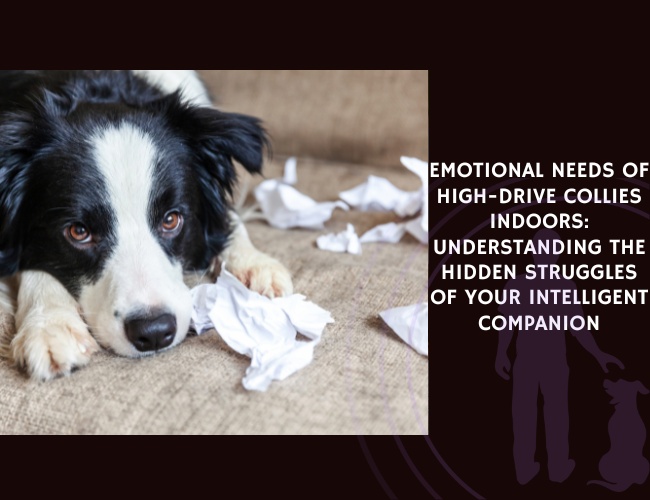
When you watch your Border Collie lying quietly on the living room floor, do you see peaceful rest or silent tension? For generations, we’ve celebrated these remarkable dogs for their extraordinary intelligence and tireless work ethic, yet we’ve only recently begun to understand the complex emotional landscape they navigate when confined to typical domestic spaces. Your high-drive Collie isn’t just a pet seeking physical exercise—they’re a cognitively sophisticated being with deep-rooted needs for purpose, structure, and meaningful engagement that go far beyond a daily walk.
The reality many Collie guardians face is both fascinating and challenging. These dogs possess a cognitive architecture shaped by centuries of breeding for complex problem-solving, directional control, and rapid decision-making in dynamic environments. When we bring them into our homes, we’re asking a mind designed for constant engagement to exist in spaces characterized by low sensory input, limited cognitive challenges, and extended periods of waiting. This mismatch creates an emotional tension that often goes unrecognized, mistaken for contentment when it may actually be suppressed drive, displacement anxiety, or what researchers now term “boredom stress.” 🧠
Understanding the emotional needs of your high-drive Collie indoors isn’t about guilt—it’s about awareness. Next, we’ll explore the genetic heritage that shapes these needs and how your dog’s brain is wired differently from breeds developed for companionship rather than work.
Breed Heritage & Purpose-Driven Cognition: How History Shapes Today’s Needs
Your Border Collie’s ancestors weren’t selected for their ability to relax on a couch. For hundreds of years, shepherds in the rugged borderlands between Scotland and England chose breeding stock based on one primary criterion: the ability to solve complex herding problems through intense focus, rapid decision-making, and sustained cognitive engagement. This wasn’t about physical stamina alone—it was about mental capacity.
The Problem-Solving Legacy
When your Collie fixates on a shadow moving across the wall or tracks your every movement through the house, you’re witnessing the direct result of selective breeding for pattern recognition and predictive processing. These dogs were developed to read subtle environmental cues—a sheep’s ear flick, a change in flock dynamics, the shepherd’s distant whistle—and make split-second decisions based on those observations. This cognitive specialization means your dog’s brain is constantly scanning, analyzing, and seeking problems to solve.
The herding behaviors we admire in working contexts—the intense eye contact, the stalking crouch, the precise flanking movements—aren’t just physical actions. They represent a deeply embedded reward system where problem-solving itself creates emotional satisfaction. When researchers study Border Collies’ neurological responses, they find heightened activation in areas associated with goal-directed behavior and reward anticipation. Your dog doesn’t just enjoy solving problems; their emotional equilibrium depends on it.
Key Herding-Derived Cognitive Traits You’ll Notice Indoors:
- Intense visual focus: Your Collie tracks movement with laser precision, even reflections or shadows
- Anticipatory positioning: They move to intercept your path before you’ve fully decided where you’re going
- Pattern recognition: They learn your routines after just 2-3 repetitions and anticipate next steps
- Environmental scanning: Constant peripheral awareness of everything happening in their space
- Decision-making speed: Split-second responses to changes, sometimes before you’ve noticed them
- Problem-solving persistence: They don’t give up easily when faced with cognitive challenges
Genetic Predisposition to Purpose
Did you know that your Collie’s need for purposeful engagement is literally written into their DNA? Studies examining breed-specific behavioral genetics have identified gene variants associated with trainability, attention span, and work drive that appear with significantly higher frequency in Border Collies compared to companion breeds. This isn’t anthropomorphism—it’s biology.
This genetic blueprint creates what we might call “purpose-based emotional satisfaction.” Unlike breeds developed primarily for companionship, which can achieve emotional fulfillment through proximity and affection alone, high-drive Collies require the additional layer of structured cognitive engagement. Through the NeuroBond approach, we recognize that emotional connection with these dogs must include clear direction and meaningful interaction—not just warmth and presence. 🐾
Meaningful Interaction vs. Simple Movement
Here’s where many well-intentioned guardians encounter confusion. You might provide your Collie with a large backyard, regular walks, and plenty of exercise, yet still observe restlessness, attention-seeking behaviors, or sudden reactivity. This happens because movement alone doesn’t satisfy the cognitive hunger these dogs experience.
Your Collie seeks meaningful interaction—activities where they can predict, problem-solve, and receive clear feedback about their performance. A thirty-minute walk where they simply follow you provides far less emotional satisfaction than a ten-minute session of directional training, scent work, or problem-solving games. The difference lies in cognitive engagement: one activity occupies their body while the other engages their mind.
This distinction becomes crucial when we consider indoor living, where opportunities for complex cognitive engagement naturally decrease. Next, we’ll examine how the indoor environment itself can create emotional suppression, even in physically comfortable settings.
Indoor Environment & Emotional Suppression: When Comfort Doesn’t Equal Calm
Your living room might be temperature-controlled, comfortable, and safe, yet for your high-drive Collie, it can feel emotionally claustrophobic. This paradox lies at the heart of indoor emotional suppression—a state where physical comfort exists alongside mental distress.
Low-Sensory Confinement and Pattern-Recognition Instincts
Border Collies evolved to work in environments rich with sensory information: wind patterns, distant sounds, movement across expansive landscapes, changing light conditions, and the complex social dynamics of livestock. Their cognitive systems developed to process this constant stream of varied input, using it to make predictions and adjust their behavior accordingly.
When you bring this highly tuned sensory processor into a typical indoor environment, something unexpected happens. The reduced sensory input doesn’t create relaxation—it creates tension. Your dog’s pattern-recognition systems, designed to extract meaning from complex environmental data, continue running at full capacity with insufficient input. This is similar to asking a professional translator to sit in an empty, silent room for hours: the cognitive machinery doesn’t shut down simply because there’s nothing to translate.
The Illusion of Calm
You might notice your Collie lying still, eyes half-closed, seemingly relaxed. But look closer. Are their ears making micro-adjustments to distant sounds? Does their body startle slightly when you shift in your chair? Do they immediately rise to alert when you stand, even if you’re just stretching?
This apparent calm often masks what behaviorists call “cognitive freeze”—a state where the dog has stopped actively seeking because repeated seeking has produced no results, not because they’ve achieved genuine rest. It’s the behavioral equivalent of learned helplessness in the cognitive domain. Your dog isn’t resting; they’re waiting in a state of suppressed arousal, their SEEKING system frustrated but still activated beneath the surface.
Signs Your Collie Is in Cognitive Freeze (Not True Rest):
- Body remains in one position for extended periods without natural shifting
- Eyes stay partially open or snap to full alert at minor sounds
- Muscles show subtle tension, particularly in neck and shoulders
- Immediate response when you move, even slightly
- No visible REM sleep cycles (twitching, soft movements)
- Heavy, forceful sighs rather than soft, relaxed breathing
- Quick transition from “rest” to full alert with no gradual wake-up
- Lying down but weight distributed forward, ready to spring up
Research in canine stress physiology reveals that dogs can maintain elevated cortisol levels—a primary stress hormone—even while appearing physically calm. In high-drive breeds, this disconnect between external appearance and internal state is particularly pronounced. Your Collie may have learned that indoor environments offer no outlets for their cognitive drives, so they’ve stopped overtly expressing those drives, but the underlying tension remains.
Emotional Claustrophobia in Physical Safety
Consider this: your Collie’s distant ancestors could scan horizons, track movement across fields, and engage in dynamic problem-solving throughout their day. Now, their descendant sits in your living room, where the most engaging stimulus might be the play of light through window blinds or the sound of the refrigerator cycling on.
This environmental impoverishment creates what we might call emotional claustrophobia—not a fear of physical confinement, but a distress arising from cognitive confinement. The space is safe, but it offers no opportunities for the type of engagement your dog’s brain craves. Over time, this can lead to a chronic low-grade stress state that affects everything from immune function to emotional regulation. 🧡
The signs of this emotional claustrophobia are often subtle and easily misinterpreted. Next, we’ll explore how to distinguish between genuine emotional rest and the hidden stress of suppressed drive.
Emotional vs. Physical Fatigue: Recognizing Hidden Tension
Your exhausted Collie returns from a two-hour hike and collapses on their bed. They’re physically spent, muscles fatigued, breath still elevated. Yet within an hour, you notice them pacing, bringing you toys, or fixating on household sounds. What happened? This scenario illustrates a crucial distinction many Collie guardians overlook: the difference between physical fatigue and emotional rest.
Physical Rest, Emotional Activation
High-drive Collies can experience simultaneous physical exhaustion and emotional restlessness. Their bodies need recovery, but their minds remain neurologically activated, unable to downregulate despite physical depletion. This state creates a unique form of suffering—your dog is too tired to engage properly but too mentally aroused to rest.
Neurologically, this manifests as elevated baseline arousal in the limbic system even during physical rest. The amygdala, which processes emotional responses, remains in a heightened state of alertness. The prefrontal cortex, responsible for impulse control and emotional regulation, struggles to modulate these signals because the underlying cognitive hunger remains unfed. Think of it as being physically exhausted from running but mentally wired from consuming caffeine—the body and mind are in conflicting states.
Physical Fatigue vs. Emotional Rest: Key Differences
Physical Fatigue Looks Like:
- Heavy breathing that gradually slows
- Immediate collapse or flopping down
- Drinking water readily
- Closed eyes but restless body
- Muscle tiredness but mental alertness
- Short rest periods followed by renewed seeking
- Quick recovery to full energy
Emotional Rest Looks Like:
- Even, calm breathing from the start
- Gradual settling with position adjustments
- Disinterest in engaging stimuli
- Soft eyes, relaxed facial muscles
- Full-body muscle relaxation
- Extended rest periods with deep sleep
- Gentle, gradual return to activity
Manifestations of Cognitive Frustration
When your Collie lacks adequate cognitive challenges, frustration doesn’t always present as obvious misbehavior. Instead, you might observe:
Common Displacement Activities and What They Mean:
- Pacing patterns: Repetitive routes through your home, often in figure-eight or circular patterns, with purposeless quality (Translation: seeking without finding)
- Object fixation: Intense focus on specific items (toys, shadows, reflections) without the play behavior that would normally follow interest (Translation: attempting to create purpose from nothing)
- Attention-demanding behaviors: Pawing at you, bringing items repeatedly, vocalizing, or positioning themselves in your line of sight (Translation: requesting cognitive engagement)
- Sudden reactive outbursts: Disproportionate responses to minor stimuli—barking intensely at distant sounds, explosive reactions to doorbells, or sharp responses to other pets (Translation: overflow of unexpressed arousal)
- Excessive grooming: Licking paws, legs, or flanks beyond normal cleaning (Translation: self-soothing during cognitive frustration)
- Mouthing or nibbling: Gentle biting of your hands, clothes, or furniture (Translation: seeking tactile engagement and feedback)
These behaviors aren’t willful disobedience or poor training. They’re displacement activities—your dog’s attempt to self-regulate by creating cognitive engagement when none is provided. It’s similar to a human stuck in a waiting room with nothing to do who starts organizing items, counting ceiling tiles, or creating mental games to occupy their mind.
The Downregulation Deficit
Perhaps most concerning is what happens when chronic cognitive understimulation affects your Collie’s ability to downregulate—to transition from arousal to calm. Dogs with satisfied cognitive needs can shift between states: alert when needed, relaxed when appropriate. But Collies experiencing persistent mental hunger often lose this flexibility.
You might notice your dog seems unable to settle, even in familiar, safe environments. They may display clinginess, following you from room to room not out of affection but out of anxious monitoring. They might shadow your movements with visible tension in their posture—weight forward, ears tracking, eyes bright with vigilance rather than soft with contentment.
Signs of Downregulation Deficit:
- Difficulty transitioning from activity to rest (taking 30+ minutes to settle)
- Restlessness during quiet periods, with frequent position changes
- Hypervigilance to household sounds or movements
- Following you constantly, even to the bathroom
- Inability to remain in one location while you’re in another room
- Startling easily during rest periods
- Circling or repositioning multiple times before lying down
- Standing up immediately when you shift or move
This constant state of readiness takes a toll. Chronic activation of stress systems affects immune function, digestive health, and emotional resilience. Your Collie becomes more reactive to minor stressors, less able to recover from excitement, and more prone to anxiety-driven behaviors. The very traits that make them exceptional working dogs—their alertness, responsiveness, and intense focus—become sources of suffering in cognitively impoverished environments.
Understanding this distinction between physical and emotional fatigue transforms how we approach our dogs’ well-being. Next, we’ll explore how attachment dynamics in high-drive breeds differ fundamentally from other dogs, and why standard affection might actually increase their anxiety rather than soothe it.
Attachment, Pressure & Human Dependency: When Love Needs Structure
If you share your life with a Border Collie, you’ve likely experienced their intense attachment style. They don’t just want to be near you—they seem to need to be monitoring you, anticipating your next move, ready to spring into action at the slightest signal. This attachment pattern differs profoundly from the more relaxed companionship of breeds developed primarily for human company.
Mentally Demanding Attachment Bonds
Your Collie’s attachment to you carries cognitive weight. Unlike breeds whose primary emotional need is proximity and warmth, high-drive Collies form attachment bonds that are purpose-building and mentally demanding. They don’t just want to be with you; they want to work with you, understand you, and fulfill a role in your shared activities.
This creates a unique dynamic. When you’re home but not providing clear direction or structured engagement, your Collie experiences a form of relational tension. They’re wired to be partners in purposeful activities, not passive observers of your life. The bond they seek is active, not ambient—it requires participation, clarity, and mutual focus.
Research on canine-human attachment patterns reveals that working breeds show different neurological activation patterns during handler interaction compared to companion breeds. Brain imaging studies indicate increased activity in areas associated with attention, prediction, and goal-directed behavior when working breeds engage with their handlers, suggesting their attachment system is fundamentally intertwined with their work drive.
Affection Without Purpose: The Paradox
Here’s where many loving Collie guardians inadvertently create problems. You praise your dog warmly, shower them with affection, and express your love freely—all wonderful impulses. But for your high-drive Collie, emotionally unstructured affection without accompanying purpose or clear communication can actually amplify anxiety rather than provide comfort.
Why? Because affection triggers anticipation in dogs bred for work. Your warm tone and physical attention signal to your Collie’s nervous system that something is about to happen, that engagement is imminent, that work is coming. When that anticipated engagement doesn’t materialize, it creates a cycle of arousal without resolution.
This manifests as what behaviorists call “frantic engagement seeking.” Your dog receives affection, becomes cognitively activated by the emotional signal, seeks purposeful activity to accompany that activation, finds none, and either escalates their seeking behaviors or experiences frustration. You might notice your Collie becoming more demanding, more insistent, more “hyper” precisely when you’re trying to calm them with love and attention.
Overstimulation Through Affection
Moments of Soul Recall—those instances where emotional memory and current experience intertwine—can actually create agitation in high-drive breeds when not paired with clear structure. Your Collie remembers past instances where your emotional warmth led to engaging activities: training sessions, games, work. Their emotional memory system activates in anticipation. When the affection exists in isolation, without the structured engagement their nervous system expects, it creates an uncomfortable state of unfulfilled arousal.
This doesn’t mean withholding affection from your dog. Rather, it means understanding that for high-drive Collies, love is best expressed through clarity, purpose, and structured interaction as much as through warmth and physical closeness. The Invisible Leash concept recognizes that these dogs feel most secure when they understand their role, receive clear communication, and engage in purposeful activities with their handler. 🐾
Affection-Only Interaction vs. Purposeful Connection:
Affection-Only (Can Increase Arousal):
- Random praise with high vocal energy
- Petting while your dog is already seeking/alert
- Excited greetings after brief separations
- Continuous verbal commentary on their actions
- Physical affection without context or expectation
Purposeful Connection (Supports Regulation):
- Calm acknowledgment paired with simple task completion
- Touch as reward for settled behavior
- Greetings that include a brief routine or expectation
- Minimal verbal communication during rest periods
- Affection as conclusion to purposeful engagement
Handler Dependency and Emotional Reliance
The intensity of your Collie’s attachment can create what appears to be dependency, but it’s more accurately described as a need for relational clarity. These dogs don’t simply become dependent on your presence; they become cognitively organized around your direction and purpose-building interaction.
This means your emotional state, your clarity of communication, and your ability to provide structured engagement directly affect your Collie’s emotional regulation. When you’re stressed, unclear, or passive, your dog lacks the external structure they rely on for internal organization. This isn’t weakness or poor training—it’s the natural result of breeding dogs whose emotional equilibrium depends on handler partnership rather than autonomous functioning.
Next, we’ll examine the subtle communication signals your Collie uses to express indoor emotional stress, and why these signs are so frequently misunderstood.

Emotional Communication & Misinterpretation: Reading the Invisible Signals
Your Border Collie is constantly communicating their emotional state, but much of this communication occurs in a frequency most humans simply aren’t tuned to receive. The dramatic signals—barking, pacing, destructive behavior—we recognize easily. It’s the quiet language of subtle stress that goes unnoticed, even as it tells us everything about our dog’s inner experience.
The Vocabulary of Silent Stress
Indoor emotional distress in high-drive Collies often presents through micro-behaviors that many guardians never learn to decode. Let’s explore this hidden language:
Fixed staring isn’t the soft gaze of contentment or the working focus of herding. It’s an unfocused or hyper-focused visual fixation—eyes hard, pupils slightly dilated, the gaze locked onto nothing in particular or everything at once. Your dog appears to be looking through objects rather than at them. This represents a state of unresolved arousal: the eyes are engaged in their hardwired scanning behavior, but there’s nothing meaningful to scan.
Heavy sighing is often misinterpreted as contentment—your dog settling peacefully beside you. But notice the quality. Is it the relaxed exhale of a dog drifting toward sleep, or is it a forceful, somewhat tense release of breath? In many Collies, heavy sighing accompanied by open eyes, alert ears, or slight body tension indicates frustration or displacement stress—the behavioral equivalent of a human’s exasperated sigh when stuck waiting with nothing to occupy their mind.
Paw flicking or repeated lifting of front paws is displacement behavior indicating cognitive frustration. Your dog’s brain is seeking something to do with their body because there’s nothing for their mind to do. You might see this while they’re lying down: a periodic, almost compulsive lifting and replacing of one paw, or both paws in alternation.
Air licking or tongue flicking without the presence of food represents self-soothing behavior during stress. The dog’s nervous system activates the comfort-seeking behaviors associated with feeding (licking, tongue movements) as an attempt to self-regulate when experiencing ambient anxiety.
Tension in rest posture is perhaps the most telling signal. Look at your “resting” Collie carefully. Are their muscles truly relaxed, or is there subtle tension in their neck, shoulders, or hindquarters? Do they startle easily from this “rest,” immediately alert and ready? True rest involves muscle relaxation; pseudo-rest maintains readiness beneath apparent calm.
Ear micro-movements reveal ongoing environmental monitoring even during apparent rest. Watch your Collie’s ears: do they constantly adjust to sounds, even minor ones? This indicates their auditory processing remains active in seeking mode, unable to filter ambient sound into background noise because their cognitive systems are looking for something—anything—to engage with. 🧠
Complete Vocabulary of Subtle Indoor Stress Signals:
Visual Signals:
- Fixed staring at nothing or through objects
- Hard eyes with visible white (whale eye)
- Dilated pupils in normal lighting
- Tracking shadows, light patterns, or reflections compulsively
Postural Signals:
- Tension in neck and shoulder muscles during rest
- Weight distributed forward, even while lying down
- Tail held low but tense rather than relaxed
- Stiff or frozen body during apparent calm
Respiratory Signals:
- Heavy, forceful sighing
- Shallow, rapid breathing at rest
- Panting without physical exertion or heat
- Breath-holding followed by sudden exhale
Behavioral Micro-Signals:
- Paw flicking or repetitive paw lifting
- Air licking or tongue flicking without food present
- Nose licking when not eating
- Yawning when not tired (stress yawn is different from sleepy yawn)
- Shaking off without being wet
Auditory Signals:
- Low, barely audible whining or humming
- Teeth chattering
- Snapping jaw movements
- Excessive swallowing
The Attention-Monitoring Mistake
Perhaps the most common misinterpretation Collie guardians make is confusing anxious attention-monitoring with bonding or obedience. Your dog lies near you, head up, eyes following your every movement, body oriented toward you, seemingly devoted and attentive. This looks like connection, and it can be, but it’s crucial to distinguish between two fundamentally different states:
Relaxed Monitoring vs. Anxious Monitoring:
Relaxed Monitoring Indicators:
- Soft, slightly squinted eyes
- Loose body with even weight distribution
- Periodic checking with ability to look away
- Calm response to your movements (acknowledgment without reaction)
- Spontaneous position changes unrelated to your activity
- Blinking rate normal and regular
- Breathing steady and unlabored
Anxious Monitoring Indicators:
- Hard, wide eyes with intense focus
- Tense body with weight shifted forward
- Constant visual tracking without breaks
- Immediate physical response to any movement you make
- Static positioning that only changes when you move
- Reduced blinking or hard stare
- Breathing that shifts with your movements
Relaxed monitoring involves soft eyes, loose body, periodic checking of your location but with the ability to look away and rest. The dog shows interest in your presence without tension about your movements.
Anxious monitoring presents as hard eyes, forward weight, constant visual tracking, inability to look away or settle, and immediate physical response to any of your movements. This isn’t devotion—it’s vigilance born from uncertainty about purpose and role.
Differentiating Safety from Vigilance
Emotional safety and emotional vigilance can appear deceptively similar to the untrained eye. A dog in a state of genuine emotional safety will:
- Shift positions freely and frequently
- Sleep deeply with visible REM cycles (twitching, soft paddling movements)
- Show relaxed muscle tone throughout their body
- Respond to stimuli proportionately (acknowledging sounds without reacting intensely)
- Exhibit play behaviors spontaneously, without seeking permission or direction
- Demonstrate variable attention—sometimes focused on you, sometimes engaged with environment
A dog in emotional vigilance will:
- Maintain relatively static positions, changing location primarily when you move
- Rest lightly, startling easily and often
- Display selective muscle tension, particularly in neck, shoulders, and legs
- Over-respond or under-respond to stimuli (hypervigilance or learned to ignore)
- Rarely initiate play, or play becomes compulsive rather than joyful
- Maintain persistent monitoring of handler, even during “rest”
Understanding these distinctions transforms your perception of your Collie’s indoor behavior. What you thought was attentive devotion might actually be anxious uncertainty. What seemed like peaceful rest might be frustrated resignation.
This awareness sets the stage for meaningful intervention. Next, we’ll explore how providing purpose, direction, and mental anchoring can fundamentally shift your Collie’s indoor emotional experience.
Restless. Unsettled. Misread.
Stillness isn’t peace.
When a high-drive Collie lies quietly indoors, they may not be resting—they may be holding back. Their mind stays switched on, scanning, predicting, rehearsing invisible patterns.
Purpose fuels emotional balance.
These dogs weren’t bred to coexist—they were bred to contribute. Their emotional stability depends not on affection alone, but on purposeful cognitive work.
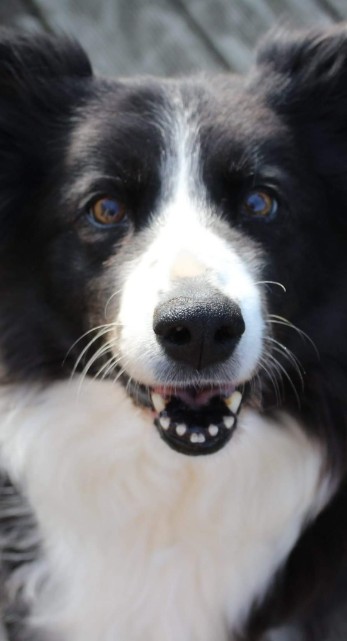
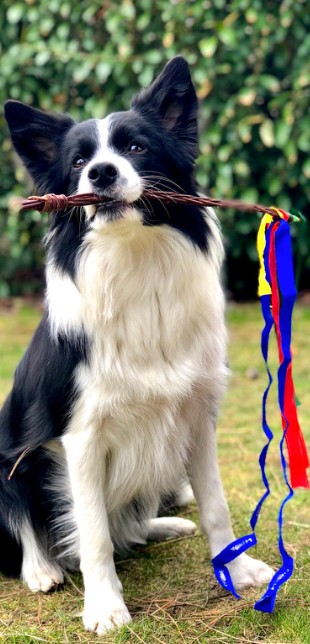
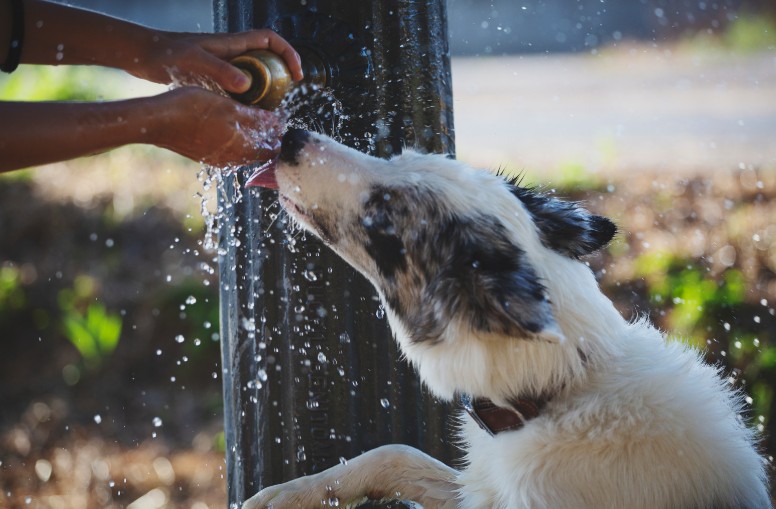
Connection needs direction.
For Collies, love isn’t just closeness—it’s clarity. They bond best when you give not just presence, but purpose. Calm guidance, mental structure, and shared tasks unlock the harmony their genetics are waiting for. Without direction, they don’t relax—they wait.
Purpose, Direction & Mental Anchoring: Creating Cognitive Fulfillment Indoors
The question isn’t whether your Border Collie can adapt to indoor living—it’s whether you can create an indoor environment that meets their cognitive and emotional needs. The answer is yes, but it requires rethinking what “indoor enrichment” actually means for a high-drive working breed.
Indoor Jobs: Beyond Physical Exercise
Your Collie doesn’t need constant physical activity; they need structured cognitive engagement. The difference is profound. A tired dog isn’t necessarily a fulfilled dog, but a mentally engaged dog achieves both physical satisfaction and emotional equilibrium.
High-Value Indoor Cognitive Activities (Ranked by Effectiveness):
- Scent discrimination work: Teaching your Collie to identify specific scents among multiple options
- Name recognition games: Building vocabulary of 20+ toy names or household object names
- Directional placement: Sending your dog to specific locations on verbal cue alone
- Pattern chains: Teaching sequences of behaviors that must be performed in order
- Problem-solving toys: Puzzles that require multiple steps to access rewards
- Hide and seek: Both for treats and for family members throughout the house
- Duration exercises: Extended stays, waits, or focus work that builds impulse control
- Choice-based games: Setting up scenarios where your dog must make decisions based on context
Indoor “jobs” that genuinely satisfy your Collie’s cognitive drives share several characteristics:
Object recognition and discrimination tasks tap directly into your dog’s pattern-recognition capabilities. Teaching your Collie to identify specific toys by name, retrieve particular items on request, or sort objects by category engages the same cognitive systems used in livestock discrimination during herding work. Start with two clearly different items, build to five or six, then introduce subtle variations. The learning process itself provides satisfaction, and the ability to demonstrate mastery offers purpose.
Directional games recreate the spatial problem-solving of herding in miniaturized form. Teaching your dog to go to specific locations on verbal cue (“go to your bed,” “find your bowl,” “check the door”), to move around objects in particular patterns, or to navigate obstacle courses based on your direction all engage their hardwired directional control systems. These activities don’t require large spaces—they require clarity and structure.
Essential Directional Games for Apartment or House:
- Named location training: Teach 5-10 specific spots your dog can go to on cue (“bed,” “mat,” “door,” “window,” “kitchen”)
- Left/right navigation: Train your dog to move left or right around furniture on verbal direction
- Behind/around commands: Send your dog behind or around objects before returning to you
- Distance downs: Practice down command at increasing distances, building impulse control
- Send-aways: Teach your dog to move away from you to a target location
- Recall with directions: Call your dog but specify which path they should take to reach you
- Room-to-room navigation: Send your dog to specific rooms to retrieve named items
- Pattern courses: Create sequences of locations your dog must visit in specific order
Scent-based puzzles provide perhaps the richest form of cognitive engagement available indoors. Your Collie’s nose, while not as specialized as a scent hound’s, is still extraordinarily capable. Hide treats in puzzle toys, create scent trails through your home, or teach formal scent discrimination (finding a specific scent among multiple options). Scent work engages your dog’s brain in sustained, focused problem-solving that creates genuine mental fatigue—the satisfying kind that leads to emotional rest.
Progressive Scent Work Training for Indoor Fulfillment:
- Basic hide-and-seek: Hide treats in obvious locations while your dog watches, building confidence
- Hidden treats: Place treats in locations your dog can’t see, increasing difficulty gradually
- Container search: Use boxes or containers, teaching your dog to indicate which contains treats
- Scent discrimination: Introduce a specific scent (essential oil on cotton ball) paired with treats
- Multiple containers: Add distractor containers, rewarding only for correct indication
- Distance work: Send your dog to search areas away from you, building independence
- Scent matching: Present target scent, then ask dog to find matching scent among options
- Room clears: Have your dog systematically search entire rooms for hidden target scent
Pattern tasks leverage your Collie’s exceptional ability to recognize and predict sequences. Teach chains of behaviors (sit, then down, then spin, then touch), work on duration exercises where your dog must maintain attention through extended periods, or create “if-then” scenarios where your dog must make decisions based on contextual cues. These activities engage executive function, impulse control, and predictive processing—all systems your Collie’s brain is designed to use extensively. 🐾
Directional Communication Creates Calm
Here’s a counterintuitive truth: your Collie feels most emotionally secure when they clearly understand their role and have explicit direction to follow. The Invisible Leash isn’t about control—it’s about providing the clarity that allows your dog’s nervous system to organize itself around clear expectations rather than anxious uncertainty.
When you provide clear, consistent direction—even for simple behaviors like waiting at doorways, going to a specific location, or holding a stay—you’re not constraining your dog’s freedom. You’re providing the structure their cognitive architecture requires for emotional regulation. Each clear communication tells your dog’s brain: “You understand your role, you know what’s expected, you can predict what comes next.” This predictability allows the nervous system to downregulate.
This is why many Collie guardians notice that their dogs seem more relaxed during training sessions than during “free time.” It’s not that the dogs prefer being told what to do—it’s that they prefer having a clear purpose and understanding their role in the current situation.
Emotional Matching and Downregulation
Does your energy state affect your Collie’s emotional regulation? Absolutely. High-drive dogs are exceptionally attuned to handler emotional states, and they tend to match the energy they perceive. This means your own emotional regulation directly influences your dog’s ability to calm.
Paradoxically, high-excitement play—even when physically exhausting—can actually impair your Collie’s ability to downregulate afterward. The arousal generated by frantic play elevates stress hormones, activates the sympathetic nervous system, and can take hours to resolve. Your dog may appear tired after an intense play session, but they’re not emotionally settled—they’re experiencing post-arousal fatigue while their nervous system slowly returns to baseline.
In contrast, calm, purposeful engagement—structured training with moderate energy, problem-solving activities with measured pace, directional work with clear expectations—creates cognitive satisfaction without the arousal spike that impairs subsequent rest. Your Collie’s brain gets the engagement it craves, but without the neurological hangover that comes from overstimulation.
High-Energy Play vs. Calm Engagement: Neurological Impact
High-Energy Play Effects:
- Immediate spike in cortisol and adrenaline
- Sympathetic nervous system activation
- 2-4 hour recovery period before true rest possible
- Increased reactivity to stimuli post-play
- Physical exhaustion but mental activation
- Creates expectation for high-arousal interaction
- Can lead to demand barking or pushy behavior
Calm Engagement Effects:
- Moderate dopamine release without stress hormone spike
- Parasympathetic nervous system remains accessible
- 15-30 minute transition to rest
- Maintained emotional baseline
- Mental satisfaction with physical appropriateness
- Creates expectation for thoughtful interaction
- Supports impulse control and patience
This is where emotional matching becomes crucial. When you maintain calm, confident energy during interactions with your Collie—even during engaging activities—you model the emotional state you want your dog to achieve. Your dog doesn’t just learn from your directions; they regulate through your presence. Through the NeuroBond approach, this emotional matching becomes a foundation for teaching your Collie how to engage purposefully without tipping into frantic arousal.
Next, we’ll explore specific NeuroBond-based strategies for creating emotional regulation in indoor environments, transforming your living space from a source of stress to a place of genuine rest.
🧠 Understanding Your High-Drive Collie’s Indoor Emotional Journey 🐾
From Cognitive Hunger to Emotional Fulfillment: A Phase-by-Phase Guide
Phase 1: Recognition
Identifying Hidden Emotional Distress
What’s Really Happening
Your Collie’s brain is designed for constant problem-solving and goal-directed behavior. When indoor environments lack cognitive challenges, their SEEKING system remains frustrated and activated. What appears as peaceful rest may actually be cognitive freeze—a state where your dog has stopped seeking because no outlet exists.
Signs to Watch For
• Fixed staring with hard eyes
• Heavy, forceful sighing during “rest”
• Paw flicking or air licking
• Tension in neck and shoulders while lying down
• Immediate alertness when you move slightly
• Constant ear micro-movements tracking sounds
Common Mistake
Many guardians mistake anxious attention-monitoring for bonding. If your Collie can’t look away from you, maintains forward weight while “resting,” and responds immediately to every movement, this is vigilance—not devotion.
Phase 2: Understanding the Breed Design
Why Your Collie Is Wired Differently
Purpose-Driven Cognition
Border Collies were bred for centuries to solve complex herding problems requiring intense focus, rapid decision-making, and directional control. Their brains possess heightened activation in areas associated with goal-directed behavior and reward anticipation. Problem-solving itself creates emotional satisfaction—it’s not optional, it’s essential.
The NeuroBond Principle
Through the NeuroBond approach, we recognize that emotional connection with high-drive dogs requires more than warmth—it demands clear direction, purposeful interaction, and structured engagement. Your Collie’s attachment system is intertwined with their work drive, creating bonds through collaborative purpose.
Key Cognitive Traits
• Pattern recognition after just 2-3 repetitions
• Anticipatory positioning before you decide direction
• Split-second decision-making speed
• Constant environmental scanning
• Problem-solving persistence that doesn’t quit
• Intense visual focus on movement
Phase 3: Environmental Assessment
Evaluating Your Indoor Space
The Sensory Mismatch
Indoor environments are low-stimulus compared to what your Collie’s brain expects. With minimal sensory input for their predictive processing systems, chronic “prediction errors” create internal agitation. Paradoxically, quiet spaces can increase mental tension in high-processing breeds rather than providing calm.
Emotional Claustrophobia
Your living room might be physically comfortable, but it can feel emotionally claustrophobic for a Collie. The space offers no opportunities for the cognitive engagement their brain craves. Over time, this creates chronic low-grade stress affecting immune function, digestive health, and emotional resilience.
Creating Zones
Establish distinct areas: Relaxation Zone (calm rest only), Thinking Zone (cognitive activities), and Observation Zone (appropriate monitoring). Environmental structure helps your dog’s nervous system understand expectations without constant direction.
Phase 4: Emotional State Differentiation
Physical Fatigue vs. Emotional Rest
Physical Fatigue Looks Like
Heavy breathing gradually slowing, immediate collapse after exercise, closed eyes but restless body, muscle tiredness but mental alertness, short rest periods followed by renewed seeking, quick recovery to full energy.
Emotional Rest Looks Like
Even calm breathing from the start, gradual settling with position adjustments, disinterest in engaging stimuli, soft eyes and relaxed facial muscles, full-body muscle relaxation, extended rest periods with visible REM sleep, gentle gradual return to activity.
The Critical Difference
Your exhausted Collie can be too tired to engage properly but too mentally aroused to rest. The amygdala remains heightened, the prefrontal cortex struggles to regulate, and the underlying cognitive hunger stays unfed—creating simultaneous physical fatigue and emotional restlessness.
Phase 5: Implementing Cognitive Fulfillment
Creating Purpose-Driven Indoor Activities
Top Cognitive Activities
• Scent discrimination work: Teaching specific scent identification
• Name recognition: Building vocabulary of 20+ objects
• Directional placement: Sending to locations on verbal cue
• Pattern chains: Sequences of behaviors in specific order
• Problem-solving toys: Multi-step puzzles
• Duration exercises: Building impulse control
The Invisible Leash Approach
Your Collie feels most secure with clear direction and purpose. The Invisible Leash reminds us that awareness and clarity—not physical restraint—guide the path. When you provide structured engagement and clear expectations, your dog’s nervous system can organize itself productively rather than existing in anxious uncertainty.
Cognitive vs. Physical Exercise
A 30-minute walk provides less emotional satisfaction than 10 minutes of directional training or scent work. Cognitive engagement activates the prefrontal cortex and produces complete stress resolution, while physical exercise alone can increase arousal without satisfying cognitive hunger.
Phase 6: Handler Communication
Calm, Clear, Consistent Connection
Arousing Communication (Avoid)
High-pitched excited voice, rapid enthusiastic praise, sudden movements or clapping, repeated exclamations, fast-paced interaction, physical roughhousing. These trigger arousal in work-driven dogs, making subsequent rest difficult and creating expectation for high-energy interaction.
Calming Communication (Embrace)
Low steady voice tone, brief quiet verbal markers, slow deliberate movements, single acknowledgment, measured interaction pace, gentle sustained touch, clear spaced cues with processing time. This maintains calm energy while providing the clarity your Collie needs.
Handler Clarity = Dog Calm
Your emotional steadiness, decisiveness, and consistency serve as stabilizing forces. When you’re clear about expectations and calm in delivery, your dog’s cognitive load decreases. They don’t waste mental energy interpreting unclear signals or predicting unpredictable responses.
Phase 7: Establishing Structure
Predictable Rhythm for Nervous System Regulation
Morning (7:00 AM)
Brief bathroom break → 15-minute cognitive session (scent work or training) → Calm breakfast with settle-wait practice. Start the day with purpose and structure.
Midday (9:00 AM – 3:00 PM)
Independent rest period in relaxation zone → Long-lasting chew or frozen Kong → Brief midday movement and 5-minute directional game → Return to rest. Predictable low-engagement time.
Afternoon (3:00 PM)
30-minute walk or physical activity → 10-minute post-exercise problem-solving → 20-minute deliberate cool-down in relaxation zone. Balance physical and cognitive needs.
Evening (6:00 PM – 9:00 PM)
Dinner with simple obedience practice → Family interaction in observation zone → Calm settling as household winds down → Final bathroom and gentle interaction → Consistent night routine.
Why Structure Works
Your Collie’s nervous system learns when to prepare for engagement and when to release into rest. Predictability dramatically reduces ambient arousal from never knowing when purpose might be available. Consistency matters more than specific activities.
Phase 8: Ongoing Assessment
Recognizing Success and Adjusting
Signs of Emotional Health
• Ability to settle within 10-15 minutes after activities
• Spontaneous soft-bodied rest lasting 30+ minutes
• Proportionate responses to environmental stimuli
• Visible REM sleep cycles with twitching
• Seeking interaction with natural breaks
• Soft eyes during rest with relaxed facial muscles
Warning Signs of Struggle
• Constant vigilance even in familiar settings
• Inability to settle without physical exhaustion
• Escalating attention-seeking despite receiving attention
• Hypervigilance to sounds or movements
• Shallow brief sleep easily disrupted
• Overreactions to minor routine changes
Soul Recall in Action
Moments of Soul Recall—where emotional memory and current experience intertwine—reveal how your past interactions shape your Collie’s present state. When you consistently provide purposeful engagement, your dog’s emotional memory creates positive anticipation rather than anxious uncertainty.
🔄 Understanding Different Indoor Scenarios
🏡 Small Apartment Living
Challenge: Limited physical space
Solution: Focus on vertical thinking games, scent work in confined areas, and directional placement within rooms. Quality cognitive engagement matters more than square footage.
🏠 House with Yard
Challenge: Assuming yard = fulfilled dog
Solution: Outdoor access doesn’t replace cognitive engagement. Still provide structured indoor activities, problem-solving, and purposeful interaction beyond physical space.
👨💼 Working from Home
Challenge: Constant human presence without engagement
Solution: Establish clear work time boundaries with relaxation zone training. Schedule micro-engagement sessions during breaks. Teach “office hours” calm.
🕐 Away 8+ Hours
Challenge: Long periods of cognitive understimulation
Solution: Morning intensive cognitive session, puzzle feeders throughout day, midday dog walker with training component, evening structured engagement.
👶 Multi-Dog Household
Challenge: Other dogs don’t provide cognitive fulfillment
Solution: Your Collie still needs individual purposeful engagement with you. Social play ≠ cognitive satisfaction. Maintain one-on-one training sessions.
🧓 Senior Collie (10+ years)
Challenge: Reduced physical capacity but same cognitive needs
Solution: Increase cognitive enrichment ratio. Focus on scent work, gentle problem-solving, and mental challenges that don’t tax aging joints.
⚡ Quick Reference Formula
Daily Minimum for Indoor Wellness:
15-30 minutes cognitive enrichment (split into 2-3 sessions)
+ Physical exercise with deliberate cool-down
+ Clear daily structure and predictable routines
+ Designated rest periods with no demands
+ Calm purposeful handler communication
= Emotionally fulfilled high-drive Collie
Remember: Cognitive satisfaction > Physical exhaustion
🧡 The Zoeta Dogsoul Perspective
When we truly understand our high-drive Collies, we recognize that indoor living isn’t about suppressing their nature—it’s about channeling their extraordinary cognitive abilities into purposeful engagement. Through the NeuroBond approach, we build emotional connection through clarity and structure. The Invisible Leash reminds us that true guidance comes from awareness and purpose, not restriction. And in moments of Soul Recall, we see how our consistent, purposeful interactions create positive emotional memories that shape our dogs’ present experience.
Your Collie doesn’t need constant activity—they need meaningful engagement. They don’t need entertainment—they need purpose. They don’t need permissive freedom—they need clear structure. When you provide these elements, your indoor space becomes more than shelter—it becomes a place of genuine rest, cognitive fulfillment, and emotional satisfaction.
That balance between honoring their heritage and meeting their current needs, between engaging their brilliance and allowing their peace—that’s the essence of Zoeta Dogsoul.
© Zoeta Dogsoul – Where neuroscience meets soul in dog training
NeuroBond-Based Emotional Regulation Indoors: Practical Applications
Understanding the theory of your Collie’s emotional needs is valuable, but translating that understanding into daily practice transforms your dog’s quality of life. Let’s explore concrete strategies for creating genuine emotional regulation in your indoor environment.
The Power of Calm, Low-Verbal Communication
Your voice carries more than words to your Border Collie—it carries energy, expectation, and emotional information. High-pitched, excited verbal praise, while well-intentioned, often triggers arousal in dogs bred for work. Your enthusiastic “Good dog!” activates your Collie’s anticipation systems, elevating arousal and making subsequent rest more difficult.
In contrast, calm, low-verbal communication provides information without activation. A quiet “yes” with a soft nod, a gentle hand touch as acknowledgment, or even simple eye contact with a slight smile communicates approval while maintaining the calm energy that allows for emotional regulation.
Arousing vs. Calming Communication Methods:
Arousing Communication (Increases Activation):
- High-pitched, excited voice tone
- Rapid, enthusiastic verbal praise
- Sudden movements or clapping
- Repeated exclamations
- Fast-paced interaction
- Physical roughhousing or excited touch
- Multiple cues given quickly
Calming Communication (Supports Regulation):
- Low, steady voice tone
- Brief, quiet verbal markers
- Slow, deliberate movements
- Single acknowledgment
- Measured interaction pace
- Gentle, sustained touch
- Clear, spaced cues with processing time
This doesn’t mean being cold or withholding affection. It means choosing communication methods that align with the emotional state you’re cultivating. When you want your Collie to settle, use settling energy. When you want engagement, use engaging energy. Many guardians make the mistake of using high energy constantly, then wondering why their dog never relaxes.
Establishing Indoor Emotional Zones
Your Collie can learn to perceive different areas of your home as carrying different emotional expectations if you’re consistent in how you use and communicate about these spaces. This concept of “indoor emotional zones” helps your dog understand context and role without constant direction.
The Relaxation Zone might be a specific bed, mat, or area of a room where only calm, rest-based activities occur. You never call your dog from this location for play or work. You don’t deliver food there (which would create alert anticipation). You only offer gentle presence, maybe soft physical contact, and calm energy. Over time, the location itself becomes a cue for downregulation.
The Thinking Zone is a space where cognitive activities happen—training sessions, puzzle toys, scent work, problem-solving games. Your dog learns that this area means “brain on,” not in a frantic way but in a focused, purposeful way. The consistent association between location and cognitive engagement helps your dog’s nervous system prepare appropriately.
The Observation Zone might be near a window or in a location with environmental stimulation. This is where your dog can engage in appropriate monitoring behaviors—watching outside activity, tracking household movement—without the expectation of interaction. It acknowledges their natural alert tendencies while giving those behaviors a designated outlet.
Activities and Expectations by Zone:
Relaxation Zone Activities:
- Calm settling on mat or bed
- Gentle massage or slow petting
- Quiet presence while you read or work
- Soft music or white noise
- Kong or long-lasting chews
- NO training, play, or active engagement
Thinking Zone Activities:
- Training new behaviors or commands
- Problem-solving puzzle toys
- Scent discrimination work
- Object recognition games
- Duration exercises and impulse control
- Pattern chains and sequences
Observation Zone Activities:
- Calm watching of outdoor activity
- Monitoring household movement
- Settle-watch exercises (calm observation practice)
- Environmental exposure with no reaction required
- Periodic acknowledgment of appropriate calm alertness
These zones don’t restrict your dog’s movement. Rather, they provide environmental structure that helps organize emotional expectations, reducing the ambient uncertainty that creates chronic arousal.
Distinguishing Rest, Satisfaction, and Avoidance
Perhaps the most important skill you can develop is accurately reading your Collie’s emotional state. The NeuroBond model emphasizes this distinction:
Emotional rest looks like: soft eyes, loose jaw, relaxed ears, evenly distributed body weight, deep breathing, ability to stay settled when you move, spontaneous position changes, and occasional deep sighs followed by deeper settling.
Cognitive satisfaction appears as: alert but not tense, engaged but able to disengage, following directions smoothly, showing problem-solving behavior without frustration, and choosing to rest after engagement with visible relaxation.
Avoidance-based silence presents as: withdrawal, lack of spontaneous behavior, limited interaction seeking, flat affect, slow responses to stimuli, resistance to engagement offers, and rest that looks more like depression than peace. 🧡
When you can accurately distinguish these states, you know whether your current approach is working. A Collie spending most of their indoor time in genuine rest and experiencing regular cognitive satisfaction is emotionally healthy. A Collie oscillating between arousal and avoidance needs a different approach.
Creating Structure Through Routine
High-drive Collies benefit enormously from predictable structure—not because they lack adaptability, but because predictability allows their cognitive resources to focus on engagement rather than on predicting what might happen next.
Consider establishing a daily rhythm that includes:
- Morning cognitive engagement session (10-15 minutes of training, problem-solving, or scent work)
- Midday calm presence time (you nearby, dog in relaxation zone, low-key interaction)
- Afternoon physical activity (walk, play, exercise) followed by deliberate downregulation session
- Evening structured rest (designated relaxation zone, consistent routine, predictable wind-down)
Sample Daily Structure for Indoor Collie Wellness:
7:00 AM – Morning Routine:
- Brief bathroom break
- 15-minute cognitive session (scent work or training)
- Calm breakfast with settle-wait practice
9:00 AM – 12:00 PM – Independent Rest Period:
- Relaxation zone time while you work
- Long-lasting chew or frozen Kong
- No active engagement expected
12:00 PM – Midday Break:
- Short bathroom and movement break
- 5-minute directional game
- Return to rest zone
3:00 PM – Afternoon Engagement:
- 30-minute walk or physical activity
- 10-minute post-exercise problem-solving
- 20-minute deliberate cool-down in relaxation zone
6:00 PM – Evening Routine:
- Dinner with simple obedience practice
- Family interaction in observation zone
- Calm settling as household winds down
9:00 PM – Night Routine:
- Final bathroom break
- 5-minute calming touch or gentle interaction
- Settle in sleeping area with consistent routine
The specific activities matter less than the consistency of structure. Your Collie’s nervous system learns when to prepare for engagement and when to release into rest. This predictability dramatically reduces the ambient arousal that comes from never knowing when purpose might be available.
The Role of Handler Clarity
Your own clarity—emotional, directional, and energetic—serves as a stabilizing force for your Collie’s nervous system. When you’re clear about what you expect, calm in your delivery, and consistent in your responses, your dog’s cognitive load decreases. They don’t need to spend mental energy trying to interpret your unclear signals or predict your unpredictable responses.
Essential Handler Clarity Practices:
- Decisiveness: Make decisions confidently, even if they’re small decisions (which door to exit, when to start activities)
- Consistency: Use the same cues, gestures, and expectations for the same behaviors every time
- Emotional steadiness: Maintain relatively even energy, avoiding dramatic emotional swings
- Follow-through: If you cue something, see it through to completion rather than dropping it mid-instruction
- Clear feedback: Provide immediate, unambiguous response so your dog knows their action was correct
- Predictable patterns: Maintain consistent routines and behavioral expectations
- Purposeful interaction: Engage with intention rather than random affection or attention
- Calm authority: Lead with quiet confidence rather than forceful control
This means:
- Make decisions confidently, even if they’re small decisions
- Communicate expectations clearly, using consistent cues and body language
- Maintain emotional steadiness, avoiding dramatic swings in your energy
- Follow through on communications (if you cue something, see it through)
- Provide immediate, clear feedback so your dog knows their response was correct
These aren’t training techniques—they’re relational practices that create the environmental clarity your Collie’s nervous system uses to organize itself. That balance between providing structure and allowing rest, between engagement and peace—that’s the essence of Zoeta Dogsoul.

Understanding the Science: Theoretical Foundations
While practical application guides your daily interactions, understanding the scientific frameworks behind your Collie’s emotional needs deepens your insight and helps you adapt strategies to your specific dog’s responses.
Affective Neuroscience and the SEEKING System
Neuroscientist Jaak Panksepp identified seven core emotional systems in mammals, one of which is the SEEKING system—the neural circuitry that drives exploration, curiosity, and goal-directed behavior. In your Border Collie, this system operates at an unusually high baseline compared to most other breeds.
Panksepp’s Core Emotional Systems in High-Drive Collies:
- SEEKING: Extremely elevated – drives exploration, goal pursuit, problem-solving (primary system)
- RAGE: Moderate – can appear when goals are repeatedly blocked or frustrated
- FEAR: Variable – often suppressed by high SEEKING drive but present in uncertain situations
- PANIC/GRIEF: Elevated – strong attachment systems create distress when separated from handler
- CARE: Moderate – less prominent than in companion breeds, focused on handler
- PLAY: High but structured – prefers purposeful play over random roughhousing
- LUST: Normal breed variation – not relevant to emotional regulation discussion
The SEEKING system doesn’t just motivate behavior; it generates positive emotional states when engaged. Your Collie doesn’t just work because they’ve been trained to—they work because the neurological act of seeking, pursuing goals, and solving problems creates emotional satisfaction. When this system remains chronically unengaged, it creates a specific form of suffering: frustrated seeking with no outlet.
This explains why your Collie can’t simply “learn to relax.” Their nervous system is designed to find satisfaction through engagement, not through cessation of activity. True rest comes after satisfying engagement, not instead of it.
Cognitive Enrichment and Stress Regulation
Research in cognitive enrichment demonstrates that complex mental challenges affect stress physiology differently than physical exercise alone. Studies measuring cortisol (stress hormone) levels in dogs before and after different types of activities reveal that cognitive challenges produce more complete stress resolution than physical exercise of equivalent duration.
Physical Exercise vs. Cognitive Enrichment: Physiological Comparison
After Physical Exercise:
- Immediate cortisol elevation (stress response to exertion)
- Gradual return to baseline over 2-4 hours
- Physical fatigue but potential mental restlessness
- Sympathetic nervous system activation
- Improved cardiovascular health
- Muscle development and physical conditioning
- May not address cognitive hunger
After Cognitive Enrichment:
- Minimal cortisol elevation
- Quick return to below-baseline levels
- Mental satisfaction with appropriate physical tiredness
- Parasympathetic nervous system engagement
- Enhanced problem-solving abilities
- Strengthened neural pathways
- Directly satisfies cognitive drives
Why? Because cognitive engagement activates the prefrontal cortex—the brain region responsible for executive function and emotional regulation. Physical exercise primarily activates motor systems and can actually increase arousal states. Your Collie running in circles in your backyard may be moving, but they’re not engaging the cognitive systems that create true satisfaction.
Predictive Processing and Environmental Mismatch
Your Border Collie’s brain constantly generates predictions about what will happen next based on sensory input. This predictive processing allows rapid response in dynamic environments—essential for herding work. However, in low-stimulus indoor environments, this system struggles.
With minimal sensory input, your dog’s brain has little to work with for generating predictions. Yet the system continues running, creating what researchers call “prediction errors”—the difference between expected input and actual input. Chronic prediction errors create internal agitation as the brain struggles to make sense of an environment that provides insufficient information for its processing capacity.
This is why some Collies seem more relaxed in busy, stimulating environments than in quiet homes. The busy environment provides the sensory information their predictive processing systems need to function properly.
Attachment Styles in Working Breeds
Attachment theory, traditionally applied to human relationships, offers insights into your Collie’s relational needs. Research on canine-human bonds reveals that working breeds often display what might be termed “task-based secure attachment”—they feel most secure when engaged in purposeful activities with their handler rather than through proximity alone.
Working Breed vs. Companion Breed Attachment Patterns:
Working Breed Attachment (Border Collies):
- Security through purposeful collaboration
- Comfort from clear direction and structure
- Bonding via shared focus on tasks
- Anxiety when proximate but without purpose
- Calmness through handler clarity
- Strong handler focus and orientation
- Need for bidirectional communication
Companion Breed Attachment (Traditional Pets):
- Security through physical proximity
- Comfort from presence and touch alone
- Bonding via passive time together
- Contentment simply being near handler
- Calmness through gentle presence
- More autonomous and self-soothing
- Satisfied with unidirectional affection
This contrasts with the “proximity-based secure attachment” common in companion breeds, where simply being near their person provides emotional security. Your Collie’s attachment system is intertwined with their work drive, meaning the bond you share is strengthened through collaborative purpose as much as through affection.
Sensory Processing in High-Intelligence Breeds
Recent research on sensory processing sensitivity in dogs suggests that highly intelligent breeds may experience sensory information differently than average-intelligence breeds. Rather than needing constant stimulation, they need varied, complex, meaningful stimulation.
A quiet environment isn’t necessarily peaceful for these dogs—it can create “sensory hunger” where their processing systems lack sufficient input. Yet overstimulation creates its own problems. The key is providing appropriate cognitive complexity: tasks that engage multiple sensory systems in coordinated, purposeful ways.
Recognizing and Responding: Practical Assessment
How do you know if your current approach to indoor living is meeting your Collie’s emotional needs? Here are concrete assessment markers:
Signs of Emotional Health
Your Collie shows emotional health through:
- Ability to settle within 10-15 minutes after engaging activities
- Spontaneous, soft-bodied rest periods lasting 30+ minutes
- Proportionate responses to environmental stimuli
- Playful behaviors that appear and resolve naturally
- Seeking interaction that includes pauses and breaks
- Eyes that soften during rest, with relaxed facial muscles
- Sleep that includes visible REM cycles
- Recovery from excitement within reasonable timeframes
- Interest in food maintaining consistent patterns
- Social engagement that balances approach and autonomy
Signs of Emotional Struggle
Concerning patterns include:
- Constant vigilance even in familiar settings
- Inability to settle without physical exhaustion
- Escalating attention-seeking despite receiving attention
- Hypervigilance to sounds or movements
- Compulsive behaviors (shadow chasing, tail chasing, repetitive licking)
- Sleep patterns that are shallow, brief, or easily disrupted
- Overreactions to minor changes in routine
- Difficulty recovering from excitement
- Decreased appetite or stress-related digestive issues
- Withdrawal or avoidance behaviors
Intervention Strategies
When you recognize signs of emotional struggle, systematic intervention helps:
Start by increasing cognitive engagement while reducing arousal-based activities. Replace one high-energy play session with two short problem-solving sessions. Observe changes in settling ability and rest quality.
Establish clear daily structure with predictable engagement and rest periods. Your Collie’s nervous system needs to learn when seeking is appropriate and when rest is expected.
Focus on calm, purposeful interaction rather than excited, arousal-based connection. Practice maintaining settled energy during all interactions, reserving higher energy only for designated activities.
Create environmental structure through physical space management, using gates or barriers to define different zones and their associated expectations.
Assess whether your Collie receives clear directional communication throughout the day, not just during formal training. Handler clarity reduces cognitive load and ambient uncertainty.
Monitor your own emotional state and energy levels. Your Collie regulates partly through your presence—your chronic stress becomes their chronic stress.
Living Successfully with a High-Drive Collie Indoors: Integration and Balance
Success with an indoor Border Collie isn’t about somehow changing your dog’s fundamental nature or suppressing their drives. It’s about creating an indoor life that honors their cognitive architecture while providing genuine rest and emotional satisfaction.
This means accepting certain truths: your Collie will always be a high-processing, purpose-driven dog. They will always notice things you miss. They will always possess more cognitive energy than most people expect. These aren’t problems to solve—they’re characteristics to accommodate thoughtfully.
It also means recognizing that your role isn’t to entertain your dog constantly or to feel guilty about indoor living. Rather, your role is to provide clear structure, purposeful engagement, and calm leadership that allows your dog’s nervous system to organize itself productively.
The indoor environment can meet your Collie’s needs when it includes:
- Regular, structured cognitive engagement that satisfies seeking drives
- Environmental clarity that reduces uncertainty and ambient arousal
- Consistent routine that provides predictability and rest opportunities
- Handler communication that offers clear direction and calm energy
- Opportunities for appropriate expression of natural behaviors
- Recognition of the difference between physical fatigue and emotional rest
Essential Elements of an Emotionally Healthy Indoor Environment:
Physical Elements:
- Designated relaxation zones with comfortable bedding
- Thinking/training areas with minimal distractions
- Observation points (windows, elevated spots)
- Puzzle toy rotation system
- Scent work supplies and hiding locations
- Clear pathways and predictable layout
Structural Elements:
- Consistent daily schedule with rhythm
- Predictable routines for transitions
- Regular cognitive engagement sessions (2-3 daily)
- Designated rest periods with no interaction
- Clear beginning and end to activities
- Separation between high-energy and calm zones
Relational Elements:
- Handler emotional consistency
- Clear, calm communication patterns
- Purpose-building interactions
- Appropriate affection timing
- Collaborative activities
- Mutual understanding of expectations
Many Border Collies live emotionally healthy indoor lives. The difference between those who thrive and those who struggle often comes down to guardian awareness—understanding what these remarkable dogs actually need versus what we assume they need.
Your high-drive Collie doesn’t need constant activity. They need purpose. They don’t need entertainment. They need engagement. They don’t need to herd livestock. They need to solve problems. They don’t need permissive freedom. They need clear structure. When you provide these things in appropriate measure, your indoor space transforms from a source of stress into a genuine home.
The journey of living with a Border Collie is one of continuous learning and adaptation. What works perfectly for one dog may need adjustment for another. What succeeds in one season of life may need modification in another. The key is maintaining awareness, responding to what your dog communicates, and staying committed to understanding their emotional experience beyond surface appearances.
Quick Reference: Meeting Your Indoor Collie’s Emotional Needs
Daily Minimum Requirements:
- 15-30 minutes cognitive enrichment (split into 2-3 sessions)
- Physical exercise with deliberate cool-down
- Clear daily structure and routine
- Designated rest periods with no demands
- Calm, purposeful handler communication
Warning Signs to Monitor:
- Inability to settle within 20 minutes of rest periods
- Constant vigilance or monitoring behaviors
- Displacement activities (pacing, fixation, excessive attention-seeking)
- Poor sleep quality with frequent waking
- Overreaction to minor environmental changes
Support Strategies:
- Increase cognitive engagement, decrease arousal-based play
- Establish environmental zones with clear expectations
- Practice calm communication and emotional steadiness
- Maintain predictable routines and structure
- Provide purpose-building interaction, not just affection
Success Indicators:
- Spontaneous, relaxed rest periods
- Ability to settle and enter deep sleep
- Proportionate responses to stimuli
- Seeking interaction with natural breaks
- Overall calm baseline with engaged alertness when appropriate
Through patient observation, thoughtful structure, and genuine connection, your indoor space can become a place where your remarkable Collie doesn’t just exist—they genuinely rest, find purpose, and experience the emotional satisfaction their exceptional minds deserve. That balance between honoring their heritage and meeting their current needs, between engaging their brilliance and allowing their peace—that’s the heart of living well with these extraordinary dogs. 🧠🧡










