
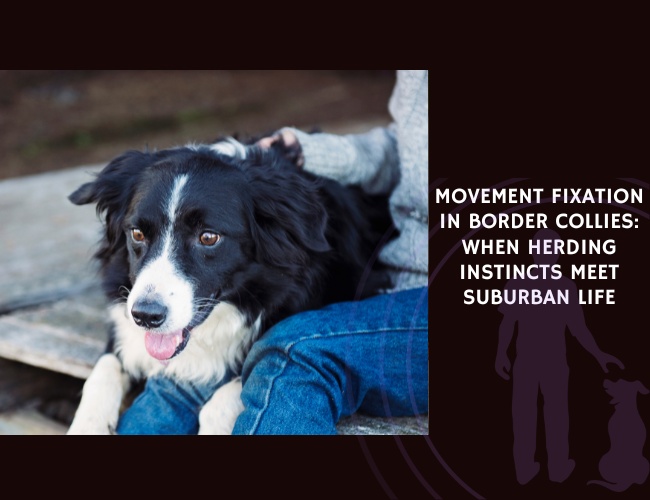
If you share your life with a Border Collie in a suburban setting, you might have noticed something remarkable—and perhaps a bit overwhelming. Your dog watches the jogger passing by with laser focus. Your companion freezes when a bicycle whizzes past the fence. Your furry friend seems unable to relax when cars stream by on the nearby street. This isn’t stubbornness or bad behavior. This is the ancient architecture of herding instinct encountering an environment it was never designed for.
The Border Collie carries within its nervous system centuries of selective breeding for one extraordinary purpose: to read, predict, and control the movement of living beings across vast landscapes. In rolling Scottish hills and Welsh valleys, this precision was invaluable. In modern suburban life, this same genetic gift can become a source of stress, obsession, and emotional overwhelm—for both you and your dog.
Let us guide you through understanding why your Border Collie sees the world as an endless flock needing management, how suburban environments amplify rather than satisfy this drive, and what you can do to transform fixation into fulfillment. This is about honoring your dog’s remarkable intelligence while creating a life that works for both of you.
The Working Heritage: Understanding Pattern-Control Architecture
Your Border Collie’s ancestors were shaped by generations of shepherds who needed dogs capable of extraordinary precision. These weren’t just pets who happened to help with farm work. They were specialists, selected for their ability to execute complex motor sequences: the wide outrun to gather scattered sheep, the careful flanking to move a flock without startling them, the famous “eye” that holds livestock in place through sheer intensity of focus.
The selection process created dogs with an almost supernatural sensitivity to movement. A working Border Collie can detect the subtle shift in a sheep’s weight that signals it’s about to break from the flock. They can read the micro-movements of hundreds of animals simultaneously, anticipating patterns before they fully emerge. This is pattern-control hardware—cognitive architecture specifically designed to predict, influence, and manage motion.
The core herding sequence includes specific motor patterns:
- The Outrun: Wide circular approach to position behind livestock without disturbing them
- The Lift: Initiating forward movement of the flock with controlled pressure
- The Fetch: Bringing livestock toward the handler using positional adjustments
- The Drive: Moving livestock away from handler in specific directions
- The Eye: Intense visual focus that holds and influences livestock position
- Flanking: Lateral movement to adjust flock direction or prevent breaking
- The Gather: Collecting scattered animals into a cohesive group
Research on herding dog phenotypes reveals something fascinating: an “Adequate Phenotype” herding dog is defined by its ability to control the direction of a flock, keep animals grouped near a handler, confront livestock respectfully, and create movement without excessive disturbance or aggression. These aren’t taught behaviors that can be easily suppressed. They’re deeply embedded neurological drives that create a constant scanning behavior, an always-on surveillance system watching for patterns that need management.
Even modern “pet line” Border Collies, dogs who have never seen a sheep in their lives, carry this same neurological architecture. Studies examining genetic divergence between show lines and working lines in Border Collies have found that while some variations exist, the fundamental herding drive persists across the breed. Your suburban Border Collie isn’t a diluted version of a working dog. They’re a working dog without work—and that distinction is critical to understanding their behavior.
Think about what this means in practical terms. Your dog’s brain is wired to constantly monitor for movement, assess patterns, and feel a powerful drive to impose order on what they perceive as chaos. In a pastoral setting with clear jobs and natural outlets, this drive finds productive expression. In suburban life, surrounded by movement that cannot be controlled or influenced, this same drive can spiral into obsession. 🧠
When Suburbs Become an Endless, Uncontrollable Flock
Imagine being a conductor watching an orchestra, but no one follows your baton. You give clear signals, you communicate with precision, but the musicians play random notes at random times. This is your Border Collie’s experience in suburban environments.
The modern suburban landscape presents a perfect storm of triggers for herding instinct. Cars stream past in predictable patterns along set routes—linear movement that resembles fleeing livestock. Joggers and cyclists move at variable speeds along the sidewalk, creating erratic motion profiles. Children play in yards and streets, their unpredictable movements activating the same neurological circuits that once responded to lambs straying from the flock.
Common suburban triggers that activate herding instinct:
- Linear traffic patterns: Cars moving in predictable straight lines
- Joggers and runners: Variable-speed human movement along regular routes
- Cyclists: Fast-moving targets with predictable trajectories
- Children at play: Erratic, unpredictable movement patterns
- Dog walkers: Multiple moving elements (human plus dog)
- Delivery vehicles: Stop-and-go patterns with territorial significance
- Wildlife movement: Squirrels, birds, cats crossing boundaries
- Neighborhood activity: Garbage trucks, lawn equipment, construction vehicles
But here’s the critical difference: none of these movements respond to your dog’s attempts at control. The car doesn’t slow when stared at. The jogger doesn’t change direction when stalked. The bicycle continues its path regardless of your dog’s focused intensity. From your Border Collie’s perspective, they’re surrounded by an endless flock that refuses to be managed—a constant source of cognitive conflict and emotional frustration.
Research on movement control in animal management highlights an important principle: uncontrolled movement creates stress at both individual and population levels. When cattle movement isn’t properly managed, it can spread disease and create chaos across regions. Your Border Collie understands this intuitively. They perceive uncontrolled movement as something that requires their intervention, something that signals disorder in their territory.
Neighborhood features amplify this challenge. Open front yards without visual barriers mean your dog has constant sight lines to moving stimuli. Busy streets create a never-ending stream of triggers. The lack of natural boundaries or controlled spaces means your dog’s vigilance system never truly deactivates. Where a working Border Collie might scan a field, identify the flock’s position, and then settle when everything is in order, your suburban companion encounters new movement patterns every few minutes—or seconds.
This isn’t about your dog being anxious or poorly trained. This is about fundamental incompatibility between neurological architecture and environmental design. Your Border Collie’s brain is doing exactly what it was bred to do: identify, track, and attempt to control movement. The problem is that suburban movement is both constant and uncontrollable, creating a feedback loop of activation without resolution.
The Sensory Gateway: How Border Collies See Movement Differently
When you watch a car drive past, you see a vehicle traveling from point A to point B. Your Border Collie sees something entirely different. They perceive velocity, trajectory, micro-accelerations, the relationship between the car and other moving objects, potential collision points, and dozens of other motion variables that most humans don’t consciously process.
The Border Collie’s visual system is specialized for motion detection in ways that set them apart even from other working breeds. Their famous “eye”—that intense, unwavering stare used to control livestock—requires extraordinary visual acuity and focus. They can detect subtle movements at great distances, track multiple moving objects simultaneously, and maintain visual lock on a target even when other stimuli compete for attention.
Signs your Border Collie has heightened visual sensitivity:
- Distance detection: Noticing movement before other dogs or humans register it
- Multi-target tracking: Following several moving objects simultaneously
- Micro-movement response: Reacting to subtle shifts other dogs ignore
- Maintained focus: Holding visual lock even with competing distractions
- Shadow and light tracking: Fixating on reflections, light patterns, or shadows
- Screen interest: Intense attention to television or computer movement
- Ceiling watching: Tracking insects, dust particles, or light changes overhead
- Threshold vigilance: Positioning to maintain sight lines of movement zones
This heightened motion sensitivity likely means Border Collies operate with lower thresholds for detecting movement compared to other breeds. Where a Labrador might notice a jogger passing by and quickly return attention to their handler, a Border Collie may detect that jogger’s approach several seconds earlier, track micro-changes in speed and direction, and remain visually locked even after the jogger disappears from view.
The continuous exposure to fast, erratic, or repetitive movement in suburban environments affects Border Collies differently than it affects other breeds. While research doesn’t directly measure this impact, the theoretical framework suggests that high motion-detection sensitivity combined with low environmental filtering creates chronic alertness. Your dog isn’t choosing to be hypervigilant. Their sensory system is simply reporting what it detects—and it detects everything.
Consider different movement profiles and how they might trigger herding sequences. Linear movement along predictable paths—like cars on streets or joggers on sidewalks—may trigger gathering or flanking responses. Erratic movement—like children playing or birds hopping across the yard—might activate chase or cutting behaviors. Near movement demands immediate response, while distant movement creates a state of watchful readiness. Your Border Collie’s brain is constantly categorizing these patterns, trying to determine which “flock member” needs attention.
Movement types and their typical trigger responses:
- Linear predictable: Cars on streets → flanking and parallel tracking
- Erratic unpredictable: Children playing → cutting and redirect attempts
- Fast linear: Cyclists, runners → chase impulse activation
- Near boundary: Movement at fence line → intense eye-stalk and barrier patrol
- Distant scanning: Far movement → watchful alert state without full activation
- Convergent patterns: Multiple objects moving toward each other → gathering response
- Scatter patterns: Objects moving apart → urgent gathering drive
- Stop-go patterns: Delivery vehicles, stop-start traffic → anticipatory positioning
Even screens and digital movement can become fixation points. The rapid, repetitive motion of television images or computer graphics may activate the same tracking systems that evolved to follow real livestock. Some Border Collies develop fixations on light reflections, shadows, or patterns of light and dark, as their motion-detection systems respond to any visual change in their environment.
Understanding this sensory reality helps explain behaviors that might otherwise seem irrational. Your dog isn’t being difficult when they fixate on a passing car. They’re responding to sensory input that, to their specialized visual system, carries the same urgency and importance as a sheep breaking from the flock. The NeuroBond approach recognizes that you can’t simply suppress these sensory responses—you need to provide context, create boundaries, and offer alternative outlets that honor your dog’s perceptual experience while building emotional regulation. 😄
From Adaptive Instinct to Maladaptive Obsession
There’s a threshold where functional behavior transforms into dysfunction. For Border Collies in suburban settings, that threshold is often crossed not through any fault of the dog or owner, but through the cumulative effect of repeated activation without completion.
An adaptive herding response looks like this: your dog detects movement, assesses the pattern, takes action to influence or control that movement, receives feedback that their action had effect, and then settles when the situation is resolved. This complete sequence provides both cognitive satisfaction and emotional regulation. The drive is activated, expressed, and resolved.
Maladaptive fixation emerges when this sequence is repeatedly interrupted. Your dog detects movement, assesses the pattern, experiences the powerful urge to control that movement—but cannot take effective action. The car continues regardless. The jogger passes by without responding. The drive activates but finds no outlet, no completion, no resolution.
How fixation typically progresses over time:
- Stage 1 – Casual Interest: Notices movement, watches briefly, easily redirected
- Stage 2 – Sustained Attention: Holds focus longer, requires stronger redirect cues
- Stage 3 – Body Tension: Physical changes during observation (muscle tension, forward lean)
- Stage 4 – Anticipatory Behavior: Positions at windows or fence lines before triggers appear
- Stage 5 – Reduced Flexibility: Difficult to interrupt once locked onto target
- Stage 6 – Emotional Activation: Whining, trembling, or vocalization during fixation
- Stage 7 – Compulsive Patterns: Returns repeatedly to check locations after trigger disappears
- Stage 8 – Generalization: Fixation extends to increasing numbers of triggers and contexts
The frustration-aggression and compulsive behavior models in behavioral science suggest that repeated prevention of completing an instinctive response can push that behavior toward compulsive repetition. For your Border Collie, the inability to act on their herding drive when confronted with moving stimuli creates chronic frustration. Over time, this frustration doesn’t diminish—it intensifies. The fixation becomes more rigid, more urgent, more difficult to interrupt.
You might notice this progression in your own dog. Early on, they watched cars with interest but could be easily redirected. Gradually, the focus became more intense. Now, they might tremble with anticipation when they hear traffic approaching, or they might pace along the fence line long after the trigger has passed. This isn’t your dog becoming more disobedient. This is an instinctive drive that’s been activated so many times without resolution that it’s begun to operate outside normal regulatory systems.
Some Border Collies develop what appear to be displaced versions of movement-control behaviors. Shadow chasing, light fixation, and tail chasing might all represent extensions of unresolved herding drive. When the primary target—the moving “flock”—remains perpetually inaccessible, the drive can generalize to other forms of movement, even their own shadow or tail. These behaviors often emerge in breeds with high prey drive and visual sensitivity, suggesting they represent fragments of the predatory sequence (orient–stalk–chase) seeking any available outlet.
The transition from instinct to obsession is rarely sudden. It’s a gradual process shaped by environment, opportunity, and the dog’s individual threshold for frustration tolerance. Understanding this progression is essential because intervention strategies differ depending on whether you’re working with early-stage fixation or deeply embedded compulsive patterns.
Through the NeuroBond approach, we recognize that your dog’s fixation isn’t a character flaw to be punished away. It’s a functional system operating in a dysfunctional context. The goal isn’t to eliminate your dog’s herding instinct—that would be like trying to eliminate their personality. The goal is to provide structured outlets, create predictable patterns, and build emotional regulation skills that allow them to experience their drives without being overwhelmed by them. 🧡
The Emotional Cost: Stress, Frustration, and Chronic Arousal
Behind every movement fixation is an emotional experience. Your Border Collie isn’t just seeing movement and responding mechanically. They’re feeling something—anticipation, urgency, frustration, possibly even distress—and those feelings accumulate over time.
The SEEKING system, described in affective neuroscience as the brain’s motivation and desire circuitry, is powerfully active in Border Collies. This system creates the drive to explore, investigate, and engage with the environment. In working contexts, it propels dogs to seek out scattered sheep, to explore the landscape for animals needing guidance. In suburban settings, it activates constantly in response to movement triggers—but without satisfying outlets.
Think about what chronic activation without resolution feels like. Imagine being deeply engaged in solving a puzzle, almost at the solution, and then having someone pull the puzzle away before you finish. Now imagine this happening dozens of times a day, every day. That’s your Border Collie’s emotional reality when surrounded by movement they cannot control.
Research on stress in animals reveals that unpredictability and lack of control are two of the most potent stressors. Your dog experiences both simultaneously. Suburban movement is unpredictable—cars appear without warning, cyclists change speed randomly, children’s play is inherently chaotic. And this movement is completely outside your dog’s control, despite their powerful instinct telling them they should be managing it.
Physical signs of chronic stress from movement fixation:
- Pacing patterns: Repetitive walking along fence lines or through rooms
- Excessive panting: Even in cool temperatures or without physical exertion
- Inability to settle: Difficulty lying down and remaining relaxed
- Hyper-startle responses: Overreacting to sudden sounds or movements
- Sleep disruption: Fragmented rest, frequent waking, constant vigilance
- Digestive changes: Stress-related diarrhea or appetite fluctuations
- Excessive shedding: Stress-induced coat loss beyond normal patterns
- Muscle tension: Constantly tight shoulders, neck, or hindquarters
The physical manifestations of this chronic stress can include pacing, excessive panting, inability to settle even in quiet environments, hyper-startle responses to sudden movement, and difficulty sleeping or achieving deep rest. Some Border Collies develop displacement behaviors—repetitive actions like excessive licking, circling, or vocalizing—that temporarily relieve the internal pressure created by unresolved drives.
The emotional load affects more than just fixation behaviors. Dogs experiencing chronic frustration often show changes in overall temperament. They may become more reactive to everyday events, less tolerant of change, more sensitive to handling or grooming. This isn’t separate from the movement fixation—it’s part of the same underlying pattern of nervous system dysregulation.
What makes this particularly challenging is that typical suburban routines often fail to address these deeper emotional needs. A twenty-minute walk around the block, while better than nothing, doesn’t provide the cognitive engagement a Border Collie requires. A small backyard, no matter how much you love your dog, can’t substitute for the spatial complexity and purposeful work their ancestors performed. Repetitive fetch games, while temporarily engaging, can actually intensify ball fixation—another form of movement obsession that mirrors the core problem.
The Invisible Leash reminds us that true guidance comes not from physical restraint but from emotional clarity. Your Border Collie needs to understand not just what they cannot do (chase the car, stalk the jogger) but what they can do instead. They need structured purpose that engages the same cognitive systems activated by herding work, but in formats compatible with suburban life.
Creating emotional regulation in a Border Collie with movement fixation requires more than management. It requires understanding that beneath the behavioral symptoms is a dog experiencing ongoing frustration, confusion about their role, and the stress of constantly activated drives meeting constant environmental resistance. Addressing fixation means addressing this emotional landscape with compassion, structure, and strategies that provide genuine cognitive satisfaction.

Suburban Life: Structural Incompatibility with Border Collie Design
When we talk about whether a breed “fits” suburban life, we’re not making a moral judgment about suburbs or about dog owners who live there. We’re examining whether the structure of daily life in these environments matches the needs embedded in a breed’s neurology and behavior systems.
For Border Collies, the answer is complex and sometimes uncomfortable: typical suburban routines are often structurally incompatible with their cognitive architecture.
Consider what working Border Collies historically experienced. They traveled across varied terrain covering miles daily. They encountered constantly changing problems requiring real-time decision making. They worked in partnership with a human handler who provided clear direction and purpose. They experienced genuine autonomy in how they solved herding challenges, while operating within a framework of collaboration. Their days had natural rhythms—intense work periods followed by genuine rest.
The working life vs. suburban life comparison:
Working Border Collie Daily Experience:
- Territory: Multiple acres of varied terrain
- Movement: 5-10+ miles daily across changing landscapes
- Mental engagement: Constant real-time problem solving
- Purpose: Clear job with measurable outcomes
- Autonomy: Decision-making within collaborative framework
- Rhythm: Intense work periods, genuine rest periods
- Feedback: Immediate response from livestock to actions
Suburban Border Collie Daily Experience:
- Territory: Small yard or leash-restricted areas
- Movement: Same routes, limited spatial variation
- Mental engagement: Brief training or play sessions
- Purpose: Ambiguous role, unclear responsibilities
- Autonomy: Limited decision-making opportunities
- Rhythm: Constant low-level stimulation, rarely genuine rest
- Feedback: No response from environmental movement to monitoring
Now consider typical suburban dog life. Movement is restricted to small yards or leash walks along repeated routes. Environmental complexity is low—the same sidewalks, the same yards, the same visual patterns day after day. Mental engagement often consists of brief training sessions or play that may not tap into the dog’s core cognitive drives. The dog’s role is ambiguous—are they meant to monitor the territory’s boundaries? Are they responsible for the “flock” of passing pedestrians? Without clear purpose, their instincts activate without direction.
Neighborhood design further compounds these challenges. Open front yards with chain-link fencing provide unobstructed views of constant movement. Busy streets create relentless streams of triggers. The lack of visual barriers means your dog’s surveillance system never gets a break. Architectural choices made for human convenience—open sight lines, easy navigation, proximity to roads—create a sensory overload situation for movement-sensitive dogs.
Research on animal husbandry and disease control emphasizes that environmental conditions profoundly impact animal health and behavior. When cattle are kept in conditions incompatible with their needs, stress increases and health problems emerge. The same principle applies to Border Collies in environments that constantly activate their drives without providing appropriate outlets.
This doesn’t mean Border Collies cannot live successfully in suburban settings. Many do, with dedicated owners who understand and address these structural challenges. But it does mean that simply providing food, shelter, love, and basic exercise isn’t sufficient. Border Collies in suburbs require deliberate environmental management, structured cognitive work, and active intervention to prevent the development of fixation behaviors.
Environmental redesign can significantly reduce trigger density. Visual barriers along fence lines can block sight of street traffic. Strategic planting creates visual complexity that reduces the stark, triggering quality of linear movement. Establishing set walking routes with built-in training opportunities provides structure and purpose. Creating designated “work” times when your dog engages in structured activities helps them understand when vigilance is required and when rest is appropriate.
Environmental modifications that reduce trigger exposure:
- Privacy fencing: Solid barriers blocking street and sidewalk visibility
- Strategic landscaping: Dense shrubs or hedges creating visual buffers
- Window film: Obscuring views at dog eye level while maintaining light
- Curtain management: Adjustable coverage for controlled viewing times
- Shade cloth barriers: Temporary solutions for chain-link fencing
- Interior calm zones: Rooms with minimal trigger access for rest periods
- Designated viewing spots: Controlled observation areas with time limits
- Route selection: Walking paths with natural visual barriers
- Timing adjustments: Scheduling walks during lower-traffic periods
The concept of controlling movement to manage stress and prevent problems appears throughout animal management research. When applied thoughtfully to Border Collie care in suburban settings, this principle suggests that managing what movement your dog is exposed to, creating predictable patterns, and building in mental barriers even when physical barriers aren’t possible can all contribute to reduced fixation risk. 😄
Redirecting the Drive: Training Frameworks That Honor Herding Heritage
If we accept that eliminating herding drive is neither possible nor desirable, the question becomes: how do we redirect it constructively? How do we provide outlets that engage the same cognitive systems activated by movement fixation, but in formats that build calm, focus, and emotional regulation rather than obsession?
Pattern walking offers one powerful approach. Instead of simple leash walks where you and your dog move from point A to point B, pattern walking introduces deliberate changes in pace, direction, and attention focus. You might walk in figure-eight patterns, practice sudden direction changes, or incorporate frequent stops with positional cues. This engages your Border Collie’s prediction and control systems—they’re tracking your movement patterns, anticipating changes, adjusting their position to maintain optimal positioning.
Pattern walking variations that engage herding instincts:
- Figure-eight patterns: Continuous curved paths requiring constant position adjustment
- Random direction changes: Sudden turns without warning cues
- Pace variations: Switching between slow walk, normal pace, and faster movement
- Spiral patterns: Gradually tightening or widening circular paths
- Zigzag walking: Side-to-side path requiring lateral tracking
- Stop-start sequences: Frequent halts with automatic sits or stands
- Backward walking: Handler moving backward while dog maintains position
- Position changes: Switching from heel to front to side positions during walk
- Obstacle integration: Incorporating benches, poles, or natural features into patterns
The key difference from fixation is that pattern walking provides completion and resolution. Your dog predicts your direction change, they execute their response, they receive feedback that they’ve succeeded in maintaining the correct position, and the sequence completes. This satisfies the cognitive itch that fixation behaviors try unsuccessfully to scratch.
Scent work and tracking provide different but equally valuable outlets. These activities engage the SEEKING system intensely, but they direct that seeking behavior toward olfactory rather than visual targets. Your dog still experiences the satisfaction of searching, finding, and “controlling” their environment by locating hidden targets. But because scent work typically involves low-arousal environments with clear start and end points, it builds focus without fueling the hyper-vigilance that visual tracking can create.
Structured obedience with an emphasis on movement control might seem counterintuitive—isn’t obedience training just teaching dogs to suppress natural behaviors? Not when it’s designed thoughtfully. Teaching your Border Collie to move through complex patterns—weaving through your legs, moving backward on cue, maintaining heel position through turns and pace changes—engages the same spatial awareness and movement coordination that herding requires. You become the “flock” that responds to their positional changes, providing the feedback their instincts crave.
Cognitive puzzle work, while not movement-based, engages the problem-solving systems that make Border Collies exceptional herding dogs. Food puzzles, scent detection boxes, and problem-solving games that require sequential thinking tap into the same cognitive architecture that allows working Border Collies to devise strategies for moving stubborn sheep or gathering flocks in complex terrain.
Cognitive activities that satisfy Border Collie mental needs:
- Scent work: Searching for specific odors in increasingly complex environments
- Food puzzles: Rotating variety requiring different solving strategies
- Hide and seek: Finding hidden toys or people in house or yard
- Name recognition: Learning and selecting specific toys by name
- Sequential tricks: Complex behavior chains performed in order
- Problem-solving boxes: Puzzles requiring multiple steps to access rewards
- Tracking exercises: Following scent trails outdoors
- Object discrimination: Choosing correct items based on cues
- Memory games: Remembering locations or sequences over time
The NeuroBond-style approach emphasizes calm leadership, emotional pacing, and directional clarity as the foundation for all these redirected activities. Your Border Collie needs to understand that you are the source of purpose and direction, not the passing car or the neighborhood jogger. This doesn’t come from dominance or force—it comes from being so clear, so consistent, and so genuinely engaging that you become more interesting than the environmental chaos.
Emotional pacing means matching your energy to what your dog needs in the moment, then gradually shifting toward your desired state. If your Border Collie is highly aroused by traffic, standing rigidly and demanding calm won’t work. Instead, you might acknowledge their activation (“Yes, I see that”), create physical distance from the trigger, engage them in a familiar pattern (like a sequence of positions or a brief search game), and only gradually reduce intensity as their nervous system down-regulates.
Directional clarity means your dog always knows what they should be doing. Ambiguity feeds fixation—when your Border Collie doesn’t have clear purpose, they’ll create their own (usually by monitoring and attempting to control environmental movement). By providing clear, consistent direction throughout your time together, you eliminate the vacuum that fixation fills.
Alternative “jobs” satisfy pattern needs because they provide what movement fixation attempts but fails to achieve: activation, engagement, purposeful action, completion, and resolution. The job doesn’t have to be herding livestock. It has to engage the same cognitive systems, provide clear feedback, and create a sense of accomplishment and purpose. When these needs are met through structured activities, the compulsive monitoring of suburban movement naturally reduces. Your dog still notices the car driving past, but it no longer carries the same urgency because their core drives are being satisfied through appropriate channels. 🧠
Driven. Fixated. Overwhelmed.
Instinct doesn’t turn off.
It waits for movement to manage.
For a Border Collie, motion isn’t background noise—it’s a command.
What you see as passing cars, runners, bicycles, or flickering shadows, their brain registers as loose sheep.
The eye was built for purpose.
That legendary Border Collie stare isn’t attention—it’s intention.
It’s the visual ignition of a neural sequence designed to move, hold, gather, and direct living beings.
In the suburbs, where movement never resolves into completion, the cycle never ends.
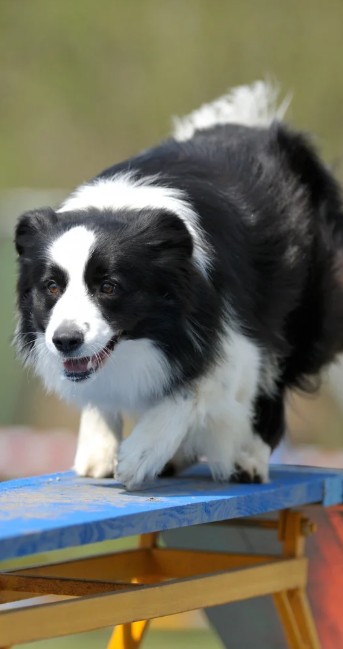


You don’t stop the pattern—you redirect it.
You translate instinct into structure, fixation into function.
You don’t suppress the eye—you give it something meaningful to watch.
Movement Triggers in Daily Life: Practical Management Strategies
Understanding the theory behind movement fixation is valuable, but you also need practical strategies for managing triggers during daily life. Let us guide you through approaches that reduce exposure while you build your dog’s capacity for self-regulation.
Visual barriers serve as your first line of defense. If your Border Collie spends time in your yard, consider installing privacy fencing or planting dense shrubs along sight lines to the street. Even temporary solutions like shade cloth attached to chain-link fencing can significantly reduce visual access to moving traffic. The goal isn’t to eliminate all visual stimulation—that’s neither possible nor beneficial—but to create choices about what your dog sees and when.
Visual barrier solutions for different situations:
- Chain-link fencing: Bamboo or reed screening, shade cloth, privacy slats
- Existing fence lines: Fast-growing hedge plants (privet, boxwood, laurel)
- Front windows: Frosted film at dog eye level, adjustable curtains
- Sliding doors: Decorative window clings, removable privacy screens
- Rental properties: Temporary fabric panels, portable planters with tall plants
- Corner yards: Strategic tall planter placement blocking key sight lines
- Open-plan layouts: Furniture arrangements creating visual breaks
- Multiple trigger points: Graduated barriers—full block for worst areas, partial for moderate
- Seasonal adjustments: Winter screens when deciduous plants lose leaves
Inside your home, window management makes a substantial difference. If your dog has developed the habit of watching out front windows for movement, you might use window film that obscures the view at dog eye level while still allowing light in, or adjust curtains so your dog cannot maintain constant surveillance. Some owners create specific “watching spots” with controlled views, teaching their dogs that observation is permitted in designated locations during designated times, but not as a constant activity.
Route planning for walks transforms what could be triggering experiences into training opportunities. Choose times when traffic is lighter if possible. Select routes with natural visual barriers like hedges or fences that block sight of streets. Build in frequent direction changes and engagement exercises so your dog’s attention remains partly on you rather than entirely on scanning the environment.
Engagement exercises to integrate during walks:
- Position changes: Switching from heel to front to behind handler
- Quick sits or downs: Brief position cues every 20-30 steps
- Touch targeting: Hand targeting or target stick touches while walking
- Direction pivots: Handler spinning while dog maintains position
- Pace variations: Speed up/slow down with attention maintained on handler
- Find it games: Tossing treats for brief scent searches during walk
- Eye contact holds: Brief duration looking at handler while moving
- Weaving exercises: Dog moving through handler’s legs while walking
- Random reinforcement: Unpredictable rewards for checking in with handler
The “watch me” or attention redirect cue becomes invaluable during walks. Before your dog fixates on an approaching trigger, you catch their attention and engage them in a brief task—a position change, a quick targeting exercise, or simply maintaining eye contact with you. The key is timing: you want to interrupt the fixation sequence before it fully activates, not after your dog is already locked onto the trigger.
Strategic rest and downtime matter more than most owners realize. Border Collies with movement fixation often struggle to achieve genuine rest because their vigilance system stays partially activated. Create calm zones in your home where environmental triggers are minimized—perhaps a quiet bedroom or interior room where traffic sounds are muted and visual access to movement is blocked. Teach your dog that these spaces signal genuine rest time, not monitoring time.
Elements of effective calm zones:
- Interior room location: Away from street-facing windows
- Sound dampening: White noise machines, soft music, or sound-absorbing materials
- Reduced visual stimulation: Minimal windows or covered window areas
- Comfortable resting surfaces: Orthopedic beds, cooling mats, elevated cots
- Low lighting: Dimmer or softer light sources promoting relaxation
- Familiar scents: Handler-scented items or calming pheromone diffusers
- Temperature control: Cooler temperatures facilitating deeper rest
- Predictable routine: Consistent rest times associated with location
- Positive associations: Special chews, enrichment toys, or treats only in calm zone
Decompression walks in low-stimulation environments provide essential balance to suburban life. Regular trips to quiet trails, empty fields, or early-morning parks give your dog’s sensory system a break from constant trigger management. These aren’t training sessions—they’re opportunities for your dog to simply exist in an environment that doesn’t constantly activate their herding drives.
The controlled exposure principle suggests that completely avoiding triggers isn’t ideal long-term—your dog needs to build tolerance and learn that movement in the environment doesn’t require their intervention. But this exposure must be controlled and gradual. You might start by working at significant distance from a trigger, rewarding calm behavior and attention to you, then very gradually reducing distance over multiple sessions as your dog demonstrates capacity for remaining regulated.
Digital management deserves attention too. If your Border Collie has developed fixations on television screens or computer monitors, consider where these devices are positioned and whether your dog has constant access to viewing them. Some dogs benefit from learning a “go to bed” cue during screen time, creating physical separation from the visual trigger.
Through the Invisible Leash principle, we understand that managing movement triggers isn’t about restriction—it’s about creating the conditions where your dog can make better choices. When trigger density is reduced, when your dog has been engaged in satisfying cognitive work, when their emotional state is more regulated, they naturally show more resilience when encountering unavoidable triggers.
These practical strategies work best when implemented as part of a comprehensive approach. No single management technique solves movement fixation, but the cumulative effect of reducing trigger exposure, providing alternative outlets, building emotional regulation skills, and creating environmental support can transform your Border Collie’s daily experience from one of constant activation to one of purposeful engagement punctuated by genuine rest.
🐕 Movement Fixation in Border Collies 👁️
Understanding When Herding Instinct Becomes Suburban Obsession
Phase 1: Recognition
Identifying the Pattern-Control Drive
Understanding the Heritage
Border Collies carry centuries of selective breeding for movement control. Their “eye,” flanking behaviors, and gathering instincts aren’t optional personality traits—they’re neurological architecture designed to predict, influence, and manage motion across vast landscapes.
What You’ll Notice
• Intense focus on passing cars, joggers, or cyclists
• Body tension when movement appears in view
• Positioning at windows or fence lines to monitor territory
• Difficulty disengaging from moving targets
Early Assessment
Start tracking when and where fixation occurs. Document trigger types (linear vs. erratic movement), distance sensitivity, and how easily your dog redirects. This baseline helps you measure progress and identify patterns.
Phase 2: Environmental Audit
Mapping Your Trigger Landscape
Suburban Trigger Density
Your neighborhood presents constant activation without resolution. Open yards provide unobstructed sight lines to streets. Busy roads create endless streams of linear movement. Children’s play areas generate erratic patterns that mimic straying livestock. Each element activates herding circuits designed for control.
High-Risk Features
• Chain-link or low fencing with clear street views
• Front-facing windows at dog eye level
• Corner lots with multiple movement vectors
• High-traffic walking paths along property lines
• Lack of visual barriers or buffer zones
Modification Strategy
Begin with quick wins: window film at dog height, shade cloth on fence sections with worst triggers, curtain adjustments for controlled viewing. Plan longer-term solutions like privacy fencing or strategic landscaping for permanent relief.
Phase 3: Sensory Management
Understanding Visual Hypersensitivity
The Border Collie Visual System
Your dog detects movement earlier, tracks multiple objects simultaneously, and maintains visual lock longer than most breeds. Their famous “eye” requires extraordinary motion sensitivity—the same system that makes them brilliant herders makes them vulnerable to suburban overstimulation.
Chronic Alertness Warning
High motion-detection sensitivity combined with low environmental filtering creates constant vigilance. Your dog’s nervous system never fully down-regulates in visually busy environments. This isn’t anxiety—it’s sensory overload from specialized hardware encountering incompatible software.
Creating Visual Rest Periods
Designate interior calm zones where your dog cannot access movement triggers. Use white noise to mask traffic sounds. Schedule genuine rest periods in these low-stimulation spaces. Visual recovery is as important as physical exercise.
Phase 4: Redirection Training
Building Alternative Response Patterns
Timing Is Everything
The most effective redirections happen before full fixation engages. Watch for early signals: ears forward, body orientation shift, weight transfer to front legs. Intervene during these preparation phases when attention remains flexible. Redirecting after lock-on is exponentially harder.
Pattern Walking Protocol
• Practice figure-eight patterns requiring constant position adjustment
• Introduce random direction changes without warning
• Vary pace between slow walk, normal, and faster movement
• Incorporate frequent stops with automatic sits or position changes
• Your movement becomes the pattern they track and control
Handler Focus Development
Through the NeuroBond approach, you become more interesting than environmental chaos. Unpredictable reinforcement, novel activities, and genuine engagement compete effectively with trigger novelty. Your dog learns to reference you first, environmental movement second.
Phase 5: Cognitive Outlets
Satisfying the Working Mind
Why Mental Work Matters
Physical exercise alone won’t satisfy pattern-control needs. A Border Collie can hike ten miles and still have mental energy seeking outlet. Thirty minutes of structured nosework, complex trick chains, or problem-solving games creates genuine cognitive exhaustion that promotes regulation and rest.
Structured Activity Menu
• Scent work: Searching for specific odors in complex environments
• Treibball: Ball positioning and directional control
• Rally obedience: Handler movement tracking and position work
• Trick chains: Sequential behaviors requiring pattern memory
• Food puzzles: Rotating variety demanding different strategies
Job Rotation Principle
Prevent new fixations by varying activities. No single outlet more than 2-3 times weekly. Monday: nosework. Tuesday: rally practice. Wednesday: trick training. Thursday: treibball. This rotation provides broad cognitive engagement without obsessive intensity.
Phase 6: Emotional Regulation
Addressing the Stress Beneath Fixation
The Emotional Cost
Behind every fixation is chronic frustration—drives activating without resolution, movement requiring control but remaining uncontrollable. This creates stress through unpredictability and lack of agency. Your dog isn’t just seeing movement; they’re experiencing urgency without outlet.
Physical Stress Signals
• Pacing patterns along fence lines or through rooms
• Excessive panting without physical exertion
• Inability to settle even in quiet environments
• Sleep fragmentation and frequent waking
• Digestive changes or stress-related appetite shifts
Building Calm Through Structure
The Invisible Leash reminds us that guidance comes through emotional clarity, not physical control. Predictable routines, protected rest periods, and clear purpose reduce ambient stress. When your dog understands their role and trusts your leadership, chronic activation diminishes.
Phase 7: Handler Partnership
Becoming the Source of Purpose
Leadership Clarity
Working Border Collies constantly reference their handlers—checking position, watching for signals, anticipating direction changes. Your suburban companion needs the same reference point. If you’re not providing clear purpose and direction, they’ll create their own through environmental monitoring.
Communication Essentials
• Consistent verbal cues and body language
• Predictable reinforcement patterns
• Emotional congruence—words matching energy
• Clear criteria for success vs. try-again
• Reliable follow-through on communications
• Minimal ambiguity in expectations
Emotional Pacing Technique
Meet your dog’s current arousal level, then gradually guide downward. If highly activated by traffic, acknowledge activation (“Yes, I see that”), create distance, engage in familiar pattern work, then reduce intensity as their nervous system regulates. Demanding calm from arousal doesn’t work—guiding toward calm does.
Phase 8: Long-Term Sustainability
Building a Life That Works
Management as Lifestyle
Movement fixation management isn’t a problem you solve and forget. It’s ongoing attention to environmental triggers, seasonal changes, stress periods, and evolving needs. Successful long-term outcomes require systems and habits that work sustainably for both you and your dog.
Monitoring for Escalation
Watch for signs that managed fixation is intensifying: increased vigilance time, harder redirections, faster arousal, reduced rest quality, or returning to old monitoring posts. Life changes—moves, schedule shifts, household disruptions—can cause resurgence requiring renewed intervention.
Professional Support Framework
Seek help proactively rather than reactively. If fixation persists despite 3+ months of management, shows aggressive displays, involves self-injury, or creates safety risks, consult veterinary behaviorists (DACVB) or certified behavior consultants (CBCC-KA, CDBC) experienced with herding breeds.
📊 Fixation Spectrum Comparison
Mild Fixation
Notices movement with interest but easily redirected. Body remains relaxed. Responds readily to name or cues. Can rest normally between events. Shows equal interest in other activities.
Moderate Fixation
Noticeable body tension when triggers appear. Requires effort to redirect. Must intervene before full lock-on. Actively scans for triggers in quiet periods. Rest becomes more difficult.
Severe Fixation
Anticipatory behaviors before triggers appear. Extremely difficult to interrupt. Physical intensity (trembling, vocalizing). Behavior persists after trigger disappears. Multiple environments affected.
Clinical Compulsion
Self-injurious behaviors (fence fighting causing wounds). Sleep disruption, appetite changes. Behavior serves anxiety-reducing function. Generalized to increasing triggers. Professional intervention required.
Working Line vs. Show Line
Both carry herding architecture, but working lines often show more intense expression. Pet lines aren’t “diluted”—they’re working dogs without work, requiring equal cognitive engagement and management strategies.
Puppy vs. Adult Fixation
Puppies show developing interest in movement—normal and manageable. Adult fixation that intensifies over time indicates chronic frustration requiring intervention. Early prevention easier than established pattern breaking.
⚡ Quick Reference Formula
Daily Mental Work = 30-45 minutes structured cognitive activity
Environmental Management = Reduce trigger density by 50-70% through barriers
Handler Focus Time = 15-20 minutes pattern work during walks
Calm Zone Access = 3-4 hours in low-stimulation rest areas
Activity Rotation = No single outlet more than 2-3x weekly
Professional Consultation = If no improvement after 3 months or safety concerns emerge
🧡 The Zoeta Dogsoul Perspective
Movement fixation isn’t a flaw in your Border Collie—it’s ancient architecture encountering modern context. Through the NeuroBond approach, we recognize that emotional clarity and structured purpose transform uncontrolled activation into guided pattern work. The Invisible Leash teaches us that true guidance emerges not from restriction, but from becoming the source of direction your dog seeks. In moments of Soul Recall—when your dog chooses partnership with you over environmental monitoring—you witness the profound shift from instinct-driven surveillance to trust-based collaboration. This isn’t about eliminating herding drive. It’s about honoring your dog’s remarkable heritage while creating a life where that intensity finds satisfying, sustainable expression. That balance between neurological understanding and emotional connection—that’s where transformation lives.
© Zoeta Dogsoul – Where neuroscience meets soul in dog training
Recognizing the Spectrum: From Mild Interest to Clinical Compulsion
Movement fixation exists on a spectrum, and recognizing where your Border Collie falls on that spectrum helps you choose appropriate interventions. Not every dog watching cars needs intensive behavioral modification, but missing early signs of problematic fixation can allow behaviors to progress into more serious compulsions.
Fixation spectrum characteristics:
Mild Fixation:
- Notices movement with interest but easily redirected
- Body remains relatively relaxed during observation
- Disengages naturally when trigger disappears
- Responds readily to name or alternative cues
- Can rest normally between trigger events
- Shows interest in other activities equally
Moderate Fixation:
- Noticeable body tension when triggers appear
- Requires effort to redirect attention
- Must intervene before full lock-on occurs
- Actively scans for triggers in quiet periods
- Positions self to maximize view of trigger zones
- Rest becomes more difficult, partial vigilance maintained
Severe Fixation / Clinical Compulsion:
- Anticipatory behaviors before triggers appear
- Extremely difficult or impossible to interrupt
- Physical intensity—trembling, excessive salivation, vocalizing
- Behavior persists long after trigger disappears
- Self-injurious behaviors (fence fighting, excessive pawing)
- Multiple environments and contexts affected
- Sleep disruption, appetite changes, generalized anxiety
At the mild end, your Border Collie notices movement but can be easily redirected. They might watch a passing car with interest, but when you call their name or cue an alternative behavior, they respond readily. Their body remains relatively relaxed during observation. They can disengage when the trigger disappears. This level often responds well to basic management and providing alternative outlets.
Moderate fixation shows increased intensity and reduced flexibility. Your dog’s body tension noticeably increases when triggers appear—muscles tighten, breathing changes, their entire focus narrows. Redirecting their attention requires more effort and often only works if you intervene before they fully lock onto the trigger. They may scan actively for triggers even in the absence of obvious movement, or position themselves in locations that maximize their view of potential triggers. Rest becomes more difficult because vigilance remains partially activated.
Severe fixation or clinical compulsion presents differently again. Your dog may show anticipatory behaviors—pacing, whining, or positioning themselves at windows or fence lines long before triggers typically appear. Once engaged with a trigger, interrupting their focus becomes extremely difficult or impossible. Physical responses intensify—trembling, excessive salivation, vocalizing, or even self-injurious behaviors like fence fighting or pawing. The behavior may persist long after the trigger disappears, with your dog continuing to stare at where the car was or returning repeatedly to check the location.
One distinguishing feature of clinical compulsion is that the behavior begins to serve an anxiety-reducing function rather than serving its original purpose. Your dog isn’t watching traffic because they believe they can control it—they’re watching because not watching creates intense discomfort or anxiety. The behavior has become self-reinforcing through its role in temporarily reducing internal distress.
Context matters in assessment. A Border Collie who fixates during walks but settles completely at home is different from one whose fixation pervades multiple environments and times of day. A dog who shows interest in moving objects but engages readily in alternative activities has more behavioral flexibility than one whose entire daily rhythm revolves around monitoring for movement.
The impact on quality of life provides another assessment dimension. Does the fixation behavior interfere with your dog’s ability to rest, eat normally, or engage in other activities? Does it create safety concerns—lunging into traffic, fence fighting, or aggressive displays toward passersby? Does it generate significant distress for your dog or household?
Quality of life impact assessment factors:
- Rest quality: Ability to achieve deep, restorative sleep
- Appetite maintenance: Normal eating patterns without stress-related changes
- Activity engagement: Interest and participation in non-fixation activities
- Safety concerns: Risk-taking behaviors toward triggers
- Physical health: Weight maintenance, coat condition, stress-related symptoms
- Social interaction: Capacity for normal interactions with family and other pets
- Training responsiveness: Ability to learn and perform non-fixation behaviors
- Household stress: Impact on family members’ daily functioning
- Environment enjoyment: Ability to relax in home and yard spaces
If your Border Collie’s fixation falls into the moderate-to-severe range, or if you’ve noticed the behavior intensifying over time despite management efforts, professional support becomes valuable. Veterinary behaviorists can assess whether there are underlying anxiety disorders or compulsive disorder diagnoses that might benefit from medication alongside behavioral intervention. Certified behavior consultants experienced with herding breeds can provide detailed behavior modification protocols tailored to your specific situation.
Soul Recall—those moments of deep emotional memory and connection—becomes particularly important when working with more severe fixations. Your dog needs to learn that safety, calm, and purpose exist in relationship with you, not in monitoring uncontrollable movement. Building that association requires consistency, patience, and often professional guidance.
The progression from adaptive behavior to compulsion isn’t inevitable. Many Border Collies in suburban settings maintain healthy relationships with environmental movement throughout their lives. But understanding the spectrum helps you recognize when casual observation is becoming something more concerning, allowing earlier intervention when behavioral patterns are more flexible and responsive to change.

Alternative Outlets: Structured Work for Working Minds
Your Border Collie’s mind needs work the way their body needs exercise—not as luxury, but as fundamental requirement for wellbeing. The challenge is finding work that genuinely engages their herding-based cognitive architecture within the constraints of suburban life.
Alternative outlets and their specific benefits:
- Rally obedience: Handler movement tracking, positional awareness, pattern completion
- Canine freestyle: Choreographed sequences, movement synchronization, creative problem-solving
- Nosework: Low-arousal searching, methodical pattern work, clear completion points
- Treibball: Ball positioning, directional control, herding simulation without livestock
- Agility (foundation): Obstacle discrimination, impulse control, distance handling
- Trick training chains: Sequential thinking, pattern memory, precision execution
- Structured fetch: Impulse control integration, route variation, conditional releases
- Tracking: Sustained focus, methodical searching, environmental problem-solving
- Barn hunt: Natural searching behaviors, environmental navigation, success-based completion
Rally obedience and canine freestyle dance offer surprisingly good matches for Border Collie needs. Both activities require the dog to constantly track handler movement, anticipate direction changes, and maintain specific positional relationships—all elements central to herding work. The structured patterns of rally courses or the choreographed sequences of freestyle provide clear beginnings, middles, and ends, offering the completion that fixation behaviors lack. Plus, these activities build handler focus, redirecting your dog’s tendency to monitor environmental movement toward collaborative movement with you.
Nosework and scent detection tap into the SEEKING system intensely while promoting calm, methodical behavior. Teaching your Border Collie to search for specific scents in increasingly complex environments engages their problem-solving abilities and pattern-recognition skills. The beauty of scent work is that it requires focus and persistence—qualities Border Collies have in abundance—but redirects them toward low-arousal searching rather than high-arousal visual tracking.
Agility can be beneficial but requires careful implementation. High-speed agility might simply redirect fixation from cars to jumps and tunnels without addressing underlying arousal patterns. However, foundation agility work that emphasizes obstacle discrimination, distance handling, and calm start-line behavior can build impulse control and focus. The key is how you train—choosing methods that reward thinking and self-control rather than just speed and intensity.
Treibball (pushing large balls into goals) was specifically designed as a herding outlet for dogs without livestock access. Your Border Collie learns to position themselves correctly relative to the ball, move it in specific directions, and respond to directional cues from you—all elements of herding work. The activity provides clear goals and completion points, satisfying the drive to control and direct movement while building partnership and communication.
Trick training beyond basic obedience deserves more credit than it typically receives. Teaching complex trick chains—sequences of behaviors performed in specific order—engages the same sequential thinking and pattern execution that herding requires. A well-trained routine of ten tricks performed in sequence requires your dog to remember patterns, inhibit anticipation, and execute precise movements—all cognitively demanding in ways that satisfy working-dog minds.
Structured fetch differs substantially from mindless ball throwing. In structured fetch, you might teach your dog to remain calm while you place the toy, to take various routes to retrieve it, to hold a stay while the toy is thrown but wait for your release word, or to perform a specific behavior (like a sit or spin) before dropping the toy for the next throw. These added elements transform a simple retrieve into a complex cognitive task requiring impulse control, pattern memory, and constant attention to your cues.
Food puzzles and problem-solving toys provide daily cognitive work that doesn’t require your constant participation. Rotation is key—offering the same puzzle daily reduces cognitive engagement as your dog masters the solution. A variety of puzzle types requiring different strategies keeps the work genuinely challenging.
The concept of “job rotation” helps prevent any single activity from becoming a new fixation. Border Collies can certainly develop ball obsessions, agility addictions, or other activity-based compulsions if an outlet is offered repeatedly without variation. Rotating through different structured activities ensures broad cognitive engagement while preventing the single-minded intensity that characterizes fixation.
Sample weekly job rotation schedule:
- Monday: Pattern walking + nosework session (20 minutes total)
- Tuesday: Rally obedience practice + food puzzle work
- Wednesday: Decompression walk in quiet area + trick training
- Thursday: Treibball or ball work + scent discrimination games
- Friday: Structured fetch with position changes + problem-solving box
- Saturday: Longer training outing (agility class, tracking, or group activity)
- Sunday: Low-key day with calm zone time + gentle enrichment
- Rotation principle: No single activity more than 2-3 times weekly
- Variety within categories: Different nosework hides, new trick sequences, varied walk routes
What makes these outlets effective isn’t just that they tire your dog physically—it’s that they provide patterns to control, problems to solve, and completion sequences that resolve activated drives. Your Border Collie’s brain is designed to gather scattered elements, impose order on apparent chaos, and guide movement toward specific outcomes. When you provide activities that allow them to do exactly that within structured contexts, the compulsive monitoring of environmental movement naturally decreases.
That balance between science and soul—between understanding the neurological mechanisms driving behavior and honoring the emotional experience of your individual dog—that’s the essence of Zoeta Dogsoul. Your Border Collie doesn’t need to herd sheep to be fulfilled, but they do need work that engages the same cognitive systems in ways that provide genuine satisfaction and purpose. 😄
The Handler’s Role: Becoming the Source of Purpose and Direction
Your Border Collie’s relationship with environmental movement will be fundamentally shaped by their relationship with you. If you’re not providing clear purpose and direction, they’ll create their own—and that self-created purpose typically involves monitoring and attempting to control whatever moves in their environment.
Calm leadership doesn’t mean dominance or force. It means being so clear, so consistent, and so genuinely interesting that you become the primary point of reference for your dog’s attention and energy. Working Border Collies constantly reference their handlers—checking position, watching for signals, anticipating direction changes. Your suburban Border Collie needs that same point of reference, but you have to actively create it rather than expecting it to emerge naturally.
Communication clarity starts with consistency. Your cues, your body language, your energy levels, and your expectations should be predictable patterns your dog can learn and trust. When everything about you is clear and consistent, your dog’s cognitive resources can focus on responding to you rather than constantly trying to figure out what you want or what’s coming next.
Elements of clear handler communication:
- Consistent verbal cues: Same words for same behaviors, no variation
- Predictable body language: Reliable physical signals your dog can read
- Stable energy levels: Consistent baseline emotional state
- Clear criteria: Defined expectations for what constitutes success
- Reliable reinforcement: Predictable consequences for behaviors
- Honest signals: Your communications accurately reflect intentions
- Minimal ambiguity: Clear yes/no rather than maybe/sometimes
- Emotional congruence: Words matching body language and energy
- Pattern reliability: Similar situations handled similarly over time
Emotional pacing requires reading your dog’s arousal level and meeting them where they are before guiding them toward where you want them to be. If your Border Collie is highly activated by passing traffic, your calm voice and relaxed body language provide a model—but only if you’ve first acknowledged their activation and created enough distance or distraction that their nervous system can begin to regulate. You cannot demand calm from an aroused dog through force of will, but you can consistently model the energy state you want while providing the structure and support that makes that state accessible.
Timing and placement matter enormously in communication. The most effective redirections happen before your dog fully fixates, not after. This requires you to develop situational awareness—noticing triggers before your dog does, reading early signs of fixation (ears forward, body tension, forward lean), and intervening while your dog’s attention is still flexible. Many handlers try to redirect after fixation is fully engaged, which is like trying to steer a car that’s already run off the road.
Early warning signs that indicate redirection is needed:
- Ear position change: Ears suddenly pricked forward toward stimulus
- Body orientation shift: Turning to face potential trigger
- Forward lean: Weight shifting toward front legs
- Tail position: Rising from relaxed to horizontal or flagged
- Breathing changes: Shift from relaxed to focused breathing pattern
- Eye fixation: Intense stare developing toward target
- Muscle tension: Visible tightening through shoulders or hindquarters
- Stillness: Sudden freezing or ceasing of normal movement
- Pre-vocalization: Subtle throat sounds before actual barking
Building trust through reliability creates the foundation for everything else. Your Border Collie needs to know that when you say something will happen, it happens. When you provide direction, following that direction leads to something positive. When you say a situation is safe, it is safe. This reliability allows your dog to transfer their need for control from the environment to you—not because you control them, but because you reliably manage the situations you encounter together.
The concept of “being interesting” is more significant than it might sound. Border Collies are sophisticated learners who bore easily with repetition. If your training consists of the same walk, the same cues, the same interactions day after day, you’re not competing effectively with the novelty of environmental movement. Varying your routines, introducing new games and challenges, and maintaining genuine engagement in your interactions keeps your dog’s attention oriented toward you rather than toward external stimuli.
Ways to become more interesting than environmental triggers:
- Unpredictable reinforcement: Random rewards at varying intervals
- Novel activities: Introducing new games or skills regularly
- Environmental variation: Different locations, routes, and training spaces
- Dynamic interaction: Changing energy levels and engagement styles
- Surprise elements: Unexpected rewards, play breaks, or activity shifts
- Challenge progression: Gradually increasing difficulty to maintain engagement
- Multi-modal rewards: Food, toys, praise, play, life rewards (sniffing, exploring)
- Handler enthusiasm: Genuine excitement and interest in training
- Creative problem-solving: New ways to practice familiar skills
Handler calmness serves as environmental regulation for your dog. Border Collies are highly sensitive to human emotional states. If you’re anxious, frustrated, or tense when passing cars or encountering other triggers, your dog receives that as information about the situation: “My human is worried, therefore this situation requires intense vigilance.” Your genuine calm—not performed or forced, but actual centered presence—communicates that triggers are simply environmental features requiring no particular response.
Through the NeuroBond framework, emotional clarity becomes your most powerful training tool. Your Border Collie doesn’t need you to be perfect, but they need you to be readable. They need to understand what you’re feeling, what you want, and what the plan is at any given moment. When that clarity exists, their cognitive resources can focus on collaboration rather than independent environmental monitoring.
Your role isn’t to eliminate your dog’s herding instinct or to compete with it. Your role is to become the channel through which that instinct finds appropriate expression. You provide the patterns worth controlling, the problems worth solving, and the purpose worth their remarkable intelligence. When you successfully occupy that role, movement fixation naturally decreases—not because the drive disappears, but because it finds satisfying outlets through partnership with you. 🧠

Long-Term Management: Building a Sustainable Life Together
Addressing movement fixation isn’t a problem you solve once and move on from. It’s an ongoing element of living successfully with a Border Collie in an environment that challenges their neurological design. Building a sustainable approach requires systems and habits that work for both you and your dog long-term.
Routine structure provides essential predictability for Border Collies. When daily life follows consistent patterns—morning routine, work periods, rest times, evening activities—your dog’s cognitive resources can focus on engaging with those patterns rather than constantly scanning for environmental changes. This doesn’t mean rigid schedules, but it does mean predictable rhythms that your dog can anticipate and rely upon.
Elements of effective routine structure:
- Consistent wake times: Similar morning schedule most days
- Designated work periods: Specific times for training or cognitive activities
- Protected rest periods: Scheduled downtime in calm zones
- Meal consistency: Regular feeding times and locations
- Exercise patterns: Predictable daily movement opportunities
- Evening wind-down: Consistent transition to nighttime calm
- Weekly rhythms: Certain activities on specific days (class Tuesday, long walk Saturday)
- Seasonal adjustments: Gradual schedule shifts with daylight changes
- Pre-activity cues: Predictable signals indicating upcoming activities
Environmental management evolves as your dog’s needs change. The visual barriers, route choices, and trigger management strategies that work during initial training might need adjustment over time. Seasonal changes affect trigger patterns—more foot traffic in summer, darker mornings in winter, kids playing outside during school breaks. Staying aware of these environmental shifts and proactively adjusting your management prevents fixation from resurging during challenging periods.
Seasonal factors affecting movement fixation:
- Spring: Increased outdoor activity, wildlife movement, lawn equipment noise
- Summer: Peak pedestrian traffic, children playing, windows open (more sound triggers)
- Fall: School schedules create new traffic patterns, leaf blowers, shorter daylight
- Winter: Darkness reduces visual triggers but increases sound sensitivity, holiday activity
- Daylight changes: Adjustment periods during time changes
- Weather patterns: Rain/snow reducing exercise opportunities, increased indoor time
- Holiday periods: Unusual schedules, visitors, delivery frequency increases
- School calendar: Summer break vs. school year traffic and activity differences
Physical exercise matters, but cognitive exhaustion matters more. A Border Collie can hike ten miles and still have mental energy seeking outlet. But thirty minutes of structured nosework, complex trick training, or problem-solving games can create genuine mental fatigue that promotes rest and reduces hypervigilance. Balance both forms of exercise, but prioritize quality mental work over simple physical activity.
Social relationships beyond the household support wellbeing, but Border Collies often need careful social structure. Dog park free-for-alls with unpredictable play may increase arousal rather than providing positive outlet. However, structured activities with familiar dogs, or one-on-one play with well-matched companions, can provide appropriate social engagement. Some Border Collies do better with less dog-focused socialization and more human partnership activities.
Monitoring for escalation remains important even after successful management. Stress periods—moves, schedule changes, household disruptions—can cause previously managed fixations to re-emerge or intensify. Catching these early signs allows quick intervention before patterns become re-established. You might notice increased pacing, return to window watching, or reduced ability to settle during what had been calm periods.
Early warning signs of fixation escalation:
- Increased vigilance: More time spent monitoring trigger zones
- Reduced rest quality: Difficulty settling, fragmented sleep patterns
- Faster arousal: Quicker transition from calm to activated
- Harder redirections: Previously effective redirects becoming less successful
- Anticipatory positioning: Returning to old monitoring posts before triggers appear
- Stress behaviors returning: Pacing, panting, or displacement behaviors reappearing
- Reduced training response: Less engagement in alternative activities
- Threshold lowering: Reacting to triggers that previously didn’t activate fixation
- Duration increases: Remaining activated longer after triggers disappear
Professional support as needed rather than as last resort changes outcomes significantly. If you notice fixation patterns intensifying despite your management efforts, consulting with a veterinary behaviorist or certified behavior consultant before the situation becomes critical allows intervention while behavior patterns remain relatively flexible. Waiting until fixation is severe makes change harder for everyone.
Medication as tool rather than failure deserves mention. Some Border Collies, particularly those whose fixation has developed into clinical compulsion or occurs alongside anxiety disorders, benefit from behavioral medication. These medications aren’t sedatives or personality changes—they’re tools that reduce baseline anxiety enough that behavioral training can be effective. Working with a veterinary behaviorist to assess whether medication might support your training efforts is a valid choice, not an admission of defeat.
Celebrating progress without expecting perfection keeps you both motivated. Your Border Collie may always notice movement more than other breeds. They may always have some degree of environmental vigilance. The goal isn’t to create a dog who ignores all movement—that would require suppressing fundamental aspects of who they are. The goal is a dog who notices movement without becoming overwhelmed by it, who can monitor their environment without constant activation, and who finds primary purpose and satisfaction through partnership with you rather than through attempting to control an uncontrollable suburban landscape.
Life with a Border Collie in suburban settings demands more than life with many other breeds. But the dogs who can read a handler’s micro-movements from a hundred yards away, who can track patterns most humans miss, who can learn complex sequences in just a few repetitions—these same dogs can learn to navigate suburban life successfully when provided with appropriate support, structure, and outlets. 🧡
When to Seek Professional Help
While many Border Collies with mild-to-moderate movement fixation respond well to the strategies outlined here, some situations require professional expertise. Recognizing these situations early leads to better outcomes for everyone.
Situations requiring professional consultation:
- Persistent escalation: Fixation continuing or worsening despite 3+ months of consistent management
- Aggressive displays: Lunging, snarling, intense barrier frustration toward triggers
- Self-injury: Fence fighting causing wounds, excessive pawing creating sores
- Complete inability to redirect: Even high-value rewards failing to interrupt fixation
- Generalization: Fixation spreading to increasing numbers of triggers and contexts
- Physical symptoms: Weight loss, digestive problems, sleep disruption, coat deterioration
- Safety risks: Bolting into traffic, breaking through barriers, extreme displays
- Co-occurring anxiety: Generalized anxiety, panic responses, or severe fear alongside fixation
- Compulsive markers: Rituals, extended post-trigger behavior, anxiety-reducing function
- Household impact: Significant disruption to family functioning or quality of life
Consider professional consultation if your dog shows any of these patterns: fixation that continues or escalates despite consistent management efforts over several months; fixation accompanied by aggressive displays toward triggers (lunging, snarling, intense barrier frustration); self-injurious behaviors associated with fixation (excessive fence fighting causing injury, compulsive licking or chewing); inability to disengage from fixation even with high-value food or extremely motivating alternatives; fixation that generalizes to increasing numbers of triggers or contexts; sleep disruption, weight loss, or other physical symptoms related to chronic hypervigilance.
Veterinary behaviorists provide medical assessment alongside behavioral expertise. They can evaluate whether underlying anxiety disorders, compulsive disorders, or other medical conditions contribute to fixation patterns. They prescribe behavioral medication when appropriate and create comprehensive treatment plans that integrate medical and behavioral approaches.
Certified behavior consultants (look for credentials like CBCC-KA, CDBC, or similar) who have specific experience with herding breeds bring valuable expertise. They can observe your dog in their actual environment, assess subtle aspects of the fixation pattern, and create detailed behavior modification protocols tailored to your situation. Remote consultations are often available, making this support accessible even in areas without local specialists.
Warning signs that professional help is urgent rather than optional include: fixation that creates safety risks (bolting into traffic, breaking through barriers, extreme barrier aggression); fixation that co-occurs with generalized anxiety, panic responses, or severe fear; signs of compulsive disorder (behavior continues long after trigger disappears, becomes ritualized, serves anxiety-reducing function rather than practical purpose); significant impact on quality of life for dog or household.
The Invisible Leash framework recognizes that sometimes the most important guidance is knowing when you need additional guides. There’s no shame in seeking professional support—in fact, recognizing when a situation exceeds your current knowledge and getting appropriate help is one of the most responsible choices you can make for your dog.
Conclusion: Honoring Heritage While Building Harmony
Your Border Collie carries within them the accumulated wisdom of generations of working dogs. That intensity in their eyes when they watch movement, that powerful drive to control and direct, that sophisticated pattern recognition—these aren’t flaws to eliminate. They’re expressions of remarkable genetic heritage shaped by centuries of partnership between humans and dogs.
The challenge of movement fixation in suburban settings stems not from defects in your dog, but from mismatch between their neurology and their environment. Understanding this distinction transforms your approach from fighting against your dog’s instincts toward working with those instincts to find appropriate expression.
The strategies outlined here—environmental management, cognitive outlets, handler partnership, structured training—work because they honor what your Border Collie is while creating conditions where those traits can exist without causing distress. You’re not suppressing herding drive; you’re channeling it. You’re not eliminating motion sensitivity; you’re building context and regulation around it.
Living successfully with a Border Collie in suburban life requires commitment, consistency, and willingness to prioritize their cognitive needs alongside their physical needs. It requires seeing training not as a phase you complete but as an ongoing conversation with a sophisticated mind. It requires accepting that your Border Collie may always be more aware, more responsive to movement, more driven than many other dogs—and finding the beauty in those qualities rather than only the challenges.
Through patterns of Soul Recall, those moments when your dog looks to you instead of the passing car, when they settle after engaging with structured work, when they trust your leadership enough to let environmental movement pass without their intervention—through these moments, you build a life together that honors their heritage while creating genuine harmony.
Your Border Collie doesn’t need to herd sheep to be fulfilled. But they do need work that engages the same remarkable cognitive systems. They need you to provide purpose, direction, and partnership. They need environmental support that reduces unnecessary triggers while building resilience toward unavoidable ones. They need outlets that allow them to be fully who they are—brilliant, intense, driven, sensitive—in ways that work within the realities of your shared life.
Is this breed right for everyone in suburban settings? Honestly, no. Border Collies thrive with owners who understand and commit to meeting their complex needs, who see training and management as ongoing practice rather than one-time achievement, and who find joy in partnership with an exceptionally intelligent, demanding companion.
Questions to assess Border Collie-suburban compatibility:
- Time commitment: Can you provide 1-2 hours daily for structured mental work and training?
- Physical exercise: Can you offer varied exercise beyond simple backyard or block walks?
- Environmental control: Can you modify your property to reduce trigger exposure?
- Lifestyle flexibility: Can you adjust routines to accommodate cognitive needs?
- Training commitment: Are you prepared for ongoing training as lifestyle, not short-term project?
- Professional support: Are you willing to seek and pay for expert help when needed?
- Activity access: Do you have access to dog sports, training facilities, or varied environments?
- Patience for intensity: Can you appreciate high drive and sensitivity rather than resenting them?
- Long-term dedication: Are you committed to 12-15 years of active mental management?
- Financial resources: Can you support training, activities, professional help, and environmental modifications?
But for those willing to honor the working heritage while building frameworks for harmony, for those who appreciate the profound intelligence behind the intensity, for those committed to becoming the source of purpose their Border Collie seeks—the relationship offers something extraordinary. You share your life with a dog whose ancestors changed the course of agriculture, whose cognitive abilities rival any canine on earth, and whose capacity for partnership, when properly channeled, is breathtaking.
That’s the essence of Zoeta Dogsoul—understanding the science of what drives behavior while honoring the soul of the individual dog before you. Your Border Collie’s fixation on movement isn’t a problem to eliminate. It’s an expression of profound instinct seeking appropriate outlet. Your task is providing that outlet, building that partnership, and creating a life where herding heritage and suburban reality find balance.
When you achieve that balance, when your Border Collie can notice passing cars without needing to control them, when they find their purpose in partnership with you rather than in managing an uncontrollable environment, when they rest deeply knowing their drives will find satisfying expression—that’s not training completion. That’s transformation. That’s what happens when ancient instinct meets compassionate understanding. That’s what’s possible when you truly see your dog for who they are and commit to building a life that works for both of you.
Keys to successful Border Collie partnership in suburban life:
- Honor the heritage: Respect herding instincts rather than trying to eliminate them
- Provide genuine work: Cognitive challenges that engage pattern-control systems
- Manage the environment: Reduce unnecessary triggers through thoughtful design
- Build handler partnership: Become the primary source of purpose and direction
- Maintain consistency: Predictable routines and clear communication
- Rotate activities: Prevent new fixations through varied outlets
- Monitor and adjust: Stay aware of changing needs and environmental factors
- Seek help proactively: Professional support before situations become critical
- Celebrate progress: Acknowledge improvements without expecting perfection
- Commit long-term: View management as ongoing lifestyle, not temporary fix










