
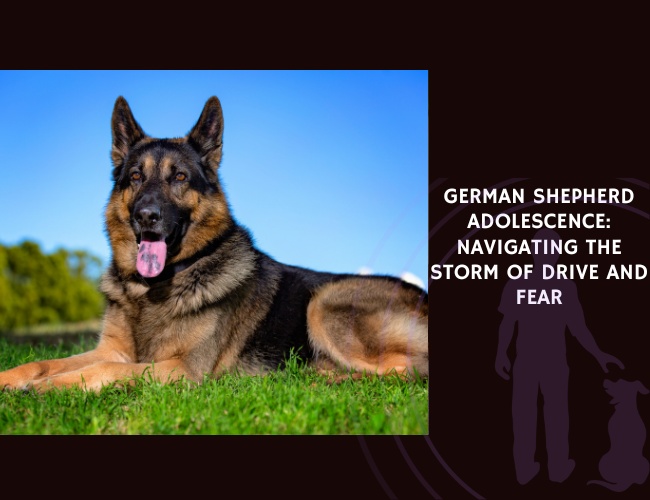
When your German Shepherd hits adolescence, you might feel like you’re suddenly living with a completely different dog. That confident, eager puppy who followed you everywhere now lunges at shadows, barks at strangers with startling intensity, and seems to have forgotten every command you ever taught. One moment they’re bold and investigative, the next they’re anxious and reactive. You’re not imagining things, and you’re certainly not alone. This developmental phase represents one of the most challenging periods in raising a German Shepherd, yet understanding what’s happening beneath the surface transforms confusion into clarity.
Adolescence in German Shepherds is fundamentally different from other breeds. These dogs carry centuries of selective breeding for environmental vigilance, protection work, and intense drive satisfaction. When these powerful instincts collide with adolescent neurobiological changes, the result is a unique developmental storm that requires understanding, patience, and strategic guidance. Let us guide you through this critical period, exploring not just what you’re seeing, but why it’s happening and how you can help your Shepherd emerge as the stable, purposeful adult you envisioned.
The Adolescent Timeline: What To Expect and When
Before diving into the complex neurobiology of adolescence, it helps to understand when you’ll face these challenges and what milestones to anticipate. German Shepherd adolescence doesn’t arrive all at once, nor does it follow a perfectly linear progression. Rather, it unfolds in waves, with each developmental stage bringing its own unique set of behaviors and challenges.
When Adolescence Begins and Ends
For most German Shepherds, adolescence begins around 6 months of age, though some may show early signs as young as 5 months, particularly in lines bred for early maturity. This initial phase often catches owners off guard because it can feel sudden. One week you have a biddable puppy, the next you’re dealing with selective hearing and increased independence.
The adolescent period typically extends until 18-24 months of age, with full emotional and behavioral maturity not solidifying until approximately 3 years of age. This extended developmental window is longer than many other breeds, reflecting the German Shepherd’s complex working heritage and the sophisticated neural architecture required to support their guardian and working instincts.
It’s crucial to understand that these ages represent general timelines. Your individual Shepherd may enter or exit phases earlier or later based on genetics, environmental factors, training history, and health status. Some dogs experience a relatively smooth adolescence, while others face more pronounced challenges. Neither path indicates failure—they simply reflect individual developmental trajectories.
Early Adolescence: The Confidence Crash (6-12 Months)
Early adolescence typically begins with what many owners describe as a “confidence crash.” Your previously outgoing puppy may suddenly become hesitant, reactive, or fearful of stimuli that never bothered them before. This phase coincides with the first major fear period of adolescence, where the brain becomes hypersensitive to novel or ambiguous stimuli.
Behavioral changes you might notice during early adolescence:
- Increased barking at unfamiliar people or sounds
- Hesitation when encountering new environments
- Stronger reactions to other dogs
- Decreased responsiveness to previously mastered commands
- Increased independence during walks
- Heightened arousal and difficulty settling
- Emergence of guarding behaviors around resources
- Testing of household boundaries and rules
This phase feels particularly challenging because it seems like regression. You thought you’d successfully socialized your puppy, and now they’re acting like they’ve never seen a person in a hat before. This isn’t training failure. It’s normal neurodevelopmental progression creating temporary behavioral disruption while new neural pathways form and mature.
Middle Adolescence: The Drive Surge (12-18 Months)
Middle adolescence brings the full force of working drive activation. Your Shepherd’s genetic programming for guarding, tracking, and environmental management intensifies dramatically. Hormonal changes reach peak levels, particularly in intact dogs, amplifying every instinct your Shepherd carries.
During this phase, you might observe:
- Increased leash reactivity, particularly toward other dogs or perceived threats
- Stronger territorial behaviors and boundary guarding
- Heightened prey drive and chase behaviors
- Increased intensity in play that can cross into overstimulation
- Decreased threshold for frustration, leading to more vocal or physical protests
- Stronger handler focus during activities that engage drive
- Improved work ethic during structured training
- Paradoxically, moments of exceptional focus and capability interspersed with complete chaos
This is often the most volatile phase because drive and fear are simultaneously operating at maximum intensity. Your Shepherd might display confident, bold behavior one moment, then react defensively the next. This isn’t personality instability—it’s two powerful systems competing for behavioral control while regulatory mechanisms struggle to keep pace.
Late Adolescence: The Integration Phase (18-24 Months)
Late adolescence represents the beginning of integration, where drive and emotional regulation start finding balance. The brain’s prefrontal cortex is developing more robust connections, allowing for improved impulse control and decision-making. You’ll notice your Shepherd becoming more consistent in their responses, though challenges certainly remain.
Positive changes emerging during late adolescence:
- Improved ability to recover from arousal
- More consistent responsiveness to trained cues, even in stimulating environments
- Developing discernment in threat assessment rather than blanket reactivity
- Increased handler focus and willingness to defer to leadership
- Longer attention span and capacity for complex tasks
- Emerging emotional maturity that supports guardian instincts functionally
- Reduction in frequency and intensity of reactive episodes
However, don’t expect perfection. Late adolescence still includes setbacks, particularly during hormonal fluctuations or when environmental stressors increase. The difference is that recovery happens faster, and the baseline behavioral stability improves steadily.
Gender Differences in Development and Timing
Male and female German Shepherds experience adolescence somewhat differently, though individual variation within each gender exceeds the differences between them. Understanding these tendencies helps set appropriate expectations.
Male German Shepherds typically enter adolescence slightly later than females, often showing first signs between 6-8 months. Their adolescent period may extend longer, with full maturity not achieved until 2.5-3 years. Males often display:
- More intense territorial and guarding behaviors
- Stronger same-sex dog reactivity, particularly toward other intact males
- Higher arousal levels and more difficulty with impulse control
- More pronounced physical awkwardness during growth spurts
- Greater tendency toward frustration-based reactivity
- Stronger drive activation in working contexts
Female German Shepherds generally enter adolescence earlier, sometimes as young as 5-6 months, particularly around their first heat cycle. Their adolescent challenges often center more on fear sensitivity and social dynamics than raw drive intensity. Females tend to show:
- More selective social bonding, becoming choosier about dog and human interactions
- Heightened vigilance and environmental scanning behaviors
- More pronounced fear periods with stronger startle responses
- Sophisticated resource guarding strategies, particularly around favored people
- Quicker emotional recovery but potentially longer-lasting fear memories
- Earlier emotional maturity, typically solidifying by 2-2.5 years
The Impact of Spaying and Neutering Timing
The timing of surgical sterilization significantly influences adolescent development, though research in this area continues to evolve. Recent studies suggest that early spaying or neutering (before 12 months) may influence growth patterns, joint development, and potentially behavioral maturation in German Shepherds.
Early Spay/Neuter (Before 12 Months) may result in:
- Extended growth periods, potentially increasing risk of joint problems
- Possible延迟 of behavioral maturity, with adolescent behaviors persisting longer
- Potential reduction in some sex-specific behaviors but not elimination of breed-typical reactivity
- Possible influence on confidence development, particularly in already-fearful individuals
- No guaranteed reduction in drive-based or fear-based reactivity
Later Spay/Neuter (After 12-18 Months) offers:
- More complete physical maturation before hormonal changes
- May support more typical behavioral development patterns
- Preserves the organizing effects of sex hormones on brain development
- Still provides health benefits while allowing skeletal maturity
- Doesn’t prevent the need for comprehensive behavioral training and management
Intact Dogs experience unique challenges:
- The full range of hormonal fluctuations that drive adolescent behaviors
- Require more intensive management, particularly around other dogs
- May show more intense territorial and protective behaviors
- Need careful supervision to prevent unwanted breeding
- Demand highly consistent training and leadership to channel drives appropriately
The decision about spaying or neutering timing should involve consultation with your veterinarian, considering your individual dog’s health, temperament, living situation, and your management capabilities. Surgical sterilization doesn’t resolve adolescent behavioral challenges. Training, management, and appropriate development support remain essential regardless of reproductive status. 🧠
Understanding The Adolescent Brain: When Biology Creates Chaos
The adolescent German Shepherd brain is undergoing profound transformation. This isn’t simply a matter of your dog being “difficult” or “testing boundaries” in a deliberate way. Neurobiological research reveals that adolescence represents a period of heightened vulnerability to emotional reactivity and anxiety across species. Your Shepherd’s brain is literally rewiring itself, and during this reconstruction, emotional stability takes a backseat to raw, unfiltered experience.
Hormonal fluctuations during this period create a biological duality that explains those bewildering behavioral swings you’re witnessing. Surges in testosterone and dopamine amplify what neuroscientists call the SEEKING system, that primal drive to explore, investigate, and engage with the environment. Your adolescent Shepherd experiences an intensification of their working drives, leading to increased curiosity, higher energy levels, and a powerful need to interact with everything around them.
Simultaneously, stress hormones like cortisol and adrenaline are also elevated, heightening fear sensitivity and threat perception. This creates a dog who can appear bold and confident while investigating a new trail, then suddenly become anxious and reactive when encountering an unfamiliar person. These aren’t contradictory personalities competing for dominance. Rather, they’re two powerful neurological systems operating at peak intensity while the brain’s regulatory mechanisms are still under construction.
For German Shepherds specifically, this biological duality is amplified by their breed-specific baseline vigilance. These dogs were selectively bred to notice environmental changes, anticipate threats, and respond decisively. When you combine this inherent hyperawareness with adolescent neurobiological vulnerability, you create the perfect conditions for what appears to be emotional chaos. Your Shepherd isn’t broken. They’re navigating an internal storm that their developing brain hasn’t yet learned to weather. 🧠
The Prefrontal Cortex Gap
The prefrontal cortex, your dog’s executive control center, is responsible for impulse control, decision-making, and emotional regulation. During adolescence, this critical brain region is still maturing, creating what researchers call the “prefrontal cortex gap.” Emotional drives are operating at full intensity while the brakes that modulate those drives are still being installed.
This explains why your previously responsive Shepherd might suddenly ignore recall commands when excited, or why they can’t seem to “calm down” even when you’ve asked repeatedly. It’s not defiance. Their brain literally lacks the developed neural pathways to override powerful emotional impulses consistently. The intensity they feel in any given moment overwhelms their capacity to self-regulate.
The Drive-Fear Collision: When Instinct Meets Insecurity
Adolescent German Shepherds experience what can only be described as an internal war between powerful, competing emotional systems. On one side, you have the SEEKING system, driving your dog toward exploration, investigation, and the pursuit of goals. On the other, you have the FEAR system, creating threat anticipation, avoidance behaviors, and defensive responses. Both are operating at unprecedented levels, and neither has learned to coexist peacefully yet.
When your Shepherd’s drive is activated but cannot be satisfied, perhaps because they’re leashed, confined, or haven’t been properly trained to channel their instincts, frustration builds rapidly. This frustration can trigger what’s known as the RAGE system, manifesting as lunging, barking, growling, or other externalized expressions of internal conflict. What you’re witnessing isn’t aggression in the traditional sense. It’s drive without clarity, energy without purpose.
Consider a common scenario: your adolescent Shepherd notices a stranger approaching while you’re on a walk. Their SEEKING system activates, driving them to investigate and assess this novel stimulus. Simultaneously, their heightened fear sensitivity triggers caution and defensive positioning. They’re leashed, which prevents full investigation and creates restraint frustration. The stranger continues approaching, which your dog’s predictive processing interprets as a potential threat. Within seconds, your previously calm dog explodes into reactive barking and lunging.
From your dog’s perspective, this response makes perfect sense. They’re attempting to fulfill their guardian instinct while simultaneously managing fear and the frustration of being unable to control the situation. The resulting behavior appears chaotic because it is, multiple emotional systems firing simultaneously without a developed regulatory framework to organize them into coherent response patterns.
Drive Without Direction: The Cost of Unfulfilled Purpose
German Shepherds are purpose-driven dogs. They were bred to work, to have clear roles and responsibilities that channel their considerable energy and intelligence. When adolescent Shepherds lack structured outlets for their drives, those drives don’t disappear. Instead, they manifest in reactive, destructive, or anxious behaviors that exhaust both dog and owner.
An adolescent Shepherd with powerful guarding instincts but no clear job description might self-assign tasks:
- Barking at every passerby
- Resource guarding valued items or spaces
- Territorial displays toward visitors
- Hypervigilance during walks
- Patrolling property boundaries obsessively
- Alert barking at every sound or movement
These behaviors aren’t “bad” in themselves. They’re your dog’s attempt to fulfill their genetic programming in the absence of clear guidance about where their responsibility begins and ends.
Through the NeuroBond approach, trust becomes the foundation for channeling these powerful drives into purposeful action rather than reactive chaos. When your Shepherd understands their role through consistent, calm leadership, their energy transforms from a liability into an asset.
Role Confusion: The Guardian Who Isn’t Ready Yet
One of the most challenging aspects of German Shepherd adolescence is what researchers call “role confusion.” Your Shepherd’s genetic programming is telling them they should be responsible for security and boundary management. Their guardian identity is emerging, creating a strong pull toward protective behaviors. However, their emotional maturity hasn’t developed enough to support that role effectively.
In the absence of clear, consistent human leadership, your adolescent Shepherd may attempt to self-appoint as the primary security manager of their environment. This manifests as spontaneous reactivity toward perceived threats, barking at strangers, guarding resources, or exhibiting territorial behaviors that seem to come out of nowhere. You might notice your previously friendly puppy suddenly becoming suspicious of visitors or reactive toward other dogs.
This behavior often represents your Shepherd trying to fulfill a role they sense they should occupy, even though they lack the emotional stability to manage it appropriately. Research on adolescent stress reveals that unclear leadership creates significant psychological stress for dogs, particularly for breeds that thrive on structure and purpose. When your leadership is inconsistent or unclear, your Shepherd feels compelled to fill the leadership vacuum, taking on responsibilities they’re not equipped to handle.
The resulting anxiety is profound. Imagine being given full responsibility for protecting your family’s home but lacking the experience, training, or emotional capacity to assess actual threats accurately. Every sound becomes potentially significant. Every stranger represents a possible danger. Every environmental change demands investigation. This is the internal experience of an adolescent German Shepherd attempting to self-manage security without adequate support.
The Leadership Vacuum
German Shepherds are exceptionally attuned to leadership dynamics. They’re constantly reading your energy, consistency, and clarity to determine whether you’re capable of managing environmental security. If your responses to situations are inconsistent, if your energy is anxious or hurried, or if you fail to provide clear direction during moments of uncertainty, your Shepherd notices. They begin to question whether you can handle the protective role they instinctively believe someone must fill.
This doesn’t mean you need to dominate your dog or engage in outdated “alpha” posturing. Rather, it means providing what German Shepherds desperately need: calm, consistent, directional leadership that communicates you have things under control. The Invisible Leash reminds us that awareness, not tension, guides the path. When your energy conveys capable leadership, your Shepherd can relax into their appropriate role rather than feeling forced to take charge prematurely.

Fear Periods and Social Perception: When The World Becomes Threatening
Adolescence brings what behaviorists call “secondary fear periods,” developmental windows when your Shepherd becomes hypersensitive to novel stimuli, environmental changes, and social encounters. During these periods, your previously confident dog might suddenly become cautious, reactive, or avoidant in situations that never bothered them before.
These fear periods serve an evolutionary purpose. In wild canids, adolescence represents the transition from protected juvenile to independent adult who must assess threats accurately to survive. The brain becomes hypervigilant, encoding potential dangers into memory to create a comprehensive threat database. For German Shepherds, whose survival depended on accurate threat detection, this system is particularly robust.
The challenge is that modern environments present endless novel stimuli that trigger this heightened vigilance. Traffic noise, strangers in unusual clothing, other dogs, bicycles, children playing, construction sounds—each represents a potential threat that your adolescent Shepherd’s brain wants to categorize and remember. Their scanning behavior intensifies, constantly surveying the environment for anything that might require response.
Research reveals that adolescent brains are less efficient at utilizing prefrontal regions responsible for maintaining extinguished fear behaviors. In practical terms, this means that fear memories or threat associations encoded during adolescence are more persistent and harder to overcome. If your Shepherd has a frightening experience with a specific stimulus during this period, they’re more likely to develop a lasting fearful response that resists modification.
The “Better Safe Than Sorry” Mindset
Adolescent German Shepherds often adopt what researchers call a “better safe than sorry” approach to ambiguous stimuli. When they can’t clearly determine whether something is threatening, they err on the side of caution, responding defensively to maintain safety margins. This might manifest as:
- Barking at people wearing unusual clothing or carrying unfamiliar objects
- Reactive responses to other dogs who simply look different from familiar dogs
- Heightened startle responses to unexpected sounds
- Defensive posturing toward anything that moves unpredictably
You might notice your Shepherd freezing and staring at stimuli, their body rigid as they attempt to assess threat level. This staring often precedes reactive behavior, representing the moment when their brain is attempting to categorize the stimulus as safe or dangerous. If they can’t make that determination quickly, or if the stimulus continues approaching, their default response tilts toward defensive reaction.
Understanding this predictive processing helps explain why your Shepherd might react more intensely to certain people or situations than seems warranted. They’re not being “mean” or “aggressive” by nature. They’re attempting to manage environmental uncertainty with an underdeveloped threat assessment system, leading to responses that prioritize safety over accuracy.
Sensory Overload: When The World Becomes Too Much
Modern environments present challenges that adolescent German Shepherds’ brains weren’t designed to handle. Urban and suburban settings offer constant sensory input: traffic noise, pedestrian crowds, multiple dogs, construction sounds, sirens, children playing, delivery vehicles, and countless other stimuli that trigger your Shepherd’s vigilance systems.
For adolescent German Shepherds, whose baseline vigilance is already elevated, these environments can create sensory overload that impairs cognitive function and emotional regulation. High arousal states interfere with working memory, reduce the capacity for self-regulation, and diminish your dog’s ability to process commands or recall trained behaviors. You might notice that your Shepherd, who responds beautifully to commands at home, seems to “forget” everything they know during walks in busy environments.
This isn’t selective hearing or deliberate disobedience. When your Shepherd is over-aroused, their cognitive resources are consumed by environmental monitoring, leaving little capacity for processing your cues. Their brain is essentially running too many programs simultaneously, causing the whole system to lag or freeze.
Recognizing Overload: What Your Shepherd Is Telling You
Learning to read your Shepherd’s stress signals allows you to intervene before overload leads to reactive incidents. Watch for these behavioral indicators:
Staring or freezing: A fixed gaze accompanied by body stillness indicates intense focus or apprehension. Your Shepherd is attempting to assess a stimulus and has temporarily stopped all other activity to devote full attention to threat evaluation.
Frantic scanning: Rapid head movements, constantly looking from one stimulus to another, reveal environmental overwhelm. Your dog is trying to track too many inputs simultaneously and can’t settle their attention.
Frantic leash pulling: Strong, persistent pulling in multiple directions shows your Shepherd attempting to increase distance from perceived threats or investigate stimuli their vigilance has flagged as significant.
Vocal distress: Whining, barking, or growling communicates emotional overwhelm and the need for either escape or increased control over the situation.
Displacement sniffing: Sudden, intense sniffing of the ground or nearby objects often represents a coping mechanism for stress, temporarily redirecting attention away from overwhelming stimuli.
Panting with a closed mouth or “smile” panting: Stress panting looks different from heat-regulation panting. The mouth is often more closed, and the expression appears tense rather than relaxed.
Whale eye: When you can see the whites of your Shepherd’s eyes, they’re likely experiencing significant stress or preparing for defensive action.
When you notice these signals, your Shepherd is communicating they need support. This might mean creating distance from overwhelming stimuli, moving to a quieter location, or simply pausing to allow them time to process and regulate. Pushing through these moments typically escalates arousal rather than building confidence. 😊
Reading Your Shepherd: Essential Communication Skills for Owners
One of the most powerful tools you have for navigating adolescence successfully is the ability to read your German Shepherd’s communication signals accurately. Your Shepherd is constantly telling you about their emotional state, stress levels, and intentions through body language, vocalizations, and behavioral displays. Learning to interpret these signals allows you to intervene before situations escalate and respond appropriately to your dog’s needs.
The Ladder of Aggression: Early Warning Signs
Canine communication follows what behaviorists call the “ladder of aggression”—a progressive series of signals that escalate from subtle warning signs to overt defensive behaviors. Your adolescent Shepherd will typically move through these stages sequentially, though under extreme stress or if early warning signals have been repeatedly punished, they may skip steps and escalate rapidly.
Early Warning Signals (bottom of the ladder) include body stiffening or freezing, turning head away or averting gaze, lip licking or tongue flicking, yawning in inappropriate contexts, ears pinned back or rotating, lowered body posture or weight shifting backward, raising one front paw, and excessive sniffing or ground-oriented attention.
Intermediate Signals (middle of the ladder) involve turning body away or showing side profile, moving away slowly or creating distance, low growling or rumbling, showing teeth with closed or slightly open mouth, raised hackles along spine or shoulders, hard staring or “whale eye,” tail tucked tightly or held rigid, and low tail with tip barely wagging.
High-Level Warning Signals (upper ladder) include loud, sustained barking, intense growling with visible teeth, snapping or air biting without contact, lunging with leash restraint, standing over or body blocking, direct staring with forward-leaning posture, and hackles fully raised with tense, forward-oriented body.
Understanding this progression allows you to recognize when your Shepherd is uncomfortable long before they feel compelled to use more intense warning signals. The goal is to respond to early signals, allowing your dog to feel heard and supported, which actually reduces the likelihood of escalation.
Distinguishing Fear from Aggression
One of the most critical skills for German Shepherd owners is differentiating between fear-based defensive behaviors and true offensive aggression. Adolescent Shepherds display reactive behaviors primarily rooted in fear and uncertainty, not predatory aggression or dominance drives.
Fear-Based Defensive Behaviors typically show retreating or backing away while vocalizing, body weight shifted backward with tension in hindquarters, vocalizations that are high-pitched, frantic, or intermittent, reactivity triggered by approach, surprise, or restraint, quick recovery when the triggering stimulus is removed, reduced intensity when distance increases, willingness to disengage when given the opportunity, and body language communicating “stay away” rather than “I’m coming for you.”
Warning Signals vs. True Threats requires understanding context and body language nuances. Warning signals serve communication purposes—your Shepherd is saying “I’m uncomfortable, please respect my space.” True threats involve committed offensive movement with intent to make contact. Most adolescent German Shepherd reactivity falls firmly in the warning signal category.
Your Shepherd who barks and lunges at the end of their leash but stops when the trigger moves away is communicating discomfort, not predatory intent. The dog who growls when you approach their food bowl is warning you about a resource they value, not displaying inherent aggression. Learning to read these signals accurately prevents misinterpretation that can lead to inappropriate training responses.
Teaching Family Members to Respect Boundaries
Perhaps the most important application of communication knowledge is teaching all family members, particularly children, to recognize and respect your German Shepherd’s communication signals. Adolescent Shepherds may have reduced tolerance for invasive or unpredictable interactions, even from familiar people.
Critical Rules for Children include never approaching a dog who is eating, sleeping, or in their designated safe space, always asking an adult before interacting with the dog, learning to recognize when the dog is asking for space, understanding that not all attention is wanted attention, avoiding sudden movements, loud noises, or chase games during adolescence, and never taking toys or items from the dog without adult supervision.
Teaching “Consent Testing” helps family members understand whether the dog wants interaction. This involves calling the dog to you rather than approaching them in their space, offering interaction, then pausing to see if the dog seeks more, watching for signs the dog is moving away or averting their gaze, respecting any signal that the dog is uncomfortable, and understanding that “not right now” doesn’t mean “not ever.”
When family members learn to read and respect your Shepherd’s communication, several beneficial outcomes emerge: your dog feels safer and more secure, reducing baseline anxiety, trust in humans strengthens because boundaries are honored, warning signals remain gentle because they’re effective, the risk of escalation or bite incidents decreases dramatically, and your Shepherd learns appropriate ways to communicate needs work effectively.
Body Language Clusters: Reading the Whole Picture
Individual signals can be ambiguous, but body language clusters—multiple signals displayed simultaneously—provide clearer communication. Your adolescent Shepherd’s emotional state is best understood by observing their entire body, the context of the situation, and how signals combine.
Stress and Anxiety Cluster might show lowered body posture with tucked tail, ears back or rotating, excessive panting or drooling, lip licking and yawning, avoiding eye contact, and displacement behaviors like sniffing or scratching.
Arousal and Excitement Cluster typically includes forward-leaning body with raised head, ears forward and alert, tail elevated and possibly wagging rapidly, mouth open with relaxed jaw, direct eye contact, and bouncy or jumpy movement patterns.
Defensive or Fearful Cluster often displays weight shifted backward, hackles raised, body stiffened or frozen, intense staring or looking away rapidly, tail tucked or low, and vocalization or air snapping.
Calm and Relaxed Cluster shows soft, loose body without tension, tail in natural position with gentle movement, ears in neutral position, soft eyes with relaxed facial muscles, breathing even and unlabored, and willingness to engage calmly with environment.
Learning to read these clusters rather than focusing on single signals provides more accurate interpretation of your Shepherd’s emotional state and allows you to respond more appropriately to their needs. 🐾
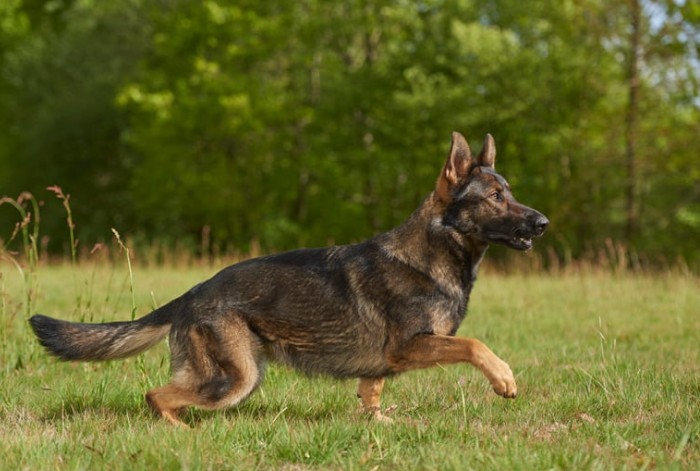
Bold. Driven. Overwhelmed.
Adolescence amplifies instinct.
Your German Shepherd’s guardian heritage collides with adolescent neurobiology, producing a confusing mix of courage and caution, insight and insecurity.
Fear meets drive.
During this critical phase, the SEEKING and FEAR systems fire simultaneously. Big emotions, big reactions, little control. The same dog who lunges at shadows may boldly survey territory minutes later.
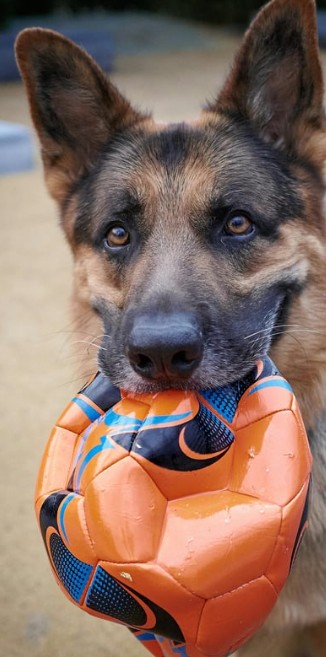
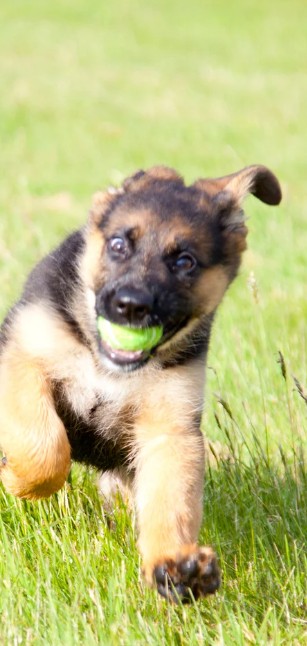
Leadership becomes anchoring.
When their world feels unpredictable, they scan yours for stability. Your calm becomes their compass, your consistency their regulation. They don’t need confrontation—they need direction.
Handler Influence: How Your Energy Shapes Their Experience
Perhaps no factor influences your adolescent German Shepherd’s development more profoundly than your own emotional state and leadership approach. German Shepherds are masters at reading human energy, mirroring the emotional states of their handlers with remarkable precision. When you’re anxious, hurried, or uncertain, your Shepherd doesn’t just notice—they internalize and amplify those emotions.
Research on relational regulation and attachment theory reveals that dogs can “outsource” their vigilance and emotional regulation to trusted humans. When your leadership is calm, consistent, and clearly defined, your Shepherd can relax their environmental monitoring, trusting that you’re managing security effectively. However, when your energy communicates stress, insecurity, or urgency, your Shepherd interprets this as confirmation that the environment is indeed threatening, escalating their own arousal and reactivity.
Consider a common scenario: you’re walking your adolescent Shepherd when you notice an approaching dog. You immediately tense, shorten the leash, and begin scanning for escape routes. Your breathing becomes shallow and rapid. You might grip the leash more tightly or begin speaking to your Shepherd in a higher-pitched, anxious tone. Before the other dog has done anything at all, you’ve communicated to your Shepherd that this situation is dangerous. Their reactive response isn’t about the other dog—it’s about your energy telling them something is wrong.
This is where NeuroBond leadership becomes transformative. By projecting confidence, consistency, and emotional neutrality, you provide the secure attachment base your Shepherd needs to navigate challenging situations without becoming overwhelmed. Your calm energy becomes their emotional anchor, allowing them to observe and process stimuli without immediately defaulting to defensive reactions.
The Cost of Punishment-Based Training
During adolescence, when your Shepherd’s fear sensitivity is heightened and their ability to regulate emotions is compromised, punishment-based training approaches can be particularly damaging. Corrections, leash yanks, verbal reprimands, or physical corrections during reactive episodes don’t teach your dog what to do instead. They simply add another layer of stress to an already overwhelmed nervous system.
When you correct your Shepherd for reacting to a stimulus, they often associate the correction not with their behavior but with the stimulus itself. You intended to communicate “don’t bark at strangers.” What they learned was “strangers are even more threatening than I thought—not only are they scary, but they also cause my trusted human to become aggressive toward me.” This compounds fear and increases future reactivity rather than reducing it.
Command-heavy training approaches that demand compliance without building understanding create additional stress. Your adolescent Shepherd, struggling to manage powerful internal drives and fears, is further burdened by the need to constantly monitor and respond to human demands. This approach increases the fear-drive conflict rather than resolving it.
🐺 German Shepherd Adolescence: Navigating The Storm 🌪️
Understanding the 6 Critical Phases of Drive, Fear, and Transformation
Phase 1: The Confidence Crash
6-12 Months: When Everything Becomes Scary
🧠 What’s Happening in the Brain
Your Shepherd’s brain enters the first major fear period. Surges in stress hormones like cortisol create hypersensitivity to novel stimuli. The prefrontal cortex gap means emotional drives operate without adequate brakes, leading to seemingly random fearful reactions to previously neutral triggers.
⚠️ What You’ll Notice
• Increased barking at unfamiliar people or sounds
• Hesitation in new environments they once explored confidently
• Decreased responsiveness to previously mastered commands
• Testing boundaries and showing increased independence
• Emergence of resource guarding behaviors
✅ Your Training Focus
Reduce environmental demands temporarily. Practice calm observation from distance rather than forced interaction. Implement predictable daily routines. Focus on building trust through NeuroBond leadership—your calm energy becomes their emotional anchor during this vulnerable window.
Phase 2: The Drive Surge
12-18 Months: Peak Intensity & Maximum Volatility
🧠 The Biological Storm
Testosterone and dopamine peak, amplifying the SEEKING system to maximum intensity. Your Shepherd’s working drives (guarding, tracking, protection) activate fully. Simultaneously, fear sensitivity remains heightened. This creates the drive-fear collision—two powerful systems competing without adequate regulatory control.
⚠️ Expect Maximum Chaos
• Intense leash reactivity toward dogs and perceived threats
• Strong territorial behaviors and boundary guarding
• Heightened prey drive and chase behaviors
• Moments of exceptional focus followed by complete chaos
• Frustration-based reactivity when drives can’t be satisfied
✅ Channel Drive Into Purpose
Implement scent work and tracking to engage the SEEKING system calmly. Assign mini-jobs during walks. Teach boundary awareness so your Shepherd knows where their responsibility begins and ends. The Invisible Leash reminds us: awareness, not tension, guides the path.
🚫 Critical Warning
Avoid dog parks during this phase. The overstimulation can encode fear memories that resist modification. One overwhelming experience can create lasting reactivity patterns. Punishment-based corrections during reactive episodes compound fear rather than reducing it.
Phase 3: The Guardian Who Isn’t Ready
Role Confusion: Responsibility Without Maturity
🧠 The Identity Crisis
Your Shepherd’s guardian identity emerges before emotional maturity can support it. Genetic programming says “protect and manage boundaries,” but their brain lacks the regulatory framework to do this appropriately. This creates internal conflict and anxiety as they attempt to fulfill a role they’re not equipped to handle.
⚠️ Self-Appointed Security Manager
• Spontaneous reactivity toward perceived threats
• Barking at strangers and territorial displays
• Resource guarding extending to spaces and people
• Hypervigilance that prevents relaxation
• Taking charge when they sense leadership is unclear
✅ Provide Clear Leadership Structure
Define exactly where your Shepherd’s job begins and ends. Teach them to alert you, then defer to your assessment. Create safe spaces where environmental management is your responsibility, not theirs. Consistent, calm leadership allows them to “outsource” vigilance to you.
Phase 4: When The World Becomes Too Much
Secondary Fear Periods & Environmental Overwhelm
🧠 Hypersensitive Scanning
The adolescent brain becomes hypervigilant, encoding potential threats into long-term memory. Modern environments overwhelm your Shepherd’s surveillance systems. High arousal impairs working memory and reduces capacity for self-regulation. When over-aroused, cognitive resources are consumed by environmental monitoring.
⚠️ Overload Warning Signs
• Staring or freezing with intense focus
• Frantic scanning—head constantly moving
• Displacement sniffing as stress coping
• Whale eye (whites of eyes visible)
• Inability to respond to previously mastered cues
• Appearing “wired” despite substantial exercise
✅ Manage Arousal & Create Recovery
Recognize overload signals early and create distance. Implement decompression protocols after every stimulating experience. Your Shepherd needs 16-18 hours of sleep daily during adolescence. Calm exposure from distance builds confidence without creating overwhelm.
Phase 5: The Integration Begins
18-24 Months: Finding Balance & Stability
🧠 Neural Integration
The prefrontal cortex develops more robust connections to emotional centers. Impulse control improves as regulatory pathways mature. Drive and fear begin finding balance rather than constantly competing. Your Shepherd develops emerging discernment in threat assessment rather than blanket reactivity.
⚠️ Positive Changes Emerging
• Improved ability to recover from arousal
• More consistent responsiveness to trained cues
• Increased handler focus and deference to leadership
• Longer attention span for complex tasks
• Reduction in frequency and intensity of reactive episodes
• Emerging emotional maturity supporting guardian instincts
✅ Gradually Increase Complexity
Begin introducing more challenging environments as capacity increases. Gradually increase responsibility in controlled contexts. Continue reinforcing calm choices and emotional regulation. Remember: setbacks still occur during hormonal fluctuations, but recovery happens faster.
Phase 6: The Regression Phenomenon
Why Progress Isn’t Linear
🧠 Normal Neurodevelopment
Regression represents temporary disruption during neurological reorganization, not training failure. Hormonal fluctuations, developmental spurts, fear period recurrence, and environmental stressors all trigger temporary backward steps. Previously consolidated learning becomes temporarily less accessible during brain rewiring.
⚠️ What Regression Looks Like
• Behaviors you thought were resolved suddenly returning
• Increased reactivity during hormonal cycles
• Temporary loss of previously mastered skills
• Two steps forward, one step back patterns
• Plateau periods with no visible progress
✅ Respond With Understanding
Reduce demands temporarily and increase support. Return to easier versions of exercises where success is achievable. Avoid punishment or frustration. Trust that learned behaviors resurface as developmental disruption resolves. Compare progress over months, not days.
📊 Understanding Individual Variations
♂️ Male German Shepherds
Enter adolescence 6-8 months, mature by 2.5-3 years. Show more intense territorial behaviors, stronger same-sex reactivity, higher arousal levels, and greater frustration-based responses. Need highly consistent leadership.
♀️ Female German Shepherds
Enter adolescence 5-6 months, mature by 2-2.5 years. Show more selective social bonding, heightened environmental scanning, pronounced fear periods, and sophisticated resource guarding around favored people. Earlier emotional maturity.
🌱 Early Adolescence (6-12M)
Fear dominates. Confidence crashes, heightened sensitivity to novel stimuli, decreased command responsiveness. Primary focus: building security through predictable routines and calm exposure from distance.
⚡ Middle Adolescence (12-18M)
Drive peaks. Maximum volatility, intense reactivity, strongest territorial behaviors. Primary focus: channeling drive into purposeful work and managing sensory overload.
🔬 Early Spay/Neuter
Before 12 months may extend growth periods and delay behavioral maturity. Doesn’t eliminate breed-typical reactivity or drive-based behaviors. Training remains essential regardless of reproductive status.
⏰ Later Spay/Neuter
After 12-18 months allows complete physical maturation. Supports typical behavioral development and preserves organizing effects of sex hormones on brain development. Consult your veterinarian for individual timing.
⚡ Quick Reference: Adolescent Survival Guidelines
Sleep Formula: 16-18 hours daily including naps
Training Duration: Short sessions (5-10 min) multiple times daily
Decompression Rule: 15-30 minutes of calm activity after every stimulating experience
Distance Threshold: Far enough that your dog notices but remains calm
Progress Measurement: Compare behavior over 3-month periods, not weekly
Red Flag Response: Escalating reactivity despite management = professional help needed
🧡 The Zoeta Dogsoul Approach to Adolescence
German Shepherd adolescence isn’t something to survive—it’s a critical window to shape the adult your dog will become. Through NeuroBond leadership, you become the calm center around which your Shepherd’s emotional storm can organize into purposeful awareness. The Invisible Leash teaches us that true control comes not from physical restraint, but from emotional connection and mutual trust. As moments of Soul Recall reveal how memory and emotion intertwine, we understand that every calm response, every patient interaction, every structured activity encodes neural pathways that support lifelong stability.
Your adolescent Shepherd isn’t broken. They’re navigating the most profound transformation of their life—from protected juvenile to capable adult guardian. With your understanding, patience, and strategic guidance, the collision of drive and fear transforms into balanced capability. That’s the essence of Zoeta Dogsoul: where neuroscience meets soul in creating dogs who are both emotionally stable and deeply connected to their humans.
© Zoeta Dogsoul – Where neuroscience meets soul in dog training
Training Through The Storm: Practical Strategies For Adolescent German Shepherds
Successfully navigating German Shepherd adolescence requires training strategies that channel drive without triggering fear, build confidence without creating overwhelm, and establish clear role expectations without demanding premature emotional maturity. Let’s explore specific approaches that transform adolescent instability into purposeful development.
Channeling Drive: Give Purpose To Power
Your Shepherd’s powerful drives don’t need to be suppressed—they need direction. Activities that engage natural instincts in controlled, low-stress ways provide the drive satisfaction your adolescent Shepherd craves while building emotional regulation:
Tracking and Scent Work: This utilizes your Shepherd’s SEEKING system in focused, methodical ways. Scent work is inherently calming because it requires concentrated attention, naturally lowering arousal levels while providing drive satisfaction. Even simple scent games in your backyard or home can transform restless energy into focused purpose.
Pattern Walking and Structured Walks: Rather than allowing chaotic, reactive walks where your Shepherd makes all the decisions, implement structured walking patterns. This might include heel work interspersed with release periods, designated sniffing zones, or walking specific patterns. This predictability helps your Shepherd understand their role during walks rather than feeling responsible for managing every environmental variable.
Mini-Jobs and Purposeful Tasks: Give your Shepherd small, achievable responsibilities during daily routines. This might include carrying a specific item during walks, waiting at doorway boundaries before entering, or holding a position while you complete a task. These mini-jobs fulfill their need for purpose and teach them that responsibility comes with clear parameters, not constant vigilance.
Boundary Awareness Training: Teach your Shepherd where their “job” begins and ends. This might involve place training, where they learn that when on their designated bed or mat, environmental management is your responsibility, not theirs. It could include teaching them to observe stimuli calmly rather than feeling compelled to react. This training communicates that awareness doesn’t always require action.
Moments of Soul Recall reveal how memory and emotion intertwine in behavior. When you consistently pair drive satisfaction with calm, purposeful activity, you’re encoding emotional memories that shape how your Shepherd experiences their instincts. Drive becomes associated with focused work rather than reactive chaos, creating neural pathways that support stable adult behavior.
Reducing Fear-Driven Reactivity: Building Confidence Gradually
Simultaneously, you need strategies that address fear sensitivity without reinforcing avoidance or creating learned helplessness:
Graded Confidence-Building: This involves exposing your Shepherd to potentially challenging stimuli at intensity levels where they can remain calm and successful. You’re not avoiding all challenges—you’re ensuring challenges match your dog’s current capacity. This requires careful observation of stress signals and the willingness to increase distance or reduce intensity before your Shepherd becomes overwhelmed.
For example, rather than walking through crowded areas where your Shepherd will certainly react, practice observing similar environments from a distance that allows calm observation. Gradually decrease distance over weeks or months as your dog’s capacity increases. Success is measured by your Shepherd’s ability to notice stimuli without feeling compelled to react defensively.
Calm Exposure Without Pressure: Present new experiences in neutral, non-threatening ways that allow your Shepherd to observe and process without pressure to interact or perform. This might mean sitting at a distance from a park and simply watching activity, rewarding calm observation rather than demanding specific behaviors.
Your role is to be the buffer between your Shepherd and environmental stimuli, managing intensity levels and communicating through your calm energy that observation doesn’t require immediate action. You’re teaching your dog that noticing something doesn’t automatically mean they must respond to it.
Controlled Responsibility: Assign protective or working tasks that match your Shepherd’s current emotional capacity. For a young adolescent, this might be as simple as alerting you to someone at the door, then immediately being directed to their place. You acknowledge their vigilance, then communicate that you’re handling the situation. This teaches them that awareness and reaction are separate, that their job is to notice and inform, not to independently manage threats.
As maturity develops, you can gradually increase complexity and responsibility. The key is ensuring each level of responsibility includes clear parameters and human oversight, preventing your Shepherd from feeling abandoned to self-manage situations beyond their capability.
Emotional Neutrality From Handler: Perhaps the most powerful intervention is your own emotional regulation. When encountering challenging situations, your calm, neutral energy prevents your Shepherd from mirroring anxiety or urgency. This doesn’t mean being emotionless or disconnected. It means projecting capable confidence that communicates environmental stability.
Practice maintaining slow, deep breathing during walks. Keep your body language relaxed rather than tense. Avoid sudden movements or verbal escalation when your Shepherd shows early stress signals. Your consistent calmness becomes the foundation from which your Shepherd can build their own emotional regulation. 🧡

The Power of Predictable Structure
Adolescent German Shepherds thrive when their world is predictable. While novelty is important for development, the foundation should be consistency and routine. This includes:
- Regular feeding times and locations
- Consistent daily exercise schedules
- Predictable walking routes with gradual introduction of variations
- Established rest periods and calm-down protocols
- Clear household rules that don’t change based on human moods or convenience
This predictability doesn’t create rigidity—it creates security. When your Shepherd knows what to expect, they can allocate cognitive resources to learning and emotional regulation rather than constant environmental assessment. The structure becomes a framework within which they can safely explore and develop.
The Socialization Paradox: Why Forced Interaction Backfires
Many owners, noticing their adolescent Shepherd becoming more reactive or fearful, instinctively increase socialization efforts. The logic seems sound: if my dog is becoming afraid of other dogs or people, they must need more exposure. However, this well-intentioned approach often backfires spectacularly during adolescence, potentially creating the exact problems you’re trying to prevent.
Understanding Fear Periods and Sensitive Windows
Adolescence includes secondary fear periods—developmental windows when your Shepherd’s brain is hypersensitive to negative experiences and less capable of processing novel stimuli calmly. During these periods, which can last days to weeks and may recur multiple times throughout adolescence, your dog’s threat detection systems are operating with heightened sensitivity.
Forcing interaction during fear periods can create lasting negative associations that are remarkably resistant to modification. A single overwhelming experience at a dog park, an aggressive approach from an unfriendly dog, or a frightening encounter with a stranger can encode fear memories that influence your Shepherd’s responses for months or years afterward. The adolescent brain’s reduced efficiency in extinguishing fear behaviors means these learned responses persist more stubbornly than experiences earlier in development.
Exposure vs. Flooding: Critical Differences
Proper Exposure involves:
- Presenting your Shepherd with stimuli at an intensity level where they can remain calm and observant
- Allowing your dog to set the pace of interaction
- Providing choice and the ability to create distance
- Pairing the experience with positive associations
- Respecting communication signals indicating discomfort
- Keeping sessions short and ending on a positive note
Flooding (what to avoid):
- Overwhelming your dog with stimuli at an intensity they cannot process calmly
- Forcing interaction without escape options
- Ignoring stress signals and pushing through discomfort
- Continuing until the dog stops reacting (learned helplessness, not confidence)
- Potentially creating sensitization rather than habituation
- Eliminating healthy warning signals
The difference might seem subtle, but the outcomes are dramatically different. Proper exposure builds genuine confidence through successful experiences. Flooding creates a dog who has learned that their communication is ineffective and that they have no control over overwhelming situations. This doesn’t reduce fear—it drives it deeper while eliminating healthy warning signals.
Maintaining Social Skills Without Overwhelm
Your adolescent Shepherd still needs positive social experiences to maintain social skills and prevent isolation. The approach, however, must be carefully calibrated to their current capacity.
Strategic Social Opportunities include:
- Parallel walking at distance with known, calm dogs
- Supervised play with carefully selected, socially skilled dogs
- Brief, positive interactions with familiar people in controlled settings
- Observation of social activity from a safe distance
- Structured group training classes with appropriate spacing
- Regular calm exposure to routine environments that support neutral associations
The key is ensuring each experience leaves your Shepherd feeling capable rather than overwhelmed. One positive interaction where your dog remained calm and engaged is worth more than ten overwhelming experiences where they were forced to tolerate situations beyond their capacity.
The Dog Park Question
Dog parks represent one of the most challenging decisions for adolescent German Shepherd owners. These environments offer benefits—off-leash exercise, social interaction, and environmental enrichment. However, they also present significant risks during this vulnerable developmental period.
Dog Park Risks During Adolescence:
- Unpredictable dog behavior with minimal human supervision
- Overstimulating environments that impair your Shepherd’s decision-making
- Potential for negative interactions that create lasting fear associations
- Reinforcement of reactive or defensive behaviors
- Difficulty extracting your dog if situations escalate
- Exposure to dogs with poor social skills or aggressive tendencies
- High arousal that impairs learning and emotional regulation
When Dog Parks Might Be Appropriate:
- Your Shepherd has demonstrated consistent, appropriate social skills with multiple dogs
- You can accurately read canine communication and intervene before problems develop
- The park has separate areas for controlled environments
- You can visit during off-peak hours with fewer, known dogs
- You have a reliable recall and can remove your dog immediately if needed
- Your Shepherd shows genuine enjoyment rather than stress or overstimulation
For most adolescent German Shepherds, structured play dates with known, socially appropriate dogs in controlled environments provide superior socialization opportunities with significantly less risk. The goal isn’t maximum social exposure—it’s quality social experiences that build confidence without creating fear or defensive habits. 🧡
The Role of Play: Channel or Chaos?
Play serves critical developmental functions, but not all play is created equal. During adolescence, when arousal regulation is already challenged, play can either support emotional development or contribute to behavioral instability. Understanding how to use play effectively transforms it from potential liability to powerful training tool.
Appropriate Play Types During Adolescence
Structured Play with Rules includes:
- Tug games with clear start and stop cues
- Fetch with impulse control requirements (sit/wait before release)
- Hide-and-seek that engages scent and seeking drives
- Puzzle toys that provide mental stimulation with physical calm
- “Find it” games that combine obedience with play These play types satisfy your Shepherd’s need for engagement while building impulse control and handler focus.
Calm Social Play with carefully selected play partners involves:
- Brief play sessions with clear breaks
- Play between dogs who match each other’s energy and size appropriately
- Environments with space to disengage if needed
- Human supervision ready to interrupt before overstimulation
- Emphasis on appropriate social signals and self-regulation
- Allowing dogs to initiate and decline interaction freely
Solo Play and Decompression through:
- Long-lasting chews that promote calm gnawing
- Sniff games that lower arousal naturally
- Food puzzles that engage problem-solving drives
- Independent toy exploration without constant human interaction
- Frozen stuffed toys for extended engagement
- Digging boxes or snuffle mats for natural behaviors
How Rough Play Escalates Arousal
While some rough play is normal and healthy, adolescent German Shepherds can easily become overstimulated, leading to arousal levels that impair judgment and increase reactivity. Rough play with intense chasing, wrestling, or mouthing floods your Shepherd’s system with excitement that their developing regulatory mechanisms struggle to modulate.
Signs Play Is Too Intense:
- Inability to respond to pause cues
- Vocalizations increasing in volume or frequency
- Play biting becoming harder or more frantic
- Play moving beyond the play area into the rest of the environment
- One dog consistently trying to disengage while the other continues
- Body language shifting from loose and bouncy to stiff or tense
- Requiring significant time (10+ minutes) to settle after play ends
- Whale eye or stress signals appearing during play
When you notice these signs, interrupt play calmly and implement a decompression period. This might involve leashing both dogs and taking a calm walk, separating dogs with a chew or puzzle toy, or practicing simple obedience behaviors to shift mental engagement. The goal is teaching your Shepherd that arousal can be modulated and that play includes natural breaks.
Using Play as a Training Tool
When implemented strategically, play becomes a powerful reward and teaching mechanism during adolescence.
Drive Satisfaction Through Play allows you to reward calm behavior with brief, controlled play sessions, use toy access as motivation for impulse control exercises, pair challenging experiences with play rewards afterward, and build handler focus by controlling access to favorite play activities.
Play as Confidence Builder involves creating success in low-stakes play scenarios, using play to reward brave behavior around novel stimuli, building positive associations with potentially challenging environments, and teaching your Shepherd that good things happen when they look to you for guidance.
When to Stop Play Sessions
Knowing when to end play is as important as knowing when to initiate it. Play sessions should end while your Shepherd is still engaged and successful, not when they’re exhausted or overstimulated.
End Play When:
- Your dog is still responsive to cues but showing early signs of fatigue
- Arousal is elevated but still controllable
- Your dog has had several successful interactions or accomplishments
- Before any signs of stress, frustration, or overexcitement appear
- While your dog still wants more (ending on a high note)
- When you notice the first subtle signs of overstimulation
Ending on a high note teaches your Shepherd that play is predictable and controllable, that good things don’t always escalate until they become overwhelming, and that you make wise decisions about their wellbeing. This builds trust and supports emotional regulation far more effectively than playing until exhaustion or overstimulation forces cessation.
Multi-Dog Household Dynamics: Navigating Relationships During Adolescence
If you have multiple dogs, your adolescent German Shepherd’s development occurs within a complex social system that significantly influences their behavioral trajectory. Understanding pack dynamics during this vulnerable period helps you support appropriate social development while preventing problems.
How Adolescent GSDs Interact with Other Household Dogs
Your adolescent Shepherd’s relationships with other household dogs often shift dramatically during this period. Previously playful dynamics may become more competitive or distant. Dogs who coexisted peacefully might suddenly have conflicts over resources, space, or attention.
This isn’t necessarily concerning—it’s normal social maturation. Your Shepherd is developing their adult social preferences and establishing their place within the household hierarchy. However, this process requires careful management to prevent escalation and ensure all dogs feel secure.
Common Dynamic Shifts you might notice:
- Increased assertion of boundaries by the adolescent
- Reduced tolerance for close proximity, particularly during rest
- Competition for handler attention or favored resources
- Testing of the established household structure
- Same-sex tension, particularly between intact adolescents and same-sex adults
- Changes in play styles or willingness to engage
Your Role as Household Manager involves:
- Preventing resource competition through management strategies
- Supervising interactions until you’re confident all dogs feel safe
- Recognizing when dogs need space from each other
- Supporting the existing household structure rather than trying to create artificial equality
- Intervening calmly when tensions escalate before physical conflict occurs
- Ensuring each dog has individual time and attention
Resource Management Strategies
Resource competition represents one of the most common triggers for conflict in multi-dog households with adolescent German Shepherds. Your Shepherd’s guardian instincts extend to valuable resources, and their developing sense of possession can create tension.
Effective Resource Management includes:
- Feeding dogs in separate spaces to eliminate food competition
- Providing multiple water sources throughout the home
- Offering high-value chews in separate areas or crated spaces
- Ensuring each dog has their own safe space that others respect
- Removing toys between play sessions rather than leaving them available for guarding
- Giving attention individually rather than forcing dogs to share handler focus
- Practicing “take turns” protocols where dogs learn they’ll each get opportunities
The goal isn’t preventing your Shepherd from valuing resources—that’s normal and healthy. Rather, you’re structuring the environment so resource possession doesn’t require defensive behavior. When your Shepherd trusts that resources are abundant and access is fairly managed, defensive guarding becomes unnecessary.
Using Stable Adult Dogs as Models
If you have a socially skilled, emotionally stable adult dog in your household, they can provide invaluable support for your adolescent Shepherd’s development. Adult dogs often communicate boundaries more effectively than humans and can teach social skills that support appropriate behavior.
Benefits of Adult Dog Mentors include:
- Modeling calm responses to triggering stimuli
- Teaching appropriate social communication and conflict resolution
- Providing feedback about appropriate play intensity and social boundaries
- Demonstrating deference to human leadership
- Offering companionship that reduces isolation anxiety
- Showing your adolescent how to navigate household routines calmly
However, this only works when the adult dog has the temperament and social skills to serve this role effectively. A reactive, anxious, or socially inappropriate adult dog will model problematic behaviors rather than supporting healthy development.
When Separation Becomes Necessary
Sometimes, despite your best efforts, the dynamics between your adolescent Shepherd and other household dogs become unsafe or severely stressful for one or more dogs. Recognizing when separation is necessary protects all dogs involved.
Indicators That Separation May Be Needed:
- Escalating conflicts despite consistent management
- Injuries occurring during interactions
- One or more dogs showing chronic stress signals (reduced appetite, excessive vigilance, inability to settle)
- Fights becoming more frequent or intense
- Resource guarding extending to aggressive protection of handler or spaces
- Your ability to supervise adequately being consistently exceeded
- Quality of life for any household member (canine or human) significantly compromised
Separation doesn’t necessarily mean permanent rehoming. Sometimes temporary management while continuing behavior modification allows adolescent challenges to resolve as your Shepherd matures. Work with a qualified professional to assess whether the household dynamics can improve with management and training, or whether permanent separation serves everyone’s wellbeing better.
Remember that supporting your adolescent Shepherd’s development sometimes means making difficult decisions that prioritize safety and emotional health for all household members, both canine and human. 😊
Sleep, Rest, and Recovery: The Foundation of Emotional Stability
In the focus on training and behavior modification, one of the most critical factors often gets overlooked: sleep. Your adolescent German Shepherd’s developing brain requires substantial rest to consolidate learning, regulate emotions, and support neurological maturation. Inadequate sleep or poor recovery significantly exacerbates every adolescent challenge you’re facing.
The Neuroscience of Sleep and Development
During sleep, your Shepherd’s brain processes experiences from the day, consolidating memories and emotional associations. This includes both positive learning and fear memories. Sleep allows the brain to organize information, strengthen neural pathways for trained behaviors, regulate emotional responses, and literally grow new neural connections that support maturity.
Adolescent dogs require more sleep than adults because their brains are working overtime to develop new capabilities while simultaneously managing powerful emotional systems. When sleep is insufficient or disrupted, emotional regulation suffers dramatically, arousal thresholds lower, reactivity increases, learning capacity decreases, and stress resilience diminishes.
Research indicates that even moderate sleep restriction during development can have lasting effects on emotional regulation and stress responses. Your Shepherd isn’t just tired—they’re operating with compromised neurological resources that make everything harder.
Recognizing Under-Recovery and Overtiredness
Many behavioral problems attributed to insufficient exercise actually stem from inadequate rest. An overtired German Shepherd often appears hyperactive, not lethargic, creating a counterintuitive presentation that leads owners to increase activity rather than providing the rest their dog desperately needs.
Signs Your Shepherd Is Under-Recovered:
- Increased reactivity to previously manageable triggers
- Inability to settle even in calm environments
- Heightened mouthing, jumping, or frantic behavior
- Reduced responsiveness to trained cues
- Shortened attention span
- Increased vocalization, whining, or demand barking
- Appearing “wired” despite substantial exercise
- Difficulty with impulse control, even in familiar contexts
- Physical signs like excessive panting, red eyes, or digestive upset
If you notice these signs, your Shepherd likely needs more rest, not more stimulation. This can feel counterintuitive, but your dog’s developing brain requires downtime to process experiences and regulate emotions effectively.
Recommended Sleep Amounts for Adolescent GSDs
Adolescent German Shepherds typically need 16-18 hours of sleep within a 24-hour period. This doesn’t mean 16 hours of continuous sleep—rather, it includes nighttime sleep plus multiple naps throughout the day. Some high-energy lines or individuals may function on slightly less, while sensitive or reactive Shepherds may require even more.
Daily Sleep Structure Might Include:
- Overnight sleep of 8-10 hours
- Morning rest period of 1-2 hours after morning activity
- Midday nap of 2-3 hours
- Afternoon rest period of 1-2 hours
- Evening quiet time of 1-2 hours before bed
- Additional short rest periods between activities
This seems like a lot, and it is. But remember that your Shepherd’s brain is doing extraordinary developmental work. Rest isn’t laziness—it’s essential neurobiology.
Creating Effective Decompression Protocols
After stimulating experiences—walks in busy environments, training sessions, social interactions, vet visits, or any arousing activity—your Shepherd needs structured decompression time to return to baseline arousal levels before attempting rest.
Effective Decompression Activities:
- Calm leash walking in familiar, quiet environments
- Long-lasting chews that promote sustained, rhythmic gnawing
- Food puzzles that engage problem-solving without high arousal
- Gentle massage or cooperative care activities
- Sniff games in the yard or home
- Simply sitting quietly with your dog in a calm space
- Calm stretching or slow movement exercises
The goal is transitioning from high arousal to calm alertness, then to true rest. Expecting your Shepherd to go directly from an exciting experience to sleep often results in restless, low-quality sleep that doesn’t provide adequate recovery.
Implementing decompression protocols after every stimulating experience helps your Shepherd develop the self-regulation skills necessary for emotional stability. Over time, their nervous system learns that arousal is temporary and that calm always follows excitement. This pattern becomes encoded in their behavioral repertoire, supporting adult emotional regulation. 🧠
Red Flags vs. Normal Adolescence: When to Worry
Throughout this guide, we’ve emphasized that adolescent challenges are normal and expected. However, it’s crucial to distinguish between typical adolescent behavior and concerning signs that require immediate professional intervention. Some behavioral patterns indicate your Shepherd needs more support than standard training and management can provide.
Expected Adolescent Behavior
Normal Adolescent Challenges that don’t require crisis intervention:
- Increased reactivity to novel stimuli with clear triggers
- Fearful responses that improve with distance or removal of the trigger
- Resource guarding that responds to management strategies
- Leash reactivity that doesn’t include hard biting or sustained aggression
- Testing boundaries and selective listening that improves with consistent training
- Increased independence and reduced handler focus during certain developmental windows
- Vocal defensiveness that serves communication rather than offensive purposes
- Behavioral inconsistency with good days and challenging days intermixed
These behaviors, while difficult, represent normal adolescent development in a breed with strong protective and working drives. They require patience, appropriate management, and strategic training but don’t indicate fundamental behavioral pathology.
Red Flags Requiring Immediate Professional Support
Certain behavioral patterns exceed normal adolescent challenges and indicate your Shepherd needs specialized behavioral intervention from a qualified professional.
Seek Immediate Professional Help If:
- Your Shepherd has displayed hard bites that cause injury, even during play or apparent warning displays
- Shows predatory aggression toward smaller animals or children with stalking, intense focus, and committed attack behaviors
- Demonstrates aggression that appears to come “out of nowhere” without warning signals or clear triggers
- Exhibits panic responses so extreme they risk self-injury or cannot be interrupted
- Displays compulsive behaviors that interfere with normal functioning
- Shows generalized fearfulness that prevents normal daily activities like walking, eating, or eliminating
- Becomes aggressive toward familiar family members without clear resource triggers
- Demonstrates multiple warning signals moving rapidly toward severe aggression with minimal provocation
These patterns suggest neurological, medical, or severe behavioral issues that exceed typical adolescent challenges. They require assessment from veterinary behaviorists or certified behavior consultants who can rule out medical contributors and design comprehensive behavior modification protocols.
Differentiating Fear-Based from Predatory Aggression
This distinction is critical because these behavior patterns have different underlying motivations, risk profiles, and management requirements.
Fear-Based Defensive Aggression typically shows:
- Obvious stress signals before, during, and after aggressive displays
- Clear triggers related to approach, restraint, or perception of threat
- Body language communicating conflict, with weight shifted back and escape-oriented behavior
- Aggressive displays that cease when the trigger is removed or distance increases
- Vocalizations that are high-pitched, frantic, or intermittent
- Willingness to avoid confrontation when given the opportunity
- Retreating or creating distance while displaying defensive behaviors
Predatory Aggression displays:
- Minimal warning signals or arousal before attack
- Silent stalking with focused attention on target
- Intense focus with forward-oriented body posture
- Committed chase and bite behaviors that don’t cease with victim submission
- Inhibited vocalizations or complete silence during approach
- Behavior directed at moving targets, particularly small animals or children
- Lack of typical conflict signals like growling or raised hackles
Most adolescent German Shepherd reactivity is fear-based defensive behavior, not predatory aggression. However, some lines have strong prey drives that can be directed inappropriately, particularly toward small running creatures. Understanding this distinction helps you assess risk accurately and implement appropriate management.
When Reactivity Crosses Into Dangerous Territory
Reactivity exists on a spectrum from mild concern to severe danger. Most adolescent German Shepherd reactivity remains in the manageable range, but certain escalations indicate immediate need for professional behavioral intervention.
Warning Signs of Dangerous Escalation:
- Reactive incidents increasing in frequency despite consistent management
- Intensity of reactions escalating even when triggers remain constant
- Your Shepherd showing reduced responsiveness to you during reactive episodes
- Recovery time after reactive incidents lengthening rather than shortening
- Generalization to increasing numbers of triggers or contexts
- Your own fear or inability to safely manage your dog in public
- Any incidents involving contact biting, even during leash reactivity
- Proactive scanning for triggers rather than simply responding to them
These patterns suggest your Shepherd’s reactivity is worsening rather than improving with maturity, indicating the need for specialized intervention. Don’t wait until someone is injured to seek help. Early intervention prevents entrenchment of dangerous patterns and improves long-term outcomes dramatically.
The Regression Phenomenon: Why Progress Isn’t Linear
Perhaps nothing frustrates adolescent German Shepherd owners more than regression—those moments when your dog, who was making excellent progress, suddenly seems to have forgotten everything they’d learned. You thought you’d turned a corner, and suddenly you’re back to square one. Understanding why regression happens and how to respond appropriately prevents despair and helps you maintain the long-term perspective necessary for successful adolescent navigation.
Why Dogs Who Were “Doing Well” Suddenly Regress
Regression during adolescence isn’t failure—it’s neurobiology. Several factors contribute to these frustrating backward steps.
Hormonal Fluctuations create temporary behavioral disruptions. Intact female German Shepherds experience behavioral changes around heat cycles, with increased reactivity, reduced handler focus, or heightened vigilance appearing 2-4 weeks before physical signs of heat. Males experience testosterone surges that can increase territorial behaviors, same-sex dog reactivity, and frustration-based responses. Even after spaying or neutering, residual hormonal effects can create temporary behavioral fluctuations during adolescence.
Neurological Developmental Spurts involve the brain undergoing intensive reorganization, with new neural pathways being constructed while others are pruned away. During these periods, previously consolidated learning can become temporarily less accessible. Your Shepherd didn’t forget their training—the neural architecture supporting that training is temporarily disrupted by developmental rewiring. This usually resolves within days to weeks as new connections solidify.
Environmental Stressors such as household changes, schedule disruptions, illnesses, or unusual events can trigger temporary regression. Your Shepherd’s stress tolerance during adolescence is limited, and even minor disruptions can exceed their capacity, leading to behaviors you thought had been resolved. Fear Period Recurrence brings secondary fear periods that can recur multiple times throughout adolescence. Your Shepherd might have successfully worked through one fear period, only to enter another weeks or months later, creating the appearance of regression when it’s actually a new developmental challenge.
How to Respond to Setbacks Without Panicking
Your response to regression significantly influences whether it represents a temporary setback or becomes a more entrenched pattern.
Effective Regression Response includes:
- Recognizing regression as temporary neurodevelopmental phenomenon, not training failure
- Reducing environmental demands and increasing support temporarily
- Returning to easier versions of exercises where your Shepherd can succeed
- Avoiding punishment or frustration, which compounds stress
- Maintaining consistent daily routines and structure
- Continuing to build on skills where your dog remains capable
- Trusting that setbacks are part of normal development, not permanent backsliding
- Increasing rest and recovery time during regression periods
The adolescent brain is plastic and changing. What appears lost is often simply temporarily inaccessible. With patient support, learned behaviors resurface as developmental disruption resolves.
The Non-Linear Nature of Adolescent Development
Expecting linear progress during adolescence sets you up for disappointment. Normal development involves two steps forward, one step back, plateau periods where nothing seems to change, sudden breakthroughs after weeks of apparent stagnation, behavioral fluctuations that seem random but reflect underlying neurodevelopment, and gradual improvement measured over months, not days or weeks.
Tracking progress requires long-term perspective. Compare your Shepherd’s behavior today not to last week, but to three months ago. This longer view reveals the genuine progress occurring beneath the day-to-day fluctuations.
Celebrating Small Wins maintains your motivation and recognizes genuine progress even during challenging periods. Small wins might include:
- One calm greeting where previous greetings were reactive
- A moment of handler focus in a previously overwhelming environment
- Trying a novel behavior rather than defaulting to reactive response
- Shorter recovery time after a trigger, even if reaction still occurred
- Your own improved response to a challenging situation
- Any sign of increased confidence or reduced fear
- Successfully navigating a situation that would have been impossible weeks ago
These small victories accumulate over time, building the foundation for the stable adult behavior you’re working toward. 🧡
Day-to-Day Management: Practical Strategies for Daily Life
Training principles are essential, but translating them into daily life requires practical management strategies that support your adolescent Shepherd through routine situations. These day-to-day protocols reduce stress, build confidence, and prevent rehearsal of reactive behaviors.
Sample Daily Schedule for Adolescent GSDs
Structure provides security. While flexibility is important, maintaining consistent daily rhythms helps your Shepherd anticipate what’s coming and allocate their limited regulatory resources effectively.
Morning Routine (6:00-9:00 AM):
- Calm greeting without overstimulation
- Brief potty outing in yard or quiet area
- Morning meal in calm environment
- Short decompression period after eating (15-20 minutes)
- Structured morning walk or training session (15-30 minutes) focused on impulse control and calm behavior
Mid-Morning Rest (9:00 AM-12:00 PM):
- Enforced quiet time in crate, bed, or calm area
- Providing long-lasting chew or quiet activity
- Minimizing environmental stimulation
- Allowing at least 2-3 hours of undisturbed rest
Midday Activity (12:00-2:00 PM):
- Brief potty break
- Lunch meal if feeding multiple times daily
- Focused training session or drive-satisfaction activity (scent work, structured play, mini-jobs)
- Decompression period after activity before next rest
Afternoon Rest (2:00-5:00 PM) provides another substantial rest period with minimized stimulation.
Evening Routine (5:00-9:00 PM):
- Final structured walk or activity
- Dinner meal in calm setting
- Family time with appropriate interaction
- Calm household activities that don’t overstimulate
- Gradual wind-down toward bedtime
Nighttime Sleep (9:00 PM-6:00 AM) ensures 8-10 hours of overnight sleep in consistent, comfortable sleeping area.
This schedule provides the balance of structured activity and substantial rest that adolescent German Shepherds require. Adjust timing to your household needs, but maintain the ratio of activity to rest and the consistent daily rhythm.
Home Management: Creating Safe Spaces and Household Routines
Your home environment significantly influences your Shepherd’s stress levels and behavioral stability.
Designate a Safe Space where your Shepherd can retreat without being disturbed. This might be a crate, a specific room, or a bed in a quiet corner. Family members must respect that when your dog is in this space, they’re off-limits for interaction unless invited. This gives your Shepherd control over social interaction and provides essential downtime.
Manage Visitor Arrivals with protocols that prevent rehearsal of reactive doorbell behaviors. When visitors arrive, your Shepherd goes to their designated space with a high-value chew before the doorbell rings, the door is answered while your dog is settled and occupied, visitors are instructed to ignore your dog initially, and only after your Shepherd demonstrates calm behavior is brief, calm greeting allowed.
Establish Household Thresholds where your Shepherd learns impulse control:
- Pausing before moving through doorways
- Waiting for release before exiting the car
- Holding a sit before meals are placed
- Waiting at gates or boundaries before entering new spaces
- Generally learning that good things come from impulse control, not demand behaviors
These routines build the impulse control and handler focus that support emotional regulation while communicating clear expectations about household behavior.
Handling Specific Situations: Practical Protocols
Doorbell Reactivity: Before implementing long-term training, manage immediate situation by using white noise or playing music to reduce doorbell clarity, considering video doorbells to screen visitors without your dog hearing, and directing your dog to their safe space with a reward before answering the door. For training, practice doorbell sounds at low volume paired with rewards, gradually increasing volume as your dog remains calm, and teaching an alternative behavior like going to their bed when the doorbell rings.
Car Rides: Create positive car associations through short trips to fun destinations, not just vet visits, feeding high-value treats in the parked car, using crates or car barriers for safety and security, and ensuring adequate air circulation and comfortable temperature. For anxious car riders, practice simply sitting in the parked car, then engine running without moving, then short drives around the block, gradually building duration.
Vet Visits: Reduce stress through cooperative care training at home, visiting the vet office for “happy visits” with no procedures, bringing high-value treats for the vet to offer, and requesting appointment times that avoid crowded waiting rooms. Consider asking the vet if you can wait in the car until the room is ready to minimize waiting room stress.
Grooming: Many adolescent Shepherds become resistant to handling during this period. Build comfort through brief, positive handling sessions at home, pairing touch with treats, respecting when your dog communicates discomfort, and focusing on cooperative care where your dog participates willingly. For professional grooming, choose groomers who understand sensitive dogs and use force-free methods. 🐾
Handler Self-Care: You Can’t Pour From an Empty Cup
Living with an adolescent German Shepherd is genuinely challenging. The constant management, interrupted sleep, public embarrassment from reactive episodes, and stress of hypervigilance take their toll. Your own wellbeing isn’t a luxury—it’s essential for successfully navigating this period.
Managing Frustration and Burnout
Acknowledge that your frustration is valid. You’re not a bad dog owner for feeling overwhelmed, angry, or exhausted. Adolescent German Shepherd behavior is objectively difficult, and your emotional response is normal.
Preventing Burnout involves:
- Recognizing your own stress signals before you’re completely depleted
- Taking breaks from training when you’re frustrated rather than pushing through
- Asking for help from family, friends, or professionals
- Maintaining interests and activities outside of dog training
- Giving yourself permission to have easy days where you focus on management rather than training progress
- Setting boundaries around dog-related responsibilities
- Prioritizing your own sleep and self-care
Your Shepherd needs you to be emotionally regulated more than they need another training session. When you’re at your limit, management is enough. Progress can wait until you have capacity again.
Building Your Support Network
You don’t have to navigate this alone. Building a support network provides practical help, emotional support, and normalized perspective.
Potential Support Sources include other German Shepherd owners who understand breed-specific challenges, force-free training communities online or locally, professional trainers or behaviorists who can provide guidance, family members who can help with practical daily management, and friends who understand when you need to decline social invitations due to dog management needs.
Sometimes simply talking with someone who understands that your dog isn’t “bad,” just adolescent, provides the encouragement necessary to continue working through challenges.
Realistic Expectations Prevent Disappointment
Unrealistic expectations set you up for constant disappointment. Understanding what’s actually achievable during adolescence helps you celebrate genuine progress rather than focusing on remaining challenges.
Realistic Adolescent Goals include reduced frequency and intensity of reactive episodes, not complete elimination, improved recovery time after triggers, not perfect calm, increased handler focus in moderately stimulating environments, not perfect attention everywhere, gradual skill building, not overnight transformation, and progress measured over months, not weeks.
Your Shepherd won’t be a perfectly trained adult by the end of adolescence. That’s normal. Full emotional maturity doesn’t arrive until approximately 3 years of age. Adolescence is about building foundation, not achieving finished performance.
Celebrating Small Wins Maintains Motivation
On difficult days, small wins provide evidence that your efforts matter. Celebrating these victories, no matter how small, sustains your motivation through the long adolescent journey.
Small Wins Worth Celebrating include any moment of calm choice over reactive response, brief handler focus in challenging environments, willingness to try a novel behavior, your own improved emotional regulation during triggering situations, getting through a walk without a major incident, any sign your Shepherd is growing more comfortable in their skin, and simply surviving another challenging day with patience and love intact.
These moments matter. They accumulate over time, building the stable adult behavior you’re working toward. Trust the process, take care of yourself, and remember that this phase is temporary. Your Shepherd will mature, and the work you’re doing now creates the foundation for the incredible adult dog they’ll become. 😊
Transforming Crisis Into Foundation: Long-Term Perspective
It’s crucial to understand that adolescent challenges, while intense, are temporary. The behaviors you’re experiencing now don’t define who your German Shepherd will become as an adult. However, how you navigate this period does establish patterns that influence future stability.
Every reactive incident isn’t a failure—it’s information. What triggered your Shepherd? What stress signals did you miss? What would have helped them remain calm? Approach each challenge as a learning opportunity rather than a judgment of your dog’s character or your training skills.
German Shepherds mature slowly, with full emotional maturity not reaching completion until approximately three years of age. The adolescent period typically spans from approximately 6 months to 18-24 months, with individual variation based on genetics, environment, and training. During this extended period, you’ll notice gradual improvement with occasional setbacks, particularly during hormonal fluctuations or environmental changes.
The goal isn’t perfection. It’s progress. You’re not trying to create a dog who never reacts or never shows drive. You’re developing a German Shepherd who can experience powerful emotions and instincts while maintaining enough regulatory capacity to make appropriate choices. You’re building a dog who trusts your leadership enough to defer to your assessment rather than feeling compelled to self-manage everything.
The Neurobiological Reality of Patience
Understanding the neurobiology of adolescent development helps maintain perspective during difficult moments. Your Shepherd’s prefrontal cortex won’t finish developing for months or years. The emotional volatility you’re experiencing isn’t a permanent personality trait—it’s a temporary developmental phase during which powerful systems are learning to work together.
Research on fear learning reveals that experiences during adolescence shape neural pathways in lasting ways. The patterns you establish now—whether reactive habits or purposeful awareness—become encoded in your Shepherd’s brain structure. This makes adolescence both challenging and critically important. You’re not just managing current behaviors; you’re literally shaping neural architecture that will influence your dog’s responses for their entire life.
This might feel overwhelming, but it’s also empowering. Every calm exposure, every moment of purposeful drive satisfaction, every instance of clear leadership creates neural connections that support stable adult behavior. You’re not fighting against your Shepherd’s nature—you’re guiding it toward functional expression.
When To Seek Professional Support
Sometimes, despite your best efforts, adolescent challenges exceed what you can manage alone. Recognizing when to seek professional support is a sign of responsible dog ownership, not failure. Consider consulting with a qualified professional if:
- Your Shepherd’s reactivity is escalating despite consistent training efforts
- Fear responses are generalizing to an increasing number of stimuli
- Aggressive displays include hard biting, sustained attacks, or targeting vulnerable individuals
- Your Shepherd’s arousal levels prevent them from eating, sleeping, or engaging in normal daily activities
- You feel unsafe managing your dog in public spaces
- Your household stress levels are affecting your wellbeing or relationships
When seeking professional support, look for trainers or behaviorists who:
- Understand German Shepherd developmental neurobiology
- Use force-free, science-based training methods
- Address both drive fulfillment and fear reduction
- Consider the handler-dog relationship as central to behavior modification
- Create individualized training plans rather than applying generic protocols
The right professional will assess your specific situation, identify contributing factors you might have missed, and create a structured plan that addresses both your Shepherd’s needs and your handling skills. They should empower you with understanding and techniques rather than simply controlling your dog themselves.
Nutrition and Physical Health: Supporting Neurological Development
While behavior modification forms the foundation of adolescent management, physical health significantly influences emotional stability. Your Shepherd’s brain requires specific nutrients to support the intense neurological development occurring during adolescence:
Omega-3 Fatty Acids: Critical for brain health and nervous system function. Quality fish oils or whole food sources support cognitive development and may reduce inflammation that can exacerbate stress responses.
B-Vitamins: Essential for neurotransmitter production and nervous system health. Whole food sources or quality supplements support the neurochemical systems managing mood and arousal.
Adequate Protein: German Shepherds require substantial protein for physical development, but protein quality matters for neurological health. Complete amino acid profiles support neurotransmitter production.
Avoiding Food Sensitivities: Food sensitivities can increase systemic inflammation and behavioral reactivity. If your Shepherd shows signs of food sensitivities—skin issues, digestive problems, or increased reactivity—working with a veterinary nutritionist might reveal dietary contributions to behavioral challenges.
Physical exercise is equally important, but exercise quality matters more than quantity. An over-tired German Shepherd can be more reactive than an under-exercised one. The goal is appropriate physical outlet combined with mental stimulation, not exhaustion. Long walks in overstimulating environments might increase reactivity rather than reducing it, while structured activities that engage both body and mind promote healthy fatigue that supports rest and recovery.
The Future You’re Building: Adolescence As Investment
When you’re in the middle of adolescent chaos, managing reactive outbursts and emotional volatility, it’s easy to lose sight of the bigger picture. But every patient response, every structured activity, every moment of calm leadership is an investment in your German Shepherd’s future. You’re not just managing current behaviors—you’re shaping the neural pathways, emotional patterns, and behavioral repertoire your dog will carry into adulthood.
That balance between science and soul, between understanding neurological realities and maintaining emotional connection—that’s the essence of Zoeta Dogsoul. Your Shepherd needs both: recognition of their biological experience and the emotional leadership that helps them navigate it. They need you to understand why their brain creates these challenges while simultaneously providing the structure and guidance that transforms challenge into capability.
The adolescent German Shepherd who lunges at strangers, barks at shadows, and seems to have forgotten all their training is the same dog who will become the stable, purposeful adult you imagined. The protective instincts that currently manifest as reactivity will mature into functional vigilance. The powerful drives that create restless energy will focus into working purpose. The fear sensitivity that makes walks challenging will develop into appropriate caution and environmental awareness.
But this transformation doesn’t happen automatically. It happens because you understood what your Shepherd was experiencing, provided the structure and purpose they needed, and offered calm leadership through the storm. It happens because you recognized that adolescence, while difficult, is the foundation upon which adult stability is built.
Your Shepherd Is Worth The Journey
Living with an adolescent German Shepherd tests patience, demands consistency, and requires understanding that extends beyond simple obedience training. There will be moments when you question your choices, when reactivity feels like it’s getting worse instead of better, when you wonder if your Shepherd will ever be the calm, capable dog you envisioned. These doubts are normal. They’re part of navigating a developmental phase that challenges both dog and handler.
But you need to know something: your Shepherd is worth every difficult moment. Behind the reactivity is a dog with incredible capacity for focus, loyalty, and purpose. Behind the fear sensitivity is a mind designed to perceive and respond to subtle environmental details. Behind the overwhelming drive is energy waiting to be channeled into meaningful work. Your adolescent German Shepherd isn’t broken or badly behaved. They’re developing, and development is messy, non-linear, and occasionally overwhelming for everyone involved.
Your role is not to suppress who your Shepherd is but to guide them toward functional expression of their nature. You’re the bridge between their powerful instincts and the modern world they must navigate. You’re the calm center around which their emotional storm can eventually organize into purposeful awareness. You’re the leader who provides structure when internal chaos threatens to overwhelm.
Every walk where you maintain calm energy despite reactivity, every training session where you build drive satisfaction, every moment when you choose understanding over frustration—these are the building blocks of your Shepherd’s future stability. You’re not just training a dog. You’re shaping a partnership built on trust, clarity, and mutual respect. You’re transforming the collision of drive and fear into balanced capability.
The storm of adolescence will pass. What remains is determined by how you navigated it: with patience, understanding, strategic guidance, and unwavering belief in your Shepherd’s potential. That’s the journey you’re on. And while it’s not always easy, it’s always worth it.
Your German Shepherd is becoming who they’re meant to be. And with your support, they’ll emerge from adolescence not despite their powerful drives and sensitive nature, but because of them—transformed into the stable, purposeful, deeply connected companion you both deserve to share life with.










