
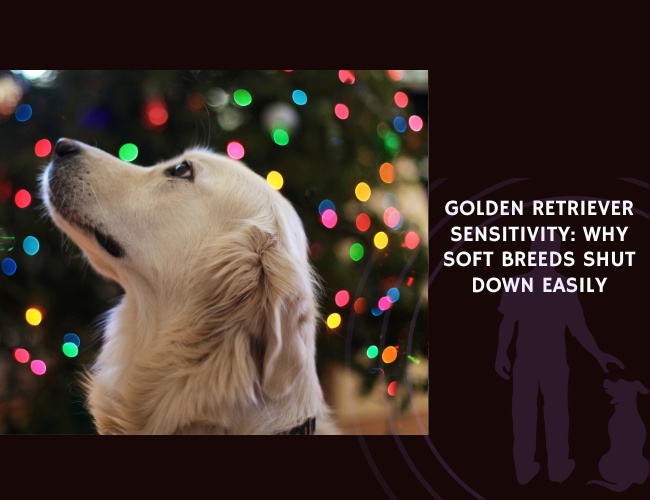
If you share your life with a Golden Retriever, you have probably noticed something extraordinary about their emotional awareness. These gentle souls seem to read your mood before you have fully processed it yourself. That same sensitivity, however, can become a source of profound vulnerability. When the world becomes too loud, too tense, or too confusing, your Golden may not bark, resist, or protest. Instead, they might simply withdraw into themselves, shutting down in silence.
This emotional collapse is not defiance. It is not stubbornness. It is a neurological and emotional response rooted in generations of selective breeding, attachment needs, and the profound way these dogs experience the world around them.
Let us guide you through the science, the signals, and the soul of what happens when a soft breed like the Golden Retriever reaches their emotional threshold.
The Origins of Softness: How Breeding Shaped Sensitivity
A Legacy Built on Cooperation
Golden Retrievers were not created by accident. In the mid-19th century, Lord Tweedmouth in Scotland meticulously developed this breed with a singular vision: a gentle, intelligent, biddable hunting companion capable of retrieving game without damage. The “soft mouth” was essential for carrying delicate waterfowl, but this physical trait reflected something deeper.
To carry game gently required immense self-control, a low drive for aggressive killing, and a profound willingness to yield personal impulses to human direction. Dogs that exhibited aggression, stubbornness, or high independence were deselected. Those with a strong affiliative drive, keen awareness of human emotions, and a natural inclination toward harmony were favored.
This continuous selection amplified emotional sensitivity. A cooperative dog must be highly responsive to subtle social cues and emotional feedback. Your Golden’s heightened awareness of your tone, your posture, your facial expression is not coincidental. It is the direct result of breeding for dogs who could anticipate, respond to, and harmonize with human intention.
The Soft Mouth as a Behavioral Blueprint
The “soft mouth” represents more than a physical capability. It reveals a temperamental foundation. When faced with stress, confusion, or pressure, a Golden Retriever’s historical programming for yielding rather than resisting becomes their default coping mechanism.
Resistance would have been counterproductive in their original role. A dog that fought back, asserted independence, or damaged game would have been unsuitable. Therefore, under stress, Golden Retrievers are more likely to “give in” or “shut down” as a form of compliance rather than exhibiting overt resistance like barking, growling, or pulling away.
This giving-in behavior, while adaptive for their historical role, becomes a vulnerability in modern contexts where handlers may not recognize the emotional cost of this compliance.
Neurological Wiring for Harmony
While direct neurological mapping for “harmony preservation” is complex, behavioral and physiological evidence strongly suggests this predisposition. Breeds like Golden Retrievers, with their strong affiliative drive, likely have neurochemical pathways that reward social cohesion and cooperation.
Their brains may be more sensitive to oxytocin, the bonding hormone, which facilitates social attachment and reduces stress in social contexts. Conversely, their stress response systems may be more readily activated by perceived social conflict or disapproval from their primary caregivers.
This neurological wiring favors behaviors that maintain social harmony and avoid confrontation, as these actions lead to positive reinforcement and prevent negative outcomes. Asserting independence, especially in a confrontational manner, would likely trigger their stress response, making harmony-preserving behaviors more reinforcing. 🧠
Understanding Shutdown: The Neuroscience of Emotional Collapse
From Cooperation to Withdrawal
Affiliative breeds like Golden Retrievers thrive on clear communication, positive reinforcement, and a sense of security within their social structure. When these conditions are disrupted by tension, confusion, or pressure, their internal state shifts dramatically.
Initially, they might try harder to cooperate, seeking to understand and please. However, if the tension, confusion, or pressure persists and they perceive no viable way to resolve the situation or escape the discomfort, their coping mechanisms transition from active engagement to passive withdrawal.
This shutdown is a protective mechanism, a way to conserve energy and minimize further perceived threat when active coping strategies have failed. It represents a shift from “I want to please” to “I need to survive this situation by becoming invisible or non-reactive.”
The FEAR and PANIC Systems
Drawing from affective neuroscience, shutdown is a profound manifestation of the FEAR and PANIC systems being overwhelmed. When a Golden Retriever is subjected to sustained pressure, perceived threat, or emotional distress, their brain’s amygdala and associated fear circuits become highly active.
If the dog cannot escape or resolve the perceived threat, the system can become overstimulated, leading to a freeze response. This is not defiance. It is a biological imperative to survive. The dog is not choosing to be stubborn; their nervous system is entering a state of emotional paralysis.
From an evolutionary perspective, freezing can make an animal less noticeable to a predator. In a social context, it can prevent further escalation of conflict. For your Golden Retriever, this freeze response is their brain’s emergency shutdown protocol when emotional resources are depleted.
The Silent Freeze Response
Due to their strong conflict-avoidance tendencies and historical breeding for docility, Golden Retrievers are often predisposed to exhibit “silent freeze” responses rather than loud stress signals like barking, growling, or resisting.
Loud stress signals are often a form of active resistance or an attempt to create distance. For a breed wired for cooperation and harmony, such overt signals might be perceived as counterproductive or even dangerous within their social structure.
Instead, they might freeze, become still, avoid eye contact, or show subtle appeasement gestures. These behaviors are less confrontational and more aligned with their innate desire to de-escalate tension. This makes their stress harder for an untrained eye to detect, which is precisely why so many handlers miss the early warning signs. 🧡
Appeasement Behaviors: The Language of Emotional Distress
Survival Through Submission
For soft, affiliative breeds, maintaining social harmony and avoiding conflict is paramount. When they perceive tension, potential disapproval, or a threat to their social bond, they instinctively resort to a repertoire of appeasement gestures.
These behaviors serve as innate signals designed to communicate non-threat and acceptance of social hierarchy:
Common appeasement signals include:
- Lip licking or tongue flicks
- Yawning in contexts unrelated to tiredness
- Turning the head away or averting gaze
- Softening or squinting the eyes
- Lowering the body posture or crawling
- Pawing at the handler
- Submissive urination in extreme cases
- Slow, deliberate movements
- Exposing the belly or throat
These are not signs of relaxation or contentment. They are stress responses designed to de-escalate potential conflict and reinforce a subordinate, non-threatening status within the social group.
The Dangerous Misinterpretation
Alarmingly often, appeasement gestures are misinterpreted as obedience, calmness, or the dog “being fine.” This represents one of the most critical areas of misunderstanding between humans and sensitive dogs.
A dog that is lip-licking, yawning, or turning its head away might be perceived as “calmly listening” or “being a good boy.” A dog that lowers its body and crawls towards a handler might be seen as “being submissive and obedient,” when in reality, it is experiencing significant stress and attempting to appease.
The “soft gaze” or averted eyes, often interpreted as a sign of respect or calmness, can actually be a signal of discomfort or an attempt to avoid perceived threat. This misinterpretation is dangerous because it leads handlers to believe the dog is coping well or even enjoying the interaction, when in fact, the dog is experiencing internal distress and is on the verge of emotional shutdown.
Through the NeuroBond approach, handlers learn to read these signals as the emotional communication they truly are, rather than signs of compliance or relaxation.

Why Soft Breeds Default to Appeasement
For Golden Retrievers, appeasement is often the first line of defense when faced with emotional discomfort. This is because:
Evolutionary advantage: In their ancestral and working roles, dogs that could de-escalate conflict without physical confrontation had better survival outcomes within human households.
Neurochemical reinforcement: Appeasement behaviors that successfully reduce tension are reinforced by the relief of stress hormone reduction, creating a behavioral loop.
Attachment preservation: For a breed deeply bonded to humans, preserving the relationship takes priority over honest emotional expression.
Energy conservation: Passive responses require less energy than active resistance, making them more sustainable during prolonged stress.
The tragedy is that these behaviors, designed to maintain connection, can actually mask the depth of distress the dog is experiencing. 🐾
Learned Helplessness: When Dogs Stop Trying
The Psychology of Giving Up
Originally developed from studies on animals exposed to inescapable aversive stimuli, learned helplessness theory explains how individuals, when repeatedly faced with situations they cannot control, may cease to respond or attempt to escape, even when opportunities for escape later arise.
In the context of Golden Retrievers, this means that dogs overwhelmed by consistent pressure, unclear expectations, or unavoidable stress may stop expressing discomfort. They appear “obedient” or compliant while internally experiencing emotional collapse and a loss of agency.
The Three Stages of Learned Helplessness
Stage 1: Active Coping Initially, when faced with an aversive or confusing situation, your Golden will try various strategies to resolve it. They might offer different behaviors, seek your guidance through eye contact, or attempt to move away.
Stage 2: Frustration and Escalation If their attempts fail to change the situation or if the confusion persists, frustration builds. The dog may become more frantic in their attempts or show increased stress signals. This is a critical intervention point.
Stage 3: Resignation and Shutdown Eventually, if no strategy proves successful, the dog learns that their actions have no impact on the outcome. They stop trying. They become passive, unresponsive, and emotionally flat. This is learned helplessness, and it can be difficult to reverse.
The Compliance Trap
One of the most insidious aspects of learned helplessness in soft breeds is that it can look like perfect obedience. A dog that has shut down will often:
- Follow commands mechanically without enthusiasm
- Show no initiative or problem-solving behavior
- Display a flat or sad expression even during activities they once enjoyed
- Lack the emotional engagement that characterizes a healthy training relationship
- Become overly passive, waiting for direction rather than offering behavior
Handlers may praise this “calm obedience,” not recognizing that they have inadvertently suppressed the dog’s emotional vitality and agency. This is not the goal of training. True cooperation involves active engagement, mutual understanding, and emotional presence from both partners.
Breaking the Cycle
The antidote to learned helplessness is restoring a sense of agency and predictability. This involves:
- Providing clear, consistent communication that the dog can understand
- Rewarding small voluntary behaviors to rebuild confidence in their own decision-making
- Removing or reducing the sources of inescapable stress
- Rebuilding trust through predictable routines and positive associations
- Allowing the dog to make choices within safe boundaries
The Invisible Leash reminds us that true guidance comes not from control, but from creating an emotional space where the dog feels safe enough to engage authentically. 😊
Sensory Processing Sensitivity: When the World Becomes Too Much
Emotional Noise and Overstimulation
Golden Retrievers are especially sensitive to emotional “noise”—the subtle cues like voice tone, body language, facial expressions, and the overall emotional atmosphere of their environment. Even minor changes in handler mood or expectations can trigger stress responses.
This heightened sensory processing means that what might seem like a normal training session to a human can feel overwhelming to a sensitive dog. Consider:
Voice tone variations: Your Golden can detect micro-changes in vocal pitch, volume, and cadence that you might not even be conscious of producing.
Body language incongruence: When your words say one thing but your body language communicates something else, it creates cognitive dissonance that is deeply unsettling for a dog bred to read human signals.
Environmental stimulation: Multiple sensory inputs competing for attention (traffic noise, other dogs, unfamiliar people, novel environments) can quickly exceed processing capacity.
Emotional urgency: Your internal stress, even if not overtly expressed, radiates through subtle physiological changes in breathing, muscle tension, and pheromones that your dog absolutely perceives.
Emotional Saturation and Cooperative Withdrawal
Too much excitement, praise, or pressure can lead to emotional saturation, causing the dog to withdraw or shut down as a protective mechanism. This is not stubbornness, but a sign that the dog’s emotional capacity has been exceeded.
Think of it as an emotional battery that drains faster in high-stimulation environments. Once depleted, the dog has no reserves left for processing new information, responding to commands, or maintaining social engagement. They must withdraw to recover.
Signs of emotional saturation include:
- Sudden disengagement or looking away
- Slowed responses to previously well-known cues
- Increased yawning, lip-licking, or other stress signals
- Physical withdrawal or seeking distance
- A glazed or unfocused expression
- Decreased food motivation even with high-value rewards
The Paradox of Over-Praise
Interestingly, excessive praise can be just as overwhelming as excessive pressure for sensitive dogs. Enthusiastic, loud, repeated verbal praise combined with physical excitement can push a Golden Retriever into sensory overload.
They want to please you, but they also need emotional regulation. When praise becomes too intense or unpredictable, it can actually create anxiety rather than reinforcement. The dog may start working to manage your excitement rather than engaging authentically with the task.
Calm, genuine acknowledgment often has more lasting value than exuberant celebration for these emotionally attuned breeds. 🧠
Soft. Alert. Overwhelmed.
Sensitivity runs deep.
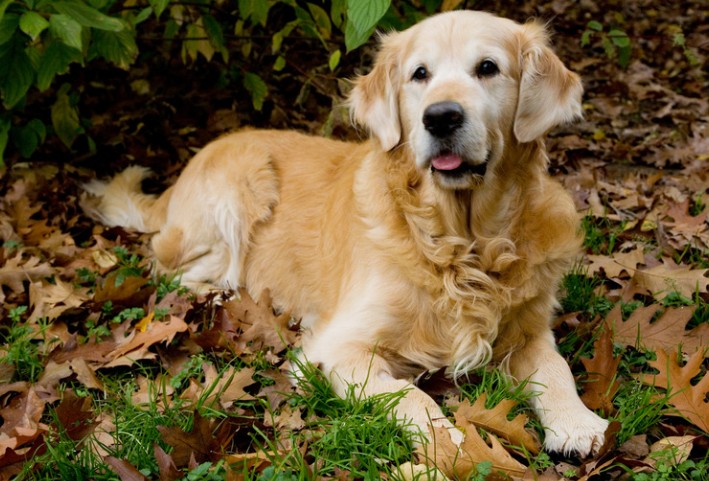
Golden Retrievers weren’t bred for resistance — they were bred for resonance. Their emotional wiring isn’t built to push back, but to tune in. When the environment becomes tense, confusing, or emotionally charged, they don’t rebel — they retreat.
Harmony costs energy.
Their cooperative heritage means they constantly scan for approval, connection, and emotional balance. But this attunement comes at a price: when too many signals arrive at once — conflicting cues, heightened tone, social pressure — their cognitive clarity collapses.


Calm protects learning.
Golden Retrievers process through feeling, not force. Clarity, softness, and emotional safety don’t just help — they unlock their capacity to think, learn, and stay engaged.
Attachment Theory: The Cost of Deep Bonds
Relational Distress and Unclear Expectations
Golden Retrievers experience profound relational distress when handler expectations are unclear or emotionally inconsistent. Their strong attachment bonds, while beautiful, also create vulnerability.
Applied to the human-animal bond, attachment theory highlights the profound impact of the relationship between a dog and its primary caregiver. Soft breeds, particularly those bred for close cooperation, often develop strong attachment bonds and rely heavily on emotional approval and clear communication from their handlers.
This makes them particularly vulnerable to stress when human expectations are inconsistent, unclear, or perceived as conflicting, leading to anxiety and potentially shutdown behaviors as a coping mechanism.
Anxious Attachment Patterns
Some Golden Retrievers develop anxious attachment styles, particularly if they have experienced:
- Inconsistent responses from handlers
- Separation experiences that were not properly conditioned
- Punishment or withdrawal of affection
- Emotional unavailability from primary caregivers
- Rehoming or significant relationship disruptions
Anxious attachment amplifies shutdown behaviors. These dogs may display:
Clinginess: Excessive following, inability to settle when separated, constant contact-seeking
Avoidance: Paradoxically, some anxiously attached dogs learn to avoid seeking comfort to prevent the pain of potential rejection
Appeasement: Heightened use of submissive gestures to maintain connection and prevent perceived abandonment
Hypervigilance: Constant monitoring of the handler’s emotional state and location
🐕 Golden Retriever Sensitivity Guide 🧠
Understanding why soft breeds shut down easily and how to preserve their gentle hearts while building emotional resilience
🧬 The Biology of Softness
Bred for Cooperation, Not Confrontation
Golden Retrievers were selectively bred for gentle retrieval and human cooperation. This created dogs with heightened emotional sensitivity, strong affiliative drives, and neurological wiring that favors harmony over independence. Their “soft mouth” reflects a soft temperament—designed to yield rather than resist.
The Shutdown Response
When FEAR and PANIC systems become overwhelmed, sensitive dogs enter emotional paralysis—a “silent freeze” response. This is not defiance but a biological survival mechanism when stress exceeds coping capacity. They withdraw to protect themselves from further perceived threat.
👁️ Reading the Silent Signals
Appeasement Behaviors (Often Misread)
These stress signals are frequently mistaken for calmness or obedience:
• Lip licking or yawning (unrelated to tiredness)
• Turning head away or averting gaze
• Softening eyes or lowering body posture
• Pawing at handler or crawling approach
• Slow, deliberate movements or complete stillness
The Compliance Trap
A shut-down dog may appear perfectly obedient—quiet, still, following commands mechanically. But this “good behavior” masks profound distress. True cooperation involves emotional engagement, not emotional collapse.
🌱 Building Resilience Without Hardening
Prevention Strategies
Protect your Golden’s emotional wellbeing through:
• Calm, intentional communication with clear expectations
• Autonomy-based learning that allows choices
• Predictable routines and structured reassurance
• Recognition of early stress signals before shutdown
• Short training sessions with high success rates
Recovery Protocol
If shutdown occurs: remove all pressure immediately, provide space and silence, allow natural recovery time, and return to easy, rewarding activities only when the dog shows genuine interest. Never force interaction during recovery.
⚠️ Critical Warning Signs
Learned Helplessness Development
When dogs are repeatedly exposed to inescapable stress or unclear expectations, they may stop trying entirely. This creates mechanical compliance without emotional engagement—appearing obedient while internally collapsed. This condition requires professional intervention to reverse.
Emotional Saturation
Too much praise, pressure, or stimulation exceeds processing capacity. Watch for glazed expressions, sudden disengagement, slowed responses to familiar cues, or decreased food motivation. These indicate the emotional battery is depleted and recovery time is essential.
⚡ The Sensitivity Principle
Softness + Clarity = Resilience
A sensitive dog thrives when emotional safety meets clear communication. Softness is not weakness to be corrected—it is strength to be honored. Build confidence through predictable guidance, not pressure. Preserve gentleness while preventing collapse through emotional clarity and relational trust.
🧡 The NeuroBond Approach
Through the NeuroBond framework, we understand that true training honors both neuroscience and soul. When we recognize shutdown as emotional overwhelm rather than disobedience, we shift from demanding compliance to fostering genuine partnership. The Invisible Leash reminds us that awareness—not tension—guides the path. In those Soul Recall moments when your Golden looks at you with complete trust, they remember not just what you taught, but how you made them feel. That balance between science and sensitivity is the essence of Zoeta Dogsoul.
© Zoeta Dogsoul – Where neuroscience meets soul in dog training
Guilt-Seeking Behaviors
When Golden Retrievers perceive that they have disappointed their handler, they often engage in guilt-seeking behaviors. These are attempts to restore harmony and repair the perceived rupture in the relationship:
- Submissive postures with lowered body and tucked tail
- Intense eye contact seeking reassurance
- Excessive appeasement gestures
- Following the handler persistently
- Bringing toys or objects as peace offerings
- Physical touching or pawing to reestablish connection
It is important to understand that these behaviors are not manipulative. They reflect genuine emotional distress over the perceived disruption in the bond. Your Golden is not trying to manipulate you; they are trying to repair what they fear might be broken.
The Handler’s Emotional Responsibility
Because Golden Retrievers are so deeply attuned to their handlers, the emotional state of the human becomes a critical factor in the dog’s wellbeing. Handler tension, disappointment, frustration, or emotional withdrawal can trigger significant distress.
This does not mean you must be emotionally perfect. It means you must be emotionally honest and clear. A dog can adapt to a handler’s bad day if the communication is straightforward and the relationship is secure. What creates shutdown is emotional incongruence—saying you are not angry while radiating tension, or demanding performance while feeling disappointed.
Soul Recall moments reveal how emotional memory intertwines with behavior. Your Golden remembers not just what happened, but how it felt. Building a relationship based on emotional clarity creates the foundation for resilience. 🧡
Training Models and Emotional Resilience
Preventing Emotional Shutdown
Training strategies that help prevent shutdown emphasize the dog’s emotional state as the foundation of learning:
Calm, intentional communication: Your tone, pace, and body language should convey clarity rather than urgency. Speak as if your dog already understands, with the patient expectation that they will meet you there.
Autonomy-based learning: Allow your Golden to make choices within safe boundaries. Problem-solving opportunities build confidence and teach the dog that their actions have meaningful, predictable consequences.
Structured reassurance: Provide consistent routines and predictable responses. Your dog should be able to anticipate what comes next in their daily life and training sessions.
Clear expectations: Be specific about what you want. Vague or changing criteria create the confusion that leads to shutdown. If you would not understand the request as a non-verbal being, neither will your dog.
Recognition of early stress signals: Intervention at the first sign of discomfort prevents escalation to shutdown. Pay attention to subtle cues like ear position changes, weight shifts, or brief gaze aversions.
The NeuroBond Approach to Emotional Clarity
The NeuroBond model emphasizes emotional clarity, relational trust, and low-noise guidance to maintain a dog’s softness while preventing collapse, confusion, or submissive shutdown.
This approach recognizes that:
- Training is a relationship, not a series of mechanical exercises
- Emotional safety enables learning; fear and confusion disable it
- Softness is a strength to be preserved, not a weakness to be hardened
- Clear communication reduces stress more effectively than any training tool
- The goal is an emotionally present, confident dog who chooses cooperation
Building Confidence Without Hardening
One of the most delicate aspects of working with soft breeds is preserving their gentleness while increasing their emotional resilience. You do not want to “toughen up” a Golden Retriever. You want to give them the confidence to navigate challenges without shutting down.
This is achieved through:
Safe exposure to novelty: Gradual, positive introductions to new experiences that build confidence through success, not flooding through overwhelm.
Reinforcing genuine confidence: Reward brave exploration and problem-solving, not just compliance. A dog that chooses to investigate something new is building resilience.
Avoiding over-praise or excessive pressure: Both extremes can undermine genuine confidence. Calm acknowledgment of effort builds more sustainable self-assurance than dramatic celebrations or harsh corrections.
Providing safe pacing: Allow your dog to progress at their own speed. Rushing creates pressure; patience creates security.
Honoring withdrawal signals: If your dog indicates they need a break, respect it. Teaching them that their communication is heard builds trust and prevents learned helplessness.
The goal is a dog who is soft in temperament but resilient in spirit—gentle but not fragile, cooperative but not broken. 🐾
Recognizing the Warning Signs: What Shutdown Looks Like
Subtle Early Indicators
Before complete shutdown occurs, your Golden Retriever will show subtle signs that their emotional capacity is being exceeded. These early warnings are your opportunity to intervene:
Behavioral changes:
- Decreased enthusiasm for previously enjoyed activities
- Slowed response to familiar cues
- Increased stillness or reduced spontaneous movement
- Looking away or avoiding eye contact more frequently
- Decreased tail wagging or lower tail carriage
- Ears held back or flattened more often
Physiological signs:
- Increased panting unrelated to heat or exercise
- Dilated pupils
- Sweaty paw pads
- Trembling or muscle tension
- Digestive changes (loose stools, decreased appetite)
- Increased shedding
Interaction patterns:
- Seeking more physical contact or distance than usual
- Decreased initiative or problem-solving
- Increased appeasement gestures
- Reluctance to engage in training or play
- Following closer or hanging back more
- Difficulty settling or restless when resting
Full Shutdown Presentation
When shutdown occurs, the signs become more obvious, though they may still be misinterpreted as calmness or obedience:
- Complete emotional flatness with glazed or unfocused eyes
- Mechanical compliance without engagement
- Lack of response to previously exciting stimuli
- Physical rigidity or complete limpness
- Extreme avoidance of eye contact
- Refusal of food even when not satiated
- Withdrawal to hide or seek isolation
- Absence of tail wagging or other normal social signals
- Unresponsive to name or familiar cues
- May appear “checked out” or dissociated
This state requires immediate intervention. The dog needs space, safety, and time to recover before any training or demands should resume.
After the Shutdown: Recovery and Repair
Once shutdown has occurred, recovery is a delicate process that cannot be rushed:
Immediate steps:
- Remove all pressure and demands
- Provide physical and emotional space
- Speak softly or remain silent
- Avoid forcing interaction
- Create a calm, predictable environment
Recovery process:
- Allow natural recovery time (minutes to hours depending on severity)
- Reintroduce gentle, positive interactions only when the dog shows interest
- Return to familiar, easy, rewarding activities
- Rebuild trust through predictable routines
- Do not immediately return to whatever triggered the shutdown
Long-term prevention:
- Analyze what led to the shutdown
- Modify training approaches to reduce similar triggers
- Build resilience gradually through positive experiences
- Ensure adequate rest and recovery time between training sessions
- Strengthen the overall relationship through low-pressure bonding activities
That balance between science and soul, between understanding the neurology and honoring the relationship—that is the essence of Zoeta Dogsoul. 😊
The Conflict Between Compliance and Authenticity
When “Good Behavior” Masks Distress
One of the most challenging aspects of working with soft breeds is that their distress often looks like ideal behavior. A shut-down Golden Retriever may appear to be the “perfect” dog:
- Quiet and still
- Following all commands without resistance
- Not pulling on leash
- Not barking or demanding attention
- “Calm” in all situations
This can be particularly appealing to handlers who struggle with more assertive or reactive breeds. However, this compliance comes at a devastating emotional cost. The dog is not peaceful; they are paralyzed. They are not obedient; they are overwhelmed.
The Ethics of Emotional Suppression
As handlers, we must ask ourselves what we truly want from our relationship with our dogs. Do we want mechanical compliance, or do we want genuine partnership?
Suppressing a dog’s emotional expression to achieve “perfect” behavior is not training. It is emotional abuse, even when done unintentionally. A dog that cannot communicate discomfort, that has learned their signals will be ignored or punished, that shuts down rather than engages, is not a well-trained dog. They are a traumatized dog.
True training builds confidence, communication, and cooperation. It preserves the dog’s ability to express themselves while teaching them appropriate ways to do so. It honors their sensitivity while building their resilience.
Fostering Authentic Engagement
To move beyond compliance toward authentic engagement, focus on:
Emotional presence: A dog that is emotionally present will show natural variation in expression—excitement when appropriate, calm when settled, curiosity when exploring, and yes, even appropriate frustration or uncertainty when challenged.
Voluntary participation: Training should be something your Golden chooses to engage in because it is rewarding and meaningful, not something they endure.
Honest communication: Allow your dog to tell you when they are uncertain, uncomfortable, or need a break. Honor those communications.
Joy in learning: Watch for the moments when your dog’s eyes light up with understanding, when they offer behaviors spontaneously, when they problem-solve with enthusiasm. This is what training should look like.
Preserved softness: Your Golden’s gentleness should remain intact while their confidence grows. Softness is not weakness; it is a profound strength when paired with resilience.
Living with a Sensitive Soul: Practical Daily Strategies
Creating an Emotionally Safe Environment
Your Golden Retriever’s daily environment significantly impacts their emotional resilience:
Predictable routines: Establish consistent schedules for meals, walks, training, and rest. Predictability reduces ambient anxiety.
Safe spaces: Provide areas where your dog can retreat without being disturbed. Teach all family members to respect these spaces.
Manageable stimulation: Monitor environmental stress levels. Busy households, frequent visitors, or chaotic schedules can chronically tax a sensitive dog.
Clear communication: Everyone who interacts with your dog should use consistent cues and expectations.
Adequate rest: Sensitive dogs often need more downtime than less reactive breeds. Ensure your Golden has quiet time to decompress.
Training Session Structure
Design training sessions that support emotional resilience:
Short durations: Multiple brief sessions (5-10 minutes) are better than long, exhausting ones.
High success rate: Structure exercises so your dog succeeds 80% of the time. This builds confidence without overwhelming.
End on success: Always finish with something easy and rewarding.
Watch for fatigue: End before your dog shows signs of stress or shutdown, not after.
Calm transitions: Move between exercises smoothly without sudden changes in energy or demand.
Recovery time: Allow rest between training sessions, especially after more challenging work.
Social Interactions and Boundaries
Help your Golden navigate social situations without shutting down:
Advocate for your dog: Not all interactions are appropriate. Decline situations that might overwhelm your dog.
Teach polite greetings: Help your dog learn calm greeting behaviors rather than overwhelming excitement or anxious appeasement.
Respect boundaries: If your dog signals discomfort with a person or dog, honor that communication.
Gradual socialization: Introduce new experiences slowly, with positive associations and escape routes.
Monitor play: Ensure play remains balanced and positive. Intervene if your sensitive dog becomes overwhelmed by rougher playmates.
Nutrition and Physical Health
Physical wellbeing supports emotional resilience:
Balanced nutrition: Ensure your Golden receives appropriate nutrients for brain health and stress management.
Regular exercise: Physical activity helps regulate stress hormones, but avoid over-exercising sensitive dogs.
Health monitoring: Pain, illness, or hormonal imbalances can lower emotional thresholds. Regular veterinary care is essential.
Adequate sleep: Dogs need 12-14 hours of sleep daily. Sensitive dogs may need more.
Stress reduction supplements: In consultation with your veterinarian, consider supplements that support emotional regulation if needed.
For Breeders: Selecting for Emotional Resilience
Beyond Traditional Temperament Testing
Responsible breeders of Golden Retrievers and other soft breeds should consider emotional resilience alongside traditional temperament traits:
Stress recovery: How quickly does a dog recover from mild stressors? The ability to bounce back is as important as initial reactivity.
Problem-solving confidence: Does the dog persist when faced with a challenge, or do they give up quickly?
Environmental confidence: How does the dog respond to novel objects, surfaces, or situations?
Social confidence: Can the dog engage with strangers appropriately without excessive fear or overwhelming appeasement?
Frustration tolerance: How does the dog respond when a reward is delayed or a desired outcome does not occur immediately?
Communication clarity: Does the dog express their needs and emotional states clearly, or do they suppress expression?
Breeding for Balance
The goal is not to eliminate sensitivity, which is a core characteristic of the breed and contributes to their extraordinary bond with humans. Rather, the goal is to ensure that sensitivity is balanced with emotional resilience:
- Dogs that are attuned but not overwhelmed
- Dogs that seek harmony but can advocate for themselves
- Dogs that are gentle but not fragile
- Dogs that cooperate but maintain agency
This requires thoughtful selection of breeding stock that demonstrates both the soft, biddable temperament that defines the breed and the emotional strength to navigate modern life without shutting down.
Early Puppy Development
Breeders can significantly impact emotional resilience through early puppyhood experiences:
Gentle stress exposure: Appropriate, brief, age-appropriate challenges that build confidence.
Predictable care: Consistent routines that teach puppies the world is manageable.
Safe exploration: Opportunities to investigate new things with support and positive outcomes.
Varied handling: Exposure to different people in gentle, positive contexts.
Problem-solving opportunities: Simple puzzles and challenges that reward persistence.
Emotional modeling: Calm, confident caregiver behavior that puppies can mirror.
The first eight weeks shape the foundation for lifelong emotional resilience. Investing in this period yields dogs that are both soft in temperament and strong in spirit. 🧡
Conclusion: Honoring the Soft Heart
Your Golden Retriever’s sensitivity is not a flaw to be corrected. It is the very essence of what makes them extraordinary companions. Their ability to read your emotions, their desire to harmonize with your needs, their gentle approach to life—these are the gifts of generations of selective breeding.
But these gifts come with responsibility. A dog this attuned, this eager to please, this oriented toward harmony, requires handlers who understand the emotional cost of their compliance. When your Golden shuts down, they are not being difficult. They are telling you, in the only way they know how, that their emotional resources are depleted.
They are asking for clarity, for predictability, for the space to recover. They are trusting you to see past the illusion of perfect obedience to the distress beneath.
Through the NeuroBond approach, we learn to read these signals, to value emotional engagement over mechanical compliance, to build resilience without hardening, to preserve softness while preventing collapse. We learn that true partnership requires emotional presence from both ends of the leash—or perhaps more accurately, both partners in the Invisible Leash of mutual awareness and respect.
Your Golden Retriever will give you everything they have. They will try until they cannot try anymore. They will cooperate until cooperation becomes shutdown. It is your privilege and responsibility to ensure that their generosity is met with understanding, that their sensitivity is honored, that their softness is preserved.
In those Soul Recall moments, when your dog looks at you with complete trust, remember: they remember not just what you taught them, but how you made them feel. Build a relationship where that memory is one of safety, clarity, and genuine connection.
That is the work. That is the relationship. That is the essence of what it means to truly understand and honor the sensitive soul of a Golden Retriever. 🐾
Is a Golden Retriever Right for You?
Before welcoming one of these gentle souls into your life, consider whether you can provide what they truly need:
You might thrive together if you:
- Value emotional connection over performance
- Can read and respond to subtle communication
- Appreciate gentleness as strength
- Are committed to patient, consistent guidance
- Can provide mental enrichment alongside physical exercise
- Understand that sensitivity requires adaptation, not correction
- Can advocate for your dog’s emotional needs in various situations
- Are prepared for a deeply bonded relationship that requires emotional presence
This might not be the right breed if you:
- Prefer independent, less emotionally demanding dogs
- Want a dog that can “handle anything” without emotional support
- Are frequently emotionally unavailable or inconsistent
- Live in a chaotic, high-stress environment without ability to modify it
- Expect perfect obedience without investing in relationship
- Cannot recognize or respond to subtle stress signals
- Are looking for a dog that requires minimal emotional investment
The Golden Retriever will meet you with their whole heart. The question is whether you can meet them with the understanding, patience, and emotional clarity they deserve.
If you can, you will experience one of the most profound interspecies relationships possible—a bond built on mutual understanding, genuine cooperation, and the kind of love that sees and honors the other’s true nature.
That is the gift of the soft heart. That is the privilege of sharing your life with a Golden Retriever. 😊










