

Have you ever noticed how your dog seems to understand one person perfectly while struggling to grasp the same command from someone else? You might watch a friend work effortlessly with their dog, wondering what invisible thread connects them. This phenomenon isn’t random—it’s rooted in a complex dance of emotional trust, communication clarity, and cognitive compatibility that transforms training from mechanical repetition into genuine understanding.
The question of why dogs learn faster with specific handlers touches something profound about the canine-human relationship. It’s not simply about technique or treats. Something deeper occurs when the right handler meets the right dog—a synchronization of energy, intention, and awareness that accelerates learning in ways that surprise even experienced trainers. Let us guide you through the fascinating science behind this connection, exploring how trust, timing, and emotional alignment create optimal learning environments for your furry companion.
Relational Trust: The Foundation of Learning
Emotional Safety as a Learning Prerequisite
When you step into training with your dog, you bring more than commands and rewards—you bring an emotional atmosphere. Dogs possess remarkable sensitivity to human emotional states, reading the subtle tension in your shoulders, the steadiness of your breath, the congruence between your words and your energy. This sensitivity means that emotional safety isn’t just beneficial for learning; research suggests it may be a prerequisite, particularly for sensitive breeds.
Think of your dog’s brain during training. When emotional stability surrounds them—calm leadership, non-reactive presence, gentle guidance—their fear and panic systems deactivate. This neurological shift allows their seeking system to engage, the curiosity-driven mechanism that makes learning feel like discovery rather than obligation. Through the NeuroBond approach, trust becomes the foundation of learning, creating space where your dog can think clearly rather than react defensively.
Low Pressure, High Trust Environments
You might notice that your dog learns differently when pressure dissolves from the equation. A low-pressure environment doesn’t mean permissive or unstructured; it means your dog feels safe enough to make mistakes, to experiment, to think through problems without fear of punishment or harsh correction. This relational safety transforms receptivity to cues, enhances learning retention, and deepens cooperation in ways that force and repetition cannot achieve.
Consider how you learn best yourself. When someone creates space for you to explore ideas, when mistakes become information rather than failures, when trust flows between teacher and student—that’s when breakthrough learning occurs. Your dog experiences the same neurological and emotional reality. Handlers who provide this emotional container often see their dogs progress faster, retain information longer, and approach training with genuine enthusiasm rather than anxious compliance.
Signs Your Dog Feels Emotionally Safe During Training:
- Soft, relaxed body language even when concentrating on difficult tasks
- Willingness to offer new behaviors without excessive hesitation or checking in
- Quick recovery from mistakes without stress signals like lip licking or yawning
- Maintains focus without appearing tense or hypervigilant
- Approaches training sessions with tail wags and genuine enthusiasm
- Shows problem-solving initiative rather than waiting for constant direction
Communication Clarity: The Language of Connection
Signal Fidelity and Cue Precision
Some handlers naturally speak dog more fluently than others. Their body posture aligns with their verbal cues, their timing reflects impeccable awareness, their marker signals arrive with split-second precision. This isn’t magic—it’s signal fidelity, the clarity with which you communicate your intentions to your dog.
Dogs process information through multiple sensory channels simultaneously. When you give a command, your furry friend reads your posture, tone, facial expression, breathing pattern, and the subtle shifts in your energy that occur before you even speak. Handlers who provide clear, consistent cues across all these channels reduce signal confusion, creating a learning environment where dogs can focus on understanding rather than decoding mixed messages.
Elements of Clear Signal Fidelity:
- Body posture alignment: Your physical stance matches the behavior you’re requesting
- Verbal consistency: You use the exact same word or phrase every single time
- Tonal stability: Your voice quality remains consistent regardless of your frustration level
- Timing precision: Markers and rewards arrive within 1-2 seconds of the desired behavior
- Gestural clarity: Hand signals are distinct, repeatable, and never muddled with other movements
- Energy congruence: Your internal state matches what your external presentation communicates
The Power of Consistency and Predictability
Your dog thrives on pattern recognition. When cue consistency becomes your training cornerstone—same word, same gesture, same emotional tone, same follow-through—you accelerate learning exponentially. Cue consistency paired with tone congruence and handler predictability creates a reliable framework within which your dog can confidently experiment and learn.
Think about the difference between learning a new language from someone who speaks clearly and consistently versus someone whose pronunciation, grammar, and meanings shift constantly. The former creates neural pathways efficiently; the latter creates confusion and frustration. Your dog faces this same challenge. Handlers whose communication remains stable across sessions, contexts, and emotional states become easier to learn from because the signal itself never becomes the obstacle. 🐾
Micro-Signals and Arousal Regulation
Did you know your breathing pattern influences your dog’s arousal state? Research on social referencing in animals reveals that dogs, like horses and other social species, use handler emotional expressions to assess situations and regulate their own responses. Your micro-signals—the subtle tensions, the quality of your presence, the intention behind your movements—influence your dog’s arousal regulation and attention far more than most handlers realize.
Skilled handlers learn to modulate these micro-signals consciously. They understand that calm, steady breathing helps settle an anxious dog. They recognize that urgent energy can spike arousal beyond the optimal learning zone. They grasp that intention—that focused directionality before movement—provides your dog with advance information about what comes next, allowing smoother cooperation and reduced confusion.
Micro-Signals That Influence Your Dog’s Learning State:
- Breathing patterns: Slow, deep breaths calm your dog; rapid, shallow breathing increases arousal
- Muscle tension: Tight shoulders or clenched jaw transmit stress before you speak a word
- Eye contact quality: Soft, attentive gaze versus hard, demanding stare creates different emotional contexts
- Movement speed: Deliberate, smooth movements reduce anxiety; jerky, rushed movements elevate it
- Spatial pressure: How close you stand and how quickly you approach affects your dog’s comfort zone
- Pre-movement intention: The subtle shift in your energy before you move telegraphs your next action
These signals operate beneath conscious awareness for most handlers, yet your dog reads them with remarkable accuracy. 🧠
Cognitive Compatibility: Matching Learning Styles
Individual Learning Profiles
Your dog isn’t a blank slate waiting for programming. They arrive with distinct cognitive preferences shaped by genetics, early experiences, and individual personality. Some dogs learn through pattern recognition, connecting sequences and anticipating outcomes. Others process information primarily through sensory channels—visual, olfactory, tactile, or auditory. Still others seek autonomy, learning best when allowed to problem-solve independently rather than follow rote instruction.
Common Canine Learning Profiles:
- Pattern learners: Excel with consistent routines, sequential training, and predictable cause-and-effect relationships
- Visual processors: Learn fastest through demonstrations, hand signals, and watching other dogs or humans
- Scent-driven learners: Engage deeply when olfactory elements are incorporated, even in non-scent work
- Auditory learners: Respond strongly to vocal tones, verbal markers, and sound-based cues
- Tactile learners: Benefit from gentle physical guidance that helps them understand body positioning
- Autonomy seekers: Thrive when given time to problem-solve independently before receiving guidance
- Social learners: Learn most efficiently through interaction, play, and collaborative exploration
Dogs learn better with handlers whose teaching style matches their cognitive profile. This cognitive compatibility means recognizing whether your dog needs clear visual demonstrations, repetitive pattern exposure, opportunities for independent discovery, or multi-sensory engagement. The handler who adapts their approach to their dog’s learning strengths accelerates progress dramatically compared to one who insists on a single teaching method regardless of how their dog processes information.
Sensory Strengths and Breed Patterns
Consider breed-specific cognition patterns. Herding breeds often excel with handlers who provide clear directional cues and appreciate their need to think independently. Hunting breeds may respond powerfully to handlers who leverage scent-based learning and reward their search-and-discover tendencies. Guardian breeds might learn fastest with handlers who respect their need for spatial awareness and thoughtful decision-making before action.
Can learning efficiency improve when handlers adapt training to dogs’ sensory strengths? Absolutely. A scent-oriented dog might grasp a behavior faster when you incorporate olfactory elements into teaching. A visually-oriented dog may need clear hand signals before verbal cues make sense. A tactile learner might benefit from gentle physical guidance that helps them understand body positioning. Recognizing and honoring your dog’s sensory preferences transforms training from struggle to flow.
Breed-Pattern Training Adaptations:
- Herding breeds (Border Collies, Aussies, Corgis): Provide clear directional cues, honor their need for purposeful work, allow independent decision-making within structure
- Scent hounds (Beagles, Bloodhounds, Bassets): Incorporate nose work into training, accept their scent-driven distractibility, use scent trails to teach behaviors
- Sight hounds (Greyhounds, Whippets, Salukis): Emphasize visual cues, work in low-distraction environments initially, respect their sensitivity to motion
- Guardian breeds (Rottweilers, Great Pyrenees, Akitas): Give thinking time before action, respect their need for spatial awareness, build trust before expecting quick compliance
- Retrievers (Labs, Goldens, Chesapeakes): Leverage their natural desire to please, use retrieval games to teach concepts, maintain high energy and enthusiasm
- Terriers (Jack Russells, Cairns, Westies): Keep sessions short and engaging, channel their intensity productively, provide mental challenges alongside physical ones
Arousal Regulation: The Optimal Learning Zone
Managing Energy and Emotion
Every dog has an optimal arousal zone for learning—that sweet spot where they’re engaged but not overwhelmed, focused but not frantic, calm but not disinterested. Skilled handlers possess an almost intuitive ability to read where their dog exists on the arousal spectrum at any given moment, adjusting their approach to maintain that productive middle ground.
Do skilled handlers better manage a dog’s arousal zone, preventing emotional overflow, frustration, or shutdown? Research on working dogs suggests they do. These handlers recognize the early warning signs: the subtle tension that precedes reactivity, the distracted scanning that signals overstimulation, the slowing response that indicates cognitive fatigue or emotional shutdown.
Reading Your Dog’s Arousal Level:
Under-Aroused (Below Optimal Learning Zone):
- Slow, lethargic responses to familiar cues
- Frequent sniffing, looking away, or environmental scanning
- Yawning, lip licking, or other displacement behaviors
- Lowered body posture with minimal tail movement
- Appears bored or disengaged from the training process
Optimally Aroused (Peak Learning State):
- Soft but attentive eyes focused on you or the task
- Relaxed yet responsive body language
- Quick, thoughtful responses without frantic energy
- Tail position suggesting confidence—loose wag at neutral or slightly elevated position
- Willingness to experiment and offer behaviors
Over-Aroused (Above Optimal Learning Zone):
- Frantic, unfocused energy with difficulty settling
- Hard eyes, tense muscles, inability to think through simple problems
- Stress signals escalating—excessive panting, drooling, whining
- Jumping, spinning, or other displacement behaviors becoming compulsive
- Unable to respond to known cues that are normally reliable
The Impact of Handler Energy
Your emotional state doesn’t stay contained within you—it radiates outward, influencing your dog’s working memory, focus, and learning motivation. Handler calmness versus urgency creates distinctly different learning environments. Calm, clear energy expands your dog’s cognitive capacity, allowing them to process complex information and make thoughtful choices. Urgent, anxious energy narrows attention, triggers stress responses, and reduces the mental space available for learning.
Can handler emotional congruence reduce cognitive interference during learning? Think of it this way: when your intention aligns with your action, your tone matches your energy, and your presence reflects genuine calm rather than forced control, you eliminate the static that scrambles clear communication. Your dog can focus entirely on the learning task rather than expending cognitive resources trying to decode confusing emotional signals or manage their response to your stress.
How Handler Energy Affects Learning Quality:
- Calm, grounded energy: Expands your dog’s cognitive capacity, allowing complex problem-solving and thoughtful choices
- Anxious, worried energy: Creates hypervigilance in your dog, reducing available mental space for learning
- Urgent, rushed energy: Triggers stress responses, narrows attention, produces reactive rather than thoughtful behavior
- Frustrated, irritated energy: Generates defensive or shutdown responses, destroys emotional safety
- Playful, joyful energy: Increases engagement but can elevate arousal beyond optimal learning zone if not balanced
- Confident, clear energy: Provides emotional stability that allows your dog to attempt challenging behaviors without fear
The quality of your energy matters more than the specific training technique you employ. 🧡
Silent. Subtle. Powerful.
They learn trust before technique.
Not every handler teaches the same; some simply speak to the dog’s emotional wiring. When presence is calm and intention clear, a dog doesn’t try to perform — it begins to understand.
Clarity is felt, not forced.
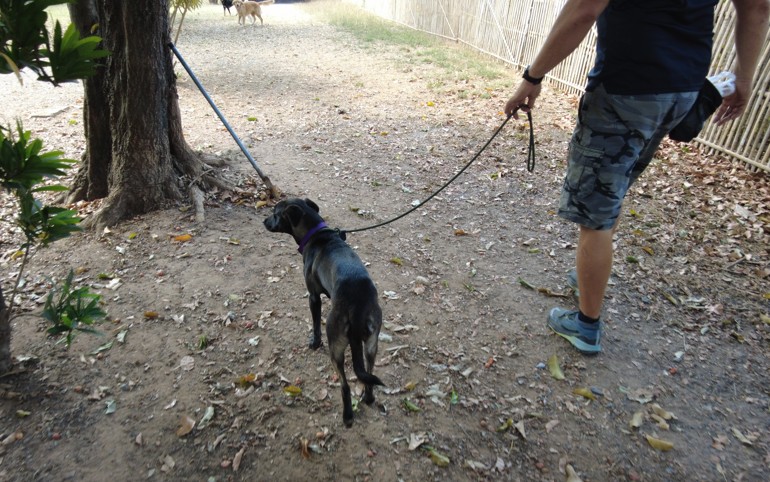
Dogs don’t follow louder voices; they follow steadier ones. A handler whose emotional state aligns with their communication creates fewer mixed signals — giving the dog space to think instead of react.


Trust sharpens focus.
When fear is absent, curiosity awakens. A dog that feels safe will experiment, offer behaviors, and recover smoothly from mistakes. This freedom to think — not just obey — is what turns commands into comprehension, and training into genuine partnership.
Attachment, Motivation, and Learning Partnership
The Secure Attachment Advantage
The relationship between attachment and learning holds fascinating complexity. Dogs do show enhanced learning when emotionally attached to their handler, but not all attachment creates equal learning outcomes. Secure attachment—trust without anxiety, connection without dependence—promotes exploration, learning resilience, and frustration tolerance. This differs dramatically from anxious, clingy, or over-dependent attachment that can actually reduce working independence and problem-solving initiative.
You might recognize secure attachment in how your dog approaches training. They check in with you regularly but don’t require constant reassurance. They attempt new challenges confidently because they trust you’ll support them if needed. They recover quickly from mistakes because the relationship provides emotional stability without creating anxious compliance.
Secure Attachment Indicators:
- Your dog works confidently at a distance without constant checking in
- They attempt new behaviors without excessive hesitation or fearfulness
- They recover quickly from corrections or mistakes without shutting down
- They show enthusiasm for training sessions without frantic, desperate energy
- They can focus on tasks even when you’re not providing constant attention
- They demonstrate independence and problem-solving initiative
Insecure Attachment Warning Signs:
- Constant checking in to the point of being unable to focus on tasks
- Refusal to attempt behaviors unless you’re within immediate reach
- Excessive stress when you create any distance during training
- Shutdown or defensive behavior in response to mild corrections
- Performance quality drops dramatically when training in new locations
- Lack of independent problem-solving—always waiting for your direction
Building secure attachment creates optimal learning conditions. 🐾
Learning With Versus Performing For
Dogs differentiate between “learning with” and “performing for” certain people. This distinction reveals itself in subtle ways—the quality of attention, the willingness to offer behaviors, the resilience during challenges, the enthusiasm for training itself. Learning with someone feels collaborative, a genuine partnership where both parties contribute to discovery. Performing for someone feels transactional, meeting external demands rather than engaging internal motivation.
“Learning With” Characteristics:
- Dog offers creative variations on behaviors, experimenting within the framework
- Problem-solving feels collaborative—your dog thinks through challenges with you
- Training sessions feel like conversations rather than one-directional command delivery
- Your dog’s enthusiasm remains high even when behaviors are challenging
- Mistakes are treated as information—your dog tries variations rather than shutting down
- The relationship feels reciprocal—you’re both learning from each other
“Performing For” Characteristics:
- Dog executes behaviors mechanically without creative engagement
- Waiting for commands rather than offering behaviors or problem-solving independently
- Training feels like obligation—your dog complies but without genuine enthusiasm
- Stress increases when behaviors become challenging or when mistakes occur
- Your dog seems to be trying to avoid correction rather than seeking understanding
- The relationship feels hierarchical—one teaches, the other obeys
Handlers who create true learning partnerships often discover their dogs think more creatively, solve problems more confidently, and retain behaviors more reliably. Moments of Soul Recall reveal how memory and emotion intertwine in behavior—your dog remembers not just what they learned but how they felt while learning it, and that emotional context profoundly influences future learning speed and motivation. 🧡
🐕 Why Your Dog Learns Faster With YOU 🧠
The science of handler-dog compatibility reveals that learning speed isn’t just about technique—it’s about emotional trust, communication clarity, and cognitive matching. Discover the relational factors that transform training from repetition into genuine partnership.
🔬 The Foundation: Emotional Safety & Trust
Why Emotional Safety Matters
Dogs possess remarkable sensitivity to human emotional states. When you provide emotional stability—calm leadership, non-reactive presence—your dog’s fear systems deactivate and their curiosity-driven seeking system engages. This neurological shift transforms learning from obligation into discovery.
Through the NeuroBond approach, trust becomes the foundation where your dog can think clearly rather than react defensively.
Signs of Emotional Safety
• Soft body language during concentration
• Willingness to offer new behaviors without hesitation
• Quick recovery from mistakes
• Problem-solving initiative instead of waiting for direction
🎯 Communication Clarity: Signal Fidelity
Multi-Channel Communication
Dogs process information through multiple sensory channels simultaneously—reading your posture, tone, facial expression, breathing pattern, and energy shifts before you even speak. Handlers who provide clear, consistent cues across all channels reduce signal confusion and accelerate learning.
The Six Elements of Signal Fidelity
• Body posture alignment: Physical stance matches the behavior requested
• Verbal consistency: Exact same word every single time
• Tonal stability: Voice quality consistent regardless of frustration
• Timing precision: Markers within 1-2 seconds of desired behavior
• Gestural clarity: Hand signals distinct and repeatable
• Energy congruence: Internal state matches external presentation
🧩 Cognitive Compatibility: Matching Learning Styles
Individual Learning Profiles
Your dog arrives with distinct cognitive preferences shaped by genetics, experiences, and personality. Some learn through pattern recognition, others through sensory channels (visual, olfactory, tactile, auditory), and others seek autonomy to problem-solve independently.
Dogs learn faster with handlers whose teaching style matches their cognitive profile—visual demonstrations for visual learners, scent elements for nose-driven dogs, autonomy for independent thinkers.
Arousal Regulation: The Optimal Zone
Every dog has an optimal arousal zone—engaged but not overwhelmed, focused but not frantic. Skilled handlers read subtle shifts and adjust to maintain that productive middle ground where learning flourishes. The Invisible Leash reminds us that awareness, not tension, guides the path to optimal learning states.
⚠️ What Slows Learning: Common Handler Mistakes
Communication Interference
• Inconsistent cues—using different words for the same behavior
• Mixed signals—body language contradicting verbal commands
• Variable timing—marker delays beyond the 1-2 second window
• Emotional incongruence—forced calm masking internal frustration
Arousal Mismanagement
Pushing training when your dog is under-aroused (bored, distracted) or over-aroused (frantic, stressed) creates cognitive interference. Your dog’s emotional state directly impacts their ability to process and retain information—timing matters as much as technique.
⚡ The Handler-Dog Learning Formula
Accelerated Learning = Emotional Safety (trust without anxiety) + Signal Fidelity (clear, consistent communication) + Cognitive Compatibility (teaching style matches learning style) + Optimal Arousal (engaged but not overwhelmed) + Secure Attachment (connection without dependence)
🧡 The Essence of Relational Learning
When you understand that your dog learns fastest not from perfect technique but from genuine emotional clarity, you transform training entirely. Through NeuroBond principles, trust becomes the foundation. Through the Invisible Leash, awareness replaces control. And through Soul Recall, your dog remembers not just what they learned, but how they felt while learning it—creating emotional memory that deepens cooperation and accelerates future learning.
The handler your dog learns fastest with isn’t necessarily the most skilled technically—it’s the one who speaks their emotional language fluently, who creates psychological safety consistently, and who honors their individual cognitive strengths wholeheartedly.
© Zoeta Dogsoul – Where neuroscience meets soul in dog training
Experience, Timing, and Handler Calibration
Reading the Threshold Points
How do experienced handlers monitor threshold points—boredom, overstimulation, confusion, frustration? They develop what might be called “attentional fluency,” a refined sensitivity to the subtle shifts in their dog’s state that signal approaching thresholds. They recognize when eyes begin to wander before boredom fully sets in. They catch the first signs of cognitive overload before frustration erupts. They detect confusion in the hesitation before a behavior rather than waiting for complete shutdown.
This calibration skill develops through experience, but it also reflects a specific kind of awareness—a quality of presence that prioritizes relationship over goal achievement. These handlers care more about maintaining connection than completing a training plan, understanding that sustainable learning emerges from staying within the dog’s current capacity rather than pushing past it.
Threshold Point Indicators to Monitor:
Approaching Boredom:
- Responses slow down progressively across repetitions
- Eyes begin wandering to environmental distractions
- Body language becomes less engaged—lowered posture, reduced tail animation
- Increased sniffing, scratching, or other displacement behaviors
Approaching Overstimulation:
- Responses become faster but less accurate or controlled
- Inability to settle between behaviors—constant motion
- Hard eyes, tense body language, elevated stress signals
- Difficulty processing familiar cues that are normally reliable
Approaching Confusion:
- Hesitation before responding, even to known behaviors
- Offering random behaviors unrelated to the current cue
- Looking away or checking in more frequently than usual
- Stress signals appearing—lip licking, yawning, or looking away
Approaching Frustration:
- Increasingly forceful responses—sitting harder, barking at you
- Avoidance behaviors—backing away, leaving the training area
- Displacement behaviors escalating—excessive scratching, shaking off
- Vocalizations increasing—whining, barking, or growling
Recognizing these early warning signs allows you to adjust before your dog crosses into unproductive emotional territory. 🧠
The Art of Pacing
Can learning speed be attributed to correct pacing—knowing when to push, pause, reinforce, or reset? Research on integrative training methods suggests pacing profoundly influences learning efficiency. The handler who recognizes when their dog has reached productive capacity for a session, who understands when to revisit foundations before advancing, who knows when a behavior needs more repetition versus when it’s ready for challenge—this handler accelerates learning by honoring the organic rhythm of skill development.
Pacing isn’t about slow training or low expectations. It’s about matching your teaching speed to your dog’s processing speed, allowing consolidation time for new information, and building progressively rather than jumping to advanced concepts before foundations solidify. The Invisible Leash reminds us that awareness, not tension, guides the path—and this includes awareness of your dog’s readiness for each next step.
Pacing Strategies for Optimal Learning:
- Know when to push: Your dog demonstrates mastery at current level, shows confidence, actively seeks next challenge
- Know when to pause: Your dog successfully completes behavior but with effort—needs consolidation time before advancing
- Know when to reinforce: Behavior appears solid but hasn’t been tested across varied contexts—time to generalize
- Know when to reset: Frustration or confusion appears—return to last successful level, rebuild confidence
- Know when to end: Your dog completes a successful repetition with enthusiasm—leave them wanting more
- Know when to simplify: Your dog struggles with current difficulty—break the behavior into smaller components
The handler who recognizes when their dog has reached productive capacity for a session, who understands when to revisit foundations before advancing, who knows when a behavior needs more repetition versus when it’s ready for challenge—this handler accelerates learning by honoring the organic rhythm of skill development. 🐾
The NeuroBond Approach: Emotional Alignment and Directional Leadership
Creating Relational Learning Environments
Can NeuroBond-trained handlers create more effective relational learning environments through emotional alignment and directional purpose? The research on human-dog bonds in professional settings suggests they can. These handlers understand that leadership doesn’t require dominance or control—it emerges from emotional clarity, calm presence, and clear intention that your dog can read and trust.
Emotional alignment means your internal state matches your external presentation. Your calm isn’t performance; it’s genuine. Your confidence isn’t bravado; it’s grounded self-assurance. Your patience isn’t forced tolerance; it’s authentic understanding of your dog’s learning process. This congruence eliminates the cognitive interference that occurs when dogs detect mismatch between what their handler projects and what they actually feel.
Elements of Emotional Alignment:
- Internal calm that manifests externally: You feel genuinely peaceful, not just acting patient while internally frustrated
- Confidence grounded in knowledge: Your certainty comes from understanding, not from ego or control needs
- Authentic patience: You genuinely accept your dog’s learning pace rather than tolerating it with barely-suppressed impatience
- Emotional honesty: When you feel uncertain, you acknowledge it rather than projecting false confidence
- Intentional presence: Your attention stays fully with your dog rather than split across multiple concerns
- Congruent body language: Your physical presentation accurately reflects your emotional state
- Voice-emotion matching: Your tone authentically expresses your genuine feeling, not a performed emotion
When these elements align, your dog receives clear, unified communication across all channels. 🧡
Trust-Based Leadership Versus Control-Based Training
Does a dog learn faster with handlers who lead through trust and emotional clarity rather than control or repetition? Traditional training often emphasizes control—managing the dog’s choices through consequences, creating compliance through repetition, establishing leadership through dominance. NeuroBond philosophy suggests an alternative: dogs learn faster and more deeply when handlers lead through trust, when emotional clarity replaces control, when partnership supersedes dominance.
This doesn’t mean permissive training without structure. It means structure emerges from mutual understanding rather than imposed force. Your dog cooperates because they trust your guidance, not because they fear consequences. They learn quickly because cognitive resources aren’t consumed by managing stress or anxiety. They retain behaviors because emotional memory associates learning with safety, connection, and positive engagement rather than pressure and compliance.
Trust-Based Leadership Characteristics:
- Structure emerges from clear communication and mutual understanding
- Your dog chooses cooperation based on trust rather than fear of consequences
- Mistakes are treated as learning opportunities requiring clarification
- Leadership is earned through consistency, not demanded through dominance
- Your dog’s emotional state during training appears calm and engaged
- Behaviors generalize well because they’re understood, not just performed under pressure
Control-Based Training Characteristics:
- Structure is imposed through corrections, pressure, or dominance displays
- Your dog complies to avoid unpleasant consequences rather than from understanding
- Mistakes trigger corrections that create stress and defensive behavior
- Leadership is enforced through intimidation or overwhelming the dog’s will
- Your dog’s emotional state during training shows stress, anxiety, or shutdown
- Behaviors remain context-dependent because they’re suppressed responses, not learned understanding
Does a dog learn faster with handlers who lead through trust and emotional clarity rather than control or repetition? Traditional training often emphasizes control—managing the dog’s choices through consequences, creating compliance through repetition, establishing leadership through dominance. NeuroBond philosophy suggests an alternative: dogs learn faster and more deeply when handlers lead through trust, when emotional clarity replaces control, when partnership supersedes dominance. 🐾
Emotional Coherence and Learning Responsiveness
Can emotional coherence—where handler intention aligns with action, space, and tone—explain enhanced learning responsiveness? Consider what your dog experiences when all your signals align. Your intention to teach “stay” matches your calm energy, your steady posture, your patient tone, and your clear spatial awareness of what you’re asking. This coherence creates signal clarity that allows your dog to focus entirely on the learning task rather than sorting through conflicting information.
Handlers with strong emotional coherence often report their dogs “just understand” them better. This isn’t mystical connection—it’s the practical result of clear, consistent, emotionally aligned communication that reduces cognitive load and accelerates pattern recognition. Your dog learns faster not because you’re a better teacher technically, but because you’ve eliminated the interference that slows learning.
Benefits of Emotional Coherence:
- Reduced cognitive interference: Your dog focuses entirely on learning rather than decoding mixed signals
- Faster pattern recognition: Clear, consistent signals across all channels accelerate understanding
- Enhanced trust development: Predictable emotional presentation builds confidence in your leadership
- Improved retention: Behaviors learned in emotionally coherent environments encode more deeply
- Greater working distance: Your dog maintains focus even when physically distant because they trust your signals
- Reduced stress and anxiety: Elimination of conflicting information creates psychological safety
- Enhanced problem-solving: Cognitive resources freed from signal interpretation can focus on task completion
Theoretical Foundations: Why This Matters
The Neuroscience of Emotional Safety
Affective neuroscience provides a framework for understanding why relational trust affects learning speed. When your dog feels emotionally safe—when their fear and panic systems deactivate—their brain shifts into a seeking mode characterized by curiosity, exploration, and cognitive engagement. This neurological state enables learning in ways that stressed, anxious, or defensive states cannot.
You create this emotional safety through consistent, calm leadership that never threatens your dog’s sense of security. Your dog learns that mistakes don’t result in punishment, that confusion receives guidance rather than correction, that effort earns appreciation regardless of outcome. This psychological safety activates the neural systems that support learning, memory consolidation, and behavioral flexibility.
Social Referencing and Communication
Social referencing theory explains how dogs use your emotional cues to interpret situations and guide their responses. Your posture, tone, and emotional regulation provide your dog with contextual information that shapes their behavior. Clear, consistent emotional signals reduce ambiguity, helping your dog understand not just what you want them to do but how they should feel about the learning process itself.
This explains why your anxiety during training can create anxious learning—your dog references your emotional state and mirrors it. Conversely, your genuine calm and confidence during challenging training moments helps your dog approach those challenges with less fear and more cognitive flexibility.
Cognitive Compatibility and Learning Optimization
Cognitive compatibility models propose that learning optimizes when teaching style matches the learner’s cognitive strengths. This seems obvious when stated, yet many handlers persist with teaching methods that don’t align with their dog’s learning profile, then wonder why progress feels slow.
The handler who adapts their approach—offering visual demonstrations to visual learners, incorporating scent challenges for nose-driven dogs, providing autonomy for independent thinkers—works with their dog’s natural cognitive strengths rather than against them. This compatibility accelerates learning simply by removing the additional challenge of processing information through non-preferred channels. 🐾
Practical Applications: Becoming the Handler Your Dog Learns Best With
Developing Communication Clarity
Start by examining your own communication consistency. Do your verbal cues remain the same across sessions? Does your body language align with your verbal signals? Does your tone match your intention? Recording your training sessions often reveals surprising inconsistencies—you might discover you use three different words for the same behavior, or your frustrated body language contradicts your cheerful verbal praise.
Work toward signal fidelity across all communication channels. Choose specific words, gestures, and emotional tones for each behavior, then maintain those choices rigorously. Your consistency creates the predictability within which your dog can learn efficiently. This doesn’t require perfection—it requires awareness and genuine effort toward improvement.
Communication Consistency Self-Assessment Questions:
- Do you use the exact same verbal cue every single time, or do variations creep in? (sit, sit down, have a seat)
- Does your hand signal remain identical across repetitions, or does it change based on your position or mood?
- Does your tone stay consistent regardless of your frustration level or how many repetitions you’ve done?
- Do you mark correct behavior within 1-2 seconds consistently, or does your timing vary?
- Does your body language align with your verbal cue, or do they sometimes contradict each other?
- Do you maintain the same criteria for “correct” across sessions, or do standards shift?
- Do you deliver rewards with consistent timing and enthusiasm, or does this vary?
Recording your training sessions often reveals surprising inconsistencies—you might discover you use three different words for the same behavior, or your frustrated body language contradicts your cheerful verbal praise. 🐾
Building Emotional Stability
Your emotional stability during training matters more than most handlers realize. Practice entering training sessions from a calm, centered place. If you feel rushed, anxious, frustrated, or distracted, your dog will reference those emotions and learning quality will diminish. Take a few moments before training to ground yourself—some deep breaths, a brief walk, whatever helps you arrive emotionally present and stable.
During training, monitor your own arousal level as carefully as you monitor your dog’s. When you feel tension rising, pause. When urgency creeps into your energy, reset. Your dog learns faster when you model the calm, clear emotional state you want them to embody.
Practices for Building Handler Emotional Stability:
- Pre-training grounding: Take 2-3 minutes before training for deep breathing, physical centering, mental preparation
- Emotional state assessment: Honestly evaluate your current emotional state—are you genuinely ready to train?
- Session length awareness: End sessions based on quality, not quantity—better to end early while both are engaged
- Mid-session check-ins: Pause periodically to assess both your emotional state and your dog’s
- Frustration protocols: Establish what you’ll do when frustration arises—pause, reset, or end the session
- Success celebrations: Authentically celebrate progress without over-stimulating arousal
- Post-session reflection: Review what worked, what didn’t, and how your emotional state influenced outcomes
Your emotional stability during training matters more than most handlers realize. Practice entering training sessions from a calm, centered place. If you feel rushed, anxious, frustrated, or distracted, your dog will reference those emotions and learning quality will diminish. 🧡
Honoring Individual Learning Styles
Observe how your furry friend processes information most naturally. Do they respond immediately to visual demonstrations? Do they need to smell and investigate before understanding? Do they learn through careful pattern repetition or sudden insight after independent problem-solving? Once you recognize your dog’s learning preferences, adapt your training to leverage those strengths.
This might mean showing more and talking less for visual learners. It might mean incorporating scent elements even into behaviors that don’t traditionally use them. It might mean providing time for your dog to think through problems rather than immediately guiding them to the solution. Cognitive compatibility isn’t one-size-fits-all—it’s a personalized approach that honors your specific dog’s cognitive architecture. 🧡
Calibrating Arousal and Pacing
Learn to read your dog’s arousal level continuously throughout training. Notice the signs of optimal engagement: soft, attentive eyes; relaxed but active body; quick but thoughtful responses; tail position that suggests confidence without stress. Compare this to signs of under-arousal (slow responses, distracted scanning, yawning) or over-arousal (frantic energy, inability to think, stress signals).
Adjust your training to maintain that optimal zone. If arousal drops, increase movement, add variety, incorporate play. If arousal rises too high, slow down, simplify, return to known behaviors, take breaks. Your skill at maintaining optimal arousal directly correlates with learning efficiency.
Building Secure Attachment
Foster secure attachment by being consistently reliable without being controlling. Your dog should trust you’ll support them through challenges but shouldn’t require your constant reassurance to function. Encourage independence and problem-solving while remaining available as a secure base. Celebrate your dog’s autonomous successes as enthusiastically as their cooperative achievements.
Avoid creating anxious attachment through inconsistent responses, emotional unavailability, or making your dog feel they must earn basic security. Secure attachment emerges when your dog knows they belong unconditionally while also trusting themselves as capable individuals. 🐾
The Bigger Picture: What This Means For Your Relationship
Understanding why dogs learn faster with specific handlers transforms how you approach training entirely. It shifts focus from technique accumulation to relationship cultivation, from control to connection, from command compliance to genuine communication. This perspective recognizes your dog as an emotional, cognitive being whose learning capacity depends not just on your skill but on the quality of trust, clarity, and compatibility you offer.
You might discover that becoming the handler your dog learns best with requires less technical mastery and more emotional awareness. It asks you to examine your own consistency, to develop genuine calm rather than performed control, to honor your dog’s individual cognitive preferences, to calibrate your energy to support optimal learning states.
The journey toward becoming this handler—the one your specific dog learns fastest with—isn’t about perfection. It’s about presence, awareness, and genuine commitment to understanding your furry friend as an individual. It’s about recognizing that learning speed reflects relationship quality as much as training skill.
Key Handler Qualities That Accelerate Canine Learning:
- Emotional self-awareness: Recognizing and managing your own emotional state before and during training
- Signal consistency: Maintaining identical cues across all communication channels and training sessions
- Cognitive flexibility: Adapting teaching methods to match your dog’s individual learning profile
- Arousal calibration: Reading and adjusting your dog’s energy level to maintain optimal learning zone
- Timing precision: Marking and rewarding desired behaviors within the critical 1-2 second window
- Relationship prioritization: Valuing connection and trust over goal achievement or behavior perfection
- Patient presence: Genuinely accepting your dog’s learning pace without hidden frustration
- Observational acuity: Noticing subtle behavioral shifts that signal approaching threshold points
- Adaptive pacing: Knowing when to advance, consolidate, simplify, or reset based on your dog’s responses
- Emotional congruence: Ensuring your internal state authentically matches your external presentation
- Trust-based leadership: Guiding through clarity and confidence rather than control or dominance
- Secure attachment facilitation: Building confidence and independence alongside connection and trust
That balance between science and soul, between technique and trust, between skill and sensitivity—that’s the essence of Zoeta Dogsoul. When you bring emotional clarity to technical skill, when you lead through calm purpose rather than control, when your communication achieves true fidelity across all channels, you create the conditions within which your dog learns not just faster but deeper, not just behaviors but understanding, not just compliance but genuine partnership. 🧡
Moving Forward: Your Next Steps
If you recognize gaps between the handler you are and the handler your dog might learn best with, take heart. Awareness itself represents the first essential step toward transformation. Start with one element—perhaps communication consistency, emotional stability, or cognitive compatibility—and work deliberately in that area before adding another focus.
Watch your dog closely during training. They’ll tell you through their responses, their enthusiasm, their learning speed whether you’re moving toward greater harmony. Trust that relationship-centered training, grounded in emotional safety and clear communication, creates sustainable learning that deepens over time rather than requiring constant reinforcement.
Your dog is ready to learn. The question isn’t whether they can, but whether you can create the relational environment that allows their natural learning capacity to flourish fully. With patience, awareness, and commitment to the principles of emotional clarity, signal fidelity, and cognitive compatibility, you can absolutely become the handler your specific dog learns best with—the one who speaks their language fluently, who creates emotional safety consistently, who honors their individual cognitive strengths wholeheartedly.
The journey begins with a single training session approached differently—with more awareness, more emotional stability, more respect for your dog’s individuality. From there, everything transforms. 🐾










