
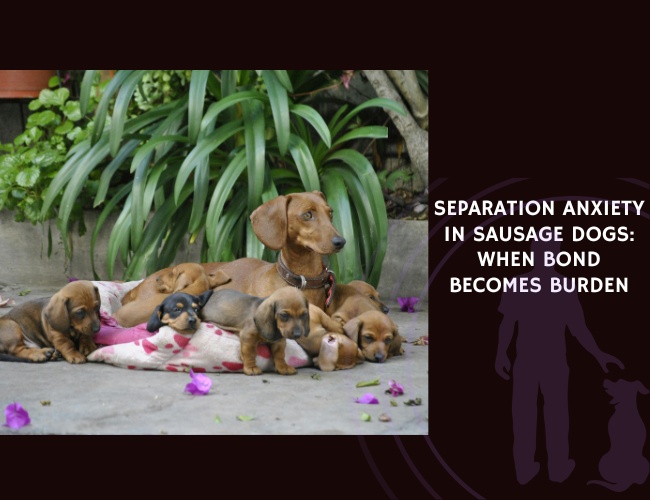
You might notice something paradoxical about your Dachshund. Here’s a breed that once hunted badgers alone in dark underground tunnels—fearless, independent, utterly self-reliant. Yet today, your sausage dog can’t bear to be without you for even a moment. The howling begins before you reach the door. The destructive chewing greets you on return. The clinginess borders on suffocating.
How did the bravest underground hunter become one of the most separation-anxious breeds in modern homes?
The answer lies not in weakness, but in transformation. As Dachshunds transitioned from independent working dogs to devoted companions, something shifted in their emotional architecture. The intense bonds they now form with their humans—once reserved for prey drive and determination—have been redirected entirely toward attachment. Through the NeuroBond approach, we can understand this not as a flaw, but as an expression of profound connection that simply needs recalibration.
This guide explores the neuroscience, behavior, and training strategies that address separation anxiety in Dachshunds—not by breaking their bond with you, but by teaching them that connection can exist even in temporary distance.
The Hunter’s Paradox: Independence Meets Dependency
From Solo Hunter to Velcro Dog
Dachshunds were originally bred in 15th-century Germany for a singular, dangerous purpose: hunting badgers (Dachs means badger, Hund means dog). Their elongated bodies, paddle-like paws, and fearless temperament allowed them to pursue formidable prey into narrow underground burrows—alone, out of sight, often out of hearing range of their handlers.
This required extraordinary self-reliance. A Dachshund working underground couldn’t look to humans for reassurance or guidance. They made split-second decisions, confronted dangerous animals, and navigated complex tunnel systems independently. Their survival depended on confidence, determination, and emotional autonomy.
Fast-forward to modern times. The vast majority of Dachshunds today have never seen a badger, let alone hunted one. Instead, they’ve become companion animals—lap dogs, even. And with this role change came a dramatic shift in breeding priorities. Where once breeders selected for courage and independence, modern breeding has increasingly favored docility, affection, and what’s often called “Velcro dog” behavior. 🧡
Did selective breeding for companionship inadvertently create emotional dependency? The evidence suggests yes. As Dachshunds moved from kennels to couches, from working roles to devoted companions, breeders may have unconsciously selected for dogs that sought constant human contact, that melted into laps, that followed their people from room to room. These traits—endearing in moderation—can become the foundation for separation anxiety when taken to extremes.
The Genetic Memory of Autonomy
Yet here’s what makes Dachshund separation anxiety so complex: the genetic heritage of independence hasn’t disappeared. Deep in their behavioral programming, these dogs still possess the capacity for autonomous action, problem-solving, and self-directed behavior. You see it when they dig obsessively in your garden, when they pursue a scent with single-minded determination, when they stubbornly insist on doing things their own way.
This creates an internal conflict—a form of cognitive dissonance. Your Dachshund carries both the genetic blueprint for independence and the learned behavior of intense emotional dependency. When you leave, they experience not just loneliness, but confusion. Their instincts say they should be capable of solitude, yet their emotional conditioning says your absence is intolerable.
This tension manifests as anxiety. They’re torn between self-directed independence and intense emotional dependency, between their heritage and their modern reality.
Understanding the Attachment System: When Connection Becomes Crisis
The PANIC System: Social Distress in Action
Affective Neuroscience, particularly the work of Jaak Panksepp, identifies seven primary emotional systems in mammalian brains. Two are particularly relevant to Dachshund separation anxiety: the PANIC system and the CARE system.
The PANIC system governs social distress and separation calls. When a young mammal becomes separated from its caregiver, the PANIC system activates, triggering vocalizations (in puppies, the plaintive whine; in adult dogs, howling and barking) designed to alert the caregiver and facilitate reunion. This is an ancient, deeply wired survival mechanism—separation from the group meant death for social mammals.
In Dachshunds with separation anxiety, the PANIC system appears to have a hair-trigger threshold. What should be a manageable concern (“my person has left temporarily”) becomes an overwhelming crisis (“I’m abandoned and in danger”). The moment you reach for your keys, their amygdala—the brain’s emotional alarm center—begins firing distress signals throughout their nervous system.
You’ll see this activation in their behavior:
- Excessive vocalization that begins even before you leave
- Physical trembling or panting when departure cues appear
- Frantic following as you move through your departure routine
- Attempts to block your exit by sitting on your shoes or standing in doorways
The CARE System: When Nurturing Needs Become Overwhelming
The CARE system drives affiliative behaviors, bonding, and the desire for nurturing contact. In healthy attachment, this system creates warmth, connection, and mutual comfort. But in anxiously attached Dachshunds, the CARE system becomes hyperactive—constantly seeking reassurance, touch, and proximity.
This is where the “Velcro dog” phenomenon intensifies. Your Dachshund doesn’t just want to be near you; they need constant physical contact to regulate their emotional state. They burrow under your arm while you work, sleep pressed against your leg, follow you into the bathroom. Any separation—even by a few feet—creates discomfort.
The problem? They’re using your presence as their primary emotional regulation strategy. Instead of developing internal self-soothing mechanisms, they’ve outsourced emotional stability to you. When you’re gone, their entire regulatory system collapses. 🧠
Anxious-Ambivalent Attachment in Dogs
Attachment theory, originally developed to understand human infant-caregiver bonds, applies remarkably well to dogs. Researchers have identified four main attachment styles: secure, anxious, avoidant, and disorganized. Dachshunds with separation anxiety typically demonstrate anxious-ambivalent attachment.
What does this look like? An anxiously attached Dachshund shows:
- Intense preoccupation with the caregiver’s location and availability
- Exaggerated distress at even brief separations
- Hypervigilance to departure cues (picking up keys, putting on shoes)
- Ambivalent behavior upon reunion—simultaneously desperate for contact yet sometimes showing frustration or displacement behaviors
- Difficulty settling even when the caregiver is present but not directly interacting
This attachment style often develops when caregivers are inconsistent—sometimes highly responsive and indulgent, other times frustrated by the clinginess. The dog learns that connection is important but unpredictable, creating anxiety about whether their needs will be met.
Through the lens of Soul Recall, we understand that these patterns form through repeated emotional experiences that become embedded in the dog’s behavioral memory. Each time your Dachshund experienced distress during separation and relief upon your return, the neural pathways strengthened, making the pattern more automatic and harder to interrupt.
Sensory Sensitivity: The Hidden Amplifier of Distress
Heightened Awareness, Lower Thresholds
Dachshunds were bred with exceptional sensory acuity—keen hearing to detect underground prey, extraordinary scent discrimination, and acute awareness of environmental changes. These traits, advantageous for hunting, can become liabilities in modern environments.
When alone, a sensory-sensitive Dachshund doesn’t simply experience your absence. They experience every:
- Sound from neighboring apartments or passing traffic
- Visual stimulus through windows—people walking, cars moving, other animals
- Scent variation as outdoor air brings unfamiliar smells
- Temperature change as the day progresses
- Shadow and light shift that might signal threats
This heightened awareness, without the security of your presence to contextualize and buffer these stimuli, can lead to sensory flooding—an overwhelming bombardment of input that the nervous system struggles to process.

Frustration Tolerance and Emotional Thresholds
Dogs with high sensory sensitivity often develop lower frustration tolerance. When everything feels more intense, the capacity to remain calm under stress diminishes. Your Dachshund might cope well when you’re home because your presence provides emotional grounding. But alone, their threshold for managing discomfort drops dramatically.
This explains why some Dachshunds are fine for 15 minutes but fall apart at 20. It’s not about the time per se—it’s about the accumulation of small stressors that finally exceeds their capacity to cope. Think of it like a bucket slowly filling with water. Each stressor adds a bit more: a door slams (more water), a dog barks outside (more water), they hear an unfamiliar sound (more water). Eventually, the bucket overflows into panic behavior.
Tactile Deprivation: The Loss of Physical Comfort
Given their “Velcro dog” tendencies, many Dachshunds are profoundly tactile-seeking. They crave physical contact—the warmth of your lap, the pressure of your hand, the security of being under a blanket pressed against you. This isn’t simply preference; for some, it becomes a primary source of nervous system regulation.
When you leave, they lose access to this powerful calming mechanism. The sudden tactile deprivation can trigger autonomic stress responses:
- Increased heart rate and respiratory rate
- Trembling or shaking
- Gastrointestinal upset (stress-induced diarrhea or nausea)
- Temperature dysregulation (feeling too hot or too cold)
You might notice your Dachshund desperately trying to recreate that lost comfort by burrowing into couch cushions, wrapping themselves in your worn clothing, or digging at bedding to create a nest-like pressure environment. These aren’t simply behaviors—they’re adaptive attempts to self-soothe through tactile stimulation.
Behavioral Expression: Reading the Language of Distress
The Separation Anxiety Behavior Spectrum
Separation anxiety manifests along a spectrum of behaviors, each serving a specific emotional function. Understanding what your Dachshund is communicating through their actions is essential for intervention.
Vocalization (Howling, Barking, Whining)
- Function: Social signaling designed to call you back
- What it indicates: Active PANIC system engagement
- Intensity clue: Continuous, high-pitched vocalizations suggest acute distress; intermittent vocalizations may indicate milder anxiety or boredom
Destructive Behavior (Chewing, Scratching, Digging)
- Function: Stress discharge, escape attempts, or self-soothing through oral activity
- What it indicates: Overwhelmed coping mechanisms and high arousal
- Pattern clue: Destruction focused on exit points (doors, windows) suggests escape motivation; chewing personal items with your scent indicates comfort-seeking
Burrowing and Nesting
- Function: Creating den-like security and pressure stimulation
- What it indicates: Attempt to self-regulate through environmental manipulation
- Adaptive note: Often the healthiest coping strategy available to them
Escape Attempts
- Function: Active problem-solving to reunite with you
- What it indicates: High distress plus strong problem-solving drive
- Risk factor: Dachshunds can injure themselves during frantic escape efforts, breaking teeth on crate bars or injuring paws on doors
Elimination (Urination or Defecation)
- Function: Often involuntary stress response, not spite or poor house training
- What it indicates: Autonomic nervous system activation during panic
- Important distinction: Separation anxiety elimination typically occurs within 30 minutes of departure, happens even when the dog was recently walked, and is often accompanied by other anxiety signals
The Clingy Greeting Rebound
- Function: Relief behavior and attachment confirmation
- What it indicates: Proportionate to the distress experienced during your absence
- What it looks like: Jumping, spinning, excessive licking, inability to settle, sometimes even involuntary urination
These behaviors aren’t separate issues to address individually. They’re a constellation of stress responses all stemming from the same root: emotional dysregulation triggered by your absence.
Early Warning Signs: Recognizing Anxiety Before Escalation
The most effective intervention happens before separation anxiety fully develops. Watch for these subtle early indicators:
Pre-Departure Anxiety Signals
- Following you more closely than usual during your morning routine
- Pacing or restlessness when you pick up keys or put on shoes
- Excessive yawning or lip-licking (stress signals)
- Lowered body posture or tucked tail
- Refusal to eat breakfast on days when you leave
- Increased scanning or monitoring of your location and activities
Mild Distress During Brief Separations
- Continuous orientation toward the door where you exited
- Inability to settle or relax in your absence
- Reluctance to engage with toys or treats when alone
- Scent-searching behavior (intense sniffing of areas where you spend time)
Reunion Behavior Changes
- Increasingly intense greetings over time
- Difficulty calming down after your return
- Shadowing behavior that intensifies after each separation
- Increased vocalization or demand for attention
Recognizing these early patterns gives you the opportunity to implement prevention strategies before the anxiety deepens into entrenched behavioral patterns.
Alone. Conflicted. Torn.
They were bred to stand alone.
Deep beneath the earth, Dachshunds hunted in darkness, making fearless decisions without human guidance. That independence still lives in their genes—but today, it collides with modern breeding for closeness and companionship.
They don’t fear silence — they fear disconnection.
When you leave, their brain doesn’t simply register absence. It activates the ancient PANIC system—social distress designed to call the group back together.



They’re not fragile — they’re emotionally wired.
Their heritage gave them courage, but modern breeding amplified sensitivity. They bond intensely, mirror your emotions, and regulate through physical closeness.
The Invisible Leash: Building Emotional Distance Within Connection
Redefining Independence Through Trust
The Invisible Leash concept offers a powerful framework for addressing Dachshund separation anxiety. It’s the understanding that true connection doesn’t require constant physical proximity—it exists in the trust, confidence, and emotional security that allows temporary distance without distress.
Your Dachshund needs to learn that your bond persists even when you’re not visible. That their emotional stability doesn’t depend on your physical presence. That they can be brave in your absence because they trust in your return.
This isn’t about making them love you less. It’s about teaching them to carry the security of your connection internally rather than requiring external validation through constant proximity.
Calm Leadership and Emotional Clarity
Dogs are extraordinarily attuned to human emotional states. Your anxious Dachshund is reading your emotions during departures—and if you’re projecting guilt, worry, or excessive concern, you’re confirming that separation is indeed something to be anxious about.
Calm leadership means:
- Maintaining neutral emotional energy during departures and arrivals
- Avoiding prolonged goodbyes that heighten emotional intensity
- Projecting confidence that everything is normal and fine
- Establishing clear boundaries around attention and physical contact
- Being consistent in your energy and expectations
When you practice emotional clarity—presenting a calm, confident, predictable emotional presence—you provide your Dachshund with an anchor they can internalize. Over time, your calm becomes their calm, even when you’re not physically present.
The Power of Predictable Routines
Anxiety thrives in uncertainty. If your Dachshund never knows when you’ll leave, how long you’ll be gone, or what will happen during your absence, their nervous system remains in constant vigilance.
Predictable routines reduce anxiety by creating a reliable framework:
Departure Routines
- Follow the same sequence of activities before leaving
- Include a specific cue that signals departure (a particular phrase or action)
- Keep the routine brief and emotionally neutral
- Provide a comfort item or activity right before you leave
Return Routines
- Ignore your dog completely for the first 5-10 minutes after arriving home
- Only offer attention once they’ve calmed down
- Keep greetings low-key and brief
- Reward calm behavior, not excited behavior
Daily Schedule
- Feed, walk, and engage with your Dachshund at consistent times
- Establish regular alone-time practice periods
- Create predictable wind-down routines before longer separations
This predictability doesn’t eliminate emotion—it contains and channels it into manageable patterns your Dachshund can learn to navigate confidently. 😊
Training Strategies: Building Emotional Resilience
Structured Autonomy-Building: The Foundation of Independence
Separation anxiety improves not through flooding (forcing the dog to endure long separations) but through systematic desensitization—gradually building tolerance for increasing periods of independence.
Phase 1: Presence Without Engagement (Week 1-2) Begin by teaching your Dachshund that being in the same room doesn’t mean constant interaction:
- Sit on the couch while they’re on the floor
- Read or work while they settle nearby
- Ignore attention-seeking behaviors (pawing, whining, nudging)
- Reward spontaneous calmness with brief, low-key attention
Phase 2: Same-Space Independence (Week 2-3) Progress to being present but creating small distances:
- Move to different chairs in the same room
- Step behind barriers (around a corner, into an alcove)
- Vary your activities unpredictably so they can’t monitor you constantly
- Practice brief bathroom trips with the door closed
Phase 3: Different-Room Separations (Week 3-5) Once they can handle same-room distance, begin leaving their sight:
- Step into adjacent rooms for 30 seconds
- Gradually increase to 1-2 minutes
- Return before they show anxiety
- Alternate rooms randomly to prevent pattern prediction
Phase 4: Brief True Departures (Week 5-8) Start actual leaving and returning:
- Walk to your car and return (30 seconds)
- Drive around the block (2-3 minutes)
- Gradually extend to 5, 10, 15 minutes
- Always return before full panic develops
Phase 5: Duration Building (Week 8+) Slowly extend time alone:
- Increase departures by 5-10 minute increments
- Include variability (some short, some longer)
- Practice at different times of day
- Incorporate your actual departure routine
The key principle: always return before they become distressed. You’re teaching them that separation is temporary and your return is inevitable—building trust through consistency, not forcing tolerance through overwhelm.
Choice-Based Calming Zones: Safe Spaces for Self-Soothing
Autonomy in confinement seems contradictory, but it’s essential. Your Dachshund needs a space that feels safe, secure, and chosen—not imposed—where they can retreat when stressed.
Creating the Calming Zone
- Choose a quiet location away from high-traffic areas
- Provide denning options: a covered crate, a bed under a table, or a quiet corner
- Include items with your scent (worn t-shirt, recently used blanket)
- Add background noise (white noise machine, soft music, or television)
- Ensure comfortable temperature and lighting
Building Positive Associations
- Feed meals in the calming zone
- Offer special high-value treats only available there
- Practice calm activities there while you’re present (gentle petting, quiet time)
- Never use the zone for punishment or forced timeout
- Allow your dog to enter and exit freely during training
Independence Practice in the Zone
- Once the zone has strong positive associations, begin brief separations while they’re settled there
- Start with 30-second absences
- Gradually extend duration
- Return before anxiety emerges
- Pair your return with calm acknowledgment, not high excitement
This space becomes their emotional anchor—a place where they can self-regulate, feel secure, and practice independence within safety.
The Role of Enrichment and Tire-Out Strategies
A physically and mentally tired Dachshund has less energy available for anxiety. Strategic enrichment serves multiple purposes: it provides appropriate outlets for their hunting drive, occupies their mind during alone time, and creates positive associations with your departure.
Pre-Departure Physical Exercise
- 20-30 minute walk or play session before you leave
- Include sniffing opportunities (scent work exercises)
- Mental stimulation through training or problem-solving games
- Avoid over-arousal; end with calm-down activities
Cognitive Enrichment During Alone Time
- Food-stuffed Kong toys frozen overnight (20-30 minutes of engagement)
- Snuffle mats or scatter feeding to engage hunting instincts
- Puzzle toys that release treats gradually
- Long-lasting chews (bully sticks, yak cheese, appropriate bones)
Lick Mats and Calming Activities
- Smear peanut butter, yogurt, or pureed pumpkin on lick mats
- The repetitive licking action promotes calming through parasympathetic nervous system activation
- Present only when you leave, creating positive departure associations
Environmental Enrichment
- Leave curtains open to windows with interesting views
- Play ambient nature sounds or dog-specific calming music
- Rotate toys to maintain novelty
- Hide small treats around the home for scent searching
These strategies don’t “cure” separation anxiety, but they reduce available energy for anxiety behaviors and create competing positive associations with your absence.
Counter-Conditioning: Changing Emotional Responses
Classical conditioning created the problem—your departure cues (keys, shoes, coat) became associated with distress through repeated pairings. Counter-conditioning uses the same principle in reverse, creating new, positive associations.
Desensitizing Departure Cues
- Identify your dog’s triggers: Keys jangling? Shoes going on? Specific coat?
- Present the cue frequently without leaving: Pick up keys 20 times a day, then sit back down
- Pair cues with positivity: Put on shoes, give treat, take off shoes; repeat throughout the day
- Randomize cue sequences: Break up the predictable departure routine so it no longer signals imminent leaving
- Gradually rebuild the actual sequence once individual cues no longer trigger anxiety
Creating Positive Departure Rituals Instead of sneaking out or offering elaborate goodbyes, establish a brief, positive ritual:
- Give a special high-value treat or toy only available when you leave
- Use a consistent phrase (“I’ll be back”) in a calm, confident tone
- Immediately leave without prolonged eye contact or emotional intensity
- Upon return, ignore your dog until calm, then offer low-key acknowledgment
Over weeks of consistent practice, your departure becomes associated with good things (special treat), predictability (same phrase and routine), and trust (you always return), gradually overwriting the anxiety response.
Advanced Considerations: When Training Isn’t Enough
Medical Rule-Outs and Health Factors
Sometimes what appears as separation anxiety has physiological components that require veterinary intervention.
Underlying Medical Conditions to Consider
- Thyroid dysfunction: Hypothyroidism can increase anxiety and behavioral changes
- Chronic pain: Arthritis or back problems (common in Dachshunds) may worsen when alone without distraction
- Cognitive dysfunction: Older Dachshunds may experience confusion and disorientation
- Urinary tract infections: May cause elimination that mimics anxiety-related accidents
- Gastrointestinal issues: Can create discomfort that worsens in stressful situations
Always work with your veterinarian to rule out medical contributions before assuming the problem is purely behavioral.
Medication-Assisted Training
For severe cases, anti-anxiety medication can be an important tool—not a cure, but a bridge that makes behavioral modification possible. When a dog’s anxiety is so severe they can’t learn, medication can lower arousal enough for training to take hold.
Common Options
- SSRIs (fluoxetine, sertraline): Daily medications that reduce overall anxiety levels
- Benzodiazepines (alprazolam): Fast-acting for acute situations
- Trazodone: Helps with situational anxiety and sleep
- Clonidine: Supports emotional regulation and impulse control
Medication works best when:
- Combined with comprehensive behavior modification
- Prescribed and monitored by a veterinarian
- Used as a temporary support tool, not a permanent solution
- Part of a holistic approach including training, enrichment, and environmental management
The Role of Secondary Caregivers and Daycare
Sometimes the solution includes expanding your Dachshund’s support network.
Dog Daycare or Pet Sitters Can provide:
- Social interaction and supervision during work hours
- Physical exercise and mental stimulation
- Gradual independence building (being with someone who isn’t their primary attachment figure)
Important considerations:
- Choose calm, structured environments that won’t over-stimulate
- Introduce gradually with short visits
- Ensure your Dachshund isn’t just transferring anxiety to a new person
- Monitor for exhaustion (too much stimulation can worsen anxiety)
Multi-Dog Households Adding a second dog can help some Dachshunds but worsen others:
- Can provide companionship and reduce loneliness for mildly anxious dogs
- May create more stress if your Dachshund has true separation anxiety from YOU specifically (not general isolation distress)
- Works best when both dogs have independent, secure attachment styles
- Requires the second dog to have calm, confident energy that models appropriate behavior
Long-Term Management: Living Successfully with a Sensitive Dachshund
Acceptance and Lifestyle Adjustment
For some Dachshunds, complete independence may never be fully achievable. Severe separation anxiety can require permanent lifestyle adjustments:
Work-From-Home Options If possible, remote work eliminates the daily separation trigger. However:
- Still practice brief separations regularly to maintain some tolerance
- Establish boundaries even when home (not always immediately available)
- Create routines that distinguish work time from engagement time
Flexible Work Arrangements
- Shortened work days
- Split shifts with partners or family members
- Bringing your dog to work (if permitted and appropriate)
- Mid-day pet sitters or dog walkers
Realistic Expectations Not every Dachshund will tolerate 8-hour absences, and that’s okay. Understanding your individual dog’s capacity and working within it—while continuing gradual improvement efforts—is often the most humane approach.
The Transformation: From Anxious Attachment to Secure Independence
Through consistent application of these principles—structured autonomy-building, calm leadership, predictable routines, and gradual desensitization—many Dachshunds can transform their relationship with solitude.
The goal isn’t to break their bond with you. It’s to deepen it into something more mature—a connection rooted not in constant proximity but in trust, confidence, and secure attachment. That balance between science and soul—understanding the neuroscience of attachment while honoring the profound emotional connection between you and your dog—that’s the essence of Zoeta Dogsoul.
Your Dachshund’s intense devotion to you is both their greatest gift and their vulnerability. By teaching them that your bond endures beyond sight, that they can carry your security internally, and that brief separations don’t threaten connection, you give them the most profound gift: the courage to be brave in your absence because they trust completely in your return.
This is the modern translation of their ancestral bravery—not facing badgers in dark tunnels, but facing an empty house with calm confidence. Both require courage. Both deserve recognition. And both demonstrate that beneath the clinginess and anxiety lives the heart of a hunter—strong, capable, and ready to learn that independence and connection aren’t opposites, but two expressions of the same unbreakable bond. 🧡










