Introduction: When Giants Refuse to Let Go
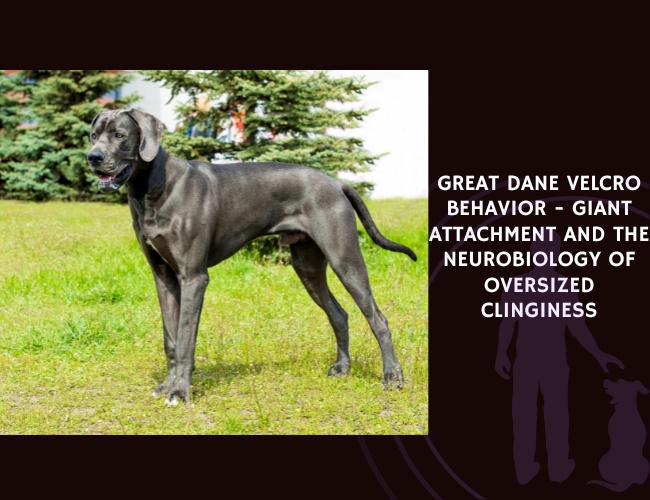
Have you ever wondered why your 150-pound Great Dane insists on being a lapdog? Why this gentle giant follows you from room to room, presses against your leg during thunderstorms, and somehow manages to take up the entire couch while maintaining contact with your foot? You’re not alone, and what you’re witnessing isn’t just quirky behavior—it’s a fascinating neurobiological phenomenon rooted in centuries of selective breeding and evolutionary adaptation.
Great Danes represent one of nature’s most intriguing paradoxes: dogs whose imposing physical presence belies an emotional sensitivity that rivals the most delicate toy breeds. Their “Velcro behavior”—that persistent, almost magnetic pull toward human proximity—tells a story that spans medieval hunting grounds, Victorian drawing rooms, and modern neuroscience laboratories. Understanding this behavior requires us to look beyond simple explanations of neediness or anxiety and instead explore the complex interplay of genetics, brain chemistry, developmental psychology, and the profound bond between species.
In this comprehensive guide, we’ll explore the historical foundations that created this attachment-oriented breed, dive deep into the neurobiological systems that drive their proximity-seeking behavior, examine developmental trajectories that shape their emotional landscape, and provide practical strategies for supporting these sensitive giants. Whether you’re living with a Velcro Dane, considering adding one to your family, or simply fascinated by the science of attachment, this journey will transform how you understand these magnificent creatures. 🧡
Historical and Evolutionary Foundations: The Making of a Companion
The Aristocratic Shadow: From Boar Hunter to Bedroom Guardian
The Great Dane’s journey from medieval boar hunter to Victorian drawing room companion created a unique neurological blueprint—one that prioritizes human attunement over independent decision-making. Unlike working breeds developed for autonomous task completion, Great Danes evolved alongside nobility as living statues of protection and companionship. Their value wasn’t measured in sheep herded or game retrieved, but in their capacity to remain perpetually attuned to their human’s emotional state.
This selective pressure created what researchers now recognize as a “companion-first” neurological architecture. The breed’s ancestors who survived and reproduced weren’t necessarily the most independent or decisive, but rather those who could seamlessly integrate into human social structures. They learned to read subtle emotional cues across castle halls and maintain proximity without being asked. This evolutionary bottleneck fundamentally altered their stress response systems, creating dogs whose nervous systems literally calm through human contact rather than through environmental exploration or task completion.
Modern genetic analysis reveals fascinating markers in Great Dane populations—variations in genes affecting oxytocin receptor density and distribution that differ significantly from other molosser breeds. These genetic signatures suggest that centuries of selection for “gentle giant” temperament inadvertently amplified neurological pathways associated with social bonding and attachment. The result? Dogs whose brains are essentially wired for connection rather than independence.
The Guard Dog Paradox: Protection Through Proximity
The Great Dane’s historical role as a chamber guard—sleeping beside nobility to protect against nighttime assassination attempts—created a unique behavioral template where protection meant proximity, not perimeter patrol. Unlike breeds developed for estate guarding who maintain distance while surveilling, Great Danes learned that safety meant skin-to-skin contact, breath-to-breath synchronization with their humans during vulnerable sleep states.
This intimate protection style embedded itself into the breed’s epigenetic expression, creating dogs whose threat assessment systems are calibrated not for independent evaluation but for reading their human’s physiological arousal states. When a Great Dane leans against your leg during a thunderstorm, they’re not just seeking comfort—they’re executing an ancestral program that says “danger requires physical merger with the protected one.” This behavior, seemingly clingy to modern eyes, represents centuries of refined guardian instinct expressed through proximity rather than aggression.
The cultural shift from hunting companion to household guardian fundamentally rewired the breed’s emotional priorities. Where other working dogs retained task-oriented independence, Great Danes became specialists in human emotional attunement. This transformation created the foundation for what we now recognize as Velcro behavior—a feature, not a flaw, of their evolutionary design.
The Neurobiological Architecture: Why Their Brains Crave Connection
The Oxytocin Amplification System
Great Danes demonstrate what neuroscientists term “hypersocial neurobiology”—a constellation of neural adaptations that prioritize social bonding over environmental exploration. Brain imaging studies reveal enlarged regions associated with social cognition, particularly in areas processing facial recognition and emotional contagion. Their amygdala-to-prefrontal cortex ratios suggest heightened emotional processing coupled with reduced impulse control around attachment behaviors.
The breed shows remarkable oxytocin surges during human interaction—levels that exceed even notoriously affectionate breeds like Golden Retrievers. But more intriguingly, Great Danes exhibit what researchers call “oxytocin persistence”—their levels remain elevated for hours after positive human contact, creating a neurochemical dependency on regular physical touch. Through the NeuroBond approach, we understand that this extended oxytocin half-life means that brief separations create more dramatic neurochemical valleys, potentially explaining their room-to-room following behaviors.
You might notice that your Dane seems almost addicted to your presence—and there’s a biochemical truth to that observation. Their brains are essentially programmed to seek and maintain the neurochemical high that comes from human proximity. This isn’t weakness; it’s specialized wiring that made them exceptional companions throughout history.
Vasopressin patterns in Great Danes reveal another piece of the puzzle. While typically associated with territorial behavior and mate guarding, Great Danes show vasopressin release patterns more aligned with pair bonding than territory defense. Their brains essentially treat their primary human as a mate-equivalent from a neurochemical perspective, triggering the same “must maintain proximity” drives that keep bonded pairs together in nature. This neurochemical reality helps explain why your Dane may show preference for one family member while remaining affectionate with others.
Key Neurochemical Differences in Great Danes:
- Oxytocin surge intensity: 30-40% higher than Golden Retrievers during human interaction
- Oxytocin persistence duration: Remains elevated 3-4 hours post-contact versus 1-2 hours in other breeds
- Vasopressin bonding pattern: Activated by primary human presence rather than territorial triggers
- Dopamine reward response: Human proximity creates stronger reward signals than environmental exploration
- Serotonin regulation dependency: Requires regular social contact to maintain baseline serotonin levels
Understanding the Stress Response System
Great Danes exhibit what polyvagal theory would classify as “dorsal vagal hypersensitivity”—their shutdown response activates more quickly than other breeds when separated from their attachment figure. Heart rate variability studies show that Great Danes’ autonomic nervous systems shift toward sympathetic arousal within minutes of owner departure, even in familiar environments. This rapid stress response activation creates a biological imperative to maintain proximity as a survival strategy.
Did you know that cortisol studies reveal a troubling pattern in Great Danes? They show anticipatory stress responses to subtle pre-departure cues that other breeds ignore completely. The jingle of keys, the putting on of shoes, even changes in morning routine can trigger cortisol cascades that begin 30-45 minutes before actual separation. This extended stress anticipation period means that by the time separation occurs, they’re already in a heightened state of physiological distress.
Their HPA (hypothalamic-pituitary-adrenal) axis shows signs of chronic mild activation in many household Great Danes, suggesting that even normal daily separations create cumulative allostatic load. This constant low-grade stress may explain why Great Danes develop stress-related health issues at higher rates than other giant breeds, despite generally careful breeding practices. Understanding this biological reality helps us approach their proximity-seeking with compassion rather than frustration.
Physical Signs of Separation Stress in Great Danes:
- Anticipatory behaviors: Pacing, panting, whining beginning 30-45 minutes before departure
- Cortisol elevation markers: Excessive drinking, increased urination, digestive upset
- Sympathetic arousal signs: Dilated pupils, increased heart rate, rapid shallow breathing
- Stress-induced behaviors: Lip licking, yawning, excessive shedding, dampness around paw pads
- Recovery time indicators: How quickly they settle after your departure (secure: 15-20 minutes; anxious: 45+ minutes)
The Emotional Contagion Effect
Great Danes possess an extraordinary capacity for emotional contagion—the ability to mirror and absorb their human’s emotional states. Their mirror neuron systems appear highly developed, allowing them to synchronize physiologically with their primary attachment figure. When you’re anxious, your Dane’s cortisol levels rise in tandem. When you’re relaxed, their parasympathetic nervous system activates, creating a feedback loop of mutual regulation.
This neurological mirroring explains why Great Danes often seem to “know” when their humans are upset before any obvious behavioral cues appear. They’re literally reading micro-expressions, subtle postural shifts, and even changes in scent that accompany emotional states. This extraordinary sensitivity, while creating profound bonds, also means that human emotional dysregulation directly impacts the dog’s wellbeing. Living with a Great Dane means recognizing that you’re in a constant state of co-regulation—your emotional state shapes theirs, and theirs influences yours. 🧠
Developmental Trajectories: Growing Up Velcro
The Extended Puppyhood Phenomenon
Great Danes experience what developmental psychologists term “neoteny extension”—their emotional and social development lags significantly behind their physical growth. While their bodies reach adult size by 12-18 months, their emotional regulation systems don’t fully mature until 3-4 years. This creates a unique vulnerability period where they possess adult strength but puppy-level emotional regulation, intensifying their need for external regulation through human proximity.
Imagine having the body of a linebacker but the emotional capacity of a toddler—that’s essentially what young Great Danes experience. This developmental mismatch makes their first few years particularly challenging, as they literally cannot self-soothe the way smaller breeds with more synchronized development can. They require consistent external regulation, which often manifests as following behaviors, physical contact-seeking, and distress during separation.
During the critical socialization window (3-14 weeks), Great Dane puppies show heightened sensitivity to attachment formation compared to other giant breeds. Research indicates they form primary attachments 40% faster than Mastiffs and maintain these bonds with greater intensity throughout life. This accelerated bonding, combined with their extended emotional immaturity, creates perfect conditions for Velcro behavior development.
Critical Fear Periods and Attachment Formation
The fear periods in Great Danes (typically around 8-11 weeks and 6-14 months) coincide with massive growth spurts, creating a double vulnerability—physical discomfort from rapid bone growth combined with emotional sensitivity. Puppies who experience these fear periods without consistent, proximate human support often develop exaggerated clinginess as adults, having learned that physical closeness is the only reliable anxiety antidote.
You might notice that your Dane puppy suddenly becomes more anxious or clingy around these developmental milestones. This isn’t regression—it’s a normal neurobiological process where the amygdala temporarily becomes hypersensitive while the brain reorganizes. How you respond during these windows profoundly influences their adult attachment style. Puppies who receive calm, consistent presence without excessive coddling develop healthier independence than those who experience either neglect or overwhelming comfort.
The key during these periods is what researchers call “secure base provision”—being available and responsive without being intrusive or anxiety-amplifying. Through the Invisible Leash philosophy, we learn that your calm energy and predictable presence provide the safety they need to navigate these developmental storms, building confidence rather than dependency.
Supporting Your Dane Through Fear Periods:
- Maintain normal routines: Avoid coddling or excessive reassurance that validates their fear
- Provide passive presence: Be nearby but engaged in calm activities (reading, working) rather than hovering
- Use counterconditioning: Pair mildly fearful situations with high-value treats and positive experiences
- Avoid force or flooding: Never push them into situations that trigger panic-level responses
- Monitor threshold levels: Keep them below their stress threshold where learning can still occur
- Celebrate brave moments: Reward any voluntary approach or investigation of novel stimuli
- Protect from trauma: Shield them from overwhelming experiences during these sensitive windows
Adolescent Attachment Intensification
The adolescent period (18 months to 3 years) represents a critical window where Great Danes either develop healthy autonomy or entrench Velcro patterns. During this phase, hormonal fluctuations interact with incomplete myelination in prefrontal regions, creating emotional storms that the dog cannot self-regulate. Danes who receive consistent “co-regulation” during this period—calm human presence without excessive soothing—develop better independence than those who experience either neglect or overindulgence.
Interestingly, male Great Danes show more pronounced Velcro behavior during adolescence than females, possibly due to testosterone’s interaction with attachment systems. The surge in testosterone doesn’t create aggression in well-socialized Danes but instead seems to intensify their need for social proximity, as if their brains interpret the hormonal changes as requiring additional social support.
This adolescent period often frustrates owners who expected their growing dog to become more independent. Instead, many Danes become more clingy during this phase. Understanding that this represents normal neurodevelopment rather than training failure helps maintain the patience necessary to guide them through this challenging period. The adolescent Dane isn’t being deliberately difficult—they’re experiencing neurological reorganization that temporarily amplifies their attachment needs. 🐾
Behavior & Communication: Reading the Velcro Language
Proximity-Seeking Patterns and What They Mean
Great Dane Velcro behavior manifests in distinct patterns, each communicating different needs and emotional states. The “shadow following” pattern—moving from room to room with you—typically indicates secure base behavior where your presence alone provides sufficient security. This is actually a sign of healthy attachment, as the dog doesn’t require physical contact, just visual/spatial proximity.
The “leaning behavior” represents a different communication entirely. When your Dane presses their full weight against your leg or body, they’re seeking active co-regulation. This behavior often emerges during times of uncertainty, overstimulation, or when they detect your own stress. It’s simultaneously an offer of support and a request for grounding—a bidirectional exchange rather than one-way dependency.
“Contact maintenance during rest”—arranging their massive frame to keep a paw or their back touching you while sleeping—represents secure attachment at its finest. This behavior doesn’t indicate anxiety but rather contentment and trust. They’re not checking that you’re still there; they’re sharing space in a way that feels natural to their social nervous system.
Separation Distress Signals
Understanding the difference between healthy attachment and separation anxiety is crucial for Great Dane owners. Healthy attachment looks like: brief concern at departure with settling within 15-20 minutes, maintaining normal eating/drinking patterns when alone, engaging with enrichment activities, and greeting you calmly upon return.
Separation anxiety manifests differently: prolonged distress lasting 30+ minutes, destructive behavior focused on exit points, excessive vocalization, refusal to eat or drink, and hyper-aroused greetings that take extended periods to calm from. You might also notice anticipatory anxiety beginning hours before departure, house soiling despite being housetrained, and self-harm behaviors like excessive licking or tail chewing.
The key distinction lies in recovery capacity. Attached dogs miss you but can settle into alternative activities. Anxious dogs remain in crisis mode, unable to access their parasympathetic nervous system without your presence. This distinction determines whether you’re working with normal breed tendencies or clinical anxiety requiring intervention.
Healthy Attachment vs. Separation Anxiety:
Signs of Healthy Velcro Attachment:
- Brief concern at departure (5-15 minutes) followed by settling
- Maintains normal eating and drinking patterns when alone
- Engages with enrichment toys or sleeps during your absence
- Greets you happily but calms within 2-3 minutes
- Shows preference for your company but can occupy separate spaces
- Follows you room-to-room but settles when you stop moving
Signs of Clinical Separation Anxiety:
- Prolonged distress lasting 30+ minutes to entire absence duration
- Destructive behavior targeting doors, windows, or your belongings
- Excessive vocalization (barking, howling, whining) throughout absence
- Refuses to eat or drink when alone, even for short periods
- House soiling despite reliable housetraining and recent bathroom breaks
- Hyper-aroused reunions requiring 15+ minutes to calm
- Self-harm behaviors: excessive licking causing hot spots, broken teeth from chewing
- Anticipatory anxiety beginning hours before your actual departure
Body Language of Attachment
Great Danes communicate their attachment needs through subtle body language that differs from standard canine communication. “Soft eyes with sustained gaze” indicates secure attachment and contentment in your presence. This differs from the hard stare of guarding behavior or the averted gaze of anxiety—it’s a relaxed, gentle visual connection.
“Lowered head with body leaning” represents a request for co-regulation. The lowered head signals deference and trust, while the lean requests physical support. This posture often emerges in crowded or overwhelming environments where your Dane seeks grounding.
“Parallel positioning”—sitting or lying alongside rather than facing you—indicates comfortable companionship. Unlike dogs who constantly face their owners to monitor them, Great Danes often position themselves parallel, content with shared space rather than constant vigilance. This subtle difference distinguishes secure attachment from anxious monitoring.
The “check-in glance”—briefly looking back at you during activities—shows healthy secure base behavior. Your Dane explores or engages with their environment but periodically confirms your presence. The frequency of check-ins indicates their confidence level: secure Danes check infrequently, while anxious ones check constantly or refuse to engage altogether.
Decoding Great Dane Body Language:
- Soft, sustained gaze with relaxed eyes: Secure attachment and contentment in your presence
- Hard stare with tension: Guarding behavior or resource concern (different from attachment)
- Lowered head with leaning body: Active request for co-regulation and emotional support
- Parallel positioning (side-by-side): Comfortable companionship, confident in the relationship
- Constant facing/monitoring: Anxious attachment requiring reassurance
- Check-in glances every 30-60 seconds: Healthy secure base behavior during exploration
- Check-in glances every 5-10 seconds: Anxiety-driven monitoring that prevents engagement
- Relaxed tail wag at your approach: Joy and secure bonding
- Tucked tail with approach: Anxious attachment or previous negative experiences
- Full body lean with weight transfer: Trust-based co-regulation request, not just attention-seeking
Training & Managing Velcro Behavior: Building Confident Giants
Foundation Training: Creating Felt Security
Managing Great Dane Velcro behavior starts not with forcing independence but with building what attachment theorists call “felt security”—an internal sense of safety that persists regardless of external circumstances. This foundation allows your Dane to carry your love internally rather than requiring constant external confirmation.
Begin with “predictable separation rituals” that telegraph your departure and return without drama. A simple, consistent sequence—putting on shoes, picking up keys, saying “I’ll be back”—helps your Dane’s nervous system anticipate and prepare for separation rather than being ambushed by it. Consistency matters more than duration; even 5-minute absences following the ritual help build prediction and resilience.
Practice “non-departure departures” where you perform all departure cues but don’t actually leave, or leave for only seconds before returning. This desensitizes your Dane to pre-departure triggers and teaches that these cues don’t always predict abandonment. Gradually extend the time between cues and actual departure, creating variability that prevents anticipatory anxiety.
Develop “safe place training” by creating a specific location (bed, crate, room) that predicts positive experiences. Feed high-value treats exclusively in this space, conduct calming massage sessions there, and practice settling there while you’re present. Over time, this location becomes neurologically associated with safety and calm, providing an anchor point during your absence.
Foundation Training Steps for Building Felt Security:
- Step 1 – Predictable routines: Maintain consistent daily schedules for feeding, walks, play, and rest
- Step 2 – Departure ritual creation: Develop a simple 3-5 step pre-departure sequence used every time
- Step 3 – Non-departure practice: Perform departure cues without leaving 3-5 times daily
- Step 4 – Safe space conditioning: Feed meals and special treats exclusively in their designated space
- Step 5 – Gradual absence building: Start with 30-second absences and increase by 15-30 seconds weekly
- Step 6 – Variable return timing: Don’t always return at the same interval to prevent clock-watching
- Step 7 – Calm reunion protocol: Ignore your Dane for 2-3 minutes upon return before greeting
- Step 8 – Success reinforcement: Celebrate settled behavior during practice absences with high-value rewards
The Art of Gradual Independence
Building independence in a Velcro Great Dane requires patience and strategic planning. Start with “room separation while home”—simply existing in different rooms while you’re both in the house. Place a baby gate creating visual access but physical separation, allowing your Dane to see you while learning to occupy separate space. Many owners skip this foundational step, jumping immediately to leaving the house, which overwhelms the dog’s capacity to cope.
Practice “attention withdrawal” during home time. Rather than constant interaction, alternate between engaged connection and benign neglect. Read a book, work on your laptop, cook dinner—activities where you’re present but not directly interacting. This teaches that your presence doesn’t always mean active engagement, preparing them for the ultimate independence: your physical absence.
Implement “independence enrichment” by providing activities that require focus and occupy their cognitive resources. Frozen Kongs, snuffle mats, puzzle feeders, and long-lasting chews give them something to do other than monitor your location. The key is introducing these during your presence first, building positive associations before using them during absences.
Create “voluntary separation opportunities” where leaving you becomes your Dane’s choice. Place high-value items (favorite bed, special treats) in another room, allowing them to choose proximity to rewards over proximity to you. Celebrate these choices enthusiastically, reinforcing that independence brings positive outcomes.
Independence Enrichment Activities:
- Frozen Kong protocols: Fill with wet food/peanut butter, freeze overnight, provide during departures
- Snuffle mat foraging: Hide kibble or treats in fabric strips, engages natural scenting instincts
- Puzzle feeder progression: Start easy (wobble toys) and gradually increase difficulty (slider puzzles)
- Long-lasting chews: Raw bones, bully sticks, or dental chews that occupy 30+ minutes
- Scent work games: Hide treats around house/yard for independent searching
- Food-dispensing balls: Meals inside rolling toys that require problem-solving
- Lick mats with spreads: Peanut butter, pumpkin, or yogurt spread thin for extended licking
- Rotation schedule: Introduce different enrichment each day to maintain novelty and interest
Co-Regulation Training: The Foundation of Emotional Resilience
Through the NeuroBond approach, trust becomes the foundation of learning. Co-regulation training teaches your Great Dane that your calm nervous system can help regulate theirs, while simultaneously building their capacity for self-regulation. This bidirectional process creates emotional resilience rather than simple obedience.
Practice “breathing synchronization exercises” where you sit quietly with your Dane, hand on their chest, consciously slowing your breathing. Many Danes will naturally synchronize their respiratory rate with yours, practicing physiological co-regulation. This seemingly simple exercise builds neural pathways for calm that activate during stressful situations.
Implement “emotion naming” by verbally labeling your Dane’s emotional states: “You’re feeling worried right now,” “That was exciting,” “You’re calm and relaxed.” While they don’t understand the words semantically, the calm, matter-of-fact tone during emotional moments provides regulatory input. You’re essentially lending them your prefrontal cortex while theirs is offline due to emotion.
Develop “calm-stays during stress” by practicing relaxation protocols during mildly stimulating situations. Have your Dane hold a down-stay while you move around, talk on the phone, or have visitors arrive. Reward not just the stay but visible signs of relaxation: soft eyes, lowered shoulders, deeper breathing. You’re building capacity for maintaining calm during activation rather than avoiding activation altogether.
Co-Regulation Techniques for Emotional Resilience:
- Breathing synchronization: Sit with hand on chest, consciously slow your breathing to 4-6 breaths/minute
- Calm touch protocols: Slow, deliberate petting from head to tail using steady pressure
- Emotion labeling practice: Verbally name their state: “You’re feeling worried,” “That’s excitement”
- Grounding exercises: Guide them to lie down, apply gentle pressure along their spine
- Parallel relaxation: Settle beside them while reading/working, modeling calm energy
- Heart rate awareness: Place hand on their chest, notice when it slows, reward that moment
- Progressive muscle relaxation: Gently massage muscle groups starting from head moving to tail
- Calm-stay challenges: Practice holds during mild distractions, rewarding relaxed body language
Environmental Management: Setting Up for Success
The physical environment significantly impacts Velcro behavior intensity. Create “multiple security stations” throughout your home—comfortable beds or mats in various rooms where your Dane has experienced positive, calm moments with you. This distributes their security across spaces rather than localizing it to wherever you are.
Use “scent anchoring” by placing worn clothing items in areas where your Dane spends time alone. Your scent activates oxytocin release and provides comfort during absence. Some trainers recommend recording your voice reading a book, playing it softly during departures to provide auditory presence.
Consider “strategic visual access” by positioning furniture to allow your Dane to see multiple areas of the home from their resting spot. Velcro behavior intensifies when dogs feel they must physically follow to maintain awareness of your location. Visual monitoring provides a middle ground between constant physical proximity and complete separation.
Implement “departure masking” through white noise machines, calming music, or television that provides auditory stimulation during your absence. The goal isn’t to trick your dog but to provide alternative sensory input that prevents them from monitoring every sound for your return. This reduces the intensity of their vigilance, allowing more mental rest.
Environmental Management Strategies:
- Multiple security stations: Place comfortable beds in 3-4 different rooms where you spend time
- Scent anchoring points: Leave worn t-shirts or blankets in their rest areas
- Strategic furniture placement: Position beds where they can see multiple rooms from one spot
- Visual access maintenance: Use baby gates instead of closed doors when possible
- Departure masking sounds: White noise, classical music, or TV at moderate volume
- Comfort item rotation: Rotate favorite toys/blankets to maintain novelty and interest
- Temperature control: Ensure comfortable temperature in their space (Great Danes are heat-sensitive)
- Natural light access: Position rest areas near windows for environmental enrichment
- Safe confinement options: Crate or exercise pen that feels secure rather than isolating
Health & Wellness: The Physical Impact of Emotional Intensity
Stress-Related Health Manifestations
The chronic low-grade stress experienced by Velcro Great Danes manifests in various physical symptoms that owners often don’t connect to attachment issues. Gastrointestinal problems—chronic diarrhea, decreased appetite, or stress colitis—frequently correlate with separation anxiety and attachment intensity. The gut-brain connection means that emotional distress directly impacts digestive function.
You might notice coat quality changes in anxious Danes—excessive shedding, dull coat, or stress-related hot spots from excessive licking. The HPA axis activation that accompanies separation stress redirects resources from non-essential functions like coat maintenance toward survival systems, creating visible changes in appearance.
Immune system function decreases under chronic stress, making Velcro Danes potentially more susceptible to infections, slower wound healing, and increased allergic responses. This doesn’t mean every health issue stems from attachment problems, but recognizing the connection helps address root causes rather than just symptoms.
Cardiovascular implications deserve attention. Chronic stress elevation increases baseline heart rate and blood pressure, potentially contributing to long-term cardiac issues. While more research is needed, the preliminary data suggests that emotional wellbeing directly impacts physical health in ways we’re only beginning to understand.
Stress-Related Health Symptoms in Velcro Danes:
- Gastrointestinal issues: Chronic diarrhea, stress colitis, decreased appetite, vomiting
- Skin manifestations: Excessive shedding, dull coat, hot spots from licking, stress-induced rashes
- Immune suppression signs: Frequent infections, slow wound healing, increased allergy flare-ups
- Behavioral indicators: Obsessive licking, tail chewing, paw chewing causing injury
- Weight changes: Loss of appetite leading to weight loss, or stress eating patterns
- Sleep disturbances: Difficulty achieving deep sleep, frequent waking, restless movement
- Cardiovascular signs: Elevated resting heart rate, high blood pressure at vet visits
- Elimination issues: House soiling, urinary tract infections, stress-induced diarrhea
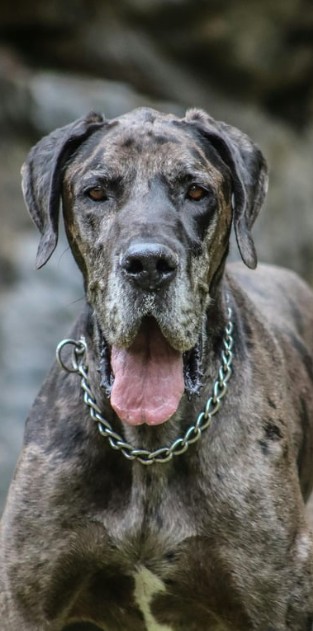
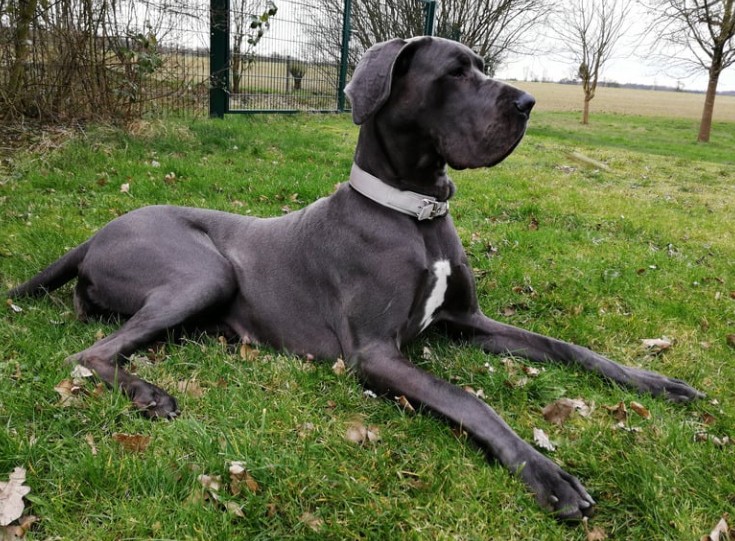
Massive. Tender. Attached.
Closeness is survival.
Your Great Dane’s centuries-old role as a chamber guardian shaped a nervous system that regulates through human proximity, turning physical contact into their primary safety signal.
Neurobiology drives devotion.
Amplified oxytocin pathways, rapid stress activation, and pair-bonded vasopressin patterns make separation feel destabilizing, pushing them toward constant closeness.
Presence restores balance.
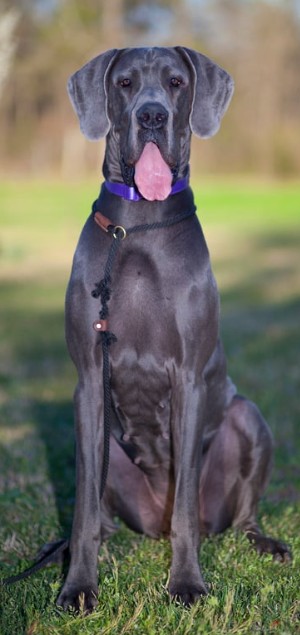
When you offer steady emotional clarity and predictable connection, their giant sensitivity settles—proving that leadership for these gentle giants begins with calm companionship.
The Sleep Quality Connection
Sleep architecture in Great Danes reveals interesting patterns related to attachment. Secure Danes cycle through normal sleep stages—light sleep, deep sleep, REM—achieving restorative rest. Anxious Velcro Danes often remain in light sleep stages, vigilantly monitoring for your presence rather than achieving deep rest. This chronic sleep deprivation compounds stress and emotional dysregulation.
Contact during sleep—your Dane sleeping while touching you—doesn’t necessarily indicate anxiety if they achieve deep sleep. The physical contact may actually facilitate deeper rest by providing security that allows their nervous system to fully relax. The concern arises when they can’t achieve rest despite contact or when any break in contact immediately wakes them.
Some Danes benefit from “co-sleeping arrangements” that provide security while maintaining boundaries. A dog bed beside your bed, a mat at the foot of the bed, or even allowing them on the bed if size permits can significantly improve sleep quality for both species. The key is consistency—changing arrangements frequently creates uncertainty that undermines the security you’re trying to build.
🐾 Understanding Your Great Dane’s Velcro Heart 💙
A Journey Through the Neurobiological Development of Giant Attachment
Phase 1: Early Foundation
Birth to 6 Months – The Attachment Blueprint Forms
🧠 Neurological Development
Great Dane puppies form primary attachments 40% faster than other giant breeds during the critical 3-14 week window. Their oxytocin receptor density begins establishing the foundation for lifelong bonding patterns. The amygdala develops heightened sensitivity to separation cues, creating the neurological blueprint for their signature Velcro behavior.
👀 What You’ll See
• Rapid bonding with primary caregiver within first 2 weeks
• Distress vocalizations when separated from littermates or humans
• Following behaviors emerge early, intensifying by 8 weeks
• First fear period (8-11 weeks) coincides with need for proximity
✅ Training Focus
Build secure attachment through consistent presence without creating dependency. Practice brief separations (30 seconds to 2 minutes) while maintaining visual contact. Create positive associations with their safe space through feeding and calm interaction. The NeuroBond approach emphasizes trust-building during these foundational weeks.
Phase 2: Growth Acceleration
6-12 Months – Physical Giant, Emotional Puppy
🧠 The Developmental Mismatch
Your Dane reaches 80-100 pounds but emotional regulation remains at puppy levels. This neoteny extension means they possess adult strength without adult emotional capacity. Their HPA axis shows heightened stress responses to separation, creating the paradox of a giant dog with toddler-level anxiety tolerance.
👀 Behavioral Signatures
• Increased following behavior as mobility improves
• Second fear period (6-14 months) intensifies attachment needs
• Physical discomfort from rapid growth increases seeking behavior
• May show distress at brief departures despite previous tolerance
✅ Management Strategy
Increase independence enrichment activities while maintaining secure base. Practice room separations with baby gates for visual access. Avoid punishment for following behaviors—instead, reward settled behavior in separate spaces. Through the Invisible Leash philosophy, guide with calm energy rather than physical restriction.
⚠️ Critical Warning
Never punish or harshly correct attachment behaviors during this vulnerable period. Fear-based training can create lasting anxiety patterns and intensify, rather than reduce, Velcro tendencies. This developmental window shapes their adult emotional landscape.
Phase 3: Adolescent Storm
12-24 Months – The Attachment Intensification Period
🧠 Hormonal Interaction
Hormonal surges interact with incomplete prefrontal cortex myelination, creating emotional volatility. Male Danes show intensified proximity-seeking as testosterone amplifies attachment systems rather than creating independence. Vasopressin patterns shift toward mate-bond intensity, treating primary humans as pair-bond equivalents.
👀 Peak Velcro Manifestation
• Most intense following and contact-seeking behaviors emerge
• Anticipatory anxiety begins 30-45 minutes before departures
• May “test” boundaries while simultaneously seeking reassurance
• Emotional storms that cannot be self-regulated without co-regulation
✅ Navigating the Storm
Provide consistent co-regulation without overindulgence. Practice breathing synchronization exercises—your calm nervous system helps regulate theirs. Increase mental enrichment to tire the emotional brain. Build gradual independence through systematic desensitization: 5-minute absences building to 30+ minutes over 8-12 weeks.
Phase 4: Emotional Maturation
2-3 Years – Finding Balance
🧠 Neurological Maturity Arrives
Prefrontal cortex completes myelination, finally matching their physical maturity. Emotional regulation systems come fully online, enabling genuine self-soothing capacity. The extended oxytocin persistence remains, but they develop ability to access calm states without constant human presence. This represents their adult attachment style.
👀 Mature Velcro Expression
• Still follows room-to-room but can settle independently
• Shows preference for proximity without panic during separations
• Can achieve deep rest while alone if properly conditioned
• Emotional recovery from departures stabilizes to 10-15 minutes
✅ Reinforcing Healthy Patterns
Celebrate their mature attachment style while maintaining independence practices. Continue variable separation training to prevent regression. Provide opportunities for confident exploration while remaining their secure base. Moments of Soul Recall—those deep recognition gazes—now come from emotional security rather than anxious monitoring.
Phase 5: Prime Partnership
3-7 Years – The Golden Years of Connection
🧠 Peak Emotional Intelligence
Your Dane achieves extraordinary emotional attunement during this phase. Mirror neuron systems operate at peak efficiency, allowing them to read micro-expressions and anticipate needs before conscious behavioral cues. The accumulated years of co-regulation create seamless bidirectional emotional flow—you regulate them, they comfort you.
👀 Refined Velcro Behavior
• Velcro behavior becomes selective and intentional rather than anxious
• They “know” when you need space versus when you need connection
• Can work independently (therapy dog visits) while maintaining bond
• Physical contact becomes mutual comfort rather than one-way need
✅ Maintaining Excellence
These are the easiest years—enjoy them! Maintain enrichment and exercise routines that support their physical and emotional wellbeing. Continue celebrating their devotion while ensuring they retain independence skills. This is the full expression of secure attachment: profound connection without anxious dependency.
Phase 6: Early Senior Transition
7-9 Years – Deepening Bonds, Changing Needs
🧠 Cognitive & Sensory Changes
Early cognitive decline may begin, intensifying proximity-seeking as mental clarity decreases. Vision and hearing loss amplify attachment needs—physical contact becomes their primary way of monitoring your presence when they can no longer see or hear you across rooms. This represents neurologically-driven attachment increase, not behavioral regression.
👀 Senior Velcro Patterns
• Increased following despite reduced mobility
• Vocalization when you leave their sight range
• Preference for sleeping locations that allow constant visual/physical contact
• May show confusion or anxiety in situations they previously handled calmly
✅ Adapting Your Approach
Prioritize comfort and security over independence training. Place orthopedic beds in multiple rooms so they can rest near you without constant movement. Use night lights if vision declining, maintain consistent routines to reduce confusion. This is the time to honor their attachment needs rather than challenge them.
Phase 7: Precious Final Years
9+ Years – Honoring the Bond’s Full Circle
🧠 The Vulnerability Circle
Advanced cognitive decline, pain, and sensory loss create profound vulnerability. Your senior Dane’s attachment intensification represents their awareness of decline and need for security. The oxytocin bond that formed in puppyhood now provides comfort through their final chapter. They often seem to understand their mortality, seeking even more proximity.
👀 End-Stage Expression
• Maximum proximity-seeking despite significant mobility limitations
• Distress vocalizations if they lose track of your location
• Increased nighttime waking to verify your presence
• Complete dependence on you for emotional regulation
✅ Honoring Their Journey
Provide maximum presence during this final phase. Work from their resting spot if possible, adjust your schedule to minimize separations, consider in-home hospice care. Their Velcro behavior, which began as neurological wiring, completes its arc—seeking comfort in their most vulnerable moments from the human they’ve loved their entire life.
📊 Velcro Intensity Across Development
Puppyhood (0-12 Months)
Intensity: 8/10
Primary Driver: Developmental bonding + fear periods
Key Challenge: Building security without creating dependency
Prognosis: Highly moldable—foundation for adult patterns
Adolescence (12-24 Months)
Intensity: 10/10 (Peak)
Primary Driver: Hormonal surges + incomplete emotional regulation
Key Challenge: Maintaining patience through most difficult phase
Prognosis: Temporary intensification—doesn’t predict adult behavior
Young Adult (2-4 Years)
Intensity: 5-6/10
Primary Driver: Established attachment + emotional maturity
Key Challenge: Maintaining independence skills during stable period
Prognosis: Most predictable and manageable phase
Prime Adult (4-7 Years)
Intensity: 4-5/10
Primary Driver: Secure attachment + confidence
Key Challenge: None—enjoy these golden years!
Prognosis: Velcro behavior without anxiety—pure devotion
Early Senior (7-9 Years)
Intensity: 7/10
Primary Driver: Sensory decline + early cognitive changes
Key Challenge: Adapting environment to changing capabilities
Prognosis: Gradual increase—accommodate rather than correct
Advanced Senior (9+ Years)
Intensity: 9/10
Primary Driver: Vulnerability + awareness of decline
Key Challenge: Providing maximum comfort in final years
Prognosis: Natural intensification—honor their needs completely
⚡ Quick Reference: Velcro Behavior Timeline
Peak Intensity Ages: 12-24 months (adolescence) and 9+ years (advanced senior)
Easiest Management: 3-7 years (prime adult phase)
Critical Training Window: 0-18 months sets lifelong patterns
Emotional Maturity: Doesn’t arrive until 3-4 years despite physical size
Independence Formula: Secure base (attachment) + gradual exposure (building confidence) = healthy autonomy
Never Correct During: Fear periods, illness, pain, sensory decline, or major life transitions
🧡 The Zoeta Dogsoul Perspective
Understanding your Great Dane’s Velcro journey through developmental phases reveals a profound truth: their attachment isn’t a problem to fix but a relationship to nurture. Through the NeuroBond approach, we recognize that their neurobiological wiring for connection creates the foundation for extraordinary partnership. The Invisible Leash teaches us that true guidance comes through calm awareness and emotional attunement, not physical force or harsh correction. In those moments of Soul Recall—when your giant companion’s eyes meet yours with complete understanding—you witness the culmination of years of trust-building and co-regulation. Your Dane’s Velcro heart, developing from puppyhood through their final years, represents not dependency but the full expression of canine devotion. By honoring each phase with patience, adapting your approach to their changing needs, and maintaining connection while building confidence, you create something rare: a bond where both species thrive not despite attachment, but because of it. That balance between neurological understanding and emotional honoring—that’s the essence of Zoeta Dogsoul.
© Zoeta Dogsoul – Where neuroscience meets soul in dog training
Nutritional Support for Emotional Balance
While nutrition can’t solve behavioral issues alone, certain dietary adjustments may support emotional regulation in Velcro Danes. Omega-3 fatty acids, particularly EPA and DHA, support brain health and have shown modest anxiety-reducing effects in some studies. Consider high-quality fish oil supplements or diets with marine-based proteins.
Tryptophan-rich proteins provide building blocks for serotonin synthesis, potentially supporting mood regulation. Turkey, chicken, and certain fish provide these precursors naturally. Some owners report improvements with diets formulated for “calm support,” though individual responses vary significantly.
Probiotics and gut health support may indirectly benefit emotional regulation through the gut-brain axis. A healthy microbiome influences neurotransmitter production and stress response. Consider high-quality probiotic supplements or fermented foods like kefir (in appropriate amounts) to support digestive health.
Avoid excessive simple carbohydrates that create blood sugar fluctuations, potentially amplifying emotional volatility. Consistent, balanced nutrition supports stable energy and mood, providing a foundation for emotional regulation work. Your Dane’s emotional sensitivity extends to how their body processes nutrients—dietary consistency matters. 🐾
Nutritional Support for Emotional Balance:
- Omega-3 fatty acids: 1000-2000mg EPA/DHA daily from fish oil or marine sources
- Tryptophan-rich proteins: Turkey, chicken, salmon provide serotonin precursors
- Complex carbohydrates: Sweet potato, brown rice, oats for stable blood sugar
- Probiotic supplementation: 1-10 billion CFU daily supporting gut-brain axis
- B-vitamin support: B-complex vitamins support nervous system function
- Magnesium sources: Supports muscle relaxation and stress response regulation
- L-theanine supplementation: Amino acid promoting calm without sedation (consult vet for dosing)
- Consistent meal timing: Feed at exact same times daily for routine predictability
- Avoid food dyes/additives: Some dogs show behavioral sensitivity to artificial ingredients
Activities & Enrichment: Channeling Attachment Energy
Physical Exercise: Movement as Medicine
Great Danes require moderate exercise that balances their need for activity with their joint vulnerabilities. Velcro behavior often intensifies in under-exercised Danes, as unreleased physical energy amplifies emotional intensity. However, their giant size means high-impact activities can damage developing joints, requiring thoughtful exercise planning.
Daily structured walks provide not just physical exercise but mental stimulation and co-regulation opportunities. The rhythm of walking side-by-side naturally synchronizes breathing and heart rate, creating physiological bonding while moving through the environment together. Aim for 45-60 minutes of walking daily, split into multiple sessions to protect joints.
Swimming offers ideal exercise for Danes, providing cardiovascular challenge without joint stress. The activity naturally separates you and your dog (unless you swim together), building independence through an activity they enjoy. Many Danes initially hesitate at water but develop enthusiasm with patient introduction and positive associations.
Avoid excessive running, jumping, or high-impact play, especially in dogs under 18 months. The long bones and joints remain vulnerable during their extended growth period, and exercise-related injuries can create lasting impacts. Instead, focus on sustained moderate activity that builds cardiovascular fitness without joint trauma.
Exercise Guidelines for Velcro Great Danes:
- Daily walking duration: 45-60 minutes total, split into 2-3 sessions
- Safe activities (all ages): Leash walking, swimming, gentle hiking on soft surfaces
- Activities to avoid (under 18 months): Running beside bikes, jumping for frisbees, agility obstacles
- Mental-to-physical ratio: 20 minutes mental stimulation equals 40 minutes physical exercise
- Swimming protocol: Start with 5-10 minutes, gradually build to 20-30 minutes
- Rest day frequency: 1-2 days weekly of gentle activity only
- Heat considerations: Exercise only during cool hours (before 9am, after 7pm in summer)
- Surface awareness: Prefer grass, dirt, sand over concrete/asphalt for joint protection
- Age-appropriate intensity: Puppies (under 12 months) max 30 minutes twice daily; Seniors (7+ years) gentler pace, shorter duration
Mental Enrichment: Tiring the Emotional Brain
Mental stimulation often proves more exhausting than physical exercise for Great Danes, offering a powerful tool for managing Velcro intensity. Scent work activities—hiding treats around the house or yard for your Dane to find—engage their considerable olfactory capabilities while providing independence practice. They’re working semi-autonomously, following scent rather than following you.
Puzzle feeders and food-dispensing toys transform meals into problem-solving activities, occupying their minds for extended periods. Start with easy puzzles, gradually increasing difficulty as they develop problem-solving skills. This builds confidence through successful challenge navigation—essential for emotional resilience.
Training sessions teach new behaviors or tricks, engaging their minds while strengthening your bond. The structure of training—you giving cues, them responding, you rewarding—creates predictable interaction patterns that feel safe to attachment-oriented dogs. Keep sessions short (5-10 minutes) but frequent throughout the day.
“Nose work” or “barn hunt” classes provide structured mental challenges while introducing them to working semi-independently. Your presence provides security, but the activity requires them to focus on the task rather than on you. This balance builds confidence while honoring their attachment needs.
Mental Enrichment Activities:
- Scent discrimination games: Hide treats in boxes, let them find which contains food
- Name learning: Teach names of toys, ask them to retrieve specific ones
- Shell game: Hide treat under one of three cups, let them indicate correct one
- New trick training: Roll over, play dead, bow, spin—5-minute sessions
- Food puzzle escalation: Start Level 1 puzzles, progress to Level 3-4 over months
- Hide and seek: Have family member hold dog, you hide, call them to find you
- Which hand game: Hide treat in closed fist, let them indicate correct hand
- Scent trails: Drag treat along ground creating trail to follow
- Muffin tin puzzle: Place treats in tin, cover with tennis balls they must remove
- Frozen treat excavation: Freeze toys/treats in ice block for summer enrichment
Social Enrichment: Beyond the Primary Bond
While Great Danes typically form intense primary attachments, healthy social development includes positive relationships with other dogs and people. Structured playdates with dog friends provide social enrichment while teaching that positive experiences exist independent of their primary person.
Group training classes serve multiple purposes—obedience skill-building, socialization, and practicing focus on you in distracting environments. The presence of other dogs and people creates mild stress that, when successfully navigated with your support, builds emotional resilience and confidence.
Therapy dog training and certification offers Velcro Danes purposeful work that channels their attachment tendency into service. Their natural attunement to human emotion makes them exceptional therapy dogs, providing comfort while building their confidence through positive reinforcement of their sensitivity.
Consider enrolling in Great Dane-specific social groups or activities. Sight hound races, gentle agility courses, or breed meetups provide socialization opportunities with dogs of similar size and temperament. The shared breed characteristics create more appropriate play styles than mixed-breed playgroups where size disparities may cause issues.
Socialization Opportunities for Velcro Danes:
- Structured playdates: One-on-one sessions with known, compatible dogs
- Group obedience classes: Force-free training with other dogs present
- Breed-specific meetups: Great Dane or giant breed social groups
- Therapy dog training: Channels attachment into service work
- Dog-friendly store visits: Lowes, pet stores for controlled public exposure
- Outdoor café outings: Practice settling calmly in public spaces
- Trail hiking groups: Social walking with other dog owners
- Nose work classes: Low-stress activity-based socialization
- Gentle giant playgroups: Size-appropriate play avoiding injury risk
- Senior dog socials: For older Danes, low-energy social time with similar-aged dogs
Living with a Velcro Dane: Practical Daily Management
Creating Sustainable Routines
Living successfully with a Velcro Great Dane requires routines that balance their attachment needs with human functionality. Establish “morning separation practice” by creating a consistent sequence: wake up, bathroom break, breakfast, then 15-30 minutes where you prepare for your day while they settle in their space. This daily micro-separation builds independence muscles without overwhelming them.
Implement “variable schedule training” by occasionally shifting routines in small ways. This prevents rigid dependency on exact sequences and builds flexibility in their nervous system. The predictability provides security while variability builds resilience—a balance essential for emotional health.
Create “alone time enrichment” as part of daily routine—even on days you’re home. Provide a special high-value activity (frozen Kong, raw bone, puzzle feeder) that only happens during designated alone time. This builds positive associations with independence rather than treating separation as loss.
Practice “gradual departures and returns” by minimizing emotional drama around transitions. No drawn-out goodbyes or excited reunions—simply leave and return matter-of-factly. This models calm energy around transitions, preventing the amplification of their emotional response through your behavior.
Sample Daily Routine for Velcro Dane Success:
- 6:30 AM: Wake, immediate bathroom break, calm morning greeting
- 7:00 AM: Breakfast in designated safe space, practice calm feeding routine
- 7:30 AM: 20-minute walk for exercise and elimination
- 8:00 AM: 15-minute alone time practice (even if you’re home), provide frozen Kong
- 9:00 AM: Parallel time—you work, they settle nearby
- 12:00 PM: Midday walk or potty break, 10-minute training session
- 1:00 PM: Rest period in their space while you engage in separate activities
- 5:00 PM: Evening walk (30 minutes), mental enrichment activity
- 6:00 PM: Dinner in safe space, practice calm settling
- 8:00 PM: Gentle play or bonding time, avoid high arousal before bed
- 10:00 PM: Final potty break, settle for night near your sleeping area
Managing Multiple Life Transitions
Great Danes’ emotional sensitivity makes them vulnerable during major life changes—moves, new babies, schedule shifts, or family structure changes. Anticipate these transitions by gradually introducing elements before the full change occurs. If moving, bring your Dane to visit the new home multiple times before moving day, allowing them to explore and build positive associations.
For new baby arrivals, begin preparations months in advance. Change walking and feeding schedules to post-baby patterns well before birth, introduce baby sounds and smells, and practice ignoring your Dane’s attention bids (as you’ll need to when caring for an infant). These gradual adjustments prevent your Dane from associating the baby with sudden loss of attention.
Job schedule changes require similar advance work. Begin shifting routine toward the new schedule weeks before it takes effect, allowing your Dane’s nervous system to adjust gradually rather than suddenly losing hours of your presence. Consider hiring a dog walker or doggy daycare to ease the transition if your new schedule significantly increases alone time.
Relationship changes—new partners moving in or out, family members leaving for college—require management because your Dane may have formed secondary attachments. Maintain consistency in your interactions while allowing time for adjustment. The Invisible Leash reminds us that awareness, not tension, guides the path through these transitions.
Preparing for Major Life Transitions:
- Moving homes: Visit new location 3-5 times before move day with positive experiences
- New baby preparation: Shift schedules 8+ weeks before due date, introduce baby sounds/smells
- Job schedule changes: Gradually adjust routine over 2-4 weeks before actual change
- New partner introduction: Multiple brief meetings before extended time together
- Family member departure: Create new routines that don’t depend on departing person
- Medical procedures: Practice vet visits for treats only, building positive associations
- Boarding preparation: Multiple short practice stays before extended boarding
- Seasonal changes: Gradually adjust exercise times as daylight shifts
- Holiday disruptions: Maintain core routine elements despite visitors/travel
- Moving to new home: Transfer scent (bedding, toys) before moving other items
Strategies for the Working Owner
Working full-time with a Velcro Great Dane presents challenges but remains manageable with strategic planning. Consider “midday check-ins” through dog walkers, pet sitters, or nearby friends who can provide a 15-30 minute break in their alone time. This divides the day into manageable segments rather than one overwhelming separation.
Pet cameras with two-way audio allow you to monitor and occasionally interact with your Dane during the day. However, use audio sparingly—hearing your voice without your presence can increase rather than decrease anxiety for some dogs. Instead, use cameras primarily for monitoring their behavior patterns and adjusting management strategies accordingly.
Doggy daycare works well for some Velcro Danes, providing social interaction and activity that prevents them from spending all day in anxious anticipation of your return. However, carefully evaluate whether your Dane finds daycare genuinely positive versus overwhelming. Some Danes do better with in-home sitters who provide a calm presence rather than high-energy group settings.
“Work from home days” should include structured independence practice rather than constant interaction. Your Dane needs to learn that your presence doesn’t always equal interaction. Practice the same separation routines on these days—putting them in their space during certain hours even though you’re home—to maintain consistency.
Working Owner Success Strategies:
- Midday dog walker: Professional visit breaking up alone time (11am-1pm ideal)
- Pet camera monitoring: Two-way audio for occasional check-ins (use sparingly)
- Morning exercise priority: 30-45 minute walk before work ensures physical tiredness
- Enrichment rotation: Different puzzle/chew each day maintains novelty
- Doggy daycare option: 2-3 days weekly for social dogs who enjoy group settings
- In-home pet sitter: Calm adult visitor for 30-minute midday companionship
- Neighbor exchange: Trade dog-sitting with nearby dog owner for reciprocal care
- Extended lunch breaks: If possible, return home for 30-minute midday break
- Weekend independence practice: Maintain separation routine even on days off
- Gradual return-to-work: Start with 2-hour absences, build to full workday over 2-3 weeks
The Multi-Dog Household Consideration
Adding another dog can either help or harm Velcro behavior depending on multiple factors. Some Great Danes benefit from canine companionship, forming secure attachments that reduce their reliance on human proximity. Others become more anxious, now worrying about both their human’s location and their canine companion’s proximity.
If considering a second dog, choose temperament carefully. A confident, independent dog may model healthier attachment patterns for your Velcro Dane. However, another anxious dog can create a feedback loop where they amplify each other’s stress. Generally, opposite-sex pairings work better, and significant age differences (not two puppies) allow the established dog to mentor the newcomer.
Introduce new dogs gradually using scent swapping, parallel walks, and controlled meetings before cohabitation. Your Velcro Dane may initially become more clingy as they adjust to sharing your attention—this is normal and typically resolves within 2-4 weeks if managed calmly.
Ensure each dog receives individual attention and training time. Your Velcro Dane needs to maintain their secure base with you independently of their canine companion. Sessions of Soul Recall—those moments when emotional memory and intuitive response reveal the depth of your bond—happen individually, not in a pack context.
Second Dog Considerations for Multi-Dog Households:
- Ideal temperament match: Confident, independent dog to model healthy boundaries
- Age difference: 2+ years between dogs allows mentoring rather than co-dependency
- Sex pairing: Opposite sex pairings typically reduce resource competition
- Size compatibility: Similar size prevents injury during play
- Individual attention schedule: Each dog gets 15+ minutes daily one-on-one time
- Separate feeding stations: Reduce resource guarding, allow individual pace
- Individual training sessions: Maintain your bond with Velcro Dane separately
- Gradual introduction protocol: Scent swap for 3-5 days, then parallel walks, then supervised meetings
- Monitor attachment transfer: Ensure Velcro Dane maintains secure base with you, not just other dog
- Warning signs to address: Increased clinginess, resource guarding, attention-seeking escalation
When Velcro Becomes Dysfunction: Recognizing True Separation Anxiety
The Clinical Picture
While breed-typical attachment differs from clinical separation anxiety, the distinction isn’t always clear. Clinical separation anxiety involves distress so severe it impairs the dog’s quality of life and may require medical intervention. Red flags include: destructive behavior that causes injury (broken teeth from chewing metal, bleeding paws from digging), self-harm behaviors, complete refusal to eat or drink during absences lasting 8+ hours, and house soiling despite reliable housetraining.
Panic-level responses—intense panting, drooling, pacing, inability to settle for entire duration of absence—distinguish anxiety from typical Velcro behavior. If your Dane can eventually settle (even if it takes 30-45 minutes), you’re working with manageable attachment. If they remain in active distress for hours, professional intervention becomes necessary.
Pre-departure anxiety that begins hours before leaving and persists until your return indicates dysregulation beyond typical breed sensitivity. While Great Danes notice departure cues earlier than other breeds, full-blown anxiety reactions to morning routine changes hours before actual separation suggests their nervous system is stuck in threat mode.
Clinical Separation Anxiety Red Flags:
- Destructive panic: Broken teeth from chewing metal crates/doors, bleeding paws from digging
- Self-harm behaviors: Excessive licking causing open wounds, tail chewing to point of injury
- Complete food refusal: Won’t eat or drink for 8+ hours when alone despite access
- Continuous panic state: Intense panting, drooling, pacing for entire absence duration
- House soiling escalation: Multiple accidents despite reliable training, even during brief absences
- Escape attempts: Damaging doors, windows, crates trying to follow owner
- Extreme pre-departure anxiety: Full panic response 2+ hours before actual departure
- Physical illness correlation: Vomiting, diarrhea consistently occurring during/after absences
- No habituation: Behavior remains severe or worsens despite months of graduated exposure
- Inability to settle: Cannot achieve any calm state for entire duration of absence
Professional Support Options
Veterinary behaviorists—veterinarians with additional behavioral training—offer the most comprehensive assessment and treatment. They can determine whether your Dane’s behavior represents breed-typical attachment, mild separation distress, or clinical anxiety requiring medical intervention. Many severe cases benefit from temporary pharmaceutical support (anti-anxiety medications) while implementing behavior modification.
Certified dog behavior consultants (CDBC) or certified applied animal behaviorists (CAAB) provide structured behavior modification without medication focus. They develop customized protocols based on your specific situation, often incorporating systematic desensitization and counterconditioning specifically tailored to your Dane’s triggers and thresholds.
Force-free trainers experienced with separation anxiety can implement protocols like the “departure desensitization” approach developed by Malena DeMartini. This highly structured program systematically increases separation duration based on the dog’s actual capacity rather than human timelines, building genuine confidence versus forced endurance.
Consider “multi-modal intervention” combining behavior modification, environmental management, potential pharmaceutical support, and alternative therapies like TTouch, acupuncture, or herbal supplements. No single approach works universally—the most successful outcomes typically involve multiple strategies addressing different aspects of the problem.
The Velcro Senior: Aging Giants and Attachment
Cognitive Changes and Attachment Intensification
Senior Great Danes (typically 7+ years) often show increased attachment and proximity-seeking as cognitive function declines. Canine cognitive dysfunction (similar to dementia) can intensify Velcro behavior as mental clarity decreases and familiar anchors become more important. Your aging Dane may follow more persistently simply because keeping you in sight reduces confusion and anxiety about their environment.
Sensory decline—decreased vision and hearing—amplifies attachment needs. When they can no longer hear you moving through the house or see you across the room, physical proximity becomes their primary way of monitoring your presence. This sensory-driven attachment differs from emotional clinginess and requires accommodation rather than modification.
Pain and mobility issues change how seniors express attachment. Where young Danes vigorously follow from room to room, seniors may vocalize distress when you move out of their limited mobility range. This transition requires you to become more mindful of positioning yourself where they can see you without requiring them to constantly relocate their aging bodies.
Adapting Management for Senior Needs
Senior Velcro Danes benefit from “stability prioritization” over independence training. This isn’t the life stage to challenge their attachment patterns—instead, honor their need for security as they navigate the confusion and vulnerability of aging. Place comfortable beds in multiple locations so they can rest near you without constant movement.
Implement “anticipatory care” by addressing their needs before they must request attention. Regular bathroom breaks, proactive pain management, and consistent routine reduce the anxiety that amplifies senior attachment. When basic needs are reliably met, they can relax more fully rather than remaining vigilant.
Consider “expanding the secure base” by having multiple family members provide care rather than centralizing everything on one person. This provides backup security if their primary attachment figure is unavailable and reduces stress if circumstances eventually require them to transition to another household.
“Cognitive enrichment” activities adapted for senior abilities help maintain mental function. Simple puzzle feeders, gentle scent work, and learning new (easy) tricks provide mental stimulation without overwhelming aging brains. These activities build confidence even as physical abilities decline.
Senior Care Adaptations for Aging Velcro Danes:
- Orthopedic bed placement: Multiple locations so they can rest near you without movement
- Ramp installation: Provide ramp access to car, bed, or furniture they’re allowed on
- Non-slip flooring: Rugs or mats on slippery surfaces prevent falls
- Elevated food/water bowls: Reduce neck strain during eating/drinking
- Shorter, frequent walks: Three 15-minute walks vs. one 45-minute walk
- Pain management priority: Work with vet for proactive arthritis/pain protocols
- Gentle massage routine: Daily massage for circulation, bonding, pain relief
- Cognitive games simplified: Easy puzzle feeders, simple scent work, gentle training
- Bathroom schedule increase: More frequent outdoor access prevents accidents
- Temperature regulation: Heating pads for cold weather, cooling mats for summer
- Vision/hearing accommodations: Use touch and scent cues as senses decline
- Night lights placement: Help them navigate at night if vision declining
End-of-Life Considerations
The profound attachment Great Danes form makes end-of-life decisions particularly heartbreaking. Their emotional sensitivity means they often seem aware when they’re declining, sometimes seeking even more proximity as if asking for support through their transition. Honor this by providing the security of your presence as much as possible during their final days or weeks.
Home hospice care allows Velcro Danes to remain in their secure environment with their attachment figure close. Many veterinarians now offer in-home euthanasia, sparing these sensitive dogs the stress of veterinary visits during their final moments. Being able to pass in familiar space, surrounded by family, provides the same security they sought throughout their lives.
After loss, recognize that your grief may be particularly intense due to the profound daily intimacy of living with a Velcro Dane. Their constant presence wove them into every aspect of your daily routine—their absence leaves gaping holes. Allow yourself to grieve this unique loss fully, perhaps finding support in Great Dane communities who understand the particular intensity of these bonds.
Reframing the Narrative: From Neediness to Devotion
Cultural Assumptions About Independence
Western culture particularly values independence in both dogs and humans, often viewing attachment needs as weakness or dysfunction. This cultural lens distorts how we perceive Great Dane behavior, pathologizing what might be normal breed expression. Consider that in cultures with different values around family closeness and interdependence, the Great Dane’s preference for proximity might be celebrated rather than corrected.
The “independent dog” ideal often reflects human convenience rather than canine wellbeing. We admire dogs who can be left alone for long hours, who don’t “bother” us for attention, who are essentially low-maintenance. But this ideal may conflict with the neurobiological reality of highly social species, particularly breeds specifically developed for human companionship.
Reframing requires asking: “Whose needs am I centering?” If your Dane’s proximity-seeking doesn’t actually cause problems—you can leave when needed, they remain calm, and you enjoy their company—is there actually a problem, or just deviation from an arbitrary standard? Many Velcro Dane behaviors that concern owners would be celebrated in other cultural contexts as devotion, loyalty, and emotional connection.
The Gift Perspective
What if we viewed Great Dane attachment not as burden but as gift? Their persistent presence offers continuous opportunities for connection in our increasingly disconnected world. Where other dogs contentedly occupy themselves, your Dane insists on relationship—an invitation to slow down, notice, and engage that many humans desperately need.
Their emotional transparency teaches attunement and empathy. Living with a dog whose emotional state is clearly visible and constantly responding to yours develops your capacity to read subtle cues and regulate your own emotional expression. This is precisely the skill set that builds better human relationships—your Dane is essentially providing daily interpersonal neurobiology training.
The physical affection they demand provides proven health benefits. The oxytocin released through touch lowers blood pressure, reduces stress hormones, and promotes general wellbeing. Your Dane’s insistence on contact literally makes you healthier, forcing you to take affection breaks throughout your day whether you realized you needed them or not.
Their preference for your company over other activities speaks to the quality of your relationship. In a world where everything competes for attention, your Dane consistently chooses you. That choice, renewed countless times daily, represents a form of love free from the complexity and conditions that often characterize human relationships. That balance between science and soul—that’s the essence of Zoeta Dogsoul. 🐾
Conclusion: Embracing the Velcro Life
The Integration Challenge
Living successfully with a Velcro Great Dane means integrating their needs with human functionality without sacrificing either. This integration requires flexibility, creativity, and a fundamental acceptance that life with an attachment-intensive dog looks different from life with an independent breed. You’re not failing if your Dane doesn’t contentedly occupy themselves for hours—you’re simply living with a different breed.
The most successful Velcro Dane owners find ways to include their dogs in daily life rather than constantly battling to exclude them. Can they be nearby while you work? Can they accompany you on errands that allow dogs? Can routines be structured to provide maximum together-time rather than treating their presence as obstacle to overcome? This integration honors their nature while maintaining necessary boundaries.
Through the NeuroBond approach, we recognize that their attachment isn’t weakness but rather the full expression of their capacity for interspecies devotion. The challenge lies not in eliminating this trait but in helping both species thrive within it. How can we honor the Great Dane’s need for connection while maintaining human functionality? How can we build their confidence without betraying their nature?
The Relationship Deepening
Paradoxically, working thoughtfully with Velcro behavior often deepens rather than decreases the bond. When you invest in understanding your Dane’s neurobiological needs, respond to their emotional communications with patience, and celebrate their devoted nature rather than fighting it, you create extraordinary intimacy. Many Velcro Dane owners report relationships with their dogs that exceed the depth of most human connections—a testament to what becomes possible when two species truly attune to each other.
Is a Velcro Great Dane Right for You?
Before welcoming a Great Dane into your life, understanding the reality of their attachment intensity helps prevent mismatches that lead to rehoming. These dogs require more than physical space and financial resources—they demand emotional availability and lifestyle flexibility that not everyone can provide.
You’re a Good Match for a Velcro Great Dane If:
- Work situation: You work from home, have flexible hours, or can bring dog to work
- Lifestyle preference: You genuinely enjoy constant companionship and rarely want alone time
- Space configuration: Your home allows dog to access main living areas, not isolated
- Exercise commitment: You can provide 45-60 minutes daily walking regardless of weather
- Financial capacity: $3,000-5,000 annually for food, vet care, supplies, potential training
- Long-term stability: Your life situation is stable for 8-10 year commitment
- Emotional availability: You can provide calm, consistent presence during their extended puppyhood
- Size comfort: You’re genuinely comfortable with 140-180 pound dog sharing your space
- Training willingness: You’ll invest time in gradual independence training and behavior work
- Social acceptance: Your living situation (rental, HOA) permits giant breed dogs
Reconsider a Great Dane If:
- Work demands: You work 8+ hour days away from home with no midday relief option
- Value independence: You prefer pets who can entertain themselves for extended periods
- Travel frequently: Your lifestyle involves regular trips where dogs can’t accompany you
- Small living space: Apartment/condo without adequate room for giant dog movement
- Limited budget: Cannot comfortably afford $250-400 monthly expenses plus emergency funds
- Life transitions: Expecting major changes (new baby, relocation, career shift) within 2 years
- First-time owner: No previous experience with large breeds or behavior modification needs
- Physical limitations: Cannot handle 150-pound dog’s pulling or provide adequate exercise
- Preference for low-maintenance: You want a dog requiring minimal attention or training
- Strict cleanliness standards: Cannot tolerate drool, shedding, or large dog messiness
The Relationship Deepening (Continued)
This depth emerges from the countless small moments of co-regulation, the daily practice of reading and responding to each other’s needs, and the accumulation of experiences where both beings feel fundamentally seen and supported. Your Dane’s persistent presence creates opportunities for this depth that more independent dogs might not demand—they insist on relationship in a way that ultimately enriches both lives.
The moments of Soul Recall—when your Dane’s eyes meet yours with that ineffable recognition, when they somehow know you’re upset before you’ve shed a tear, when their massive head rests on your lap with complete trust—these moments reveal how memory and emotion intertwine in behavior. They demonstrate that the work of managing Velcro behavior ultimately serves something much larger than simple training: the cultivation of genuine interspecies understanding.
Final Reflections: Love Without Boundaries
Perhaps the most profound insight from understanding Great Dane Velcro behavior is recognizing it as communication rather than pathology. These dogs, through their intense proximity-seeking, tell us something essential about the nature of interspecies love—that it transcends size, species, and conventional independence. When a 150-pound Great Dane arranges their massive frame to maintain contact with your foot while you work, they’re not displaying weakness but rather the courage to be vulnerable despite their intimidating size.
The question isn’t how to eliminate this behavior but how to help both species thrive within it. How can we honor the Great Dane’s need for connection while maintaining human functionality? How can we build their confidence without betraying their nature? How can we celebrate their devotion while ensuring their welfare if circumstances change?
The answer lies in approaching Velcro behavior with the same sensitivity Great Danes bring to reading our emotions. By matching their attunement with our own, by seeing their proximity-seeking as language rather than symptom, by responding with patience and wisdom rather than frustration or indulgence, we create relationships that honor both species’ needs. In learning to support their emotional needs while building their resilience, we don’t just train better dogs—we become better humans, more attuned to the subtle languages of connection that bind all social mammals together.
Great Danes will continue following their humans from room to room, leaning against legs, and arranging their massive frames to maintain minimal contact during sleep. This behavior, written in their genes and reinforced by centuries of selection, represents not a flaw but a feature—a living reminder that in a world increasingly disconnected, some beings still understand that proximity is precious, that connection requires presence, and that love, whether from a 150-pound dog or a tiny human heart, always seeks closeness with what it treasures most.
Your Velcro Great Dane isn’t asking you to fix them. They’re inviting you into a relationship of profound mutual devotion, offering daily lessons in presence, attunement, and the courage to need and be needed. The gift of their attachment, properly understood and supported, transforms both species—creating dogs who feel secure enough to handle necessary independence, and humans who’ve learned to slow down, notice, and connect in a world that rarely demands either.
That’s not a problem to solve. That’s a life to cherish. 🧡