
Introduction: When Twilight Brings Tension
Have you ever noticed your confident, tail-wagging companion suddenly transform into a hesitant, wide-eyed shadow of themselves when darkness falls? You’re not alone. Many dog guardians witness a profound shift in their furry friend’s behavior during evening walks—sudden freezing, pulling toward home, or an anxious reluctance that simply wasn’t there during daylight hours.
This transformation isn’t stubbornness or randomness. It’s a deeply rooted response to how darkness fundamentally alters your dog’s perception of the world. While we humans reach for flashlights and trust our familiarity with paths we walk daily, our canine companions experience nighttime through an entirely different sensory lens—one where certainty fades with the light, and ancient survival instincts whisper warnings in the shadows.
Dogs, despite their superior night vision compared to ours, face unique challenges when visual input diminishes. Their remarkable sensory world—built on a foundation of scent, sound, and sight working in intricate harmony—becomes unbalanced in darkness. What was once predictable becomes uncertain. What felt safe now feels ambiguous. And in that ambiguity, fear can take root and flourish.
Understanding why your dog fears the dark isn’t just about addressing a behavioral quirk. It’s about recognizing how their brain processes uncertainty, how their nervous system responds to sensory deprivation, and how we, as their trusted guides, can help them rediscover confidence when the sun sets. This exploration will take us through the intricate neuroscience of canine fear, the sensory disruptions that darkness creates, and most importantly, the compassionate, evidence-based approaches that can transform nighttime from a source of anxiety into an opportunity for deeper connection.
What you’ll discover in this guide:
- How darkness fundamentally alters your dog’s sensory perception and spatial awareness
- The neurobiological mechanisms behind fear responses when visual certainty disappears
- Why some breeds are more susceptible to nighttime anxiety than others
- Observable behavioral signs that reveal your dog’s inner distress during darkness
- The critical role your own emotional state plays in either amplifying or calming canine fear
- Evidence-based training protocols for systematically building nighttime confidence
- Environmental modifications that create immediate relief while long-term progress develops
- When nighttime fear signals broader anxiety requiring professional intervention
Let us guide you through this journey, where science meets soul, and where understanding becomes the first step toward healing. 🧡
The Sensory Landscape: How Darkness Reshapes Your Dog’s World
Visual Perception in Diminished Light
Your dog’s eyes are remarkable instruments, evolved over millennia to detect movement and navigate in conditions that would leave us stumbling. Thanks to a higher rod-to-cone ratio in their retinas, dogs possess enhanced night vision—a legacy from their ancestral hunters who prowled during dawn and dusk. Yet this evolutionary gift comes with unexpected limitations that darkness reveals with startling clarity.
Depth Perception Challenges
In daylight, your dog effortlessly leaps onto the couch, navigates stairs, and judges distances with unconscious precision. But as light fades, something shifts. Depth perception relies on multiple visual cues—binocular disparity between each eye’s view, motion parallax as objects move relative to each other, and the relative size of familiar objects. In low light, these cues become frustratingly indistinct.
What compromises depth perception in darkness:
- Shadow distortion – Shadows create false depth where none exists, making flat surfaces appear hollow or elevated
- Lost edge definition – The boundaries between objects blur, making distance judgment uncertain
- Reduced contrast sensitivity – Similar-toned objects merge visually, eliminating size comparison cues
- Impaired motion parallax – Moving objects don’t provide clear depth information when their edges are indistinct
- Binocular confusion – Each eye receives unclear information, preventing accurate 3D perception synthesis
Shadows play tricks, creating false depth where none exists. A flat puddle might appear as a treacherous hole. A slight elevation might vanish entirely, leading to hesitant paw placements and cautious stepping. You might notice your typically agile companion suddenly moving with exaggerated care, as if the ground itself has become untrustworthy. This isn’t caution—it’s genuine perceptual uncertainty.
Spatial Awareness and the Crumbling Mental Map
Dogs construct detailed cognitive maps of their environments, mental blueprints that guide them through familiar spaces with confidence. These maps depend heavily on visual landmarks—the distinctive tree at the corner, the familiar fence line, the color of a neighbor’s house. When darkness obscures these reference points, even well-known routes can feel alien and disorienting.
Signs your dog’s spatial awareness is compromised:
- Increased scanning behaviors – Head swiveling constantly as they search for recognizable landmarks
- Slower, hesitant movement – Deliberate, careful steps replacing their usual confident stride
- Reduced exploration radius – Staying closer to you or refusing to venture beyond familiar zones
- Confusion at familiar intersections – Hesitation at turns they normally take automatically
- Repetitive circling – Attempting to reorient themselves through repeated position checking
- Reluctance to venture forward – Stopping frequently as if verifying location before proceeding
The result? Increased scanning behaviors as your dog frantically searches for recognizable features. Slower, more deliberate movement patterns. A reluctance to venture beyond a smaller radius of perceived safety. Their internal GPS, so reliable by day, now sends uncertain signals that something fundamental has changed.
Threat Discrimination in Ambiguity
Perhaps most critically, darkness compromises your dog’s ability to distinguish friend from foe, benign from threatening. That rustling shape ahead—is it a plastic bag caught on a fence, or an unfamiliar animal? The approaching figure—your neighbor returning home, or an unknown intruder? Without clear visual confirmation, your dog’s brain defaults to caution, interpreting ambiguity as potential danger.
This visual uncertainty creates a cascade of physiological responses. Heart rate increases. Muscles tense. The body prepares for action, just in case. For some dogs, this preparedness manifests as heightened alertness. For others, it spirals into genuine fear.
The Auditory Shift: When Sounds Become Amplified
As visual certainty diminishes, your dog’s remarkable auditory capabilities take center stage—but not always in helpful ways. Dogs can hear frequencies far beyond human perception and detect sounds at distances that would astound us. During daylight, these sounds exist within a rich visual context that helps your dog interpret and categorize them. In darkness, that context vanishes.
Nocturnal Soundscapes and Startle Responses
The night brings its own acoustic signature. Crickets chirp in rhythmic waves. Distant traffic hums with altered patterns. An unseen jogger’s footsteps approach from an indeterminate direction. For dogs already operating under visual uncertainty, these sounds don’t merely inform—they alarm.
Common nocturnal sounds that intensify startle responses:
- Insect choruses – Crickets, cicadas, or other rhythmic sounds that create continuous background noise
- Distant vehicle sounds – Traffic, motorcycles, or trucks with altered acoustic properties at night
- Wildlife movements – Rustling in bushes, branches snapping, small animals scurrying unseen
- Human activity noises – Footsteps echoing, voices carrying farther in quiet air, doors closing
- Environmental sounds – Wind through trees, settling structures, nocturnal bird calls
- Unexpected sharp sounds – Car alarms, sirens, sudden barking from unseen dogs
- Mechanical noises – Air conditioning units, generators, or equipment running at night
The neuroscience here is fascinating. Your dog’s brain constantly engages in predictive coding, attempting to match incoming sensory information against expected patterns. When a sound occurs but cannot be visually confirmed, a mismatch arises—what neuroscientists call a “prediction error.” The brain interprets this error as potential threat, triggering heightened arousal and defensive readiness.
A rustle in the bushes during daylight prompts a glance and categorization. The same rustle at night, with no visual confirmation of its source, generates a full-body startle response. The sound hasn’t changed—only the absence of visual certainty that once tempered the reaction. This is why your dog might seem “overreactive” during evening walks, jumping at noises that wouldn’t merit a second glance during the day.
Auditory Unpredictability as Anxiety Amplifier
The unpredictability itself becomes the stressor. Your dog cannot prepare for, predict, or categorize these sounds with confidence. Each unexpected noise becomes a potential crisis demanding immediate assessment. Over time, this constant state of auditory vigilance exhausts the nervous system, creating a feedback loop where anxiety about potential sounds generates more anxiety.

Olfactory Dominance: Compensation or Complication?
Scent is your dog’s primary sense, their most trusted informant about the world’s hidden dimensions. While we see and conclude, dogs smell and understand. In darkness, this olfactory dominance intensifies as your companion seeks to compensate for diminished visual data.
When Scent Provides Reassurance
Familiar, comforting scents can anchor your dog in darkness. The scent trail they’ve marked on previous walks becomes a map more reliable than vision. Your scent on their collar or harness provides continuous reassurance of your presence. Other known dogs’ territorial markers confirm location and continuity. In these instances, olfaction reduces arousal, offering predictability when other senses fail.
Scents that reduce arousal and provide reassurance:
- Your personal scent – Clothing items, your hand scent on the leash, familiar human odor
- Home territory markers – Scent trails from previous walks, familiar boundary markers
- Known companion dogs – Scent marks from friendly, familiar dogs in the neighborhood
- Routine path indicators – Consistent environmental scents that mark familiar routes
- Calming botanical scents – Lavender, chamomile, or other safe aromatherapy options
When Scent Amplifies Arousal
Yet olfactory information can equally intensify fear. An unfamiliar dog’s scent, particularly if it carries markers of arousal or aggression, triggers vigilance without the visual context to assess distance or direction. The scent of wildlife—a fox, a raccoon, perhaps even a coyote—activates ancient predator-awareness systems without providing crucial information about proximity or threat level.
Scents that amplify arousal and increase vigilance:
- Unknown canine markers – Scent from unfamiliar dogs, particularly intact males or aroused individuals
- Wildlife presence indicators – Fox, raccoon, deer, or other wild animal scent trails
- Predator markers – Coyote, larger carnivore scents that trigger ancestral alarm responses
- Human threat indicators – Stress hormones from unknown humans, unfamiliar human concentrations
- Novel chemical odors – Strong artificial scents, cleaning products, or unusual environmental changes
- Injury or illness markers – Blood, infection, or distress pheromones from other animals
The ambiguity persists: powerful scent information without visual confirmation creates a different kind of uncertainty. Your dog knows something significant is present but cannot determine what, where, or how close. This incomplete information can be more anxiety-provoking than no information at all.
Neurobiology of Nighttime Fear: The Brain Under Darkness
The Amygdala’s Heightened Vigilance
At the heart of your dog’s fear response lies a small but powerful brain structure: the amygdala. This almond-shaped cluster of neurons serves as the brain’s threat-detection system, constantly scanning incoming sensory information for potential dangers. In conditions of uncertainty—precisely what darkness creates—the amygdala’s activity intensifies dramatically.
Think of the amygdala as a smoke detector with adjustable sensitivity. In clear, predictable environments, its threshold is appropriately calibrated to respond to genuine threats. But in darkness, with sensory input compromised and ambiguous, the threshold lowers. Now the detector activates for situations that might be threatening, that could potentially pose danger, that carry even slight risk markers.
This heightened amygdala activation explains seemingly disproportionate fear responses. A benign shadow triggers the same neural cascade as a genuine threat might. The brain, operating under a “better safe than sorry” principle honed by evolution, errs on the side of caution. Your dog isn’t being “dramatic”—their threat-detection system is functioning exactly as designed for conditions of incomplete information. 🧠
The Hippocampus and Contextual Memory
Working in concert with the amygdala, the hippocampus plays a crucial role in spatial memory and contextual understanding. This structure helps your dog recognize “I’ve been here before and it was safe” versus “this is a new situation requiring vigilance.” In darkness, the hippocampus struggles.
Without clear visual landmarks, the hippocampus cannot reliably retrieve or apply contextual memories. That familiar walking path becomes cognitively unfamiliar. The mental associations that normally modulate fear—”I know this place, nothing bad happens here”—fail to activate with normal strength. Consequently, the hippocampus cannot effectively inhibit the amygdala’s fear response.
The result is a neurological perfect storm: an overactive amygdala detecting potential threats without the hippocampus’s calming influence of contextual safety. This imbalance drives the anxiety you observe.
Cortisol Dynamics and Anticipatory Anxiety
Fear responses don’t occur in isolation—they trigger a cascade of hormonal changes that prepare the body for action. Cortisol, the primary stress hormone, rises in response to uncertainty and perceived threat. In darkness, especially if previous nighttime walks have been stressful, cortisol levels may begin climbing before the walk even starts.
This anticipatory anxiety is particularly insidious. Your dog’s body begins preparing for stress based on learned associations: darkness equals uncertainty equals potential threat. Over time, this pattern can intensify, creating a self-fulfilling prophecy where anxiety about becoming anxious generates the very stress response feared.
Chronic elevation of cortisol carries significant welfare implications. Prolonged stress suppresses immune function, disrupts digestive processes, and can contribute to behavioral problems beyond the specific context of night walks. Addressing nighttime fear isn’t merely about walk management—it’s about protecting your dog’s overall health and well-being.
The Polyvagal Perspective: Defensive States and Safety
The Polyvagal Theory offers profound insights into how darkness shifts your dog’s nervous system state. This framework describes three neural circuits: the ventral vagal system supporting social engagement and calm exploration, the sympathetic system mobilizing for action (fight or flight), and the dorsal vagal system creating immobilization (freeze responses).
In safe, predictable environments, your dog operates primarily through the ventral vagal system—playful, curious, socially engaged. Darkness and its accompanying uncertainty, however, push the nervous system toward defensive states. The sympathetic system activates, preparing for potential threat. In extreme cases, the dorsal vagal system may engage, resulting in the freeze response where your dog becomes seemingly rooted to the spot, unable to move forward despite encouragement.
This isn’t willful disobedience. It’s a neurobiological shift beyond conscious control, where the nervous system has determined that the level of perceived threat necessitates defensive rather than exploratory states. Understanding this helps us approach treatment with compassion rather than frustration.
Behavioral Manifestations: Reading the Signs of Darkness Fear
Physical Tension and Postural Changes
Your dog’s body becomes a canvas displaying their internal emotional state. Fear of darkness manifests through observable physical signs that, once recognized, provide valuable insight into their subjective experience.
Body Language Signals
Muscle tension becomes palpable—you might feel it through the leash, sense it in their gait, or observe it in their rigid stance. The tail, that eloquent communicator of canine emotion, drops low or tucks between the legs, abandoning the relaxed, neutral position of confidence. Ears may pin backward, attempting to capture sounds from all directions simultaneously, or flatten against the head in submissive fear.
Observable body language indicators of darkness fear:
- Tail carriage – Low tail position, tucked tail, or rigid tail lacking natural movement
- Ear position – Pinned backward, flattened against head, or constantly swiveling for sound detection
- Muscle tension – Stiff gait, rigid shoulders, tense facial muscles visible in jaw and around eyes
- Posture lowering – Crouched stance, lowered head carriage, weight shifted backward
- Piloerection – Raised hackles along spine indicating high arousal or fear
- Whale eye – Visible whites of eyes as dog looks peripherally without turning head
- Paw lifting – Repeated paw raising indicating conflict between moving forward and retreating
- Trembling – Visible shaking or quivering despite appropriate temperature
Movement Patterns
Watch how your dog moves through darkness compared to daylight. Their usual fluid, purposeful stride gives way to tentative, careful steps. They might refuse to move forward entirely, becoming an immovable anchor on the leash. Alternatively, they might pull frantically toward home, their entire focus on returning to the safety of familiar, well-lit territory.
Movement patterns that signal darkness-related fear:
- Hesitant forward movement – Taking small, careful steps with frequent pauses for assessment
- Complete immobilization – Refusing to move forward despite encouragement, becoming “rooted”
- Backward pulling – Consistent pulling toward home or away from darker areas
- Pacing behaviors – Moving back and forth without clear direction or purpose
- Seeking handler proximity – Pressing against your legs, attempting to stay as close as possible
- Route deviation – Actively avoiding darker paths or areas, pulling toward lit sections
- Acceleration through dark zones – Rushing quickly through particularly dark areas
- Sideways crabbing – Moving forward while keeping body angled to watch behind or to the side
Some dogs display what appears as “pacing” behavior—moving back and forth without clear direction, unable to commit to forward motion but equally unable to settle. This behavioral manifestation reflects the internal conflict between the desire to explore (ventral vagal) and the compulsion to seek safety (sympathetic/dorsal vagal).
Scanning and Hypervigilance
Hypervigilance is exhausting. Imagine being perpetually on high alert, scanning constantly for threats that might emerge from any direction. This is your dog’s experience during darkness-induced fear.
Visual Scanning Behaviors
You’ll notice your dog’s head moving constantly—left, right, behind, above. They’re attempting to compensate for reduced visual clarity through increased visual sampling. Each shadow demands investigation. Every movement in peripheral vision requires assessment. This constant scanning prevents relaxation or enjoyment of the walk itself.
Auditory Hyperresponsiveness
Accompanying the visual scanning comes auditory hypervigilance. Your dog might freeze at sounds you cannot even perceive, their head cocked in intense concentration. A distant car door closing might trigger a full-body startle. The normal environmental sounds of evening—wind in trees, settling houses, nocturnal animals—each receives intensive analysis rather than casual filtering.
This state of hypervigilance prevents the nervous system from downregulating into calm. Instead, arousal builds upon arousal, creating increasing tension that may manifest in other behaviors like whining, excessive panting despite cool temperatures, or trembling.
Vocalization and Communication Attempts
Some dogs become more vocal during darkness fear, using their voice to communicate distress or attempt to solicit reassurance and protection from their human companion.
Whining and Whimpering
These high-pitched vocalizations signal distress and often serve as attempts to elicit care from the guardian. Your dog is communicating “I’m uncomfortable, I need help, I don’t feel safe.” This isn’t manipulation—it’s genuine emotional expression seeking co-regulation.
Barking Patterns
Alert barking at shadows, sounds, or perceived threats may increase. This barking serves multiple functions: warning potential threats, alerting the pack (you) to perceived danger, and creating auditory information that helps the dog locate itself spatially through echo patterns. The barking itself becomes both a coping mechanism and a communication strategy.
Avoidance and Refusal Behaviors
When fear becomes overwhelming, avoidance seems the only logical solution from your dog’s perspective. This manifests in several ways that can be frustrating for guardians but make perfect neurobiological sense.
Pre-Walk Resistance
You reach for the leash at dusk, and suddenly your typically walk-eager companion vanishes under the bed or becomes “glued” to their spot on the couch. This isn’t laziness—it’s learned avoidance. Your dog has associated evening walks with distress and is attempting to prevent the experience entirely.
Mid-Walk Refusal
More challenging is the dog who begins the walk but then refuses to continue, sitting or lying down immovably. This can occur when arousal exceeds coping capacity, when a specific trigger appears, or when the accumulation of uncertainty becomes too much to bear. Attempting to force movement in these moments often intensifies fear rather than resolving it.
Breed Predispositions and Individual Variations
Vigilance-Selected Breeds
Certain breeds, shaped by centuries of selective breeding for alertness and protective behaviors, may demonstrate heightened sensitivity to nighttime environmental changes. Guardian breeds—German Shepherds, Belgian Malinois, Dobermans, and similar—were specifically developed to detect and respond to potential threats. This genetic heritage means their threat-detection systems may be more easily activated by the ambiguity darkness creates.
Breeds with potential heightened nighttime vigilance:
- Guardian/Protection breeds – German Shepherd, Rottweiler, Doberman, Cane Corso, Giant Schnauzer
- Livestock guardian breeds – Great Pyrenees, Anatolian Shepherd, Maremma, Akbash
- Herding breeds – Border Collie, Australian Shepherd, Belgian Malinois, Australian Cattle Dog
- Terrier breeds – Especially working terriers bred for alertness and independent threat assessment
- Northern/Spitz breeds – Breeds with strong environmental awareness and independent decision-making
- Sight hounds – Breeds heavily reliant on visual hunting, potentially more affected by visual limitation
Herding breeds similarly carry heightened environmental awareness, as their work required constant monitoring of flock movements and potential threats. These dogs might display more intense scanning behaviors and vigilance during darkness.
This doesn’t mean these breeds are destined for nighttime fear—but their genetic predispositions may lower the threshold at which darkness-related uncertainty triggers defensive responses. Understanding this helps us provide appropriate support and training.
Age-Related Considerations
Puppies and Developmental Fears
Young dogs undergo several fear periods during development, times when their brains are particularly sensitive to potentially threatening stimuli. If darkness exposure coincides with these developmental windows, negative associations can form rapidly and persist into adulthood.
Senior Dogs and Sensory Decline
As dogs age, both vision and hearing naturally decline. What was once manageable nighttime visual limitations may become genuine impairment. A senior dog who once enjoyed evening walks might develop darkness fear as their sensory capabilities diminish, making the world genuinely more uncertain and navigation more challenging. Cognitive changes accompanying aging might also reduce the ability to contextualize and modulate fear responses.
Past Trauma and Learned Fear
For rescue dogs or those who’ve experienced negative events during darkness—attacks by other animals, getting lost, painful injuries, or frightening human interactions—nighttime can become a trigger for trauma-related responses. These aren’t simply fears of darkness itself but rather conditioned associations between darkness and past suffering.
The NeuroBond framework recognizes that healing these deeper wounds requires patience, consistency, and building new positive emotional memories that can gradually override the traumatic associations. It cannot be rushed, and it demands our most compassionate, skilled guidance.
Twilight. Tension. Trust.
When vision fades, instinct rises. As daylight dissolves, the world your dog once knew blurs into ambiguity—every shadow becomes a question without answer.
Fear follows uncertainty. Depth and distance distort; familiar paths lose their anchors, and survival circuits hum louder than logic.
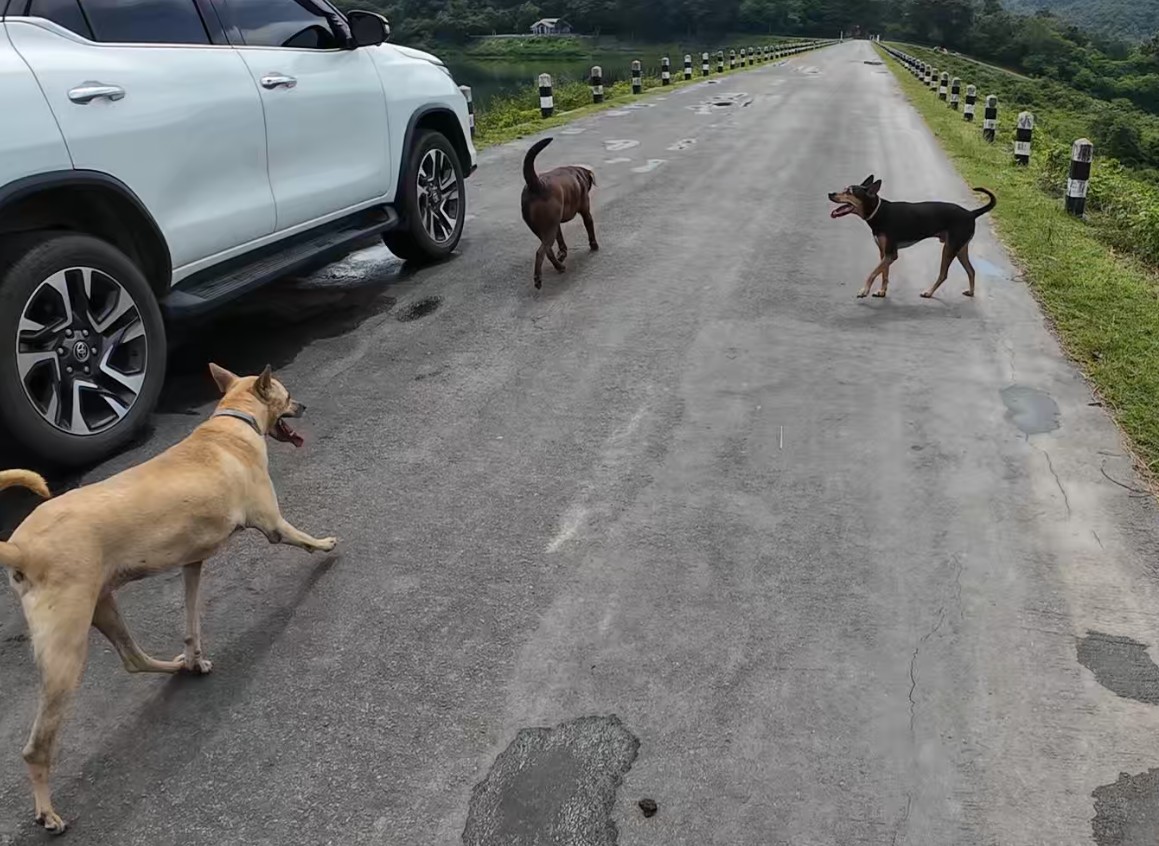
Calm restores clarity. Your steady pace, soft tone, and predictable guidance rebuild what the night takes—reminding your dog that safety can still be seen through you.
Environmental Factors: How Context Shapes Fear
Open Spaces Versus Confined Paths
The structure of your walking environment profoundly influences fear intensity. Open fields or parks, while offering more space, can paradoxically increase anxiety for darkness-fearful dogs. The lack of boundaries means threats could emerge from any direction, requiring 360-degree vigilance that exhausts the nervous system.
Conversely, some dogs find open spaces slightly less threatening because they can maintain distance from potential threats and have multiple escape routes. Individual variation matters significantly here.
Narrow alleys, paths between buildings, or wooded trails create different challenges. These confined spaces limit escape options and reduce the ability to maintain safe distance from perceived threats. Sound also behaves differently in confined spaces—echoing, amplifying, coming from unclear directions—which can intensify auditory unpredictability.
Understanding your individual dog’s responses to different environments allows you to strategically choose walking routes that minimize triggers while gradually building confidence.
Urban Versus Rural Soundscapes
The acoustic environment varies dramatically between settings, each presenting unique challenges for darkness-fearful dogs.
Urban Nightscapes
Cities maintain relatively consistent activity throughout evening hours. Street lights reduce pure darkness, but they also create stark contrasts of light and shadow that can be visually confusing. Traffic noise provides constant background sound, but sudden changes—a siren, a car door, a shout—stand out sharply against this backdrop.
For some dogs, the consistency of urban environments provides predictability. For others, the complexity and unpredictability of human activity patterns amplifies stress.
Rural Quietness and Natural Sounds
Rural settings often become dramatically quieter after dark, creating an environment where every sound—wind rustling leaves, wildlife movement, distant animal calls—becomes prominent. The absence of visual landmarks (fewer street lights, less artificial illumination) can be both comforting (more natural) or anxiety-provoking (less familiar).
Natural sounds carry different informational value for dogs. A coyote’s distant howl might trigger deep instinctual responses that urban sounds don’t. The rustle of a deer or rabbit in underbrush presents genuine wildlife that dogs’ ancestral brains categorize differently than urban stimuli.
🌙 Understanding Canine Nyctophobia: From Fear to Confidence 🐾
A comprehensive guide to helping your dog overcome darkness-related anxiety through neuroscience-backed approaches
Phase 1: Visual Perception Breakdown
When darkness disrupts your dog’s primary navigation system
🧠 What Happens in the Brain
Despite superior night vision, dogs lose critical depth perception cues in darkness. Shadow distortion creates false depth signals, while reduced contrast sensitivity makes distance judgment uncertain. The brain’s predictive coding system fails to match visual expectations with reality.
⚠️ Observable Signs
• Hesitant paw placements and exaggerated caution
• Increased head scanning and spatial confusion
• Reluctance to navigate familiar terrain
• Misjudging distances to objects or obstacles
✅ Intervention Strategy
Begin with late afternoon walks when light is dimming but not dark. Use collar-mounted LED lights to enhance depth perception cues. Walk familiar routes exclusively during initial adaptation phases.
Phase 2: Auditory Hypersensitivity
When sounds become alarming without visual confirmation
🧠 The Prediction Error Mechanism
When auditory input cannot be visually confirmed, the brain generates “prediction errors”—mismatches between expected and actual sensory data. These errors trigger the amygdala’s threat detection system, causing exaggerated startle responses to otherwise benign sounds.
⚠️ Common Nocturnal Triggers
• Unseen footsteps or rustling in bushes
• Distant vehicle sounds with altered acoustics
• Wildlife movements and nocturnal bird calls
• Mechanical noises from air conditioning units
• Sudden sharp sounds like car alarms
✅ Training Protocol
Start in predictable, low-sound environments. Practice calm breathing to regulate your own nervous system—your dog will mirror this. Gradually introduce controlled environmental sounds while maintaining positive associations through high-value rewards.
Phase 3: Scent as Safety Signal
Leveraging your dog’s dominant sense for reassurance
🧠 Soul Recall Through Scent
Familiar scents activate emotional memories that can override fear responses. Your personal scent, territorial markers from previous walks, and known companion dog scents provide olfactory landmarks that create continuity and safety when visual cues fail.
⚠️ Scents That Amplify Arousal
• Unfamiliar dog markers from aroused individuals
• Wildlife presence indicators (fox, coyote, raccoon)
• Novel chemical odors without context
• Stress hormones from unknown humans
✅ Scent Implementation
Tie a piece of your worn clothing to the collar or harness. Walk the same routes regularly so your dog’s own scent marks provide familiarity. Consider dog-safe calming aromatherapy like diluted lavender on collar edges.
Phase 4: Fear Circuit Activation
Understanding the amygdala-hippocampus response
🧠 The Amygdala’s Lowered Threshold
In darkness, the amygdala’s threat detection sensitivity increases dramatically. Like a smoke detector with heightened sensitivity, it triggers for situations that might be threatening. The hippocampus struggles to provide contextual safety signals without visual landmarks, leaving the amygdala’s fear response unchecked.
⚠️ Cortisol and Anticipatory Anxiety
Stress hormones begin rising before the walk even starts. This anticipatory anxiety creates a self-fulfilling prophecy where anxiety about becoming anxious generates the feared stress response. Chronic elevation impacts immune function and overall wellbeing.
✅ Nervous System Regulation
Through NeuroBond principles, your calm parasympathetic state becomes an external regulator. Deep, rhythmic breathing and relaxed musculature signal safety to your dog’s nervous system, helping shift from defensive (sympathetic) to exploratory (ventral vagal) states.
Phase 5: Reading Fear Signals
Observable body language and movement patterns
🧠 Physical Tension Indicators
Your dog’s body displays their emotional state through palpable muscle tension, low or tucked tail carriage, pinned or backward ears, crouched posture with weight shifted backward, raised hackles, visible whale eye, repeated paw lifting, and trembling despite appropriate temperature.
⚠️ Movement Pattern Changes
• Hesitant, tentative steps with frequent pauses
• Complete refusal to move forward (rooting)
• Frantic pulling toward home or lit areas
• Pacing without clear direction
• Sideways crabbing while watching peripherally
✅ Recognition is Intervention
Early identification of stress signals allows you to reduce exposure intensity before fear escalates. Watch for subtle signs like lip licking, yawning, or tight mouth that indicate approaching threshold—and respond by simplifying the environment.
Phase 6: Gradual Exposure Protocol
Building confidence through structured progression
🧠 The Power of Sub-Threshold Exposure
Systematic desensitization works by exposing your dog to darkness at intensities below their fear threshold while creating positive associations. The nervous system gradually learns that darkness doesn’t predict threat, recalibrating the amygdala’s sensitivity over time.
⚠️ Critical Progression Rules
Progress at your dog’s pace, never your timeline. One overwhelmed exposure can undo weeks of work. Watch for subtle stress signals (lip licking, yawning, whale eye) indicating approaching threshold, and reduce intensity immediately.
✅ 12-Week Structured Plan
Weeks 1-2: Late afternoon, 5-10 minutes
Weeks 3-4: Deeper dusk, 15 minutes
Weeks 5-6: Twilight transition
Weeks 7-8: Early darkness, familiar routes
Weeks 9-10: Full darkness, familiar paths
Weeks 11-12: Route variation in darkness
Phase 7: Positive Association Building
Creating new emotional connections with darkness
🧠 Emotional Reconditioning
Counter-conditioning changes the emotional response to darkness by pairing it with genuinely positive experiences. Reserve extraordinary rewards—premium treats, favorite games, special toys—exclusively for nighttime exposure. Darkness becomes a predictor of wonderful things.
⚠️ High-Value Reinforcement Strategies
• Freeze-dried liver, real meat, or cheese (above normal treat quality)
• Special toys reserved exclusively for evening walks
• Interactive feeding games and scatter feeding
• Brief tug sessions or favorite engagement activities
• Access to highly motivating sniff spots
✅ Implementation Timing
Begin rewards the moment darkness appears, not after fear manifests. This proactive approach prevents the fear response cascade and builds positive anticipation. Deliver rewards unpredictably to maintain engagement and prevent habituation.
Phase 8: Rhythmic Co-Regulation
Movement as medicine for anxious nervous systems
🧠 The Invisible Leash Philosophy
Steady, rhythmic movement patterns activate the parasympathetic nervous system, creating physiological calm. Your consistent pace becomes a physical meditation—predictable proprioceptive feedback that grounds your dog in the present moment rather than anxious anticipation about invisible threats.
⚠️ Rhythmic Walking Patterns
• Steady metronome pace with consistent step cadence
• Breath-synchronized walking (4 steps inhale, 4 exhale)
• Pattern walking: 20 steps forward, turn, repeat
• Pause-walk-pause protocol at regular intervals
• Figure-eight patterns in safe open areas
✅ Your Calm as Their Anchor
Maintain deep, audible breathing, relaxed shoulders, and confident forward focus. Your steady energy becomes the most powerful environmental modification—more effective than any tool. Through co-regulation, your parasympathetic state activates theirs.
🔍 Fear of Darkness: Key Differentiators
Specific Phobia vs. Generalized Anxiety
Specific: Fear only during darkness, confident otherwise, no separation anxiety, sudden onset possible
Generalized: Multi-context fear, sound sensitivity all day, stranger wariness, chronic hypervigilance
Age-Related Variations
Puppies: Developmental fear periods make rapid negative associations possible, require gentle introduction
Seniors: Natural sensory decline (vision, hearing) makes genuine navigation difficulty, cognitive changes reduce fear modulation
Urban vs. Rural Challenges
Urban: Consistent ambient lighting, constant background noise, stark light-shadow contrasts, human activity unpredictability
Rural: Dramatic quietness amplifies sounds, fewer visual landmarks, genuine wildlife presence, natural darkness variations
High-Vigilance Breeds
Guardian breeds: German Shepherd, Rottweiler, Doberman—threat detection systems more easily activated
Herding breeds: Border Collie, Australian Shepherd—heightened environmental awareness from work heritage
Open vs. Confined Spaces
Open fields: Threats could emerge from any direction requiring 360° vigilance, but multiple escape routes available
Narrow paths: Limited escape options increase vulnerability, sound echoes create directional confusion
Scent Arousal Effects
Calming scents: Your personal scent, familiar territory markers, known companion dogs, home scent transfers
Alarming scents: Unfamiliar dog markers, wildlife indicators, predator presence, novel chemical odors
⚡ Quick Reference: The 3-3-3 Darkness Adaptation Rule
3 Elements to Control: Light level (collar LED), Scent (familiar markers), Rhythm (steady pace)
3 Signs to Reduce Intensity: Lip licking, yawning, whale eye (subtle stress signals)
3 Weeks Minimum Per Level: Maintain each exposure intensity for at least 3 weeks before progressing—patience prevents setbacks
Success Formula: Sub-threshold exposure + Positive associations + Handler calm = Gradual confidence building
🧡 The Zoeta Dogsoul Approach to Nighttime Confidence
Darkness fear isn’t a behavioral problem to fix—it’s a neurobiological response to sensory uncertainty that requires our compassionate understanding. Through the NeuroBond framework, we recognize that our own regulated nervous system becomes the most powerful tool for helping our dogs recalibrate their threat detection. The Invisible Leash reminds us that calm energy and rhythmic movement create safety signals more potent than any physical tool. And through Soul Recall, we leverage emotional memories—activated by familiar scents and positive associations—to override fear responses rooted in uncertainty.
This journey asks us to slow down, to meet our dogs where they are, to honor that their fear makes perfect neurological sense even when the environment is objectively safe. In that space between science and soul, between understanding mechanisms and holding space for emotion, true transformation occurs. When we guide with patience rather than force, when we regulate rather than react, we don’t just help our dogs tolerate darkness—we teach them that even in uncertainty, they are held in safety.
That’s the essence of Zoeta Dogsoul: where awareness meets compassion, where neuroscience illuminates the path, and where the quality of our presence becomes the light that guides them through the dark. 🌙
© Zoeta Dogsoul – Where neuroscience meets soul in dog training
Weather and Seasonal Variations
Weather conditions interact with darkness to create compound challenges. Rain obscures scent trails that might otherwise provide reassurance and creates additional auditory confusion with its constant sound. Wind amplifies sounds, carries them from unusual directions, and creates movement everywhere (swaying branches, blowing debris) that demands visual investigation.
Seasonal changes affect daylight hours, meaning what was once a pleasant late-afternoon walk might now occur in full darkness. This transition can be jarring for dogs, requiring conscious adjustment and additional support.
The Human Factor: Handler Influence on Canine Confidence
Emotional Contagion and Co-Regulation
Perhaps no factor influences your dog’s nighttime experience more powerfully than your own emotional state. Dogs are exquisitely attuned to human emotion, reading our subtle physiological signals—heart rate changes, breathing patterns, muscle tension, even hormonal shifts—with remarkable accuracy.
When Handler Anxiety Amplifies Canine Fear
If you feel anxious about evening walks—worried your dog will react fearfully, tense about potential triggers, nervous about other dogs or people—your dog perceives and mirrors this anxiety. Your tension transmits through the leash in shortened, jerky movements. Your breathing becomes shallow. Your scanning behavior matches theirs.
Handler behaviors that amplify canine nighttime fear:
- Tense leash handling – Short, tight leash with jerky corrections or restrictive tension
- Rapid, shallow breathing – Anxious breathing patterns your dog can hear and sense
- Hypervigilant scanning – Constantly looking for potential threats, mirroring dog’s anxiety
- Anticipatory tension – Tensing up before leaving house or entering darker areas
- Rushed movements – Quick, jerky walking patterns lacking smooth rhythm
- Verbal anxiety – High-pitched, rapid, overly-reassuring tone suggesting concern
- Avoidance patterns – Obvious route changes or hurrying that communicate threat perception
This creates a feedback loop: your anxiety increases their fear, which increases your anxiety, further intensifying their fear. Neither of you can downregulate when both are in heightened states.
The Power of Calm Presence
Conversely, when you maintain genuine calm—deep, regular breathing, relaxed musculature, steady energy—you become an external regulator for your dog’s nervous system. This is the essence of co-regulation, where your parasympathetic state helps activate theirs.
Handler behaviors that support canine confidence:
- Deep, rhythmic breathing – Slow, audible breath patterns that communicate calm
- Relaxed leash handling – Loose leash with gentle, fluid movements
- Confident posture – Upright stance, relaxed shoulders, grounded presence
- Steady pace – Consistent walking rhythm without rushing or hesitation
- Calm, low vocal tone – Brief, grounded verbal cues in deeper register
- Forward focus – Looking ahead confidently rather than anxiously scanning
- Strategic pausing – Deliberate stops for grounding, not reactive freezing
This isn’t about faking confidence or forcing cheerfulness. Dogs detect inauthenticity. Instead, it requires genuinely cultivating your own calm through conscious breathing, grounding techniques, and confident (not tense) body language. Your calm becomes their safety signal, more powerful than any treat or verbal reassurance.
Movement Patterns and Rhythmic Grounding
The Invisible Leash concept recognizes that how we move matters as much as where we move. Steady, rhythmic walking patterns—consistent pace, regular turning intervals, predictable direction changes—create a physical experience that regulates the nervous system.
Why Rhythm Matters Neurologically
Rhythmic, repetitive movements activate the parasympathetic nervous system, promoting calm. They provide predictability in an otherwise unpredictable environment. Your dog’s body receives consistent proprioceptive feedback (information about body position and movement) that grounds them in the present moment rather than anxious anticipation.
Walking as Moving Meditation
Think of your nighttime walk as moving meditation. Your steady rhythm becomes the focus, the anchor. Changes in pace or sudden stops disrupt this regulatory pattern, so maintaining consistency—even when your dog tenses or hesitates—provides crucial nervous system support.
This doesn’t mean dragging a frozen dog forward. Rather, when they’re capable of movement, maintaining gentle, steady forward momentum while staying attuned to their capacity is key. When they genuinely cannot move, we stop, provide grounding, and reassess rather than forcing.
Voice Tone and Reassurance Strategies
How you speak to your dog during darkness fear matters enormously. High-pitched, rapid, overly-solicitous reassurance (“It’s okay! It’s okay! Don’t worry!”) actually confirms danger from your dog’s perspective. Your anxious tone suggests there IS something to worry about.
Effective Verbal Support
Calm, low, slow tones signal safety. Brief, confident statements rather than continuous chatter. Your voice becomes one more predictability marker, a familiar sound that cuts through the unfamiliar nighttime soundscape.
Silence can also be powerful. Not all situations require talking. Sometimes, your calm presence and steady movement communicate far more than words.
Training and Intervention Strategies: Building Nighttime Confidence
Systematic Desensitization and Graduated Exposure
The foundation of addressing darkness fear lies in systematic desensitization—gradually and carefully exposing your dog to the feared stimulus (darkness) at intensities below their fear threshold, while creating positive associations.
Starting Where Success is Possible
Never begin with the full feared scenario. If your dog fears complete darkness during walks, start with:
- Late afternoon walks when light is dimming but not dark
- Familiar, safe locations where confidence is higher
- Brief duration exposures (5-10 minutes initially)
- Times when the environment is quiet and predictable
Structured progression for systematic desensitization:
- Week 1-2: Dusk walks in familiar areas – Walk 30 minutes before sunset, 5-10 minute duration
- Week 3-4: Deeper dusk exposure – Walk 15 minutes before sunset, gradually extending to 15 minutes
- Week 5-6: Twilight transition – Begin walks at sunset, incorporating first moments of true dusk
- Week 7-8: Early darkness – Start 15 minutes after sunset, maintaining familiar routes
- Week 9-10: Darkness with route familiarity – Full darkness walks on most familiar paths only
- Week 11-12: Distance extension – Gradually extend walking distance in darkness
- Week 13+: Route variation – Slowly introduce new routes while maintaining darkness exposure
Gradual Progressive Challenges
As your dog demonstrates relaxation at one level, gradually increase difficulty by:
- Extending walk duration by 5-minute increments
- Walking slightly later (deeper dusk/darkness)
- Introducing new routes once familiar ones feel safe
- Adding carefully controlled environmental sounds or stimuli
Critical Rules
Progress at your dog’s pace, not your timeline. One rushed exposure that overwhelms them can undo weeks of careful work. Watch for subtle stress signals (lip licking, yawning, whale eye, tight mouth) that indicate approaching threshold, and reduce intensity before crossing into fear.
Counter-Conditioning: Creating Positive Associations
While desensitization reduces fear through gradual exposure, counter-conditioning actively builds positive emotional associations with darkness. These approaches work synergistically.
High-Value Reinforcement in Darkness
Identify truly special rewards—not everyday treats, but extraordinary ones your dog adores. Reserve these exclusively for nighttime exposure work. The presence of darkness predicts these amazing rewards, creating new emotional associations: darkness = wonderful things happen.
High-value reinforcement strategies for darkness exposure:
- Premium protein treats – Freeze-dried liver, real meat, cheese, chicken (items above normal treat quality)
- Interactive feeding – Hand-feeding special meals, scatter feeding in safe dark areas
- Favorite toys – Special toy reserved exclusively for evening walks, never available at other times
- Engagement games – Brief tug sessions, find-it games, other highly motivating activities
- Social rewards – Gentle praise, physical affection, calm celebratory energy
- Environmental rewards – Access to favorite sniff spots, permission for extra exploration time
- Novel experiences – Safe, interesting activities that generate positive emotional states
Engagement Activities
Beyond food, consider activities your dog loves: favorite games, special toys only available during evening walks, unique experiences (safe exploration of interesting scent locations). The goal is generating genuine positive emotion in the previously feared context.
Environmental Modifications for Gradual Adaptation
Manipulating the environment allows you to control exposure intensity with precision.
Structured Light Cues
Using a collar-mounted LED light or carrying a soft flashlight doesn’t eliminate darkness but adds controllable illumination. This provides:
- Enhanced depth perception through better shadow definition
- Increased handler visibility and security
- Gradual transition tool that can be slowly reduced as confidence builds
Light modification options for gradual adaptation:
- Collar or harness-mounted LED lights – Provides continuous gentle illumination in dog’s field of vision
- Handler-carried flashlight – Adjustable beam intensity, can be gradually reduced over time
- Reflective gear – Helps dog see their own body position and movement
- Strategic route lighting – Choose paths with some ambient lighting initially
- Gradual light reduction protocol – Start bright, reduce intensity weekly over months
- Safety lights for visibility – Small clip lights that don’t illuminate environment but mark position
Start with brighter light and gradually reduce intensity over weeks or months. Some dogs may always benefit from some ambient light—and that’s completely acceptable. Our goal isn’t forcing dogs to tolerate pure darkness but helping them feel safe during necessary nighttime outings.
Familiar Scent Integration
Leveraging olfaction as a reassurance tool can be remarkably effective. Strategies include:
- Carrying a piece of your worn clothing that your dog can periodically smell
- Using a specific, safe calming scent (lavender, chamomile) consistently associated with positive experiences
- Walking routes where your dog has previously left scent marks, providing familiar olfactory landmarks
Implementing familiar scents for nighttime reassurance:
- Handler scent on bandana – Tie worn t-shirt piece to collar or harness
- Scent markers along route – Pre-mark route with familiar scents hours before walk
- Calming aromatherapy – Diluted lavender or chamomile on collar edge (ensure dog-safe concentration)
- Home scent transfer – Rub hands on dog’s bedding, then pet during walk
- Companion animal scent – If dog is bonded to another pet, transfer their scent to collar
- Positive association scents – Use specific scent during calm, happy times, then during night walks
- Scent trail following – Walk same routes regularly so dog’s own scent provides continuity
The concept of Soul Recall emerges here—emotional memories connected to familiar, safe scents can activate positive associations that override uncertainty-based fear. When a dog encounters a scent trail that evokes memories of pleasant past walks, those emotional memories help contextualize the current experience as safe.
Rhythmic Walking Patterns and Movement Therapy
The NeuroBond framework emphasizes how synchronized, rhythmic movement between handler and dog creates internal safety signals that rebalance limbic reactivity. In practice, this means:
Establishing Consistent Pace
Find a walking rhythm that feels sustainable and calming—not rushed, not dragging. Match your dog’s natural comfortable pace rather than imposing yours. This rhythm becomes a physical meditation, a repetitive pattern that engages the parasympathetic nervous system.
Rhythmic movement patterns that regulate the nervous system:
- Steady metronome pace – Consistent step cadence (e.g., count of 1-2-3-4 rhythm)
- Breath-synchronized walking – Match steps to breath patterns (4 steps inhale, 4 steps exhale)
- Pattern walking – Regular sequences like: 20 steps forward, wide turn, 20 steps forward
- Pause-walk-pause protocol – Walk steadily for set duration, pause together, resume
- Figure-eight patterns – Gentle looping patterns in safe open areas
- Straight-line focus walks – Long, uninterrupted straight paths with minimal turning
- Synchronized stopping – Both handler and dog stop simultaneously on cue
Predictable Pattern Work
Incorporate gentle, predictable patterns into walks: straight line for 20 steps, wide gentle turn, straight line again. Or: walk forward, pause together for three breaths, walk forward. These patterns provide structure and predictability that anxious nervous systems crave.
Movement as Communication
Your steady movement communicates “I know where we’re going, I’m confident, you can trust my leadership.” This isn’t about dominance—it’s about providing external structure when your dog’s internal sense of safety is compromised.
Managing Expectations: When Professional Support is Needed
While many cases of nighttime fear respond well to patient, consistent guardian-led intervention, some situations require professional support from veterinary behaviorists or certified behavior consultants.
Indicators for Professional Help
Seek professional guidance if:
- Fear is escalating despite careful intervention
- Your dog shows fear across multiple contexts, suggesting generalized anxiety
- Physical aggression emerges (lunging, snapping, biting)
- Fear reaches intensity where exposure training cannot proceed safely
- Quality of life is significantly impaired
Signs that professional veterinary behavioral support is needed:
- Escalating fear intensity – Fear worsens despite consistent, appropriate intervention
- Multi-context anxiety – Fear appears across numerous situations beyond darkness
- Aggressive responses – Lunging, snapping, biting directed at perceived threats or handlers
- Panic-level reactions – Complete immobilization, loss of bowel/bladder control, extreme vocalizations
- Self-injurious behavior – Attempts to escape that cause physical harm
- Severe quality of life impact – Cannot toilet outside after dark, extreme distress affecting daily function
- Failed DIY protocols – Multiple structured attempts without measurable progress
- Handler safety concerns – Situations where managing the dog safely is becoming impossible
- Medical rule-out needed – Sudden onset fear potentially indicating pain or illness
- Medication evaluation – Assessment for anti-anxiety medication to enable learning
Medication as Tool, Not Failure
For dogs with severe anxiety or those where underlying generalized anxiety disorder drives darkness fear, appropriate anti-anxiety medication prescribed by a veterinarian can be transformative. Medication doesn’t “fix” the problem but can reduce anxiety to levels where learning becomes possible. It’s a tool, not an admission of failure, and can make the difference between making progress and remaining stuck.
The Broader Context: Darkness Fear and Generalized Anxiety
Distinguishing Specific Phobia from Symptom
Determining whether darkness fear stands alone or represents one manifestation of broader anxiety disorder matters for treatment planning.
Specific Phobia Pattern
If darkness is the ONLY context where significant fear appears—your dog is otherwise confident, relaxed in other situations, shows no separation anxiety, handles novel environments well during daylight—darkness fear likely represents a specific phobia. Treatment focuses primarily on darkness-specific desensitization and counter-conditioning.
Indicators of darkness-specific phobia:
- Isolated fear context – Fear appears exclusively during darkness/night walks
- Daytime confidence – Dog shows normal, relaxed behavior in all daylight situations
- No separation anxiety – Comfortable being alone, no distress when guardian leaves
- Novel environment confidence – Handles new places well during daylight hours
- Sound tolerance – No excessive reactivity to noises during the day
- Social confidence – Comfortable with strangers, other dogs, various social contexts
- Sudden onset – Fear began after specific darkness-related incident or experience
Generalized Anxiety Pattern
If your dog shows anxiety across multiple contexts—fear of strangers, intense separation distress, reactivity to various sounds regardless of time of day, difficulty relaxing in general—darkness fear is likely a symptom of broader anxiety disorder. Here, treatment must address the underlying generalized anxiety through:
- Comprehensive behavior modification addressing all contexts
- Possible medication for anxiety management
- Environmental management to reduce overall stress
- Building general confidence and coping skills
Indicators of generalized anxiety with darkness component:
- Multi-context fear – Anxiety appears in numerous different situations
- Separation distress – Significant anxiety when left alone
- Sound sensitivity – Excessive reactions to various sounds at all times
- Stranger fear – Wariness or fear of unfamiliar people
- Generalized hypervigilance – Constantly alert and scanning even in safe environments
- Difficulty settling – Struggles to relax even at home
- New environment stress – Anxiety in novel places regardless of lighting
- Resource guarding – Defensive behaviors around food, toys, spaces
- Chronic stress indicators – Digestive issues, excessive shedding, other physical manifestations
The darkness fear may improve as overall anxiety reduces, even without darkness-specific work.
The Role of Control and Predictability
Underlying much anxiety—both specific and generalized—is a sense of lack of control over one’s environment and inability to predict what will happen next. Darkness amplifies this by removing the primary sense (vision) dogs use for environmental prediction.
Interventions that increase control and predictability—structured routines, clear communication, consistent handler responses, environmental modifications—address this fundamental need and can reduce anxiety across contexts, including nighttime walks.
Theoretical Frameworks: Understanding the Deeper Mechanisms
Predictive Coding and Uncertainty
The Predictive Coding Theory provides elegant explanation for why darkness generates such profound anxiety. Your dog’s brain constantly generates predictions about incoming sensory information based on past experience and current context. When these predictions match reality, the brain processes information efficiently with minimal conscious awareness.
Darkness, however, creates massive prediction errors. Visual predictions cannot be confirmed. Auditory information arrives without expected visual context. Olfactory information suggests presences that cannot be visually verified. These cascading prediction errors signal to the brain: “Something is wrong. The world is not behaving as expected. Threat may be present.”
This framework helps us understand that darkness fear isn’t irrational—it’s a rational response to conditions where the brain’s primary information-processing system (prediction-confirmation) cannot function normally.
Affective Neuroscience and the FEAR System
Jaak Panksepp’s Affective Neuroscience framework identifies FEAR as one of the basic emotional systems shared across mammalian species. This system exists precisely to respond to ambiguous, uncertain, or potentially threatening situations—exactly what darkness creates.
The FEAR system’s activation isn’t a bug; it’s a feature. It kept ancestors alive by erring on the side of caution when information was incomplete. Our intervention goal isn’t eliminating this system but helping it recalibrate so that familiar, genuinely safe nighttime contexts don’t trigger intense activation.
Understanding this helps us approach fearful dogs with compassion rather than frustration. Their fear makes neurobiological sense, even when the environment is objectively safe.
Polyvagal Theory and State-Dependent Behavior
Stephen Porges’ Polyvagal Theory illuminates how darkness shifts dogs between neurophysiological states. In safe conditions with adequate sensory information, the ventral vagal system supports social engagement, play, and exploration. As perceived safety decreases—through sensory uncertainty—the system shifts toward sympathetic activation (mobilization for defense) or even dorsal vagal activation (immobilization/freeze).
This framework explains why forcing a frozen dog to move often fails—they’re in a dorsal vagal state where movement feels neurologically impossible. It also highlights why handler calm and co-regulation are so powerful: your ventral vagal activation can help shift your dog’s state from defensive back toward social engagement.
The Invisible Leash operates here—your calm energetic state, your regulated breathing and movement, invite your dog’s nervous system to match yours, shifting from defensive to exploratory states without force or coercion.
Practical Application: A Sample Rehabilitation Plan
Let’s bring theory into practice with a structured approach for a dog showing moderate nighttime fear:
Week 1-2: Assessment and Baseline
- Identify current fear level on a 1-10 scale
- Note specific triggers: pure darkness, shadows, sounds, unfamiliar territory
- Assess handler confidence and anxiety levels
- Establish success criteria: what would progress look like?
Assessment checklist for baseline evaluation:
- Fear intensity rating – Score 1-10 for darkness fear (1=minimal, 10=severe panic)
- Specific trigger identification – List exact situations that trigger fear (complete darkness, shadows, specific sounds, etc.)
- Body language inventory – Document specific stress signals your dog displays
- Environmental factors – Note which locations/routes show more or less fear
- Handler emotional state – Honestly assess your own anxiety levels during night walks
- Duration tolerance – How long can dog manage before fear escalates?
- Time of day sensitivity – Does deeper darkness correlate with increased fear?
- Recovery time – How long after walk does dog take to return to baseline calm?
- Success moments – Note any situations where dog showed confidence
- Medical rule-out – Confirm no vision impairment, pain, or illness contributing to behavior
Week 3-4: Foundation Building
- Begin late afternoon walks, before true darkness, in most familiar territory
- Practice calm breathing and regulated movement patterns
- Introduce collar light or small flashlight for handler confidence
- Keep sessions brief (10-15 minutes) and end on success notes
- Implement high-value treats specifically for these sessions
Week 5-8: Gradual Darkness Increase
- Slowly extend walk times 5-10 minutes later each week
- Maintain familiar routes while darkness deepens
- Practice rhythmic walking patterns with frequent pauses for grounding
- Introduce familiar scent cues (worn shirt in pocket to smell when needed)
- Monitor for stress signals and reduce intensity if approaching threshold
Week 9-12: Complexity Addition
- Begin varying routes slightly while maintaining core familiar sections
- Practice in different weather conditions (dry nights first, then gentle rain)
- Gradually reduce light assistance if progress allows
- Introduce calm, controlled exposure to quiet evening sounds
- Build duration toward desired walk length
Ongoing Maintenance
- Regular nighttime walks maintain confidence
- Seasonal adjustments as daylight hours change
- Continued monitoring for stress signals
- Celebration of progress, recognition that some dogs may always need support
Conclusion: Guiding Your Dog Through the Darkness
Fear of darkness in dogs is neither mystery nor stubbornness. It’s a profound neurobiological response to sensory uncertainty, where diminished visual input compromises the brain’s ability to predict, contextualize, and confirm safety. The interplay between impaired depth perception, heightened auditory unpredictability, ambiguous olfactory information, and activation of ancient FEAR systems creates a perfect storm of anxiety that can transform confident companions into hesitant, hypervigilant shadows of themselves.
Yet within this understanding lies profound hope. When we recognize that fear arises from specific, identifiable mechanisms, we can address each component with targeted, compassionate interventions. Systematic desensitization respects the nervous system’s need for gradual adaptation. Counter-conditioning builds new positive associations that override learned fear. Environmental modifications provide scaffolding while confidence develops. And perhaps most powerfully, the quality of our own presence—our calm energy, our steady rhythm, our grounded confidence—becomes the most potent tool for guiding our dogs back toward nighttime peace.
The frameworks of NeuroBond, the Invisible Leash, and Soul Recall remind us that healing isn’t about controlling dogs but about creating conditions where their nervous systems can naturally downregulate, where emotional memories of safety can emerge, and where the connection between human and dog becomes itself a source of courage.
This journey requires patience. Progress may be gradual, sometimes frustratingly slow. There will be setbacks when unexpected triggers arise or when environmental factors create challenge. Yet each small victory—each moment when your dog chooses curiosity over fear, each walk that ends in calm rather than tension, each night when darkness transforms from enemy to neutral backdrop—represents genuine neurological change, new neural pathways of safety forming where fear once dominated.
Some dogs may never fully embrace darkness, and that’s acceptable. Our goal isn’t forcing comfort where none exists but expanding the zone where peace is possible, building sufficient confidence that necessary nighttime outings can occur without significant distress.
As you walk this path with your companion, remember: their fear is valid, their responses make neurobiological sense, and your patient, informed support can genuinely transform their experience. In the quiet rhythm of your shared steps through evening shadows, in the steady reassurance of your grounded presence, you offer something infinitely valuable—the message that even in darkness, they are not alone, and safety persists.
That balance between science and soul, between understanding mechanisms and honoring emotion, between structured intervention and compassionate flexibility—that’s the essence of Zoeta Dogsoul. It’s where transformation lives, where fear gradually yields to confidence, and where nighttime walks can once again become opportunities for connection rather than sources of dread. 🧡
May your journey through the darkness lead both you and your furry friend toward greater light.










