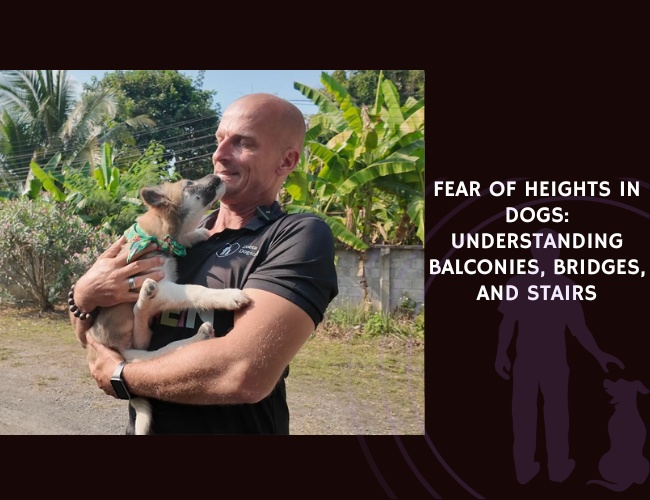
When Your Dog Freezes at the Edge — What Science and Soul Tell Us About Elevated Spaces
Have you ever watched your dog suddenly stop at the top of a staircase, body rigid, tail tucked, refusing to move forward? Perhaps your furry companion trembles on a glass-floored bridge or won’t step onto your apartment balcony, even on a calm day. These moments reveal something profound about how our dogs perceive the world — a complex interplay of sensory processing, emotional regulation, and spatial cognition that goes far deeper than simple fear.
Fear of heights in dogs is not just a behavioral quirk or training challenge. It represents a multisensory anxiety condition rooted in how canine brains process visual depth cues, vestibular feedback, and tactile stability. When we understand the neurological and emotional mechanisms behind this fear, we can approach it with compassion, patience, and scientifically grounded methods that honor the trust our dogs place in us.
This guide explores the perceptual, neurological, and emotional dimensions of canine height aversion, offering you a comprehensive understanding of why it happens and, most importantly, how you can help your dog navigate elevated spaces with confidence and calm.
The Canine Visual System: How Dogs See Heights Differently
Visual Depth Perception and Transparent Surfaces
Your dog’s eyes don’t work quite like yours. While we share many aspects of visual processing, dogs rely more heavily on motion detection and peripheral vision than on detailed color perception or static depth cues. This difference becomes critically important when your dog encounters transparent or open vertical spaces — glass balconies, metal grate stairs, or suspension bridges with gaps between the planks.
When a dog looks down through a transparent surface, several perceptual challenges arise:
- Missing visual ground reference: The brain expects to see textured, opaque ground but receives only transparent material, creating a perceptual void
- Evolutionary mismatch: Your dog’s visual system evolved to navigate forest floors and rocky terrain, not trust invisible barriers between them and drops below
- Absent tactile-visual integration: Normal walking pairs the feel of solid ground with visual confirmation, but transparent surfaces break this expected pairing
- Depth cue confusion: The distance to the ground below conflicts with the immediate tactile feedback from paws, creating sensory discord
- Continuous uncertainty: Without reassuring visual feedback, the brain cannot resolve the threat assessment, maintaining a state of persistent vigilance
This phenomenon intensifies with certain architectural features. Glass-bottomed observation decks, modern staircases with open risers, or balconies with widely spaced railings all challenge your dog’s ability to feel secure. They may scan the environment repeatedly, trying to gather enough visual information to feel safe, but the conflicting signals — “I should see ground, but I don’t” — create a state of persistent uncertainty.
Research using eye-tracking technology shows that dogs confronted with transparent elevated surfaces exhibit rapid, scattered scanning patterns, suggesting their visual system is actively searching for stable reference points. Unlike solid, opaque surfaces where dogs move confidently forward, transparent structures trigger hesitation, extended pauses, and what behaviorists call “approach-avoidance conflict.”
Motion and Distance: The Role of Visual Scanning
Dogs naturally use motion parallax — the way objects appear to move at different speeds as you move — to judge distance and depth. When standing on a height, the distant ground below moves very little as they shift their position, while nearby objects move more dramatically. This sensory information helps their brain calculate how far away something is.
However, on elevated transparent surfaces or open structures, this calculation becomes problematic. The visual field beneath them lacks the expected texture and movement cues. Combined with the fact that dogs have a different inter-pupillary distance than humans — affecting their stereoscopic depth perception — the result can be genuine disorientation. Your dog isn’t being stubborn; their visual system is genuinely struggling to make sense of the environment. 🧠
Visual–Vestibular Mismatch: When the Senses Conflict
Understanding the Balance System
Your dog’s sense of balance relies on three integrated systems working in harmony: visual input from the eyes, vestibular input from the inner ear, and proprioceptive input from muscles and joints. These systems constantly communicate, creating a unified sense of body position and movement through space.
The vestibular system, located in your dog’s inner ear, detects head position and movement. When your dog turns their head or shifts weight, tiny hair cells in the vestibular organs bend, sending signals to the brain about acceleration, rotation, and orientation relative to gravity. This system works seamlessly when all sensory inputs align.
But what happens when they don’t?
Visual-vestibular mismatch occurs when what your dog sees conflicts with what their inner ear feels. Imagine your dog standing on an elevated walkway, looking down at movement far below — perhaps traffic, water flowing, or people walking. Their eyes register motion, signaling to the brain that they might be moving. Yet their vestibular system reports complete stillness. This contradiction creates a neurological conflict.
The Cascade of Disorientation
In humans, this mismatch triggers dizziness, unsteadiness, and a heightened sense of threat. Research suggests dogs experience similar responses. The brain, receiving contradictory information, prioritizes safety and triggers a defensive response. Heart rate increases, muscles tense, and the sympathetic nervous system prepares for danger.
This is why some dogs appear dizzy or disoriented on heights, even when the surface is perfectly stable. Their brain is processing a sensory conflict that feels genuinely threatening. The visual system says “motion” while the vestibular system says “stillness,” and this mismatch registers as potential danger — like the feeling of losing your balance.
Interestingly, research in mice has shown that visual input is critical for expressing fear of heights, while peripheral vestibular input was found to be less essential in naive subjects. However, dogs with pre-existing vestibular sensitivity or chronic conditions may experience this conflict more intensely, making them particularly vulnerable to height-related anxiety.
Environmental Factors That Amplify Mismatch
Certain environments intensify this sensory conflict. Swaying suspension bridges create actual movement, adding genuine vestibular input to the confusing visual signals. Wind on high balconies can create subtle body movements that amplify the sense of instability. Even watching movement far below — birds flying, cars passing, water flowing — can trigger the visual system to register motion that the vestibular system doesn’t confirm. 🌊
Breed, Age, and Physical Factors: Who Is Most Vulnerable?
Brachycephalic Breeds and Visual Limitations
Dogs with short muzzles — breeds like Pugs, French Bulldogs, Boxers, and Boston Terriers — face unique challenges with depth perception. Their facial structure affects the positioning of their eyes, potentially altering their inter-pupillary distance and binocular overlap. This can impact how accurately they perceive depth and distance, particularly when looking down from heights.
These breeds may also have a reduced field of binocular vision, meaning the area where both eyes’ fields overlap is smaller. Since stereoscopic depth perception relies on this overlap, brachycephalic dogs might find judging vertical distances more challenging than dogs with longer muzzles. This doesn’t mean they’re always fearful of heights, but they may process elevated environments differently.
Additionally, brachycephalic breeds often experience:
- Respiratory compromise under stress: Already challenged breathing becomes more labored during anxiety, creating a physiological feedback loop that amplifies distress
- Temperature regulation difficulties: Elevated stress on heights combined with poor heat dissipation can create overwhelming physical discomfort
- Reduced exercise tolerance: Less stamina for navigating challenging terrain means elevated structures feel more physically demanding
- Altered facial expressions: Difficulty reading their stress signals since their facial structure masks some typical fear indicators
- Lower physical confidence: Awareness of their own respiratory limitations may create generalized caution about physical challenges
Vestibular Sensitivity and Balance Disorders
Some dogs have congenital or acquired vestibular sensitivities that make them more prone to disorientation on elevated surfaces. Vestibular disease, whether acute or chronic, disrupts the inner ear’s ability to provide accurate balance information. Dogs recovering from vestibular episodes or those with mild, ongoing vestibular dysfunction may show heightened anxiety around heights simply because their baseline balance system is already compromised.
Senior dogs often develop age-related vestibular changes, making surfaces that once felt stable now feel uncertain. A dog who confidently navigated stairs for years might suddenly hesitate, not due to personality change but because their sensory processing has shifted. Recognizing this helps us respond with patience rather than frustration.
Age and Developmental Windows
Puppies in their critical socialization period — roughly 3 to 14 weeks — who aren’t exposed to various elevated surfaces may later show heightened fear responses. Early, positive experiences with stairs, ramps, and different floor textures build neural pathways for confident navigation. Without these experiences, adult dogs may perceive heights as genuinely novel and potentially threatening.
Conversely, senior dogs may develop height aversion as their vision deteriorates, proprioceptive awareness dims, or cognitive function declines. What once felt manageable now requires more mental and physical effort, triggering avoidance behaviors. Through the NeuroBond approach, we can recognize these age-related changes and adapt our expectations and support accordingly.

The Neuroscience of Height-Related Fear
Brain Structures and Fear Processing
When your dog encounters an elevated surface that triggers fear, specific brain structures activate in a coordinated response. The amygdala, a small almond-shaped structure deep in the brain, serves as the fear processing center across mammalian species. It receives sensory information and rapidly assesses potential threats, triggering defensive behaviors before conscious thought occurs.
The cascade begins within milliseconds:
- Sensory input reception: Visual, vestibular, and proprioceptive signals about height converge at the thalamus
- Dual pathway activation: Information travels simultaneously on a fast unconscious route to the amygdala and a slower analytical route to the cortex
- Threat assessment: The amygdala rapidly evaluates potential danger based on sensory patterns and emotional memory
- Defensive preparation: Before conscious awareness, the body receives signals to prepare for threat response
- Physiological mobilization: Heart rate increases, muscles tense, stress hormones release, and attention narrows to the perceived threat
- Behavioral expression: Observable fear behaviors emerge as the final output of this neurological cascade
Research in mice has identified a fascinating non-image-forming visual circuit involving the ventral lateral geniculate nucleus and the lateral/ventrolateral periaqueductal gray that drives fear associated with heights, independent of the primary visual cortex. This suggests that subcortical pathways — ancient, evolutionarily preserved circuits — mediate this fear response, operating below the level of conscious visual processing.
The Cerebellum and Vestibular Nuclei
The cerebellum, located at the back of the brain, coordinates movement and maintains balance. It receives input from the vestibular nuclei, which process signals from the inner ear. When your dog stands on an elevated surface, the cerebellum constantly calculates body position and makes micro-adjustments to maintain stability.
If the sensory input suggests instability — whether real or perceived — the cerebellum signals the body to adopt a more cautious posture. This manifests as lowered body position, stiff movement, and reluctance to shift weight. These aren’t conscious choices; they’re automatic protective responses orchestrated by ancient brain structures designed to prevent falls and injury.
The interaction between these systems explains why forced exposure rarely resolves height fear. You’re not addressing a simple lack of experience; you’re confronting deeply wired neurological responses that prioritize survival above all else.
Emotional Memory and the Hippocampus
The hippocampus, crucial for memory formation, works closely with the amygdala to create lasting emotional memories. If your dog has one significantly frightening experience on an elevated surface — a slip, a sudden loud noise, or intense handler anxiety — the hippocampus encodes this event as a powerful memory linked to the environmental context.
Subsequently, similar contexts — the sight of metal stairs, the echo of footsteps on a bridge, the sway of an elevated walkway — can trigger recall of that emotional memory. This is why a single traumatic event can create long-lasting height aversion. The brain has learned “elevated structures = danger,” and this learning persists.
This is where Soul Recall becomes relevant — those moments when emotional memory and intuitive response intertwine, when past experience shapes present perception. Understanding this helps us approach rehabilitation with gentleness, recognizing we’re not just changing behavior but helping to reshape emotional memory itself. 🧡
Physiological Markers: What Fear Looks Like Inside
The Stress Hormone Response
When your dog experiences fear on an elevated surface, their body releases cortisol, a stress hormone produced by the adrenal glands. Cortisol mobilizes energy resources, increases alertness, and prepares the body for sustained stress response. While acute cortisol release is adaptive — it helps your dog respond to genuine threats — chronic or repeated elevation can lead to prolonged high cortisol levels.
Measuring salivary cortisol before, during, and after height exposure provides objective data about stress levels. Dogs with intense height fear show significantly elevated cortisol that remains high even after returning to ground level. This physiological signature indicates the experience was genuinely distressing, not merely uncomfortable.
Heart Rate Variability and Autonomic Balance
Heart rate variability (HRV) measures the variation in time intervals between heartbeats. Healthy, regulated nervous systems show good HRV — the heart rate speeds up and slows down naturally with breathing and environmental changes. When fear takes hold, HRV decreases dramatically. The heart beats in a more rigid, monotonous pattern, indicating sympathetic nervous system dominance.
Low HRV during height exposure signals:
- Sympathetic dominance: The fight-or-flight system has overridden the rest-and-digest system
- Loss of nervous system flexibility: The body is locked in a rigid defensive pattern rather than flowing adaptively
- Reduced stress resilience: The system has fewer resources available to cope with additional challenges
- Impaired social engagement: The ventral vagal system supporting connection and calm has been suppressed
- Extended recovery time needed: It will take longer for your dog to return to baseline after the stressful experience
- Potential for dorsal vagal shutdown: If stress continues, the system may collapse into freeze or complete withdrawal
Skin Conductance and Sympathetic Activation
Electrodermal activity, measured through skin conductance, reflects sympathetic nervous system activation. When your dog experiences fear, sweat glands in their paw pads become more active, increasing skin conductance. This physiological marker, widely used in human fear research, provides real-time data about anxiety levels.
Studies exposing humans to virtual height scenarios show robust increases in skin conductance, heart rate, and self-reported distress. Similar patterns appear in dogs confronting real elevated structures. These physiological responses aren’t under voluntary control; they represent the body’s automatic fear response, validating what we observe behaviorally.
Behavioral Signatures: Reading Your Dog’s Fear
Freezing and Immobility
When your dog suddenly stops moving on an elevated surface, body rigid and muscles tense, they’re exhibiting what behaviorists call “defensive freezing.” This isn’t stubbornness; it’s a hardwired survival response. In nature, freezing makes animals less visible to predators and prevents them from moving into potentially dangerous situations without adequate information.
Freezing in response to height serves several functions:
- Information gathering: Allows extended sensory processing without committing to potentially risky forward movement
- Risk reduction: Minimizes the chance of a misstep that could lead to falling or injury
- Energy conservation: Maintains physical resources while the brain assesses options
- Clear communication: Signals to the handler that genuine distress is occurring and support is needed
- Threat visibility reduction: An evolutionary holdover where stillness makes animals less noticeable to predators
- Decision delay: Buys time for the cognitive systems to override the initial fear response if possible
Trembling and Muscle Tension
Visible trembling, particularly in the legs and core, indicates high sympathetic arousal. The muscles are primed for action — fight or flight — but the situation offers no clear escape route. This creates a state of intense physiological activation with no outlet, manifesting as trembling.
Dogs may also show fine motor tremors, subtle shaking that becomes visible in their lips, jaw, or ears. Combined with muscle tension throughout the body, this creates a physical state of high distress that’s exhausting to maintain. Prolonged exposure while in this state doesn’t lead to desensitization; it leads to learned helplessness.
Tail Position and Body Posture
Your dog’s tail tells a nuanced story. A tail tucked tightly between the legs, pressed against the belly, signals intense fear and a desire to make themselves smaller and less vulnerable. Compare this to a relaxed tail that moves freely, even if held neutral — this indicates comfort and confidence.
Body posture shifts dramatically with fear. Your dog may lower their body, crouching close to the surface with their center of gravity dropped. Their weight shifts backward, away from the perceived threat of the edge. Their ears pin back, their eyes widen with visible whites showing (whale eye), and their mouth may clamp shut or pant rapidly.
Scanning and Vigilance
Watch your dog’s eyes. Rapid, darting movements scanning the environment below signal active threat assessment. Your dog is trying to gather enough information to feel safe, but on transparent or open surfaces, this information remains elusive. The scanning continues without resolution, maintaining the heightened state of vigilance.
Observable signs of height-specific fear include:
- Freezing or refusing to move forward despite encouragement or rewards
- Trembling or visible shaking particularly in the legs and core muscles
- Tail tucking tight against the belly or between the legs
- Low body posture with weight shifted backward away from the edge
- Dilated pupils and “whale eye” showing whites of the eyes
- Excessive panting or held breath with tense jaw
- Repeated ground scanning looking down through transparent surfaces
- Attempts to retreat or turn around on the elevated structure
- Vocalizations including whining, whimpering, or distress barking
- Clinging behavior pressing against the handler or wall
- Lowered head position with ears pinned back
- Stiff, shortened gait with careful, tentative paw placement
Some dogs become hypervigilant, unable to focus on their handler or respond to cues because all their attention is consumed by monitoring the perceived threat. This cognitive narrowing — where fear dominates all mental resources — prevents learning and makes training attempts ineffective.
Vocalization and Communication
Whining, whimpering, or high-pitched barking indicates emotional distress. Your dog is communicating that they’re overwhelmed and need help. Some dogs become silent, which can be equally concerning — this may signal dorsal vagal shutdown, where the nervous system has moved beyond fight-or-flight into a freeze state of profound withdrawal.
The Invisible Leash reminds us that awareness, not tension, guides the path. When your dog vocalizes or falls silent in fear, they’re not being disobedient; they’re showing you exactly where their emotional and neurological state has taken them.
Height. Vision. Fear.
Perception betrays stability. Transparent floors erase depth cues, forcing your dog’s eyes and balance system into conflict—seeing danger where their paws feel safety.
Instinct resists the void. Evolution tuned dogs for opaque earth, not invisible drops; when ground vanishes, survival circuits ignite.

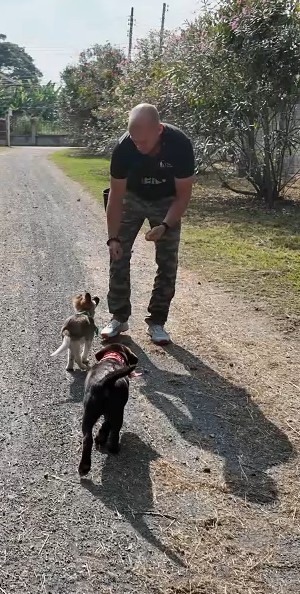
Reassurance rewires confidence. Slow steps, solid surfaces, calm tone—your steadiness becomes their footing until the world feels grounded again.
Environmental Factors: How Surfaces Shape Fear
Vibration and Dynamic Movement
Elevated surfaces that vibrate, sway, or move underfoot create genuine instability that amplifies fear responses. Suspension bridges, metal catwalks near machinery, or elevated walkways with foot-traffic vibration all send powerful signals to your dog’s proprioceptive and vestibular systems: “This surface is unstable.”
Even subtle movements register intensely. Your dog’s paw pads contain numerous mechanoreceptors that detect pressure, texture, and vibration. When the surface beneath them trembles or shifts, these receptors send urgent signals to the brain about potential danger. Combined with visual and vestibular input, the result is a multisensory alarm system in full activation.
Research shows that haptic feedback — physical movement or vibration during height exposure — intensifies threat perception and impairs cognitive performance in humans. Similar effects occur in dogs. A stable elevated surface might be manageable, but add vibration, and the fear response escalates dramatically.
🏔️ Fear of Heights in Dogs: A Phased Understanding
From sensory perception to confident navigation — understanding the journey through visual, vestibular, and emotional processing
Phase 1: Initial Sensory Recognition
When visual depth cues trigger the first alert
🧠 What Happens in the Brain
Your dog’s visual system encounters transparent or open vertical spaces. The brain expects solid ground but receives conflicting information. The thalamus rapidly relays sensory data to both the amygdala (fast, unconscious threat assessment) and cortex (slower, analytical processing).
📊 Observable Behaviors
• Slowed approach with extended pauses
• Rapid eye scanning of the surface below
• Head lowering to gather more visual information
• Tentative paw placement testing the surface
✅ Support Strategy
Maintain calm presence without verbal pressure. Allow extended observation time. Your regulated nervous system becomes a reference point for safety assessment during this critical first encounter.
Phase 2: Vestibular-Visual Mismatch
When inner ear signals conflict with visual input
🧠 Sensory Integration Challenge
The vestibular system reports stillness while visual input suggests motion (movement below, swaying, or depth perception). This sensory conflict activates the cerebellum and vestibular nuclei, triggering defensive postures and disorientation responses.
📊 Physical Manifestations
• Body lowering with weight shifted backward
• Visible trembling in legs and core
• Widened stance for stability
• Possible dizziness or unsteady gait
⚠️ Critical Warning
Dogs with pre-existing vestibular sensitivity or brachycephalic breeds experience this phase more intensely. Never force forward movement during visible disorientation — this can create lasting trauma and learned helplessness.
Phase 3: Fear System Activation
The amygdala triggers full defensive response
🧠 Neurological Cascade
The amygdala activates the FEAR system (Panksepp’s affective neuroscience). Cortisol releases, heart rate variability decreases, and the sympathetic nervous system dominates. Subcortical pathways override conscious processing — your dog’s survival instinct takes full control.
📊 Defensive Behaviors Emerge
• Complete freezing or refusal to move
• Tail tucking and whale eye (visible whites)
• Attempts to retreat or turn around
• Vocalizations (whining, distress barking)
• Clinging to handler or wall
✅ NeuroBond Intervention
Through the NeuroBond approach, your calm becomes their anchor. Synchronized breathing, gentle physical contact, and emotional co-regulation help shift from sympathetic dominance back toward ventral vagal engagement — the state where learning becomes possible again.
Phase 4: Multi-Sensory Overwhelm
When environmental factors compound the fear
🧠 Sensory Overload Pattern
Surface texture (slippery, see-through, resonant), acoustic feedback (echoing footsteps), vibration, and temperature combine to create multisensory threat signals. The proprioceptive system receives conflicting information about stability, intensifying the fear response exponentially.
📊 Compounding Factors
• Transparent surfaces eliminate visual ground reference
• Metal grating produces unsettling sounds
• Vibration from traffic or machinery
• Wind creating actual surface movement
• Cold or hot temperature conduction through paws
✅ Training Adaptation
Separate challenges: introduce novel textures at ground level first. Build confidence with stable surfaces before transparent ones. Progress from quiet to noisy environments. Each sensory element deserves its own desensitization timeline.
Phase 5: Memory Encoding & Soul Recall
How experience becomes lasting emotional memory
🧠 Hippocampal Processing
The hippocampus works with the amygdala to encode emotional memories. A single intense fear experience creates powerful context-dependent learning. Subsequently, similar environmental cues — metal stairs, glass floors, echoing sounds — trigger Soul Recall moments where past emotion shapes present perception.
📊 Pattern Recognition
• Fear generalizes to similar structures
• Environmental triggers activate without current threat
• Body remembers even when mind has “forgotten”
• Avoidance becomes automatic, not conscious choice
⚠️ Forced Exposure Risk
Forcing exposure without resolution creates compound memories: height + helplessness + handler betrayal. This damages the secure attachment foundation needed for all future learning. Memory reshaping requires patience, not pressure.
Phase 6: Learned Immobility Pattern
When repeated exposure without resolution suppresses movement
🧠 Defensive Strategy Solidification
Without successful resolution experiences, your dog learns that freezing is the safest response. This postural learning inhibition means approach-avoidance conflict shifts to passive shutdown. The brain prioritizes immobility over exploration, creating a defensive pattern that extends beyond heights.
📊 Progressive Withdrawal
• Earlier refusal in approach sequence
• Passive resistance replaces active avoidance
• Body lowering becomes default posture
• Learned helplessness if pattern continues
• Generalization to other uncertain contexts
✅ Breaking the Cycle
Start far below fear threshold. Create genuine success experiences at minimal heights. Use incremental elevation protocols where each level becomes truly comfortable before progressing. Success rebuilds confidence; pressure reinforces immobility.
Phase 7: Gradual Confidence Building
Evidence-based rehabilitation through positive association
🧠 Neural Pathway Reconstruction
Systematic desensitization creates new neural pathways associating elevated surfaces with safety and reward rather than threat. The brain learns that height can predict positive outcomes, gradually shifting amygdala reactivity and building prefrontal cortex regulation capacity.
✅ Protocol Elements
• Ground-level texture introduction (separate tactile from height)
• Minimal elevation start (2-4 inches initially)
• Gradual height increases only after confidence
• High-value positive reinforcement pairing
• Choice and autonomy throughout process
• Multiple context generalization training
📊 Progress Indicators
Voluntary approach increases, body language softens, tail position rises, exploratory behaviors emerge, check-ins with handler show trust, and recovery time decreases. Progress isn’t linear — plateaus and setbacks provide valuable threshold information.
Phase 8: Integrated Mastery & The Invisible Leash
When awareness replaces fear and trust enables exploration
🧠 Neurological Integration
The prefrontal cortex now modulates amygdala reactivity effectively. Visual, vestibular, and proprioceptive inputs integrate smoothly. Your dog can assess heights rationally while maintaining emotional regulation — fear no longer overrides cognitive processing.
✅ Mastery Characteristics
• Relaxed approach to previously feared structures
• Confident paw placement without hesitation
• Normal body posture and tail carriage
• Ability to navigate various surface types
• Quick recovery from minor startle moments
• Handler check-ins show connection, not dependency
📊 The Invisible Leash in Action
Awareness, not tension, now guides the path. Your dog navigates elevated spaces with calm attention rather than panic. The emotional connection you’ve built becomes the invisible leash — not controlling through force, but guiding through trust and shared understanding.
🔍 Height Fear Vulnerability: Key Factors
Breed-Specific Factors
Brachycephalic breeds (Pugs, French Bulldogs) face altered depth perception and respiratory challenges that amplify stress. Herding breeds may show heightened vigilance. Small breeds perceive heights as proportionally more threatening.
Age-Related Vulnerability
Puppies (3-14 weeks) without elevation exposure develop stronger fears. Adult dogs with trauma show persistent avoidance. Senior dogs experience vision decline and vestibular changes increasing uncertainty.
Surface Complexity Levels
Solid opaque = lowest challenge. Textured metal = moderate (sound + feel). Transparent/grated = highest challenge (visual void + uncertainty). Vibrating structures compound difficulty exponentially.
Vestibular Health Impact
Healthy vestibular function enables adaptation. Mild sensitivity creates increased caution. Vestibular disease (acute/chronic) produces severe disorientation and genuine danger on heights requiring medical intervention first.
Handler Emotional State
Calm, regulated handler = dog co-regulates effectively. Anxious handler = emotional contagion amplifies fear. Frustrated/forcing handler = compounds fear with betrayal, creating complex trauma.
Previous Experience Pattern
Early positive exposure = resilient confidence. Neutral limited exposure = uncertainty but teachable. Traumatic experience = requires extensive rehabilitation addressing both fear and emotional memory.
⚡ Quick Reference: Desensitization Timeline Formula
Mild fear (hesitation, scanning): 2-6 weeks with consistent training
Moderate fear (freezing, trembling): 2-4 months gradual progression
Severe phobia (panic, refusal): 6+ months, professional support recommended
Golden Rule: Progress at sub-threshold levels only. One successful confident step > ten forced anxious steps. Each session should end with relaxed body language, not just compliance. Trust rebuilds slowly; pressure damages quickly.
🧡 The Zoeta Dogsoul Perspective on Height Fear
Fear of heights reveals the profound interplay between neuroscience and soul — where ancient survival circuits meet the trust that enables growth. Through the NeuroBond framework, we recognize that emotional synchrony creates the nervous system bridge allowing your dog to face uncertainty from a foundation of security. The Invisible Leash reminds us that awareness, not tension, guides the path forward; true confidence emerges not from force but from felt safety. And in those moments of Soul Recall, when past fear meets present trust, we witness the delicate process of emotional memory reshaping itself through relationship.
This journey isn’t about conquering heights — it’s about honoring the sensory reality your dog experiences while building the secure attachment that allows them to explore beyond their comfort zone. When we meet their vulnerability with patience rather than pressure, their biology with understanding rather than dismissal, we create the conditions where fear can transform into confident curiosity. That balance between respecting the neuroscience of how their brain processes threat and honoring the soul connection that makes healing possible — that’s the essence of Zoeta Dogsoul.
© Zoeta Dogsoul — Where neuroscience meets soul in dog training
Acoustic Properties and Echoing Sounds
The sound of your dog’s footsteps matters more than you might think. Open metal grate stairs produce sharp, echoing sounds that signal “unstable, hollow, dangerous” to your dog’s brain. Each step creates auditory feedback that differs dramatically from familiar solid ground, adding another layer of sensory novelty and potential threat.
Echoing environments — like enclosed stairwells, parking garages with elevated floors, or bridges over water — create reverberating sound patterns that can be disorienting. Your dog’s excellent hearing picks up these acoustic cues, and the brain processes them as additional evidence of an unusual, potentially risky environment.
The combination of echo, height, and visual transparency creates a perfect storm:
Your dog’s brain receives multiple novel and conflicting sensory inputs simultaneously. The stress response intensifies not because of any single factor but because of the cumulative sensory challenge. This multisensory overwhelm explains why some dogs who handle stairs confidently indoors panic on outdoor fire escapes or open metal structures.
Floor Texture and Traction
Slippery surfaces eliminate secure traction, fundamentally undermining your dog’s confidence. When their paws can’t grip effectively, every step becomes uncertain. This is particularly problematic on elevated surfaces because the consequence of a slip feels catastrophically higher — literally.
Different flooring materials create distinct challenges:
- Smooth metal: Conducts temperature extremes, provides minimal traction, produces loud echoing sounds with each step, and reflects light in disorienting ways
- Grated mesh: Offers good traction but removes all visual ground reference, allowing clear view of the drop below and creating a “walking on air” sensation
- Glass or plexiglass: Eliminates both visual reference and secure traction while potentially creating glare or reflections that add visual complexity
- Polished wood or tile: Becomes slippery when wet or worn, provides inconsistent grip, and can feel unstable under weight shifts
- Textured rubber: Provides excellent traction but feels unfamiliar, may have unusual give or bounce, and requires adjustment time
- Rope or cable bridges: Introduce dynamic movement, swaying, and the sensation of instability with every step
- Perforated steel: Combines the challenges of see-through surfaces with hard, cold, resonant materials that amplify sound
Research confirms that flooring texture alters emotional stability and step confidence. Dogs show more cautious gait patterns, shorter strides, and increased hesitation on novel or challenging surfaces. When elevated, these adaptations intensify because the perceived cost of a mistake increases dramatically.
Transparency and Visual Ground Reference
See-through floors present perhaps the greatest perceptual challenge. Your dog’s brain evolved expecting solid ground to look a certain way — opaque, textured, visually distinct from air. Transparent surfaces violate these expectations so profoundly that many dogs simply refuse to trust them, regardless of training or encouragement.
The famous “visual cliff” experiment, where infants and animals are tested on a surface with a clear glass section revealing a drop below, demonstrates that depth perception and self-preservation instincts are deeply rooted across species. Dogs approaching the transparent edge slow down, stop, or refuse to proceed, even when they can see others walking safely across it.
This isn’t irrational fear; it’s rational caution in response to sensory input that signals potential danger. Respecting this response, rather than forcing through it, builds trust and creates a foundation for gradual confidence building. 😊
The Human Element: How Your Emotions Transfer
Emotional Contagion and Nervous System Synchrony
Your dog doesn’t just observe your emotions; they feel them. Research on emotional contagion demonstrates that dogs are remarkably attuned to human emotional states, with physiological synchrony occurring between bonded human-dog pairs. When you feel anxious approaching an elevated surface, your dog’s nervous system registers this anxiety.
Your heart rate increases, you might tense your muscles, your breathing becomes shallow, and you may unconsciously tighten your grip on the leash. Your dog perceives all these signals through multiple channels — your posture, your scent (anxiety produces distinct pheromones), your tone of voice, and the tension transmitted through the leash.
This creates a feedback loop:
Your dog senses your anxiety and becomes more alert to potential threats. Their increased vigilance and fearful behavior amplify your concern. This mutual escalation can transform a manageable situation into a crisis, with both human and dog in heightened stress states.
The Power of Calm Leadership
Through the NeuroBond approach, trust becomes the foundation of learning. When you approach an elevated surface with genuine calm — not forced cheerfulness or suppressed worry, but authentic nervous system regulation — you offer your dog a model for how to respond.
Calm leadership doesn’t mean pushing your dog forward or dismissing their fear. It means maintaining your own regulated state while acknowledging their experience. Your calm becomes a resource they can draw from, a signal that while they perceive threat, you, their trusted guide, assess the situation as manageable.
Practical elements of calm leadership include:
- Regulated breathing: Slow, deep breaths that activate your parasympathetic nervous system and create a physiologically calming presence
- Relaxed body language: Soft shoulders, loose arms, and neutral posture rather than tense, forward-leaning positioning
- Steady energy: Neither overly excited nor anxiously encouraging, maintaining an even, matter-of-fact demeanor
- Gentle tone: Speaking in a calm, conversational voice rather than high-pitched, anxious reassurance that signals danger
- Patient pacing: Allowing your dog to set the speed of approach rather than pulling, pushing, or rushing
- Loose leash: Maintaining slack in the leash to communicate trust and lack of urgency
- Grounded presence: Standing solidly and calmly rather than hovering anxiously or moving unpredictably
- Authentic calm: Genuine nervous system regulation rather than performed or forced cheerfulness that dogs easily detect as incongruent
Handler Frustration and Trust Damage
Perhaps most critically, how you respond when your dog shows fear determines whether the experience builds or damages trust. Frustration, impatience, or anger in response to height-related fear can profoundly undermine your relationship. Your dog learns that expressing vulnerability leads to negative responses from you, which can damage the secure attachment that makes all training possible.
Forced exposure — physically pulling, dragging, or carrying a resistant dog onto an elevated surface — can create lasting associative fear conditioning. The height itself becomes linked not just with the sensory challenges but also with feeling trapped, helpless, and abandoned by their trusted companion. This compounds the original fear, making rehabilitation significantly more difficult.
The essence of Zoeta Dogsoul lies in recognizing these moments as opportunities for deeper connection, not battles to be won. When your dog freezes on a staircase and you respond with patience, creative problem-solving, and emotional availability, you strengthen the bond that makes all future learning possible. 🧡
Postural Learning and Defensive Inhibition
When Caution Becomes Paralysis
Postural learning inhibition describes a phenomenon where repeated exposure to a feared stimulus without successful resolution leads to learned suppression of movement. Your dog doesn’t become habituated; instead, they learn to freeze more quickly and completely, developing a defensive strategy of immobility.
This occurs when your dog repeatedly encounters elevated structures that trigger fear but never experiences a pathway to safety or resolution. Each exposure reinforces the strategy of “don’t move, don’t engage, wait for rescue or removal.” Over time, this becomes the default response, not just on elevated surfaces but potentially in other uncertain situations.
The progression typically follows this pattern:
- Initial encounter: Approach-avoidance conflict where your dog wants to proceed but feels uncertain, showing hesitation and repeated stopping
- Repeated exposure without resolution: Fear doesn’t decrease because each exposure ends with removal or distress rather than successful navigation
- Active avoidance development: Your dog begins refusing earlier in the approach sequence, stopping further from the elevated structure
- Defensive posture adoption: Body lowering, crouching, or lying down becomes the primary response rather than forward exploration
- Passive shutdown emergence: Active avoidance gives way to immobile freezing or complete refusal to engage at all
- Generalization: The learned immobility begins appearing in other uncertain contexts beyond just elevated surfaces
- Trust erosion: Repeated forced exposure without resolution damages the secure attachment needed for future learning
The Role of Body Posture in Fear Expression
Research confirms that fear of heights is dependent on body posture. When humans stand upright, height fear intensifies compared to when they crouch or sit. Similar patterns appear in dogs. A dog standing normally on an elevated surface experiences the full impact of visual depth cues and vestibular feedback. A dog who has learned to lower their body, crouch, or lie down is attempting to reduce their exposure to these threatening inputs.
This postural adaptation isn’t a sign of progress or comfort; it’s a coping mechanism that indicates ongoing distress. The dog has learned to minimize the sensory experience rather than process and integrate it confidently.
Breaking the Cycle
Interrupting postural learning inhibition requires a fundamentally different approach than repeated exposure. Instead of asking your dog to “face the fear,” you need to rebuild their confidence in their own body and their ability to navigate uncertainty successfully. This means starting far below the threshold of fear, creating genuine success experiences, and allowing your dog’s nervous system to learn that elevated navigation can end in safety and reward.
Effective Desensitization: A Multisensory Approach
The Principles of Systematic Desensitization
True desensitization doesn’t mean forcing your dog to tolerate fear until they give up resisting. It means gradually building positive associations and confidence through careful, incremental exposure that stays below the fear threshold. This approach, grounded in learning theory and behavioral therapy, has proven effectiveness for treating phobias across species.
Core principles include:
- Sub-threshold exposure: Start at an intensity level where your dog shows interest or mild curiosity but no overt fear responses
- Positive association building: Pair each exposure with high-value rewards, play, or other genuinely rewarding activities your dog loves
- Gradual progression: Increase difficulty only when your dog shows confident, relaxed behavior at the current level
- Individual pacing: Move at your dog’s speed, not a predetermined timeline, recognizing that progress is non-linear
- Success emphasis: Structure sessions to end on positive notes, building a pattern of successful experiences
- Setback recognition: View regression as information about current thresholds rather than failure, adjusting accordingly
- Consistency: Maintain regular, short training sessions rather than occasional long ones that may overwhelm
- Generalization: Practice in multiple contexts once basic confidence develops, helping skills transfer across environments
Incremental Elevation Protocols
Begin with surfaces at or near ground level, gradually increasing height over multiple sessions — days, weeks, or even months, depending on your dog’s response. A systematic progression might look like this:
Ground-level introduction: Introduce novel surface materials (metal grating, clear plastic, textured rubber) while on solid ground. Reward your dog for walking across, sniffing, and interacting with these materials. This separates the tactile/visual challenge from the height element.
Minimal elevation: Raise the surface 2-4 inches. For many dogs, this height is perceptually similar to ground level but provides a starting point. Practice until your dog crosses confidently without hesitation.
Gradual increase: Add 2-6 inches of height every few sessions, monitoring your dog’s body language closely. If signs of concern appear, you’ve progressed too quickly. Return to the previous height and spend more time there.
Environmental variety: Once your dog handles several feet of elevation on your practice surface, begin introducing different contexts — outdoor stairs, different locations, various surface materials. This helps generalize the learning rather than creating a single-context confidence that doesn’t transfer.
Surface Familiarity Training
Separating the textural challenge from the height challenge allows your dog to process each component independently. Introduce grated surfaces, transparent materials, and resonant flooring at ground level first. Let your dog explore these surfaces through play, feeding, or simply walking across repeatedly until the novelty dissipates.
For transparent surfaces specifically:
Place the clear material over a visually interesting surface so your dog can see something beneath it. Gradually transition to placing it over neutral surfaces, then over spaces with increasing visual depth. This stepwise approach helps your dog’s brain adapt to the disconcerting experience of seeing through where they walk.
Paired Positive Associations
Every exposure to elevated surfaces should include something your dog finds genuinely valuable. High-value treats are helpful, but consider other reinforcement options as well. If your dog loves play, bring a favorite toy and engage in brief play sessions on the elevated surface. If your dog is food-motivated, conduct part of their regular meal on progressively higher surfaces.
Scent cues can provide powerful anchoring:
Introduce a specific calming scent — lavender essential oil (dog-safe dilution), dog-appeasing pheromone (DAP), or even just a favorite blanket with familiar scents — during ground-level training. Once positive associations form, this scent can provide comfort during elevated exposure, creating sensory continuity between safe and challenging contexts.
The Role of Choice and Autonomy
Perhaps the most crucial element of effective desensitization is allowing your dog choice. Can they approach at their own pace? Can they retreat if they feel overwhelmed? Can they sniff, observe, and gather information before committing to action? Autonomy and choice activate different neural pathways than forced compliance, pathways associated with exploration, confidence, and voluntary engagement.
When your dog chooses to step onto an elevated surface, even if only partially or briefly, their brain encodes this as a successful decision made from a state of relative safety. This builds genuine confidence far more effectively than being pulled or carried onto the same surface.
Proprioceptive Enrichment and Vestibular Training
Building Core Stability and Body Awareness
Proprioceptive enrichment involves activities that enhance your dog’s awareness of body position and movement. Balance exercises strengthen the core muscles and improve vestibular function, creating a more stable physical foundation for navigating challenging terrain.
Activities to incorporate include:
- Wobble board work: Standing or moving on balance discs or wobble boards to develop core strength and dynamic balance control
- Cavaletti training: Navigating raised poles or stepping rails at various heights and spacings to improve paw placement awareness
- Textured surface walks: Regular exposure to foam pads, rubber mats, gravel, sand, and other varied surfaces during daily walks
- Weight shifting exercises: Teaching your dog to balance on three legs, lift individual paws on cue, or shift weight from front to rear
- Figure-eight patterns: Walking tight circles and figure-eights to challenge lateral balance and coordination
- Sit-to-stand transitions: Slow, controlled movement between positions to build core stability and body awareness
- Platform work: Standing on elevated stable platforms (at ground height initially) of decreasing size to challenge balance
- Tunnel navigation: Crawling through tunnels or under obstacles to enhance spatial awareness and proprioceptive feedback
Vestibular Therapy Principles
Vestibular physical therapy has shown effectiveness in treating height intolerance in humans by improving balance, reducing dizziness, and building confidence in body control. Similar principles can benefit dogs with vestibular sensitivity or height-related anxiety.
Therapeutic activities include:
Slow, controlled movements through space, such as being gently rocked while standing or turned in wide circles. Graduated exposure to gentle, controlled movement on unstable surfaces. Head positioning exercises where your dog learns to track treats or toys through various positions while maintaining balance. Coordination activities that require simultaneous visual tracking and body movement.
These exercises shouldn’t be conducted on elevated surfaces initially. The goal is to strengthen the underlying systems that support confident navigation, then transfer these skills to height-related challenges.
Integration with Height Desensitization
Once your dog shows improved proprioceptive awareness and balance confidence through these exercises, integrate them into your height training protocol. Practice weight shifting and balance exercises on low platforms before attempting greater heights. Use wobble boards or balance discs at ground level near your elevation training area, creating a warm-up routine that activates body awareness before height exposure.
This comprehensive approach addresses both the sensory processing challenges and the physical coordination required for confident elevated navigation. It treats height aversion as a multisensory condition requiring multisensory solutions. 😄
The NeuroBond Method: Co-Regulation and Secure Attachment
Emotional Synchrony as a Training Foundation
The NeuroBond framework recognizes that deep learning occurs not through pressure or force but through the secure attachment that allows for vulnerability and growth. When your dog faces a height challenge, they’re not just encountering a physical obstacle; they’re confronting a neurological threat that activates ancient survival circuits.
Your role isn’t to eliminate this response or push through it. Your role is to become a source of nervous system regulation that allows your dog to access the calmer brain states where learning becomes possible. This is emotional synchrony — the coordination of your physiological and emotional states to create a shared experience of safety.
Practical application involves:
Approaching the height challenge in a genuinely calm state yourself. If you feel anxious, pause. Take time to regulate your own nervous system through breathing, movement, or mental reframing before continuing. Position yourself near your dog rather than behind them pushing forward. Your proximity, combined with your calm presence, provides co-regulatory support. Use synchronized movement — walk together slowly, pause together, breathe together. This creates a felt sense of shared experience rather than isolated challenge. Offer gentle physical contact if your dog finds it comforting. A hand on their shoulder or side can transmit your calm and provide reassuring sensory input.
The Invisible Leash in Practice
The Invisible Leash reminds us that awareness, not tension, guides the path. Physical leash tension communicates urgency, pressure, and the handler’s anxiety. A loose leash, combined with attentive presence, communicates trust and availability without force.
When your dog hesitates on an elevated surface, resist the urge to pull, encourage verbally, or physically guide them forward. Instead, maintain a loose leash, position yourself calmly, and wait. This pause gives your dog time to gather sensory information, assess their options, and make a choice from a less pressured state.
If your dog chooses to retreat, allow it without disappointment. Each time you honor their communication about their limits, you strengthen the trust that will eventually allow them to take risks in your presence. This isn’t permissiveness; it’s building the secure attachment that makes all future learning possible.
Moments of Soul Recall
There will be moments when you see something shift in your dog’s expression. The tight muscles soften slightly. Their breathing deepens. They make brief eye contact with you, checking in. These are moments of Soul Recall — when the present experience begins to be shaped by emerging trust rather than solely by past fear.
These moments are fragile and precious. They indicate your dog’s nervous system is shifting from defensive patterns toward ventral vagal engagement — the state of social connection and calm exploration. Recognize these moments, honor them, and don’t push immediately for more. Let your dog’s nervous system stabilize in this new pattern before asking for additional challenge.
That balance between science and soul — the neurobiology of fear and the relational trust that enables healing — that’s the essence of Zoeta Dogsoul. 🧡
When to Seek Professional Support
Recognizing Severe Phobic Responses
While many dogs can overcome height-related anxiety with patient desensitization, some show responses that indicate deeper intervention is needed.
Signs that professional help would be valuable include:
- Immediate panic responses: Extreme distress including screaming, attempting to leap from surfaces, or complete loss of behavioral control even at minimal heights
- Generalization to related contexts: Height fear spreading to avoiding windows, refusing any slightly elevated surface, or developing anxiety about visual depth cues even on ground level
- Physical stress symptoms: Diarrhea, vomiting, prolonged shaking, or elimination accidents associated with height exposure
- No improvement with training: After weeks or months of careful, positive desensitization, your dog shows no reduction in fear intensity or duration
- Injury risk behaviors: Self-injurious attempts to escape, aggressive responses when approached on heights, or dangerous panic reactions
- Quality of life impact: The fear significantly limits your dog’s ability to participate in normal daily activities or causes chronic stress
- Handler stress: You feel overwhelmed, frustrated, or unable to remain calm during training attempts
- Underlying health concerns: Suspected vision problems, vestibular disease, pain, or neurological conditions that may contribute to the fear
Professional Resources to Consider
A veterinary behaviorist can assess whether underlying medical conditions contribute to your dog’s height anxiety. Vestibular disease, vision problems, chronic pain affecting movement confidence, or neurological conditions all warrant medical evaluation. They can also prescribe anxiety-reducing medications if appropriate for short-term use during training.
A certified professional dog trainer or behavior consultant with specific experience in phobia treatment can design individualized protocols, observe your training sessions to provide feedback, and help troubleshoot when progress stalls. Look for trainers with credentials like CPDT-KA, CBCC-KA, or KPA CTP who explicitly use force-free, desensitization-based methods.
For complex cases, a comprehensive approach involving veterinary care, behavioral medication, skilled training support, and lifestyle modifications provides the best outcome. There’s no shame in seeking help; severe phobias can significantly impact quality of life for both you and your dog.
Lifestyle Adaptations and Management
When Avoidance Is the Right Choice
Not every fear requires complete resolution. If your dog lives in a ground-floor home, rarely encounters elevated structures, and can navigate the few necessary stairs with support, intensive height training may not be worthwhile. Quality of life considerations matter.
Management strategies can include:
- Route planning: Choosing walking paths and outings that naturally avoid challenging elevated structures or transparent surfaces
- Alternative access: Using different building entries or exits when exterior stairs are intimidating or dangerous for your dog
- Physical support: Carrying small dogs over particularly challenging sections while continuing gradual training for less extreme situations
- Environmental modification: Installing carpet runners, textured mats, or non-slip tape on slippery stairs to provide better traction and confidence
- Support equipment: Using a properly fitted support harness that allows you to provide physical stability without pulling or lifting completely
- Scheduling considerations: Planning activities during less crowded times when you can move at your dog’s pace without feeling rushed
- Communication with others: Informing visitors, family members, and other caregivers about your dog’s height sensitivity so they can provide appropriate support
- Lifestyle adaptation: Accepting that some activities may need modification or elimination if they consistently cause distress without improving
These adaptations aren’t defeats; they’re practical accommodations that honor your dog’s experience while maintaining their participation in your shared life.
Creating Safe Spaces
Ensure your home environment doesn’t inadvertently reinforce height anxiety. If your balcony or deck triggers fear, don’t force access. Instead, create alternative outdoor spaces for elimination and enrichment. If interior stairs are necessary, consider installing baby gates at top and bottom so your dog can approach gradually rather than feeling trapped.
For dogs in multi-level homes, teaching an reliable “wait” cue at the top of stairs prevents rushed descents that could lead to falls and increased fear. Controlled, careful stair navigation, even if slow, builds confidence more effectively than anxious rushing.
Ongoing Enrichment for Confidence
General confidence-building activities support your dog’s overall resilience and emotional regulation capacity. Puzzle toys, scent work, trick training, and other mentally engaging activities that allow for success and mastery create a foundation of confidence that can transfer to other challenges, including height exposure.
Dogs who regularly experience success, solve problems, and engage in activities that create positive arousal (excitement and engagement rather than fear and stress) develop more flexible nervous systems better able to cope with novel or challenging situations.
Final Reflections: Understanding Runs Deeper Than Training
Fear of heights in dogs reveals something profound about how perception, emotion, and learning intertwine. It’s not a simple training problem with a quick fix. It’s a complex interplay of sensory processing, neurological threat assessment, emotional memory, and relational trust.
When you watch your dog hesitate at a height, you’re witnessing an ancient survival system doing exactly what evolution designed it to do — assess risk, prioritize safety, and avoid potential injury. The challenge is that our modern built environment includes many elevated structures that are genuinely safe but perceptually threatening.
Your response to your dog’s fear matters more than any specific training technique. When you meet their vulnerability with patience, understanding, and creative problem-solving rather than frustration or force, you build the secure attachment that allows all learning to flourish. You demonstrate through your actions that their fear is valid, their communication is heard, and your relationship can withstand uncertainty and challenge.
The journey from height avoidance to confident navigation is rarely linear. There will be setbacks, plateaus, and moments of doubt. Remember:
Progress is measured not in whether your dog can traverse every elevated surface but in whether their stress decreases, their willingness to try increases, and their trust in you deepens. Each small success — one more step taken voluntarily, one moment of relaxation in a previously fearful context, one time your dog checks in with you rather than freezing — represents genuine neurological and emotional change.
The science illuminates the mechanisms, but the soul work — the patient presence, the emotional attunement, the willingness to meet your dog exactly where they are — creates the healing. Through the NeuroBond approach, you become not just a trainer but a secure base from which your dog can explore, a co-regulator of their nervous system, and a trusted guide through uncertain terrain.
Whether your dog fully overcomes height anxiety or learns to navigate necessary elevated structures with your support while avoiding others, the deeper victory is in the strengthened bond, the mutual understanding, and the trust that you’ve cultivated through facing this challenge together.
That’s the essence of Zoeta Dogsoul — recognizing that every behavioral challenge is an invitation to deepen connection, that science and empathy are partners in understanding, and that the greatest training happens when we lead with both intelligence and heart. 🧡
Conclusion: Is Height Training Right for Your Dog?
Only you can answer this question, and it depends on multiple factors specific to your life together. Consider your dog’s overall quality of life, the frequency with which they encounter elevated structures, the intensity of their fear response, and your capacity to commit to gradual, patient training over potentially many months.
If you live in a high-rise apartment with daily elevator and stair requirements, height training becomes more essential. If your dog encounters elevated structures rarely and you can easily adapt your routine, intensive intervention may be unnecessary. There’s wisdom in distinguishing between what’s genuinely needed and what societal expectations suggest we “should” do.
Whatever you choose, let it be guided by compassion for your dog’s experience, realistic assessment of your shared circumstances, and commitment to maintaining the trust that forms the foundation of your relationship. Some fears we overcome; some we learn to work with; all of them offer opportunities for deeper understanding and connection.
Your dog isn’t broken because they fear heights. They’re simply responding to sensory input that their brain interprets as threatening, using neurological systems that have kept canines safe for millennia. Meeting them with understanding rather than judgment, with patience rather than pressure, honors both the science of how their brain works and the soul of who they are as your unique companion.
Next steps are yours to determine, guided by your dog’s responses, your lifestyle needs, and the trust you share. Whatever path you choose, may it be walked together with awareness, compassion, and the knowledge that sometimes the most profound growth happens not in conquering fear but in learning to move through it with grace. 😊