
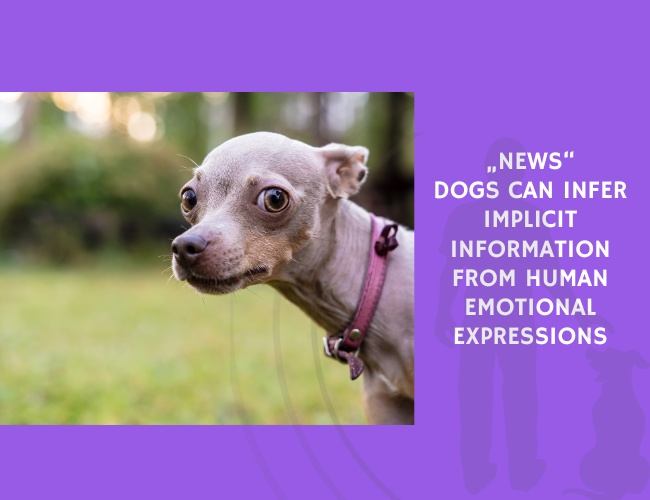
Published in Animal Cognition, this study investigated whether dogs can interpret and use emotional cues from human interactions to guide their own behavior. Adult domestic dogs were shown silent social exchanges between two unfamiliar people who displayed positive, negative, or neutral emotional interactions. After observing these scenarios, dogs were tested on how they responded to each person, providing insight into their ability to infer emotional states and predict outcomes based on observation alone.
The results showed that dogs did not merely react to visible gestures or expressions—they used emotional context to make functional social decisions. For instance, dogs avoided individuals who had previously displayed anger or negative affect and approached those associated with positive emotion. This suggests that dogs form internal representations of human emotions and evaluate how these may influence future interactions.
Albuquerque and colleagues concluded that dogs possess a sophisticated capacity for emotional inference and social reasoning. Rather than simply reading expressions, they appear to understand the relational meaning behind them—a cognitive process aligning more closely with human empathy and theory of mind than simple conditioning.
This study reinforces that the human–dog relationship operates on a level of mutual emotional intelligence. Dogs are not passive observers but active interpreters of human affective behavior, capable of predicting social outcomes and adjusting their choices accordingly—a sign of emotional attunement deeply rooted in canine cognition.
Source: Albuquerque, N., Mills, D., Guo, K., Wilkinson, A., & Resende, B. (2021). Dogs can infer implicit information from human emotional expressions. Animal Cognition, 25, 231–240. Published August 14, 2021.










