
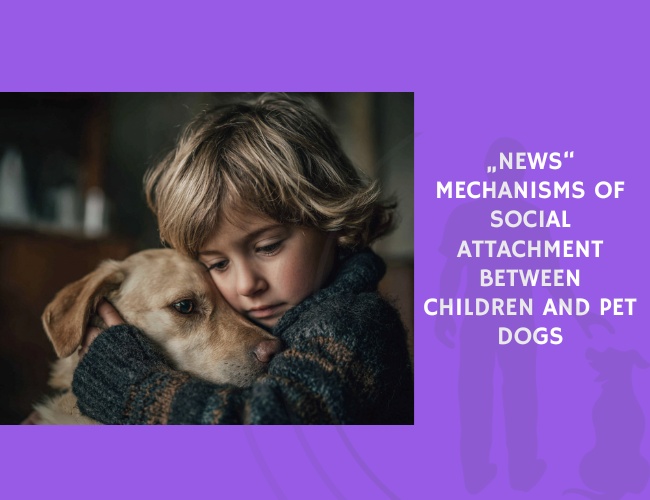
Published in Animals (MDPI), this comprehensive review highlights that the quality of the child–dog attachment—not merely the presence of a pet—determines the degree of developmental and emotional benefit. Drawing from 118 references across neuroscience, endocrinology, and developmental psychology, the authors discuss how oxytocin-mediated bonding, behavioral synchrony, and emotional contagion underlie the therapeutic effects of canine companionship during childhood.
The review identifies that secure attachments to dogs provide measurable stress-buffering effects, improved emotional regulation, and enhanced social competence in children. These benefits arise through neuroendocrine pathways—particularly oxytocin and cortisol modulation—mirroring mechanisms found in parent–child relationships. Conversely, weak or inconsistent bonds can diminish these effects, underscoring the need to view the child–dog relationship as a dynamic, co-regulated system.
Reilly and colleagues also call for a dyadic approach in future research, analyzing both partners within the relationship. They propose integrating neuroimaging, behavioral coding, and physiological monitoring to capture how mutual gaze, touch, and vocal tone influence attachment and emotional synchrony. This model offers a foundation for interventions in child mental health, education, and animal-assisted therapy.
The authors conclude that strong, emotionally secure bonds between children and their dogs foster resilience, empathy, and long-term well-being. The child–dog attachment system, supported by shared neurobiology, represents one of the most profound and accessible examples of cross-species social connection in human development.
Source: Reilly, O. T., Somerville, L. H., & Hecht, E. E. (2024). Mechanisms of Social Attachment Between Children and Pet Dogs. Animals, 14. Published October 1, 2024.










