
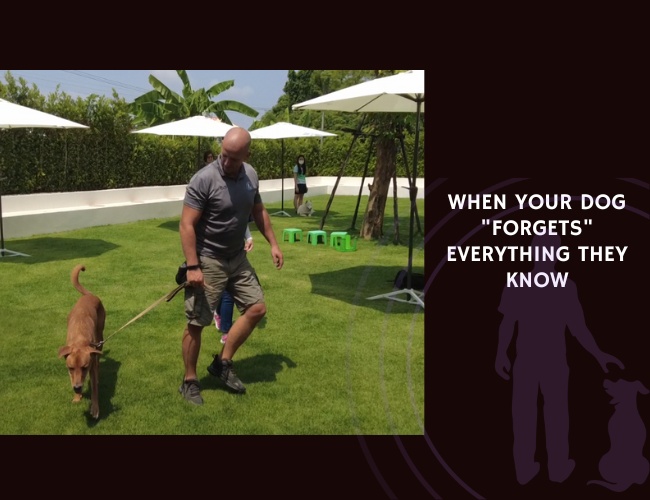
You’ve practiced for weeks. Your dog sits perfectly in the living room, recalls beautifully in the backyard, and walks calmly beside you down your quiet street. But the moment you step into the park, approach a busy café, or encounter a crowd of people, it’s as if those months of training vanished. Your dog pulls, ignores your cues, and seems entirely oblivious to commands they knew by heart just minutes ago.
You’re not alone in this frustration, and more importantly, your dog isn’t being stubborn or defiant. What you’re witnessing is a fascinating and complex interplay between memory, context, emotion, and stress—a phenomenon that reveals just how sophisticated your dog’s brain truly is, and how deeply their learning is tied to the environment around them.
Let us guide you through the science of why well-trained dogs seemingly “forget” in public spaces, and how understanding this can transform both your training approach and your relationship with your furry friend. This isn’t about obedience failure; it’s about memory retrieval under pressure, contextual learning, and the profound ways stress reshapes cognitive access.
Understanding How Dogs Encode and Remember Commands
The Architecture of Canine Memory
When your dog learns a command, they’re not simply storing a word paired with an action. They’re creating a rich, multi-sensory memory that includes far more information than you might realize. The scent of your backyard grass, the ambient sound of birds chirping, the angle of afternoon sunlight, your relaxed posture, even your breathing pattern—all of these become woven into the memory fabric of that “sit” or “stay” command.
This is context-dependent learning, and it’s one of the most powerful forces shaping how your dog retrieves information. Research shows that memory retrieval is optimized when the environmental and internal states during recall match the original learning context. When your dog was learning to sit in your quiet living room, their brain was encoding that command alongside dozens of contextual cues you weren’t consciously teaching.
Through the NeuroBond approach, we recognize that learning isn’t just cognitive—it’s relational and environmental. Your dog’s memory of a command exists within a specific sensory and emotional landscape. When that landscape changes dramatically, the pathway to that memory becomes harder to access.
Place-Dependent Learning in Action
Think of your dog’s memory like a filing system where each memory is stored with a specific set of labels. The “sit” command learned in your backyard has labels like “grass smell,” “backyard fence,” “relaxed handler,” and “familiar sounds.” When you ask for a sit in a bustling city park, your dog’s brain searches for that file, but the labels don’t match. The current environment is shouting “car horns,” “unknown dogs,” “crowd density,” and “pavement texture.”
This mismatch creates what researchers call contextual interference. Your dog isn’t refusing to sit—they genuinely struggle to access that memory because the retrieval cues are absent. Studies on rats have demonstrated that training-associated emotional arousal shapes how memories are later recalled, and the same principle applies to your dog. The emotional and sensory context during learning becomes part of the memory itself.
Working Memory Under Siege
Beyond long-term memory storage, there’s another critical factor: working memory. This is your dog’s ability to hold information in mind temporarily while processing it—like keeping your place in a recipe while you gather ingredients. In a high-distraction environment, your dog’s working memory becomes overwhelmed by competing stimuli.
Imagine trying to solve a math problem while surrounded by flashing lights, loud music, and constantly moving objects. That’s what your dog experiences in a crowded, novel environment. The sensory overload diverts attentional resources away from your cue and toward the environmental stimuli that their brain perceives as potentially important for survival.
Research on stress and cognition shows that glucocorticoids and noradrenergic stimulation—both elevated during stress—can bias which memory systems are engaged. Under sensory overload, your dog might shift from flexible, cognitive processing toward more rigid, habitual responses. This is why a stressed dog might offer behaviors you didn’t ask for or simply freeze, unable to process your command at all.
The Stress Response: When Arousal Hijacks Learning
How Elevated Arousal Changes Everything
Your dog’s heart races. Their cortisol levels spike. Their pupils dilate. These aren’t just signs of excitement or nervousness—they’re indicators of a physiological state that fundamentally alters how their brain processes information.
Elevated arousal has a paradoxical effect on memory. While mild stress can sometimes enhance learning by making information emotionally salient, high levels of arousal impair the retrieval of previously learned information. This is because stress hormones—particularly cortisol and noradrenaline—enhance memory consolidation (the process of storing new memories) but simultaneously impair memory retrieval (the process of accessing stored memories).
What does this mean for your dog in a busy park? Even if they learned the “come” command perfectly at home, the stress of the new environment floods their system with hormones that make it harder to access that stored memory. It’s not that the memory disappeared; it’s that the biochemical state of their brain has shifted, and the neural pathways to that memory are temporarily inhibited.
The Threshold Between Learning and Overwhelm
Every dog has a unique threshold for how much novelty and distraction they can handle before their cognitive function begins to deteriorate. This threshold depends on temperament, training history, breed predispositions, and even early life experiences. A dog raised in a bustling urban environment might have a higher threshold for crowd density than a dog raised in a rural setting.
As environmental novelty or crowd density increases, the associated stress response intensifies. Research suggests that cognitive learning is only efficient at lower stress levels. Beyond a certain point, stress doesn’t just make learning harder—it actively diminishes the effectiveness of cognitive interventions, including your attempts to cue behaviors.
Understanding your individual dog’s threshold is crucial. Pushing them repeatedly into situations where they’re over-threshold doesn’t build resilience; it can create learned helplessness or increase anxiety over time. The goal is to work just below that threshold, gradually expanding their capacity through systematic exposure.
Breed-Specific Sensitivities: Why Your Dog’s Heritage Matters
While every dog is an individual, breed heritage significantly influences which environmental stimuli are most likely to trigger retrieval failures. Understanding your dog’s genetic predispositions helps you anticipate challenges and design training strategies that work with, rather than against, their natural inclinations.
Herding Breeds: When Movement Becomes Magnetic
Border Collies, Australian Shepherds, Corgis, and other herding breeds possess extraordinary motion sensitivity. Their brains are wired to detect, track, and respond to movement—it’s what makes them brilliant working dogs. But in public settings filled with joggers, cyclists, children playing, and other dogs, this gift becomes a cognitive burden.
For herding breeds, moving objects aren’t just distractions—they’re neurologically compelling stimuli that can override trained commands. A Border Collie who sits perfectly at home might find it nearly impossible to maintain that sit when a skateboard passes, not because they’re disobedient, but because their brain is screaming “MOVEMENT! TRACK IT! CONTROL IT!”
Training considerations for herding breeds:
- Begin generalization training in environments with controlled, predictable movement
- Use stationary focal points (trees, benches, parked cars) as initial training locations
- Gradually introduce movement at greater distances before bringing it closer
- Teach a strong “watch me” or eye contact cue that redirects their visual attention
- Accept that some movement patterns (rapid, erratic motion) may always be more challenging
- Consider that their need to track and predict movement is a feature, not a flaw
Scent Hounds: When the Nose Knows Too Much
Beagles, Bloodhounds, Basset Hounds, and other scent-driven breeds experience the world primarily through their remarkable olfactory systems. With up to 300 million olfactory receptors (compared to humans’ 5-6 million), these dogs don’t just smell things—they read entire stories written in scent.
In a public park, your scent hound isn’t distracted; they’re reading a sensory novel. Every blade of grass tells them which dogs passed by, how recently, their emotional state, and whether they’re friend or potential rival. The ground itself becomes a compelling information source that can completely eclipse your verbal cue.
For scent hounds, command retrieval failure often occurs because their working memory is fully occupied processing olfactory information. It’s not that they don’t hear you—it’s that their brain’s processing capacity is saturated with scent data.
Training considerations for scent hounds:
- Incorporate formal “sniff time” into training sessions as both reward and decompression
- Train an “on duty” vs. “free time” distinction so they learn when it’s sniffing time
- Use novel scents sparingly in new environments to avoid olfactory overwhelm
- Begin training in locations with less scent complexity (newer parks, paved areas)
- Accept that some scent sources (prey animals, food, other dogs’ marking spots) will always be highly salient
- Consider that following scent trails is their job—redirecting this drive requires patience, not force
Guardian Breeds: Threat Assessment as Priority
Rottweilers, Great Pyrenees, Anatolian Shepherds, and other guardian breeds were developed to make independent decisions about threat assessment. Unlike herding or sporting breeds bred to work closely with humans, guardians were bred to patrol, observe, and respond to danger without constant human input.
In public spaces, guardian breeds are often engaged in continuous environmental scanning and threat evaluation. That person approaching from the left? Assess. Those dogs playing loudly? Monitor. That unusual sound? Investigate. This mental workload leaves less cognitive capacity for processing your sit command.
What looks like “ignoring you” is often a dog prioritizing what they perceive as security concerns. They’re not being disobedient; they’re doing the job their genetics tell them is most important—keeping you safe.
Training considerations for guardian breeds:
- Build trust that you’re monitoring threats so they can relax their vigilance
- Train a formal “release” from guard duty so they learn when scanning isn’t required
- Begin generalization in environments where they feel territorially secure
- Give them time to observe and assess new environments before asking for commands
- Understand that some situations (crowds approaching, perceived territorial intrusions) may require extra support
- Recognize that their protective nature is valuable—channel it rather than suppress it

Sporting Breeds: Arousal in Their Element
Retrievers, Spaniels, Pointers, and Setters were bred for high energy, environmental engagement, and intense work drive in outdoor settings. The irony is that the environments where you most want reliable command response (parks, fields, outdoor spaces) are precisely where these breeds become most aroused and focused on their genetic purpose.
A Golden Retriever who’s perfectly calm in your living room may become an entirely different dog at the lake—because that’s the environment their ancestors worked in for generations. The outdoor context itself triggers heightened arousal and engagement with environmental stimuli.
For sporting breeds, public outdoor environments activate their working drive. Birds, water, sticks, and open spaces aren’t distractions—they’re what their brain categorizes as “work opportunities.” Command retrieval struggles often stem from environmental arousal rather than cognitive deficits.
Training considerations for sporting breeds:
- Begin outdoor training in less stimulating natural settings (sparse fields, quiet trails)
- Use their natural retrieving drive as a reward for command compliance
- Understand that their arousal will naturally be higher outdoors—adjust expectations accordingly
- Build impulse control gradually rather than expecting immediate calm in exciting environments
- Consider that their enthusiasm is a feature of the breed—work with it rather than against it
- Structure training to include outlets for their working drive (retrieving games, scent work)
Terriers: World as Interactive Stimulus
Terriers—from Jack Russells to Airedales—were bred to be tenacious, independent, and highly reactive to environmental stimuli. Whether hunting vermin or going to ground, terriers succeed by being quick to react and determined in pursuit.
In public settings, this translates to dogs who find nearly everything potentially interesting and worth investigating. That rustling leaf? Check it. That distant bark? Respond. That person with a dog? Alert to it. Terriers often struggle with command retrieval in public because their attentional system is designed to notice and react to everything.
What makes terriers excellent at their traditional work (quick reactions, environmental awareness, determination) makes public command reliability challenging. Their brains are wired for rapid response to environmental triggers, not sustained focus on a handler in distracting settings.
Training considerations for terriers:
- Build extremely strong impulse control foundations before expecting public reliability
- Use very high-value rewards in public settings—environmental stimuli are inherently rewarding to them
- Keep training sessions shorter and more frequent rather than long and intensive
- Accept that their alertness to their environment is part of their charm and value
- Train a strong “leave it” or impulse control cue as a cornerstone behavior
- Recognize that some terriers will always be more environmentally reactive—this is typical, not problematic
Understanding your dog’s breed heritage doesn’t excuse unreliable behavior, but it does help you set realistic expectations and design training approaches that acknowledge their natural inclinations. You’re not fighting their genetics—you’re learning to work skillfully with them. 🧠
Emotional Contagion: When Your Stress Becomes Theirs
Here’s a factor many handlers underestimate: your emotional state directly influences your dog’s ability to retrieve commands. Dogs are extraordinary at reading human emotions. They detect subtle changes in your breathing pattern, muscle tension, vocal tone, and even biochemical signals like stress hormones in your sweat.
When you become frustrated, impatient, or anxious about your dog’s performance in public, they perceive this shift. Your stress becomes their stress through emotional contagion. This compounded arousal further impairs their cognitive access to learned behaviors.
The Polyvagal Theory offers insight here: perceived safety enables social engagement and cognitive function, while perceived threat activates primitive defensive responses. If your dog senses that you’re stressed—which they might interpret as a signal of danger—their nervous system shifts into a protective state that inhibits communication and learning. The very frustration you feel about their “disobedience” might be contributing to the problem.
Through the Invisible Leash, we learn that calm, centered presence from you creates the emotional safety your dog needs to access learned behaviors under stress. Your arousal state isn’t separate from theirs—it’s intertwined.
Why Training Location Matters More Than You Think
The Trap of Single-Context Training
Most dog training begins at home or in a training facility—quiet, controlled environments with minimal distractions. While this makes sense for initial learning, it creates a significant limitation: your dog’s memory of those commands becomes tightly bound to that specific context.
If a dog only learns to sit in your living room, their brain categorizes “sit” as something that happens in living rooms. The command becomes place-dependent rather than generalizable. When you move to a park, your dog isn’t transferring knowledge from one setting to another—they’re attempting to access a memory filed under completely different environmental labels.
This explains why a dog who performs flawlessly in training class can seem like a completely different animal the moment they step outside. The training hall has become such a strong contextual cue that the behaviors are essentially locked to that location.
Stimulus Control and Environmental Salience
In your quiet backyard, your voice is the most salient stimulus in your dog’s environment. It stands out clearly against a relatively calm sensory backdrop. In a busy public space, your voice competes with hundreds of other stimuli—barking dogs, car engines, food smells, running children, and unfamiliar humans.
This competition for attention isn’t about your dog choosing to prioritize other stimuli over you. It’s about the relative salience of different inputs. Novel, biologically relevant stimuli (like other dogs or food) can be neurologically more attention-grabbing than a familiar verbal cue, especially when the dog’s arousal system is activated.
Research indicates that high emotional arousal can shift dogs from flexible, cognitive control toward more rigid, habitual responses. In a stressful environment, stimulus control breaks down because the environmental stimuli become overwhelmingly salient, drowning out your cue.
Building Generalization Through Contextual Variety
The solution isn’t to train harder in one location—it’s to train across many contexts. Contextual generalization requires systematic exposure to varied environments while maintaining the behavior-cue association.
Start with your low-distraction home environment, then gradually introduce small changes: train in different rooms, at different times of day, with different household members present. Then move to your front yard, your quiet street, a calm park during off-hours. Each incremental change helps your dog learn that the cue means the same thing regardless of where you are.
This process isn’t quick, but it’s neurologically sound. Each context in which your dog successfully performs a command creates a new memory trace. Over time, these traces form a network, and the command becomes less context-dependent and more truly generalized. You’re teaching your dog that “sit” means sit everywhere, not just in specific places.
Concrete Training Protocols: Your Week-by-Week Roadmap
Understanding the theory is essential, but you also need a practical, structured plan. Here’s a detailed protocol for systematically building command generalization across contexts. This approach respects your dog’s learning capacity while providing clear milestones and success criteria.
The 8-Week Progressive Exposure Framework
This protocol assumes your dog reliably performs basic commands (sit, down, stay, recall, loose-leash walking) in your home with at least 90% success rate. Adjust timelines based on your individual dog—some will progress faster, others need more time at each level.
Week 1-2: Foundation in Varied Home Contexts
The goal here isn’t to introduce distractions but to break the association between commands and specific locations within your familiar environment.
Daily structure:
- 3-5 brief training sessions (3-5 minutes each)
- Practice the same 3-4 commands in different rooms
- Vary time of day, lighting conditions, and which household member gives cues
- Practice with different doors open/closed to introduce subtle sound variations
Success criteria before progression:
- 85% success rate in any room of your home
- Dog responds within 3 seconds of cue
- No stress signals (lip licking, yawning, avoidance) during sessions
- Dog offers behaviors readily, not hesitantly
Red flags requiring more time at this level:
- Dog seems confused when asked to sit in kitchen after mastering it in living room
- Success rate drops below 70% in any location
- Dog requires multiple repetitions of cue to respond
- Signs of stress or reluctance to engage
Week 3-4: Your Property with Minimal Distractions
Now move outside but stay within your familiar territory. This introduces new surfaces, smells, and ambient sounds while maintaining location security.
Daily structure:
- 2-3 outdoor sessions (5-7 minutes each)
- Begin in backyard during quiet times (early morning or evening)
- Practice on different surfaces: grass, patio, driveway, porch
- Gradually extend to front yard during low-traffic periods
- If dog is successful, introduce very mild distractions: family member walking past, toy on ground
Distance and duration guidelines:
- Start with commands requiring no duration (sit, touch, name response)
- Add brief duration (3-5 seconds) only after 80% success with instant cues
- Work within 3-5 feet of your dog initially
- Increase distance only after success at close range
Success criteria before progression:
- 80% success rate anywhere on your property
- Dog can maintain attention despite ambient neighborhood sounds
- Responds to first cue (not needing repetition)
- Comfortable working on all surfaces on your property
Red flags requiring more time at this level:
- Success rate below 65% in any outdoor location on your property
- Dog highly distracted by sounds beyond your property line
- Dog won’t take treats outdoors (indicates over-threshold arousal)
- Regression in previously mastered commands
Week 5-6: Quiet Public Spaces at Off-Peak Times
This is a significant jump. Choose locations wisely: empty parking lots, quiet side streets during morning hours, suburban parks at dawn.
Daily structure:
- 1-2 sessions in public spaces (10-15 minutes including acclimation time)
- Spend first 5 minutes just being present—let dog observe and acclimate
- Begin training at the periphery of the space, not in the center
- Keep sessions short and successful—always end on a high note
- Return to familiar locations 2-3 times before introducing new ones
Environmental management strategies:
- Position yourself with your back to a solid barrier (wall, fence, parked car) to reduce stimuli from behind
- Work perpendicular to pathways rather than facing them directly
- Choose training times when few people or dogs are present
- Start at greater distance from any activity (50+ feet away)
Success criteria before progression:
- 75% success rate in 2-3 different quiet public locations
- Dog maintains engagement for 5+ minutes in new environment
- Can re-engage after noticing environmental stimuli (sees another dog, hears car)
- Takes treats readily (indicating manageable arousal)
Red flags requiring more time at this level:
- Success rate below 60% consistently
- Dog unable to take treats or seems panicked
- Regression in multiple commands, not just one
- You feel frustrated rather than encouraged—this means you’re pushing too hard
Week 7-8: Moderate Public Environments
Gradually increase complexity: residential parks during moderate use, quiet downtown streets during off-peak hours, pet stores during less busy times.
Daily structure:
- 1-2 sessions in moderate-distraction environments (15-20 minutes)
- Begin each session with a few easy wins in a quieter zone
- Gradually move toward slightly more distracting areas within the same space
- Plan exit strategy—know where you can retreat to if dog becomes overwhelmed
- Practice “reset” techniques (covered in next section) when dog loses focus
Intensity management:
- If environment proves too challenging, move to periphery rather than ending session on failure
- Work at whatever distance allows 70% success—this might be 30 feet from activity initially
- Use higher-value rewards than you used at home
- Keep cue delivery calm and consistent—don’t change your voice under pressure
Success criteria before progression:
- 70% success rate in environments with moderate, predictable activity
- Dog can recover focus after reasonable distractions (person walking by at 15+ feet)
- Shows confidence—tail neutral to slightly elevated, body relaxed, takes treats
- You feel confident your dog will likely respond when you cue
Red flags requiring more time at this level:
- Success rate consistently below 55%
- Dog shows significant stress signals (panting, excessive yawning, whale eye, body tension)
- You find yourself repeating cues or getting frustrated
- Dog has one or more “bad” experiences (overwhelm, fearful reaction)
Beyond Week 8: Maintenance and Progressive Challenge
After successfully completing this 8-week foundation, continue expanding gradually:
Weeks 9-12: Increase complexity of successful environments
- Same locations but during busier times
- Closer proximity to distractions (20 feet → 15 feet → 10 feet)
- Longer duration commands
- Chaining multiple behaviors together
Months 4-6: Introduce genuinely challenging environments
- Busy parks during peak hours
- Downtown areas with significant foot traffic
- Dog-friendly events with multiple dogs present
- Veterinary office, grooming facility waiting rooms
Ongoing maintenance:
- Practice in varied contexts at least 2-3 times weekly
- Return to easier environments if you notice regression
- Accept that some days will be harder than others—that’s normal
- Celebrate the progress you’ve made rather than focusing on remaining challenges
Sample Training Session Structure
Regardless of environment level, structure each session similarly:
Phase 1: Arrival and acclimation (3-5 minutes)
- Let dog observe environment without asking for anything
- Allow brief sniffing to gather information
- Check your own stress level—breathe, relax shoulders
- When dog shows even momentary attention to you, mark and reward
Phase 2: Easy wins (2-3 minutes)
- Start with dog’s easiest, most reliable command
- Get 3-5 successful repetitions before asking for anything harder
- Use high-value rewards
- Keep energy positive but calm
Phase 3: Working practice (5-10 minutes)
- Practice 2-3 different commands
- Mix easy and slightly challenging cues
- If dog fails twice in a row, switch to easier command or increase distance from distraction
- Watch for stress signals—they tell you when to ease up
Phase 4: Cool down and success end (2-3 minutes)
- Return to easiest command
- End with something dog will definitely succeed at
- Provide sniff time, play, or other reward
- Leave while dog is still successful and engaged, not after frustration
Reading the Red Flags: When to Make It Easier
Learning to recognize when your dog needs support rather than challenge is a crucial skill:
Physical stress signals:
- Excessive panting unrelated to heat or exercise
- Lip licking, yawning, or whale eye (showing whites of eyes)
- Body tension, lowered tail, ears back
- Trembling or inability to settle
- Dilated pupils
Behavioral indicators:
- Refusing treats they normally love
- Unable to perform commands they know well
- Offering stress-displacement behaviors (sniffing ground frantically, scratching)
- Pulling toward exit or hiding behind you
- Hyperarousal—unable to settle, attention darting everywhere
Training performance signals:
- Success rate drops below 60% suddenly
- Dog requires multiple cue repetitions
- Response latency increases significantly (longer delay before responding)
- Quality of behavior deteriorates (sloppy sits, brief duration)
When you notice these signs: reduce the difficulty immediately. Move farther from distractions, switch to easier commands, take a sniff break, or simply leave and try again another day. Pushing through stress doesn’t build resilience—it builds anxiety associations with public spaces.
Emergency Reset Techniques: Tools for Overwhelmed Moments
When Cues Become Inconsistent
Under stress or frustration, handler behavior often changes in subtle but significant ways. Your verbal cue might become sharper in tone. Your body language might tense. You might repeat the command multiple times or add extra words (“Sit! Come on, sit! I said sit!”). To your dog, these variations can seem like entirely different cues.
Dogs are brilliant at reading the fine details of our communication, but this means they’re also sensitive to inconsistencies. If your “sit” cue at home is a calm, single word paired with relaxed body language, but your “sit” cue in public is tense, repeated, and accompanied by frustrated energy, your dog might genuinely not recognize them as the same request.
Research on human-dog communication dynamics emphasizes that consistency across contexts is essential. Your dog learned a specific pattern—a specific tone, rhythm, and emotional tenor paired with a behavior. When that pattern changes under stress, you’re essentially using a different cue.
The Timing Problem
When a dog doesn’t respond immediately in a distracting environment, the natural human response is to repeat the cue. But this can create a problematic learning pattern: the dog begins to learn that commands don’t require an immediate response, that they’re negotiable or optional.
Moreover, if your dog is cognitively overloaded, repetition doesn’t help—it adds to the noise. Your dog needs time to process the cue, search for the relevant memory, and formulate a response. Rapid repetition or escalation in your voice can increase their stress, further impairing their ability to retrieve the behavior.
Better approach: give one clear cue, then wait. If your dog doesn’t respond, it’s not because they didn’t hear you or are being stubborn—it’s because they’re struggling to access that memory in this context. That’s your signal to reduce the environmental pressure (move further from the distraction) or temporarily switch to a behavior your dog can successfully perform to rebuild confidence and cognitive access.
Trained. Triggered. Tuned Out.
Memory lives in context. What feels like defiance in the park is often a mismatch of sensory cues—new smells, sounds, and movement scramble the neural links that connect your words to meaning.
Stress silences recall. When adrenaline spikes, the prefrontal cortex—the part of your dog’s brain that retrieves learned commands—goes offline. Instinct takes the lead, logic fades, and survival circuits dominate.

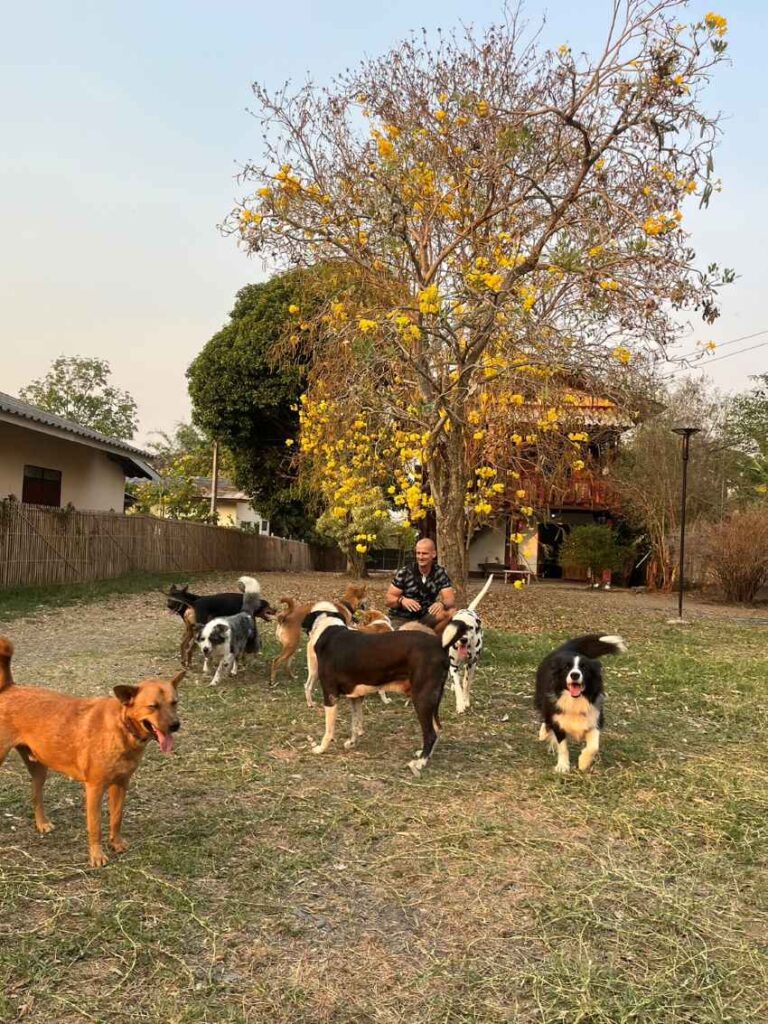
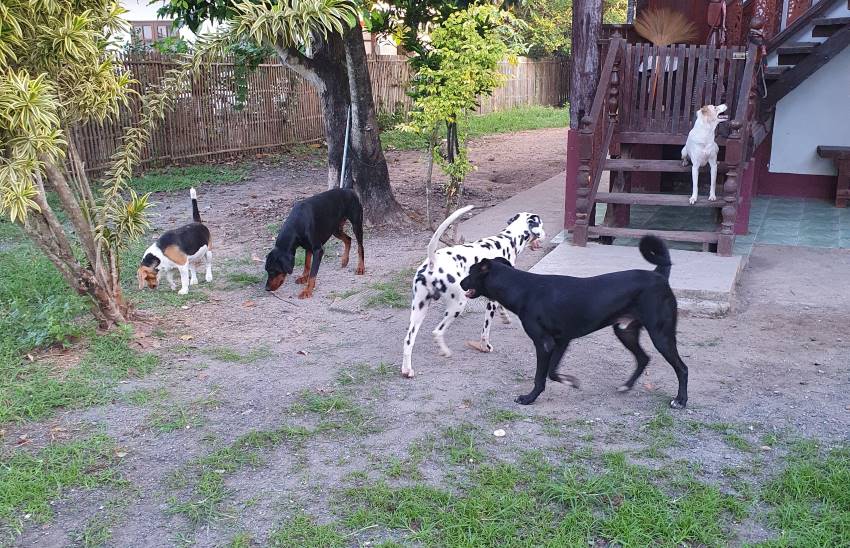
Calm rebuilds access. Rehearse skills across shifting environments, keeping stress low and connection high. Each success re-links memory to safety until performance becomes portable, wherever the world unfolds.
Reading Your Dog’s Confusion vs. Refusal
This distinction is critical and often misunderstood. A dog experiencing retrieval failure looks different from a dog who understands the cue but chooses not to comply.
Signs of retrieval failure:
- Looking around with apparent confusion
- Offering incorrect but familiar behaviors (stress-related displacement behaviors)
- Freezing or appearing overwhelmed
- Showing signs of anxiety (panting, yawning, lip licking, whale eye)
- Responding correctly after a significant delay
- Performing part of the behavior incorrectly
Signs of true non-compliance (which is actually quite rare and often rooted in other issues):
- Direct eye contact followed by clear refusal
- Turning away deliberately after acknowledging the cue
- Performing a different rewarding behavior instead
- Consistent pattern of selective non-response to specific cues
Most of what handlers interpret as disobedience is actually retrieval failure or communication breakdown. Through moments of Soul Recall, when you pause and truly observe your dog’s emotional and cognitive state, you begin to recognize these differences. This awareness transforms frustration into understanding and punishment into support.
🧠 Understanding Memory Retrieval Failures in Trained Dogs
Why well-trained dogs “forget” commands in public spaces – and what neuroscience tells us about context, stress, and cognitive access
Phase 1: Home Learning Foundation
Where memory encoding begins
Your dog isn’t just learning a word-action pair. They’re encoding a rich, multi-sensory memory that includes ambient sounds, scent patterns, lighting conditions, your posture, and emotional state. This context-dependent learning means every environmental detail becomes woven into the memory fabric of that command.
Perfect performance at home with quick response times, relaxed body language, and consistent execution. Your dog appears confident and the commands seem “solid.” This creates the expectation that these behaviors will transfer seamlessly to other environments.
• Establish clear verbal and visual cues in a calm environment
• Build consistency before adding complexity
• Note which environmental factors are present during successful training
• Document your dog’s stress-free baseline performance
Phase 2: First Context Shift
When familiar behaviors meet new environments
Your dog’s brain searches for the “sit” memory but the retrieval cues don’t match. The memory was filed with labels like “living room carpet,” “familiar sounds,” and “relaxed handler.” In a new location, these contextual anchors are absent, creating genuine difficulty in accessing the stored behavior.
Delayed responses, confused looks, or offering incorrect behaviors. Your dog might perform the command after several repetitions or only when you’re very close. This isn’t stubbornness—it’s a retrieval challenge where the neural pathway to that memory is harder to access.
Repeating commands louder or with frustration changes the cue itself. Your tense “SIT!” becomes a different signal than the calm “sit” your dog learned at home. This handler stress adds to your dog’s confusion rather than clarifying the request.
Phase 3: Stress Response Activation
When arousal hijacks cognitive access
Elevated cortisol and noradrenaline flood your dog’s system. While these hormones enhance memory consolidation for new experiences, they simultaneously impair retrieval of existing memories. The biochemical state of your dog’s brain has shifted, making neural pathways to learned commands temporarily inhibited.
• Racing heart rate and rapid breathing
• Dilated pupils and heightened alertness
• Panting, yawning, or lip licking (stress signals)
• Inability to take treats or focus on handler
• Shifting toward rigid, habitual responses rather than flexible behavior
Recognize this as over-threshold, not disobedience. Create distance from the trigger, use pattern interrupts like “find it” games, or simply leave. Training cannot occur when the dog’s nervous system is in defensive mode. Your job shifts from commanding to co-regulating.
Phase 4: Sensory Overwhelm
When competing stimuli drown out your cue
Your dog’s working memory—their ability to temporarily hold and process information—becomes overwhelmed by competing stimuli. Novel sights, sounds, and smells that their survival brain deems potentially important divert attentional resources away from your cue. The prefrontal cortex, responsible for executive function, cannot maintain focus under this sensory bombardment.
Your dog’s head swivels constantly, unable to settle attention. They may freeze in place, pull toward stimuli, or offer rapid behavior changes. They appear frantic or “checked out.” Your voice, once the most salient stimulus at home, now competes with hundreds of biologically relevant distractions.
Reduce cognitive load by simplifying the task. Move to the environment’s periphery where stimuli are less intense. Use high-value rewards that break through the noise. Engage simpler, well-rehearsed behaviors to rebuild cognitive access before attempting complex commands.
Phase 5: Handler-Dog Stress Loop
When your frustration becomes their anxiety
Dogs detect subtle changes in your breathing, muscle tension, vocal tone, and biochemical signals. When you become frustrated or anxious about their performance, they perceive this shift and their stress compounds. The Polyvagal Theory explains that perceived threat inhibits social engagement systems—your stress signals danger, pushing your dog further from cognitive access.
Dog struggles → Handler frustration → Dog senses threat → Increased arousal → Worse performance → Handler stress increases → Dog’s nervous system shuts down further. This downward spiral explains why public training can deteriorate rapidly once it begins to go wrong.
Through the Invisible Leash, your calm, centered presence creates emotional safety. Regulate your own nervous system first: deep breathing, relaxed posture, patient tone. Your dog’s ability to access learned behaviors depends significantly on your emotional state. You’re not just giving commands—you’re providing co-regulation.
Phase 6: Building Contextual Bridges
Progressive exposure for true generalization
Each successful command execution in a new context creates a new memory trace. Over time, these traces form a network where the command becomes less tied to specific environmental labels and more genuinely generalized. You’re teaching your dog’s brain that “sit” means the same thing regardless of location.
• Start in low-distraction environments (80-90% success rate)
• Add one variable at a time (different room, time of day, surface)
• Gradually increase environmental complexity (front yard → quiet street → park perimeter)
• Practice until performance is reliable before progressing
• If success drops below 70%, retreat to previous difficulty level
True generalization takes weeks to months, not days. Each dog progresses at their own pace based on temperament, training history, and stress resilience. Pushing too quickly can create anxiety associations with public spaces that require even longer to address.
Phase 7: Resilience Building
Training under mild, manageable pressure
Research shows that training under mild, controlled stress can improve performance under pressure. When stress is kept within a manageable range, the learned behavior becomes associated with that arousal state, expanding your dog’s “I can still function” zone. This builds distress tolerance—the ability to maintain cognitive function despite environmental pressure.
• Train during times with mild ambient activity (children playing in distance, light traffic)
• Practice at the edge of your dog’s comfort zone, not beyond it
• Work at distances where your dog notices distractions but can still respond
• Introduce controlled novelty gradually (new surfaces, unfamiliar objects)
• Maintain positive emotional tone throughout—stress exposure without support creates trauma
The stress must be mild and controllable. Flooding (overwhelming exposure) doesn’t build resilience—it creates learned helplessness and increases anxiety. Always maintain your dog’s ability to respond successfully. If they can’t, the stress level is too high.
Phase 8: Long-Term Success
Maintaining skills across changing contexts
Generalization isn’t “one and done.” Memories require periodic reinforcement across contexts to remain accessible. Life changes (moving, seasonal variations, new family members) can require re-generalization. Think of it as ongoing skill maintenance rather than a completed achievement.
• Practice commands in varied contexts weekly, not just when problems arise
• Refresh training when introducing new environments or situations
• Recognize that adolescence (6-18 months) may require retraining
• Senior dogs may need additional support as cognitive function changes
• Celebrate incremental progress—reliability builds gradually
In moments of Soul Recall, you’ll recognize when your dog is genuinely confused versus being over-threshold. This awareness allows you to respond appropriately—providing support rather than correction, distance rather than pressure, understanding rather than frustration. The relationship transcends commands.
🔍 Individual Factors Affecting Memory Retrieval
Strengths: Neuroplasticity makes learning new contexts easier; natural curiosity supports exploration
Challenges: Shorter attention spans, lower impulse control, still developing stress management. Critical socialization period requires careful positive exposure.
Strengths: Better impulse control and focus; can handle longer training sessions
Challenges: May have established context-specific learning that requires systematic retraining. Previous negative experiences can create resistance to new environments.
Strengths: Established bond and communication patterns; accumulated experience
Challenges: Cognitive decline, sensory loss (hearing/vision), pain affecting willingness to perform. Require gentler expectations and additional environmental support.
Characteristics: High motion sensitivity, intense focus on movement, quick to arousal
Training Note: Motion distractions (cyclists, runners, cars) create particularly strong interference. Need extensive proofing against movement triggers.
Characteristics: Olfactory system dominates attention; scent tracking overrides other stimuli
Training Note: Novel scent environments create massive cognitive interference. Scent-based rewards and cues may help bridge contexts more effectively.
Characteristics: Constant environmental threat assessment; protective instincts create vigilance
Training Note: Perceived threats shut down social engagement systems quickly. Need extensive work on “safe” associations with public spaces before command work.
Retrieval Failure Signs: Confusion, delayed response, offering wrong behaviors, stress signals (panting, yawning, lip licking), looking around for answers
Over-Threshold Signs: Cannot take treats, whale eye, freezing, frantic behavior, inability to respond to ANY cue
Handler Contribution: Your frustration = their increased stress. Your calm = their cognitive access
Action Formula: If success rate drops below 70% → Reduce environmental difficulty → Rebuild confidence → Progress gradually
When we recognize that “forgetting” is actually a retrieval challenge rooted in context, stress, and cognitive load, our entire approach transforms. Through the NeuroBond framework, we understand that emotional co-regulation comes before command compliance—your calm, centered presence creates the safety your dog needs to access learned behaviors. The Invisible Leash reminds us that true connection isn’t about control through tension but through awareness and trust. In moments of Soul Recall, we pause to truly see our dog’s internal experience, recognizing confusion rather than assuming defiance, understanding overwhelm rather than labeling stubbornness.
Your dog isn’t broken. Your training isn’t wasted. You’re both learning to navigate a complex world together, building neural pathways one successful experience at a time. That journey—with all its challenges, breakthroughs, and deepening understanding—transcends obedience and becomes relationship. That’s where science meets soul, where commands become conversation, and where patience transforms into partnership.
© Zoeta Dogsoul – Where neuroscience meets soul in dog training
Training for Real-World Resilience: Practical Strategies That Work
Progressive Environmental Exposure
The most effective training strategy for building command generalization is systematic desensitization paired with positive reinforcement across gradually increasing levels of distraction.
Begin with your baseline: Identify where your dog can perform commands reliably with minimal distraction. This is your foundation.
Create a distraction hierarchy: List environments in order from least to most distracting. For example:
- Living room with no distractions
- Backyard during quiet hours
- Front yard with occasional passersby
- Quiet side street
- Residential neighborhood during moderate activity
- Park perimeter during off-peak hours
- Park during moderate activity
- Busy urban sidewalk
- Crowded park or event
Work through the hierarchy slowly: Don’t jump from level one to level eight. Progress to the next level only when your dog can perform reliably (80-90% success rate) at the current level. If performance deteriorates at any level, drop back to the previous level until confidence is rebuilt.
This methodical approach respects your dog’s learning capacity and nervous system. You’re building neural pathways for success rather than reinforcing failure or creating anxiety associations with public spaces.
The Power of Controlled Stress Exposure
Counterintuitively, training under mild, controlled stress can actually improve your dog’s resilience and recall stability in challenging environments. The key is that the stress must be controlled—at a level where your dog is slightly challenged but not overwhelmed.
Research demonstrates that when stress levels are kept within a manageable range, the learned information can become associated with that arousal state. This means your dog learns to perform even when experiencing some degree of environmental pressure. Rats trained under slightly elevated stress conditions showed better memory retention than those trained only in completely calm conditions.
Practically, this might mean:
- Training during times when there’s mild ambient activity (children playing in the distance, light traffic noise)
- Practicing commands while your dog is mildly excited about something (but not over-threshold)
- Working at a distance from distractions where your dog notices them but can still focus
- Introducing controlled novelty (new objects, different surfaces, unfamiliar but calm people)
The goal isn’t to flood your dog with stress but to gradually expand their “I can still think and respond” zone. This builds what psychologists call distress tolerance—the ability to maintain cognitive function under pressure.
Emotional State Anchoring and Positive Associations
One of the most powerful but underutilized training strategies is pairing command practice with positive emotional experiences across varied contexts. When your dog experiences joy, connection, or satisfaction while practicing commands in new environments, those positive emotions become part of the memory trace.
Research on post-training activities shows that dog-human play following training sessions improves re-training performance. This suggests that positive emotional engagement aids both memory consolidation and retrieval. When learning is embedded in a positive emotional context, it becomes more accessible even under stress.
Practical applications:
- End every training session in a new environment with play or an activity your dog loves
- Pair successful command execution with high-value rewards in challenging contexts
- Maintain a positive, playful attitude even when training in distracting places
- Use environmental rewards (sniffing time, greeting a dog, investigating an interesting smell) as reinforcement for responding to your cues
- Practice commands immediately before activities your dog enjoys (going to the park, getting in the car for an adventure)
This creates what we might call emotional scaffolding—positive feelings that support cognitive access even when the environment is challenging. That balance between structured practice and emotional connection, that’s the essence of Zoeta Dogsoul. 🧡
Scent Cues as Contextual Anchors
While not extensively covered in traditional training literature, scent cues offer a fascinating possibility for improving command generalization. Unlike visual or auditory cues, scent is processed differently in the brain and might serve as a stable anchor across varied environments.
Consider introducing a unique scent (perhaps a particular essential oil on your clothing or a specific treat scent) during successful training sessions at home. Then, maintain that scent when moving to new environments. Your dog’s powerful olfactory system might use this consistent scent cue as a bridge between contexts, making the trained behaviors more accessible.
This approach is speculative but grounded in dogs’ extraordinary scent memory capabilities. Many dogs can detect and remember specific scents across years and vastly different environments. Using this strength intentionally in training deserves more exploration.
The Neuroscience Behind the Behavior: Frameworks That Explain Why
Context-Dependent Learning Theory
At the heart of why dogs “forget” in public is a fundamental principle of neuroscience: memories are not stored in isolation but are embedded within the context where they were formed. When environmental and internal states during retrieval match those during learning, memory access is optimized.
For your dog, this means every aspect of the learning environment—sounds, smells, surfaces, lighting, your emotional state, their physiological state—becomes associated with the memory. This is why a command learned in your quiet home might be neurologically “invisible” to your dog in a chaotic park. The contextual mismatch creates what neuroscientists call a retrieval failure.
This isn’t a flaw in how dogs learn; it’s actually an adaptive feature. Context-dependent memory helps animals predict what information is relevant in specific situations. In the wild, knowing what behaviors work in which contexts has survival value. The challenge in dog training is that we want behaviors that generalize across contexts—something that requires deliberate effort to achieve.
Affective Neuroscience and Emotional Systems
The field of affective neuroscience provides another lens for understanding public environment struggles. This framework suggests that high arousal activates primal emotional systems—particularly FEAR and RAGE systems—that can suppress higher cognitive functions associated with SEEKING and PLAY systems.
When your dog feels threatened, overwhelmed, or unsafe in a new environment, their brain prioritizes survival over learning. The prefrontal cortex—the region responsible for executive function, impulse control, and accessing learned behaviors—becomes less active. Meanwhile, the amygdala and other limbic structures associated with emotion and threat detection become hyperactive.
This is why a frightened or overstimulated dog can’t “just focus.” Their brain is literally not in a state where cognitive flexibility and learned command execution are accessible. The neural pathways for these higher functions are temporarily suppressed by the activation of more primitive defensive systems.
Training strategies that prioritize safety, predictability, and gradual exposure work because they prevent this neural shutdown. When your dog feels safe, their prefrontal cortex can engage, and cognitive access to learned commands becomes possible.
Working Memory Capacity and Prefrontal-Limbic Connections
Working memory—the brain’s system for temporarily holding and manipulating information—relies heavily on the prefrontal cortex and its connections with limbic structures. When this system is overwhelmed by competing stimuli or disrupted by stress hormones, cognitive performance deteriorates dramatically.
In practical terms, your dog’s working memory in a distracting environment is like your computer trying to run multiple complex programs simultaneously while overheating. Processing slows, programs crash, and previously simple tasks become impossible.
Research on brain dynamics during stress shows that cognitive load affects neural strategies, particularly in prefrontal regions. For dogs in overwhelming environments, the sheer number of novel stimuli creates excessive cognitive load. Their working memory can’t simultaneously process your cue, inhibit responses to environmental distractions, and execute the learned behavior.
This is why breaking down the task helps. If your dog can’t sit in a busy park, can they sit with you standing further from the activity? Can they sit if you first engage their attention with a treat? These scaffolds reduce the cognitive load, making the task manageable for their working memory capacity.
The Polyvagal Perspective: Safety Enables Learning
Polyvagal theory, developed by Stephen Porges, offers profound insights into why environmental context affects dog behavior so dramatically. This theory posits that the vagus nerve regulates our physiological state, and that our perception of safety or threat determines which neural circuits are active.
In a state of safety (what Porges calls “ventral vagal activation”), the social engagement system is online. This is the state where learning, communication, and flexible behavior are possible. Dogs in this state can hear your cues, access learned behaviors, and respond appropriately.
When a dog perceives threat or overwhelming stimulation, they shift into defensive states—either mobilization (sympathetic activation leading to fight-or-flight) or immobilization (dorsal vagal activation leading to freezing or shutdown). In these states, social engagement and cognitive access are inhibited. The dog literally cannot process commands the same way.
This framework helps explain why the same dog who’s responsive at home seems completely different in public. It’s not about obedience—it’s about which neural circuits are active based on their perception of safety. Your role as handler becomes less about command delivery and more about co-regulating your dog’s nervous system to maintain or restore a state where learning is neurologically possible.
Health and Wellness: When “Forgetting” Signals Something Deeper
Ruling Out Medical Causes
Before attributing command failures to stress or context, it’s important to rule out potential medical issues that can affect cognition, attention, and responsiveness:
Hearing loss: Age-related or noise-induced hearing loss can make dogs appear unresponsive to verbal cues, particularly in noisy environments where sound discrimination is harder.
Vision impairment: Dogs relying partially on visual cues (your hand signals or body language) may struggle in busy, visually complex environments if their vision is compromised.
Pain or physical discomfort: A dog experiencing joint pain, digestive upset, or other physical discomfort may be less responsive to commands, particularly those requiring physical movement like sit or down.
Cognitive dysfunction syndrome: Older dogs can experience age-related cognitive decline similar to dementia in humans, affecting memory, learning, and responsiveness.
Thyroid imbalances: Hypothyroidism has been linked to behavioral changes in dogs, including difficulty with training and environmental responsiveness.
Neurological conditions: Certain neurological issues can affect memory, coordination, and ability to process cues.
If your previously reliable dog suddenly begins having widespread difficulty with commands across contexts, a veterinary consultation is warranted before assuming it’s purely behavioral or training-related.
The Role of Nutrition in Cognitive Function
While often overlooked, nutrition significantly impacts cognitive function, stress resilience, and learning capacity in dogs. Certain nutrients support brain health and may improve your dog’s ability to handle stressful environments:
Omega-3 fatty acids (EPA and DHA): Support brain structure and function, potentially improving cognitive flexibility and stress resilience.
B vitamins: Play crucial roles in neurotransmitter synthesis and nervous system function.
Antioxidants (Vitamin E, selenium, carotenoids): Protect brain cells from oxidative stress, which increases during arousal and anxiety.
L-theanine and other calming supplements: May support a calm-but-alert mental state conducive to learning and command execution.
Adequate protein: Provides amino acids necessary for neurotransmitter production, including those involved in focus and impulse control.
A dog struggling with chronic stress or anxiety may benefit from a diet optimized for brain health, potentially improving their capacity to handle challenging environments. Always consult with your veterinarian before making significant dietary changes or adding supplements.
Age Considerations: Puppies, Adults, and Senior Dogs
Puppies and Developing Brains
Young puppies are particularly susceptible to context-dependent learning and environmental overwhelm. Their brains are still developing, and critical periods for socialization and environmental exposure occur during the first few months of life.
For puppies, systematic exposure to varied environments isn’t optional—it’s essential for developing the neural flexibility needed for command generalization. However, this must be done carefully. Overwhelming a puppy can create lasting negative associations or increase anxiety around novel environments.
Key principles for puppies:
- Begin environmental exposure early but gently
- Keep experiences positive and end before overwhelm occurs
- Allow puppies to observe from a safe distance rather than forcing interaction
- Train basic cues in many locations from the beginning rather than perfecting them in one place first
- Recognize that shorter attention spans and lower impulse control are developmental, not defiance
Adult Dogs Learning New Contexts
Adult dogs with established training in limited contexts face the challenge of retrain and generalization. The good news is that adult dogs are capable of learning and generalizing new skills—it simply requires patience and systematic approach.
For adults newly learning to respond in public environments:
- Break the task into smaller steps than you would for a puppy
- Acknowledge that generalization takes time and doesn’t happen automatically
- Be prepared for temporary regression when introducing new contexts
- Use higher-value rewards in challenging environments than you would at home
- Recognize that some dogs need more repetitions across contexts than others
Senior Dogs and Cognitive Changes
Older dogs may experience legitimate cognitive decline that affects their ability to respond to commands, particularly in challenging environments. Cognitive dysfunction syndrome can impair memory retrieval, environmental processing, and learning.
However, many behaviors attributed to aging are actually pain-related or due to sensory decline. An arthritic dog may be reluctant to sit on cold pavement. A dog with hearing loss may genuinely not hear your cue in a noisy environment.
For senior dogs:
- Adjust expectations based on cognitive and physical capabilities
- Provide additional support in novel environments
- Use clearer visual cues if hearing is declining
- Keep training sessions shorter but continue mental engagement
- Focus on commands that support quality of life rather than performance
- Recognize when an environment is genuinely too overwhelming and provide supportive alternatives
The Shadow of the Past: How Previous Experiences Shape Current Behavior
Your dog’s current inability to respond in certain public settings might not be about the present moment at all. Past experiences—particularly negative or frightening ones—can create powerful associations that override current training. What looks like “forgetting” may actually be avoidance rooted in emotional memory.
When One Bad Experience Changes Everything
Dogs form emotional memories with remarkable speed and durability. A single frightening experience in a specific context can create a lasting association that makes command retrieval nearly impossible in similar situations. This isn’t weakness or stubbornness—it’s a survival mechanism that helped canine ancestors avoid dangerous situations.
Imagine your dog was once startled by a loud truck in a parking lot. That experience created an emotional memory linking “parking lot” with “danger.” Now, every time you enter a parking lot, your dog’s amygdala activates before their prefrontal cortex can even process your cues. They’re not choosing to ignore your “sit” command—their brain is busy managing a perceived threat based on past experience.
Common scenarios that create lasting associations:
- Being rushed by an off-leash dog at a particular park
- Loud, unexpected noises (fireworks, construction, vehicle backfire) in specific locations
- Overwhelming crowds or chaotic environments during a sensitive learning period
- Punishment or harsh corrections in public settings
- Physical discomfort or pain associated with certain environments (hot pavement, rough surfaces)
- Veterinary or grooming experiences that created fear of similar buildings or parking lots
These experiences don’t just create fear—they create context-specific anxiety that interferes with cognitive access. Your dog may perform perfectly in other public spaces but struggle in locations that trigger these emotional memories.
Recognizing Avoidance vs. Retrieval Failure
Distinguishing between simple retrieval failure and avoidance due to past trauma requires careful observation:
Signs of stress-based retrieval failure:
- Generalized difficulty across various public settings
- Improves with practice and systematic exposure
- Shows interest in environment, just struggles with focus
- Can recover quickly with support and distance
- Responds eventually, just with longer latency
Signs of trauma-based avoidance:
- Specific to particular locations or contexts
- Doesn’t improve or worsens with repeated exposure
- Shows significant stress signals before arriving at location
- May refuse to enter area or constantly tries to leave
- Might refuse treats altogether (extreme stress indicator)
- Performance deteriorates rather than improves over session
If your dog shows avoidance patterns, pushing through with traditional training can worsen the problem. These situations require therapeutic intervention, not just more practice.
Desensitization vs. Counter-Conditioning: Choosing Your Approach
When past trauma affects current performance, you need different tools than standard training protocols.
Systematic desensitization involves gradual exposure to the triggering stimulus at intensities low enough that fear doesn’t activate. The goal is to habituate—to teach the nervous system that the stimulus isn’t actually dangerous.
For example: If your dog is afraid of parking lots due to a past scare, you’d start by sitting in your car in a quiet parking lot (no walking), then progress to standing outside the car, then walking a few steps, then practicing one easy command, etc. Each step occurs only when the previous step causes no stress response.
Counter-conditioning pairs the triggering stimulus with something positive, creating a new emotional association that competes with the negative one.
Using the same example: While gradually exposing your dog to parking lots, you’d pair each exposure with their favorite treats, play, or other highly positive experiences. The goal is for “parking lot” to eventually predict “good things” more strongly than it predicts “scary things.”
In practice, these approaches are usually combined. You gradually expose your dog (desensitization) while pairing each exposure with positive experiences (counter-conditioning). Through moments of Soul Recall, where you tune into your dog’s emotional state rather than just their compliance, you discover the pace that supports healing rather than rehearsing fear.
Key principles for working with trauma-based avoidance:
- Progress must be at your dog’s pace, not your desired timeline
- If stress signals appear, you’ve progressed too quickly—go back a step
- Every session should end with your dog feeling successful, not stressed
- Improvement is measured in reduced stress signals, not command compliance
- This process often takes weeks or months, not days
- Professional help accelerates progress and prevents mistakes
When Professional Behavioral Consultation Becomes Essential
Some situations exceed the scope of standard training and require professional behavioral intervention:
Seek a certified behavior consultant or veterinary behaviorist when:
- Your dog shows panic responses (attempting to flee, elimination, extreme stress) in certain contexts
- Avoidance behaviors are generalizing (spreading to more and more situations)
- Past trauma involved serious threat (dog attack, significant injury, extended terror)
- Your own stress about your dog’s behavior is affecting your relationship
- Standard training approaches have failed or made things worse
- You suspect your dog’s behavior might have medical components (pain, neurological issues)
- Aggression accompanies the fear or avoidance
What professionals can offer that training alone cannot:
- Behavior modification protocols specifically designed for trauma and fear
- Assessment of whether anxiety medication might support the therapeutic process
- Structured plans with clear progress markers and adjustment criteria
- Experience distinguishing between normal training challenges and pathological anxiety
- Support for you in managing your emotions and expectations
- Integration of medical and behavioral approaches when needed
Working with trauma-based behavior issues isn’t about “better training”—it’s about therapeutic behavior modification. The goal shifts from command compliance to emotional rehabilitation. Commands will return naturally once your dog feels safe again.
The Timeline for Healing: Managing Expectations
Recovery from trauma-based associations follows a different timeline than standard skill generalization. While you might build command reliability in new contexts over 8-12 weeks, overcoming fear-based avoidance can take 6-12 months or longer, depending on severity.
What healing looks like:
Weeks 1-4: Minimal observable progress in actual behavior, but stress signals may decrease slightly. Your dog might approach the trigger area more readily or show less anticipatory anxiety.
Weeks 5-12: Beginning to show interest in environment rather than pure vigilance. May start taking treats in previously frightening contexts. Stress signals appear later in exposure rather than immediately.
Months 3-6: Can remain in previously challenging environment without constant stress signals. Begins responding to simple, well-known commands. Shows curiosity rather than fear.
Months 6-12: Reliable command response returns in previously problematic contexts. Emotional recovery is evident—dog shows confidence and engagement. May still have harder days, but baseline has shifted.
This isn’t a linear progression. Expect setbacks, plateaus, and sudden leaps forward. What matters is the overall trend over months, not daily performance.
The most important thing you can do is separate your dog’s worth from their performance. They’re not broken because they’re afraid. They’re healing, and healing takes the time it takes.
Multi-Dog Dynamics: When Training Gets Complicated
Many handlers aren’t working with just one dog, and even if you are, public spaces are full of other dogs whose presence dramatically affects your dog’s cognitive capacity. The social complexity of multiple dogs introduces factors that can overwhelm even solid training.
How Other Dogs Hijack Attention and Memory Access
The presence of another dog—whether yours or a stranger’s—changes everything about your dog’s cognitive state. Dogs are social animals, and conspecifics (members of their own species) are neurologically prioritized stimuli. When another dog appears, your dog’s brain must simultaneously:
- Assess the other dog’s intent (friend, threat, play partner?)
- Monitor the other dog’s body language continuously
- Manage their own arousal (excitement, fear, or prey drive)
- Inhibit the impulse to approach, flee, or engage
- Continue processing your cues
- Execute learned commands
This cognitive load is substantial. It’s not that your dog doesn’t care about your “sit” command—it’s that their working memory is saturated with social processing, leaving minimal capacity for command execution.
Why other dogs are uniquely challenging:
Unlike environmental distractions (cars, sounds, smells), other dogs are unpredictable agents making their own decisions. Your dog must track their movement and continuously reassess the social situation. This dynamic quality makes dogs far more cognitively demanding than static environmental features.
Additionally, certain behaviors toward other dogs may be self-rewarding (approach for play, chase if prey drive activates, defensively bark if anxious), creating competing motivation systems that your training must compete against.
Training One Dog While Managing Another
If you have multiple dogs, training in public becomes exponentially more complex. Each dog affects the other’s arousal level, attention, and ability to access learned behaviors.
Common challenges:
Competing for attention: One dog’s success draws your attention, potentially creating anxiety or demand behaviors in the other dog who wants that attention too.
Arousal amplification: One dog’s excitement feeds the other’s arousal. What started as manageable stimulation in one dog becomes overwhelming for both through social facilitation.
Different threshold levels: One dog might be ready for a challenging environment while the other is over-threshold, forcing you to choose between pushing one too hard or holding the other back.
Resource guarding dynamics: In public with treats present, subtle resource guarding between your dogs might surface, creating tension that interferes with cognitive access for both.
Strategies for managing multiple dogs:
Train separately first: Each dog should be solid in public environments individually before you attempt joint public training. This ensures you’re not teaching multi-dog management and environmental generalization simultaneously.
Use a helper: Having another person handle one dog while you work with the other allows both dogs to progress at appropriate paces. You can gradually bring them closer together as each improves.
Create physical barriers: Train with dogs on opposite sides of a visual barrier initially, reducing social processing demands while still working in the same environment.
Reward calm coexistence: Before asking for any commands, reward both dogs for simply being in the same space calmly. This builds the foundation of regulated social presence.
Accept different progressions: Your dogs may generalize at different rates. Resist the urge to push the slower dog to keep up with the faster one. Individual pace matters more than matched progress.
Using a Confident Dog to Support an Anxious One
While challenging in some ways, having multiple dogs can be therapeutic if one dog is confident in environments where the other is anxious. Dogs engage in social referencing—looking to conspecifics to assess how to respond to novel situations.
How this works:
Your anxious dog observes your confident dog remaining calm in a potentially scary environment. This social information suggests “maybe this situation isn’t dangerous after all.” Over time, the anxious dog can adopt more confident behaviors modeled by their companion.
Effective implementation:
- Allow anxious dog to observe from safe distance while confident dog works successfully
- Keep sessions short enough that confident dog maintains good performance (modeling matters)
- Don’t force interaction—let anxious dog choose their distance
- Reward anxious dog for any signs of relaxation or interest, even without command compliance
- Gradually close the distance as anxious dog shows comfort
When this doesn’t work:
- If anxious dog is so stressed they can’t process observational learning
- If the two dogs have a competitive relationship that increases stress
- If confident dog becomes overstimulated, potentially triggering anxious dog
- If anxious dog’s fear generalizes to include the confident dog as part of the “scary situation”
Competition and Resource Guarding in Public Settings
Even dogs who share resources peacefully at home may show guarding behaviors in public. The environmental stress and novelty can lower thresholds for guarding, and the presence of strange dogs heightens possessive behaviors.
How this interferes with training:
When your dog is worried about protecting resources (treats, toys, your attention, or even you), their cognitive resources shift toward monitoring and guarding rather than processing commands. A dog in “guard mode” cannot simultaneously be in “learning mode”—these mental states compete neurologically.
Signs of subtle guarding affecting training:
- Dog takes treats but immediately gets between you and the other dog
- Stiffens when you reward the other dog
- Performs commands aimed at getting closer to you and farther from the other dog
- Shows stress signals specifically when other dog approaches during training
- Works beautifully until treats appear, then becomes distracted by monitoring the other dog
Management strategies:
- Create enough space between dogs that guarding doesn’t activate
- Use lower-value treats that aren’t worth guarding
- Reward each dog in different locations rather than from the same position
- Train with dogs facing away from each other initially
- Watch for stiffening or “freezing over resources”—these are early warnings
When Seeing Other Dogs Is the Training Challenge
For many dogs, the mere sight of another dog—yours or a stranger’s—is what triggers retrieval failure. This is different from multi-dog household dynamics; it’s about dogs whose arousal around conspecifics prevents cognitive access regardless of whose dog it is.
Types of dog-directed arousal:
Frustrated greeting: Dog desperately wants to greet every dog but hasn’t learned impulse control. Their arousal is excitement, not fear, but it’s equally disruptive to command access.
Fear-based reactivity: Dog is anxious around other dogs and displays defensively (barking, lunging). The reactive display is a stress response that precludes command processing.
Predatory response: Some dogs show prey drive toward running or playing dogs, particularly if they have herding or hunting heritage. This ancient drive system can completely override trained behaviors.
Selective social anxiety: Dog is fine with some dogs but anxious around others based on size, play style, or past experiences. Unpredictability of which dogs trigger anxiety keeps the dog in constant assessment mode.
Training approaches specific to dog-reactivity:
- Begin with dog silhouettes or photos before working near real dogs
- Use distance as your primary tool—work at ranges where dog notices but doesn’t react
- Reward orientation to you rather than focusing on the other dog
- Teach an incompatible behavior (hand touch, watch me) that becomes a pattern interrupt
- Consider that some dogs may never be comfortable training in dog-dense environments—and that’s okay
The goal isn’t necessarily for your dog to love other dogs or work calmly right next to them. The goal is finding the conditions under which your dog can both notice other dogs exist and still access their training. For some dogs, that distance might always be 50 feet. For others, it might eventually be 5 feet. Both are success if your dog can function cognitively.
Working with multi-dog dynamics—whether your own dogs or others’—requires accepting that social complexity affects training difficulty exponentially. This isn’t failure; it’s acknowledging that mammals are wired to prioritize social information. Your training must work with this reality, not against it. 🐾
Building Your Support System: Resources and Professional Help
When to Seek Professional Training Support
While understanding the science behind command retrieval failures empowers you as a handler, there are times when professional guidance becomes invaluable:
Seek help when:
- Your dog shows signs of increasing anxiety or fear in public environments despite your efforts
- You feel consistently frustrated or discouraged by your dog’s public behavior
- Your dog’s responses are deteriorating rather than improving with practice
- You’re unsure how to structure a progressive exposure plan
- Your dog shows aggression or reactive behaviors in addition to command non-compliance
- You need help distinguishing between stress behaviors and other behavioral issues
Finding the Right Training Philosophy
Not all trainers understand or work with the neuroscience of stress and memory. Look for professionals who:
- Emphasize positive reinforcement and relationship-based training
- Understand stress signals and arousal thresholds in dogs
- Use systematic desensitization and counter-conditioning for environmental work
- Focus on building confidence rather than demanding compliance
- Can explain the “why” behind their methods with reference to learning theory
- Prioritize your dog’s emotional wellbeing alongside training goals
Certifications to look for include CPDT-KA (Certified Professional Dog Trainer), KPA CTP (Karen Pryor Academy Certified Training Partner), or IAABC (International Association of Animal Behavior Consultants) members. These credentials indicate training in modern, science-based methods.
Conclusion: Reframing “Forgetting” as Understanding
What we’ve explored in these pages represents a fundamental shift in how we understand our dogs’ behavior in public spaces. The dog who “forgets” their training in the park isn’t stubborn, defiant, or poorly trained. They’re experiencing a complex interaction between memory systems, stress physiology, contextual learning, and cognitive load—all of which are normal, predictable features of mammalian neuroscience.
This reframing changes everything. Instead of frustration when your dog doesn’t respond, you feel curiosity: What’s overwhelming them right now? Are they over-threshold? Is the context too different from where we trained? Am I contributing to their stress? These questions lead to solutions rather than blame.
Your dog’s struggle in public spaces is an invitation to become a better student of their internal experience, a more thoughtful trainer, and a more supportive partner. It asks you to slow down, build systematically, and prioritize their sense of safety and capability over performance expectations.
The path forward is clear: train across contexts, manage arousal levels, maintain your own emotional regulation, recognize signs of cognitive overload, and build gradually toward your goals. Your dog isn’t forgetting—they’re showing you exactly where they need more support, more practice, and more understanding.
In the space between frustration and understanding, between demanding compliance and supporting success, between viewing behavior as defiance and recognizing it as communication—that’s where true partnership emerges. That’s where training transcends technique and becomes relationship. That’s where you and your dog discover that the invisible leash connecting you isn’t made of control, but of trust, presence, and mutual understanding. 🐾
Next steps for your journey:
- Assess where your dog performs reliably and begin your distraction hierarchy
- Practice commands in three new locations this week, starting with minimal distraction
- Notice your own stress levels when training in public and practice centering yourself first
- Celebrate small victories—a single successful sit in a new environment is meaningful progress
- Remember that generalization takes time; be as patient with your dog as you hope others are with you
Your dog isn’t broken. Your training isn’t wasted. You’re both learning to navigate a complex world together, one context at a time. And that journey, with all its challenges and breakthroughs, is what builds the kind of relationship that transcends commands altogether.










