
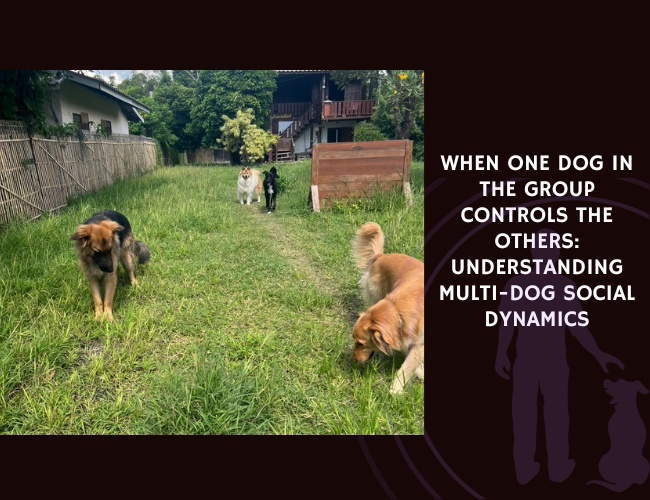
Have you ever watched your dogs interact and wondered who really sets the tone in your household? Perhaps you’ve noticed one dog who seems to orchestrate the movements of others, or maybe you’ve witnessed tensions that leave you uncertain about how to restore peace. Let us guide you through the fascinating world of multi-dog social dynamics, where leadership emerges not from force, but from emotional clarity and predictability.
The relationship between dogs living together is far more nuanced than simple dominance hierarchies suggest. Understanding these dynamics helps you create a harmonious home where each dog feels secure, valued, and emotionally balanced. What you’re about to discover might shift how you see your pack forever.
Beyond Dominance: Understanding True Social Control
What Social Control Really Means
When we talk about one dog controlling others, we’re not describing a tyrant ruling through fear. True social control in multi-dog households reflects something far more sophisticated: resource predictability and emotional leadership. Did you know that what looks like dominance is often simply one dog providing clarity to the group about when, where, and how resources become available?
Research shows that genuine leadership in dog groups emerges through confidence and predictability, not through tension and threat. The dog who controls the group is typically the one who helps others feel secure by creating consistent expectations. This means that the “leader” isn’t necessarily the loudest or most aggressive dog, but rather the one who provides emotional stability to the household.
You might notice this in subtle ways. The dog who calmly positions herself by the door before walks, who waits with quiet assurance at feeding time, or who settles the group with her presence is demonstrating true social influence. This is vastly different from a dog who uses intimidation, resource guarding, or coercion to maintain control.
Distinguishing Influence from Coercion
Social influence emerges when one dog naturally guides group behavior through calm confidence and predictable responses. This dog reduces uncertainty for others, creating a sense of safety that allows the entire household to function smoothly. Through the NeuroBond approach, we understand that this kind of leadership is built on co-regulated clarity rather than dominance assertion.
Coercive control, on the other hand, reveals itself through elevated aggression, which research associates with uncertainty within dominance networks. When you see one dog consistently using threats, blocking access to resources with tension, or creating anxiety in other dogs, you’re witnessing maladaptive control rather than healthy leadership. This distinction matters profoundly for your dogs’ wellbeing.
Here are behavioral markers that help you distinguish between the two:
Signs of healthy social influence:
- Other dogs look to this individual for cues before acting
- The group remains calm in this dog’s presence
- Resource transitions happen smoothly without conflict
- This dog can redirect group energy with subtle signals
- Overall household stress levels remain low
Signs of coercive control:
- Frequent staring, blocking, or intimidating postures
- Other dogs show signs of stress: lip licking, yawning, avoidance
- Escalating tensions around resources like food, toys, or attention
- The controlling dog shows persistent hypervigilance
- Other dogs display behavioral inhibition or learned helplessness
Understanding this difference helps you identify whether your multi-dog household needs intervention or simply acknowledgment of natural, healthy social structure. 🐾
The Emotional and Neurological Foundation of Multi-Dog Relationships
How Dogs Process Social Hierarchy Neurologically
Your dogs’ brains are constantly processing social information through complex neural circuits. While specific research on canine dominance neurology is still developing, we understand that the same brain regions involved in human social processing play crucial roles in how dogs navigate their relationships with each other.
The amygdala processes emotional responses, including fear and threat assessment during social encounters. The prefrontal cortex helps dogs make decisions about social engagement or avoidance. The hypothalamus coordinates stress responses that affect how subordinate dogs cope with social pressure. These neural systems work together to help your dogs determine their place within the household and respond appropriately to social cues.
Through moments of Soul Recall, dogs access emotional memories that shape their current social responses. A dog who experienced positive, confidence-building interactions in puppyhood may naturally assume a leadership role, while one whose early social experiences involved uncertainty might default to a more cautious position within the group.
The Chemistry of Social Bonding and Competition
Neurotransmitters shape the emotional landscape of your multi-dog household in powerful ways. Serotonin helps regulate mood and social confidence, supporting calm leadership behaviors. Dogs with balanced serotonin levels tend to navigate social situations with greater flexibility and emotional stability.
Dopamine drives motivation and reward-seeking, influencing which dogs compete for resources and which ones naturally defer. Oxytocin, often called the bonding hormone, facilitates affiliative behaviors and helps dogs form cooperative relationships rather than purely competitive ones. When your dogs engage in calm social contact, play together gently, or rest peacefully in proximity, oxytocin is supporting those harmonious moments.
You might observe these neurochemical influences when one dog consistently mediates conflicts between others, or when your most confident dog helps an anxious newcomer feel safe. This isn’t random—it’s your dogs’ neural chemistry supporting social harmony.
Chronic Stress in Subordinate Dogs
When social dynamics become maladaptive, subordinate dogs may experience chronic stress that affects their entire wellbeing. Prolonged activation of stress systems can lead to behavioral inhibition, where a dog becomes increasingly passive and withdrawn. Some dogs develop learned helplessness, essentially giving up on influencing their environment because previous attempts felt futile.
The balance between what neuroscientists call the SEEKING system (which drives exploration and engagement) and the FEAR system (which triggers avoidance and anxiety) determines how flexibly your dogs can respond to social challenges. A subordinate dog under chronic stress shows a FEAR system in overdrive, which limits their ability to engage confidently with their environment or housemates.
Watch for these signs in your dogs:
- Persistent low body posture or tucked tail around other dogs
- Reluctance to engage in activities they once enjoyed
- Increased startle responses or hypervigilance
- Changes in appetite or sleep patterns
- Displacement behaviors like excessive licking or yawning
If you recognize these patterns, your dog may be experiencing unhealthy social pressure that requires intervention. This isn’t a failing on anyone’s part—it’s valuable information that helps you adjust the household dynamics to support every dog’s emotional health. 🧡
Group Behavior and Emotional Contagion
How One Dog’s Emotional State Affects the Entire Pack
Have you ever noticed how when one of your dogs becomes excited, the others seem to catch that energy almost instantly? This phenomenon, called emotional contagion, is one of the most powerful forces shaping multi-dog household dynamics. Your dogs don’t just coexist—they continuously influence each other’s emotional states through sophisticated mechanisms of affective resonance.
Research confirms that group-level synchronization emerges from emotional resonance rather than hierarchy alone. Dogs possess remarkable capacities for empathy and mimicry, meaning they spontaneously align their emotional moods with those of their companions. When one dog experiences anxiety, fear, or excitement, other dogs in the household pick up on these signals through body language, vocalizations, and even subtle changes in scent.
This emotional mirroring happens through intraspecific motor and emotional alignment. Your dogs watch each other constantly, reading postures, expressions, and movement patterns that communicate internal states. A tense dog with raised hackles and forward-leaning posture broadcasts arousal that other dogs immediately register and may mirror. Conversely, a calm dog with soft eyes and relaxed body language can help regulate the entire group’s emotional temperature.
The Regulatory Role of Emotionally Stable Dogs
While research doesn’t explicitly confirm that emotionally stable dogs act as regulatory anchors, the principles of emotional contagion strongly suggest this dynamic. When you have one dog who consistently maintains calm, confident energy, that dog’s emotional state becomes available for others to mirror. This is particularly powerful when introducing a new dog to your household or when managing a dog with anxiety.
Think of your emotionally stable dog as the household’s emotional thermostat. Through what the NeuroBond Framework describes as co-regulated clarity, this dog helps others find their emotional footing. You might notice that your anxious dog settles more quickly when lying near your confident dog, or that your reactive dog shows less arousal when your calm dog leads the way on walks.
The Invisible Leash between emotionally bonded dogs creates invisible threads of influence. One dog’s steadiness can provide scaffolding for another dog’s developing confidence. This doesn’t happen through dominance or control, but through the powerful mechanism of social facilitation, where dogs mirror the arousal and behavior of key group members.
When Negative Affect Destabilizes the Group
The opposite dynamic creates significant challenges in multi-dog households. An anxious or reactive dog doesn’t just experience their own distress—they broadcast it throughout the group, potentially amplifying chaos through emotional contagion. When one dog’s FEAR system is chronically activated, other dogs pick up on this tension, which can create a feedback loop of escalating arousal.
Elevated aggression in one dog, often associated with uncertainty in social relationships, can destabilize the entire group through this contagion mechanism. Other dogs may become hypervigilant, anticipating conflict and remaining in a state of tension that prevents relaxation and play. The frequency of fears and anxieties in one dog predicts not only that individual’s behavioral challenges but can also contribute to group-wide instability.
You might observe this when:
- One dog’s alert barking triggers a cascade of barking from all dogs
- A reactive dog’s tension at the door creates general household arousal
- An anxious dog’s pacing prompts others to become restless
- One dog’s resource guarding makes all dogs more possessive
Understanding emotional contagion helps you recognize that addressing one dog’s reactivity often improves the entire household’s emotional climate. It’s not about isolating the “problem dog” but rather supporting that dog’s emotional regulation, which naturally benefits everyone. Next, we’ll explore how your role as the human mediator shapes these dynamics in profound ways. 🧠
Calm. Clear. Coordinated.
Influence flows from trust. In multi-dog homes, balance emerges not from dominance but from predictability. The dog others follow is the one who stays consistent when emotions rise.
Tension reveals uncertainty. Coercion masks insecurity—staring, blocking, guarding are signs of confusion, not control. True steadiness quiets the room without force.
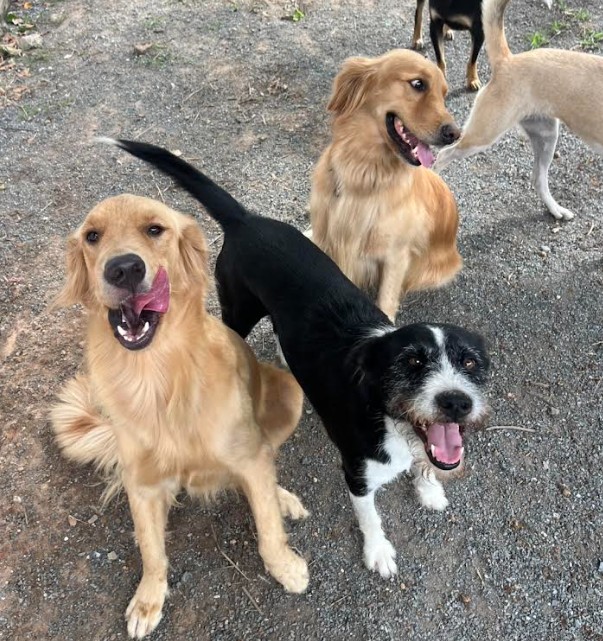

You set the rhythm. When you model clarity and calm transitions, social weight redistributes. Stability radiates downward, and harmony replaces hierarchy.
Human Mediation and Environmental Factors
Your Emotional State Sets the Group’s Foundation
Did you know that your own emotional state and management style play perhaps the most crucial role in whether your multi-dog household stabilizes into harmony or escalates into conflict? Research shows that owner temperament and the human-dog relationship significantly affect not just individual dog behavior, but the entire group’s social dynamics.
Owners with high negative affectivity—meaning those who experience worry, sadness, or frustration more intensely—tend to develop different relationships with their dogs compared to owners with high effortful control, who maintain emotional steadiness even under stress. Your emotional consistency, or lack thereof, ripples through your entire pack. When you feel anxious about your dogs’ interactions, they sense that uncertainty, which can actually amplify the very tensions you’re hoping to prevent.
The NeuroBond Framework emphasizes that emotional leadership from humans can replace dominance dynamics and foster stable inter-dog relationships through co-regulated clarity. This means that your calm, clear presence becomes the organizing principle for your dogs’ social world. Rather than your dogs competing to establish who’s in charge among themselves, they look to you as the emotional center who provides predictability and security.
You become most effective when you:
- Maintain emotional neutrality during inter-dog tensions
- Provide clear, consistent guidance about resource access
- Model calm energy even when dogs show arousal
- Create predictable routines that reduce uncertainty
- Offer each dog individual attention and validation
How Environment Amplifies or Reduces Social Tension
Your physical environment and resource management profoundly influence whether one dog’s control over others remains healthy or becomes problematic. Dominance hierarchies naturally help reduce conflict over resources and reproduction, which means that when resources feel scarce or unpredictable, control behaviors intensify as dogs compete for what they perceive as limited access.
Resource scarcity creates the perfect conditions for maladaptive control. When there aren’t enough high-value resources to go around—whether that’s food, toys, resting spots, or your attention—dogs may resort to more intense strategies to secure what they need. One dog may begin guarding resources more aggressively, while others may become increasingly anxious about their access to necessities.
Confined spaces can amplify tensions by limiting dogs’ ability to create physical distance when they need emotional space. In a small home or apartment, dogs can’t escape tense interactions or decompress separately, which keeps stress levels elevated. This doesn’t mean you can’t successfully maintain multiple dogs in smaller spaces, but it requires more intentional management to ensure each dog has sanctuary zones where they feel secure.
Attention bias from you might inadvertently strengthen unhealthy control dynamics. If you consistently give attention to the dog who demands it most forcefully, you’re reinforcing pushy behavior while teaching more polite dogs that deference doesn’t pay off. This can destabilize natural social structures where a confident but calm dog might otherwise provide leadership.
Consider these environmental adjustments:
- Provide multiple feeding stations to reduce competition
- Create several comfortable resting areas throughout your home
- Ensure each dog has individual access to you daily
- Offer choices about social engagement versus solitude
- Maintain consistent routines that reduce uncertainty about resource availability
Through thoughtful environmental design, you help your dogs feel that resources are abundant and predictable, which naturally reduces the need for rigid control behaviors. 🐾

Recognizing When Social Control Becomes Maladaptive
The Line Between Natural Hierarchy and Bullying
Understanding when social control crosses from natural, healthy hierarchy into maladaptive dominance or bullying is essential for protecting your dogs’ welfare. True dominance reflects resource predictability, not aggression or coercion. The moment control shifts toward intimidation, threat, and fear-based compliance, it has become problematic and requires intervention.
Natural hierarchy functions smoothly. You observe one dog who others naturally defer to, but this happens without tension. Resources move between dogs calmly. The leader may eat first or choose the best resting spot, but subordinate dogs show relaxed body language and willing deference rather than fear-based avoidance. There’s a sense of order that actually reduces conflict and helps everyone feel secure.
Maladaptive dominance or bullying reveals itself through persistent aggression, coercion, and the chronic stress of subordinate dogs. When control is asserted through intimidation linked to uncertainty in social relationships, the household dynamic has shifted into unhealthy territory. Research indicates that aggression toward other dogs, frequent fears and anxieties, and lack of choice, control, and predictability are significant predictors of behavioral disorders.
Watch for these warning signs:
- One dog consistently prevents others from accessing resources through threats
- Subordinate dogs show persistent fear responses around the controlling dog
- The controlling dog displays hypervigilance and won’t allow others to relax
- Physical altercations occur with increasing frequency
- Some dogs develop behavioral inhibition or learned helplessness
- Overall household stress remains chronically elevated
You’re not alone if you’re witnessing these patterns. Many multi-dog households experience periods where social dynamics become unbalanced. Recognizing this early allows you to implement changes before serious welfare issues develop or injuries occur.
Impact on Individual Wellbeing
When social control becomes coercive, the effects on individual dogs can be profound and lasting. Subordinate dogs may develop chronic anxiety disorders, showing persistent hypervigilance and stress responses even when the controlling dog isn’t present. Some dogs begin avoiding areas of the home, limiting their movement and reducing their quality of life significantly.
The controlling dog isn’t immune to negative effects either. Dogs who maintain control through constant vigilance and threat display experience their own chronic stress. This hyperarousal prevents deep rest, can lead to reactivity issues, and often stems from underlying insecurity rather than true confidence. These dogs need support as much as their subordinates do.
Beyond behavioral symptoms, maladaptive social dynamics can affect physical health. Chronic stress compromises immune function, may contribute to digestive issues, and can exacerbate existing health conditions. You might notice changes in appetite, sleep quality, or even changes in coat condition when stress levels remain elevated over time.
The good news is that recognizing maladaptive dynamics is the first step toward restoration. Through intentional intervention, environmental adjustments, and often professional support, you can help your multi-dog household find a healthier balance. Next, we’ll explore practical strategies for creating harmony and supporting every dog’s emotional wellbeing. 🧡
Creating Harmony Through Balanced Routines and Leadership
The Power of Predictable Group Routines
While research doesn’t explicitly detail the mechanisms, the principle that true dominance links to resource predictability suggests that consistent, fair routines profoundly improve inter-dog trust and reduce social tension. When your dogs know exactly what to expect and when, uncertainty decreases, which naturally reduces the need for controlling behaviors.
Shared feeding protocols create predictability around the highest-value resource. Rather than creating competition, structured feeding actually helps dogs relax because each individual knows they’ll receive their meal. You might feed dogs in separate locations initially to reduce arousal, then gradually bring feeding stations closer as trust builds. The key is consistency—same time, same process, same peaceful outcome.
Cooperative rest periods help your dogs associate each other’s presence with calm, positive experiences. Designate quiet times when all dogs settle in proximity to you, perhaps during your evening reading or TV watching. Initially, they may need individual spaces, but over time, dogs often choose to rest near each other when these periods consistently feel safe and peaceful.
Synchronized walks leverage the powerful bonding effects of moving together toward a common goal. Walking as a group, especially with you providing clear leadership, helps dogs experience themselves as a cooperative unit rather than competitors. The shared activity, combined with mental stimulation from environmental exploration, often reduces household tensions significantly.
Consider implementing:
- Consistent daily schedule for all major activities
- Individual attention sessions for each dog
- Group training exercises that reward cooperation
- Calm greeting protocols when you arrive home
- Structured play sessions that end before arousal escalates
Through these balanced routines, you create the predictability that allows trust to flourish. Each dog learns they’ll have access to what they need, which removes the anxiety that often drives controlling behaviors.
Becoming the Emotional Center of Your Pack
Perhaps the most powerful intervention you can make is establishing yourself as the emotional center rather than allowing intra-group power competition to determine household dynamics. Through the NeuroBond Framework, we understand that emotional leadership characterized by co-regulated clarity can foster stable inter-dog relationships more effectively than allowing dogs to sort themselves into hierarchies through conflict.
Leader neutrality means you remain calm and clear regardless of inter-dog tensions. When one dog tries to prevent another from approaching you, you calmly create space for both dogs without showing frustration or anxiety. Your emotional steadiness tells both dogs that resources (including your attention) are abundant and that competition isn’t necessary.
Clear relational structures help dogs understand behavioral expectations without ambiguity. You decide when dogs eat, where they rest, how they greet visitors, and when play happens. This isn’t about being rigid or controlling—it’s about providing the clarity that allows dogs to relax rather than constantly negotiating social standing.
Acting as an emotional anchor means your dogs look to you for information about how to respond to situations rather than reacting based on each other’s arousal. When one dog becomes excited or anxious, your calm presence helps regulate the entire group. The Invisible Leash between you and your dogs creates emotional guidance that transcends physical control.
Practical leadership strategies include:
- Requiring calm behavior before accessing valued resources
- Interrupting tense interactions with redirected attention to you
- Providing clear communication through consistent cues
- Rewarding deference to your guidance rather than competition between dogs
- Creating a sense of abundant resources through predictable access
By establishing emotional leadership, you reduce the need for dogs to establish control among themselves. They can simply be companions rather than competitors, which transforms household dynamics fundamentally.
When to Seek Professional Support
Sometimes, despite your best efforts, multi-dog dynamics require professional intervention. This isn’t a failure—it’s a recognition that complex behavioral challenges often benefit from expert guidance. Consider seeking support from a certified professional dog trainer or veterinary behaviorist when:
- Aggression between dogs escalates in frequency or intensity
- One or more dogs show signs of chronic stress or behavioral shutdown
- You feel unsafe managing your dogs together
- Initial interventions haven’t improved the situation within several weeks
- Dogs have caused injuries to each other
Professional support might include behavior modification protocols, temporary management strategies like rotation schedules, or in some cases, medication to reduce anxiety and support behavioral change. The right professional will work with your entire household system, including your role as the emotional leader, to create lasting improvements.
That balance between science and soul—between understanding the neurobiology of social behavior and honoring the emotional reality of each dog’s experience—that’s the essence of Zoeta Dogsoul. 🐾
Questions to Consider About Your Multi-Dog Household
As we’ve explored the complex dynamics of multi-dog social relationships, you’ve gained tools for understanding what’s happening in your own household. Before we close, let’s reflect on some questions that can help you assess your current situation and identify opportunities for improvement:
About social structure:
- Which dog do others naturally look to for cues?
- Does this leadership emerge through calm confidence or through tension and threat?
- Do subordinate dogs show relaxed body language or signs of chronic stress?
- Are there moments when social tension escalates, and what triggers these moments?
About emotional contagion:
- Which dog’s emotional state most influences the group?
- Does one dog help regulate others’ arousal, or amplify it?
- How quickly does emotional energy spread through your pack?
- Can your dogs settle peacefully together, or does proximity create tension?
About your role:
- Do your dogs look to you for guidance during uncertain moments?
- Does your emotional state affect your dogs’ interactions?
- Are you consistent in managing resources and setting behavioral expectations?
- Do you intervene in inter-dog tensions calmly or with anxiety?
About environmental factors:
- Does each dog have sufficient access to valued resources?
- Can dogs create physical distance from each other when needed?
- Are routines predictable enough to reduce uncertainty?
- Does your living space support multiple dogs comfortably?
Your honest answers to these questions provide valuable information about whether your multi-dog household is functioning in healthy balance or needs support. Trust your observations—you know your dogs better than anyone.
Conclusion: The Journey Toward Multi-Dog Harmony
Understanding when one dog controls others in your household isn’t about judging or labeling your dogs, but about recognizing the complex social and emotional dynamics at play. You’ve learned that true leadership emerges through confidence and predictability rather than aggression and coercion, and that your role as the emotional center profoundly shapes whether your dogs relate as competitors or companions.
The science of emotional contagion reveals that your dogs are in constant communication, influencing each other’s states through sophisticated mechanisms of empathy and mimicry. One dog’s anxiety or reactivity ripples through the entire group, just as one dog’s calm confidence can provide regulatory support for others. Through the NeuroBond approach, you understand that fostering emotional alignment and co-regulated clarity creates the foundation for harmonious multi-dog relationships.
Your management style, environmental design, and consistent routines determine whether natural social structures stabilize or escalate into problematic dynamics. By providing abundant, predictable access to resources and establishing yourself as a calm, neutral leader, you remove the conditions that fuel maladaptive control behaviors. Each dog can relax into their role within the household rather than constantly negotiating social standing through tension.
Remember that creating harmony in a multi-dog household is a journey, not a destination. Some days will feel smooth and connected, while others might challenge you with unexpected tensions. This is normal and doesn’t mean you’re failing. What matters is your continued awareness, your willingness to adjust your approach as needed, and your commitment to each dog’s emotional wellbeing.
If your household is struggling with maladaptive control dynamics, chronic stress, or escalating aggression, don’t hesitate to seek professional support. The right trainer or behaviorist can provide personalized strategies that address your specific situation, helping every dog feel safe, valued, and emotionally balanced.
Your dogs are fortunate to have an owner who cares enough to understand the deeper dynamics shaping their social world. Through continued learning, emotional awareness, and intentional leadership, you’re creating a household where every dog can thrive. That commitment to seeing beyond surface behaviors to the emotional and neurological processes underneath—that’s what transforms good dog ownership into something extraordinary. 🧡
The journey toward multi-dog harmony asks us to balance scientific understanding with emotional attunement, to provide clear leadership while honoring each dog’s individuality, and to recognize that true control comes not from dominance but from the trust and predictability we create together. This is the path forward—one of awareness, compassion, and co-regulated clarity that allows every dog in your care to flourish.










