
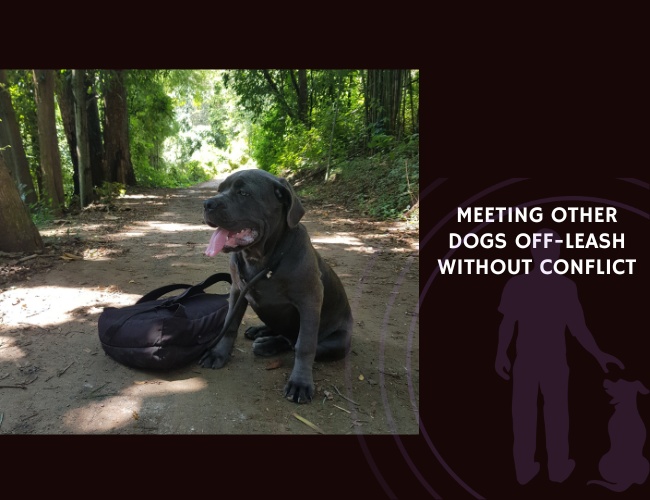
Introduction: The Dance of Canine Connection
Have you ever watched your dog approach another dog at the park and felt your heart race with uncertainty? Will they play harmoniously or will tension escalate? These moments reveal something profound about the intricate social world our dogs navigate every single day.
Off-leash encounters between dogs are among the most complex social interactions in the canine world. Unlike the structured predictability of leashed walks, off-leash meetings allow dogs to express their full range of communication signals, emotional states, and social preferences. Understanding these encounters is not just about preventing conflict—it’s about honoring the deep neurobiological and emotional processes that shape how your dog experiences the world.
In this guide, we’ll explore the fascinating science behind dog-to-dog interactions, from the subtle flick of an ear to the cascading hormonal changes that occur in milliseconds. You’ll discover how your own emotional state influences your dog’s social confidence, and how recognizing early signs of tension can transform potentially stressful encounters into opportunities for connection. 🐾
Let us guide you through the social neurobiology of canine encounters, where science meets intuition, and where understanding creates safety.
The Language of First Contact: Reading Canine Communication
How Dogs “Speak” Without Words
Your dog’s body is constantly telling stories. Every muscle tension, every shift in weight, every glance carries meaning in the sophisticated language of canine communication. When two dogs meet off-leash, they’re engaging in a rapid-fire exchange of information that would take us minutes to articulate in words.
Key nonverbal signals include:
- Tail carriage and movement: A high, stiff tail often indicates arousal or potential tension, while a relaxed, sweeping wag suggests openness to interaction
- Ear position: Forward ears signal alertness or potential challenge, while relaxed or slightly back ears indicate a more receptive state
- Body posture: A loose, wiggly body shows confidence and friendliness, whereas a stiff, frozen posture may precede defensive behavior
- Gaze patterns: Soft, indirect eye contact facilitates peaceful greetings, while hard stares can be perceived as threatening
- Movement speed and trajectory: Slow, curved approaches tend to reduce tension, while direct, rapid approaches may escalate arousal
Did you know that dogs assess each other’s intentions within the first three seconds of visual contact? This initial assessment determines whether the subsequent interaction will be exploratory, playful, or potentially confrontational.
The Importance of Approach Trajectories
The path your dog takes when approaching another dog matters enormously. Think of it like human social etiquette—walking directly up to a stranger and standing face-to-face feels confrontational, while approaching at an angle and standing side-by-side feels more comfortable.
Curved approaches allow dogs to gather information gradually, reducing the pressure of direct confrontation. This arc-shaped trajectory gives both dogs time to assess body language, scent signals, and emotional state before committing to closer contact. Dogs who naturally employ curved approaches tend to have more successful social encounters.
Direct approaches, particularly when combined with high speed, can trigger defensive responses even in socially confident dogs. The directness activates the other dog’s vigilance systems, preparing them for potential threat. You might notice your dog stiffening or becoming more alert when another dog makes a beeline toward them.
Greeting Sequences That Signal Compatibility
Certain patterns of greeting consistently predict positive outcomes. When you observe these sequences, you’re witnessing social competence in action:
- Circular sniffing: Dogs who naturally move in gentle circles around each other, taking turns investigating rear and flank areas, demonstrate mutual respect and curiosity
- Parallel walking: Sometimes the best greeting isn’t face-to-face at all—dogs who walk alongside each other before closer contact often establish rapport through shared movement
- Play bows: The classic “downward dog” position with front legs extended and rear elevated is an unambiguous invitation to play
- Intermittent disengagement: Socially skilled dogs don’t maintain constant contact—they check in, move away, and return, creating a rhythm that prevents over-arousal
Through the NeuroBond approach, we recognize that these greeting sequences aren’t just mechanical behaviors—they’re expressions of emotional intelligence, each dog gauging the other’s comfort level and adjusting accordingly.
Next, we’ll explore the invisible neurobiological processes occurring beneath these visible behaviors.
The Neurobiology of Social Encounters: What Happens Inside
Hormones Tell the Hidden Story
While you watch the external dance of greeting behaviors, a remarkable hormonal symphony plays out inside your dog’s body. These chemical messengers shape emotional experience, influence decision-making, and determine whether an encounter feels safe or threatening.
Oxytocin—the bonding hormone: Often called the “love hormone,” oxytocin increases during positive social interactions. When dogs engage in mutual sniffing, gentle play, or peaceful coexistence, oxytocin levels rise, creating feelings of trust and connection. This hormonal shift not only makes the current interaction more positive but also builds social confidence for future encounters.
Cortisol—the stress indicator: This hormone surges when dogs perceive threat or uncertainty. Elevated cortisol isn’t necessarily negative—it prepares the body for action and heightens awareness. However, chronically elevated cortisol or extreme spikes during social encounters indicate that your dog is experiencing significant stress. Understanding your dog’s cortisol patterns helps you identify which situations are within their comfort zone and which require more gradual exposure.
The balance between these systems determines social outcomes. A dog with elevated oxytocin and manageable cortisol can navigate complex social situations with confidence. A dog with low oxytocin and high cortisol may perceive neutral behaviors as threatening, leading to defensive reactivity.
The Emotional State Before Contact Matters
Your dog doesn’t enter each social encounter with a blank slate. They bring their current emotional state—accumulated from the morning’s walk, your energy as you approached the park, their last meal, even their quality of sleep. This emotional background becomes the lens through which they interpret new social information.
Leash frustration is a common pre-existing arousal state. Dogs who regularly experience tension on leash (pulling toward other dogs but being restrained) develop associations between the sight of other dogs and frustrated arousal. When these dogs are released off-leash, they may appear overly excited or pushy, overwhelming potential playmates who interpret their intensity as aggression rather than enthusiasm.
Owner anxiety creates another layer of pre-existing arousal. Dogs are extraordinarily attuned to human emotional states through a process called emotional contagion. When you feel nervous about an approaching dog, your body tenses, your breathing changes, and you may unconsciously tighten your grip or alter your posture. Your dog reads these signals and mirrors your concern, entering the interaction already primed for vigilance rather than relaxation. 🧠
Anticipatory excitement can also become problematic. A dog who has learned that arriving at the park means immediate high-intensity play may be in such an elevated arousal state that they cannot effectively read social signals or respond to calmer dogs’ requests for space.
The Neurological Basis of Self-Regulation
Some dogs seem naturally capable of modulating their excitement, shifting smoothly between playful exuberance and calm observation. Others struggle, either escalating into uncontrolled frenzy or shutting down entirely under social pressure. These differences have neurological foundations.
The prefrontal cortex—the brain region responsible for impulse control and decision-making—varies in development and functionality among individual dogs. Dogs with strong prefrontal cortex function can inhibit impulsive responses, pause to assess situations, and choose appropriate behaviors even when excited. Early socialization and positive training experiences help develop these neural pathways.
The amygdala—the brain’s threat-detection center—also shows individual variation. Dogs with heightened amygdala reactivity may perceive neutral social signals as threatening, leading to defensive responses. This isn’t a character flaw; it’s a neurobiological difference that requires patient, systematic exposure to safe social experiences to gradually recalibrate threat perception.
When these systems work in harmony, dogs navigate social encounters with what we might call social intelligence—reading subtle cues, adjusting their behavior to match their partner’s energy, and maintaining emotional equilibrium even in complex situations.
Understanding Core Emotional Systems: Panksepp’s Framework
Beyond the structural differences in brain regions, neuroscientist Jaak Panksepp identified fundamental emotional systems hardwired into the mammalian brain that help us understand why dogs behave the way they do during social encounters. These systems—SEEKING, PLAY, and FEAR—interact dynamically, and recognizing which system is active gives you a powerful interpretive lens for reading your dog’s behavior.
The SEEKING System represents curiosity, exploration, and anticipatory motivation. When activated during dog encounters, you’ll observe:
- Focused but relaxed attention on the other dog
- Deliberate, investigative sniffing patterns
- Ears forward but body loose
- Purposeful movement toward objects of interest
- A sense of engaged curiosity rather than anxiety
A dog in SEEKING mode approaches the world with “what might this be?” energy—they’re gathering information and assessing possibilities. This is often the ideal starting state for social encounters, as it combines alertness with openness.
The PLAY System activates joyful, social engagement. This is what we hope to see flourish during positive off-leash encounters:
- Bouncy, exaggerated movements
- Play bows and self-handicapping (larger dogs “holding back” with smaller ones)
- Loose, wiggly body language
- Open-mouthed “play face”
- Taking turns in chase or wrestling
- Brief pauses to re-invite play
Dogs in genuine PLAY mode exhibit an unmistakable lightness and reciprocity. They’re fully engaged but maintain behavioral flexibility—able to shift, pause, and modulate intensity based on their playmate’s responses.
The FEAR System activates defensive responses when threat is perceived. Signs include:
- Stiff, frozen body posture
- Heightened vigilance and scanning
- Attempts to increase distance (backing up, hiding)
- Defensive vocalizations (growling, barking)
- Dilated pupils and whale eye
- Potential freeze, flight, or fight responses
Understanding that FEAR isn’t a character flaw but a neurobiological protective mechanism helps you respond with compassion rather than frustration when your dog shows anxiety.
How Systems Transition and Influence Each Other
Here’s where it gets fascinating: these systems don’t operate in isolation. A dog might begin an encounter in SEEKING (curious investigation), transition smoothly to PLAY (joyful interaction), but suddenly activate FEAR if the other dog becomes too intense or makes a sudden movement.
One dog’s emotional state can also trigger system changes in another through emotional contagion. When an anxious dog arrives at the park in FEAR mode—body tense, scanning for threats—their emotional state can activate FEAR systems in other dogs who might otherwise have remained in PLAY. Conversely, a confident dog operating from SEEKING or PLAY can help anxious dogs shift out of FEAR mode through their calm, invitational energy.
Managing System Transitions in Real Time
Your role becomes helping your dog maintain or return to productive emotional systems during encounters:
- SEEKING → PLAY: This is a natural, positive transition. Support it by allowing appropriate investigation time before play begins. Rushing this transition often creates over-arousal.
- PLAY → Over-arousal: When play intensity escalates beyond your dog’s regulation capacity, their PLAY system can tip into defensive reactivity. Interrupt before this threshold with calm recalls and brief rest periods.
- FEAR → SEEKING: This is your goal with anxious dogs. Create conditions where curiosity can override fear—sufficient distance, presence of calm dogs, your reassuring presence, and positive associations with other dogs’ presence.
- Preventing FEAR activation: Recognize early signs that your dog is shifting from SEEKING/PLAY toward FEAR (stiffening, intense staring, raised hackles) and intervene before the FEAR system fully activates. Once activated, returning to social engagement becomes much more difficult.
You might notice that your dog has a “default system”—some dogs live primarily in SEEKING, approaching the world with curiosity. Others maintain high PLAY drive, constantly inviting interaction. Some dogs, particularly those with difficult histories, default to FEAR in novel or uncertain situations. Understanding your dog’s baseline helps you work with their neurobiological tendencies rather than against them. 🧠
Next, we’ll explore how early experiences shape these emotional systems and determine adult social competence.

The Foundation of Social Confidence: Early Learning and Experience
Why Puppy Socialization Creates Lifelong Impact
The first few months of a dog’s life represent a critical period for social learning. During this time, neural pathways are highly plastic, meaning experiences literally shape brain development. Puppies exposed to diverse, positive social encounters with other dogs develop neural networks that support confident, flexible social behavior throughout their lives.
Puppy play isn’t just cute—it’s essential neurodevelopmental work. Through play, puppies learn bite inhibition, conflict resolution, reading body language, and emotional self-regulation. They discover that communication resolves tension, that intensity can be modulated, and that social interaction is rewarding rather than threatening.
Maternal modeling provides another crucial layer of social education. Puppies whose mothers demonstrated calm confidence around other dogs often inherit this behavioral template. Conversely, puppies who observed maternal anxiety or aggression toward other dogs may internalize these responses as normal, requiring deliberate counter-conditioning in adulthood.
Group housing situations in responsible breeding or fostering environments offer rich social learning opportunities. Puppies raised with littermates and other stable dogs learn the nuanced give-and-take of group dynamics—when to yield, when to assert, when to invite play, and when to rest.
You might wonder: can dogs who missed early socialization still develop social confidence? Absolutely, though the path requires more patience and intentionality, as we’ll explore in the training section below. 🐾
Social Facilitation Theory: Why Energy Is Contagious
Have you ever noticed how one excited dog can transform an entire playgroup’s energy within seconds? Or how a calm, mature dog can help settle an anxious newcomer? This phenomenon is explained by Social Facilitation Theory, which reveals how the presence and behavior of others amplify an individual’s dominant responses.
How Dogs Amplify Each Other’s Emotional States
Social facilitation works through mirror processes—dogs unconsciously reflect and magnify each other’s emotional and behavioral patterns. When your dog observes another dog displaying high arousal, excitement, or anxiety, their own corresponding emotional system activates and often intensifies. This happens automatically, beneath conscious awareness, driven by ancient social bonding mechanisms.
This amplification can work in either direction:
- Positive amplification: A confident, playful dog can elevate another dog’s comfort level, helping them shift from uncertainty to engagement. Their relaxed body language and invitational play signals communicate safety, allowing anxious dogs to experiment with social interaction in a supported context.
- Negative amplification: An anxious or reactive dog can trigger vigilance in otherwise calm dogs. Their tension, scanning behavior, and defensive posture activate threat-detection systems in nearby dogs, creating a cascade of escalating arousal even when no actual threat exists.
Why High-Energy Parks Often Backfire for Anxious Dogs
Understanding social facilitation explains a common training mistake: bringing anxious or reactive dogs to busy, high-energy dog parks in hopes that “socialization” will cure their anxiety. Instead, the overwhelming sensory input and constant activation of arousal states typically reinforces the very patterns you’re trying to change.
When your anxious dog enters an environment where multiple dogs are displaying high arousal—running, barking, wrestling intensely—their nervous system mirrors this elevated state. But unlike confident dogs who can modulate back to calm, anxious dogs often become stuck in heightened arousal, experiencing the encounter as overwhelming rather than enriching. This creates negative associations: “other dogs = chaos and stress.”
The result? Your dog’s amygdala (threat-detection center) learns that groups of dogs predict danger, making future social encounters even more challenging. Each overwhelming experience essentially teaches their brain that their anxiety is justified.
Strategic Use of Calm “Mentor Dogs”
Here’s the positive application of social facilitation: pairing your anxious or socially inexperienced dog with carefully selected calm, stable dogs who naturally demonstrate appropriate social behavior. These “mentor dogs” serve as living templates, showing your dog what relaxed, confident social engagement looks like.
Ideal mentor dogs display:
- Calm confidence without pushiness
- Appropriate responses to social signals (respecting space when asked)
- Patient tolerance of clumsy or anxious behavior
- Ability to initiate gentle play without overwhelming
- Natural inclination to check in and match energy levels
When your dog repeatedly experiences positive encounters with mentor dogs, several beneficial processes occur:
- Their arousal baseline lowers because they’re mirroring calm rather than chaos
- Positive associations form between “other dogs” and “feeling safe”
- Social skills develop through successful communication exchanges
- Confidence builds from experiences of agency (choosing to engage) and positive outcomes
Many professional trainers maintain relationships with clients whose dogs serve as mentors, facilitating controlled socialization experiences that build confidence rather than overwhelming nervous systems.
How Fear and Excitement Spread Through Groups
In group settings, emotional contagion can create rapid state changes. One dog’s barking may trigger a chorus of barking. One dog’s sudden sprint can initiate a group chase—exciting for some dogs but terrifying for others who feel chased rather than playful.
This is particularly relevant at dog parks during busy hours. The cumulative arousal of multiple excited dogs creates what we might call a “high-arousal environment” that affects every dog present. Confident, well-regulated dogs may thrive on this stimulation. But dogs with marginal social skills or anxiety tendencies often reach dysregulation quickly in these conditions.
Practical Application: Choosing Social Partners Strategically
Understanding social facilitation transforms how you approach your dog’s social experiences:
- For confident dogs: Varied partners and busy environments provide stimulation without overwhelm
- For developing social skills: Small groups (2-4 dogs) with compatible energy levels allow learning without excessive arousal
- For anxious dogs: One-on-one interactions with calm, patient dogs build positive associations without triggering overwhelm
- For reactive dogs: Initially, practice in the presence of other calm dogs at sufficient distance, allowing observation without direct interaction
The goal isn’t avoiding all stimulation—it’s matching environmental challenge to your dog’s current regulation capacity, gradually building resilience through positive experiences at manageable intensity levels. 🐾
Context-Specific Social Learning
Here’s a fascinating aspect of canine social learning: dogs don’t always generalize from one social experience to another. A dog who plays beautifully with familiar dogs at daycare may be uncertain or reactive with unknown dogs in unfamiliar environments.
This context-specificity occurs because dogs encode social memories with environmental details attached. The familiar dogs carry associations of safety and predictability. The daycare environment provides clear routines and spatial arrangements that reduce uncertainty. When these contextual cues are absent, the dog’s confidence may falter.
Understanding this helps us appreciate why controlled, repeated exposure in varied environments builds more robust social skills than occasional encounters in a single location. Each positive experience in a new context adds another thread to the web of social confidence.
The Role of Repeated Exposure in Building Resilience
Dog parks and other off-leash areas offer valuable opportunities for repeated social exposure, though they require careful navigation. These environments work best for dogs who already possess baseline social skills and can benefit from practice in managing arousal amid multiple dogs, various play styles, and changing group dynamics.
Structured playgroups or training classes with consistent participants allow dogs to develop ongoing relationships, learning the specific communication styles of regular playmates. This familiarity reduces uncertainty and allows for more nuanced interaction—dogs learn which companions enjoy chase games versus wrestling, who needs more personal space, and how to navigate the social hierarchy of the group.
Progressive exposure strategies help anxious or reactive dogs build positive associations. This might involve starting with calm, well-matched dogs at distance, gradually decreasing space as the anxious dog shows comfortable body language, and ensuring every session ends on a positive note before arousal exceeds the dog’s capacity for self-regulation.
Moments of Soul Recall often emerge in these carefully structured experiences—when a dog who once cowered from other dogs tentatively approaches a new friend, or when a once-reactive dog takes a breath and disengages from tension. These moments reveal how emotional memory and new experience can intertwine to create behavioral transformation.
Environmental and Human Factors: The Context of Every Encounter
How Physical Space Shapes Social Outcomes
The environment in which dogs meet off-leash isn’t a neutral backdrop—it actively influences emotional state, arousal levels, and interaction outcomes. Understanding these environmental factors helps you choose appropriate locations and manage them strategically.
Spatial constraints matter enormously. A small, enclosed area with multiple dogs creates density that elevates arousal and limits escape routes. When dogs cannot maintain comfortable distance, tension accumulates. Contrast this with an open field where dogs can naturally create and collapse distance as needed, using space itself as a communication tool.
Crowd density—both canine and human—affects interaction quality. Busy environments with many dogs require constant social assessment and arousal management. For socially confident dogs, this can be stimulating and enriching. For uncertain or selective dogs, the cognitive and emotional load becomes exhausting, potentially triggering defensive behavior.
Surface texture influences movement patterns and body language. On soft grass, dogs move with fluid, natural gaits that communicate relaxation. On concrete or asphalt, movement becomes harder, movement patterns stiffen slightly, and the acoustic environment (clicking nails, echoing barks) adds sensory intensity that can elevate arousal.
Resource distribution creates another environmental variable. Areas with scattered toys, water bowls, or high-value features (like a single shaded spot on a hot day) introduce potential conflict points. Dogs who are resource-guarded may show tension they wouldn’t display in neutral, featureless spaces.
The Human Factor: Your Energy Matters More Than You Think
Let’s address a truth that many dog owners find surprising: you are one of the most significant environmental factors in your dog’s off-leash encounters. Your emotional state, physical tension, vocal patterns, and spatial positioning influence your dog’s behavior through multiple pathways.
Owner anxiety transmits to dogs through emotional contagion. Research consistently shows that dogs display more stress-related behaviors when interacting with tense humans compared to calm ones. Your elevated heart rate, altered breathing pattern, and muscle tension don’t go unnoticed—your dog reads these as signals that the environment may be unsafe.
Vocal interference during dog-dog encounters often escalates rather than de-escalates tension. Anxious calling, high-pitched corrections, or urgent commands increase arousal in both dogs. The tonal quality and frequency of your voice can either support calm assessment or trigger vigilance.
Spatial positioning by owners influences the interaction zone. When humans crowd around greeting dogs, they create social pressure that may inhibit natural communication. Giving dogs physical space to move, approach, and disengage allows them to use their full range of distance-management behaviors.
Active support versus interference represents a nuanced balance. Giving your anxious dog reassurance can reduce their emotional response and help them feel safer. However, in cases of fear-based aggression, effusive consolation may inadvertently reinforce vigilant scanning for threats. The key lies in calm, confident presence rather than nervous hovering. 🧡
Through the NeuroBond approach, you become a secure base for your dog—projecting calm clarity that tells them, “I’ve assessed this situation, and we’re safe.” This emotional co-regulation allows your dog to rely on your judgment rather than making fear-based decisions independently.
Gender Differences: How Your Gender Affects Your Dog’s Stress
Here’s a finding that surprises many dog owners: research consistently shows that dogs display more stress-related behaviors when interacting with men compared to women. This isn’t about individual personality but rather reflects patterns in how dogs have learned to read human behavior across their developmental experiences.
What the Research Reveals
Studies measuring canine stress indicators (cortisol levels, body language, behavioral responses) show that dogs often exhibit:
- More frequent lip-licking and yawning around male handlers
- Higher baseline arousal in the presence of unfamiliar men
- Increased vigilance and environmental scanning
- Greater physical distance maintenance
- More frequent gazing toward exits or away from the interaction
These patterns appear even with dogs who have positive relationships with men, suggesting the response isn’t purely about negative experiences but involves something about how dogs perceive and process human gender cues.
Why This Occurs
Several factors likely contribute to this pattern:
- Voice characteristics: Male voices typically have lower frequencies and greater volume, which dogs may initially perceive as more alerting or potentially threatening compared to higher-pitched female voices
- Physical presence: On average, men have larger physical stature, more angular body shapes, and different movement patterns that may activate mild vigilance in dogs
- Behavioral differences: Research shows men and women tend to interact with dogs differently—men often use more direct eye contact, larger gestures, and approach more directly
- Socialization gaps: Puppies and young dogs may have more frequent positive interactions with women (who statistically comprise more primary caregivers and trainers), creating broader positive associations
Practical Implications for Male Dog Owners
If you’re a male dog owner, this information isn’t about limitation—it’s about strategic adaptation that helps your dog feel more comfortable, particularly during off-leash social encounters where they’re already managing complexity:
Vocal adjustments:
- Use a slightly higher, softer tone during greetings and around new dogs
- Avoid loud, sudden vocalizations that may startle
- Employ calm, melodic speech patterns rather than sharp commands
- Consider that your voice contributes to your dog’s arousal baseline
Physical approach strategies:
- Use curved rather than direct approaches when meeting new dogs
- Crouch or kneel to reduce height differential in tense situations
- Keep body posture relaxed and open (avoid squared shoulders, direct orientation)
- Move deliberately rather than quickly or unpredictably
Eye contact management:
- Soften your gaze when your dog shows uncertainty
- Use peripheral vision rather than direct staring during dog-dog interactions
- Blink slowly and frequently to communicate non-threat
- Allow your dog to look away without forcing eye contact
Interaction pacing:
- Give extra processing time before expecting responses
- Allow your dog to approach new dogs rather than directing them forward
- Respect their need for slightly more personal space
- Build trust through consistency and predictability
Why This Matters in Multi-Handler Households
In households with multiple handlers of different genders, dogs may show different social confidence levels depending on who’s present during off-leash encounters. A dog might appear more socially confident with a female handler and more cautious with a male handler—not due to relationship quality but due to these baseline arousal differences.
Understanding this helps families:
- Recognize that behavioral differences across handlers aren’t personal
- Adjust expectations based on who’s handling the dog in social situations
- Have male handlers take extra care with calming strategies during encounters
- Celebrate progress relative to each handler’s baseline rather than comparing directly
The goal isn’t for male handlers to feel disadvantaged—it’s to work consciously with these patterns to support your dog’s comfort and confidence. Many male handlers develop exceptionally deep bonds with their dogs precisely because they’re intentional about these adaptations. 🧡
Calm. Fluid. Connected.
Social grace begins in stillness. Off-leash encounters aren’t dominance displays—they’re emotional negotiations. Dogs read tension in milliseconds, adjusting posture and breath before touch ever happens.
Curves build trust. A gentle arc, averted gaze, and balanced movement diffuse pressure where straight lines would collide. In this rhythm, curiosity replaces caution and communication stays fluid.
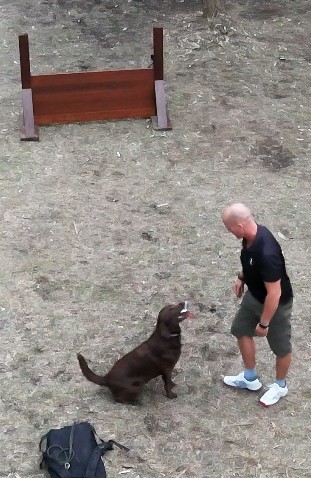


Your calm writes their script. When your energy stays grounded, your dog’s nervous system mirrors safety. Connection becomes cooperation, and every meeting turns from risk into relationship.
Male Dogs and Leash Tension: Understanding Pre-Existing Arousal Patterns
While we’re discussing gender influences, it’s important to address how your dog’s sex affects their behavior patterns, particularly regarding leash reactivity and its impact on off-leash social encounters.
Research Findings on Male Dog Behavior
Studies examining leash-walking behavior reveal that male dogs, on average:
- Pull more frequently and with greater force on leash
- Create higher overall leash tension during walks
- Display more intense interest in social stimuli (other dogs, interesting scents)
- Show more pronounced frustration responses when restrained from investigating
These patterns exist independent of training, appearing across various breeds and age groups, suggesting hormonal and neurological factors contribute to these behavioral tendencies.
How Leash Frustration Affects Off-Leash Behavior
Here’s why this matters for off-leash encounters: when male dogs repeatedly experience the frustration cycle of seeing another dog, surging forward with interest, and being physically restrained by the leash, their brains form a powerful association:
Other dog appears → Arousal spike → Physical restraint → Frustration
Over time, this pattern creates what behaviorists call “barrier frustration” or “leash reactivity.” The dog isn’t necessarily aggressive—they’re experiencing intense frustrated arousal because the thing they want to investigate is being prevented by the leash.
When this dog is finally released off-leash, they often:
- Approach other dogs with excessive speed and intensity
- Display pushy, overwhelming greeting behavior
- Show poor reading of other dogs’ “slow down” signals
- Appear almost frantic in their social approach
- Struggle to regulate their excitement level
Other dogs often misinterpret this intensity as aggression or rudeness, responding with defensive behavior or avoidance. This creates a self-fulfilling problem: the frustrated dog finally gets access to other dogs but experiences negative social outcomes, reinforcing anxiety or reactivity.
The Testosterone Connection
Testosterone influences behavior in several relevant ways:
- Increases arousal baseline: Male dogs operate at slightly higher arousal levels generally
- Intensifies interest in social stimuli: Intact males particularly show heightened interest in other dogs
- Affects impulse control: Can reduce the prefrontal cortex’s ability to inhibit impulses
- Influences territorial responses: May intensify space-management behaviors
Neutered males typically show reduced intensity in these patterns, though the behavior isn’t eliminated entirely, especially if established before neutering.
Sex-Specific Training Considerations
Understanding these patterns allows you to work with your male dog’s tendencies rather than fighting against them:
On-leash preparation:
- Practice “look at that” protocols that reward noticing other dogs calmly rather than pulling toward them
- Build a strong “check in” behavior that redirects attention before arousal spikes
- Use longer leashes that allow some investigation while preventing overwhelming approaches
- Reward loose-leash walking heavily, especially in the presence of social stimuli
Transition strategies:
- Before off-leash release, allow a “decompression period” with long-line walking to lower arousal
- Practice recalls and settles before permitting free interaction
- Release off-leash only after demonstrating calm focus, not while in high arousal
- Choose less stimulating times (early morning, off-peak hours) for initial practice
Off-leash management:
- Call your dog for brief check-ins every 1-2 minutes during first meetings
- Interrupt overly intense approaches before they reach the other dog
- Reward calm, curved approaches and gentle investigation
- Remove from situations before frustration builds if interaction is prevented
Consider neutering impacts: For intact male dogs, understand that:
- Their social interactions carry additional hormonal complexity
- Other dogs (particularly intact males) may respond more defensively to them
- Neutering won’t eliminate learned behavior patterns but may reduce intensity
- Training and management remain essential regardless of neuter status
Female Handlers with Male Dogs
If you’re a female handler with a male dog, you’re working with two potential arousal modifiers: your presence likely provides some calming influence (per the gender research above), while your dog’s sex may contribute to higher baseline pulling and reactivity. This combination means:
- Your dog may show better self-regulation with you than with male handlers
- But may still display more leash tension and social intensity than female dogs
- Your calm energy can help counterbalance your dog’s natural arousal tendencies
- Consistent, patient training that works with these patterns yields the best outcomes
The key insight: these sex-linked behavior patterns aren’t character flaws requiring punishment—they’re neurobiological tendencies requiring strategic training that channels natural drives into appropriate outlets while building regulation skills. When you understand why your male dog displays these patterns, you can respond with effective training strategies rather than frustration. 🐾
🐕 Off-Leash Dog Encounters Without Conflict 🐾
A neuroscience-based roadmap for peaceful canine social interactions
Phase 1: Pre-Encounter Preparation
Setting the emotional foundation
🧠 Neurobiological Context
Your dog’s emotional state before arriving at the park determines 60-70% of social outcome success. Cortisol levels from morning stress, leash frustration, or owner anxiety create a baseline arousal that colors every interaction. Through emotional contagion, your nervous system directly influences your dog’s readiness for positive encounters.
👁️ What to Observe
• Your own breathing pattern and muscle tension
• Your dog’s pulling intensity and vocalization on approach
• Environmental arousal level (how many dogs, noise level)
• Your dog’s SEEKING vs. FEAR system activation
✅ Pre-Entry Protocol
Practice three deep breaths before entering. Allow 2-3 minutes of parallel walking outside the fence to lower arousal. Only enter when your dog can maintain focus on you for 5 seconds. Male dogs may need longer decompression periods due to higher baseline pulling patterns.
Phase 2: Initial Visual Contact (0-3 Seconds)
The critical assessment window
🔬 The First Three Seconds
Dogs determine social intentions within three seconds of visual contact. During this window, both dogs’ amygdala (threat detection) and SEEKING systems compete for dominance. The dog whose SEEKING system wins approaches with curiosity; the dog whose FEAR system activates shows defensive vigilance.
🚦 Green vs. Red Light Signals
Green lights: Soft gaze, loose body, curved approach, lowered tail position, play bow intention
Red lights: Hard stare, stiff body, direct beeline approach, high tail carriage, piloerection (raised hackles)
⚠️ Immediate Intervention Needed
If either dog freezes completely, shows whale eye (whites visible), or begins intense staring, create distance immediately. Don’t wait for escalation—these signals indicate FEAR system activation that can shift to defensive aggression in milliseconds.
Phase 3: Approach Trajectory Management
The geometry of safe greetings
📐 Why Curves Matter
Curved approaches reduce frontal lobe activation associated with threat assessment. When dogs arc toward each other rather than head-on, both brains have more processing time to evaluate body language, allowing prefrontal cortex impulse control to override amygdala reactivity. This spatial strategy alone can prevent 40-50% of greeting conflicts.
🎯 Guiding the Arc
Use the Invisible Leash principle: position yourself so your dog naturally arcs toward the other dog. Call their name to create a check-in that breaks direct momentum. Reward any self-initiated curve or pause. For male handlers, use softer vocal tones to reduce your dog’s arousal during approach—dogs show 25% more stress behaviors with male voices.
⏱️ Speed Regulation
Slow approaches allow oxytocin (bonding hormone) to build gradually. Fast approaches spike cortisol (stress) before bonding can occur. Male dogs naturally approach faster and need more handler guidance to moderate speed—this isn’t defiance but testosterone-influenced impulse control challenges.
Phase 4: First Contact Greeting Sequence
The 3-5 second initial investigation
🔄 Optimal Greeting Pattern
Socially competent dogs engage in circular sniffing—brief rear investigation, side movement, mutual sniffing. This pattern activates the polyvagal social engagement system. Interrupting too soon prevents bonding; allowing too long risks arousal escalation. The sweet spot: 3-5 seconds, then create brief distance.
📊 Reading the Greeting
Positive signs: Loose bodies, intermittent sniffing, natural breaks in attention, wiggly movements
Concerning signs: Mounting attempts, excessive focused sniffing, one dog trying to leave while other pursues, vocalization changes
✂️ The Strategic Interruption
After 3-5 seconds, calmly call both dogs for a brief break. This isn’t punishment—it’s arousal management. Through the NeuroBond approach, this interruption teaches dogs that greetings have natural rhythms, preventing the “meeting → immediate overstimulation” pattern that causes conflicts.
Phase 5: Sustained Interaction & Play
Managing the PLAY system activation
🧪 The Play Neurochemistry
Healthy play activates Panksepp’s PLAY system—creating dopamine release (reward), oxytocin elevation (bonding), and manageable cortisol (arousal without distress). Dogs in genuine play show reciprocity: taking turns, self-handicapping, and natural pauses. When PLAY tips into over-arousal, cortisol spikes overwhelm regulation capacity.
🎭 Social Facilitation Effects
One dog’s excitement amplifies others through emotional contagion. A calm dog can help settle anxious dogs; an over-aroused dog can trigger group frenzy. This is why bringing anxious dogs to high-energy parks often backfires—they mirror chaos rather than learning calm social engagement.
⏸️ Mandatory Rest Intervals
Call your dog for 30-second breaks every 2-3 minutes during play. This prevents arousal accumulation that leads to snapping or bullying. Use these breaks to offer water and assess your dog’s recovery rate—dogs who bounce back quickly have good regulation; those who remain vigilant need longer breaks or exit.
Phase 6: Early Tension Recognition
Intervening before escalation
⚠️ Subtle Warning Signals
Most conflicts have 5-10 seconds of warning signs: excessive yawning, lip-licking, ground sniffing (displacement), stiffening, weight shifting forward, tail position rising, vocalization tone changes. These indicate a dog’s FEAR or defensive systems beginning activation. Recognize these before freeze/fight/flight emerges.
🧠 The Support vs. Ignore Decision
Support when: Your dog seeks you, shows mild uncertainty, can still respond to you—your calm helps regulate their nervous system.
Ignore (neutral removal) when: Your dog is fixated on trigger, actively reactive, in defensive aggression—attention can accidentally reinforce the pattern through disinhibition.
🛡️ Calm Neutrality Protocol
When tension emerges: 1) Breathe deeply (regulates your system first), 2) Calmly create distance without urgency, 3) Redirect to familiar behavior once space established, 4) Don’t punish or over-comfort, 5) Assess whether to continue or exit. Your steady energy teaches your dog to trust your judgment over their alarm systems.
Phase 7: Emotional System Transitions
Guiding SEEKING → PLAY → Calm cycles
🎯 Understanding System Shifts
Your dog cycles through Panksepp’s emotional systems: SEEKING (curiosity), PLAY (joyful engagement), FEAR (defense). Successful encounters maintain SEEKING/PLAY. Failed encounters shift to FEAR. Your job is recognizing transitions early: stiffening = PLAY → FEAR shift; intense staring = SEEKING → FEAR shift; mounting = PLAY → dominance confusion.
🌊 Preventing FEAR Activation
Once FEAR systems fully activate, returning to social engagement becomes exponentially harder. Intervene during the transition window—when you see ear position change, body stiffen slightly, or attention fixate. This early intervention prevents the full defensive cascade and teaches your dog that you protect them from having to escalate.
🎼 Conducting the Symphony
Through Soul Recall—the deep intuitive understanding of your dog’s patterns—you learn to read micro-transitions. You notice the half-second before PLAY becomes too intense, the moment before SEEKING shifts to FEAR. This attunement allows you to guide encounters like conducting music, supporting positive flow while preventing discord.
Phase 8: Strategic Exit & Integration
Ending on a positive note
⏰ Timing the Exit
Leave before your dog shows fatigue or stress accumulation. The “leave them wanting more” principle creates positive associations. Most dogs optimally handle 20-45 minutes depending on age, social experience, and arousal level. Watch for decreased play initiation, more distance-seeking, or slower recovery from interactions—these signal readiness to exit.
🧊 Post-Encounter Decompression
Social interaction is cognitively and emotionally taxing. Provide 2-4 hours of quiet recovery time—sniff walks, appropriate chewing, rest. This allows your dog to integrate the experience and return cortisol to baseline. Without recovery, cumulative stress builds, making the next encounter more challenging.
📈 Tracking Progress
Notice small victories: maintained check-ins during distraction, appropriate disengagement from tension, relaxed body language near other dogs, faster recovery to calm. These incremental improvements compound. Celebrate them—your recognition reinforces your dog’s developing social confidence and strengthens your emotional bond.
🔍 Social Competence Across Different Contexts
🐕 Confident vs. Anxious Dogs
Confident: SEEKING/PLAY default systems, curved approaches, reads signals accurately, self-regulates arousal
Anxious: FEAR default system, needs mentor dogs, benefits from one-on-one interactions, requires longer distance threshold
👨👩 Male vs. Female Handlers
Male handlers: Dogs show 25% more stress behaviors, need softer vocal tones, benefit from curved approaches, require extra calm projection
Female handlers: Dogs typically show baseline lower arousal, still need intentional regulation strategies
♂️♀️ Male vs. Female Dogs
Male dogs: Higher leash tension, faster approaches, testosterone-influenced arousal, need more impulse control training
Female dogs: Generally more selective socially, often better at reading subtle cues, may show clearer boundaries
🌳 Environment Types
Open fields: Best for learning, allows natural distance management, reduces density stress
Enclosed parks: Higher arousal, limited escape routes, requires existing social skills, better for confident dogs
🕐 Time of Day Impact
Early morning: Lower crowd density, calmer dogs, ideal for anxious/learning dogs, reduced arousal baseline
Peak hours: High energy, social facilitation effects amplified, best for confident/social dogs, requires active management
👶🦴 Age Groups
Puppies (8-16 weeks): Critical socialization window, need diverse positive exposures, gentle play partners
Adults: Established patterns, benefit from strategic matching
Seniors: Reduced tolerance, need calm partners, shorter sessions
⚡ Quick Reference: The 3-3-30 Rule
3 seconds: Initial visual assessment window—intervene if red flags appear
3-5 seconds: First greeting investigation length before break
30 seconds: Mandatory rest interval during sustained play every 2-3 minutes
30-45 minutes: Optimal total encounter duration before exit
🧡 The Essence of Connected Social Encounters
Off-leash encounters reveal the profound truth at the heart of canine social intelligence: safety emerges not from control, but from attunement. Through the NeuroBond approach, you become your dog’s emotional anchor—your calm nervous system co-regulates theirs, creating the secure base from which confident exploration becomes possible. The Invisible Leash represents this state of connection where awareness, not tension, guides behavior—your dog checks in not from drilling, but from genuine emotional synchrony. And in moments of Soul Recall, you witness the transformation: the once-reactive dog who now disengages from tension, the anxious dog who approaches with curiosity. These breakthroughs reveal how neurobiological understanding and emotional wisdom merge into something greater than technique—a relationship built on trust, where your dog learns that you see them, understand them, and will guide them through the complex social world with steady, loving presence.
© Zoeta Dogsoul – Where neuroscience meets soul in dog training
The Invisible Leash: Calm Projection in Off-Leash Spaces
When your dog is physically off-leash but emotionally connected to your calm presence, something remarkable occurs. The Invisible Leash represents this state of attunement where awareness, not tension, guides behavior. Your dog maintains social awareness of you even while engaging with other dogs, periodically checking in not because they’ve been drilled to do so, but because your emotional connection provides orientation and safety.
This requires cultivation:
- Consistent calm energy in various environments teaches your dog that your emotional state reliably indicates actual safety levels
- Clear communication about expectations (stay close, you may explore, time to disengage) helps your dog trust your guidance
- Authentic confidence rather than forced cheerfulness allows your dog to read genuine emotional information
When you embody this calm, grounded presence, you shift from being a potential source of anxiety to being a resource for emotional regulation—and this changes everything about how your dog approaches social encounters.
Training Strategies for Safer Social Encounters
Desensitization for Socially Anxious Dogs
If your dog shows anxiety around other dogs—stiffening, excessive lip-licking, avoidance, or defensive displays—systematic desensitization offers a path forward. This process gradually exposes your dog to social stimuli at intensities they can handle while building positive associations.
Start at threshold distance: Identify the distance at which your dog notices other dogs but remains in a learning state (responsive to you, body relatively relaxed). This might be 100 feet initially. At this distance, pair the sight of other dogs with high-value rewards.
Gradual distance reduction: Over multiple sessions, incrementally decrease the distance while maintaining your dog’s emotional equilibrium. If anxiety signs emerge, you’ve progressed too quickly—return to the previous distance until your dog is consistently comfortable.
Vary the social stimulus: Practice with different dogs (sizes, energy levels, colors), in various environments, and at different times of day. This broader exposure helps your dog generalize that “other dogs” generally predict positive experiences rather than threats.
Incorporate choice: Allow your dog to approach when ready rather than forcing interaction. This control over their experience reduces helplessness and builds agency, both crucial for emotional confidence.
Social Cue-Matching Protocols
Teaching your dog to recognize and respond appropriately to other dogs’ social signals creates smoother interactions. This advanced training requires careful observation and timing.
Teach “check in”: Reward your dog for naturally glancing back at you during off-leash exploration. This builds a pattern of maintaining connection even when distracted, allowing you to recall attention before arousal exceeds optimal levels.
Reward disengagement: When your dog notices another dog acting uncomfortable (turning away, stiffening, lip-licking) and respects that signal by creating distance, mark and reward this reading of social cues. Over time, your dog learns that responding to others’ communication produces positive outcomes.
Practice parallel walking: Before allowing face-to-face greetings, walk parallel to another calm dog-handler team at comfortable distance. This builds positive association with other dogs’ presence without the intensity of direct interaction.
Match arousal levels: Actively facilitate meetings between dogs with compatible energy levels. A high-energy adolescent matched with a calm senior often creates frustration for both. Successful matches build confidence; mismatches may reinforce anxiety.
Structured Greeting Protocols Based on Body Language
Creating a systematic approach to greetings helps both you and your dog navigate initial encounters with more confidence and clarity.
Pre-greeting assessment: Before allowing your dog to approach another dog, observe both dogs’ body language from distance. Look for loose, wiggling bodies, soft eyes, and curved approach intentions. If either dog shows stiffness, hard stares, or high arousal, defer the greeting.
Controlled initial approach: Rather than allowing dogs to rush together, maintain loose leash contact (or voice guidance if fully off-leash) to moderate approach speed. The goal is curiosity-driven approach, not overwhelming intensity.
Allow brief investigation: Permit 3-5 seconds of mutual sniffing, then call both dogs away for a short break. This interruption prevents escalating arousal and teaches dogs that greetings have natural rhythms—approach, investigate, disengage, reassess.
Progressive interaction: If the initial greeting goes well, allow longer interaction periods, always watching for signs of tension emergence:
- Stiffening body
- Whale eye (showing whites of eyes)
- Excessive panting or drooling
- Mounting attempts
- Vocalization changes
Timely disengagement: End interactions before tension emerges rather than after. This “leave them wanting more” approach builds positive associations and prevents the encoding of negative social memories. 🐾
The Support vs. Ignore Dilemma: When to Comfort and When to Step Back
One of the most confusing aspects of handling anxious or reactive dogs during social encounters is knowing when your support helps and when it might inadvertently reinforce the very behaviors you’re trying to change. Many owners receive contradictory advice: “comfort them so they feel safe” versus “ignore it or you’ll reward the fear.” Both perspectives contain truth, but the key lies in understanding which situations call for which response.
When Active Support Reduces Emotional Responses
Research shows that giving your dog calm, reassuring support during stressful situations can significantly reduce their emotional distress in specific contexts. Active support works best when your dog is experiencing:
General anxiety or uncertainty: When your dog seems nervous but not actively reactive (scanning the environment, slight body tension, frequent check-ins with you), your calm presence and gentle reassurance help them feel secure. Your voice and touch act as emotional anchors, telling their nervous system, “I’m here, you’re safe, we can handle this together.”
Novel social situations: When your dog encounters new types of dogs, environments, or social configurations they haven’t experienced before, supportive guidance helps them navigate uncertainty. Speaking calmly, maintaining relaxed body language, and positioning yourself as a secure base allows them to explore while knowing they have backup.
Mild stress responses: Lip-licking, yawning, slight avoidance behaviors, or seeking proximity to you all indicate your dog is slightly stressed but still in a learning state. This is the ideal window for supportive intervention—your calm energy helps prevent escalation to more intense fear responses.
Recovery from startle: If something unexpected happens (sudden noise, dog appearing from behind a bush, ball rolling toward them), immediate calm reassurance helps your dog recover equilibrium faster, preventing the startle from becoming a traumatic association.
In these contexts, active support includes:
- Speaking in calm, reassuring tones (not high-pitched or anxious)
- Maintaining relaxed body language and slow breathing
- Gentle physical contact if your dog seeks it
- Creating distance from the stressor while remaining present
- Redirecting attention to familiar, calming activities
When Ignoring Works Better
However, there are specific situations where your attention to fearful or aggressive behavior may inadvertently strengthen it through a process called “disinhibition.” This occurs when your response unintentionally signals that your dog’s assessment (this is dangerous, I need to react defensively) is correct.
Active aggression or intense reactivity: When your dog is barking, lunging, or displaying overt aggression toward another dog, effusive comforting can actually increase the intensity and duration of the reactive episode. Why? Your dog interprets your anxious attention as confirmation that yes, this situation really is threatening enough to warrant this level of response.
Attention-seeking reactive behavior: Some dogs learn that reactive displays reliably produce owner attention and intervention (being picked up, given treats, removed from the situation). If the primary motivation is attention-seeking rather than genuine fear, your response reinforces the behavior chain.
Fear-based defensive aggression that’s self-reinforcing: When a dog has learned that reactive displays successfully create distance from perceived threats (other dog moves away), and you add supportive attention on top of this, you’re accidentally layering two reinforcement streams—both the environmental outcome (threat leaves) and social outcome (you provide comfort) strengthen the aggressive display.
Highly aroused states where your dog cannot process comfort: When a dog is in extreme arousal—what trainers call “over threshold”—their cognitive processing is overwhelmed. They literally cannot process your attempts at comfort because their nervous system is in full defensive activation. In these moments, your best action is calmly creating distance (removing them from the situation) without fanfare or emotional reaction.
In these contexts, the better response includes:
- Remaining completely calm and neutral (neither punishing nor comforting)
- Immediately creating distance from the trigger without urgency
- Redirecting attention to simple, familiar behaviors once slightly calmer
- Addressing the underlying trigger conditioning through systematic training
- Not making a “big deal” about the reactive episode
The Critical Distinction: Fear vs. Reactivity
The key to knowing which response to use lies in distinguishing between:
Fear response: “I’m scared and seeking reassurance from you”
- Your support helps regulate their nervous system
- They’re looking to you as a secure base
- Your calm presence reduces their distress
Reactive response: “I’m handling this threat by creating distance through aggression”
- Your attention may inadvertently validate their threat assessment
- They’re not seeking comfort—they’re executing a defensive strategy
- Your involvement may increase behavior intensity
How to Distinguish in Real Time
Watch for these behavioral markers:
Seeking support (comfort helps):
- Dog moves toward you or checks in frequently
- Stops reactive behavior when you speak calmly
- Body softens slightly with your presence
- Accepts redirection to alternative behaviors
- Shows stress signals but remains responsive
Defensive reactivity (ignoring is better):
- Dog moves away from you toward the trigger
- Continues/intensifies reaction despite your presence
- Body remains rigidly tense or continues to escalate
- Cannot be redirected until physically removed from situation
- Shows no awareness of you during the episode
The Concept of Disinhibition
Disinhibition occurs when your response unintentionally removes the internal “brake” on your dog’s behavior. Imagine your dog is uncertain whether to bark at an approaching dog. If you respond with anxious energy, treats, or picking them up, you’re inadvertently signaling “yes, you’re right to be worried,” which removes their hesitation about displaying the reactive behavior.
This is particularly important with puppies and young dogs who are still learning appropriate responses. Your reaction teaches them whether their initial impulse (bark at the strange dog) is appropriate or should be inhibited.
A Practical Decision Framework
When your dog shows stress or reactivity during an off-leash encounter, ask yourself:
- Can my dog still respond to me? (Yes = support may help; No = create distance first)
- Is my dog seeking connection with me or fixated on the trigger? (Seeking = support; Fixated = neutral removal)
- Has this behavior been self-reinforcing in the past? (Yes = avoid adding attention reinforcement)
- Is this a learning moment or an overwhelm moment? (Learning = guide and support; Overwhelm = just remove calmly)
- Am I calm enough to provide genuine support or am I anxious? (Calm = your presence helps; Anxious = your energy may amplify their concern)
The Middle Path: Calm Neutrality
Often, the most helpful response is what we might call “calm neutrality”—you acknowledge the situation without drama, create whatever distance is needed, and project unshakeable confidence that everything is manageable. This approach:
- Doesn’t accidentally reinforce defensive behavior through attention
- Doesn’t abandon your dog to navigate stress alone
- Models the emotional state you want them to develop
- Preserves your role as a secure, reliable guide
Through the Invisible Leash, this calm neutrality becomes your default—your dog learns that your steady, grounded presence is the most reliable indicator of safety, more trustworthy than their own alarm systems. You’re neither dismissive of their concerns nor reinforcing them, but rather serving as an emotional compass that gradually recalibrates their threat assessment. 🧠
This nuanced understanding transforms you from someone who “tries to fix the dog’s fear” into someone who provides the emotional regulation support that allows your dog to develop their own confidence and appropriate social responses.
Interpreting Subtle Tension Before Escalation
Conflict-prevention rests on recognizing the early warning signs that tension is building. Most dog fights are preceded by multiple subtle signals that escalation is brewing—signals that, when recognized, allow intervention before defensive aggression emerges.
Avoidance behaviors often appear first:
- Head turning or gaze aversion
- Curving away from direct approach
- Sniffing the ground (displacement behavior)
- Sudden interest in marking or scratching
- Moving behind the owner
Appeasement signals indicate a dog is trying to communicate non-threat:
- Lip licking or tongue flicks
- Lowered body posture
- Slow, deliberate blinking
- Yawning
- Lifting a paw
Escalating tension markers suggest the situation is approaching threshold:
- Piloerection (raised hackles along the spine)
- Weight shifting forward onto front legs
- Tail raising and stiffening
- Direct, prolonged eye contact
- Vocalization changes (deeper tone, intensity)
- Freezing in place
When you notice these signs, calmly call your dog away before the other dog interprets their behavior as a challenge. This isn’t “ruining the fun”—it’s providing skilled navigation of social complexity, teaching your dog that you’re a reliable guide in uncertain situations.
Through the Invisible Leash, this guidance feels collaborative rather than controlling, building trust through repeated experiences of your perceptive intervention protecting them from uncomfortable situations.
The Practical Framework: Integrating Knowledge Into Daily Life
Choosing Appropriate Socialization Environments
Not all off-leash opportunities are created equal. Selecting environments that match your dog’s current social skill level sets them up for success rather than overwhelming them.
For confident, socially skilled dogs:
- Busy dog parks with variable groups offer stimulation and practice managing complex dynamics
- Playgroups with rotating participants provide novelty while maintaining some structure
- Open spaces with minimal constraints allow full expression of movement and play styles
For developing social skills:
- Small, controlled playgroups with carefully matched dogs build confidence incrementally
- Parallel walking sessions at dog-friendly areas provide exposure without interaction pressure
- Structured training classes incorporate social elements while maintaining clear activity focus
For anxious or selective dogs:
- Scheduled playdates with known, patient dogs offer predictability and safety
- Low-traffic times at parks reduce sensory and social overwhelm
- Private, enclosed areas allow off-leash movement without unexpected encounters
Respect your dog’s social preferences. Some dogs are universally social, delighting in every new canine acquaintance. Others are selective, preferring a small circle of familiar friends. Neither approach is wrong—honoring your dog’s personality creates welfare rather than forcing them into uncomfortable social roles.
Reading Your Dog’s Feedback
Your dog constantly provides feedback about their experience—the challenge is learning their specific communication style. Each dog has individual patterns for expressing comfort, uncertainty, and distress.
Create a baseline: Observe your dog in known comfortable situations. What does their tail carriage look like when relaxed? How do they breathe? What’s their typical gait and posture? This baseline allows you to notice deviations that signal emotional change.
Track recovery time: After social encounters, how long does it take your dog to return to baseline? A dog who bounces back within minutes has good stress resilience. A dog who remains vigilant or shut down for hours may be operating beyond their comfortable threshold.
Notice patterns: Does your dog consistently enjoy encounters with certain types of dogs (size, age, play style) while struggling with others? Do specific environments or times of day correlate with better or worse social responses? These patterns reveal your dog’s preferences and needs.
Trust behavioral communication: If your dog repeatedly shows avoidance signals in particular situations, believe them. They’re providing clear feedback that their comfort zone is being exceeded, even if other dogs seem fine in the same context.
Creating Sustainable Social Wellness
Building positive off-leash social experiences isn’t about maximizing quantity—it’s about optimizing quality and sustainability. A few deeply positive encounters create more lasting benefit than many mediocre or stressful ones.
Balance social exposure with rest: Social interaction is cognitively and emotionally taxing. Provide quiet recovery time after intense social sessions, allowing your dog to integrate experiences without additional demands.
Maintain training foundations: Basic skills like recall, attention, and self-interruption become crucial safety tools in off-leash social environments. Regular practice keeps these skills reliable under distraction.
Monitor cumulative stress: A single challenging encounter may be manageable, but multiple stressful experiences in quick succession can create behavioral regression. Space demanding experiences with recovery periods.
Celebrate small wins: Notice and appreciate the positive moments—the successful disengagement, the appropriate play bow, the calm parallel walking. These victories build both your confidence and your dog’s social competence. 😄
Through these integrated practices, you’re not just managing individual encounters—you’re cultivating a lifelong pattern of social wellness, where your dog approaches other dogs with confidence born from positive experience and emotional security.
The Science of Emotional Synchrony
How Humans and Dogs Mirror Each Other
One of the most remarkable findings in canine science is the degree to which dogs and humans influence each other’s emotional and physiological states. This bidirectional relationship, called behavioral synchrony, extends beyond learned behavior into automatic, unconscious coordination.
Breath rhythm synchronization occurs when dogs and their owners spend time together. Studies measuring respiratory patterns show that bonded pairs often fall into matching breathing rhythms, particularly in calm, relaxed states. This physiological coordination likely facilitates emotional co-regulation—your calm, deep breathing can actually help your dog’s nervous system settle.
Heart rate variability patterns also show convergence between bonded dogs and humans. Heart rate variability (HRV)—the variation in time between heartbeats—serves as a marker of autonomic nervous system flexibility. Higher HRV indicates better stress resilience and emotional regulation. Dogs show improved HRV when near their calm, familiar humans, suggesting the human presence directly supports physiological regulation.
Cortisol synchrony represents another layer of interconnection. When humans experience stress elevation, their dogs’ cortisol levels often rise correspondingly—even when the stressor doesn’t directly involve the dog. This emotional contagion means your unresolved anxiety becomes your dog’s anxiety, potentially sabotaging their social confidence in off-leash encounters.
The positive side? Cultivating your own emotional regulation directly benefits your dog’s nervous system, creating a foundation for confident social behavior that no amount of external training techniques can replicate. 🧠
Polyvagal Theory and Safe Social Engagement
Understanding the Polyvagal Theory—how the autonomic nervous system regulates social engagement versus defensive responses—illuminates why some off-leash encounters succeed while others deteriorate rapidly.
The social engagement system represents the most evolved aspect of the mammalian nervous system. When active, it supports curiosity, playful exploration, and facial expression of emotion. Dogs in this state approach new dogs with soft bodies, attentive but not vigilant, ready to play or peacefully coexist.
The mobilization system (fight or flight) activates when the social engagement system cannot successfully navigate a situation. Energy mobilizes for action—heart rate increases, muscles tense, attention narrows to potential threats. Dogs in this state may appear hyperalert, reactive, or aggressive, but they’re operating from a defensive position, not malicious intent.
The immobilization system represents the most primitive defensive response—freeze, shut down, and dissociate. Dogs overwhelmed by social stress may appear to “shut down,” becoming unresponsive and disconnected. This isn’t stubbornness; it’s neurobiological overwhelm.
Safe, successful off-leash encounters require that both dogs maintain social engagement system activation. This depends on:
- Clear safety cues (relaxed body language from both dogs)
- Absence of perceived threats (appropriate approach trajectories, compatible arousal levels)
- Access to autonomic co-regulation (support from calm humans or experienced, emotionally balanced dogs)
When you understand these neural systems, defensive behavior transforms from “bad behavior” into communication about nervous system state—information that guides your supportive response rather than triggering frustration.
Conclusion: Bringing Science and Soul Together in Social Encounters
The off-leash encounters between your dog and other dogs are far more than simple social moments—they’re complex neurobiological events shaped by evolutionary history, individual experience, hormonal cascades, environmental factors, and the profound emotional connection between you and your dog.
Throughout this exploration, we’ve seen how body language communicates intention, how early socialization shapes adult confidence, how environmental factors influence outcomes, and how your emotional state directly impacts your dog’s social experience. These aren’t separate factors but interwoven threads creating the tapestry of each social encounter.
The core principles to carry forward:
- Trust your dog’s communication—their body language provides clear feedback about their comfort level
- Recognize that prevention beats intervention—identifying early tension signs allows you to support your dog before escalation
- Honor individual differences—not all dogs thrive in the same social environments or with the same companions
- Cultivate your own emotional regulation—your calm presence creates the foundation for your dog’s social confidence
- Prioritize quality over quantity—fewer positive encounters build more lasting confidence than many mediocre ones
The balance between science and soul—understanding the neurobiological mechanisms while honoring the emotional depth of the dog-human bond—that’s the essence of Zoeta Dogsoul. 🧡
Is Off-Leash Socialization Right for Your Dog?
This question deserves honest reflection. Off-leash socialization offers tremendous benefits for dogs who genuinely enjoy and are equipped to handle it—physical exercise, mental stimulation, social fulfillment, and opportunities for natural behavioral expression.
However, it’s not universally necessary or beneficial. Some dogs genuinely prefer human company to canine interaction. Others thrive with a small circle of familiar dog friends rather than constant novel encounters. Forcing dogs into uncomfortable social situations for the sake of “socialization” can create more harm than benefit.
Ask yourself:
- Does my dog actively seek out interaction with other dogs, or do they tolerate it to please me?
- After off-leash sessions, does my dog seem energized and content, or stressed and exhausted?
- Can I accurately read my dog’s social signals and intervene appropriately when needed?
- Am I choosing social opportunities based on my dog’s genuine needs or my assumptions about what dogs “should” enjoy?
The goal isn’t creating a dog who tolerates all other dogs in all situations—it’s supporting your specific dog’s social wellness according to their individual temperament, experiences, and preferences.
Moving Forward: Your Next Steps
If you’re working toward more positive off-leash encounters, consider these practical next steps:
Deepen your observational skills: Spend time watching dogs interact without your dog present. Notice the subtle signals, the successful communication, the warning signs before conflict. This observer practice sharpens your ability to read situations in real-time.
Assess your emotional state: Before entering off-leash environments, check in with yourself. If you’re anxious, stressed, or distracted, your dog will likely reflect these states. Sometimes the most supportive choice is deferring socialization until you can bring calm, grounded presence.
Start smaller than feels necessary: If you’re building confidence in an anxious or selective dog, err on the side of too-easy rather than appropriately challenging. Success builds upon success, while repeated stressful experiences compound.
Seek professional support when needed: If your dog shows consistent reactivity, fear, or aggression in social situations, work with a qualified professional who understands behavioral neuroscience and uses force-free methods. These challenges have solutions, but they require skilled guidance.
Trust the process: Social confidence builds gradually through consistent, positive experience. Celebrate small improvements—the maintained eye contact with you despite distractions, the successful disengagement from mounting tension, the relaxed body language near other dogs. These victories matter.
Your commitment to understanding the neurobiology of social encounters, honoring your dog’s individual needs, and cultivating your own emotional regulation creates the conditions for positive off-leash experiences. This isn’t just training—it’s relationship deepening, where awareness and connection transform potentially stressful situations into opportunities for trust-building and joy.
The path forward combines scientific understanding with intuitive attunement, behavioral knowledge with emotional wisdom. When you walk this path with your dog, off-leash encounters transform from sources of anxiety into celebrations of canine social intelligence and the profound bond you share. 🐾
That’s the journey—and it’s one worth taking together.










