
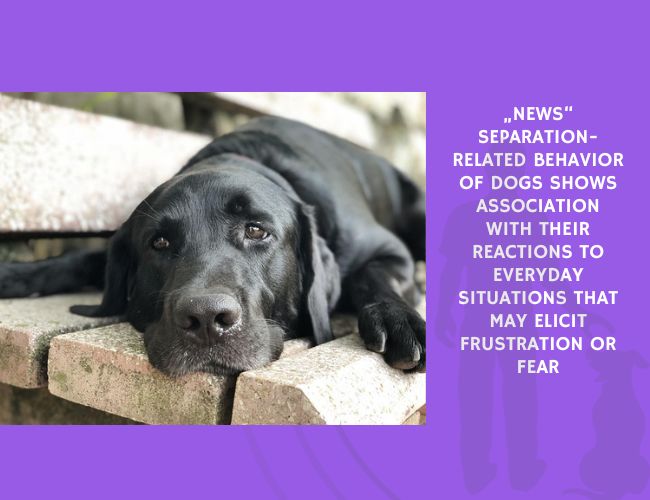
Published in Scientific Reports, this study explored how separation-related disorders in dogs emerge from differing internal emotional states. While separation distress is often treated as a uniform behavioral problem, the researchers proposed that dogs react differently depending on whether their primary emotional driver is fear, panic, or frustration. To test this, the team combined a behavioral separation test with a detailed owner questionnaire assessing personality traits, fear tendencies, and frustration thresholds.
The results revealed distinct behavioral profiles. Dogs with higher fear-related scores were more likely to whine quietly and avoid barking—a passive stress response reflecting withdrawal and emotional suppression. In contrast, dogs showing frustration-related tendencies (e.g., high “demanding” scores on the questionnaire) displayed more active protest behaviors such as barking and scratching at the door. Meanwhile, dogs prone to phobic reactions tended to whine and attempt escape, highlighting overlapping yet distinct emotional mechanisms.
These findings provide strong empirical support for the idea that separation-related disorders are not singular but multifaceted. A dog’s individual emotional profile—how it copes with fear, stress, and frustration—shapes the form and intensity of its separation behavior. Recognizing these differences is crucial for effective treatment and training strategies, as interventions for fear-based distress (focused on safety and gradual desensitization) differ significantly from those addressing frustration-based agitation (requiring impulse control and patience training).
Lenkei and colleagues conclude that a contextual, emotion-informed approach is essential for understanding and addressing separation problems in dogs. By differentiating between fear, panic, and frustration, practitioners can design tailored behavioral therapies that align with each dog’s inner emotional landscape, improving welfare and reducing owner–dog distress during separations.
Source: Lenkei, R., Faragó, T., Bakos, V., & Pongrácz, P. (2021). Separation-Related Behavior of Dogs Shows Association with Their Reactions to Everyday Situations That May Elicit Frustration or Fear. Scientific Reports, 11. Published September 28, 2021.










