
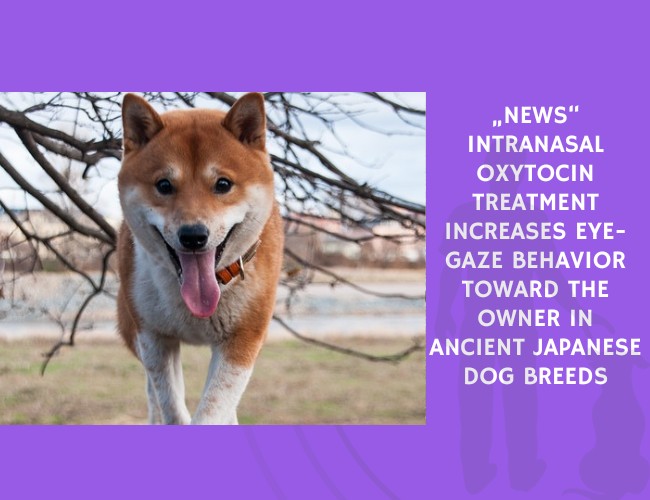
Published in Frontiers in Psychology, this study investigated whether Japanese dog breeds—genetically closer to wolves—engage in oxytocin- and gaze-mediated bonding similar to European breeds. Prior research had shown that mutual gazing between dogs and humans increases oxytocin release in both species, reinforcing emotional attachment. To test this in ancient breeds, the researchers administered oxytocin or saline intranasally to the dogs before behavioral trials, then observed their gaze behavior toward owners and measured hormonal and cardiac responses in both dogs and humans.
The results showed that oxytocin treatment significantly enhanced dogs’ gazing toward their owners and concurrently raised the owners’ urinary oxytocin levels. However, compared with European breeds, Japanese dogs displayed shorter durations of physical contact and proximity, indicating subtle species or breed differences in affiliative strategies. Physiological measures from owners revealed that heart rate variability (HRV) indices—including R-R intervals (RRI), SDNN, and RMSSD—were lower following oxytocin treatment, suggesting increased emotional arousal during these interactions.
Interestingly, owners of female dogs exhibited lower SDNN values than those of male dogs, pointing to possible sex-related dynamics in how owners physiologically respond to their dogs. These findings demonstrate that while Japanese breeds use eye-gazing as an attachment cue comparable to European dogs, they may rely on additional social strategies beyond gaze to maintain their human connection.
Nagasawa and colleagues conclude that oxytocin plays a universal role in reinforcing the interspecies bond through behavioral and hormonal feedback loops. Yet, differences across breeds and sexes highlight the complexity of canine social cognition—where genetic heritage and individual temperament shape the ways dogs express attachment and emotional synchronization with humans.
Source: Nagasawa, M., Ogawa, M., Mogi, K., & Kikusui, T. (2017). Intranasal Oxytocin Treatment Increases Eye-Gaze Behavior Toward the Owner in Ancient Japanese Dog Breeds. Frontiers in Psychology, 8. Published September 21, 2017.










