
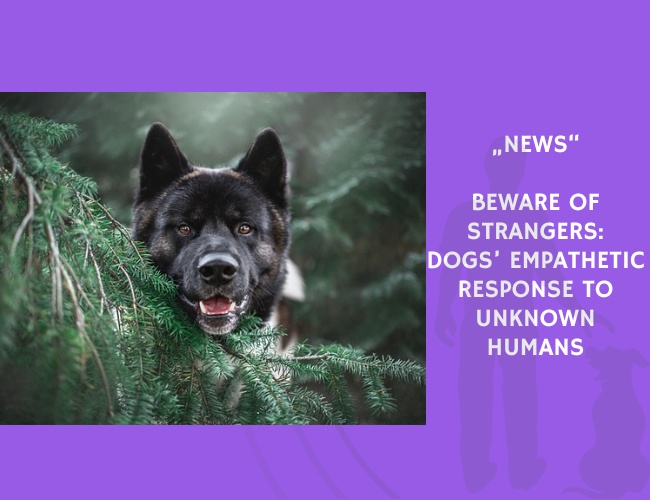
Published in Animals (MDPI), this study examined how dogs react when confronted with a distressed versus calm stranger placed behind a transparent barrier. The researchers measured door-opening behaviour, heart rate variability, and approach style to determine whether dogs would attempt to assist a stranger in distress. Contrary to expectations, the dogs showed no significant difference in behaviour or physiology between the calm and distressed conditions.
While earlier studies demonstrated that dogs would quickly help their owners in distress, the results here suggest that empathy and helping behaviour are context-dependent. Dogs that did open the door were generally described by their owners as less fearful and less aggressive, but this was unrelated to the stranger’s emotional state. Those that refrained from opening were typically rated as more anxious or cautious, indicating that individual temperament strongly influences social approach behaviour.
Rivera and Meyers-Manor conclude that dogs may not exhibit empathy-like behaviours toward strangers in unfamiliar environments without their owner’s presence to provide emotional security. These findings underscore the social specificity of canine empathy—while dogs are deeply attuned to their familiar humans, they may require a sense of relational safety to engage empathetically with others. The study highlights how context, familiarity, and attachment mediate dogs’ emotional responsiveness and helping motivations.
By clarifying the boundaries of canine empathy, this research advances understanding of inter-species emotional perception and emphasizes the relational depth of the human–dog bond—a dynamic rooted not in general sympathy, but in trust, familiarity, and emotional attunement.
Source: Rivera, M., & Meyers-Manor, J. E. (2024). Beware of Strangers: Dogs’ Empathetic Response to Unknown Humans. Animals, 14. Published July 1, 2024.










