
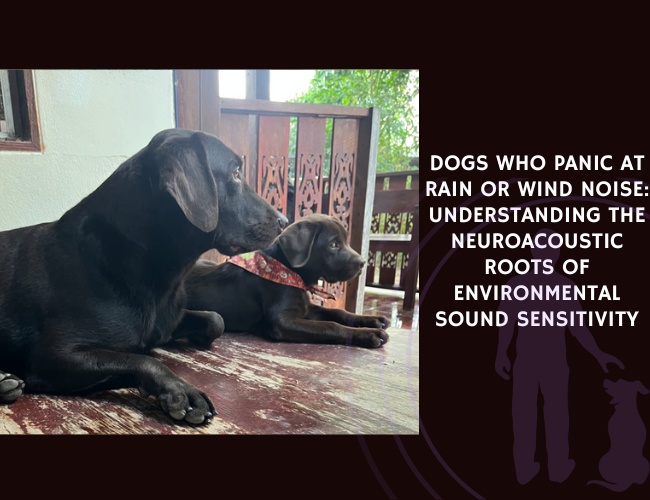
When the sky darkens and the first drops of rain patter against the window, does your dog suddenly transform into a trembling, pacing shadow of their usual self? You’re not alone. Nearly one-third of dogs experience genuine distress during storms, and for some, even the whisper of wind or the rhythmic sound of rainfall can trigger a cascade of panic that seems impossible to soothe.
This isn’t simply a quirk of temperament or a minor inconvenience. What you’re witnessing is a complex neurological and emotional response rooted in how your dog’s brain processes unpredictable environmental sounds. Unlike the controlled environment we create for our furry friends most of the time, weather events introduce elements that challenge their sense of safety at the deepest level.
Let us guide you through the science, the signs, and most importantly, the solutions that can help your sensitive companion find peace when nature’s soundtrack becomes overwhelming. 🧡
The Neurological Foundation: Why Weather Sounds Trigger Panic
Understanding the Canine Fear Response
Your dog’s brain isn’t wired quite like yours when it comes to processing sound. The canine auditory system evolved to detect threats from great distances, making it exquisitely sensitive to frequencies and patterns that humans barely notice. When rain intensifies or wind howls through trees, your dog isn’t just hearing noise—they’re experiencing a full-body alarm system activation.
The amygdala, a small almond-shaped structure deep within the brain, acts as your dog’s threat detection center. During unpredictable acoustic events like thunderstorms or sudden wind gusts, this region can become hyperactive, flooding your dog’s system with stress hormones before their conscious mind even registers what’s happening. This phenomenon, known as amygdala hypersensitivity, explains why some dogs seem to panic “out of nowhere” when the weather shifts.
Through the NeuroBond approach, we understand that this isn’t about a dog being “dramatic” or “spoiled.” It’s about fundamental emotional systems—specifically the FEAR and PANIC circuits—becoming overactivated in response to stimuli that feel genuinely threatening to them.
The Low-Frequency Mystery
Did you know that much of what frightens sensitive dogs during storms exists below the range of human hearing? Rain and wind produce significant low-frequency sound waves, typically between 20 and 200 Hz. These deep rumbles travel farther, penetrate structures more effectively, and create a sense of environmental instability that dogs find deeply unsettling.
Your dog might react to the storm long before you even notice the weather changing. They’re detecting:
- Barometric pressure shifts that alter how sound waves travel through air
- Low-frequency vibrations that resonate through the ground and building structures
- Irregular acoustic patterns that lack the predictability their brains crave
- Infrasound waves generated by distant thunder or approaching weather systems
This sensory experience creates what researchers call “acoustic stress”—a state where the sympathetic nervous system activates, preparing the body for immediate danger. Unlike a passing car or doorbell, these sounds lack clear boundaries, making it impossible for your dog to predict when the threat will end.
The HPA Axis and Chronic Stress
When your dog experiences repeated panic episodes during weather events, their body’s stress response system—the hypothalamic-pituitary-adrenal (HPA) axis—can become chronically activated. This isn’t just about being scared in the moment; it’s about creating a persistent state of hypervigilance that affects their overall well-being.
Each storm reinforces neural pathways associated with fear, making future episodes potentially more intense. The brain essentially learns to anticipate danger more efficiently, which sounds helpful but actually creates a downward spiral of increasing sensitivity. 🧠
Recognizing the Signs: How Your Dog Communicates Acoustic Panic
Behavioral Indicators You Can’t Miss
Your dog’s panic manifests through a constellation of behaviors that range from subtle to impossible to ignore. Understanding these signs helps you intervene earlier, before their distress escalates to potentially dangerous levels.
Mild to Moderate Fear Responses:
- Panting excessively even in cool temperatures, with rapid, shallow breaths
- Pacing repetitively along familiar routes through your home
- Seeking contact by pressing against you or following you from room to room
- Lowered body posture with tail tucked and ears pinned back
- Yawning or lip-licking when not tired or hungry (stress signals)
Severe Panic Indicators:
- Trembling or shaking uncontrollably throughout their entire body
- Attempting to hide in bathtubs, closets, or under furniture
- Destructive behavior like scratching at doors, digging at carpets, or chewing inappropriate objects
- Escape attempts that might involve jumping through windows or breaking through barriers
- Complete immobility or “freezing” in place, unable to respond to your voice
The intensity of these behaviors doesn’t always correlate with the actual volume of the noise. Some dogs panic during light rain, while others remain calm until thunder crashes. This variability reflects individual differences in auditory thresholds, previous experiences, and neurological sensitivity.
The Anticipatory Anxiety Phenomenon
Perhaps most heartbreaking for guardians is watching their dog develop anticipatory anxiety. Your previously confident companion now begins showing fear responses hours before the first raindrop falls. They’ve learned to associate subtle environmental cues with the acoustic stress to come.
You might notice your dog becoming restless when:
- The sky darkens with approaching clouds
- Air pressure drops before a storm system arrives
- Wind begins to pick up outside
- They detect changes in smell or humidity that precede rain
This isn’t your dog being psychic—it’s their remarkable sensory system detecting real physical changes in their environment. Unfortunately, this early warning system transforms into a source of prolonged suffering when they can’t escape or control what’s coming.
Vocalization Patterns During Panic
Some dogs become completely silent during panic episodes, while others vocalize intensely. The sounds your dog makes reveal important information about their internal state:
- Whining or whimpering indicates distress and often represents an attempt to solicit comfort from you
- Barking at the sounds suggests an effort to “fight back” against the perceived threat
- Howling can signal extreme distress or an attempt to locate their “pack” during danger
- Complete silence might indicate a freeze response, which is sometimes more concerning than active panic
Understanding how your furry friend “talks” during these episodes helps you respond more effectively to their specific needs. 🐾
The Science of Sound: Acoustic Properties That Amplify Fear
Why Indoor Environments Matter
Your home’s acoustic environment plays a crucial role in how intensely your dog experiences weather-related sounds. Hard surfaces like tile, hardwood floors, and large windows don’t absorb sound—they reflect it, creating echoes and amplifications that make the original noise feel more chaotic and threatening.
Consider how these common household features might be affecting your sensitive dog:
- Large glass windows vibrate with wind and transmit external sounds directly
- Open floor plans allow sound to travel and reverberate without barriers
- High ceilings create echo effects that distort the directionality of noise
- Minimal soft furnishings reduce natural sound dampening
- Electrical appliances add subtle hums that compound with storm sounds
You might notice your dog gravitates toward specific spaces during storms—perhaps a carpeted bedroom or a closet filled with clothes. They’re instinctively seeking acoustic refuge where sounds feel less overwhelming.
The Unpredictability Factor
Research in acoustic stress theory emphasizes that unpredictability is often more distressing than volume alone. A fire alarm is loud but follows a predictable pattern. Wind and rain, however, create constantly changing soundscapes—gusts that swell and fade, rain that intensifies and lightens, thunder that cracks without warning.
This unpredictability prevents your dog’s nervous system from adapting or habituating to the stimulus. Each moment requires renewed vigilance, maintaining the stress response in an exhausting state of high alert. The Polyvagal Theory explains this beautifully: when the vagus nerve can’t detect safety patterns in the environment, it keeps your dog locked in defensive states rather than allowing them to rest in their social engagement system.

The Role of Human Connection: Emotional Contagion and Co-Regulation
How Your Emotions Influence Your Dog’s Response
Did you know that your emotional state during storms directly affects your dog’s ability to cope? Dogs are remarkably attuned to human emotions through multiple channels—they read your facial expressions, body language, vocal tone, and even chemical signals in your sweat.
When you feel anxious about the storm, perhaps worrying about your dog’s reaction or feeling frustrated by their behavior, your dog detects this emotional shift. Research confirms that dogs exhibit emotional contagion, particularly with familiar humans. Your stress can inadvertently amplify their panic, creating a feedback loop where both of you become increasingly dysregulated.
The Invisible Leash reminds us that awareness, not tension, guides the path. Your internal state—whether calm or anxious—communicates more to your dog than any words you might speak. This isn’t about blame; it’s about understanding the powerful influence of the human-canine bond on nervous system regulation.
Presence Versus Isolation
The question often arises: should you comfort your panicking dog, or will that “reinforce” their fear? This outdated notion misunderstands how fear works neurologically. You cannot reinforce a genuine emotion like fear by offering comfort—you can only provide co-regulation that helps your dog’s nervous system return to baseline.
When left alone during storms, dogs often experience:
- Intensified panic without access to their primary attachment figure
- Reinforced association between storms and feeling abandoned or unsafe
- Increased risk of self-injury during escape attempts
- Deeper conditioning of the fear response due to lack of resolution
Your calm, grounded presence offers your dog something their brain desperately needs during perceived danger: a trusted companion who signals that survival is not in question. This doesn’t mean overwhelming them with attention or excited reassurance, but rather offering steady, quiet availability.
Building Physiological Attunement
When you breathe slowly and maintain a relaxed body posture during storms, something remarkable can happen: your dog’s nervous system may begin to synchronize with yours. This phenomenon, called physiological attunement, involves the alignment of autonomic functions like heart rate and breathing patterns between bonded individuals.
You might practice:
- Slow, deep breathing that your dog can sense and potentially match
- Relaxed body language with soft eyes and loose muscles
- Calm movement through your space without urgency or tension
- Gentle physical contact if your dog seeks it, without restraining them
Through moments of Soul Recall, where memory and emotion intertwine in behavior, your dog remembers that being near you has historically meant safety. This deep relational bonding becomes a resource they can access even when their fear circuits are activated. 🧡
Intervention Strategies: From Sound Therapy to Sensory Stabilization
Gradual Desensitization with Therapeutic Soundscapes
One of the most effective approaches to reducing acoustic panic involves controlled, gradual exposure to the sounds that trigger fear—but with a critical difference. Unlike real storms, therapeutic soundscapes allow you to control volume, duration, and predictability while your dog is in a calm state.
The process works like this:
Week 1-2: Foundation Building
- Play extremely quiet rain sounds during pleasant activities (meals, play, treats)
- Volume should be barely noticeable, well below threshold for any stress response
- Duration: 5-10 minutes, twice daily
- Pair consistently with something your dog loves
Week 3-4: Gradual Volume Increase
- Slowly increase volume by small increments (10-15% louder)
- Monitor your dog constantly for any stress signals
- If anxiety appears, reduce volume immediately and maintain that level longer
- Continue pairing with positive experiences
Week 5-8: Adding Complexity
- Introduce wind sounds at low volume
- Vary the patterns slightly while keeping overall intensity low
- Extend duration gradually to 20-30 minutes
- Practice during different times of day
Week 9-12: Realistic Scenarios
- Build toward more realistic storm soundscapes
- Include occasional “peak” moments (louder gusts, heavier rain bursts)
- Always maintain association with safety and comfort
- Practice emotional co-regulation during sessions
Research into sound therapy demonstrates that natural sounds can actually promote relaxation by encouraging alpha brain waves while suppressing delta waves associated with stress. This neurological shift is exactly what we’re cultivating through systematic exposure. 🧠
Noise. Fear. Memory.
Sound becomes sensation. For sensitive dogs, rain isn’t background noise—it’s vibration, pressure, and pulse colliding at once. Their nervous system doesn’t just hear the storm; it feels it.
Fear learns fast. Each thunderclap strengthens the brain’s alarm circuits, wiring panic into prediction. What began as surprise becomes expectation, and calm turns into vigilance.

Safety rewires response. Through steady presence, desensitization, and trust, the storm loses its power. Connection becomes the shelter where fear dissolves back into silence.
The NeuroBond Approach: Beyond Conventional Methods
Traditional desensitization focuses primarily on habituation—reducing the fear response through repeated exposure until the brain stops reacting. The NeuroBond approach adds a crucial dimension: shared calm states and nonverbal synchrony between you and your dog.
This method recognizes that emotional co-regulation and predictability within the human-animal bond can help repair nervous system synchrony. Instead of simply exposing your dog to the sounds and hoping they adapt, you actively participate in their regulation by:
Creating Synchronized Calm:
- Beginning each session with several minutes of quiet togetherness
- Breathing slowly and deliberately while maintaining gentle contact
- Focusing your own nervous system toward relaxation before introducing sounds
- Allowing your dog to feel your groundedness as an external regulator
Building Trust Through Predictability:
- Following consistent rituals before, during, and after sound exposure
- Using specific cues that signal “this is safe practice, not real danger”
- Maintaining predictable responses regardless of your dog’s behavior
- Creating clear beginnings and endings to each session
Fostering Nonverbal Communication:
- Reading your dog’s subtle signals before they escalate to panic
- Adjusting your approach based on their communication
- Trusting their feedback about what pace feels manageable
- Celebrating small successes through genuine, calm acknowledgment
Comparative research suggests that this integrated approach may be more effective than desensitization alone, particularly for dogs with severe phobias or trauma histories. By replacing hyperarousal with trust and safety rather than simply reducing reactivity, you’re addressing the deeper emotional need behind the panic.
🌧️ Understanding Your Dog’s Storm Panic 🌪️
When rain patters or wind howls, does your dog transform into a trembling, anxious companion? Discover the neurological roots of weather noise sensitivity and proven pathways to help your furry friend find peace during storms.
🧠 The Neurological Foundation
Why Weather Sounds Trigger Panic
Your dog’s amygdala—their brain’s threat detection center—becomes hyperactive during unpredictable acoustic events. Low-frequency sounds (20-200 Hz) from rain and wind travel farther and penetrate structures, creating genuine physiological stress responses.
What Your Dog Actually Hears
Dogs detect weather changes before you do:
• Barometric pressure shifts altering sound wave travel
• Low-frequency vibrations resonating through structures
• Irregular acoustic patterns lacking predictability
• Infrasound waves from distant weather systems
The Chronic Stress Cycle
Repeated storm exposure activates the HPA axis (stress response system), creating persistent hypervigilance. Each storm reinforces neural fear pathways, potentially intensifying future reactions unless interrupted with proper intervention.
👁️ Recognition & Response Patterns
Behavioral Signs You Can’t Miss
Mild to Moderate: Panting, pacing, seeking contact, lowered body posture, stress yawning
Severe Panic: Uncontrollable trembling, hiding attempts, destructive behavior, escape attempts, complete immobility (freeze response)
Anticipatory Anxiety Development
Your dog begins showing fear responses hours before storms arrive, detecting darkening skies, pressure drops, wind changes, or humidity shifts. This early warning system becomes a source of prolonged suffering when escape isn’t possible.
Your Emotional Influence Matters
Dogs exhibit emotional contagion with familiar humans. Your anxiety during storms can amplify their panic through a feedback loop. The Invisible Leash reminds us: your internal calm state communicates more powerfully than any words.
🌱 Intervention & Healing Strategies
Gradual Desensitization Protocol
12-week progression using therapeutic soundscapes:
• Weeks 1-2: Barely audible rain sounds during positive activities
• Weeks 3-4: Gradual 10-15% volume increases, monitoring stress signals
• Weeks 5-8: Introduce wind sounds, vary patterns at low intensity
• Weeks 9-12: Build toward realistic storm scenarios with peaks
The NeuroBond Approach
Beyond conventional desensitization, NeuroBond emphasizes shared calm states and nonverbal synchrony. Your grounded presence provides external nervous system regulation, helping repair autonomic dysregulation through emotional co-regulation and predictable safety signals.
Sensory Stabilization Tools
• Weighted blankets/anxiety wraps for gentle pressure calming
• Closed curtains to reduce visual storm cues
• Calming scents (lavender, chamomile) as olfactory anchors
• White noise machines for acoustic consistency
• Soft materials (rugs, curtains) to dampen echoes
⚠️ Critical Considerations & Risk Factors
When to Seek Professional Help
Contact a certified veterinary behaviorist if your dog experiences:
• Self-injury during panic (broken teeth, damaged paws)
• Dangerous escape attempts (breaking through windows)
• No improvement after 3-4 months of consistent intervention
• Severely compromised quality of life during storm seasons
Age & Genetic Vulnerabilities
Older dogs increasingly develop noise phobias due to cognitive changes and hearing loss. Herding breeds and sight hounds show higher sensitivity. A single traumatic storm experience during critical socialization periods (3-14 weeks) can create lasting phobic responses.
Medical Issues to Rule Out
Before attributing panic solely to behavior, veterinary examination should exclude ear infections, cognitive dysfunction syndrome, thyroid imbalances, chronic pain, and neurological conditions that amplify stress responses.
⚡ Quick Reference: Measuring Real Progress
Heart Rate Variability (HRV): Higher variability = healthier, more flexible nervous system
Cortisol Tracking: Monitor baseline levels and recovery speed after exposure
Behavioral Timeline: Expect meaningful improvement over 6-12 months, not weeks
Success Indicators: Faster recovery, reduced hiding, willingness to eat during mild storms, seeking comfort instead of isolation
🧡 The Path to Storm Peace
Your dog’s panic during storms isn’t a character flaw—it’s a nervous system response that can heal with understanding and support. Through Soul Recall, where emotional memory intertwines with behavior, your consistent presence becomes their anchor during chaos. The invisible threads of trust you build through patient co-regulation create lasting nervous system repair. Progress is measured not in perfect calm, but in moments of recovery, connection, and growing resilience. That balance between neuroscience and compassion—that’s the essence of Zoeta Dogsoul.
© Zoeta Dogsoul – Where neuroscience meets soul in dog training
Sensory Stabilization Techniques
Your dog’s panic isn’t purely auditory—it’s a whole-body experience involving multiple sensory systems. Providing additional sensory support can help their nervous system shift from sympathetic arousal (fight-or-flight) to parasympathetic recovery (rest-and-digest).
Weighted Comfort Tools:
- Anxiety wraps or weighted blankets provide gentle, constant pressure
- This pressure activates pressure receptors that can calm the nervous system
- Similar to swaddling an infant, it creates a cocoon of security
- Must be introduced gradually when dog is calm, not forced during panic
Visual Environment Modifications:
- Close curtains or blinds to reduce visual storm cues (lightning, moving trees)
- Use soft, warm lighting rather than bright overhead lights
- Create cozy, den-like spaces with blankets draped over surfaces
- Minimize visual stimulation that could compound sensory overload
Olfactory Anchors:
- Introduce specific calming scents (lavender, chamomile) during relaxed times
- Create a positive association between these scents and feeling safe
- Use the same scent during desensitization training
- Deploy the scent before and during real storms as an environmental cue for safety
Acoustic Modifications:
- Use white noise machines to create consistent background sound
- Play calming music specifically designed for dogs (slower tempos, simplified arrangements)
- Strategic placement of soft materials (rugs, curtains, upholstered furniture) to dampen echoes
- Consider soundproofing measures for severe cases (acoustic panels, weather-sealed windows)
The goal isn’t to eliminate all sensation but to provide a more regulated, predictable sensory environment that supports your dog’s ability to maintain equilibrium during storms. 🐾
Special Considerations: Individual Differences and Risk Factors
Breed and Genetic Predispositions
Not all dogs are equally vulnerable to noise phobias. Research indicates that certain breeds show significantly different rates of noise sensitivity, suggesting genetic and breeding influences on auditory processing and fear responses.
Breeds with Higher Noise Sensitivity:
- Herding breeds (Border Collies, Australian Shepherds) may have heightened sensory awareness as part of their working heritage
- Sight hounds (Greyhounds, Whippets) often show increased sensitivity to environmental stimuli
- Sporting breeds (Retrievers, Spaniels) bred for gunshot work can develop noise phobias despite breeding for opposite trait
Breeds with Lower Noise Sensitivity:
- Certain terrier breeds historically bred for pest control in noisy environments
- Some working breeds selected for stable temperament in chaotic situations
- Individual variation remains significant regardless of breed
Understanding your dog’s genetic background helps set realistic expectations and can inform your approach to intervention. A herding breed with noise sensitivity isn’t “broken”—they’re experiencing an amplified version of the alertness that makes them exceptional at their original work.
Age-Related Vulnerability
Older dogs become increasingly susceptible to developing noise phobias, even if they showed no previous signs of fear. This age-related shift may involve:
- Cognitive changes affecting how the brain processes and responds to threats
- Hearing loss that creates distorted perception of sounds, making familiar noises seem strange or threatening
- Reduced resilience in stress response systems that previously managed fear effectively
- Comorbid anxiety related to other age-related changes (pain, disorientation, declining senses)
Senior dogs deserve special consideration in your approach. What might seem like sudden onset behavior problems could actually be your aging companion struggling with neurological changes beyond their control.
The Role of Early Experience and Trauma
A single traumatic encounter with loud noise can create lasting phobic responses. Dogs who experienced:
- Severe storms during critical socialization periods (3-14 weeks of age)
- Being alone and terrified during their first major weather event
- Physical injury coinciding with loud noise (being hit by falling branch during storm)
- Fireworks trauma that generalizes to other unpredictable loud sounds
…may develop intense, persistent fear responses that require more intensive intervention. These memories aren’t just cognitive—they’re encoded in the body’s nervous system as learned survival responses.
Epigenetic factors may also play a role, where stress experienced by previous generations influences how current dogs’ genes express themselves. A mother dog who was highly stressed during pregnancy might have puppies with heightened baseline anxiety, making them more vulnerable to developing phobias.
Medical Conditions to Consider
Before attributing all panic to purely behavioral causes, rule out medical conditions that might amplify your dog’s distress:
- Ear infections or auditory pain that make sounds physically uncomfortable
- Cognitive dysfunction syndrome affecting how the brain processes sensory information
- Thyroid imbalances that can create or worsen anxiety disorders
- Chronic pain conditions that lower stress tolerance overall
- Neurological conditions affecting emotional regulation
A thorough veterinary examination is essential, particularly if the panic seems disproportionate or if it developed suddenly in a previously confident dog. 🧡
Measuring Progress: Objective Indicators of Nervous System Healing
Why Behavioral Observation Isn’t Enough
When you’re deeply invested in helping your dog, it’s easy to see improvement where you hope for it or miss subtle backsliding. This is why incorporating objective measures of stress and regulation can provide valuable feedback about whether your interventions are truly working.
Behavioral changes might lag behind internal shifts, or your dog might suppress visible panic while still experiencing significant internal distress. Objective biomarkers help you understand what’s happening beneath the surface.
Heart Rate Variability: The Gold Standard
Heart rate variability (HRV) measures the variation in time between successive heartbeats. Contrary to intuition, greater variability actually indicates a healthier, more flexible nervous system capable of moving fluidly between activation and rest.
High HRV indicates:
- Strong parasympathetic (rest-and-digest) influence
- Flexible nervous system that can respond appropriately to situations
- Good stress resilience and emotional regulation
- Overall autonomic health
Low HRV suggests:
- Chronic sympathetic (fight-or-flight) activation
- Rigid, inflexible nervous system stuck in defensive modes
- Poor stress resilience and limited emotional flexibility
- Need for intervention to support regulation
Portable heart rate monitors designed for dogs can track HRV during training sessions and real storm events, giving you data-driven feedback about your dog’s internal state. Improvements in HRV over weeks and months indicate genuine nervous system healing, even before behavioral changes become obvious.
Cortisol Measurement and Stress Hormones
Cortisol, the primary stress hormone, can be measured through saliva, urine, or blood tests. Tracking cortisol levels provides insight into:
- Baseline stress levels when your dog appears calm
- Stress reactivity to specific triggers during controlled exposure
- Recovery speed after stressful events end
- Chronic activation of the HPA axis that needs addressing
For accurate assessment, multiple measurements over time are essential rather than single snapshots. You’re looking for trends: Do cortisol levels drop more quickly after exposure as training progresses? Does baseline cortisol decrease over months? These indicate meaningful improvement in your dog’s stress response system.
Pupil Dilation and Autonomic Indicators
Your dog’s pupils dilate when their sympathetic nervous system activates during fear or stress. While you can’t measure this as precisely without specialized equipment, you can observe general patterns:
- Dilated pupils during calm weather suggest anticipatory anxiety
- Constricting pupils during gradual sound exposure indicate parasympathetic engagement
- Extremely dilated pupils with glazed expression signal overwhelm requiring immediate support
Other autonomic indicators include:
- Respiratory rate (slower, deeper breathing indicates parasympathetic shift)
- Body temperature (extremities warming up as circulation normalizes)
- Digestive function (willingness to eat indicates stress level)
- Sleep quality (deep, restorative sleep versus hypervigilant resting)
Progress Timeline and Realistic Expectations
Genuine nervous system healing takes time—often months rather than weeks for severe phobias. Understanding realistic timelines helps you maintain consistency rather than abandoning approaches prematurely or pushing too hard too fast.
Weeks 1-4: Establishing baseline, beginning gentle exposure, building trust in the process Weeks 5-8: First subtle signs of improvement (slightly less pacing, marginally faster recovery) Weeks 9-16: More noticeable behavioral changes (seeking comfort rather than hiding, responding to cues) Weeks 17-24: Consolidation of gains, handling moderate storm sounds with support Months 6-12: Significant improvement, possibly handling real storms with minimal intervention
Some dogs progress faster; others require longer timelines, particularly if trauma or genetics play significant roles. The key is consistent, patient application of your chosen approach while monitoring for steady, incremental progress. 🧠
Creating a Comprehensive Support Plan: Integrating Multiple Approaches
Your Dog’s Unique Acoustic Profile
No two dogs experience weather noise sensitivity in exactly the same way. Creating an effective support plan begins with understanding your specific dog’s acoustic profile—what triggers them, how intensely they react, what helps them regulate, and what makes things worse.
Take time to observe and document:
Trigger Specifics:
- Which sounds trigger the strongest reactions? (wind gusts, rain patterns, distant thunder, close thunder)
- What volume threshold causes initial distress versus panic?
- Do certain weather patterns (quick-moving storms versus steady rain) differ in impact?
- Are there time-of-day factors? (nighttime storms worse than daytime)
Response Patterns:
- What are your dog’s earliest, subtlest signs of distress?
- How quickly do they escalate from mild concern to full panic?
- What behaviors do they use to self-soothe? (seeking contact, hiding, pacing)
- How long does recovery take after the storm passes?
Regulation Resources:
- Does physical contact from you help or increase distress?
- Do specific spaces in your home provide more comfort?
- Are there activities that can sometimes distract during mild episodes?
- What has accidentally worked well in the past?
This detailed understanding allows you to create interventions tailored precisely to your dog’s needs rather than following generic protocols that might not address their specific challenges.
The Layered Approach: Multiple Interventions Working Together
The most effective support plans rarely rely on a single technique. Instead, they layer multiple evidence-based interventions that work synergistically:
Layer 1: Environmental Management
- Acoustic modifications to reduce sound transmission
- Creating safe spaces optimized for comfort
- Minimizing additional stressors during storm season
Layer 2: Systematic Desensitization
- Regular practice with controlled soundscapes
- Gradual progression based on your dog’s pace
- Consistent pairing with positive associations
Layer 3: Emotional Co-Regulation
- Your presence and grounded nervous system state
- Shared calm practices and attunement
- Building trust through predictable responses
Layer 4: Sensory Support
- Weighted comfort tools when helpful
- Olfactory anchors and calming scents
- Visual environment optimization
Layer 5: Potential Medical Support
- Consultation with veterinary behaviorist for severe cases
- Possible anti-anxiety medication during peak storm season
- Supplements that support nervous system function (after veterinary approval)
Layer 6: Lifestyle Foundation
- Adequate physical exercise for stress resilience
- Mental enrichment that builds confidence
- Consistent daily routine that creates overall security
Each layer supports the others. Environmental management makes desensitization more effective. Emotional co-regulation enhances sensory support. Medical intervention might be necessary to create a window where learning can occur. This comprehensive approach addresses the multifaceted nature of acoustic panic rather than expecting any single intervention to solve everything. 🐾
When to Seek Professional Support
While many dogs improve significantly with consistent home-based interventions, some situations warrant professional guidance from a certified veterinary behaviorist or certified applied animal behaviorist:
Seek professional help if:
- Your dog’s panic includes self-injury (breaking teeth, damaging paws trying to escape)
- Destructive behavior threatens home safety (trying to break through windows)
- Multiple intervention attempts have shown no improvement over 3-4 months
- Your dog’s quality of life is severely impacted (can’t function during storm season)
- You’re feeling overwhelmed and need expert guidance
- Medical conditions or medications need specialized management
Professional support isn’t admission of failure—it’s recognition that some cases require specialized expertise. A qualified behaviorist can assess subtle factors you might not recognize, develop highly customized protocols, and potentially recommend pharmacological support when appropriate.
Living with Weather Sensitivity: Long-Term Management and Lifestyle Adaptation
Seasonal Considerations and Storm Tracking
If you live in a region with distinct storm seasons, your management approach should shift seasonally. During high-risk periods, you might:
- Track weather patterns using apps that provide advance warning of approaching systems
- Adjust schedules to avoid leaving your dog alone during predicted storm windows
- Increase support practices (more frequent desensitization sessions, consistent use of calming protocols)
- Prepare your environment in advance rather than scrambling during the event
Storm tracking technology allows you to anticipate weather events hours or even days ahead. This advance notice lets you implement your support protocol proactively rather than reactively, often resulting in less intense panic responses.
Building Overall Stress Resilience
Weather noise sensitivity rarely exists in isolation. Dogs with one anxiety disorder often develop others, and overall stress load affects how severely they react to specific triggers. Building general stress resilience helps your dog cope better with acoustic challenges:
Physical Resilience:
- Appropriate exercise that provides physical outlet without exhaustion
- Quality nutrition that supports nervous system health
- Adequate sleep in secure, comfortable environments
- Regular veterinary care to address physical health issues
Emotional Resilience:
- Consistent, predictable daily routines
- Positive training that builds confidence and trust
- Appropriate socialization that expands comfort zones safely
- Play and joy as regular parts of life
Mental Resilience:
- Enrichment activities that engage natural behaviors
- Problem-solving opportunities that build competence
- Novel experiences introduced gradually to prevent rigidity
- Rest and downtime to prevent constant stimulation
A dog with strong general resilience has more internal resources available when storms occur. They’re not already operating at maximum stress capacity, so acoustic challenges don’t push them immediately into overwhelm.
The Role of Acceptance and Unconditional Support
Some dogs may never become completely comfortable during intense storms, and that’s okay. The goal isn’t perfection or complete elimination of all fear—it’s meaningful reduction in suffering and improvement in quality of life.
You might find that after dedicated work, your dog still shows some distress during severe weather events but recovers more quickly, doesn’t panic during moderate rain, or can accept comfort more readily. These outcomes represent genuine success, even if they don’t match your initial hopes.
That balance between science and soul—accepting your dog exactly where they are while gently supporting them toward greater peace—that’s the essence of Zoeta Dogsoul. Your dog isn’t broken. They’re not defective. They’re experiencing genuine distress that deserves your compassion, your patience, and your unwavering commitment to their wellbeing.
The Path Forward: Hope, Healing, and the Human-Canine Bond
Trusting the Process
Progress with noise sensitivity is rarely linear. You’ll have breakthrough moments where everything seems to click, followed by setbacks during particularly severe storms. This isn’t failure—it’s the natural rhythm of nervous system healing.
Trust that consistent, compassionate application of evidence-based approaches creates cumulative change over time. Each small exposure that doesn’t end in overwhelming panic teaches your dog’s brain something new. Each moment of co-regulation deposits resources into their nervous system bank account. Each adjustment to their environment reduces the total stress load they’re carrying.
The research is clear: systematic desensitization works. Emotional co-regulation works. Environmental management works. Sensory support works. When layered together and applied with patience, these approaches create meaningful change for the vast majority of dogs with weather noise sensitivity.
Celebrating Small Victories
In the midst of managing acute panic, it’s easy to overlook subtle improvements. Make a point of noticing and celebrating:
- Your dog seeking you for comfort instead of hiding in terror
- Finishing a meal despite rain in the background
- Recovery time dropping from two hours to forty-five minutes
- Playing with a toy while wind noise plays at low volume
- Showing interest in a treat during mild storm conditions
These seemingly small shifts represent profound changes in your dog’s internal experience. Their nervous system is learning new patterns, creating new associations, finding new pathways to regulation. Each tiny victory is worth acknowledging, both to encourage yourself and to support your dog’s progress. 🧡
The Continuing Journey
Managing weather noise sensitivity isn’t a problem you solve once and forget. It’s an ongoing practice of awareness, support, and adaptation as your dog ages and circumstances change. Storm seasons will come and go. Some years will be easier than others. New triggers might emerge, or old ones might finally fade.
What remains constant is the relationship between you and your furry friend. The trust you build through this process—showing your dog that you’ll stay present during their fear, that you’ll respect their communication, that you’ll adjust your approach based on their needs—extends far beyond storms themselves. You’re creating a foundation of security that supports every aspect of your life together.
The invisible threads of connection that bind you to your dog—built through shared experiences, mutual understanding, and unconditional acceptance—become their greatest resource during times of distress. When their world feels unpredictable and threatening, you remain the constant. That’s the power of the NeuroBond approach: recognizing that healing happens not in isolation but through relationship.
Conclusion: Is Your Dog’s Peace Possible?
If you’ve read this far, you’re clearly dedicated to understanding and helping your noise-sensitive companion. The question isn’t whether your dog can improve—evidence overwhelmingly suggests that most dogs do show significant progress with appropriate support. The real question is: are you prepared for the journey?
This path requires patience, consistency, and willingness to adapt your approach based on your dog’s unique needs. It means tracking weather patterns, practicing during calm periods, maintaining your own regulation during storms, and celebrating incremental progress rather than expecting overnight transformation.
But here’s what you gain: a deepening of the bond between you and your dog that transcends the specific challenge of noise sensitivity. You learn to read their subtle communications more accurately. They learn to trust your presence more completely. Together, you create a partnership that can weather not just literal storms but whatever challenges life brings.
Your dog’s panic during rain and wind isn’t a character flaw or permanent condition. It’s a nervous system response that can shift with understanding, support, and time. The auditory triggers that overwhelm them today can become manageable tomorrow through the layered approaches we’ve explored.
So yes—your dog’s peace is possible. Not perfect silence in the midst of chaos, perhaps, but genuine reduction in suffering. Not immunity to fear, but resilience in facing it. Not elimination of all distress, but the ability to recover and return to joy.
And through this process, you’ll discover something remarkable: that the work you do to support your dog’s emotional healing somehow supports your own. That the patience you cultivate for their progress teaches you patience for yourself. That the unconditional acceptance you offer them reflects back, creating space for both of you to be exactly who you are—fears, vulnerabilities, and all.
That’s the journey ahead. Are you ready to take the first step? 🐾
Remember: Every dog’s journey is unique, and severe cases may require professional support from certified veterinary behaviorists. The information provided here is educational and should complement, not replace, guidance from qualified professionals who can assess your specific situation.










