
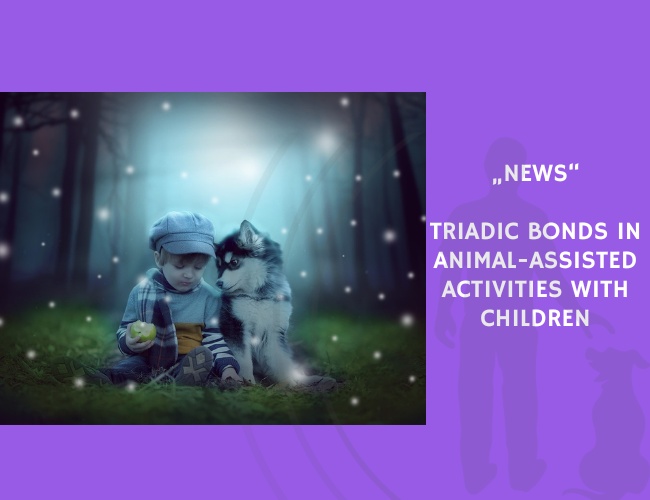
Published in the Human-Animal Interaction Bulletin, Renata P. S. Roma and colleagues conducted a comprehensive review to explore how dog–handler teams are conceptualized and integrated within studies of Animal-Assisted Activities (AAAs) involving children, youth, and young adults. Although many studies report the benefits of AAA participation—such as improvements in social, emotional, and cognitive outcomes—the role of the handler has often been overlooked or underexamined.
Through a scoping review of studies published between 2004 and 2019, the authors identified gaps in how research describes and measures the triadic relationship among dog, handler, and client. Specifically, they noted inconsistent reporting of demographic characteristics, training and certification of AAA teams, and limited assessment of behavioral and physiological responses from both dogs and handlers during interventions.
Roma and her team found that while many researchers focus on dog–client interactions, few consider the mutual adjustments and communicative exchanges that occur within the full triad. The study underscores the importance of recognizing handlers not merely as facilitators but as active emotional and behavioral regulators influencing the interaction’s quality and therapeutic outcomes.
To address these gaps, the paper introduces a transdisciplinary framework designed to guide future research. This approach integrates insights from psychology, education, veterinary science, and communication studies to form a more holistic understanding of AAA dynamics. By emphasizing relational and contextual analysis, this framework acknowledges the interdependence between all participants and their shared environment.
The authors conclude that adopting such a framework will enhance both research design and practical applications in the field of human–animal interaction. By accounting for the relational complexity of dog–handler–client systems, practitioners and researchers can develop more ethically grounded, effective, and empathetic intervention models that support well-being for all participants—human and canine alike.
Source: Roma, R. P. S., Tardif-Williams, C., Moore, S. A., & Bosacki, S. (2021). A Transdisciplinary Perspective on Dog-Handler-Client Interactions in Animal Assisted Activities for Children, Youth and Young Adults. Human-Animal Interaction Bulletin. Published December 1, 2021.










