
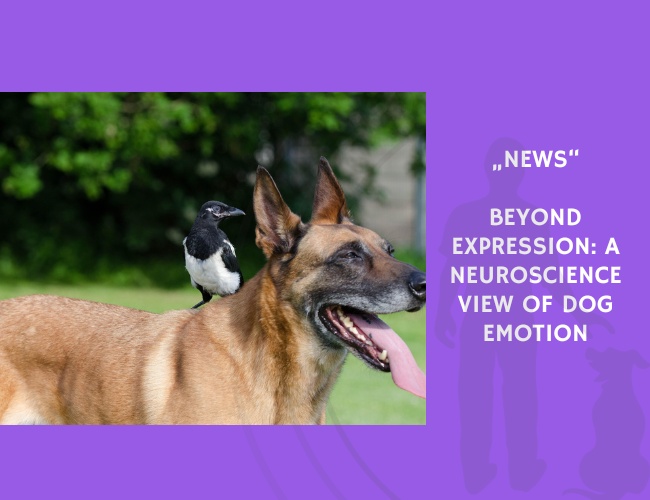
In an influential review published in Animal Sentience: An Interdisciplinary Journal on Animal Feeling, Peter F. Cook presents a thought-provoking argument for reframing how scientists study dog emotions. Rather than interpreting canine emotional expression through a human lens, Cook advocates for a neuroscience-driven approach that focuses on measurable physiological processes and evolutionary context.
Cook critiques two dominant frameworks in canine emotion research: one that assumes dogs experience human-like feelings based on their expressive behavior, and another that restricts study to visible emotional displays. Both, he argues, fail to capture the underlying affective mechanisms that govern canine emotional responses. Instead, Cook calls for examining how dogs use valenced representations of bodily states—changes in the nervous and endocrine systems that reflect emotional significance—to guide decision-making and learning.
This perspective aligns with findings in affective neuroscience showing that emotional processing occurs largely at a physiological level, not necessarily dependent on conscious feeling. For example, studies cited by Cook demonstrate that dogs release oxytocin when gazing at humans and experience changes in cortisol levels during social interaction. Such data reveal meaningful emotional processes without requiring assumptions about dogs’ subjective experiences.
Cook emphasizes that dogs’ evolution within the human social niche makes them a unique model for exploring how social pressures shape emotional development. Their close bond with humans may have refined emotional systems comparable in function—though not necessarily in conscious experience—to human social emotions like attachment or empathy. As such, physiological research methods such as MRI scanning, hormone assays, and heart-rate monitoring offer a more objective pathway for understanding canine affect.
The author warns against anthropomorphism—the tendency to project human emotions onto dogs—arguing that while dogs communicate in ways that humans find relatable, their emotional systems must be interpreted through their own biological and evolutionary framework. He concludes that advancing the science of canine emotion requires a disciplined focus on neurobiological function rather than surface expression, laying the groundwork for more accurate and humane studies of dog welfare and cognition.
Source: Cook, P. (2017). Studying dog emotion beyond expression and without concern for feeling. Animal Sentience: An Interdisciplinary Journal on Animal Feeling, 2, 15.










