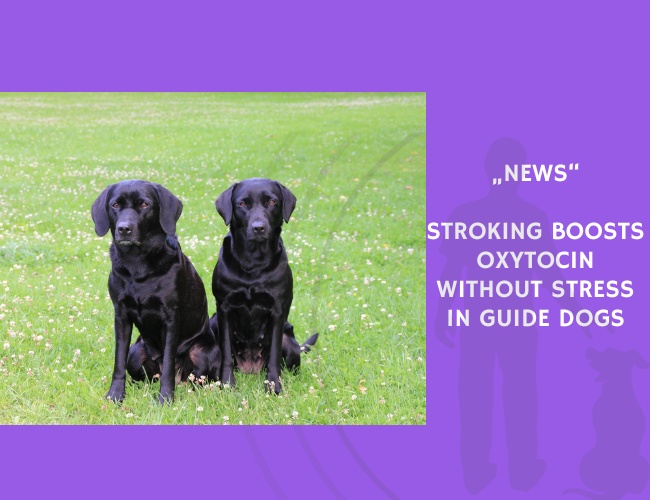
In a study published in Animals, A. Ogi and colleagues examined the physiological and emotional effects of human–dog interaction on guide dogs. Oxytocin, a hormone associated with bonding and emotional regulation, has been widely studied in human and animal relationships. However, the researchers sought to understand whether short-term physical contact—such as gentle stroking—could measurably affect oxytocin levels in trained working dogs.
The experiment involved eight guide dogs (six Labrador Retrievers and two Golden Retrievers) about to be assigned to their future handlers. Each dog experienced two contrasting five-minute conditions: a positive condition consisting of affectionate interaction with their trainer, and a negative condition involving brief isolation. Saliva samples were collected before and after each session to analyze levels of oxytocin and cortisol using Enzyme Immunoassay (EIA).
The results were clear. Oxytocin concentrations rose significantly after the positive interaction (p = 0.036), but showed no change after isolation. Conversely, cortisol levels remained stable across both scenarios, indicating that the increase in oxytocin was not influenced by stress. Behavioral assessments during isolation also showed no signs of distress, confirming that the observed hormonal changes were linked specifically to emotional enrichment rather than stress mitigation.
These findings suggest that affectionate physical contact—such as stroking or gentle petting—elicits measurable positive physiological responses in dogs. The increase in oxytocin supports the idea that human touch can foster emotional security and social bonding, even in well-trained working animals accustomed to structured environments. The absence of cortisol elevation further indicates that such interactions enhance well-being without inducing stress or overstimulation.
Ogi et al. propose that stroking may strengthen the human–dog bond through pathways independent of the hypothalamic–pituitary–adrenal (HPA) stress axis. These preliminary results pave the way for future research on how tactile interactions can be integrated into training, welfare assessment, and therapy contexts for working and companion dogs alike. By linking oxytocin release to positive touch, the study provides compelling evidence of the biochemical foundation of affection in dog–human relationships.
Source: Ogi, A., Mariti, C., Baragli, P., Sergi, V., & Gazzano, A. (2020). Effects of Stroking on Salivary Oxytocin and Cortisol in Guide Dogs: Preliminary Results. Animals, 10. Published April 1, 2020.