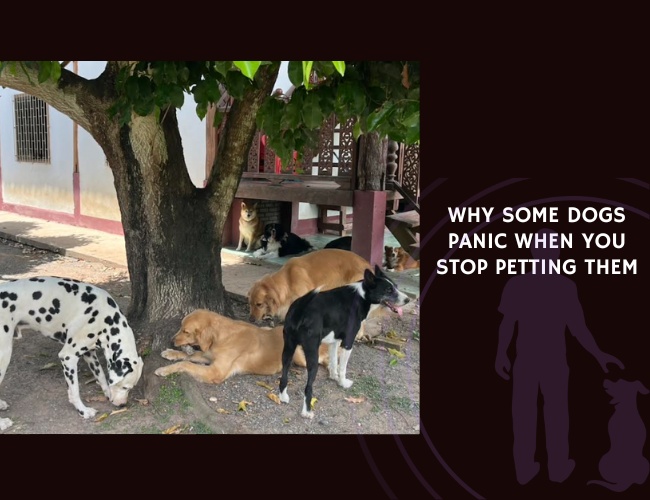
Have you ever noticed your dog becoming visibly distressed the moment your hand stops moving? That anxious whine, the pawing at your leg, or the desperate nudge against your palm—these behaviors tell us something profound about the emotional world of our canine companions. Understanding why some dogs react with panic when petting ceases opens a window into the intricate dance of neurochemistry, attachment, and trust that defines the human-dog bond.
Let us guide you through the science and soul of this fascinating phenomenon, exploring not just what happens, but why it matters for your relationship with your furry friend.
The Neurochemistry of Touch: What Happens Inside Your Dog’s Brain
When you stroke your dog’s soft fur, you’re doing far more than providing simple physical comfort. You’re orchestrating a complex neurochemical symphony that influences everything from stress levels to emotional bonding.
The Oxytocin Connection
Tactile stimulation triggers the release of oxytocin, often called the “bonding hormone.” Research shows that physical touch can significantly increase oxytocin levels in mammals, creating feelings of trust, safety, and connection. In dogs, this means that each stroke reinforces the emotional bond between you. Your gentle petting becomes a chemical signal that says, “You are safe. You are loved. We belong together.”
This oxytocin release doesn’t happen in isolation. It creates a cascade of positive effects throughout your dog’s body, reducing inflammation, supporting cardiovascular health, and strengthening the very foundation of your relationship. When petting continues, your dog experiences a sustained state of biochemical comfort—a feeling of being held in an invisible embrace of safety.
The Stress Hormone Dance
While oxytocin rises, cortisol—your dog’s primary stress hormone—often decreases during positive tactile interaction. Studies demonstrate that comforting physical contact can significantly reduce cortisol levels, helping your dog shift from a state of alertness or anxiety into one of relaxation. This is particularly powerful for dogs who carry tension from their daily experiences or past trauma.
However, the relationship between touch and cortisol isn’t always straightforward. The effect depends heavily on context, your dog’s individual history, and the quality of the interaction itself. A rushed, distracted petting session may not provide the same stress-reducing benefits as a calm, fully present moment of connection.
When the Touch Stops: The Rebound Effect
Here’s where things become interesting. When petting suddenly ceases, your dog may experience what we might call a neurochemical withdrawal. The comforting flood of oxytocin stops, and without the buffering effect of continued touch, stress hormones may rebound. Your dog’s body, which had settled into a state of calm, now faces an abrupt change—and their nervous system may interpret this as a threat.
This isn’t about your dog being “needy” or “spoiled.” It’s a genuine physiological response to the sudden removal of a powerful source of comfort and safety. Through the NeuroBond approach, we understand that these moments reveal how deeply intertwined our emotional states become with our dogs’ wellbeing. 🧡
Understanding Attachment: Why Some Dogs React More Intensely
Not all dogs panic when petting stops, and this variation tells us something important about attachment styles and emotional development.
The Anxious Attachment Pattern
Dogs, like humans, can develop different attachment styles based on their early experiences and ongoing relationships. Some dogs form what we call anxious attachment patterns—they’ve learned that comfort and safety are unpredictable. For these dogs, every moment of connection feels precious and precarious. When petting stops, they don’t simply miss the sensation; they experience what feels like a threat to the bond itself.
Research reveals that the attachment style of the owner significantly influences dog behavior. Owners with anxious attachment toward other people often form intensely strong attachments to their dogs, sometimes turning to their canine companions for emotional support that feels unavailable elsewhere. This dynamic can create a feedback loop where both human and dog experience heightened anxiety around separation or interruption of contact.
Early Life Experiences Shape Adult Responses
The way your dog responds to the cessation of touch has roots that may extend back to their earliest weeks of life. Puppies who received inconsistent handling, limited positive touch, or experienced neglect during critical developmental periods often grow into adults who are hypersensitive to the withdrawal of physical affection. Their nervous systems learned early that comfort is fleeting and unreliable.
Conversely, dogs raised with consistent, responsive caregiving tend to develop secure attachment styles. These dogs can tolerate breaks in physical contact because their foundational experience tells them that connection is reliable and will return. They’ve learned what we call trust calibration—the deep knowing that temporary separation doesn’t mean permanent loss.
Emotional Need Versus Learned Expectation
When your dog panics at the end of petting, are they expressing a genuine emotional need for safety, or have they simply learned to expect continuous touch? The answer is often both, and they’re more intertwined than we might think.
From an emotional safety perspective, touch activates what neuroscientist Jaak Panksepp called the CARE system—the brain circuitry responsible for nurturing bonds and social comfort. When this system is suddenly deactivated, the PANIC/GRIEF system may engage, triggering distress signals that originally evolved to reunite separated social partners.
Simultaneously, if your dog has learned through repeated experience that petting typically continues for extended periods, they develop an expectation. The sudden violation of this expectation creates what behaviorists call a negative prediction error—reality doesn’t match what the brain anticipated, and this mismatch itself can be stressful.
The Invisible Leash reminds us that our dogs are constantly reading our energy and intentions. When we abruptly withdraw touch without signaling our ongoing presence, we inadvertently break the energetic thread of connection that guides them to feel safe. 🧠
The Physiological Stress Response: Reading Your Dog’s Body
Your dog’s body tells a story that words cannot. Understanding the physiological markers of stress helps us recognize when petting cessation triggers genuine panic versus mild disappointment.
Heart Rate Variability: The Window Into Emotional Regulation
Heart Rate Variability (HRV) measures the variation in time between consecutive heartbeats, and it’s one of our most valuable windows into emotional regulation and stress response. Higher HRV generally indicates a well-regulated nervous system with good stress resilience. During calm, connected petting, your dog’s HRV often increases, reflecting the activation of the parasympathetic nervous system—the “rest and digest” state.
When petting suddenly stops, dogs prone to panic may show a sharp decrease in HRV, indicating that their sympathetic nervous system (the “fight or flight” response) has rapidly activated. Their heart rate may spike, becoming more rigid and less variable. This isn’t just about missing the pleasant sensation; it’s a full-body stress response.
Cortisol Patterns: Before, During, and After
The cortisol story happens in phases. Before petting, an anxious dog may already have elevated baseline cortisol. During positive tactile interaction, we often see cortisol levels drop as oxytocin rises and the dog’s nervous system downregulates. This is the sweet spot of connection and calm.
After petting ceases, cortisol may rebound, sometimes even surpassing the initial baseline in dogs with poor stress resilience. This rebound effect is more pronounced in dogs with anxious attachment or those who’ve experienced early-life adversity. Their bodies learned to interpret sudden changes in comfort as potential threats, triggering a protective stress response.
You might notice physical signs of this cortisol spike: panting, pacing, dilated pupils, or increased lip-licking and yawning. These are your dog’s body’s way of trying to self-regulate and cope with the sudden shift in their biochemical state.
The Amygdala’s Alarm System
While we can’t directly measure what’s happening in your dog’s brain during these moments, neuroscience gives us a strong framework for understanding. The amygdala, a small almond-shaped structure deep in the brain, serves as the emotional alarm system. It’s particularly sensitive to social cues and potential threats to attachment.
When petting abruptly stops, especially for a dog with anxious tendencies, the amygdala may interpret this as a form of social loss or abandonment. This triggers the alarm pathways associated with separation distress—the same neural circuits that fire when a puppy is separated from their mother or when a bonded pair of dogs is separated.
This isn’t conscious thought; it’s automatic emotional processing happening below the level of your dog’s awareness. Their brain is simply doing what evolution designed it to do: signal distress when social connection is threatened, because for social mammals, connection literally means survival.
Co-Regulation: How Your Calm Becomes Their Calm
Here’s the beautiful part: your physiological state directly influences your dog’s. This phenomenon, called co-regulation, means that when you maintain emotional regulation and calm presence during disengagement, you can actively prevent or mitigate your dog’s stress rebound.
Research on polyvagal-informed practices shows that intentional breath regulation and calm presence can induce physiological states that reduce inflammation, oxidative stress, and improve cardiovascular function. When you bring this regulated state to your interactions with your dog, they sense it through multiple channels—your breathing rhythm, your muscle tension, your energetic presence.
By maintaining steady breath and a calm demeanor as you transition from active petting to still presence, you signal to your dog’s nervous system that safety continues even though the tactile stimulation has paused. This is the essence of what we call emotional safety within the NeuroBond framework—creating a stable foundation of trust that transcends any single form of interaction.

Social Communication: The Language Beyond Words
Dogs are masters at reading human communication, often understanding us better than we understand ourselves. The way we handle transitions in touch speaks volumes.
Handler Rhythm and Emotional Tone
Your dog doesn’t just feel your touch; they feel your intention behind it. The rhythm of your strokes, the consistency of your pressure, and the emotional quality of your presence all communicate meaning. A rhythmic, meditative quality to petting signals sustained attention and care. Erratic or distracted petting, even if physically pleasant, may leave your dog uncertain about your engagement.
When you stop petting, the way you transition matters enormously. An abrupt stop accompanied by immediate withdrawal of your attention sends a very different message than a gradual slowing of strokes followed by your continued calm presence. Your dog reads the difference instantly, and their nervous system responds accordingly.
The Power of Micro-Signals
Before you consciously decide to stop petting, your body may already be broadcasting your intention through what we call micro-signals. A subtle increase in muscle tension, a change in breathing pattern, a shift in your gaze—your dog perceives these tiny cues and begins preparing for the change before your hand actually stops moving.
For anxious dogs, these micro-signals can trigger anticipatory stress. They’ve learned to read the warning signs that comfort is about to end, and their anxiety begins before the actual loss occurs. This is why some dogs seem to panic just as your hand slows down, before you’ve even fully stopped.
Understanding this gives you power. By maintaining consistent, relaxed body language and intentionally softening any tension as you transition away from active petting, you can reduce these anticipatory stress responses. Your dog learns that subtle shifts in your state don’t necessarily predict loss of connection.
Safety Pause Versus Rejection
Your dog’s interpretation of why petting stopped dramatically influences their emotional response. Through subtle cues—your continued proximity, your gentle tone of voice, your relaxed posture—you can help them understand that this is a safety pause rather than rejection.
A safety pause communicates: “I’m still here. We’re still connected. I’m just resting my hand.” Rejection, on the other hand, communicates: “I’m done with you. You’re on your own now.” The physical act of stopping is identical, but the emotional message is entirely different.
Dogs who’ve experienced inconsistent caregiving or have anxious attachment patterns may be hypervigilant for signs of rejection. They’ve learned that the withdrawal of touch sometimes precedes the withdrawal of presence and care. By consciously communicating your ongoing presence through voice, gaze, and calm energy, you help rewire this interpretation.
Through moments of Soul Recall, your dog may be responding not just to the current situation but to emotional memories from their past—times when the loss of touch meant the loss of safety. By creating new experiences where touch can pause without threatening the bond, you help build new, healthier emotional memories. 😊
Zoomies. Explained.
Those wild puppy sprints have a purpose.
Zoomies—technically called FRAPs—aren’t random chaos. They help puppies release energy, build coordination, and regulate emotions.
It’s play, but it’s primal.
From brain development to stress relief, these bursts are rooted in biology. Even your living room becomes a training ground for growth.

This guide breaks it down.
Learn what zoomies mean, when they’re normal, and how to support your pup—safely, calmly, and with expert-backed strategies.
Practical Applications: Helping Your Dog Feel Secure
Understanding the science is beautiful, but what matters most is how we apply this knowledge to enhance our dogs’ wellbeing and strengthen the bonds we share.
Structured Touch Desensitization: Building Tolerance Gradually
For dogs who panic when petting stops, structured desensitization can be transformative. This isn’t about withholding affection; it’s about teaching your dog that breaks in physical contact are safe and temporary.
Start with brief sessions where you:
- Pet your dog for 30 seconds while maintaining calm, regulated breathing
- Pause your hand on their body (still maintaining contact) for 3-5 seconds
- Resume petting for another 30 seconds
- Gradually increase the duration of the pauses while your hand remains in contact
- Eventually progress to removing your hand completely while staying present
Throughout this process, pair each pause with a gentle verbal cue like “pause” or “resting” spoken in a calm, reassuring tone. Your dog begins to associate this word with the concept that connection continues even when active petting stops.
The key is to work at your dog’s pace. If they show signs of stress (whining, pawing, moving away, or increased panting), you’ve progressed too quickly. Take a step back to a level where they remain calm, and build from there.
Verbal and Visual Continuity Cues
Dogs process verbal and nonverbal information through different neural pathways and at different speeds. By pairing the end of petting with consistent verbal or visual cues, you create bridges of connection that span the gap between physical contact and its absence.
Consider implementing:
- A specific phrase like “all done for now” delivered in a warm, calm tone
- A gentle hand signal, such as an open palm showing your dog you’re pausing
- Sustained eye contact that communicates presence and attentiveness
- A soft smile and relaxed facial expression signaling safety
These cues become anchors of continuity. Your dog learns that even though the sensation has changed, the relationship hasn’t. You’re still engaged, still present, still theirs.
Research suggests that action toward sound sources enhances confidence, which means that your dog actively attending to your verbal cue can itself provide reassurance. The cue becomes something they can “hold onto” psychologically when physical contact pauses.
The Gradual Withdrawal Protocol
For dogs with intense separation anxiety around touch cessation, a formal gradual withdrawal protocol can make significant differences:
Week 1-2: Practice transitioning from active petting to passive hand placement. Your hand remains on your dog but stops moving. Build up to 30-60 second pauses while your hand rests on them.
Week 3-4: Progress to lifting your hand but keeping it hovering just above their body, maintaining your focused attention on them. Start with 5-10 seconds and gradually extend.
Week 5-6: Move to removing your hand completely but remaining in the same position beside your dog, continuing to speak softly or maintain eye contact. Gradually increase duration.
Week 7-8: Practice standing up after petting stops but remaining nearby, continuing verbal reassurance. Your dog learns that your physical repositioning doesn’t mean abandonment.
Throughout this process, maintain what we call synchrony—the art of staying attuned to your dog’s emotional state and adjusting your approach in real-time based on their responses. This attunement itself becomes a powerful source of security.
Alternative Forms of Connection
One of the most powerful ways to reduce tactile dependence is to expand your dog’s understanding of how connection can be expressed. Affection isn’t only physical; it’s energetic, emotional, and relational.
Teach your dog that connection also includes:
- Verbal praise delivered with genuine warmth and emotion
- Shared calm presence—simply sitting together in peace
- Gentle eye contact that communicates love and attentiveness
- Synchronized breathing exercises where you breathe slowly and your dog’s rhythm begins to match yours
- Parallel activities like quiet walks where you’re together but not touching
By diversifying the ways you express affection and connection, you reduce the pressure on physical touch to carry the entire weight of your bond. Your dog develops a more robust, resilient sense of connection that isn’t dependent on any single form of interaction.
Empowering Your Dog’s Agency
Sometimes panic around petting cessation stems from a lack of control. If your dog has learned that they have no say in when touching begins or ends, they may become hypervigilant about any changes in physical contact.
Give your dog more agency by:
- Allowing them to initiate petting sessions—when they approach and request touch, honor it when possible
- Creating clear consent signals—if your dog moves away, respect that choice
- Teaching an “opt-in” behavior where your dog can request more petting if they want it, rather than demanding it through anxious behaviors
- Celebrating moments when your dog chooses to settle near you without touch
This empowerment shifts the dynamic from one of dependency to partnership. Your dog learns that their preferences matter, that they have some control over their comfort, and that connection doesn’t require constant physical contact to be real and reliable.
The NeuroBond Framework: Reducing Tactile Dependence Through Trust
The NeuroBond framework offers a comprehensive approach to transforming tactile dependence into secure, flexible attachment. This framework recognizes that lasting change happens when we address synchrony, emotional safety, and trust calibration simultaneously.
Synchrony: Attunement as Foundation
Synchrony means becoming deeply attuned to your dog’s emotional rhythms, reading their subtle signals, and responding with exquisite timing. This doesn’t mean anticipating every need, but rather recognizing states and responding appropriately.
When you’re in synchrony with your dog, you notice:
- The first signs of relaxation during petting (softening eyes, slower breathing, reduced muscle tension)
- Subtle indicators of satiation (a gentle shift in position, a soft sigh, a sense of completion)
- Early stress signals if you’ve withdrawn too quickly (ear tension, brow furrowing, changes in breathing)
By attuning to these signals, you learn to time your touch and its withdrawal in ways that honor your dog’s actual needs rather than operating on autopilot or your own assumptions. This attunement itself becomes deeply reassuring to your dog—they feel seen, understood, and held in your awareness even when not held in your hands.
Emotional Safety: The Foundation That Holds Everything
Emotional safety is the bedrock upon which secure attachment is built. For dogs to tolerate breaks in physical contact without panic, they need a deep, body-level knowing that safety is constant even when circumstances change.
Building emotional safety involves:
- Absolute consistency in your presence and emotional availability
- Predictable daily routines that create a sense of order and security
- Calm, regulated responses to your dog’s distress rather than anxiety or frustration
- An environment free from unpredictable threats or chronic stressors
- Your own emotional wellness, as your state directly influences theirs
When emotional safety is solid, your dog can weather small disruptions and changes without their entire system going into alarm. The pause in petting becomes just that—a pause, not a crisis. They’ve learned at a fundamental level that their security doesn’t depend on continuous physical contact because the larger container of safety is always present.
Trust Calibration: Teaching Reliability
Trust calibration is the process through which your dog learns that connection is reliable, that comfort returns, and that temporary separation doesn’t threaten the bond. This learning happens through hundreds of micro-experiences that consistently demonstrate your trustworthiness.
The calibration process includes:
- Following through on implied promises—if your body language suggests you’ll return to petting, do so
- Creating predictable patterns around touch—certain times or contexts reliably include affection
- Gradually extending the time between touch sessions while proving through your behavior that connection remains
- Always returning to connection after planned withdrawals, teaching that separation is temporary
- Responding consistently to your dog’s genuine requests for comfort while gently redirecting anxiety-driven demands
Over time, these experiences recalibrate your dog’s expectations and their nervous system’s responses. They develop what we might call earned secure attachment—trust that wasn’t present initially but emerged through the accumulation of reliable, responsive experiences.
Integrating the Three Elements
The magic happens when synchrony, emotional safety, and trust calibration work together. You’re attuned to your dog’s state (synchrony), which allows you to provide responsive care within a consistently safe environment (emotional safety), and through this reliable responsiveness over time, your dog’s trust deepens (trust calibration).
This integrated approach shifts your dog from a place of “I need constant touch to feel okay” to “I trust that comfort and connection are available when I need them, even if they’re not present every single moment.” This is the difference between anxious dependency and secure attachment.
That balance between science and soul—understanding both the neurochemistry and the heartfelt bond—that’s the essence of Zoeta Dogsoul. 🧡
When Breed and Temperament Shape Response
While attachment and experience play major roles, we can’t ignore that breed characteristics and individual temperament influence how dogs respond to the withdrawal of touch.
Herding Breeds and Proximity Needs
Breeds developed for herding often show heightened sensitivity to human attention and proximity. They were bred to work in close coordination with handlers, reading subtle cues and maintaining attentiveness. For these dogs, physical touch often becomes a primary channel for that working connection.
When petting stops, a Border Collie, Australian Shepherd, or Corgi might show more persistent attention-seeking than an independent breed. This isn’t weakness; it’s their breeding showing. They’re wired to maintain close contact and coordination with their human.
Companion Breeds and Touch Sensitivity
Toy and companion breeds like Cavalier King Charles Spaniels, Havanese, or Shih Tzus were specifically bred for physical closeness. Their entire purpose was to provide comfort through presence and touch. These dogs may show more distress when petting stops because, in a very real sense, they’re being prevented from fulfilling their bred purpose.
Independent Breeds and Self-Regulation
In contrast, breeds developed for independent work—certain terriers, livestock guardians, or spitz breeds—often show better tolerance for interruptions in physical contact. They were bred to work at a distance from handlers, making autonomous decisions. These dogs typically have better inherent ability to self-regulate when touch pauses.
Temperament Trumps Breed
Despite breed tendencies, individual temperament matters enormously. A naturally anxious individual of any breed will show more distress than a confident individual. Early socialization, life experiences, and the specific human-dog relationship dynamics all shape response patterns more powerfully than breed alone.
Special Considerations for Rescue Dogs and Trauma Survivors
Dogs who’ve experienced neglect, abuse, or inconsistent caregiving often show more intense responses when petting stops. Their panic isn’t manipulation; it’s a trauma response.
Understanding the Sensitized Nervous System
Trauma creates lasting changes in the nervous system. Dogs with difficult pasts may have amygdalas that are hypersensitive to any signals that might indicate loss or abandonment. Their stress response systems became overactive through repeated activation during their traumatic experiences.
For these dogs, the sudden cessation of petting can trigger flashbacks at a body level—not conscious memories, but somatic experiences where their nervous system recalls previous times when comfort disappeared and threats materialized. Their panic is real and deserves our compassion and patience.
The Longer Timeline of Healing
If your rescue dog panics when petting stops, understand that building security may take months or even years rather than weeks. The neural pathways of fear and anxiety were etched through repeated experience; creating new pathways of safety and trust requires equal patience and repetition.
Celebrate small victories: the first time your dog settles calmly after a brief pause in petting, the moment they look to you for reassurance rather than panicking, the day they demonstrate that they trust the connection will return. These moments are profound healing.
Trauma-Informed Touch Practices
For trauma survivors, touch itself needs careful, conscious attention:
- Always allow your dog to consent—extend your hand and let them close the distance
- Start with shorter petting sessions that end before your dog becomes overly dependent
- Practice grounding techniques where your steady presence helps regulate their nervous system
- Combine touch with other sensory comforts like your calm voice or familiar scents
- Never use withdrawal of touch as punishment, as this reinforces fear patterns
The NeuroBond framework is particularly powerful for trauma survivors because it addresses the foundational ruptures in their ability to trust. By providing the synchrony, emotional safety, and trust calibration they missed in early development, you help their nervous system finally learn what secure attachment feels like.
Creating Lifetime Wellbeing: Beyond the Moment
Understanding why your dog panics when petting stops allows you to create not just individual moments of comfort, but a lifetime pattern of secure, resilient bonding.
Dogs with good stress resilience can weather changes, disruptions, and disappointments without becoming overwhelmed. By thoughtfully working with your dog’s responses to petting cessation, you’re actually training their entire stress response system to be more flexible and robust.
Each successful experience of “petting stopped, but I’m still safe” strengthens their resilience. Their nervous system learns that temporary discomfort doesn’t signal danger. This resilience then extends to other areas of life—tolerance for grooming, veterinary handling, temporary separations, or environmental changes.
The Ripple Effect on Your Relationship
When your dog develops security around interruptions in physical contact, something beautiful happens: your entire relationship deepens. They’re no longer hypervigilant about maintaining constant touch, which means they can relax more fully. You’re freed from feeling obligated to provide endless petting, which allows you to be more present when you do offer touch.
The relationship shifts from one driven by anxiety and dependence to one characterized by trust and mutual enjoyment. Your dog chooses connection rather than desperately clinging to it, and that choice makes every moment of contact more genuine and meaningful.
Preparing for Life’s Inevitable Separations
Life brings separations—veterinary visits, grooming appointments, boarding, or health events that might require you to limit touch temporarily. Dogs who panic when basic petting stops are at serious risk for distress during these necessary separations.
By helping your dog build tolerance for interruptions in contact now, you’re preparing them for these future challenges. The work you do today becomes their resource tomorrow when circumstances require resilience.
Is This Pattern Right for Your Dog?
Not every moment of disappointment when petting stops indicates a problem. Dogs can express preference for continued touch without panic. The distinction matters.
Normal Preference Versus Anxious Panic
A dog showing normal preference might:
- Look at you hopefully when petting stops
- Gently nudge your hand once or twice
- Settle down within 30 seconds to a minute
- Show relaxed body language even while requesting more
- Accept your decision if you don’t resume
A dog experiencing anxious panic might:
- Whine, bark, or vocalize persistently
- Repeatedly paw at you with increasing intensity
- Show signs of physical stress (panting, pacing, trembling)
- Become unable to settle for extended periods
- Display escalating arousal rather than calming over time
If your dog’s response falls into the latter category, applying the strategies in this article can significantly improve their wellbeing and your relationship quality.
When to Seek Professional Support
Consider working with a veterinary behaviorist or certified behavior consultant if:
- Your dog’s panic around touch cessation is severe or worsening
- The anxiety is part of broader separation anxiety or generalized anxiety
- Your dog shows aggression or becomes dysregulated when touch stops
- You feel overwhelmed or unsure how to help
- Previous attempts at gradual desensitization haven’t shown progress
Professional guidance can provide individualized strategies, rule out medical contributors to anxiety, and support both you and your dog through the process of building security.
The Heart of the Matter
Understanding why some dogs panic when petting stops reveals something profound about the nature of attachment, trust, and the neurobiological foundation of love itself. Your dog isn’t being difficult or manipulative when they react with distress; they’re showing you their inner world, their needs, and their vulnerabilities.
By bringing knowledge, patience, and consciousness to these moments, you become not just a provider of comfort but a builder of resilience. You help your dog develop the internal resources to feel secure even when external circumstances change. This is the deepest gift we can offer our canine companions—the ability to trust that love and safety are constants even when individual expressions of those qualities must pause.
The work of creating secure attachment isn’t always easy, but it’s always worthwhile. Every moment you spend helping your dog feel safe during breaks in touch is an investment in their lifelong wellbeing and in the depth of the bond you share. That bond, built on trust and understanding rather than dependency and anxiety, becomes the foundation for a relationship that nourishes both species.
Your dog’s panic when petting stops is an invitation—to understand more deeply, to connect more consciously, and to create the kind of trust that doesn’t require constant reassurance because it lives in the very fabric of your relationship. This is the journey from tactile dependence to emotional security, from anxious attachment to calm confidence, from reaction to resilience.
And in that journey, both you and your furry friend discover what it truly means to be held—not just in hands, but in heart, in awareness, and in the unbreakable bond of trust that defines our most precious relationships. 🧡