
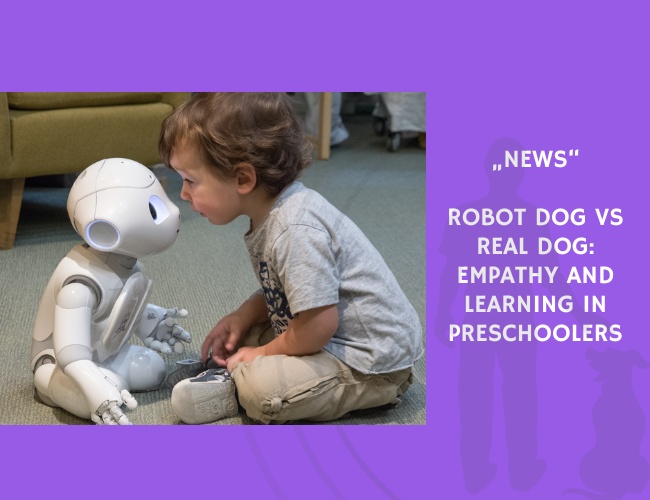
In a pioneering multidisciplinary study presented at the ACM SIGCHI Annual Symposium on Computer-Human Interaction in Play, Katriina Heljakka and colleagues investigated how artificial and living companions influence young children’s emotional and social learning. With the rise of social robots in education and healthcare, the research aimed to understand whether robotic dogs could replicate or complement the empathic benefits of real animals in a structured learning environment.
The study involved 16 Finnish preschoolers aged 5–7 years who participated in guided play sessions with both a commercial robot dog and a real dog. Conducted between March and May 2020, the research combined facilitation, observation, and video analysis to capture the nuances of children’s interactions and emotional expressions during these play-based learning sessions.
Preliminary findings revealed that the robot dog encouraged reflective discussions about human relationships and emotions, making it a valuable tool for structured social-emotional learning (SEL). In contrast, the real dog elicited spontaneous empathy—children reacted naturally to its behaviors, demonstrating compassion, care, and nonverbal understanding. These differing interaction styles underscored that while both forms of engagement foster empathy, they do so through distinct mechanisms: robot dogs simulate human-like communication, whereas real dogs evoke authentic emotional resonance.
Heljakka et al. conclude that robotic dogs, by mirroring predictable and programmable social cues, may be particularly effective in supporting guided learning about human interaction and emotional vocabulary. Real dogs, however, remain unmatched in teaching spontaneous emotional attunement and empathy through natural, unpredictable responses. The authors suggest that these two forms of engagement are not mutually exclusive but potentially complementary in early education settings.
The study contributes to the broader discourse on empathic design and educational robotics, showing how technology can be meaningfully integrated into early childhood education. It also invites reflection on the ethical and emotional boundaries between human–animal and human–robot relationships, emphasizing that empathy is a multifaceted skill that can be nurtured through both natural and artificial companionship.
Source: Heljakka, K., Ihamäki, P., & Lamminen, A. (2020). Playing with the Opposite of Uncanny: Empathic Responses to Learning with a Companion-Technology Robot Dog vs. Real Dog. ACM SIGCHI Annual Symposium on Computer-Human Interaction in Play. Published November 2, 2020.










