
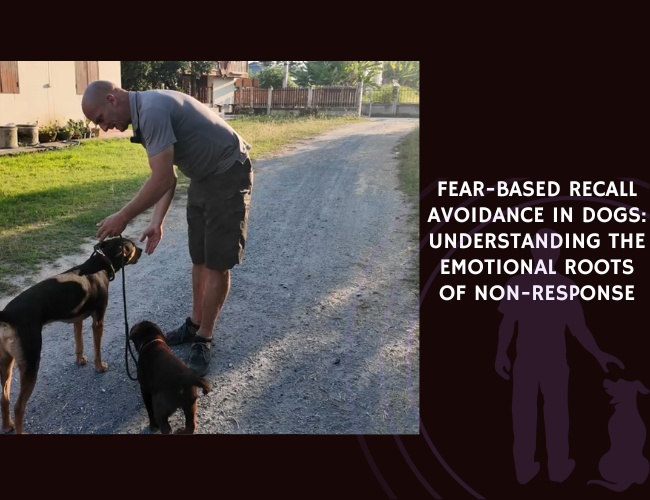
You call your dog’s name across the park, your voice clear and familiar. Yet instead of bounding toward you with joy, your companion hesitates, lowers their head, or even turns away. This moment—frustrating, confusing, sometimes heartbreaking—reveals something profound about the emotional world your dog inhabits. Fear-based recall avoidance isn’t about disobedience or stubbornness. It’s about trust, memory, and the delicate architecture of emotional safety that exists between you and your furry friend.
When a dog consistently refuses to return when called, we’re witnessing the manifestation of deep-rooted emotional conflict. This behavior emerges from a complex interplay of associative learning, stress physiology, and the quality of the bond you share. Understanding these mechanisms opens the door to more compassionate, effective approaches that honor your dog’s emotional experience while rebuilding reliable recall.
Through the lens of modern behavioral science and neurobiological research, let us guide you through the hidden emotional landscape that shapes your dog’s response—or lack thereof—when you call them home.
The Emotional Foundation: How Fear Takes Root
When Recall Becomes a Warning Signal
Your dog’s brain is constantly forming associations between events, sounds, and outcomes. When you call “come” and your dog returns, only to face scolding for taking too long, something profound happens in their neural circuitry. The recall cue itself—once a neutral sound—becomes a predictor of discomfort or threat.
This process, known as associative fear conditioning, operates at a fundamental level in all mammals. If your dog experiences repeated pairings between the recall command and aversive outcomes like harsh corrections, restraint, or angry voices, their brain begins to treat the cue itself as a danger signal. You might notice your dog’s ears flatten, their tail tuck, or their gaze avert the moment you call them. These aren’t signs of guilt—they’re manifestations of conditioned fear.
What makes this particularly challenging:
- The association can form after just a few negative experiences
- Once established, fear memories are remarkably resistant to extinction
- Even previously reliable recall can deteriorate if negative experiences accumulate
- The dog may generalize this fear to similar contexts or vocal tones
The emotional memory of these experiences doesn’t simply fade with time. Through the NeuroBond approach, we recognize that addressing the emotional foundation requires more than just avoiding punishment—it demands actively rebuilding positive associations through trust-based interactions.
The Weight of Anticipatory Stress
Dogs possess an extraordinary ability to read human emotional states. Your posture, the tension in your shoulders, the pitch of your voice, even your breathing pattern—all of these communicate volumes to your sensitive companion. When you’re frustrated, anxious, or angry, your dog perceives these signals long before you issue a command.
This creates a phenomenon called anticipatory stress. Your dog doesn’t just respond to what happens when they return; they respond to what they predict will happen based on your emotional state. If your body language signals tension or threat, your dog’s hypothalamic-pituitary-adrenal (HPA) axis activates, flooding their system with stress hormones before they even begin moving toward you.
You might observe:
- Hesitation or freezing when you call, even from a short distance
- Approach-avoidance behavior: starting toward you, then stopping or circling
- Stress signals like lip-licking, yawning, or ground-sniffing
- A lowered body posture or “guilty” expression before any interaction occurs
This stress response can override previously learned commands because your dog’s brain has shifted into a defensive mode where self-preservation takes priority over obedience. The Invisible Leash between you—that energetic connection built on trust and calm awareness—becomes frayed when fear enters the equation.
Emotional States That Block Connection
Among the various emotional states that inhibit recall behavior, fear and anxiety stand as the most powerful obstacles. When your dog’s fear system activates, it doesn’t merely compete with their desire to comply—it fundamentally reshapes their priorities and capabilities.
Fear-driven avoidance conditioning teaches your dog that not returning prevents unpleasant outcomes. This creates a paradox: the very act of avoiding you becomes reinforcing because it allows them to escape anticipated discomfort. Each time they successfully avoid returning and nothing bad happens, the avoidance behavior strengthens.
What many interpret as “guilt” is actually a fear response. Your dog isn’t feeling remorse for ignoring your call; they’re displaying appeasement behaviors in response to your perceived threat. This misinterpretation often perpetuates the cycle, as handlers may intensify their corrections based on the false belief that the dog “knows they did wrong.”
The emotional conflict your dog experiences is profound. Part of them may want to return—seeking the reward or connection they once associated with you—while another part screams danger. This internal battle creates visible stress and often results in complete behavioral shutdown or frantic flight. 🧡
The Neurobiological Reality: What Happens in Your Dog’s Brain
The Amygdala’s Role in Fear Memory
Deep within your dog’s brain lies the amygdala, a small but mighty structure that acts as the emotional command center, particularly for fear processing. When your dog experiences a frightening event during recall—whether it’s punishment, rough handling, or even an unexpected loud noise—the amygdala encodes this experience with remarkable precision.
The amygdala doesn’t just store these memories; it actively influences how your dog responds to similar situations in the future. When you call your dog and they’ve previously experienced fear during recall, the amygdala triggers a cascade of physiological responses even before conscious decision-making occurs. This activation simultaneously engages the HPA axis, preparing your dog’s entire system for threat response.
This neural activation has profound effects:
- It impairs the retrieval of positive, non-fearful learned behaviors
- It undermines trust-based responses by prioritizing survival over social bonding
- It can persist long after the original threatening experience
- It influences not just the immediate recall situation but generalizes to similar contexts
Chronic stress or repeated fear experiences can lead to alterations in amygdala-dependent responses, essentially rewiring how your dog perceives and responds to your recall cue. This neurobiological reality explains why simply “training harder” often fails—you’re not addressing the emotional architecture that’s blocking the behavior.
The Stress Hormone Cascade
When your dog’s fear system activates during a recall attempt, their body responds with a coordinated release of stress hormones. Cortisol and adrenaline surge through their system, creating what you might recognize as the “fight or flight” response. While this system evolved to protect mammals from immediate physical threats, it activates just as powerfully in response to psychological stressors.
These hormones serve specific survival functions, but they come at a cognitive cost. The prefrontal cortex—the brain region responsible for executive functions, decision-making, and impulse control—becomes impaired under high stress. This means your dog literally has diminished capacity to make thoughtful choices when their stress hormones spike.
Instead of thinking through the learned behavior of returning when called, your dog’s brain shifts into reactive mode. The sophisticated training you’ve invested in becomes inaccessible because the emotional state has hijacked the cognitive systems needed to execute learned commands. You’re not seeing defiance; you’re witnessing the biological reality of a brain under perceived threat.
The physiological signs you might observe include:
- Dilated pupils and rapid, shallow breathing
- Trembling or muscle tension
- Excessive panting even in cool weather
- Inability to focus or take treats they’d normally accept eagerly
- Spontaneous urination or defecation in extreme cases
The sensitivity to these stress hormones can also be influenced by your dog’s early life experiences. Dogs with histories of trauma or inconsistent care may have heightened stress reactivity, making them more vulnerable to fear-based recall avoidance. 🧠
The Promise of Oxytocin: Building Bridges Through Bonding
While stress hormones can dismantle recall reliability, another neurochemical offers hope: oxytocin. Often called the “bonding hormone,” oxytocin plays a crucial role in social attachment, trust, and feelings of safety. When you engage in positive, nurturing interactions with your dog—gentle touch, playful engagement, calm presence—both your bodies release oxytocin.
This hormonal response creates a neurobiological foundation for trust. Research in human maternal bonding has demonstrated that oxytocin levels correlate with behaviors like affectionate touch, positive vocalizations, and attentive gaze. These same principles apply to the human-animal bond you share with your dog.
Higher oxytocin levels may actively reduce fear-related avoidance by enhancing your dog’s sense of emotional safety. When your dog associates you with feelings of security and connection rather than threat, the very neurochemistry of your relationship shifts. You become a source of comfort rather than a potential danger.
Through Soul Recall moments—those instances of deep, intuitive connection—you’re not just training a behavior; you’re reshaping the neurobiological landscape of your relationship. This is why force-free, relationship-based training approaches often succeed where punishment-based methods fail. You’re working with your dog’s biology rather than against it.
Creating opportunities for oxytocin release involves:
- Calm, affectionate physical contact without restraint or pressure
- Gentle play that builds mutual enjoyment
- Synchronized activities like relaxed walks
- Consistent, predictable routines that create security
- Positive associations with your presence and proximity
When oxytocin flows freely in your relationship, recall becomes less about compliance and more about connection—your dog returns because being with you feels good, safe, and right.

Learning History: How the Past Shapes Present Behavior
The Destructive Legacy of Punishment-Based Training
Punishment-based recall training creates a minefield of emotional associations. When you punish a dog for failing to return quickly enough, or for the behavior that preceded your call, you’re inadvertently teaching them that coming to you predicts something unpleasant. This logic may seem counterintuitive, but it’s how associative learning operates.
Consider this common scenario: your dog steals food from the counter, you call them, they return, and then you scold them for the theft. From your perspective, you’re punishing the stealing behavior. From your dog’s perspective, they’re being punished for returning when called. The temporal proximity of the consequence to the behavior matters enormously in learning.
Punishment-based training histories create several cascading problems:
- They establish recall itself as a predictor of aversive outcomes
- They teach your dog that proximity to you can be dangerous
- They create emotional conflict between the desire to return and the fear of consequences
- They may suppress the behavior temporarily without addressing the underlying emotional state
Perhaps most damaging is inconsistent punishment. If your dog sometimes receives affection when returning and sometimes receives correction—depending on your mood, the situation, or what preceded the recall—you create a state of profound uncertainty. This unpredictability can be more stressful than consistent negative outcomes because your dog cannot predict when it’s safe to return.
The concept of extinction becomes relevant here. Even if you’ve since stopped using punishment, the fear memory can persist and resurface, particularly under stress. This phenomenon, known as spontaneous recovery, explains why a dog might respond reliably for months and then suddenly refuse to return in certain contexts.
The Language Your Body Speaks
Long before you issue a verbal command, your body is communicating. Your dog reads this non-verbal language with sophisticated precision, interpreting subtle cues that you may not even realize you’re transmitting.
Your posture conveys volumes. Leaning forward, standing tall with squared shoulders, or moving quickly toward your dog can all signal aggression or pursuit—threat behaviors in canine communication. Conversely, turning slightly sideways, kneeling down, or even taking a few steps backward can signal invitation and safety.
Eye contact, while valued in human communication, can be perceived as challenging or threatening by dogs, particularly those already experiencing fear. Direct, sustained eye contact might intensify your dog’s avoidance, while soft, brief glances or even looking away can reduce pressure.
Voice pitch and quality matter immensely:
- High, light voices typically signal friendliness and playfulness
- Low, harsh voices signal threat or displeasure
- Tight, strained vocal quality reveals tension even if words are “positive”
- Relaxed, melodic tones communicate safety and welcome
Research in speech emotion recognition demonstrates that vocal cues carry significant emotional information that transcends the actual words spoken. Your dog doesn’t understand “come” because of its linguistic meaning—they respond to the entire emotional package your voice delivers.
When you’re frustrated that your dog isn’t returning, the very tension in your voice and body may be the reason they won’t approach. You’ve inadvertently confirmed their fear that returning means facing an upset handler. Breaking this cycle requires conscious awareness of the signals you’re sending before and during recall attempts.
Environmental Context: The Geography of Safety
The environment where recall occurs significantly influences your dog’s perception of safety and their behavioral choices. Space itself carries emotional meaning for your dog.
In open fields or parks, your dog may feel more exposed and vulnerable. If they anticipate a negative interaction, the availability of escape routes might actually increase their likelihood of fleeing. The openness provides both physical and psychological distance, making avoidance a more viable strategy from your dog’s perspective.
Conversely, confined spaces present a different challenge. Your dog might feel trapped, which can intensify fear responses. However, limited space can also make them more likely to return simply because there’s nowhere else to go. This doesn’t indicate true recall reliability—it’s compliance born of limited options rather than choice.
Environmental factors that influence recall include:
- Visual openness versus enclosure
- Presence of novel or exciting stimuli (other dogs, wildlife, interesting smells)
- Familiar versus unfamiliar territory
- Distance from perceived “safe zones” or exits
- Previous emotional experiences in similar environments
The lateral habenula, a brain structure involved in defensive responses, mediates behavior specifically when threat and safety memories conflict. Your dog’s brain is constantly evaluating whether the environment supports approach or avoidance. If past experiences in similar spaces have been negative, the environmental cues alone can trigger fear-based avoidance, even if you’ve done nothing threatening in the current moment.
Understanding this environmental dimension helps explain why your dog might recall perfectly in your backyard but fail completely at the dog park, or why they return reliably on familiar streets but not in new locations. The context provides a framework that either supports or undermines the behavior.
Cognitive Patterns: Understanding Your Dog’s Decision-Making
Learned Helplessness and the Shutdown Response
When dogs repeatedly experience situations where their actions seem to make no difference in outcomes, they can develop a state called learned helplessness. In the context of recall, this might emerge if your dog has tried multiple strategies—returning quickly, approaching slowly, avoiding entirely—and still faced negative consequences regardless.
The hallmark of learned helplessness is a passive, resigned quality. Your dog may simply stop trying to engage with the recall command altogether. They might stand still, lie down, or show minimal response when called. This isn’t stubbornness or spite; it’s a cognitive and emotional shutdown born from repeated experiences where no action led to safety or positive outcomes.
Signs your dog may be experiencing learned helplessness include:
- Lack of response to previously effective cues
- Flat emotional affect with minimal engagement
- Reduced overall activity and initiative
- Failure to avoid obviously aversive situations
- Generalized withdrawal from training or interaction
Research indicates that stress can lead to failures in exhibiting avoidance reactions even to innately aversive stimuli. In practical terms, this means your dog might not even attempt to protect themselves or make choices that would improve their situation. They’ve learned that nothing they do matters, so they do nothing.
Recovering from learned helplessness requires patient, systematic rebuilding of your dog’s sense of agency—their belief that their actions can produce positive outcomes. This involves creating situations where success is guaranteed, where every choice they make leads to something good, and where they gradually rediscover their power to influence their world.
The Internal Tug-of-War: Seeking Versus Avoiding
Within your dog’s brain, two powerful systems constantly interact: the seeking system and the fear system. The seeking system, described in Jaak Panksepp’s affective neuroscience work, drives your dog to explore, engage, and pursue rewarding experiences. It’s what makes them excited about play, food, and connection with you.
The fear system, conversely, drives defensive responses and threat avoidance. When both systems activate simultaneously during a recall attempt, your dog experiences profound emotional conflict. Part of them wants to return—perhaps they remember previous rewards, or they desire connection with you—but another part perceives danger in approaching.
Research shows that the lateral habenula mediates defensive responses specifically when threat and safety memories conflict, biasing choice behavior toward avoiding threats. Your dog’s brain is quite literally weighing competing predictions: “If I return, something good might happen” versus “If I return, something bad might happen.”
Behaviorally, this conflict manifests as:
- Hesitation and indecision, starting and stopping repeatedly
- Approach-avoidance patterns: moving toward you then veering away
- Displacement behaviors like sudden sniffing, scratching, or investigating irrelevant objects
- A slow, uncertain approach with appeasing body language
- Splitting the difference by returning but stopping just out of reach
When fear dominates this internal competition, the seeking system becomes suppressed. Your dog’s natural drive for reward and connection simply cannot compete with the overwhelming imperative to avoid perceived danger. This is similar to how eating disorders research shows that emotional arousal can elicit maladaptive reward associations—strong emotional states reshape how the brain processes potential rewards.
Breaking this conflict requires tipping the balance decisively toward the seeking system. You must make approaching you so reliably positive, so consistently safe, that the fear system gradually quiets. Through the NeuroBond approach, this rebalancing happens not through force but through systematic emotional reconditioning that honors your dog’s internal experience.
Individual Differences: Temperament and Susceptibility
Not all dogs respond identically to similar experiences. Just as humans have different temperamental predispositions, dogs show remarkable individual variation in their sensitivity to stress, their boldness, and their recovery from fearful experiences.
Some dogs possess what we might call a sensitized stress response system. These sensitive souls react more intensely to perceived threats, take longer to recover from stressful experiences, and may be more prone to developing fear-based behaviors. This sensitivity isn’t a flaw—it’s simply part of their neurobiological makeup.
Factors that influence individual susceptibility include:
- Genetic temperament traits (boldness versus caution, sociability versus independence)
- Early life experiences, particularly during critical developmental periods
- Previous trauma or inconsistent care
- Breed-typical characteristics that influence independence or handler orientation
- General health status and any chronic pain conditions
Certain breeds, developed for independent work like hunting or livestock guarding, may naturally be less handler-focused. When combined with fearful experiences, this independence can amplify recall challenges. These dogs aren’t defiant; they’re following both their temperamental predisposition and their learned associations.
Conversely, highly handler-oriented breeds may suffer more intensely from fear-based recall avoidance because the conflict between their desire for connection and their fear of consequences creates particularly acute emotional distress. Their natural inclination to be close to you makes the fear of approaching you especially painful.
Understanding your individual dog’s temperament helps you calibrate your approach. Sensitive dogs may require slower, more gradual reconditioning with extreme attention to avoiding any perceived pressure. Independent dogs may need higher-value reinforcement and more creative engagement strategies. One size never fits all in behavioral work. 🧡
Zoomies. Explained.
Those wild puppy sprints have a purpose.
Zoomies—technically called FRAPs—aren’t random chaos. They help puppies release energy, build coordination, and regulate emotions.
It’s play, but it’s primal.
From brain development to stress relief, these bursts are rooted in biology. Even your living room becomes a training ground for growth.


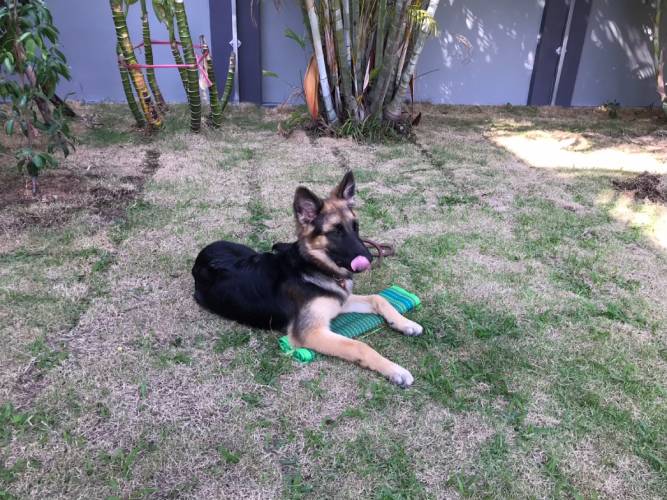
This guide breaks it down.
Learn what zoomies mean, when they’re normal, and how to support your pup—safely, calmly, and with expert-backed strategies.
Rebuilding Trust: Emotional Reconditioning Strategies
Systematic Desensitization: Small Steps to Safety
Emotional reconditioning begins with systematic desensitization—a process of gradually, carefully rebuilding positive associations with recall while preventing any exposure to the feared outcomes. This isn’t quick, but it’s profoundly effective when implemented with consistency and patience.
The principle is straightforward: you create situations where your dog experiences only positive outcomes when you call them, starting at a level of difficulty so low that success is virtually guaranteed. This might mean beginning at distances of just a few feet in your home, where your dog feels completely safe.
The systematic desensitization process involves:
- Identifying your dog’s threshold: the distance/context where they still respond positively
- Working exclusively below that threshold initially
- Using exceptionally high-value rewards every single time they approach
- Gradually increasing difficulty only after consistent success
- Immediately reducing difficulty if you see any signs of stress or hesitation
- Ensuring that every recall ends positively with no neutral or negative outcomes
This approach mirrors prolonged exposure therapy used for PTSD in humans, where traumatic memories and situations are confronted gradually in a controllable way. The exposure must be manageable—enough to allow new learning without triggering the old fear response.
You might notice that initially, this feels almost absurdly simple. Calling your dog from three feet away when you could just reach over and touch them might seem unnecessary. But this simplicity is precisely the point. You’re rebuilding the emotional foundation, teaching your dog’s nervous system that “come” predicts only good things, no matter what.
As trust rebuilds, you’ll observe subtle changes: your dog’s ears perk up when they hear the cue instead of flattening, their tail wags instead of tucking, they move toward you with confidence instead of caution. These shifts signal that the emotional reconditioning is working—you’re creating new neural pathways that compete with and eventually override the fear-based associations.
The concept of latent inhibition also supports this approach. Research suggests that pre-exposure to stimuli in a non-threatening context before any negative associations form can retard fear learning. While your dog already has established fears, controlled positive exposures serve a similar protective function, creating a buffer of positive experiences that compete with negative memories.
Modifying Your Approach: Tone, Timing, and Distance
Rebuilding recall trust requires you to become exquisitely mindful of three critical variables: your tone of voice, your timing of reinforcement, and the distance at which you practice.
Tone of voice becomes your most powerful tool. Every time you call your dog, your voice should convey warmth, invitation, and genuine delight. This doesn’t mean shouting with false enthusiasm—dogs are experts at detecting insincerity. Rather, it means cultivating authentic positive emotion when you call them.
High-pitched, melodic voices typically signal friendliness and safety. Practice calling your dog with a tone you might use to greet a dear friend you’re genuinely happy to see. Remove any edge of command, demand, or expectation from your voice. You’re inviting, not ordering.
Timing of reinforcement determines learning success. The moment your dog makes any movement toward you—even just a lean in your direction or a glance your way—mark and reward it immediately. This precise timing helps your dog clearly understand that any approach behavior, no matter how small, produces wonderful outcomes.
Use a marker signal (a clicker or a cheerful “yes!”) at the exact instant your dog initiates approach behavior. Follow this immediately with high-value rewards: exceptional treats, favorite toys, or whatever your individual dog finds most motivating. The reinforcement must be immediate and must be meaningful to your dog specifically.
Distance management prevents failure and builds confidence. Begin training at distances so short that your dog cannot fail. For severely fearful dogs, this might mean starting with you and your dog in the same room, casually calling them when they’re already oriented toward you.
As success accumulates, increase distance in tiny increments:
- Start at three feet, practice until reliable
- Move to five feet, practice until reliable
- Increase to ten feet, practice until reliable
- Gradually extend to longer distances over weeks or months
If at any point your dog hesitates or shows avoidance, immediately return to the last distance where they were successful. There’s no shame in backing up; it’s smart training that prevents reinforcing fear responses.
This graded, controllable exposure mirrors strategies used in exposure therapy for anxiety disorders. The goal is to ensure success at every stage, building a history of positive experiences that gradually expands your dog’s comfort zone. Through this patient approach, the Invisible Leash between you strengthens—that awareness and energetic connection that allows calm control without physical restraint or force.
🧠 The Journey from Fear to Trust: Emotional Recall Reconditioning 🧡
A systematic 8-phase approach to rebuilding recall reliability through emotional safety and neurobiological understanding
Phase 1: Recognition & Assessment
Understanding the emotional landscape
Your dog’s amygdala has encoded recall as a fear predictor through associative conditioning. When the HPA axis activates, cortisol floods their system, impairing prefrontal decision-making and triggering defensive responses rather than learned compliance.
• Hesitation or freezing when called
• Lowered body posture, tucked tail, pinned ears
• Approach-avoidance behavior (starting toward you, then stopping)
• Stress signals: lip-licking, yawning, whale eye
Document current threshold distances, identify specific triggers, assess your own emotional patterns honestly. Stop all punishment immediately. This phase is about observation without intervention—understanding before action.
Phase 2: Creating Emotional Safety
Establishing the foundation of trust
Through the NeuroBond approach, co-regulation becomes the cornerstone of healing. Your calm, grounded presence helps regulate your dog’s nervous system, allowing their ventral vagal complex to activate—the physiological state where social engagement becomes possible again.
Remove all pressure from recall situations. Use long lines for safety instead of testing unreliable recalls. Create predictable routines that reduce overall anxiety. Never call your dog to something they dislike—protect the cue completely.
Engage in gentle, affectionate touch without restraint. Share synchronized activities like relaxed walks. Create positive proximity associations through treats when your dog approaches spontaneously. These interactions increase oxytocin, neurochemically rebuilding trust.
Phase 3: Foundation Building (Weeks 1-4)
Guaranteed success at minimal distance
You’re creating new neural pathways that associate the recall cue with safety and reward. Each successful pairing strengthens these connections while the fear circuits gradually weaken through non-reinforcement. This is associative learning working in your favor.
• Indoor only, familiar low-distraction spaces
• Distances: 3-10 feet maximum
• Call only when dog is relaxed and oriented toward you
• 5-10 repetitions daily, always end on success
• 100% reinforcement with high-value rewards
Use high-pitched, melodic tones that signal friendliness. Turn slightly sideways rather than facing directly. Reward any lean or glance toward you instantly. Your emotional state must convey genuine warmth—dogs detect insincerity through subtle vocal and postural cues.
Phase 4: Context Expansion (Weeks 5-8)
Gradual generalization with maintained safety
Your dog’s prefrontal cortex can now access learned behaviors more reliably as stress hormone levels decrease. The seeking system begins to override the fear system, allowing exploration and reward-motivated behavior to emerge naturally.
Introduce new indoor locations gradually. Increase distance to 15-20 feet slowly. Add mild distractions like toys or another calm person. Watch stress signals carefully—any hesitation means reduce difficulty immediately. Patience here prevents regression later.
Maintain 100% reinforcement but introduce variety in rewards. Sometimes exceptional treats, sometimes favorite toys, sometimes enthusiastic affection. This variability strengthens the behavior while keeping motivation high through unpredictability of reward type.
Phase 5: Outdoor Integration (Weeks 9-16)
Environmental complexity with safety nets
The lateral habenula mediates defensive responses when threat and safety memories conflict. Outdoor spaces present new environmental cues that your dog must evaluate. Initial regression is normal—the brain is recalibrating safety assessments in novel contexts.
Start in your fenced yard during quiet times. Return to shorter distances (10-15 feet). Use long line for safety without creating tension. Practice when environmental distractions are minimal—early morning or late evening. Build success history before adding complexity.
Never test unreliable recall in unsafe situations. Setbacks here can undo months of progress. If your dog hesitates outdoors, this is valuable data—not failure. Reduce challenge level and rebuild confidence systematically.
Phase 6: Real-World Application (Weeks 17+)
Competing with environmental rewards
Through consistent emotional safety, you’ve developed the Invisible Leash—that energetic connection where awareness and trust create guidance without physical restraint. Your dog returns not from force but from the genuine pull of connection that feels stronger than environmental attractions.
Gradually introduce other dogs, interesting smells, wildlife presence. Increase distances to 30-50+ feet over months. Practice in varied locations—parks, trails, urban environments. Each new context is a fresh learning opportunity requiring patience.
Begin varying reinforcement schedules carefully—not every recall, but frequently enough to maintain reliability. Sometimes jackpot rewards create excitement. Use life rewards: recall before throwing ball, before releasing to greet another dog. Make returning the gateway to what they want.
Phase 7: Deep Bonding & Intuition
Beyond obedience to partnership
Soul Recall represents the deepest form of connection—where emotional memory and intuitive bonding transcend trained commands. Your dog returns because the relationship itself draws them back, because separation feels incomplete, because being with you is their preferred state.
You’ve developed profound attunement to your dog’s subtle communications. You notice micro-expressions, energy shifts, hesitation before it becomes avoidance. Your dog reads you equally well—anticipating your intentions, responding to your emotional state before verbal cues.
Continue prioritizing the bond over the behavior. Practice co-regulation daily through calm presence. Create shared joy experiences without agenda. Protect emotional safety as sacred. The recall reliability now maintains itself because the foundation is unshakeable trust.
Phase 8: Lifelong Partnership
Sustaining trust through life’s changes
The new neural pathways you’ve built remain malleable. Stressful life events, aging, or environmental changes may temporarily affect recall. This is normal. The foundation allows rapid recovery when you return to reinforcement basics.
Provide occasional refreshers with 100% reinforcement. Practice in novel contexts periodically. Never reintroduce punishment. Monitor for stress signals during life transitions. Maintain realistic expectations—no dog has perfect recall in every situation always.
Your dog experiences freedom without fear, engagement without anxiety, connection without conflict. The reliability you’ve built allows off-leash adventures while emotional safety remains the priority. This is training that honors welfare—where behavioral success and emotional wellbeing are inseparable.
🔄 Understanding Individual Differences in Fear-Based Recall
Timeline: 6-12+ months
Needs: Extreme patience, lowest possible pressure, tiny incremental steps
Signs: Startle easily, intense stress signals, slow recovery from fear
Examples: Hounds, Northern breeds, some terriers
Challenge: Lower handler-focus competes with recall
Strategy: Exceptionally high-value rewards, strong reinforcement history
Needs: Professional support, possible medication, extended timelines
Reality: May never achieve 100% reliability
Goal: Trust-building over behavioral perfection
Examples: Terriers, sight hounds, some herding breeds
Challenge: Biological impulses override trained behavior
Management: Call before arousal peaks, accept limitations
Timeline: 3-6 months typically
Advantage: Less entrenched fear patterns, neuroplasticity
Note: Faster progress if intervention begins early
Considerations: Cognitive changes, sensory decline, pain issues
Adaptation: Closer distances, clearer signals, health assessment
Patience: Learning slower but trust-building still possible
Progression Speed = 5 consecutive perfect recalls before increasing difficulty
Setback Protocol = Return to last successful level for 1 week
Reinforcement Rate = 100% until Phase 6, then 80%+ indefinitely
Practice Frequency = 5-10 reps daily, never exceeding dog’s enthusiasm
Stress Signal Response = Immediate difficulty reduction, session end if needed
Fear-based recall avoidance dissolves not through force, but through the patient cultivation of emotional safety. When you embrace the NeuroBond approach—prioritizing co-regulation, trust, and emotional synchrony—you’re working with your dog’s neurobiology rather than against it. The Invisible Leash you create isn’t about control; it’s about the energetic connection where calm awareness guides without restraint. Through countless moments of positive reinforcement and genuine attunement, Soul Recall emerges—that deep, intuitive pull where your dog returns not from obligation, but from the recognition that being with you is where they belong. This journey transforms fear into trust, avoidance into joyful approach, and training into profound relationship.
© Zoeta Dogsoul – Where neuroscience meets soul in dog training
The NeuroBond Method: Co-Regulation and Emotional Synchrony
Traditional operant conditioning approaches to recall focus primarily on consequences—rewards for returning, potentially punishments for not returning. While consequences certainly matter, they don’t address the emotional foundation that makes recall either easy or impossible for your dog.
The NeuroBond framework offers a more holistic approach that emphasizes co-regulation, emotional safety, and emotional synchrony. This methodology recognizes that your dog’s willingness to return isn’t just about the rewards they might receive; it’s fundamentally about the quality of your relationship and the emotional experience of being with you.
Co-regulation involves actively helping your dog manage their emotional state. Rather than expecting your dog to regulate their fear independently, you become a source of emotional stability. This means:
- Maintaining your own calm, grounded state even when recall fails
- Providing comfort and reassurance without reinforcing avoidance
- Creating predictable routines that reduce overall anxiety
- Being present and attuned to your dog’s emotional needs
- Modeling the emotional state you want your dog to experience
When you remain calm despite your dog’s fear, you provide an external regulator that helps their nervous system settle. Your emotional state becomes contagious in the best possible way. This is the essence of co-regulation—your dog borrows your calm until they can access their own.
Emotional safety means creating an environment where your dog never has to fear consequences for their choices. This extends beyond training sessions to your entire relationship:
- No punishment for slow recalls or non-compliance
- No frustration expressed through voice, body language, or handling
- Consistent, predictable responses from you
- Freedom to make choices without coercion
- Respect for their emotional state and communication
When your dog knows with absolute certainty that returning to you always means safety—never disappointment, correction, or restraint they don’t want—the internal conflict dissolves. They can access their natural desire for connection without the interference of fear.
Emotional synchrony develops when you and your dog learn to “read” each other deeply. You become attuned to subtle shifts in your dog’s emotional state, responding with sensitivity and appropriate support. Your dog, in turn, learns to trust your emotional signals, knowing that you understand and respect their experience.
This synchrony emerges through:
- Attentive observation of your dog’s body language and stress signals
- Responsive adjustments to your behavior based on their state
- Shared positive experiences that build mutual joy
- Non-verbal communication that flows naturally between you
- Moments of genuine connection without agenda or expectation
Research on oxytocin and bonding demonstrates that these positive, attuned interactions create neurobiological changes that enhance feelings of safety and connection. When you consistently show up as a source of understanding and support rather than demand and pressure, oxytocin flows more freely in your relationship.
The NeuroBond approach outperforms operant recall alone because it addresses the root cause of fear-based avoidance: the emotional experience of the relationship. When your dog feels genuinely safe with you, when they trust that you’ll honor their emotional needs, when you’ve cultivated deep synchrony—recall becomes natural. Your dog doesn’t return because they must; they return because they want to. They return because that’s where Soul Recall leads them—back to the connection that feels right.
That balance between scientific understanding and emotional attunement—that’s the essence of Zoeta Dogsoul. It recognizes that training and behavior change aren’t purely mechanical processes. They’re deeply relational, rooted in trust, and most successful when we honor the emotional beings our dogs are.
Practical Implementation: From Theory to Daily Life
Assessment: Understanding Your Dog’s Current State
Before beginning any reconditioning work, you need a clear understanding of where your dog currently stands. This assessment helps you design an appropriate training plan and set realistic expectations.
Observe and document your dog’s recall behavior:
- At what distance does hesitation or avoidance begin?
- In which contexts does recall fail most consistently?
- What specific triggers seem to intensify fear (your tone, posture, location)?
- What body language does your dog display when called? (ears, tail, posture, movement quality)
- Are there any situations where recall still works reliably?
Pay particular attention to your dog’s stress signals. These include:
- Lip licking or tongue flicks
- Yawning when not tired
- Panting when not hot or exercised
- Whale eye (visible whites of eyes)
- Tucked tail or lowered body posture
- Ears pinned back
- Slow, cautious movement or complete freezing
- Displacement behaviors like sudden sniffing or scratching
These signals tell you when you’re approaching or exceeding your dog’s threshold. Your training must stay below this threshold to be effective.
Assess your own behavior honestly:
- How do you typically respond when your dog doesn’t come immediately?
- What does your voice sound like when frustrated?
- What is your body language like during failed recalls?
- Do you consistently reward successful recalls, or only sometimes?
- Have you ever punished your dog after they eventually returned?
This honest self-assessment often reveals patterns you weren’t conscious of. Many handlers discover they’ve inadvertently created the very problem they’re trying to solve through subtle signals of frustration or inconsistent reinforcement.
Creating a Progressive Training Plan
Based on your assessment, design a systematic plan that builds complexity gradually over time.
Phase 1: Foundation Building (Weeks 1-4)
- Practice only indoors in familiar, low-distraction environments
- Use distances of 3-10 feet initially
- Call your dog only when they’re already relaxed and oriented toward you
- Reward every single successful approach with high-value treats
- Practice 5-10 repetitions daily, always ending on success
- Focus on building positive emotional associations with the recall cue
Phase 2: Expanding Context (Weeks 5-8)
- Gradually introduce new indoor locations (different rooms)
- Slowly increase distance to 15-20 feet
- Begin adding mild distractions (toy on floor, another person present)
- Continue 100% reinforcement of successful approaches
- Introduce variety in rewards (different treats, play, affection)
- Monitor stress signals carefully and reduce difficulty if they appear
Phase 3: Outdoor Transition (Weeks 9-16)
- Move to enclosed outdoor spaces like your fenced yard
- Return to shorter distances (10-15 feet) with new environment
- Practice during low-distraction times initially
- Gradually increase environmental challenges
- Maintain high rate of reinforcement
- Use long line for safety, but avoid any tension or pulling
Phase 4: Real-World Application (Weeks 17+)
- Practice in increasingly challenging environments
- Introduce presence of other dogs, people, or interesting smells
- Slowly increase distance to functional ranges (30-50+ feet)
- Begin to vary reinforcement schedule gradually
- Always maintain high-value rewards available
- Continue monitoring for any signs of fear resurgence
This timeline is approximate—some dogs will progress faster, while others need more time at each phase. Your dog sets the pace, not arbitrary timelines. 🧠
Handling Setbacks and Plateaus
Progress is rarely linear. You’ll likely encounter setbacks where your dog suddenly seems to regress, or plateaus where improvement stalls.
When setbacks occur:
- Don’t interpret them as failure or evidence that the approach isn’t working
- Immediately reduce difficulty to the last level where your dog was successful
- Assess whether you progressed too quickly or introduced too much challenge
- Check for health issues—pain or illness can dramatically affect behavior
- Evaluate environmental factors that might be creating additional stress
- Return to foundation work if necessary without frustration
Setbacks often provide valuable information. They reveal that your dog wasn’t quite as ready for the increased challenge as you thought, or that certain contexts trigger stronger fear responses than others.
When progress plateaus:
- Ensure you’re using sufficiently high-value reinforcement for your individual dog
- Verify that your timing of rewards is precise
- Check that you’re not inadvertently creating pressure through subtle body language
- Consider whether your practice sessions are too long, causing fatigue or stress
- Evaluate whether medical issues might be affecting your dog’s responsiveness
- Try changing your recall cue entirely if the current one has too many negative associations
Sometimes a plateau simply means your dog needs more time consolidating their learning at the current level before advancing. Patience during plateaus often leads to sudden breakthroughs.
Lifestyle Integration: Beyond Training Sessions
Effective recall reconditioning extends beyond formal training sessions into your entire relationship with your dog.
Create positive associations with your presence generally:
- Randomly offer treats when your dog approaches you spontaneously
- Practice gentle, affectionate touch without restraint
- Engage in play and activities your dog genuinely enjoys
- Provide predictable routines that create feelings of safety
- Allow your dog choice and agency in daily interactions
Avoid recreating fear patterns:
- Never call your dog to do something they dislike (grooming, nail trims, ending play)
- Don’t chase your dog if they’re avoiding you—it confirms their fear
- If you must end outdoor freedom, approach calmly rather than calling
- Keep all interactions positive and pressure-free
- Practice patience even when inconvenienced by recall challenges
Build the bond through co-regulation:
- Spend time simply being present with your dog without agenda
- Notice and respond to their emotional communication
- Provide comfort during stressful situations
- Create shared positive experiences through walks, play, or relaxation
- Model the calm, grounded energy you want your dog to experience
Your relationship quality directly impacts recall reliability. When every interaction with you feels safe and often rewarding, your dog naturally gravitates toward you. This is where the Invisible Leash becomes real—not a tool or technique, but the energetic awareness and mutual trust that allows calm guidance without force.
The Science of Success: Why This Approach Works
The methodologies described here aren’t based on wishful thinking or anthropomorphism. They’re grounded in established principles of learning theory, neurobiology, and behavioral science.
Classical and operant conditioning principles explain the mechanics: By consistently pairing the recall cue with positive outcomes (food, play, affection) without ever pairing it with aversive outcomes, you create new conditioned emotional responses. The recall cue becomes a predictor of good things, activating approach motivation rather than avoidance.
Affective neuroscience explains the emotional dimension: By reducing activation of the fear system and enhancing activation of the seeking system, you literally change which emotional circuits dominate your dog’s experience. When seeking and bonding circuits are active, approach behavior flows naturally.
Polyvagal theory explains the physiological state changes: By consistently creating experiences of safety, you help your dog’s nervous system shift from defensive states (sympathetic mobilization or dorsal vagal shutdown) to social engagement states (ventral vagal activation). In this calm, connected state, your dog can access learning, relationship, and voluntary cooperation.
Neurochemistry explains the bonding dimension: Positive, attuned interactions increase oxytocin, which enhances feelings of safety and social connection. This neurochemical foundation makes your presence inherently rewarding rather than threatening, transforming the emotional quality of recall from obligation to desire.
Stress physiology explains why force fails: Punishment and pressure activate the HPA axis, releasing cortisol and adrenaline that impair prefrontal function and enhance amygdala reactivity. This biological cascade makes learning nearly impossible and fear memories more entrenched. Conversely, working below stress thresholds allows the prefrontal cortex to function optimally, facilitating new learning.
The research consistently demonstrates that emotional safety and positive reinforcement create durable behavioral change more effectively than aversive methods. This isn’t because positive approaches are “nicer”—though they certainly are. It’s because they work with, rather than against, the fundamental biology of learning and emotion.
Long-Term Maintenance: Sustaining Reliable Recall
Once you’ve successfully rebuilt recall reliability, maintaining it requires ongoing attention and occasional refreshers.
Continue intermittent reinforcement at meaningful levels:
- While you don’t need to reward every recall forever, maintain frequent reinforcement
- Use variable reinforcement schedules where sometimes rewards are spectacular
- Never let rewards disappear entirely or become too predictable
- Occasionally return to 100% reinforcement during challenging contexts
Preserve emotional safety as a non-negotiable principle:
- Never reintroduce punishment or harsh corrections for recall failures
- Maintain awareness of your emotional state and non-verbal communication
- Continue protecting recall from negative associations
- If you must retrieve your dog, approach calmly rather than calling
Provide regular practice across varied contexts:
- Don’t assume that success in one environment guarantees success everywhere
- Periodically practice in new locations or with new distractions
- Treat each novel context as a new learning opportunity initially
- Maintain realistic expectations about generalization
Monitor for stress and regression:
- Stay attuned to your dog’s emotional state during recalls
- Watch for any reemergence of hesitation or avoidance behaviors
- If stress signals appear, immediately reduce challenge level
- Address any regression promptly before fear patterns re-establish
Prioritize the relationship over the behavior:
- Remember that recall reliability emerges from trust and connection
- Continue building positive shared experiences
- Practice co-regulation and emotional attunement
- Let the NeuroBond you’ve developed guide your interactions
Recall maintenance isn’t about drilling the behavior endlessly. It’s about sustaining the emotional foundation that makes recall natural and effortless. When your dog genuinely feels safe with you, when they trust that returning always leads to positive outcomes, when the bond between you is strong—recall maintains itself.
Common Mistakes and How to Avoid Them
Even with the best intentions, handlers often make predictable errors that undermine recall reconditioning. Awareness of these pitfalls helps you avoid them.
Mistake 1: Progressing too quickly The eagerness to see improvement can lead to increasing difficulty before your dog is truly ready. This recreates failure experiences that reinforce fear. Solution: Let your dog’s behavior guide progression. Multiple consecutive successes at each level before advancing.
Mistake 2: Practicing only during formal training sessions If recall only happens during structured training, your dog may learn it as context-dependent rather than generalized. Solution: Practice informally throughout daily life, calling your dog for good things that happen naturally.
Mistake 3: Insufficient reinforcement value Using mediocre treats or rewards your dog finds only mildly interesting won’t compete with fear memories. Solution: Identify what your dog finds exceptionally valuable and reserve these items exclusively for recall training initially.
Mistake 4: Inadvertent punishment after return Calling your dog, then immediately doing something they dislike (ending play, leaving the park, bathing) teaches them that coming when called predicts loss of freedom. Solution: Build in a buffer of positive interaction before any necessary but unpleasant activity.
Mistake 5: Visible frustration Your dog reads your emotional state acutely. Even subtle signs of frustration or impatience can trigger fear responses. Solution: Practice mindfulness about your own emotional regulation. If frustrated, end the session positively rather than continuing.
Mistake 6: Inconsistent practice Sporadic training sessions don’t build the repetition necessary for new neural pathways to form and strengthen. Solution: Brief daily practice sessions are far more effective than occasional long sessions.
Mistake 7: Calling when failure is likely Setting your dog up to fail by calling in situations beyond their current capability reinforces avoidance. Solution: Manage the environment carefully, using long lines for safety rather than testing unreliable recall in risky situations.
Mistake 8: Neglecting the relationship foundation Focusing solely on the mechanics of recall training without addressing the overall bond and trust in your relationship. Solution: Remember that recall is a symptom of relationship quality. Invest in building connection beyond formal training. �
Special Considerations: Complex Cases
Some dogs present particularly challenging recall cases that require additional considerations.
Dogs with Trauma Histories
Dogs who have experienced significant trauma, abuse, or neglect often carry deep-seated fear patterns that extend beyond recall into many aspects of their lives. These sensitive souls require exceptional patience and may show slower progress.
Special approaches for trauma survivors:
- Extend timelines significantly—progress might take months or years rather than weeks
- Pay meticulous attention to stress signals, backing off at the first sign of discomfort
- Consider working with a certified behavior consultant or veterinary behaviorist
- Address overall anxiety through environmental management, routine, and potentially medication
- Celebrate tiny victories and maintain unwavering consistency
- Recognize that some dogs may never achieve perfect reliability due to lasting neurobiological changes
For these dogs, the goal isn’t necessarily flawless recall but rather building enough trust and safety that they choose connection over avoidance more often than not. The journey of healing is itself valuable, independent of behavioral perfection.
Multi-Dog Households
When multiple dogs share a household, recall dynamics become more complex. Dogs influence each other’s emotional states and behavioral choices.
Managing recall in multi-dog homes:
- Practice with each dog individually initially to build solid foundations
- Gradually introduce group recalls only after individual reliability is established
- Be aware that a fearful dog may trigger fear responses in others
- Use management strategies (separate areas, long lines) during the rebuilding process
- Reward each dog individually for successful recalls to prevent competition
- Consider that one dog’s positive recall might eventually model confidence for others
The social dynamics between your dogs can either support or undermine recall training. A confident dog who reliably returns might eventually encourage a fearful dog through social facilitation, but only if you’ve first addressed the fearful dog’s individual emotional barriers.
Dogs with Independence or High Prey Drive
Some dogs, whether by breeding or temperament, are naturally less handler-oriented or have powerful instincts that compete with recall. Hunting breeds, primitive breeds, and some herding breeds may fall into this category.
Strategies for independent or prey-driven dogs:
- Use exceptionally high-value rewards that can compete with environmental attractions
- Build impulse control exercises separately from recall work
- Practice recalls before arousal peaks (call before they spot the squirrel, not after)
- Create a strong reinforcement history with thousands of successful repetitions
- Accept that reliability may never reach 100% in highly stimulating environments
- Use management tools (long lines, fenced areas) when necessary for safety
- Make yourself more interesting than the environment through play and engagement
For these dogs, recall competes with powerful biological drives. While you can significantly improve reliability through proper training, maintaining realistic expectations prevents frustration and helps you implement appropriate safety measures. 🧡
The Welfare Perspective: Why This Matters
Fear-based recall avoidance isn’t merely a training inconvenience. It reflects a welfare concern that affects your dog’s quality of life and your relationship with them.
Dogs experiencing chronic fear around recall often generalize this anxiety to other aspects of their relationship with you. They may become hypervigilant, constantly monitoring your emotional state for signs of potential threat. This state of persistent worry diminishes their overall wellbeing.
The welfare implications extend to:
- Reduced freedom and enrichment if you cannot safely allow off-leash time
- Chronic stress that affects physical health, immune function, and longevity
- Compromised bond and relationship quality
- Limited ability to engage in natural dog behaviors like running and exploration
- Potential for dangerous situations if emergency recall fails
Conversely, successfully resolving fear-based recall avoidance through ethical, emotion-focused methods creates profound welfare benefits. Your dog experiences reduced anxiety, increased freedom, deeper trust in you, and the ability to engage fully in life without the constant shadow of fear.
The methods described here prioritize your dog’s emotional experience as the foundation for behavioral change. This welfare-centered approach recognizes that dogs are sentient beings whose subjective emotional states matter, not just for training effectiveness but as an ethical imperative.
Training shouldn’t be something done to your dog, but rather something you do with your dog—a collaborative process that honors their experience while building skills and strengthening your bond.
Moving Forward: Your Next Steps
If you recognize your dog in these descriptions of fear-based recall avoidance, you now understand the complex emotional and neurobiological factors at play. This knowledge empowers you to approach the situation with compassion rather than frustration.
Begin with these fundamental shifts:
- Stop all punishment or negative consequences associated with recall immediately
- Start observing your dog’s stress signals with new awareness
- Assess your own emotional regulation and non-verbal communication honestly
- Commit to rebuilding trust as the foundation for reliable recall
- Accept that progress takes time and requires patience
Your action plan:
- Complete the assessment described earlier to understand your starting point
- Design a progressive training plan appropriate to your dog’s current state
- Gather exceptional rewards that your dog finds genuinely motivating
- Begin foundation work at distances and contexts where success is guaranteed
- Practice daily, maintaining emotional safety and positive associations consistently
- Track progress through written records or video to notice subtle improvements
- Seek professional help from force-free trainers or behavior consultants if needed
Remember that you’re not just training a behavior—you’re healing a relationship and rebuilding your dog’s sense of safety in the world. Through the Soul Recall framework, each successful return becomes a moment of reconnection, a reaffirmation that you are trustworthy, that approaching you is safe.
The Invisible Leash you’re cultivating isn’t about control through force or fear. It’s about the energetic awareness and mutual understanding that makes separation uncomfortable for both of you—not because of what might happen if your dog doesn’t return, but because the connection between you is so strong that being together simply feels right.
Conclusion: From Avoidance to Joyful Return
Fear-based recall avoidance represents one of the most heartbreaking challenges in the human-canine relationship. To call your companion and see them hesitate or flee speaks to a fundamental breakdown in trust and safety. Yet understanding the emotional and neurobiological mechanisms behind this behavior offers a clear path forward.
Your dog isn’t being stubborn, defiant, or dominant when they fail to return. They’re expressing their genuine emotional state—one shaped by past experiences, stress physiology, and the quality of the bond you share. When you recognize this truth, frustration transforms into compassion, and punishment-based approaches give way to healing-focused methodologies.
The journey from fear-based avoidance to reliable, joyful recall requires patience, consistency, and a willingness to examine your own behavior honestly. It demands that you become your dog’s source of safety rather than a potential threat. It asks you to prioritize emotional wellbeing alongside behavioral outcomes.
But this journey offers rewards far beyond a functional recall command. As you rebuild trust through systematic emotional reconditioning, you’ll discover a deeper connection with your dog. You’ll learn to read their subtle communications with greater accuracy. You’ll develop the co-regulation and emotional synchrony that transforms your relationship from transactional to truly bonded.
The NeuroBond approach recognizes that training and relationship are inseparable. Recall reliability emerges naturally from a foundation of trust, safety, and positive emotional associations. When your dog knows with absolute certainty that returning to you always leads to good things—never punishment, restriction, or the end of joy—the internal conflict dissolves. They return not because they must, but because they want to. Because that’s where they belong.
This isn’t just training. It’s relationship building at its most fundamental level. It’s honoring your dog as the emotional, sentient being they are. It’s choosing connection over control, understanding over frustration, and patience over force.
That balance between scientific understanding and emotional attunement—that integration of neurobiology, learning theory, and genuine connection—that’s the essence of Zoeta Dogsoul. It’s what transforms fearful avoidance into eager approach, turning the recall cue from a warning signal into an invitation to come home. 🧡
Your dog is waiting—not to obey, but to trust. Begin today by becoming the safe harbor they’ve been seeking. The journey may be long, but every step brings you closer to the joyful reunion you both deserve.










