
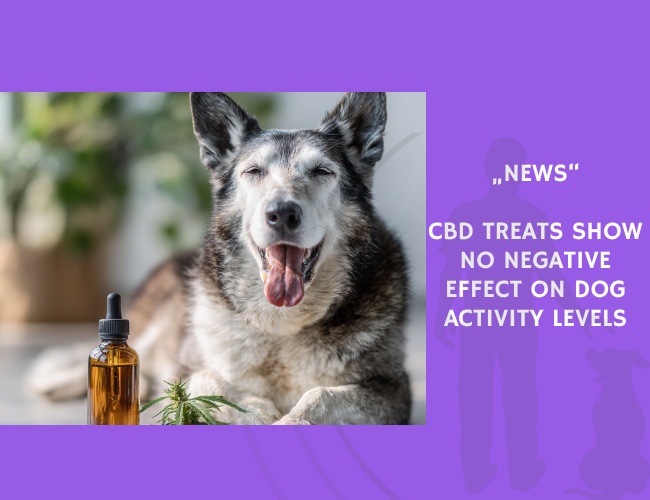
In a study published in the Journal of Animal Science, Elizabeth M. Morris and colleagues explored how cannabidiol (CBD) supplementation affects the activity and behavior of adult dogs. The growing popularity of CBD products for companion animals has prompted research into their safety and physiological effects, particularly in the context of activity and stress regulation.
The researchers employed a randomized complete block design involving 24 dogs averaging 18.0 ± 3.4 kg in body weight. The dogs were divided into three treatment groups: control (no CBD), 2 mg CBD/kg body weight/day, and 4 mg CBD/kg body weight/day. The CBD was administered via treats given twice daily following scheduled exercise sessions. Dogs were fitted with activity monitors to record movement continuously, while environmental conditions alternated between “Quiet” and “Music” sessions to evaluate contextual influences on behavior.
After a two-week baseline and adaptation period, data were collected for an additional two weeks to assess total activity points, duration, and scratching behavior. Statistical analyses using the MIXED procedure in SAS revealed that CBD did not significantly alter total activity (P = 0.9971) or activity duration (P = 0.8776). Interestingly, CBD supplementation tended to reduce scratching behavior (P = 0.0692), suggesting potential mild benefits for skin comfort or relaxation.
Activity patterns showed that, regardless of treatment, dogs were more active in the afternoon (PM) than in the morning (AM) (P < 0.0001). Dogs receiving 4 mg/kg/day tended to be slightly less active during PM sessions (P = 0.0914), but overall, CBD did not negatively affect exercise activity or movement duration. In fact, during active exercise sessions, dogs receiving CBD ran more than controls (P = 0.0339), suggesting that supplementation may not impair and might even support physical engagement.
The study concludes that CBD supplementation up to 4 mg/kg/day is well-tolerated and does not reduce daily activity levels in dogs. These findings are important for owners and veterinarians considering CBD for therapeutic purposes, as they indicate no detrimental effects on energy or behavior within tested dosage ranges.
This work provides an evidence-based foundation for further exploration into the physiological and behavioral impacts of CBD in canines, paving the way for its potential use in managing stress, discomfort, or anxiety without compromising performance.
Source: Morris, E. M., Kitts-Morgan, S., Spangler, D. M., McLeod, K., & Harmon, D. (2020). The impact of feeding treats containing cannabidiol (CBD) on the daily activity level of dogs. Journal of Animal Science, 98, 60–61. Published November 30, 2020.










