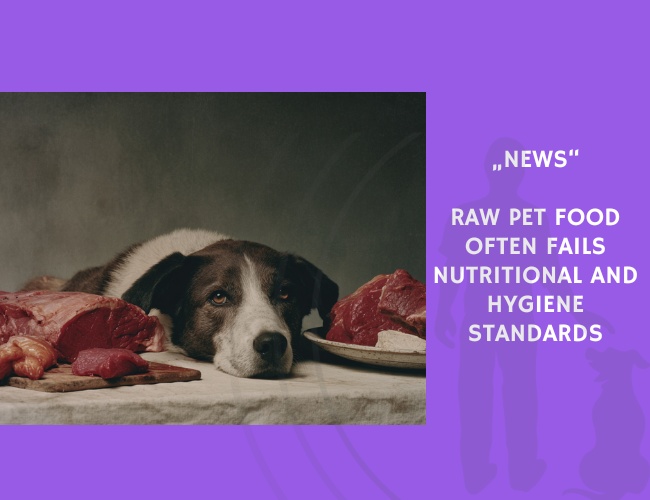
In their study published in Animals, C. Vecchiato and colleagues investigated whether commercial raw meat-based diets (RMBDs) meet nutritional standards and hygiene expectations for companion animals. Despite their growing popularity as “natural” alternatives to processed pet food, RMBDs may carry significant risks related to nutrient balance and microbial contamination.
The team analyzed 44 commercial RMBD products purchased in Germany, assessing their nutrient profiles and bacterial content. They compared measured nutrient levels against declared values and minimum dietary requirements for dogs and cats across life stages. The study also tested for hygiene quality using aerobic colony count (ACC), Enterobacteriaceae presence, and Salmonella spp. detection.
The findings revealed that every RMBD tested had at least one nutritional concern. Fat and protein levels exceeded declared values in 33% and 45% of the samples, respectively. The diets were generally very rich in fat (mean 69 g/Mcal, range 33–95 g/Mcal), often leading to poor nutrient balance. Moreover, fat content showed a strong negative correlation with protein (r = −0.74, p < 0.0001), suggesting that as fat increased, protein quality declined. This imbalance could pose risks of obesity and malnutrition in companion animals.
Hygiene results were equally concerning. High bacterial loads were recorded, with average counts of 2.61 × 10⁸ CFU/g for aerobic colonies and 3.61 × 10⁶ CFU/g for Enterobacteriaceae. Salmonella spp. were detected in two out of ten products tested, confirming potential zoonotic hazards. Notably, frozen RMBDs containing poultry or mixed animal carcasses had significantly higher bacterial contamination compared to thawed or beef-based products (p = 0.003).
Vecchiato et al. concluded that the nutritional and microbiological quality of commercial RMBDs often fails to meet safety and adequacy standards. The combination of nutrient deficiencies and bacterial contamination represents a dual risk—affecting both pet health and human household safety. The authors recommend stricter regulation and monitoring of RMBD production, alongside veterinary guidance for owners choosing raw diets.
This study underscores the importance of evidence-based feeding decisions. While raw feeding may appeal to naturalistic ideals, ensuring balanced nutrition and hygienic safety remains essential to protecting the wellbeing of both pets and their human companions.
Source: Vecchiato, C., Schwaiger, K., Biagi, G., & Dobenecker, B. (2022). From Nutritional Adequacy to Hygiene Quality: A Detailed Assessment of Commercial Raw Pet-Food for Dogs and Cats. Animals, 12. Published September 1, 2022.