
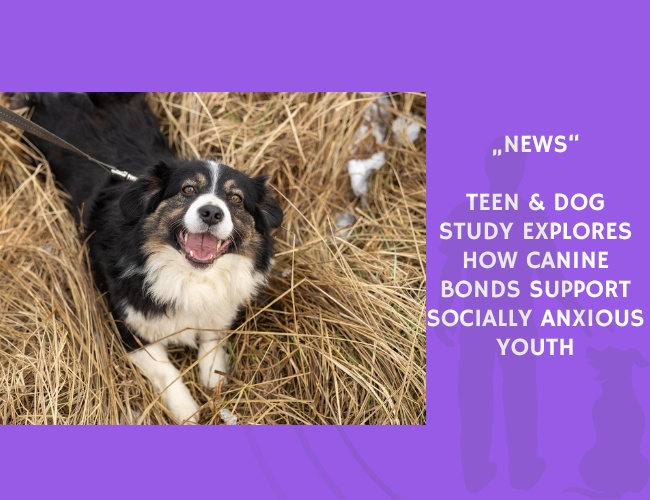
Published in PLOS ONE, the study by Megan K. Mueller and colleagues provides the research framework for one of the most comprehensive investigations into the therapeutic potential of the human–dog bond among adolescents with high social anxiety. The project, known as the Teen & Dog Study, aims to uncover how canine companionship may foster emotional regulation, physiological calm, and social resilience in young people navigating anxiety-related challenges.
The study follows 514 adolescents aged 13–17 from across the United States, all living with their dogs and families. Its longitudinal design incorporates repeated assessments of physiological, emotional, and social well-being over time. Researchers seek to identify the mechanisms through which youth–dog interactions promote adaptive coping, focusing particularly on family dynamics, individual temperament, and social contexts that shape these relationships.
The protocol details three main objectives: first, to evaluate how the quality of the youth–dog bond supports coping with social anxiety; second, to understand family-level processes that foster or hinder healthy dog–human interactions; and third, to explore the physiological effects of these interactions, such as changes in heart rate variability and stress responses during moments of social tension.
To achieve this, the research integrates diverse data sources—including surveys, interviews, ecological momentary assessments, and continuous physiological monitoring. This multifaceted approach enables the team to capture not only subjective experiences but also objective physiological indicators of stress and comfort during real-world interactions between teens and their dogs.
The Teen & Dog Study represents a vital step toward developing evidence-based interventions that use dog-assisted companionship to promote mental health in youth. By illuminating how dogs help adolescents manage social anxiety, the research may inform future therapeutic frameworks for schools, families, and clinical programs that support anxious or socially withdrawn young people.
Source: Mueller, M. K., King, E. K., Charmaraman, L., Mote, J., Anderson, E. C., Dowling-Guyer, S., Mason, N., Brown, J. J. N., Mingo, E. C., Sabelli, R. A., & McCobb, E. (2025). Longitudinal idiographic assessment of adolescent-dog relationships and adaptive coping for youth with social anxiety: The Teen & Dog Study protocol. PLOS ONE, 20. Published October 7, 2025.










