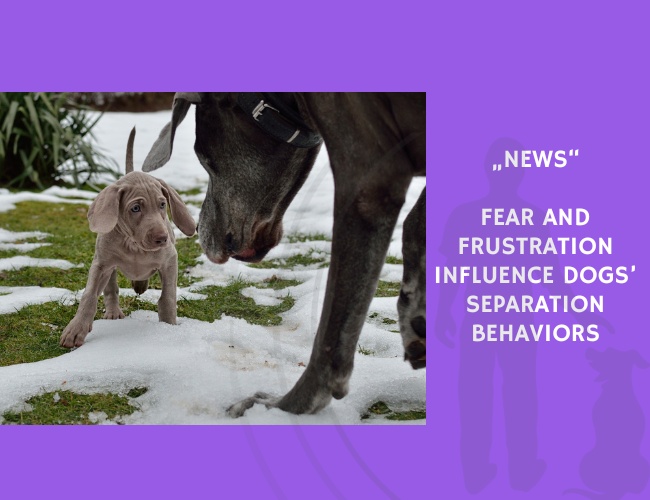
Published in Scientific Reports, this study by Rita Lenkei and colleagues explored whether dogs’ behavioral reactions to separation reflect different internal emotional states such as fear, panic, or frustration. The research aimed to determine how a dog’s temperament in other contexts influences its response to being separated from its owner.
The researchers combined owner questionnaires with controlled separation tests to measure emotional and behavioral responses. The questionnaires assessed factors like fearfulness, frustration thresholds, and phobic tendencies, while the separation test observed behaviors such as whining, barking, scratching, and escape attempts.
Results revealed that dogs prone to fear-related behaviors tended to whine more and bark less when separated, reflecting distress without aggression. Conversely, dogs with higher frustration scores exhibited increased barking and door-scratching behaviors, signaling agitation and attempts to regain contact. Dogs showing strong phobic tendencies displayed both whining and escape-seeking behaviors, highlighting the overlapping but distinct emotional mechanisms driving separation-related responses.
The findings provide empirical support for the idea that separation-related problems in dogs are not uniform but rather stem from different emotional motivations. This distinction is critical for treatment, as fear-based reactions may require desensitization and confidence-building, while frustration-related behaviors might respond better to impulse control and enrichment strategies.
By identifying the emotional diversity behind separation behaviors, Lenkei and colleagues emphasize the importance of individualized approaches to behavioral therapy and training. Understanding whether a dog’s distress stems from fear, frustration, or both can help owners and trainers choose the most effective, humane interventions to improve canine welfare.
Source: Lenkei, R., Faragó, T., Bakos, V., & Pongrácz, P. (2021). Separation-related behavior of dogs shows association with their reactions to everyday situations that may elicit frustration or fear. Scientific Reports, 11. Published September 28, 2021.