
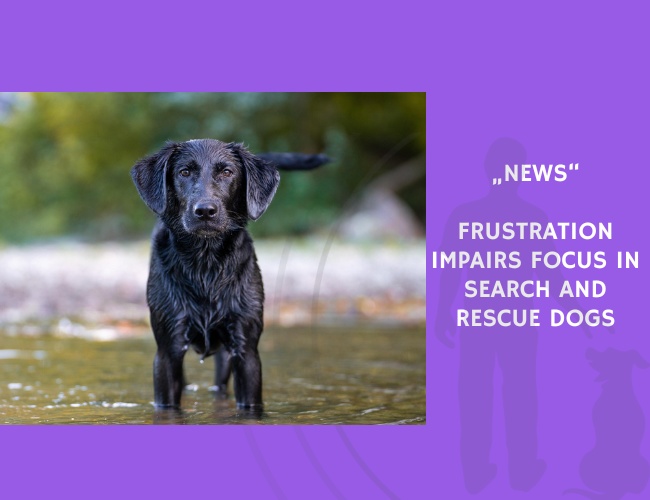
Published in Frontiers in Veterinary Science, this study by Sally Dickinson and Erica N. Feuerbacher examined how two forms of stress—psychological frustration and physical exertion—affect the physiological and behavioral performance of search and rescue (SAR) dogs. These highly trained dogs are invaluable for locating missing persons in complex environments such as disaster zones, wilderness, and avalanche areas.
Researchers assessed heart rate variability (HRV) and search accuracy to measure the effects of frustration versus moderate exercise. Frustration was induced by preventing dogs from reaching a target scent, while exercise-related stress was generated through controlled physical activity. The findings revealed that frustration caused a significant drop in HRV—indicating higher autonomic stress—and led to longer search latency times, suggesting impaired focus and task efficiency.
Interestingly, while physical exertion elevated arousal levels, it did not compromise the dogs’ ability to locate the target odor. In contrast, frustration led to both physiological strain and behavioral disruption, confirming that psychological stressors can be more detrimental to canine performance than physical fatigue.
The study highlights the need for training programs that build frustration tolerance in working dogs. Techniques such as incremental goal-setting, reward control, and recovery intervals could help mitigate stress during real-life missions. Ensuring psychological stability is not only vital for operational success but also for maintaining canine welfare in high-stakes rescue scenarios.
Source: Dickinson, S., & Feuerbacher, E. N. (2025). Frustration and its impact on search and rescue canines. Frontiers in Veterinary Science, 12. Published March 7, 2025.










