Introduction: The Invisible Line Between Joy and Conflict
You watch your dog racing across the park, tail wagging, mouth open in what looks like pure joy. Another dog joins in, and suddenly the energy shifts. The play becomes rougher, the sounds sharper, and you feel tension rising in your chest. What just happened?
Play is one of the most beautiful expressions of canine life – a dance of trust, communication, and joy. Yet within this dance lies a delicate threshold, an invisible line where excitement can tip into conflict. Understanding this transition is not just about preventing fights; it is about honoring the emotional landscape of your dog and building a foundation for healthier social connections.
This exploration takes us deep into the neurobiological circuits that govern arousal, the subtle communication signals that maintain balance, and the environmental factors that either support or disrupt your dog’s ability to self-regulate. Through the NeuroBond approach, we recognize that every moment of play is a conversation between brain chemistry, learned behavior, and emotional memory.
Let us guide you through this complex territory with both scientific insight and practical wisdom. 🧠
Character & Emotional Foundations: The Neurobiology of Arousal
What Happens in Your Dog’s Brain During Play?
Every playful chase, every mock wrestle, is orchestrated by intricate neural networks that control arousal, motor function, and emotional expression. The emotional brainstem serves as command central, coordinating three essential networks: Ascending pathways that heighten awareness, Descending networks that activate characteristic play behaviors, and Modulatory systems that keep everything in balance.
When your dog spots a play partner, lateral projections from the periaqueductal gray, hypothalamus, and amygdala spring into action. These structures activate the approach behaviors that draw your dog toward rewarding social interaction. The prefrontal cortex, amygdala, hypothalamus, striatum, and cerebellum work together to assess the situation: Is this friend or foe? Is this safe or dangerous?
The beauty of healthy play lies in this coordination. Your dog’s brain constantly evaluates reward sensitivity, cognitive processing, and emotional expression simultaneously. This is where the foundation of trust begins – in the seamless integration of neural circuits that allow your dog to be both excited and controlled.
The Chemical Dance: Dopamine and Noradrenaline
You might notice how some dogs seem to “lose their minds” during play, becoming increasingly frantic until control disappears entirely. This escalation has a chemical signature. Dopamine and noradrenaline, two powerful neurotransmitters, create the intensity of appetitive motivation that drives play behavior.
The raphe nuclei release serotonin, the ventral tegmental area floods circuits with dopamine, and the locus coeruleus delivers noradrenaline throughout the brain. These modulatory pathways coordinate how your dog experiences arousal and excitement. When balanced, they create joyful engagement. When dysregulated, they fuel overexcitement and loss of inhibitory control.
Recent research reveals fascinating cross-talk between dopamine and noradrenaline in cerebellar networks. Both can decrease excitatory signals, and remarkably, dopamine can act through noradrenaline receptors while noradrenaline can work through dopamine receptors. This delicate chemical conversation means that small shifts in one system ripple through the other.
Noradrenaline exerts inhibitory control over dopamine release in the hypothalamus, creating a natural brake system. When this brake fails – through overstimulation, stress, or genetic predisposition – dopamine floods the system unchecked. The frontal cortex, responsible for impulse control and decision-making, becomes overwhelmed. Your dog crosses from exhilarated to dysregulated. 🧡
Individual Differences: Why Some Dogs Tip Faster Than Others
Not every dog experiences play arousal the same way. You have likely observed this at the dog park: one dog maintains perfect self-control through hours of play, while another escalates within minutes. These individual differences in emotional regulation and stress resilience are deeply rooted in both neurobiology and experience.
The way your dog processes rewarding or aversive stimuli, and their coping strategies, can predict vulnerability or resilience to behavioral challenges. Dogs with lower stress resilience show more dramatic physiological arousal responses. Their sympathetic nervous system activates more quickly and returns to baseline more slowly. This means they spend more time in states of high arousal, where the risk of play-to-fight transitions increases.
Individual variations in dopaminergic and noradrenergic system functioning create different arousal profiles. Some dogs naturally maintain better balance between excitement and inhibition. Others have systems that lean toward overstimulation, requiring more conscious environmental management and training support.
Through understanding these differences, we move away from judgment and toward compassion. Your dog is not “bad” or “aggressive” – they are navigating their unique neurochemistry within social contexts that may or may not support their needs.
Behavioral Signals & Communication: Reading the Language of Play
The Meta-Language of Balanced Play
Healthy canine play depends on meta-communication – signals that say “this is play, not conflict.” While dogs use numerous communication channels, understanding the full spectrum helps you recognize when balance exists and when it begins to falter.
Visual communication includes more than the obvious play bow. Blinking patterns play a role in intra- and interspecific communication, with dogs demonstrating mimicry of blinking between playmates. This subtle synchronization indicates attunement and positive social engagement. When blinking patterns become rigid or disappear, connection may be breaking down.
Olfactory signals form another crucial layer. Scent marking mediates territorial defense and intrasexual competition in free-ranging dogs. During play, changes in scent marking behavior can indicate shifting emotional states. A dog who suddenly increases marking during or after play may be processing stress or uncertainty.
The vomeronasal organ, critical from birth for detecting chemical signals, continues to inform social interactions throughout life. Dogs read each other’s emotional states through pheromones and other chemical cues invisible to our human awareness. When these olfactory conversations support mutual understanding, play remains balanced. When they create confusion or trigger defensive responses, escalation becomes more likely.
Self-handicapping – when a larger or more skilled dog moderates their strength to match a smaller playmate – demonstrates sophisticated social awareness. Role reversals, where dogs take turns being chaser and chased, show flexibility and trust. These signals create the Invisible Leash of mutual respect that allows play to remain joyful. 🐾
When Communication Breaks Down
You can sense the moment when play shifts. The body language becomes stiffer, the vocalizations change tone, the pauses disappear. These are the behavioral thresholds where meta-communication fails to prevent escalation.
While research does not specify exact thresholds, understanding the foundations of dog communication helps us recognize when signals are being misinterpreted or ignored. A play bow offered to a dog already in high arousal may not register. Gentle mouthing that gradually increases in pressure may cross a playmate’s tolerance threshold without the first dog recognizing the boundary.
Mismatches in physical attributes create additional risk. Research on German Shepherd puppies considered body size as a primary variable in play interactions, suggesting that size disparities influence play dynamics. When a large dog plays roughly with a small dog, even well-intentioned behavior can become overwhelming or frightening.
Breed differences in play style add another layer of complexity. Herding breeds may use intense eye contact and stalking behaviors that other dogs misinterpret as predatory. Terriers often prefer rougher, more intense physical contact than gentler breeds tolerate comfortably. Brachycephalic breeds may struggle to produce clear vocal signals due to their anatomy.
These mismatches do not make play impossible, but they require greater awareness and intervention to maintain safety and positive emotional experiences for all participants.
Environmental & Human Influences: The Context of Play
Setting Variables That Shape Stability
The environment where play occurs profoundly influences whether arousal remains balanced or spirals into conflict. Space constraints create immediate physical pressure. When dogs cannot escape or create distance, they lose a crucial self-regulation tool.
Territorial factors matter significantly. Scent marking plays a crucial role in territorial defense, suggesting that resource-related tensions can influence social interactions even during play. A dog playing in their own backyard may feel more defensive than in a neutral space. Multiple dogs competing for limited space, toys, or human attention create resource pressure that can leak into play interactions.
The acoustic environment influences behavior and wellbeing in measurable ways. Research on cannabidiol’s impact on dog activity included “Quiet time” and “Music time” sessions, recognizing that auditory input affects canine arousal levels. Excessive noise – from traffic, construction, or even excited human voices – can contribute to overstimulation and affect play stability.
Dogs need periods of calm to practice down-regulation. Continuous high-arousal environments prevent this essential skill development. Without opportunities for quiet recovery, dogs remain in sympathetic nervous system activation, making them more reactive and less able to read social cues accurately. 😊
Human Interventions: Help or Hindrance?
You are not a passive observer of canine play. Your presence, actions, and energy actively shape the interaction. Dogs modulate their behavior in response to human social cues with remarkable sensitivity. Human gazing influences begging strategies in free-ranging dogs, demonstrating their attention to human focus and intentions.
The dog-human relationship is characterized as a dependency-driven relationship within a prestige-based social system. This means your dog looks to you for social information and guidance. Your interventions, whether intentional or unintentional, profoundly impact their emotional state and self-regulation during play.
Disruptive interventions create confusion and escalation. Yelling at dogs during high-arousal play often increases rather than decreases excitement. Sudden physical restraint can trigger panic or defensive aggression. Waving arms, making loud noises, or rushing toward dogs in conflict activates their threat-detection systems.
Interventions That Often Make Play Escalation Worse:
- Yelling, screaming, or using a harsh, panicked tone of voice
- Rushing directly toward dogs in conflict with tense, aggressive body language
- Grabbing collars or limbs suddenly without warning or preparation
- Using physical punishment like hitting, kicking, or alpha rolls
- Spraying water or throwing objects at the dogs
- Creating additional chaos by bringing more people or dogs into the situation
- Continuing to allow interaction while hoping it will “work itself out”
Helpful Human Interventions During Rising Arousal:
- Calmly walking toward the dogs with relaxed, confident body language
- Using a cheerful, upbeat tone to redirect attention before threshold is crossed
- Creating environmental interruptions like opening a gate or door to naturally separate dogs
- Tossing treats away from the interaction to create positive distance
- Calling dogs to you for a brief pause using previously trained recall cues
- Positioning yourself between dogs as a calm, non-threatening barrier
- Suggesting a structured activity change like “let’s go for a walk” to all handlers present
Conversely, calm human presence can support regulation. Dogs in social learning environments observe and respond to human emotional states. Your groundedness provides a reference point for acceptable arousal levels. Your quiet confidence in managing the environment helps dogs feel safer and more able to self-regulate.
The challenge lies in timing and quality of intervention. Early, gentle redirection before arousal peaks supports learning. Last-minute panic reactions reinforce the very arousal patterns you hope to change.

Conditioned Reactivity Through Repeated Overstimulation
Can repeated exposure to chaotic play environments create lasting reactivity? The answer is yes. Genetic background modulates neurotransmission in response to different rewarding or aversive experiences, meaning physiological and emotional responses become shaped by environment and experience.
Research on early life stress indicates that such experiences affect subjective fear and physiological reactivity. While this research involved humans, the principle applies broadly across species. The early social environment is particularly important for the development of social play in young animals, with lasting effects on behavioral patterns.
A puppy repeatedly placed in overwhelming play situations learns that social interaction equals dysregulation. Their nervous system becomes conditioned to respond to play invitations with high arousal and poor impulse control. The neural pathways that should support balanced engagement instead fire in patterns of reactivity and conflict.
This creates what we might call negative Soul Recall – emotional memories that associate play with stress rather than joy. These memories operate below conscious awareness, triggering physiological responses before cognitive processing occurs. Your adult dog may “overreact” to play invitations not because they lack training, but because their nervous system remembers overwhelm.
Understanding this helps us approach reactive dogs with compassion rather than frustration. We are not dealing with “bad behavior” but with learned physiological patterns that require patient reconditioning.
Cognitive Development & Social Learning: Building Play Competence
How Dogs Learn Social Boundaries
Social learning forms the foundation of canine social competence. Prestige-based social systems, characterized by observation and cooperation, influence both dog-dog and dog-human interactions. Dogs learn appropriate social behaviors, including play boundaries, through watching and engaging with others.
The cognitive capacity for understanding complex social signals is remarkable. Pet dogs can be taught to associate words with corresponding outcomes using soundboard buttons, responding appropriately even without body language cues. This demonstrates sophisticated learning abilities that extend to play contexts.
Young dogs develop social awareness progressively. Research shows that children’s ability to recognize dog communication signals improves with age, suggesting that interpreting social signals – even across species – is a learned skill that develops over time. The same principle applies to dogs learning to read each other.
A puppy who experiences diverse, well-moderated play interactions develops a rich vocabulary of social signals. They learn to recognize subtle shifts in another dog’s body language, to adjust their own behavior based on feedback, and to distinguish playful invitation from genuine threat. This learning requires exposure to various play partners, body types, and play styles within supportive contexts.
Dogs deprived of this diverse social exposure struggle with social fluency. They misread signals, respond inappropriately, and experience more conflict in play. Their social incompetence stems not from aggression but from insufficient learning opportunities.
The Impact of Early Play Experiences
The question arises: do dogs who experienced rough or unsupervised puppy play display poorer impulse control in adulthood? While direct causal research is limited, supporting evidence suggests early experiences profoundly shape adult behavior.
Research on German Shepherd puppies indicates that environment affects social play style, implying that early play experiences shape behavioral development. Studies of Galápagos sea lions demonstrate the importance of complex early social environments for developing appropriate social play. These principles suggest that the quality and structure of early play interactions are crucial for developing self-regulation and social skills.
Deficiencies in early social learning or consistent exposure to overstimulating, unregulated play likely hinder impulse control development. Puppies need play experiences that include natural pauses, opportunities to disengage, and consequences for excessive roughness. Without these elements, they do not learn the internal regulation skills necessary for managing adult play arousal.
The critical socialization period – roughly 3 to 14 weeks for puppies – represents a window of heightened learning. Experiences during this time shape neural development and behavioral templates. Puppies who learn that play has no boundaries or that arousal has no ceiling carry these patterns into adulthood.
This does not mean adult dogs cannot learn new patterns, but reconditioning requires more time and conscious effort than initial socialization would have demanded.
Structured Play Training for Emotional Competence
Can structured, emotionally aware play training reduce reactivity and improve social competence? Research strongly supports this approach. Guided playful learning supports social-emotional learning, providing a valuable tool for developing social-emotional competencies.
Studies with preschoolers interacting with robot dogs showed that guided play supported social-emotional learning through conversations about relationships. Interaction with real dogs facilitated empathic responses. These findings suggest that structured play, when thoughtfully designed, builds emotional and social skills.
Individual differences in emotion regulation strategies link to behavioral outcomes. Cognitive reappraisal – the ability to reframe situations to change emotional responses – associates with healthier patterns of affect and social functioning compared to suppression strategies. Applied to canine training, structured play that incorporates arousal modulation and teaches appropriate emotional responses enhances self-regulation and social competence.
This is where the NeuroBond framework becomes practical. Training sessions designed around building trust, reading subtle cues, and practicing down-regulation during exciting contexts create new neural pathways. Dogs learn that arousal can rise and fall safely, that exciting experiences can include pauses, and that social interaction does not require continuous intensity.
Games and Exercises That Build Impulse Control During Play:
- Pause and Release: Ask for a brief “wait” or “stay” before throwing a toy, gradually increasing duration before release
- Name Game: Call your dog’s name during low-level play and reward for immediate attention and eye contact
- Settle Between Rounds: Practice a “settle” or “down” cue after 2-3 minutes of play before resuming
- Off-Switch Training: Teach a specific cue that means “playtime is ending” followed by calm activities
- Body Awareness: Work on “touch” or targeting exercises that require precision and focus during excitement
- Consent-Based Play: Pause frequently and wait for your dog to re-initiate, teaching them they control engagement
- Breathing Breaks: Incorporate 30-second pauses where you both simply breathe and observe the environment
Games that build impulse control – such as “wait” before chasing a toy, or “settle” after brief play bursts – teach the nervous system flexibility. The goal is not to suppress playfulness but to expand the range of arousal states your dog can navigate comfortably.
Play. Peak. Pivot.
Joy and chaos share a border. When excitement surges unchecked, the chemistry of fun turns volatile. What began as connection becomes collision when arousal outruns awareness.
Neurochemistry drives escalation. Dopamine fuels engagement, noradrenaline sharpens intensity—but together, they can blur boundaries. The same systems that build play can also break control.
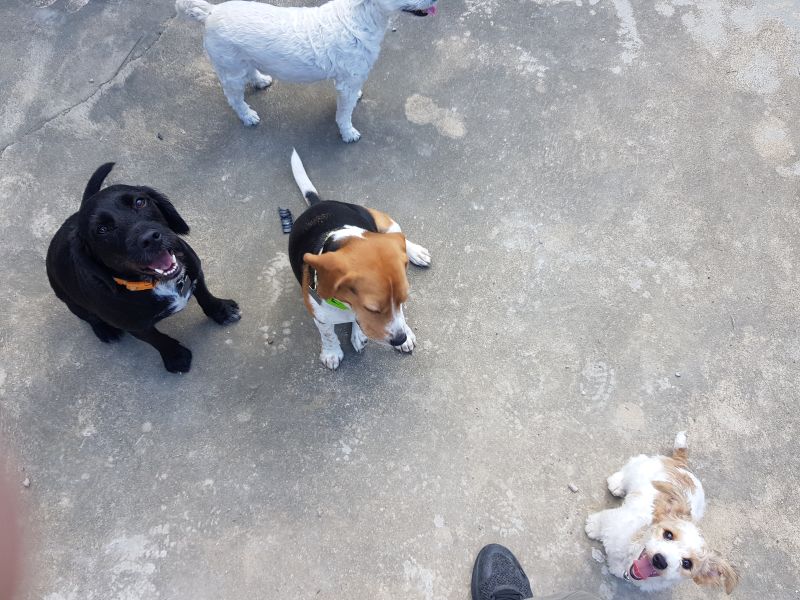
Balance preserves the bond. When calm guidance re-enters the moment, the spiral reverses. Regulation restores rhythm, and play becomes dialogue once more.
Training Applications: From Understanding to Practice
Distinguishing Normal Arousal from Early Warning Signs
How can you, as a dog guardian or trainer, distinguish between healthy play arousal and early warning signs of escalation? The answer lies in understanding the multifaceted nature of canine communication and developing observational precision.
Watch for subtle shifts across multiple communication channels. Visual cues include changes in blinking patterns, pupil dilation, and body tension. Olfactory signals, while less obvious to humans, manifest in increased marking or investigation of the environment. Vocal patterns shift from breathy, irregular play sounds to more sustained, tonal vocalizations.
Body language transitions provide clear information. In balanced play, you see:
Signs of Healthy, Balanced Play:
- Frequent role reversals where dogs take turns being chaser and chased
- Natural pauses for brief disengagement and reorientation
- Loose, wiggly body movement with open, relaxed mouths
- Play bows or other meta-signals that refresh the “this is play” agreement
- Self-handicapping where stronger dogs moderate their intensity
- Regular check-ins with play partners through brief eye contact or physical pauses
Early Warning Signs of Escalation:
- Bodies becoming stiffer with tense muscle tone
- Movements becoming more linear, focused, and predatory
- Natural pauses disappearing completely
- One dog persistently targeting another without reciprocation
- Mounting behaviors that become obsessive or forceful
- Vocalizations shifting from breathy play sounds to sustained, tonal growls
- Lip licking, whale eye, or other stress signals appearing during play
The theoretical foundation of social communication theory tells us that play relies on meta-signals to prevent misinterpretation. When these signals are present, play remains safe. When they become absent or ignored, conflict approaches. Your role involves recognizing this transition point and intervening before threshold is crossed.
Trainers who understand neurobiological arousal patterns recognize that dysregulation happens on a continuum. Small interventions early in the arousal curve are far more effective than dramatic interventions at the peak. A brief pause, a moment of distance, or a simple attention redirect when arousal begins climbing prevents the need for emergency separation later.
Designing Play Sessions Around Arousal Modulation
Should play sessions be designed around arousal modulation rather than continuous activity? The answer is an emphatic yes. Designing play sessions around arousal modulation is supported by principles of emotional regulation and physiological responses.
Objective physiological assessment of sympathetic arousal is feasible and can correspond directly with therapeutic activities aimed at arousal regulation. This suggests that monitoring and actively managing arousal levels during play is more effective than allowing continuous activity without structure.
Environmental factors influence activity levels significantly. Studies including “Quiet time” versus “Music time” sessions demonstrate that controlling the environment and incorporating periods of calm or lower stimulation benefits arousal management. By integrating periods of rest or low-arousal activities, trainers help dogs practice self-regulation and prevent overexcitement that could lead to conflict.
Practical application involves structuring play sessions with intentional rhythm: brief bursts of active play followed by calm activities or rest periods. This might look like two minutes of fetch followed by one minute of calm attention or simple engagement with the handler. Gradually, dogs learn that arousal naturally rises and falls, that excitement does not require sustained intensity.
The Invisible Leash becomes tangible through this training. Your dog learns to check in with you during exciting contexts, to accept gentle guidance about when to pause, and to trust that play will resume after brief rest periods. This builds the internal regulation capacity that prevents play from escalating into conflict.
Group play sessions benefit enormously from this structure. Instead of allowing continuous free play until problems emerge, facilitate structured play periods with built-in pauses. During pauses, dogs might practice simple cues, receive calm petting, or simply stand quietly with their guardians. This prevents cumulative arousal buildup and maintains emotional safety.
Emotional Decompression and Co-Regulation After Conflict
When play does escalate into conflict, what happens next matters enormously. Can emotional decompression or co-regulation techniques restore equilibrium after play-induced conflict? The evidence supports that effective emotion regulation strategies and coping mechanisms are crucial for managing emotional states and preventing maladaptive responses.
Individual differences in emotion regulation link to behavioral outcomes, and healthier patterns of affect and social functioning associate with effective emotion regulation strategies. While specific protocols vary, the underlying principle of co-regulation and emotional decompression aligns with broader understanding of social-emotional learning and regulation.
Guided interventions aimed at calming and re-establishing equilibrium after high-arousal play are effective. Techniques that facilitate a shift from defensive mobilization back to safe social engagement restore equilibrium and prevent future conflicts. This is the essence of Soul Recall working positively – helping your dog’s nervous system remember that safety and connection are possible even after moments of dysregulation.
Practical Co-Regulation Techniques After Play Conflict:
- Maintain calm, grounding presence without excessive touch or immediate physical intervention
- Allow physical space for autonomic nervous system recovery while staying emotionally present
- Use soft verbal reassurance with a low, soothing tone rather than excited or anxious energy
- Engage in parallel walking where you move together without direct interaction demands
- Practice quiet sitting or standing together, allowing your dog to lean into you if they choose
- Offer water to support physiological cooling and reset
- Guide toward gentle, low-arousal activities like sniffing or slow exploration
- Avoid eye contact that might feel confrontational during the immediate recovery period
Avoid immediately re-introducing play or forcing social interaction. The body needs time to metabolize stress hormones and return to baseline. This typically requires 20 to 90 minutes depending on the individual dog and severity of escalation. Forcing premature re-engagement risks reinforcing reactive patterns rather than building regulation skills.
Long-term, dogs benefit from learning that dysregulation is not catastrophic and that equilibrium can be restored. This builds resilience and confidence in their ability to navigate social challenges. Your role involves providing the external regulation support while their internal systems develop greater capacity.
🐕 The Play-to-Fight Transition: Understanding Arousal Escalation 🎯
A neurobiological journey through the 8 phases where joyful play transforms into conflict
Phase 1: Initial Play Invitation
The Social Approach System Activates
The prefrontal cortex evaluates the social opportunity while the ventral tegmental area releases dopamine, creating motivation. The amygdala assesses safety, and if the environment feels secure, approach behaviors activate.
• Play bows with loose, wiggly body
• Soft eye contact and frequent glances
• Approach and retreat patterns
• Mouth open in relaxed position
Allow natural greeting rituals. Maintain calm, positive energy. Ensure adequate space for both dogs to approach and retreat comfortably. This is where the foundation of NeuroBond begins.
Phase 2: Arousal Builds – Balanced Engagement
Dopamine and Noradrenaline in Harmony
The Modulatory network coordinates dopamine (excitement) and noradrenaline (arousal) in balanced ratios. The cerebellum fine-tunes motor control while the prefrontal cortex maintains inhibitory control over impulses.
• Chase games with frequent role reversals
• Natural pauses every 30-60 seconds
• Play signals continue (soft play bites, bouncy movements)
• Both dogs appear equally engaged and enthusiastic
This is ideal play! Stay relaxed and observant. Avoid unnecessary intervention. Your calm presence acts as an Invisible Leash, providing security without control.
Phase 3: Arousal Intensifies – First Warning Signs
The Balance Begins to Shift
Dopamine levels continue rising while noradrenaline’s inhibitory control begins to weaken. The locus coeruleus increases noradrenaline output, heightening overall arousal. The prefrontal cortex works harder to maintain impulse control.
• Pauses become shorter or disappear
• Vocalizations increase in frequency and intensity
• Body tension increases slightly
• One dog may begin targeting more persistently
• Play bows become less frequent
This is your intervention opportunity! Gentle redirection NOW prevents escalation later. Call dogs to you with cheerful tone, suggest a brief walk, or create environmental change.
Phase 4: Overarousal – Loss of Self-Regulation
Inhibitory Control Begins to Fail
The frontal cortex becomes overwhelmed by subcortical arousal. Dopamine floods circuits unchecked as noradrenaline’s braking system fails. The amygdala hypersensitivity increases, making threat detection more reactive.
• Bodies become stiff and movements linear
• Vocalizations shift to tonal growls
• One or both dogs fixate without breaking eye contact
• Mounting or pinning behaviors emerge
• No reciprocity in interaction
Separate calmly but decisively. Use environmental barriers, recall to different areas, or leash and create distance. Avoid yelling or physical punishment which escalates arousal further.
Phase 5: The Threshold – Fight or Flight Response
Survival Circuits Take Over
The periaqueductal gray and hypothalamus activate defensive motor programs. The amygdala hijacks executive function completely. Noradrenaline surges create hypervigilance. The dog is now in survival mode, not social play mode.
• Air snapping or inhibited bites as warnings
• Teeth bared, ears pinned back
• Hackles raised along spine
• Explosive, sudden movements
• Attempts to escape or create distance
Physical safety is priority. Use barriers, leashes, or environmental interruptions. Never reach into the space between dogs. After separation, allow 20-90 minutes for nervous system recovery.
Phase 6: Post-Conflict State – Stress Response Active
The Autonomic Storm
Cortisol floods the system. The sympathetic nervous system remains activated. Heart rate, respiration, and muscle tension stay elevated. The hippocampus begins encoding the experience as an emotional memory.
• Panting heavily despite cool temperature
• Hypervigilance and scanning environment
• Stress signals: lip licking, yawning, whale eye
• Inability to settle or focus
• Possible displacement behaviors (sniffing, shaking off)
This is where Soul Recall becomes critical. Provide calm, grounding presence. Parallel walking, quiet sitting, or gentle sniffing activities help shift from sympathetic to parasympathetic nervous system activation.
Phase 7: Recovery & Decompression
Returning to Baseline
The parasympathetic nervous system gradually takes over. Cortisol levels begin to normalize. The prefrontal cortex regains executive function. Serotonin systems help restore emotional equilibrium and cognitive flexibility.
• Breathing returns to normal
• Body tension releases gradually
• Interest in environment returns
• Willingness to engage in calm activities
• Natural behaviors like drinking water or gentle exploring
Allow minimum 30-60 minutes of quiet time. Engage in low-arousal bonding activities. Avoid re-introducing social play immediately. This recovery period is essential for healthy emotional processing.
Phase 8: Memory Consolidation & Learning
What Happens in the Following 24-72 Hours
The hippocampus consolidates the experience into long-term memory. Emotional associations form in the amygdala. Depending on how recovery was handled, the brain either learns “I can regulate after stress” or “play leads to overwhelm.”
• Possible increased reactivity to play invitations initially
• May avoid the location where conflict occurred
• Could show hesitation around similar dogs or situations
• Or, with good support, shows resilience and continued social interest
Gradually reintroduce positive social experiences in controlled contexts. Practice arousal modulation games. Build confidence through structured success. This shapes whether the experience becomes trauma or a learning opportunity.
🔍 Individual Differences in Play-to-Fight Risk
Characteristics: Terriers, herding breeds, working lines
Risk Factor: Naturally higher dopamine sensitivity and drive leads to faster arousal escalation
Strategy: Shorter play sessions with built-in pauses
Characteristics: Golden Retrievers, Cavaliers, many companion breeds
Risk Factor: May reach threshold when overwhelmed by rougher play partners
Strategy: Match with similar play styles, avoid size mismatches
Characteristics: Hormonal changes, incomplete prefrontal cortex development
Risk Factor: Poor impulse control despite good early socialization
Strategy: Structured play with frequent regulation practice
Characteristics: Physical limitations, sensory decline, cognitive changes
Risk Factor: Lower tolerance, may react defensively when uncomfortable
Strategy: Gentle, brief interactions with calm partners
Characteristics: Limited early exposure, poor signal reading
Risk Factor: Misinterpret play signals, don’t know social boundaries
Strategy: Gradual exposure with socially skilled, tolerant dogs
Characteristics: Heightened stress response, amygdala hypersensitivity
Risk Factor: Lower threshold for defensive aggression during high arousal
Strategy: Focus on calm, parallel activities before introducing direct play
Arousal Level Assessment:
• 0-3 (Calm-Engaged): No intervention needed
• 4-6 (Moderate-High): Gentle redirection window – call for brief pause
• 7-8 (Overaroused): Immediate separation needed – use barriers/distance
• 9-10 (Fight Response): Safety protocol – separate and allow 60-90 min recovery
The 20-Minute Rule: If play exceeds 20 minutes without natural breaks, create one. Continuous arousal without down-regulation increases escalation risk exponentially.
Recovery Time Formula: Conflict intensity × 10-15 minutes = minimum recovery needed before any social re-engagement.
Understanding the play-to-fight transition is not about preventing joy—it’s about honoring the neurobiological truth that arousal is a spectrum, not a switch. Through the NeuroBond framework, we recognize that trust forms in the space between excitement and safety, where your dog learns that high arousal can exist without loss of control. The Invisible Leash is woven not from restraint but from your calm awareness, your ability to read subtle shifts before threshold is crossed, and your willingness to guide without dominating. When conflict does occur, how we facilitate recovery determines whether the experience becomes negative Soul Recall—a memory that breeds reactivity—or a lesson in resilience. Every play session is an opportunity to teach your dog that their nervous system can climb and descend safely, that social connection doesn’t require constant intensity, and that you are the steady presence who understands their inner landscape. This is where neuroscience meets soul: in the recognition that preventing play aggression is an act of profound respect for your dog’s emotional experience.
© Zoeta Dogsoul – Where neuroscience meets soul in dog training
Health Considerations: The Body’s Role in Play Behavior
Physical Factors That Influence Play Tolerance
Play aggression does not exist in isolation from physical health. Pain, discomfort, illness, and physical limitations profoundly affect a dog’s tolerance for rough play and their ability to communicate boundaries effectively.
Genetic factors define breed characteristics, including physical structure and potential health vulnerabilities. The ridge gene complex in Rhodesian Ridgebacks, for example, associates with dermoid sinus predisposition. While not directly linked to play behavior, such genetic predispositions influence physical comfort, which in turn affects social tolerance.
A dog experiencing chronic pain from hip dysplasia, arthritis, or dental disease has a lower threshold for play that involves body contact. What another dog experiences as normal roughness may feel intolerable to a dog in pain. These dogs may respond defensively to play invitations not because they lack social skills but because they are protecting their bodies from anticipated discomfort.
Breed-specific physical characteristics influence play style and tolerance. Brachycephalic breeds may struggle with sustained high-energy play due to breathing limitations, becoming stressed and reactive when they cannot catch their breath. Dogs with long backs risk injury from twisting movements common in play. Heavy or giant breeds may unintentionally harm smaller dogs simply due to their mass and momentum.
Recognizing these physical factors allows us to create appropriate play contexts. Matching dogs by size, energy level, and physical capability reduces risk. Monitoring for signs of physical discomfort or fatigue prevents play from continuing past a dog’s physical limits.
Regular veterinary care, pain management when needed, and awareness of breed-specific vulnerabilities all contribute to safer, more positive play experiences.
Hormonal and Life Stage Influences
Life stage and hormonal status influence play behavior and arousal regulation significantly. Intact males may display more intense play behaviors, particularly around adolescence when testosterone surges. Females in various stages of their reproductive cycle may be more or less tolerant of play depending on hormonal influences.
Adolescent dogs of all sexes experience neurological changes that affect impulse control and arousal regulation. The prefrontal cortex, responsible for executive function, does not fully mature until 18 to 36 months in most dogs. During adolescence, dogs may demonstrate poorer decision-making and impulse control even if they showed excellent skills as puppies.
This explains why many dogs experience a “teenage regression” in play behavior. They are not being deliberately difficult; their brain development temporarily outpaces their regulatory capacity. Understanding this helps us maintain appropriate expectations and provide the additional structure adolescent dogs need.
Senior dogs often show decreased play tolerance. Sensory changes, including reduced hearing or vision, can make them startle more easily during play. Cognitive changes may slow their processing of social signals. Physical changes increase discomfort with rough contact. These factors do not mean senior dogs should never play, but their play needs look different from younger dogs.
Respecting these life stage differences honors where each dog is in their journey. Creating play groups with similar life stages or carefully supervising mixed-age play prevents mismatches that could lead to conflict.
Lifestyle & Environmental Management: Creating Safe Play Contexts
Optimizing Physical Spaces for Balanced Play
The physical environment where play occurs can either support or undermine emotional regulation. Space size, terrain, obstacles, and escape routes all influence play dynamics. Large, open areas allow dogs to use distance as a regulation tool. When arousal climbs, dogs can create space, pause, and reset before re-engaging.
Conversely, confined spaces increase pressure and prevent natural regulation. Corners, fences, and narrow passages can trap dogs, forcing continued interaction even when one participant wants to disengage. This creates the conditions for play to tip into defensive aggression.
Terrain variety supports healthy play by providing natural breaks and changes in activity type. A space with flat areas for running, gentle slopes for different muscle engagement, and quieter spots for brief rest serves multiple regulation needs. Obstacles like logs or small hills create natural pauses as dogs navigate them.
Environmental enrichment includes not just physical features but also sensory experiences. Access to water for drinking and cooling, shade for rest, and areas with interesting scents for investigation all provide opportunities for dogs to briefly disengage from social play and self-regulate through other activities.
Essential Environmental Features for Safe Play:
- Multiple exit routes and open pathways to prevent dogs from becoming trapped or cornered
- Varied terrain with flat areas for running and gentle slopes for natural activity changes
- Obstacles like logs, small hills, or platforms that create natural pauses in play flow
- Shaded rest zones where dogs can cool down and observe rather than constantly participate
- Water stations accessible from multiple points for hydration and temperature regulation
- Quiet areas separated from high-traffic zones where overstimulated dogs can decompress
- Non-slip surfaces like grass or rubber matting to prevent injury during quick movements
- Visual barriers like bushes or low fencing that allow dogs to create psychological distance
Surface quality matters for injury prevention and comfort. Soft grass is gentler on joints than concrete. Avoiding slippery surfaces reduces injury risk during fast movements. These physical factors influence how comfortable dogs feel during play, which affects their arousal thresholds.
Social Grouping Strategies
Who plays with whom matters enormously. Thoughtful social grouping prevents many play-related conflicts before they begin. Size matching is the most obvious consideration, but play style compatibility may be even more important.
Key Factors for Successful Play Matching:
- Body size and weight: Pair dogs within similar size ranges to prevent accidental injury
- Play style preference: Match wrestlers with wrestlers, chasers with chasers, and gentle players together
- Energy level: Ensure both dogs can maintain similar intensity without one becoming exhausted or frustrated
- Life stage: Consider matching puppies with puppies, adults with adults, and creating gentle senior groups
- Social skill level: Pair socially confident dogs with those still learning, but avoid overwhelming novice players
- Breed tendencies: Be mindful of herding breeds’ intensity, terriers’ roughness, and retriever gentleness
- Previous relationship history: Honor existing friendships while carefully introducing new potential playmates
Some dogs prefer high-energy chase games, others enjoy wrestling, some like to dig or explore together. Matching dogs by preferred play style creates more balanced, satisfying interactions for all participants. A dog who loves rough wrestling may overwhelm a dog who prefers parallel play or gentle chase games.
Energy level matching prevents situations where one dog feels relentlessly pursued or where one dog becomes frustrated by a playmate who cannot keep up. This does not mean mixing energy levels never works, but it requires active monitoring and willingness to intervene.
Limiting group size supports better regulation. Large groups create complex social dynamics that can overwhelm even socially skilled dogs. Smaller groups or rotating pairs allow more focused, manageable interactions. This is especially important for dogs developing social skills or those with reactive histories.
Regular assessment of social compatibility allows adjustments as dogs change or as relationship dynamics shift. A pairing that worked beautifully three months ago may no longer serve both dogs well. Flexibility and responsiveness to current needs prevents persistent conflicts.
Welfare Implications: The Broader Picture
Psychological Impact of Repeated Play Conflicts
Dogs who repeatedly experience play escalating into conflict suffer psychological consequences beyond the immediate interaction. These experiences shape their expectations about social engagement, their confidence in their ability to navigate dog-dog interactions, and their overall emotional wellbeing.
Repeated negative experiences during play can create generalized fear or anxiety about other dogs. What should be joyful becomes stressful. Dogs may begin exhibiting reactivity on leash or reluctance to engage socially at all. This social withdrawal represents a significant welfare concern, as social connection is fundamental to canine wellbeing.
The relationship between play conflict and other behavioral issues deserves attention. Dogs who lack confidence in social situations may display increased anxiety in other contexts. The stress of repeated dysregulation can lower overall stress resilience, making dogs more reactive to various triggers.
From a welfare perspective, we must ask whether our management practices support dogs’ social needs or inadvertently create ongoing stress. Free-for-all play sessions that repeatedly result in conflict do not serve welfare goals, regardless of how common this practice may be.
Building a Culture of Informed Play
Creating systemic change requires shifting cultural attitudes about dog play. Many guardians believe that “dogs will work it out” or that rough play is always acceptable if no one is seriously injured. These beliefs overlook the emotional experiences and learning occurring during play interactions.
Education about arousal modulation, social communication, and the neurobiological factors underlying play behavior empowers guardians to make better decisions. Understanding that arousal escalation is not simply “bad behavior” but a physiological process helps people intervene appropriately and compassionately.
Professional training communities bear responsibility for promoting evidence-based approaches to social play management. This includes advocating for structured play over continuous free-for-alls, teaching clients to recognize early warning signs, and prioritizing emotional safety alongside physical safety.
Public spaces like dog parks require reconsideration through this lens. Current dog park culture often normalizes chaos and conflict. Imagine instead spaces designed with multiple separate areas for different play styles and energy levels, with educated volunteers helping monitor and guide interactions. Such changes could transform these spaces from sites of repeated stress into genuine resources for healthy socialization.
Senior Dogs & Long-Term Behavioral Patterns
How Early Play Experiences Shape Aging
The play experiences your dog has throughout life, particularly during critical developmental periods, influence their social behavior and stress responses in their senior years. Dogs who developed strong regulation skills and positive social associations maintain social confidence longer as they age.
Conversely, dogs with histories of play-related conflict may show increased reactivity or social avoidance as seniors. The accumulated emotional memories, the patterns of Soul Recall, shape their expectations and responses. A senior dog who learned that play leads to overwhelm may reject social opportunities entirely, even gentle ones appropriate for their age.
Physical changes in aging intersect with these learned patterns. Sensory decline can make senior dogs more easily startled during play. Cognitive changes may slow their processing of social signals. Physical discomfort from arthritis or other conditions lowers tolerance for contact. These factors combine with learned patterns to create the senior dog’s unique social profile.
Understanding this longitudinal perspective emphasizes the importance of positive early experiences and ongoing appropriate social opportunities throughout life. Dogs who maintain safe, enjoyable social engagement across their lifespan typically demonstrate better social resilience into old age.
Adapting Play for Senior Comfort and Joy
Senior dogs deserve continued social engagement adapted to their needs. This might mean shorter play sessions, gentler play styles, or carefully selected play partners. A senior who once loved rough wrestling may now prefer calm parallel walks or gentle sniffing games with an old friend.
Creating senior-friendly play contexts involves environmental accommodations. Soft surfaces protect aging joints. Shaded areas provide cooling. Water access supports hydration. Shorter sessions prevent fatigue. These simple adjustments allow senior dogs to maintain social connection without overwhelm.
Monitoring becomes more important with senior dogs. They may have less obvious signals of discomfort or may reach their limits more quickly. Proactive intervention prevents situations where a senior feels the need to respond defensively because they cannot physically escape or communicate their needs clearly.
The relationship between you and your senior dog deepens through this attentive care. You become the advocate who ensures their social experiences remain positive, who honors their changing needs, and who facilitates continued joy in safe contexts. This is the Invisible Leash at its most refined – the trust that allows your dog to relax into their golden years knowing you understand and protect their wellbeing.
Conclusion: Honoring the Dance Between Joy and Safety
The transition from play to aggression is not a mysterious event but a predictable outcome of neurobiological, social, and environmental factors interacting in complex ways. By understanding the arousal systems governing play, the communication signals that maintain balance, and the individual and contextual variables that influence escalation risk, we can create safer, more joyful social experiences for our dogs.
This understanding calls us to move beyond simplistic views of “aggressive” or “friendly” dogs toward nuanced recognition of arousal states, communication challenges, and the profound influence of early experience and current context. Your dog is not a simple machine that either plays appropriately or attacks; they are a complex being navigating neurochemical cascades, learned patterns, physical sensations, and social expectations simultaneously.
Through the NeuroBond framework, we recognize that every play interaction is an opportunity for learning, connection, or stress. Our choices about where, when, how, and with whom our dogs play shape their neural pathways, their social confidence, and their lifelong relationship with other dogs. This responsibility calls for informed, compassionate decision-making grounded in both scientific understanding and deep respect for canine experience.
The Invisible Leash that guides healthy play is woven from trust, clear communication, and the knowledge that you will protect your dog from situations that exceed their regulatory capacity. This does not mean preventing all play or eliminating every challenge, but rather creating conditions where play can remain in its joyful territory, where arousal can climb and descend safely, and where social connection builds confidence rather than fear.
As you move forward with this knowledge, observe your dog with fresh eyes. Notice the subtle signals that indicate their arousal state. Recognize the environmental factors that support or challenge their regulation. Honor their individual differences and adapt their social experiences to their unique needs. Create play opportunities that build competence and connection rather than simply releasing energy.
That balance between excitement and safety, between freedom and guidance, between the science of arousal and the poetry of trust – that is the essence of Zoeta Dogsoul. 🧡
Is structured, emotionally aware play management right for you? If you recognize the signs of play escalation in your dog, if you have witnessed the moment when joy tips into conflict, or if you simply want to deepen your understanding of your dog’s inner experience, then this approach offers profound possibilities for transformation. Your dog’s social life can be rich, joyful, and safe – when we bring both knowledge and heart to the dance of canine play.