
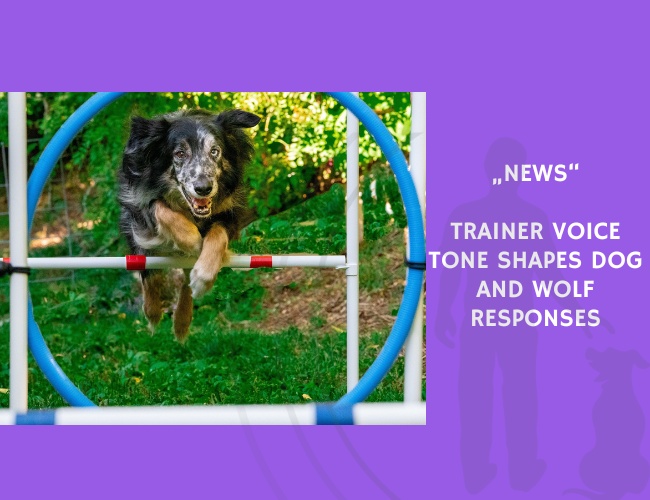
Communication style plays a crucial role in human–animal interaction, particularly in dog training. In a 2023 study published in Animals, Melissa Gabriela Bravo Fonseca and colleagues examined the association between trainers’ speech characteristics and the responses of nine mixed-breed dogs and nine wolves during 270 training sessions using positive reinforcement methods.
Trainers’ speech was categorized as nice, neutral, or reprehensive. The researchers analyzed how the duration and tone of each speech type influenced animals’ behavior and physiological responses, including tail wagging, proximity, and task performance. A friendly, encouraging tone (“nice speech”) was strongly associated with increased tail wagging, closer proximity to trainers, and improved correct responses in dogs. Conversely, reprehensive speech corresponded with reduced success and avoidance behaviors—particularly retreating in wolves.
While both species reacted positively to kind vocal tones, dogs responded more to higher-pitched, enthusiastic voices, typical of dog-directed speech, whereas wolves were more responsive to lower, calmer intonations. This suggests that domestication may have shaped dogs’ sensitivity to human vocal emotion, facilitating communication and cooperation.
Although no significant changes were found in cortisol levels, indicating stable physiological stress, the study highlights how vocal warmth enhances emotional connection and performance during training. Trainers’ tone of voice, therefore, plays an essential role in supporting positive learning experiences and reinforcing trust across species.
Source: Fonseca, M. G. B., Hilário, H., Kotrschal, K., Range, F., Virányi, Z., Duarte, M., Pereira, L. C. G., & Vasconcellos, A. S. (2023). The Power of Discourse: Associations between Trainers’ Speech and the Responses of Socialized Wolves and Dogs to Training. Animals, 13. Published March 1, 2023.










