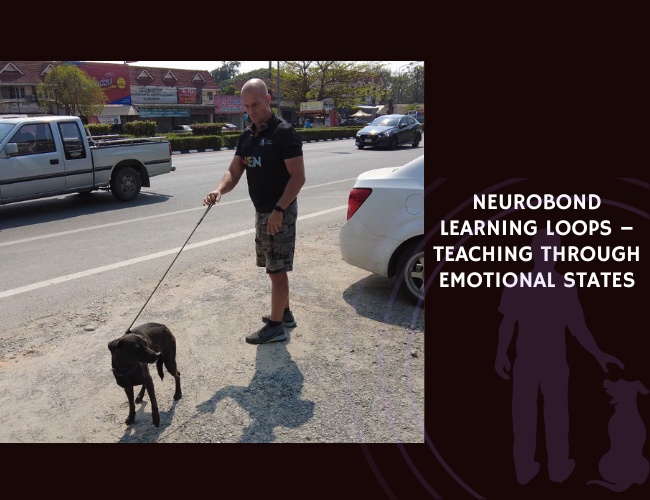
Introduction: The Hidden Language of Learning
Have you ever noticed how your dog seems to sense your mood before you even speak? That moment when your tension travels down the leash, or when your calm presence helps your anxious companion settle? This invisible exchange is not coincidence—it’s the foundation of how dogs truly learn.
Traditional training often focuses on commands, corrections, and compliance. But beneath every sit, stay, or recall lies something far more profound: an emotional conversation between two nervous systems. When we understand this dialogue, we unlock a more effective, ethical, and deeply connected approach to canine education.
The NeuroBond Learning Loop model reveals that learning is not just a cognitive process—it’s an emotional dance. Your dog’s ability to focus, remember, and adapt depends heavily on their emotional state and, remarkably, on yours too. Through the co-regulation of emotional and physiological states, you and your dog can achieve a level of communication and trust that transforms training from mechanical obedience into genuine understanding.
Let us guide you through the science and soul of emotional learning, where neurobiology meets the everyday moments you share with your furry friend. This is not just about teaching behaviors—it’s about building a relationship where learning flows naturally from trust, safety, and emotional synchrony.
Understanding Emotional Synchrony and Learning
How Emotional States Shape Cognitive Performance
Your dog’s emotional state acts as a filter through which all learning must pass. When your companion feels safe, curious, and engaged, their brain operates at peak efficiency. Neurons fire more readily, connections strengthen, and information moves from short-term awareness into lasting memory. But when stress, fear, or frustration dominate, that same brilliant mind struggles to process even simple cues.
Signs Your Dog Is in an Optimal Learning State:
- Soft, relaxed body posture with loose muscles and natural movement
- Engaged eye contact that feels connected rather than staring or avoidant
- Regular breathing patterns without panting or breath-holding
- Curious exploration of the environment with tail in neutral or gently wagging position
- Quick recovery from minor stressors, returning to engagement within seconds
- Playful energy with appropriate enthusiasm for the task at hand
- Problem-solving behavior showing willingness to try different approaches
Signs Your Dog Is Outside Their Learning Window:
- Body tension or rigidity with frozen posture or slow, careful movements
- Avoidance behaviors including turning away, sniffing excessively, or attempts to leave
- Stress signals such as yawning, lip licking, whale eye, or pinned ears
- Inability to take treats or loss of interest in normally high-value rewards
- Repetitive behaviors that seem disconnected from the training task
- Hyperarousal with inability to settle, excessive barking, or frantic energy
- Shutdown responses where your dog becomes unresponsive or “checks out”
Research across species reveals that emotional regulation is fundamental for psychosocial development and adaptive behavior. Think of your dog’s brain as a sophisticated computer—emotional states determine whether it runs smoothly or crashes under pressure. Stress hormones like cortisol flood the system during anxiety, redirecting cognitive resources away from learning toward survival responses. Your dog isn’t being stubborn when they can’t follow a familiar command in a stressful environment; their brain is literally working differently.
Conversely, positive emotional states create the ideal neurological environment for learning. When your dog experiences joy, safety, and connection, reward pathways activate, memory consolidation strengthens, and new behaviors integrate more smoothly into their behavioral repertoire. This is why the same dog who struggles in a chaotic training class might excel during calm, connected sessions at home.
The Power of Synchronized Affective States
Have you ever wondered why some trainers seem to have an almost magical connection with dogs? The secret often lies in emotional synchrony—the alignment of affective states between human and canine. When your emotional state matches or complements your dog’s needs, communication accuracy skyrockets and task acquisition accelerates.
Dogs have evolved as masters of reading human cues. They seek information about their environment from us, using our emotional signals to navigate uncertain situations. This phenomenon, known as social referencing, means your dog constantly monitors your emotional broadcasts for guidance. When you approach training with calm confidence, that emotional clarity becomes a beacon your dog can follow.
Through the NeuroBond approach, trust becomes the foundation of learning. Synchronized affective states create a shared emotional language where misunderstandings decrease and cooperation flows naturally. Your dog doesn’t just hear your command—they feel your intention, read your body’s subtle signals, and respond from a place of emotional understanding rather than mere compliance.
This synchrony works both ways. Just as your calm can soothe an anxious dog, your stress can amplify their worry. The connection between you functions as an emotional feedback loop, constantly influencing each other’s physiological and psychological states. Recognizing this mutual influence empowers you to become a more intentional, effective guide for your companion.
Physiological Markers of Successful Co-Regulation
Beneath the surface of every training session, a complex physiological symphony plays out. Heart rates synchronize, breathing patterns align, and hormones shift in response to emotional states. These markers tell the true story of what’s happening between you and your dog.
Observable Indicators of Successful Co-Regulation:
Physical Relaxation Signs:
- Soft muscle tone throughout the body, especially in the face, neck, and shoulders
- Loose, flowing movement rather than stiff or jerky motion
- Relaxed tail carriage appropriate to the breed, with natural swing
- Soft, blinking eyes with normal pupil size
- Mouth slightly open with relaxed jaw or gentle panting
Engagement and Connection Markers:
- Willing eye contact that feels mutual rather than forced
- Orienting toward you naturally without constant prompting
- Soft vocalizations like gentle whines, sighs, or contented sounds
- Seeking proximity choosing to be near you voluntarily
- Reciprocal interaction where your dog responds and initiates communication
Nervous System Balance Indicators:
- Regular breathing rhythm that matches or synchronizes with yours
- Appropriate arousal levels for the activity—alert but not anxious
- Quick stress recovery bouncing back rapidly from minor challenges
- Digestive comfort with normal appetite and no stress-related stomach issues
- Restful sleep patterns indicating overall nervous system health
Heart rate variability (HRV) serves as a window into nervous system flexibility. Higher HRV indicates a balanced autonomic nervous system—one that can shift smoothly between alertness and relaxation. During successful co-regulation, both human and dog typically show improved HRV, reflecting their capacity to remain emotionally flexible and responsive rather than locked in stress patterns.
Oxytocin, often called the bonding hormone, plays a starring role in emotional synchrony. Studies across species show that positive social interactions increase oxytocin levels, enhancing social attention and deepening connections. When you and your dog share a moment of genuine connection—a soft gaze, a gentle touch, a playful interaction—oxytocin levels rise, creating a neurochemical foundation for trust and learning.
Cortisol levels tell another crucial part of the story. This stress hormone rises during challenges but should decrease in safe, supportive environments. A calm, predictable human presence helps regulate canine cortisol, creating the emotional safety necessary for optimal learning. You might notice this in your dog’s body language: tense muscles softening, rapid panting slowing to relaxed breathing, or vigilant eyes becoming curious and engaged. 🧡
Vagal tone, reflecting the function of the vagus nerve, indicates how well the social engagement system operates. Strong vagal tone supports emotional regulation, social connection, and the ability to return to calm after stress. Through consistent, emotionally attuned interactions, you help strengthen your dog’s vagal tone, building their capacity for resilience and adaptive learning.
Neurobiological Foundations of Emotional Learning
The Limbic System: Where Emotion and Memory Meet
Deep within your dog’s brain, a collection of structures forms the emotional command center that shapes every learning experience. The limbic system—comprising the amygdala, hippocampus, anterior cingulate cortex, and related structures—processes emotional significance, forms memories, and integrates social information in ways that profoundly influence behavior.
The amygdala acts as an emotional alarm system, rapidly identifying potential threats and triggering protective responses. When your dog encounters something frightening, the amygdala flags it instantly, often before conscious thought occurs. This structure specializes in aversive learning, helping your dog remember what to avoid. However, an overactive amygdala, perhaps due to traumatic experiences or chronic stress, can hypersensitize your dog to perceived threats, making neutral situations feel dangerous.
The hippocampus, closely connected to the amygdala, transforms experiences into lasting memories. This structure doesn’t just record events—it encodes the emotional context surrounding them. Your dog doesn’t simply remember that “sit” means to place their bottom on the ground; they remember how they felt when learning it, where they were, and what happened next. This emotional embedding explains why a dog might perform beautifully at home but struggle in new environments—the emotional context differs.
The anterior cingulate cortex serves as a sophisticated integration hub, weaving together social context, decision-making, and empathy. This region helps your dog understand social dynamics, read intentions, and make choices based on both logic and feeling. It’s part of what enables dogs to sense when you’re upset, respond to subtle social cues, and adjust their behavior based on relationship dynamics.
Together, these limbic pathways create the neurological infrastructure for emotional learning. Every training session, every interaction, every moment of connection or stress leaves its mark within these structures, shaping how your dog processes future experiences.
Hormonal Influences on Learning and Bonding
The chemistry of connection flows through every successful training session, with hormones acting as molecular messengers that either open or close the doors to learning. Understanding these chemical influences helps explain why identical training techniques can produce vastly different results depending on the emotional climate.
When you approach your dog with calm, predictable energy, you’re not just setting a mood—you’re influencing their neuroendocrine system. A relaxed human presence signals safety, allowing your dog’s cortisol levels to decrease. As stress hormones decline, cognitive resources previously allocated to threat detection become available for learning and memory formation. This is why dogs often show breakthrough progress after periods of reduced pressure and increased emotional support.
Simultaneously, positive interactions trigger oxytocin release in both species. This remarkable hormone enhances social attention, increases gaze fixations toward faces (especially eyes), and deepens the sense of connection. Oxytocin essentially amplifies social salience, making you more interesting, your cues more noticeable, and your approval more rewarding to your dog. This neurochemical boost transforms training from work into a collaborative experience your dog genuinely wants to engage in.
The balance between cortisol and oxytocin creates what we might call the learning window—that sweet spot where stress is low enough for cognitive flexibility but engagement is high enough for motivation. Through the NeuroBond approach, you learn to recognize and maintain this window, creating optimal conditions for learning to flourish.
Emotional Safety and Synaptic Plasticity
At the cellular level, learning means changing the brain itself. Synaptic plasticity—the ability of neural connections to strengthen, weaken, reorganize, and form anew—is the biological foundation of all behavioral change. But here’s what many traditional training approaches miss: emotional safety profoundly influences this neurological flexibility.
When your dog feels emotionally secure, their brain can dedicate resources to growth and adaptation. Synapses strengthen more readily, new neural pathways form more easily, and learning consolidates more deeply. The Invisible Leash reminds us that awareness, not tension, guides the path toward this neural flexibility. In safe environments, the brain operates in a learning-ready state, where plasticity flourishes.
Chronic stress, conversely, can actually impair synaptic plasticity. Sustained cortisol exposure affects hippocampal function, disrupting memory formation and retrieval. This explains why dogs from stressful backgrounds often struggle to learn new behaviors or unlearn problematic ones—their nervous systems remain locked in survival mode, where plasticity takes a back seat to protection.
The cerebellar reserve demonstrates how the brain compensates for challenges through plasticity in safe conditions. When damage or stress occurs, supportive environments allow neural reorganization and functional restoration. Similarly, dogs with behavioral challenges can develop new, healthier patterns when emotional safety creates the neurological space for change.
This understanding reshapes how we approach training. Rather than pushing harder when progress stalls, we might ask: Does my dog feel safe enough for their brain to change? Am I creating the emotional conditions that allow synaptic plasticity to work its magic? True learning emerges when neurobiology and emotional security align. 🧠
Behavioral Communication and Feedback Loops
How Dogs Mirror Human Emotional States
Your dog is reading you right now—not just your words or gestures, but the subtle emotional currents running through your body. This remarkable capacity to mirror and absorb human emotional states represents one of the most powerful forces in canine learning, yet it’s often invisible to us.
Mirror neuron systems, specialized brain circuits that activate both when performing an action and when observing it in others, may explain this phenomenon. These systems facilitate emotional mirroring, enabling dogs to unconsciously reflect the emotional states of their human companions. When you feel stressed during training, your dog doesn’t just observe your stress—they experience a version of it themselves.
Social referencing amplifies this effect. In uncertain situations, dogs actively seek emotional information from trusted humans to guide their responses. If you approach a new object with fear, your dog interprets that as a warning signal. If you radiate calm confidence, that same object becomes less threatening. Your emotional broadcast essentially tells your dog how to feel about their world.
This explains why anxious handlers often have anxious dogs, even when using identical training methods to calm handlers. The emotional transfer happens below the level of conscious communication, traveling through posture, breathing patterns, micro-expressions, and even chemical signals we’re only beginning to understand. You might notice your dog’s energy shift the moment you start feeling frustrated—they’re not ignoring you; they’re responding to the emotional shift they’ve detected.
Real-Time Emotional Modulation as a Training Tool
Once you understand emotional mirroring, an extraordinary possibility emerges: you can intentionally shift your emotional tone to guide your dog’s state in real time. This represents a sophisticated application of the human-in-the-loop principle, where deliberate human feedback shapes learning outcomes moment by moment.
Consider a dog struggling with leash reactivity. Traditional approaches might focus on commands and corrections. The emotional modulation approach asks: What emotional state would best serve my dog right now? If your dog feels anxious, can you broadcast calm so convincingly that they begin to mirror it? If they’re understimulated, can you inject enthusiasm that awakens their engagement?
This isn’t about faking emotions—dogs are too perceptive for that. It’s about authentically accessing emotional states that support your dog’s needs. A trainer skilled in emotional modulation might lower their voice, slow their breathing, and consciously relax their body when approaching an aroused dog, creating an invitation to de-escalate. Moments later, they might brighten their energy to reward calm behavior, using emotional variation as both guide and reinforcement.
Through moments of Soul Recall, we discover how memory and emotion intertwine in behavior, allowing us to understand which emotional tones will resonate with our dog’s history and current needs. A dog with trauma history might need extra doses of patient calm. A confident but bored dog might thrive with playful challenge. Your emotional flexibility becomes one of your most powerful training tools.
The Language of Non-Verbal Communication
While we humans love our words, dogs speak a more ancient language—the subtle vocabulary of breath, posture, and micro-movements that conveys intention and emotion with remarkable precision. Mastering this non-verbal dialogue is essential for anyone seeking to communicate clearly with their canine companion.
Key Non-Verbal Signals That Build Trust and Clarity:
Breathing Patterns:
- Slow, deep breaths communicate calm and activate your dog’s parasympathetic nervous system
- Sighing or yawning (mirrored from your dog) shows empathy and can help them relax
- Matching breath rhythm during connection moments creates physiological synchrony
- Avoiding rapid, shallow breathing prevents transmitting anxiety to your dog
Postural Communication:
- Soft, relaxed shoulders signal safety rather than tension or threat
- Grounded, balanced stance conveys confidence and stability your dog can trust
- Turning slightly sideways reduces pressure and makes approach less confrontational
- Lowering your center of gravity creates invitation rather than intimidation
- Open body language with uncrossed arms encourages connection
Hand and Touch Signals:
- Soft, curved hand positions feel inviting compared to pointing or rigid gestures
- Calm, confident touch with appropriate pressure builds security
- Respecting touch preferences by letting your dog initiate or choose duration
- Using touch for grounding during stressful moments helps co-regulation
Facial Expression and Gaze:
- Soft eyes with relaxed face muscles communicate warmth and safety
- Brief eye contact that connects without staring or creating pressure
- Genuine smiles that reach your eyes can be read by your dog
- Looking away periodically shows respect and reduces intensity
The NeuroBond framework recognizes that learning emerges through reciprocal regulation, where your calm presence stabilizes canine cognition. This stability flows primarily through non-verbal channels. When your body language, breathing, and subtle movements align with supportive emotional states, you create the clarity and trust that allow learning to flourish.
Training Methodology and Cognitive Flexibility
Emotional Balance and Behavioral Generalization
Why does your dog perform perfectly at home but seem to forget everything in the park? The answer lies in emotional balance and its profound effect on cognitive flexibility. Dogs who can regulate their emotions effectively demonstrate remarkable abilities to generalize learned behaviors across diverse environments—a skill that proves elusive when emotional equilibrium falters.
Emotional regulation serves as the foundation for adaptability. When your dog maintains emotional balance, they can allocate cognitive resources to the task at hand rather than to managing internal distress or environmental overwhelm. This balanced state allows them to recognize that “sit” means the same thing whether you’re in your living room, at the vet’s office, or surrounded by distractions at a busy café.
Emotionally balanced dogs show enhanced working memory, better signal interpretation, and stronger task persistence because their brains aren’t hijacked by stress responses. They can think through challenges, adapt to novel situations, and maintain focus despite changes in context. This is the essence of cognitive flexibility—the ability to apply knowledge across varying circumstances.
Consider two dogs learning recall. One, emotionally balanced and secure, practices in gradually increasing distraction levels while maintaining regulation. The other, chronically anxious or overexcited, might nail recalls at home but completely ignore them elsewhere. The difference isn’t intelligence or training quality—it’s the emotional foundation supporting cognitive transfer.
Building emotional balance, therefore, becomes a primary training goal rather than a secondary consideration. Before asking your dog to perform in challenging environments, you might ask: Does my dog have the emotional regulation skills to maintain cognitive function here? If not, the training goal shifts from behavior execution to emotional skill-building.
The Cognitive Cost of Emotional Overload
When emotional intensity exceeds your dog’s capacity to regulate it, cognitive functions begin to deteriorate in predictable ways. This phenomenon, emotional overload, explains many training frustrations that seem like disobedience but are actually neurological limitations.
How Emotional Overload Manifests in Training:
Cognitive Disruptions:
- Working memory collapse where your dog can’t hold simple commands in mind
- Signal confusion misinterpreting clear cues or responding to wrong signals
- Decreased discrimination unable to distinguish between different commands or contexts
- Loss of impulse control acting on first impulse rather than making thoughtful choices
- Inability to problem-solve giving up quickly rather than trying alternative approaches
Behavioral Responses to Overload:
- Displacement behaviors such as excessive sniffing, scratching, or spinning
- Complete shutdown becoming unresponsive or appearing “stubborn”
- Hyperactivity with frantic energy that can’t be channeled productively
- Aggression or reactivity as a last-resort response to overwhelming stress
- Avoidance strategies attempting to leave, hide, or disengage entirely
- Attention fragmentation unable to focus on anything for more than seconds
Physical Stress Indicators:
- Excessive panting beyond what temperature or exercise would explain
- Drooling or foaming at the mouth during training sessions
- Loss of appetite refusing even high-value treats
- Trembling or shaking particularly in the legs or throughout the body
- Dilated pupils even in bright light conditions
- Piloerection (raised hackles) along the back or shoulders
Working memory—the mental workspace where your dog holds and manipulates information—shrinks dramatically under emotional stress. Imagine trying to solve complex math problems while someone screams in your face. That’s what it feels like for a dog trying to respond to cues while emotionally overwhelmed. The information simply can’t be held and processed effectively because cognitive resources are diverted to threat management.
Signal interpretation becomes distorted through the lens of strong emotion. An anxious dog might interpret your neutral posture as threatening. An overexcited dog might miss your subtle settling cues entirely. The emotional state essentially rewrites incoming information, making accurate communication nearly impossible. Research shows that emotional states can have lasting effects on cognitive processing, influencing not just the current moment but subsequent trials as well.
Task persistence collapses when overwhelm sets in. Your dog might attempt a behavior once, fail due to inability to focus, then shut down completely or engage in displacement behaviors—sniffing, shaking off, looking away—anything to escape the cognitive demands they can no longer meet. This isn’t resistance; it’s cognitive overload manifesting as behavioral avoidance.
Recognizing these signs of emotional overload allows you to respond appropriately. Rather than repeating commands or increasing pressure, you can pause, help your dog regulate, and resume only when cognitive function returns. This understanding transforms how we interpret apparent disobedience—often, it’s a brain that temporarily can’t process, not a dog who won’t comply.
Structured Emotional Feedback Loops: An Alternative Approach
What if training could replace corrections with connection, substituting punishment with proactive emotional support? Structured emotional feedback loops offer exactly this—a systematic approach that works with your dog’s emotional and cognitive systems rather than against them.
The “pause, connect, guide” framework exemplifies this approach. When training stalls or your dog struggles, you pause rather than push. This pause creates space for emotional regulation, preventing escalation and allowing both nervous systems to reset. During the pause, you might take several deep breaths, soften your posture, or create physical distance if your dog needs it.
Next, you connect—reestablishing emotional synchrony before attempting to teach. This might involve eye contact, gentle touch, a moment of play, or simply standing together in calm presence. Connection rebuilds the relational foundation that makes guidance possible. Through the Invisible Leash, awareness flows between you, restoring the communication channel that stress had disrupted.
Finally, you guide—offering clear, emotionally supportive instruction from this place of connection. Your dog, now emotionally regulated and relationally connected, can actually process the information. Learning occurs not through correction but through clarity emerging from calm.
Research into human-in-the-loop systems demonstrates that proactive, emotionally intelligent intervention significantly accelerates performance with minimal corrective effort. Safety-aware approaches that integrate emotional awareness into feedback mechanisms produce superior outcomes compared to correction-based models. This translates directly to dog training: emotional feedback loops prove more effective than traditional correction because they address the neurological prerequisites for learning.
This approach requires different skills from trainers. Rather than perfect timing of corrections, they must develop emotional literacy—the ability to read subtle signs of emotional state shifts, regulate their own emotions intentionally, and facilitate co-regulation. The result is learning grounded in trust, intrinsic motivation, and genuine understanding rather than fear of consequences. 😊
Connect. Regulate. Teach.
Emotion is the gateway. Every command passes through the heart before it reaches the brain.
Synchrony builds learning. When calm meets calm, neurons mirror trust and behaviour follows naturally.



Teach through state, not force. The nervous system remembers safety longer than any cue or correction. 🧡
Applications to Welfare, Training, and Therapy
Emotional Awareness in Rehabilitation and Reactivity Training
Many behavioral challenges, particularly reactivity, have roots deep in emotional soil. Surface behaviors—lunging, barking, aggression—often mask underlying states of fear, anxiety, frustration, or trauma. Emotional-state awareness transforms rehabilitation from symptom suppression to genuine healing, addressing root causes rather than just visible effects.
Consider a leash-reactive dog. Traditional approaches might focus on interrupting the reaction—redirecting attention, creating distance, using corrections. These techniques might reduce the behavior temporarily, but they don’t address the emotional state driving it. An emotionally aware approach asks: What is my dog feeling right now? Fear? Frustration? Overarousal? Each emotion requires different support.
If fear drives the reactivity, your dog needs safety and gradual confidence-building, not pressure to “face their fears.” You might notice early warning signs—slight stiffening, whale eye, subtle weight shifts—before the obvious reaction occurs. Responding to these early signals by creating distance or offering support prevents escalation while building your dog’s trust that you’ll protect them from overwhelm.
For frustration-based reactivity, your dog might need help developing impulse control and finding appropriate outlets for energy. The emotional support looks different—helping them tolerate the frustration of not accessing something they want, teaching alternative behaviors, and ensuring adequate physical and mental stimulation elsewhere.
Emotional co-regulation becomes the primary therapeutic tool. As you help your dog navigate triggering situations while maintaining regulation, you’re essentially teaching their nervous system new response patterns. Over time, situations that once triggered immediate reactions become opportunities to practice staying connected and regulated. That’s where lasting behavioral change occurs—not in forced compliance but in expanded emotional capacity.
Programs focusing on emotional regulation and empathy have shown dramatic improvements in behavioral outcomes across species. The same principles apply to canine rehabilitation: when we enhance emotional literacy and regulation skills, behavioral problems often resolve naturally.
Prioritizing Emotional Literacy Over Mechanical Obedience
The dog training world stands at a crossroads between two paradigms. One prizes mechanical obedience—behaviors performed on command regardless of the dog’s emotional state or understanding. The other prioritizes emotional literacy—teaching dogs to understand and regulate emotions, read social cues, and make good choices from a foundation of connection.
Mechanical obedience creates dogs who comply but may not comprehend. They perform behaviors because they’ve been conditioned to respond to specific cues, but the underlying emotional intelligence remains undeveloped. When situations differ from training conditions, these dogs often struggle because they lack the emotional regulation and cognitive flexibility to adapt.
Emotional literacy, conversely, develops dogs who understand themselves and their world more deeply. These dogs can recognize their own rising anxiety and employ calming strategies. They read human emotions accurately and respond appropriately. They make thoughtful choices in novel situations because they’ve learned to think, feel, and regulate rather than just obey.
Research confirms that emotional regulation forms the basis for psychosocial development, future success, and adaptability. A dog with strong emotional literacy skills is more resilient, better at problem-solving, and capable of thriving across diverse situations. They’re not just well-trained; they’re emotionally mature and socially competent.
This doesn’t mean abandoning training behaviors—rather, it means embedding that training within an emotional literacy framework. You still teach sit, stay, and recall, but you do so in ways that enhance your dog’s emotional awareness and regulation capacity. You notice when your dog feels confident versus worried, excited versus overwhelmed. You adjust your approach based on their emotional state, treating it as information rather than something to overcome.
That balance between science and soul—that’s the essence of Zoeta Dogsoul. It honors your dog’s emotional life as central to their learning journey, not as an obstacle to training efficiency.
Teaching Emotional Co-Regulation to Trainers
If emotional co-regulation represents such a powerful force in canine learning, shouldn’t we formally teach it to those who educate dogs? The answer is an emphatic yes. Integrating emotional co-regulation into trainer education represents an ethical imperative and a practical necessity for modern, humane training practices.
Essential Components of Emotional Co-Regulation Training:
Foundational Knowledge Areas:
- Affective neuroscience basics including limbic system function and emotional processing pathways
- Stress physiology understanding cortisol, oxytocin, and autonomic nervous system responses
- Polyvagal theory and its implications for social engagement and safety
- Mirror neuron systems and their role in emotional contagion between species
- Attachment theory as it applies to human-dog relationships
- Developmental psychology of canine emotional and cognitive maturation
Personal Development Skills:
- Self-awareness practices for recognizing your own emotional states in real time
- Emotional regulation techniques including breathwork, grounding, and perspective shifts
- Mindfulness training to maintain present-moment awareness during sessions
- Stress management strategies for maintaining calm under training challenges
- Body awareness understanding how your physical state affects your dog
- Reflective practice habits for continuous improvement and learning
Observational and Assessment Skills:
- Reading micro-expressions in canine facial features and body language
- Identifying stress signals at the earliest possible stages
- Distinguishing emotional states recognizing fear versus frustration versus excitement
- Context assessment evaluating environmental factors affecting emotional state
- Pattern recognition tracking emotional trends over time and across situations
- Individual difference sensitivity adapting observations to breed, age, and history
Practical Application Abilities:
- Implementing pause-connect-guide sequences in diverse training scenarios
- Adjusting difficulty based on emotional state rather than arbitrary progression
- Creating emotional scaffolding that supports gradual capacity building
- Facilitating co-regulation through intentional emotional modeling
- Environmental management for optimal emotional conditions
- Crisis intervention skills for managing acute stress or reactivity safely
The human-in-the-loop concept supports this approach—when humans receive proper training in optimizing learning systems, outcomes improve dramatically. Trainers educated in emotional co-regulation become more effective facilitators of learning, not just deliverers of techniques.
This education shift from purely technical training to holistic, emotionally informed practice represents the future of ethical canine education. It acknowledges that dogs are sentient, emotional beings whose learning depends on relationship quality, emotional safety, and trust. Trainers equipped with these skills serve both dogs and their people more effectively, creating training experiences that nurture rather than stress, that build rather than break.
Organizations incorporating emotional literacy into professional standards report improved training outcomes, reduced behavioral fallout, and stronger human-animal bonds. This isn’t soft science—it’s rigorous, evidence-based practice that recognizes the full complexity of how dogs learn.
Advanced Perspectives: The Integration of Emotional and Cognitive Learning
Emotional States as Information, Not Obstacles
Traditional training often treats emotional states as obstacles to overcome—anxiety to be suppressed, excitement to be contained, fear to be desensitized away. The NeuroBond perspective flips this entirely: emotional states are information, providing crucial data about your dog’s internal experience and learning readiness.
When your dog shows anxiety during training, they’re communicating something important. Perhaps the difficulty level exceeds their current capacity. Maybe the environment feels unsafe. Possibly, past negative experiences color their current perception. Rather than pushing through anxiety, you can treat it as valuable feedback guiding your training decisions.
Similarly, excitement isn’t just energy to be contained—it indicates high engagement and motivation, perhaps revealing what your dog finds most reinforcing. Frustration signals unmet needs or unclear communication. Each emotional state offers insights that, when read accurately, make you a better teacher.
This information-rich perspective requires a fundamental mindset shift. Instead of asking “How do I make my dog stop feeling this way?” you ask “What is this emotional state telling me about my dog’s experience?” This inquiry opens possibilities for responsive, individualized training that meets each dog where they are.
The Neurobiology of Trust-Based Learning
Trust represents more than a pleasant feeling—it’s a neurobiological state that fundamentally alters how learning occurs. When your dog trusts you, their brain operates differently than when they feel uncertain or threatened, with measurable changes in neural activity, hormone levels, and cognitive function.
Trust activates the social engagement system, governed by the ventral vagal complex of the parasympathetic nervous system. This state enables social learning, exploration, and cognitive flexibility. Your dog’s attention focuses outward rather than inward on self-protection. Their capacity for nuanced discrimination increases. Memory consolidation improves.
The anterior cingulate cortex, that sophisticated integration hub, processes trust-based interactions differently than fear-based ones. Neural pathways associated with prediction, empathy, and theory of mind become more active. Your dog can better anticipate your intentions, understand your perspective, and collaborate rather than simply comply.
Oxytocin, released during trust-building interactions, enhances these effects. It increases social attention, making your cues more salient. It reduces amygdala reactivity, helping your dog remain calm even in challenging situations. It strengthens the neural pathways connecting positive experiences with your presence.
This neurobiological foundation explains why relationship-based training produces deeper, more lasting results than methods relying on force or fear. Trust literally changes your dog’s brain chemistry and neural processing in ways that facilitate learning. The behavioral changes emerge from genuine neurological shifts, not just conditioned responses.
Creating Emotionally Intelligent Training Environments
The physical and social environment profoundly influences emotional states and, therefore, learning outcomes. Creating emotionally intelligent training spaces means thoughtfully designing contexts that support regulation, build confidence, and minimize unnecessary stress.
Environmental management starts with assessment: Does this space feel safe to my dog? Are distractions at an appropriate level for their current skills? Does the environment allow for emotional regulation breaks? Simple changes—training in familiar locations, managing visual and auditory distractions, ensuring adequate space for movement and distance—can dramatically impact emotional state.
Social environment matters equally. Who else is present? Do they create supportive energy or additional pressure? Dogs training near stressed companions often experience vicarious stress. Those working with calm, regulated partners often remain more relaxed themselves. Group training dynamics require careful management to maintain emotionally supportive conditions.
Temporal considerations also influence emotional states. Training duration, session frequency, and rest periods all affect your dog’s capacity for regulation and learning. Short, successful sessions often outperform long, exhausting ones. Adequate recovery time between sessions allows for memory consolidation and emotional reset.
Creating what might be called “emotional scaffolding” within training helps dogs succeed. This means structuring challenges progressively, celebrating small victories, providing support during difficulties, and adjusting difficulty based on emotional state rather than arbitrary schedules. You’re building not just behaviors but emotional capacity alongside them. 🧡
The Future of Canine Education: Toward Emotional Integration
Emerging Research and Future Directions
The integration of affective neuroscience with canine learning science represents a frontier with enormous potential. Emerging research directions promise to deepen our understanding of how emotional states shape learning and how we can optimize training based on this knowledge.
Neuroimaging studies of dogs during training could reveal real-time brain activity patterns associated with different emotional states and learning processes. Understanding which neural circuits activate during successful learning versus stress-induced shutdown would provide objective markers for training effectiveness.
Wearable technology measuring physiological markers—heart rate variability, skin conductance, cortisol levels—could give trainers real-time feedback about dogs’ emotional states. Imagine being able to see when your dog enters or exits optimal learning zones, allowing immediate adjustment of training parameters.
Cross-species research comparing emotional learning across dogs, wolves, and other canids might illuminate which aspects of emotional synchrony are species-specific versus more broadly shared. This could refine our understanding of dogs’ unique capacity for human-dog co-regulation.
Longitudinal studies tracking dogs through childhood into adulthood could reveal how early emotional experiences shape lifelong learning capacity. This research might inform breeding programs, early socialization protocols, and interventions for puppies at risk for behavioral challenges.
Comparative studies between training methodologies, measuring not just behavioral outcomes but emotional welfare markers, could provide evidence-based guidance on which approaches best support both learning and wellbeing. This research would help the field move from opinion to data regarding training methods.
Practical Implementation for Trainers and Guardians
Translating NeuroBond principles into daily practice requires concrete strategies accessible to both professional trainers and dog guardians. Here are practical applications that bring emotional co-regulation from theory into real-world training:
Daily Practices for Building Emotional Connection:
Morning Connection Rituals:
- Five minutes of quiet presence before beginning your day’s activities
- Synchronized breathing sitting or standing together in calm awareness
- Gentle touch exchange offering calming strokes without training demands
- Soft eye contact building connection through gaze without pressure
- Simple presence just being together without agenda or expectation
Throughout-the-Day Emotional Check-Ins:
- Pause between activities to assess your dog’s emotional state before transitions
- Notice arousal levels adjusting activity intensity to support regulation
- Offer decompression time after stimulating experiences or training sessions
- Respond to subtle signals before stress escalates to obvious distress
- Celebrate calm moments reinforcing relaxed states as much as active behaviors
Evening Wind-Down Practices:
- Calming activities that promote parasympathetic activation before rest
- Gentle massage or stretching helping release physical tension from the day
- Quiet reflection time in comfortable resting spaces
- Predictable bedtime routines that signal safety and closure
- Low-stimulation environments supporting nervous system recovery overnight
Weekly Emotional Development Sessions:
- Novel experiences at threshold gradually expanding comfort zones
- Confidence-building exercises tailored to individual dog’s needs
- Social connection opportunities with appropriate playmates or people
- Environmental variety practiced with emotional support and scaffolding
- Rest and integration days allowing nervous system consolidation
Training Session Structure for Emotional Success:
Before Training Begins:
- Check your own state first ensuring you’re emotionally ready to guide
- Assess your dog’s readiness evaluating whether this is an optimal learning moment
- Prepare the environment minimizing stressors and maximizing success potential
- Set realistic expectations based on current emotional and cognitive capacity
- Define success broadly including emotional regulation as a primary goal
During Active Training:
- Start with connection never jumping straight into demands
- Read constantly monitoring emotional state shifts throughout the session
- Adjust in real time making difficulty easier or harder based on observed state
- Celebrate emotional wins praising regulation as much as behavior execution
- End on success stopping while your dog is still engaged and confident
After Training Concludes:
- Decompress together helping your dog transition back to relaxed state
- Reflect on patterns noting what supported or challenged emotional regulation
- Adjust future plans based on insights gained during this session
- Record progress tracking emotional capacity alongside behavioral achievements
- Rest adequately ensuring recovery time before the next training opportunity
Conclusion: The Heart of Learning
We’ve journeyed through neurobiology and behavior, hormones and habits, exploring how emotional states create the foundation upon which all learning rests. The NeuroBond Learning Loop model isn’t just a training method—it’s a paradigm shift that recognizes your dog as an emotional, sentient being whose capacity to learn depends fundamentally on feeling safe, connected, and understood.
The implications extend far beyond training techniques. When we acknowledge that emotional co-regulation drives learning, we must reconsider our entire approach to canine education. Corrections give way to connection. Compliance becomes less important than comprehension. The relationship itself—built on trust, emotional attunement, and reciprocal regulation—becomes the primary teaching tool.
Your dog’s brain changes in response to emotional experiences. Neural pathways strengthen or weaken based on how safe, supported, and connected they feel during learning. The hormones coursing through their system either facilitate or hinder cognitive flexibility, memory formation, and behavioral adaptation. These aren’t peripheral concerns—they’re central to whether learning succeeds or fails.
As trainers and dog guardians, developing emotional literacy becomes as essential as technical skill. Reading subtle emotional cues, regulating your own states, creating conditions for co-regulation, and responding to emotional information rather than just behavioral outcomes—these capacities distinguish truly masterful facilitators of learning.
The future of ethical, effective canine education lies in this integration of emotional awareness with training practice. It requires trainers formally educated in neuroscience, personal regulation, and relational skills. It demands that we measure success not just by behavioral compliance but by emotional wellbeing, relationship quality, and adaptive capacity.
The science supports what many intuitively know: dogs learn best when they feel safe, when trust exists, when emotional states are acknowledged and supported rather than ignored or suppressed. This isn’t sentimentality—it’s neurobiology. The amygdala, hippocampus, and anterior cingulate cortex don’t distinguish between “serious training” and “emotional indulgence.” They simply process experience through an emotional lens, always.
Every interaction with your dog either builds or erodes the neurobiological foundation for learning. Every moment you respond to their emotional signals with understanding, you strengthen neural pathways of trust and security. Every time you pause to help them regulate rather than pushing through overwhelm, you expand their window of tolerance and cognitive flexibility.
This is the promise of the NeuroBond Learning Loop: training that honors the whole dog, not just their behaviors. Education that recognizes emotional states as the medium through which all learning flows. A relationship where your dog doesn’t just obey but understands, where they don’t just comply but actively collaborates, where learning emerges naturally from connection rather than being forced through pressure.
Is This Approach Right for You and Your Dog?
Ask yourself these questions as you consider integrating emotional co-regulation into your training practice:
For Dog Guardians:
- Are you willing to develop awareness of your own emotional states and how they affect your dog?
- Can you shift from viewing training as behavior modification to seeing it as relationship development?
- Are you ready to slow down, pause when needed, and prioritize emotional safety over quick results?
- Do you want a dog who thinks, feels, and chooses rather than just performs on command?
- Can you celebrate emotional growth as much as behavioral achievements?
For Professional Trainers:
- Are you prepared to deepen your education in neuroscience, emotional regulation, and relational dynamics?
- Can you read subtle emotional cues and adjust your approach in real time based on what you observe?
- Are you willing to challenge conventional correction-based methods in favor of connection-based alternatives?
- Do you want to measure success through welfare markers and emotional capacity, not just behavioral outcomes?
- Can you hold space for both human and canine emotional experiences during training sessions?
If these questions resonate, you’re ready to explore emotional learning as a core training philosophy. The journey requires patience, self-awareness, and a willingness to see your dog as an emotional partner in the learning process. The rewards—deeper connection, more effective learning, and enhanced wellbeing for both species—make this commitment worthwhile.
Your Next Steps on the NeuroBond Journey
Beginning to integrate emotional co-regulation into your practice doesn’t require complete overhaul of your current approach. Start with these accessible steps:
Week 1: Observation Simply observe your dog’s emotional cues throughout daily life. Notice breathing patterns, muscle tension, ear positions, tail carriage, and overall energy. Begin connecting these physical signals to probable emotional states. Keep a journal noting patterns you discover.
Week 2: Self-Awareness Shift focus to your own emotional states. Before each training session or significant interaction, pause and check in with yourself. What are you feeling? How is your body holding that emotion? Begin practicing intentional regulation—deep breathing, muscle relaxation, perspective shifts—before engaging with your dog.
Week 3: Connection Practice Dedicate time each day to simple connection without training goals. Sit together, make soft eye contact, synchronize breathing, offer gentle touch. Notice how this affects both your emotional states. This becomes your foundation for all future training.
Week 4: Emotional Feedback Loops During training, implement the pause-connect-guide sequence when challenges arise. Notice the difference in outcomes compared to your previous approach. Celebrate moments when emotional support leads to breakthrough progress.
Ongoing: Community and Learning Seek out resources, communities, and mentors who prioritize emotional literacy in training. Continue deepening your understanding of neuroscience, ethology, and relational dynamics. Remember that developing emotional co-regulation skills is a lifelong practice, not a destination.
The Transformation Awaits
What begins as a shift in training methodology often becomes a transformation in relationship. As you develop emotional attunement with your dog, you may find yourself experiencing deeper connection, clearer communication, and moments of profound mutual understanding. These are the moments of Soul Recall—when the boundary between teaching and learning, between human and dog, softens into something richer than either alone.
Your dog has always been reading your emotional states, mirroring your nervous system, seeking co-regulation from you. Now you’re learning to consciously participate in this dance, to offer the emotional scaffolding that makes learning possible, to recognize that teaching happens heart to heart as much as mind to mind.
The Invisible Leash connecting you isn’t made of nylon or leather—it’s woven from attention, empathy, and emotional resonance. When you tend this connection carefully, when you honor emotional states as the foundation of learning, training transforms from something you do to your dog into something you create together.
That balance between rigorous science and profound soul connection, between understanding neurobiology and honoring emotional experience—that’s where transformative learning lives. That’s the essence of Zoeta Dogsoul.
The journey toward emotionally intelligent training begins with a single pause, a moment of connection, a choice to acknowledge that beneath every behavior lies an emotional experience worthy of your attention and care. Your dog has been waiting for you to join them in this emotional dialogue all along.
Are you ready to answer that invitation? The path forward is clear: observe deeply, regulate consciously, connect authentically, and guide with emotional wisdom. Your dog’s brain will respond by opening doors to learning you never imagined possible. The NeuroBond Learning Loop doesn’t just teach behaviors—it nurtures the emotional and neurobiological conditions that allow your dog to become their best, most adaptive, most confident self.
Next, let this understanding infuse every interaction with your furry friend. Watch how training transforms when emotional safety comes first. Notice how behavioral challenges often dissolve when the underlying emotional needs receive attention. Celebrate the small victories of regulation as loudly as the big achievements of performance.
This is more than training—it’s relationship. It’s more than behavior—it’s being. And it begins right now, with you, with your dog, with the breath you share and the trust you build, one emotionally attuned moment at a time. 🐾